

The Ultimate Reality, Hinduism decades is of Two perspectives.

One with Attributes, qualities,Saguna.
The other Nirguna, without Attributes,Nirguna.
The western thought explores the Universe through what is outside,the perceived.
It is necessary to have something in us to perceive .
For all we know, there may be things out there and if one does not se it or perceive it, one may never know it, aware of it.
Awareness, which is the rudiment of Knowledge,, needs two things.
That which is to one known and that which knows or is aware.
‘We have the Mind as an instrument.
We know things through the Mind.
If the Mind is absent or dysfunctional, we will not know things out there or may not know them as they are.
Hinduism makes further distinction.
Mind is what interprets sensations and the Data received.
The sensations or Data is received is through the Brain, which is just like a CPU, just receives.
The job of sorting them out, collating adding value judgements is reserved for the Mind.
The classification and addition of value judgments is by the Chitta that directs the mind.
The Chitta is based on Human Dispositions.
The dispositions of individuals vary.
So what is out there varies .
So logically what we perceive is not what IS but what we perceive as what IS.
So Reality expresses itself in the way we want to perceive it.
This is the reason why many Gods and Goddesses are found in Hinduism.
Without accommodating the Mind to perceive by providing it with a Target, we can not know what is outside.
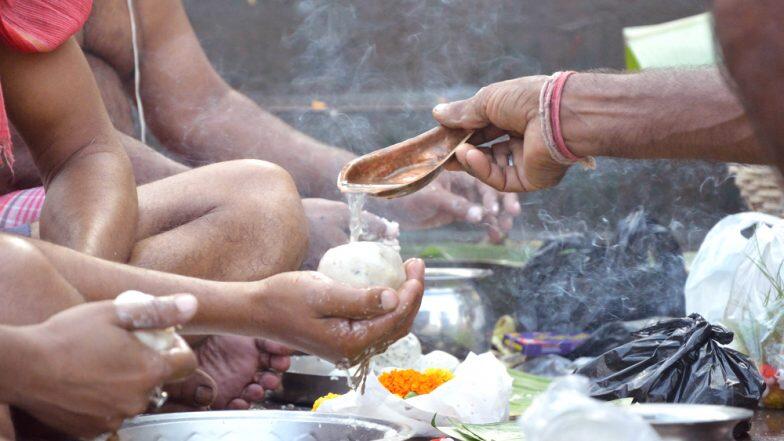
Therefore knowing the limitations of the Mind, Hinduism prescribes different systems of worship.
The target of worship may be an Idol, Symbol.
Once the Mind gets focussed on this, it evolves to comprehend the Ultimate Reality without Attribute, Brahman.
These procedures are like gradually moving from LKG to Ph.d.
Once you obtain Ph.d , LKG seems to be irrational and look unnecessary.
But without it, you could not have reached Ph.d level.
Yet there are individuals who are equipped with dispositions to do Ph.d, that is to understand Reality without Attributes, Nirguna Brhaman.
One Like Ramana Maharishi
Adi Shankaracharya has provided a Stotra addressed to Nirguna Brahman which explains these.
One may notice that all the Sahasranamas, Vishnu and Lalitha Sahasranamas have Saguna and Nirguna Brahma upasanas embedded in them.
Lalitha Sahsranama has organised this better by allotting separate portions,like Saguna Aradhana, Nirguna Aradhana and the identification of Shiva and Shakthi in the same Text.
I shall be posting on this later.
The Nirguna Manasa Pooja by Adi Shankaracharya.
The disciple said:
1. In the indivisible Satchidananda whose nature is only unconditioned, and which is also the non-dual state, how is worship prescribed?
2. Where is the invocation (avahana) of the Fullness, and the seat (asana) of the All-supporting How is there washing of the feet (padya), offering of water (arghya) and sipping (achamana) for the limpid and Pure One?
3. How is there bathing (snana) for the Immaculate, and clothing (vasa) for the womb of the universe? How is there a sacred thread (upavita) for Him who is without lineage and caste?
4. How is there sandal paste (gandha) for the Unattached, and flowers (pushpa) for the Odorless? What is the jewel (bhusha) of the Undifferentiated? What ornament (alamkara) for the Formless?
5. What use of incense (dhupa) for the Spotless, or of lamps (dipa) for the Witness of everything? What is here the food-offering (naivedyam) for Him who is satiated only with His own bliss?
6-7. How does one prepare betel (tambula) for the Rejoicer of the universe? He whose nature is self-luminous consciousness, that Illuminator of the sun and other stars, who is sung by `shrutis’, how is there for Him the light- waving ceremony (nirajana) What circumambulation (pradakshina) for the Infinite? What prostration (pranama) for the non-dual Reality?
8. For Him who is unknowable by the words of the Vedas, what praise (stotra) is prescribed? How is there the ceremony of dismissal (udavasana) for Him who is established inside and outside?
The Guru said:
9. I worship the symbol of the Self (atmalinga) shining like a jewel and situated in the heart-lotus within the city of illusion, with the ablutions (abhisheka) of the unsullied mind from the river of faith, always, with the flowers of samadhi, for the sake of non-rebirth.
10. `I am the One, the Ultimate’. Thus one should invoke (avahayet) Lord Siva. Then one should prepare the seat (asana) , that is thinking of the self-established Self.
11. `I have no contact with the dust of virtue and sin.’ Thus should the wise one offer washing of the fet (padya), that is such knowledge destroying all sins.
12. One should pour forth tha handful of water which is the root- ignorance held from time without beginning. This is verily the water- offering (arghya) of the symbol of the Self.
13. `Indra and other beings drink only the tiny fraction of a drop from the waves of the bliss ocean of Brahman.’ That meditation is considered as the sipping (achamana).
14. `All the worlds are bathed verily by the water of Brahma’s bliss which is indivisible.’ That meditation is the ablution (abhishechana) of the Self.
15. `I am the light of Consciousness without any veil’. This thinking is the holy cloth (sad vastram) of the symbol of the Self. Thus should think the wise one.
16. `I am the thread of the garland of all the worlds which are in the nature of the three gunas’. This conviction is verily considered here as the highest sacred thread (upavIta).
17. `This manifold world mingled with numerous impressions is supported by me, and by no other’. This meditation is the sandal paste (chandana) of the Self.
18. With the sesamum-flowers in the form of renunciation of the activity of sattva, rajas, and tamas, one should always worship (yajet) the symbol of the Self, for attaing liberation while living.
19. With the non-dual Bel leaves devoid of the triple distinction between the Lord, the guru, and the Self, one should worship (yajet) Lord Siva that is symbol of the Self.
20. One should think of His incense (dhupa) as the giving up of all impressions. The wise one should show the lamp (dipa) that is the realization of the luminous Self.
21. The food-offering (naivedyam) of the symbol of the Self is the big rice pudding known as the egg-universe of Brahma. Do drink the sweet nectar of bliss that is the delightful beverage (upasechana) of Mrityu or Lord Siva.
22. One should remember that cleansing the remnants of ignorance with the water of knowledge, is the washing of hands (hasta prakshalana) of the pure symbol of the Self.
23. Giving up the use of the objects of passion, this is the chewing of betel (tambula) of Lord Siva, the supreme Self who is devoid of the attributes beginning with passion.
24. Knowledge on one’s own nature of Brahman, most shining, and burning to destruction the darkness of ignorance, that is here the waving of lights (nirajana) of the Self.
25. The vision of the manifold Brahman is the ornament (alamkritam) with garlands. Then one should remember the vision of the all- blissful nature of the Self, as the handful of flowers. (pushpanjali).
26. `Thousands of Brahma’s mundane eggs revolve in me, the Lord, whose nature is immovable and steady like a heap.’ This meditation is the circumambulation (pradakshina).
27. `I am verily worthy of a universal salutation. Apart from my true Self, none is so worthy of salutation.’ This reflection is verily here the salutation (vandana) of the symbol of one’s own Self.
28. The idea of the unreality of duties is termed as the saintly act (sat kriya) of the Self. Thinking of the Self as being beyond names and forms, this is the praise of his name (nama kirtana).
29. The hearing (shravana) of that God is the thought of the unreality of things to be heard of. The reflection (manana) of the symbol of the Self is the thought of the unreality of things to be reflected on.
30-31. Knowledge of the unreality of things to be contemplated upon, is the deep meditation (nididhyasana) of the Self. Devotedness to the Self by the absence of all delusion and distraction, is named the perfect steadiness (samadhi) of the Self; and not delusion of one whose mind rests on something else. This is called the eternal reposeof the mind (chitta vishranti) in Brahman itself.
32-33. Thus performing till death or even for a moment this worship of the symbols of one’s own Self, which is expounded according to Vedanta, one who is well concentrated should give up the illusion of all bad impressions, as dust from the feet. Having shaken off the mass of ignorance and pain, one attains the bliss of liberation.
Nirguna Manas Pooja . devanAgari PDF
Citation.
http://www.astrojyoti.com/nirgunamanasapooja.htm


Thanks for providing very valuable and divine information. Your articles lift the thought process