Tag: Tectonic plates

  • Shiva Uma Wedding Agastya To South 40 Million Years Ago Tectonics Proof

    Shiva Uma Wedding Agastya To South 40 Million Years Ago Tectonics Proof

    Indian Philosophy, Cosmology and Hinduism are so intricately connected with one another that it is difficult to separate them.

    The Indian texts mention, through the Puranas and  Philosophy,through Astronomical Observations about the age of the Earth.

    Here one encounters a problem of Philosophy, that of Time.

    Indian philosophy treats Time as Non-Linear, Cyclic, that is time coils around.

    For details please read my Post on Time, Non Linear.

    The Four Aeons, Yugas keep recurring as also the Astronomical events.

    The Purana state  that Agastya moved towards the South twice .

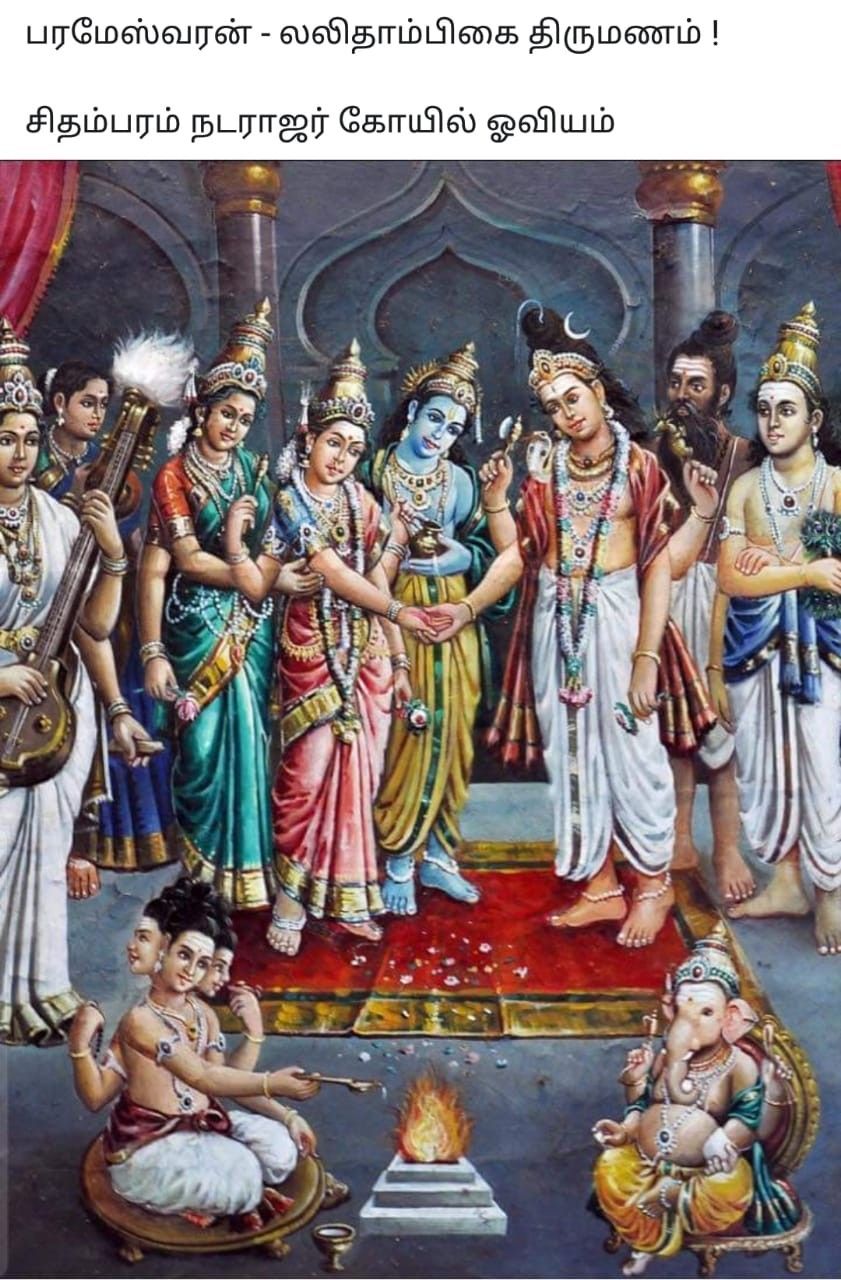
    Once when Lord Shiva ordered him to move over to South to stabilize the earth, when the North end came down, South rose because of overcrowding by people who came to witness Shiva’s wedding with Uma.

    He moved again to South to tame the Vindhya mountain.

    ( These two events have happened at different periods, not at one instance.

    Now let us look the calculation of Time .

    There are Four Yugas and they repeat themselves.

    Brahma, the Creator begins Creation at the beginning of each Yuga which will be dissolved at the end of one Chatur Yuga

    Kali Yuga                                4,32000 Years

    Dwpara Yuga  4,32,000*2= 8,64,000

    Tretha Yuga    4,32,000*3=1296000

    Satya Yuga        4,32,000*4=1728000

    Total                                         4820000 Years One Chatur Yuga

    One Manvantara is 306.72 million Years.

    Life in the universe is created and destroyed once every 4.1 to 8.2 billion years, which is one full day (day and night) for Brahma. The lifetime of a Brahma is believed to be 311 trillion and 40 billion years-Hindu Cosmology.

    ‘Eighty million years ago, India was approximately 6400 km (3968 miles) south of the Eurasian plate. Separating the two was the Tethys Sea. The Indo-Australian tectonic plate – containing the continent of Australia, the Indian subcontinent, and surrounding ocean – was pushed northward by the convection currents generated in the inner mantle. For millions of years, India made its way across the sea toward the Eurasian plate. As India approached Asia, around 40 million years ago, the Tethys Sea began to shrink and its seabed slowly pushed upwards. The Tethys Sea disappeared completely around 20 million years ago and sediments rising from its seabed formed a mountain range. When India and Tibet collided, instead of descending with the plate, the relatively light sedimentary and metamorphic rock that makes up the subcontinent of India pushed against Tibet, forcing it upwards, and created a massive mountain fold. The Himalayas.’

    Proof from the position of Agastya Star,Canopus.

    Canopus is associated with the Sage Agastya, one of the ancient rishis (the others are associated with the stars of the Big Dipper). Agastya, the star, is said to be the ‘cleanser of waters’ and its rising coincides with the calming of the waters of the Indian Ocean. It is considered the son of Pulasthya, son of Brahma.

    Canopus is 310 Light Years away from the Earth.

    ‘Agastya, is the author of 25 hymns (nos 166 to 190) of the first ‘mandala’ of the Rigveda.
    2. Canopus, the second brightest star in the night sky, is called Agastya in India.
    3. This star is close to the ecliptic south pole, having an ecliptic latitude of –76°.
    4. As the celestial poles go round the ecliptic poles due to the phenomenon of precession of the earth’s axis of rotation, this star becomes visible from different latitudes on the globe at different times. If we assume that for a star to be visible at a place its altitude at the meridian passage should be at least 5°, then calculations give the visibility curve for Agastya (Canopus) as follows.
    5. Agastya was not visible from any part of India before 10,000 BC.
    6. First it became visible at Kanyakumari around that epoch. Thereafter, as it was brought more and more northwards by precession, it became visible at various places in India.
    7. It became visible in the east coast (in the present Chennai region) in 8500 BC, and in the present day Hyderabad in 7200 BC, in the Vindhya region in 5200 BC, at Delhi in 3100 BC.
    8. At present it is visible from most parts of India for longer or shorter durations. This cycle will repeat after every 25,765 years. It is thus clear that around 5000 BC, the star Agastya was visible from the south of the Vindhyas, but not from the north of it.
    9. If sage Agastya was the first to cross the Vindhyas from the north, he would have been the first northerner to see the star. Hence the star has been named after him, just as the Magellanic clouds in the southern sky are named after the navigator Magellan, who first saw them as he sailed southwards.
    10. This fixes an epoch of 5000 BC for sage Agastya. This date is based on the assumption that for a star to be visible its meridian altitude has to be at least 5°.
    11. If we make 8° meridian altitude as the criterion for visibility, the date of Agastya would be shifted to about 4000 BC. The dates 5000 and 4000 BC should therefore bracket the probable epoch of Agastya crossing the Vindhyan mountains.

    Hindu Puranas state that the south Pole came up because of over crowding in the Himalayas because pople has rushed in to witness the wedding of Lord Shiva with Parvati and to set the earth’s balance aright Shiva ordered Agastya to go to South and he did so.

    Now the tectonic plate movement of the Himalayas confirm this by observing that

    ” The Indo-Australian tectonic plate – containing the continent of Australia, the Indian subcontinent, and surrounding ocean – was pushed northward by the convection currents generated in the inner mantle. For millions of years, India made its way across the sea toward the Eurasian plate. As India approached Asia, around 40 million years ago, the Tethys Sea began to shrink and its seabed slowly pushed upwards. The Tethys Sea disappeared completely around 20 million years ago and sediments rising from its seabed formed a mountain range. When India and Tibet collided, instead of descending with the plate, the relatively light sedimentary and metamorphic rock that makes up the subcontinent of India pushed against Tibet, forcing it upwards, and created a massive mountain fold.”

    Hence Agastya left for the South around 40 Million years ago to balance the earth.

    Please read my Post  Canopus Agastya validates Sanatana Dharma.

    Citation and Reference.

    http://www.wikiwand.com/en/Canopus

    http://www.pbs.org/wnet/nature/the-himalayas-tectonic-motion-making-the-himalayas/6342/

    http://en.wikipedia.org/wiki/Yuga#The_four_yugas_and_Brahmajnana

    http://cosmoquest.org/forum/archive/index.php/t-90134.html

  • Vishnu and Twelve Tectonic Plates Of Earth

    While Vishnu was in His Yoga Nidra,two demons emerged from his ears.


    (Vishnu does not sleep. It is called Yoganidra, it is Wakefulness born of Yoga.Tamil Language has a beautiful word for this, ‘அறிதுயில்’, which means sleeping while being aware of).


    Tectonic plates.svg
    Map of 15 Tectonic Plates


    The world was enveloped in water.


    They started destroying whatever Brahma has created.


    Vishnu found it difficult to kill them.


    So He showed confusion in their minds.


    While they were confused, Vishnu asked them how Death would embrace them and they replied that they could be killed only in place without water.


    One has to remember that there was nothing but water.


    Vishnu had them in His lap and killed them with His Sudarshan Chakra.


    (Bhavishya Purana)


    Vishnu killed them by manifesting as Hayagreeva, after Madhu and Kaidabha stole the Vedas, and hid them in the Ocean.


    Vishnu then retrieved the Vedas.


    The bodies of Madhu and Kaidabha split into 12 parts(two times  Six)


    These twelve are the Twelve tectonic plates of the earth.( Padma Purana)


    Geology lists Seven  Tectonic Plates, six primary, eight secondary.


    Primary Plates.


    • African Plate
    • Antarctic Plate
    • Eurasian Plate
    • Indo-Australian Plate
    • North American Plate

    Secondary Plates.

    • Arabian Plate
    • Caribbean Plate
    • Cocos Plate
    • Indian Plate
    • Juan de Fuca Plate
    • Nazca Plate
    • Philippine Sea Plate
    • Scotia Plate


    Citation.

    List of Tectonic Plates Wiki