Tag: Puri

  • Shankar Mutts By Shankaracharya Four Vedas

    Shankar Mutts By Shankaracharya Four Vedas

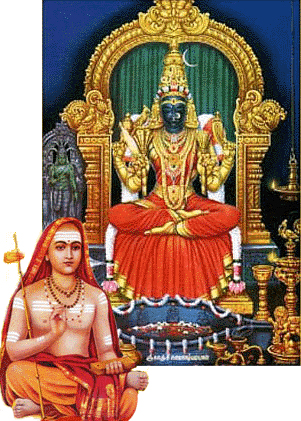
    Those who know a little of Sanskrit and Hinduism would know what an Intellectual Giant Adi Shankaracharya was.

    But not many know the logic that has gone behind his establishing the four Mutts.

    He chose four directions to found the Mutts.

    Shishya
    (lineage)
    Direction Maṭha Mahāvākya Veda Sampradaya
    Padmapāda East Govardhana Pīṭhaṃ Prajñānam brahma (Consciousness is Brahman) Rig Veda Bhogavala
    Sureśvara South Sringeri Śārada Pīṭhaṃ Aham brahmāsmi (I am Brahman) Yajur Veda Bhūrivala
    Hastāmalakācārya West Dvāraka Pīṭhaṃ Tattvamasi (That thou art) Sama Veda Kitavala
    Toṭakācārya North Jyotirmaṭha Pīṭhaṃ Ayamātmā brahma (This Atman is Brahman) Atharva Veda Nandavala

    All the Four Vedas are represented

    Padmapadacharya (fl. 8th century CE) was an Indian philosopher, a follower of Adi Shankara.

    Padmapāda’s dates are unknown, but modern scholarship places his life around the middle of the 8th century; similarly information about him comes mainly from hagiographies. What is known for certain is that he was a direct disciple of Shankara, of whom he was a younger contemporary. Padmapada was the first head of Puri Govardhana matha. He is believed to have founded a math by name Thekke Matham in Thrissur, Kerala. Keralites believe that he was a Nambuthiri belonging to Vemannillom, though according to textual sources he was from the Chola region in South India.

    Sureśvara (also known as Sureśvarācārya, c. 750 CE) was an Indian philosopher, who studied under Śankara. Śankara is said to have entrusted to Sureśvara his first monastic institution, the Sringeri Sharada Peetham. Suresvara is believed to have founded the famous Naduvil Matham in Thrissur…

    Little is known for sure about Sureśvara’s life. According to a strong tradition within Advaita Vedānta, before he became a disciple of Śankara, Sureśvara was known as Maņdana Miśra, a Mīmāmsāka. After being defeated in debate by Śankara, Miśra renounced his life as a householder, and became a sannyāsin. Whether this Maņdana Miśra was the same as the author of Brahmasiddhi is questioned by modern scholars, on the basis of textual analysis.

    Hastamalakacharya (IAST Hastāmalakācārya) (c. 8th century CE) was a disciple of Adi Shankara, the Advaita philosopher. He was made the first Jagadguru (head) of the Dvāraka Pīṭhaṃ, the monastery founded by Adi Shankara in Dwaraka. Hastamalaka founded a matha by name Idayil Matham in Thrissur, Kerala.

    The Mādhavīya Śaṃkaravijayam states that when Adi Shankara was at Kollur, he accepted invitations by brāhmaņas to have Bhikşa (alms or food) at their houses. On such an occasion he visited a village called Śrī Bali (present day Shivalli), where every house was said to emit the holy smell of the smoke of Agnihotra sacrifice, to accept Bhikşa. That place was inhabited by about two thousand brāhmaņas who were learned in the Vedas and performed the Yajnas prescribed in the Vedas. There was also a temple dedicated to Shiva and Parvati.

    In that village there lived a brāhmaņa, Prabhākara, who was noted for his learning. He had a son who though appearing quite handsome, behaved rather like an idiot. Though upanayanam was performed for him, he did not take to studying the Vedas, instead preferred to sit around doing nothing. Hearing about Adi Shankara’s visit, Prabhākara approached the Acharya (teacher) with a load of fruit and prostrated before him. He also made his son prostrate before him. Prabhākara explained to Adi Shankara that his son behaved rather like an idiot and sat idly throughout the day.

    Then, Adi Shankara addressed that young boy and asked him who he was. The boy replied in 12 verses containing the gist of theAdvaita philosophy.Thus Adi Shankara was immensely impressed with him and accepted him as his disciple. He was named Hastāmalaka (one with the amalaka fruit in his hand) since the knowledge of the Self was natural to him like an Amalaka fruit in one’s hand. Adi Shankara took the boy into his party and started towards his next destination..

    Totakacharya (IAST Toṭakācārya) (c. 8th century CE) was a disciple of Ādi Śaṅkara, the Advaita philosopher. He was made the first Jagadguru (head) of the Jyotirmaṭha Pīthaṃ, the northern maṭha founded by Ādi Śaṅkara near Badrinath. He founded a maṭha by name Vadakke Matham in Thrissur, Kerala…

    he Mādhavīya Śaṅkaravijayam states that when Ādi Śaṅkara was at Śṛṅgeri, he met a boy named Giri. Ādi Śaṅkara accepted the boy as his disciple. Giri was a hard-working and loyal servant of his Guru, Ādi Śaṅkara, though he did not appear bright to the other disciples. One day, Giri was washing his Guru’s clothes, when Ādi Śaṅkara sat down to begin a lesson on Advaita Vedānta. He however did not start the lesson saying he was waiting for Giri to come back from his chores and singing lessons. At this, Padmapada pointed to a wall and said that it would be the same if Ādi Śaṅkara taught to this dumb object as he taught to Giri. Now, Ādi Śaṅkara wanted to reward Giri for his loyalty and devotion. Thus he mentally granted Giri the complete knowledge of all the śāstras (sciences). The enlightened Giri composed extempore the Toṭākāṣṭakam, a Sanskrit poem in the toṭaka metre, in praise of the Guru Ādi Śaṅkara. Thus the dumb disciple Giri became Toṭākācārya.

    Look at the way Shankaracharya appointed Pontiffs, from deep south to west and from North to South.

    And three of these Mutts  fall into a pattern of being in the same latitude.

    Geographically speaking the char Dham make a perfect square with Badrinath and Rameswaram falling on the same longitude and Dwarka (old) and Puri on the same latitude, representing the farthest north, east, west, and south points of India (at that time, before coastlines changed)

    Badrinath, coordinates. Longitude.

    79.49481879999996

    Rameshwaram Longitiude.

    79.31292910000002

    Dwaraka latitude.

    22.2441975

    Puri Latitude.

    19.8133822

    * Present alignment.

    Citations.

    https://en.wikipedia.org/wiki/Char_Dham

    http://www.distancesfrom.in/odisha/puri-latitude-longitude/46.html

  • Unexplained Facts About Puri, Jagannath

    Some time back I came across a post listing some curious and inexplicable facts about Puri, Orissa, India.

    I wanted to write about it and promptly forgot to book mark.

    Now I am unable to find the post.

    However I came across similar information form Iskcondivinetree.

    It lists some curious facts about Puri.

    They are:

    Story:

    Mahaprasad, Puri
    Puri PrasadMahaprasad, Puri

    Wonders of the Jagannath Temple in Puri are as follows::
    1.Flag always flaps in opposite direction of air.
    2.From any place in Puri you will always find the Sudarshan Charka (Charka at top of Temple) facing you.
    3.Normally during day-time, air comes from sea to land & during evening, the vice-versa occurs. But in Puri it’s totally opposite.
    4.No bird or planes fly above the Temple.
    5.The shadow of the main dome is invisible at any time of the day.
    6.The quantity of cooked food inside the Temple remains same for the entire year. But that same quantity of prasadam can feed few thousand people & 20 lac people, Still it won’t get wasted.
    7.In the Temple kitchen, 7 pots are kept on each other & cooked on firewood. In this process the contents in the top pot get cooked first & then the bottom one.
    8.After entering from Singhadwara’s first step (from inside of the Temple), u can’t hear any sound produced by the ocean. But, when u cross the same step (from outside of the Temple) u can hear it. This can be noticed clearly during evening.

    JAI JAGANATH Share this & let the world know about Jagannath ji..

    Regards. Hari Bol
    Jai Shri Krishna

    Comment on this is at the site.

    Attahasya Das on Tuesday

    As to the second “wonder” about that you will always find from any place of Puri the Sudarshan Charka (Charka at top of Temple) is facing to you, it is not right. I have many photos taken from many angles of the Sudarshan Charka in Puri, and I can see that Chakra is facing to different sides depending on from which side those photos are taken.

    As to the shadow of the main dome is also the same: you can see from those photos that in the sunny day the shadow is clearly visible around that main dome. However, these facts do not in any way diminish the spiritual nature of the Sudarshan Chakra of Lord Vishnu! We don’t have to look for some physical evidences to prove the spiritual nature of the Sudarshan Chakra.

    Does this mean that that the other features check out?

    People residing in Puri may confirm this.

    I had earlier posted some facts pertaining to Benares,Varanasi.

    • Flowers do not smell
    • Cows  do not knock you even if you touch them
    • Eagles(Golden Eagle) Will not Fly over
    • Corpses will nor Smell (while being burnt)
    • Lizard(common Lizard) will not  make sound.

    Varanasi,Kasi is an important pilgrimage Center for the Hindus.”

    I requested for feed back on the veracity of this.

    Yet to receive the feedback.

    Varanasi. please respond.

    Let me add some more to this list.

    Suchindrum,Kanyakumari District,Tamil Nadu.

    Here all the three divinities Brahma, Vishnu and Siva are in the same Idol.

    Thanumalayan Temple Goprum.
    Stanumalayan Temple,Tamil Nadu.


    The holy place, which is 13 km from Kanyakumari, has a very big temple dedicated to the Trinity — Brahma, Vishnu and Siva. According to tradition, the top, middle and bottom portions of the image in the temple represent Siva (Sthanu), Vishnu (Maal) and Brahma (Ayan) respectively.

    The place got the name of Suchindram, according to the Sthalapurana, as Indra was relieved of a curse. The term “Suchi” means purifying and the place where Indra was purified got the name of Suchindram. According to the believers, Indra even now visits the temple daily for performing “Ardhajama Pooja” in the night.

    Another fact I came to know is that , if you insert a long iron string in the left ear of the Anajaneya Idol, it comes out through the other ear!

    Navapaashanam, Ramanatahapuram District, Tamil Nadu.

    Dharpasayanam/Thirupullani is a place where Lord Rama is reported to have worshiped the Lord Varuna, God of water and Navapaashanam is where Rama  worshiped the Navagrahas before embarking on this journey to Srilanka to annihilate Ravana.

    The Navagrahas are represented in stones in the sea, amidst water .

    Whatever be the season and tide condition, the Navagrahas never get submerged though the area around it are, despite the ground level where these Navagrahas are located are at the same level.

    Sources:

    http://www.iskcondesiretree.net/profiles/blogs/eight-divine-wonders-of-sri-jagannatha-temple-puri

    http://ramanisblog.in/2013/01/05/varanasi-eagle-wont-fly-flowers-corpse-dont-smellcows-dont-dash/

    The food is prepared in earthen soiled pots, which resembles to French sauté pans. These pots are kept one over the other on an earthen furnace. The most interesting aspect of this cooking is that the topmost pot is cooked first and then the next below it. When the food is cooked, the wall of the pots gets hot and provides heat retention. Due to this, food remains hot for atleast 5-6 hours and tastes yummy. –

    See more at: http://blog.onlineprasad.com/2013/07/11/lord-jagannaths-mahaprasad/#sthash.voy9yLBS.dpuf

  • Jagannath Puri Rath Yatra 2013 Live

    Hinduism celebrates  God as a friend, philosopher, guide,child, lover..in short in any form one could think of.

    Cropped version of image:Rath_Yatra_Puri_2007_11071.jpg
    Puri Jagannath Rath Yatra,(GFDL, Creative Commons)

    As such every temple has a set of festivals and rituals.

    Generally the Birth day of the God,the day when He /She conquered Evil, the important mile stone during God’s Avatar on the earth.

    There are also interesting Customs and festivals associated with the Temples.

    Every major consecrated Temple has a Temple Cart( Chariot) , the God is taken around in procession around the major streets of the City, there are practices in some temples in the South the daily Accounts are read out to God at the Night!

    These Temple Chariot processions are famous in India..

    While there are many Chariot Festivals being conducted every year,The Thirvarur and Srivilliputhur  Chariot Festivals are very grand as the Puri Rath Jagannath Rath Yatra( The Journey of Lord Jagannath onthe Chariot, Puri, Orissa)

    This Festival is conducted every year,   every-year on Ashad Shukla Dwitiya that generally falls between the months of June-July. The festival is celebrated to commemorate the annual visit of the presiding deities of the Jagannath Puri temple to their Aunt’s house. It is believed that during this festival, Lord Jagannath comes out of their holy abode and gives Darshana (holy view) to the people…

    Rath Yatra 2013 date falls on the 10th July (Wednesday) and Return Car Festival or Bahuda Jatra falls on 19th July this year. Also known as Chariot Festival or Car festival, this is one of the most awaited Hindu festivals of the state as well as the country.

    The festival is also known as Gundicha Jatra, Ghosa Jatra, Navadina Jatra, Dasavatara Jatra and by a variety of other names. For the devoted and believers, it is considered the most auspicious occasion.

    The festival begins with the Ratha Prathistha or invoking ceremony in the morning, but the Ratha Tana or chariot pulling is the most exciting part of the festival, which begins in the late afternoon when the chariots of Jagannath, Balabhadra and Subhdra start rolling. Each of these carriages have different specifications: The chariot of Lord Jagannath is called Nandighosa, has 18 wheels and is 23 cubits high; the chariot of Balabhadra, called Taladhvaja has 16 wheels and is 22 cubits high; Devadalana, the chariot of Subhadra has 14 wheels and is 21 cubits high’.

    The chariots on which the deities are taken to the temple are massive pieces of art that are adorned with numerous designs & patterns. The construction of the chariots starts with the Chandana Yatra and is undertaken by carpenters known as “Maharana”, who hold hereditary rights for the same.

    Further, these chariots are distinguished from each other by a set colored pattern of cloth robes such as Lord Jagannath’s chariot (Nandighosa)is covered with red & yellow robes, Lord Baladhabra’s chariot (Taladhwaja) has red & blue robes of cloth and Devi Subhadra’s chariot (Dwarpadalana) is covered with red & black cloth.

    Watch Rath Yatra Here, Live:

    Rath Yatra 2013 Live Streaming


    Ref:

    http://incredibleorissa.com/en/rath-yatra-2013-date-live-odisha/

    Related:

    However Hinduism encourages worship Gods in Idol for, and attribution of Human properties are allowed as they are a tool to Realize God or Self.


    For details please read my post ‘Gods have name and Form, Yes and No’


    Birthdays of God , like Janmastami for Lord Krishna, Arudra Darisanam of Lord Siva, Pooram Nakshatra For Andal, Marriages Uthiram  Nakshatra for Lord Siva and Parvati are all celebrated with grandeur.

    http://ramanisblog.in/2013/03/30/chariots-of-godstemple-cars-of-india/