Tag: Hatha Yoga

  • Prana Nadis Yoga Link  Explained

    Prana Nadis Yoga Link Explained

    There is a lot of information on Nadis, as used Indian philosophy.There is Nadi associated with Patanjali Yoga,Prana,Hatha Yoga,Vaasi Yoga and Shatkarma. It is also mentioned in connection with Nadi Reading in Future prediction.

    And all this is connected to Self Realisation.And Prana.Let us try to understand the concept on detail.

    Indian philosophy is based on experience and such experiences as are found have led seekers towards Realisation of Brahman,Reality are compiled and presented in the Form of Vedas and also through as systems of philosophy.

    Vedas are called as Sabda pramana, Testimony. It is a tool of knowledge. There are many sources of knowledge,Perception, Inference,Comparison,Testimony, Intuition.Of these, Vedas come under Testimony. In life , one has to depend on Testimony of others as a source of knowledge at some point of time. Vedas are such sources that provide you the Testimonies of seekers of Reality. You can follow them if they suit you.It is your choice.

    Some prefer other sources of knowledge like Perception and other sources listed above. In experience, one finds one single source of knowledge does not seem to help in Self Realisation . More than one source of knowledge is needed.

    All these relate to things that are external. We have our senses through which we come to know, experience. There are five sense organs,Eyes,Ears,Nose,Mouth,Skin. Each of these contribute one aspect of experience.Nose, Smell; Mouth,speech;Taste;Eyes,seeing;Skin, Touch .Ears, hearing.These Five are called Karmendriya, Organs of Action. In addition, we have five Organs of knowledge, corresponding to each Karmendriya.These Five are called Gnanendriyas.I shall devote an article on the difference between Karmendriya and Gnanendriya.

    Knowledge Is out of the interaction between the senses and what we find out of ourselves,out in the world. These are known to us through the tools of knowledge like Perception…

    How correct, incorrect or How Right or Wrong this knowledge is another matter. That forms a separate topic.

    Assume that such knowledge is true. We shall proceed Such knowledge as we gain through the senses and the tools of knowledge we have, of things out there are ‘Is’.

    Such knowledge is received by our Brain- Mind – Intellect – Chitha ( it is on a higher plane than Intellect,which we call Buddhi). Brian received sensory inputs and it does not add any judgement to what has been received.It is just like CPU, receives input without starting to process . Mind connects the dots and forms One full picture of Information.Then Intellect decides whether the information is factual : Right or Wrong. That is, Intellect passes Factual,Value judgements. The particular interpretation of same sensory inputs by each one of us differently is decided by Chitha. Chitha is directed by dispositions of individuals and dispositions are, in turn, influenced by Karmic particles,which are the results of actions performed by us,either physically,mentally, and by words. Or by all the three.

    These three processes are linked though a single factor. It is called Prana,Life Energy.Prana is the life force running through every cell of our body. It is Life. Difficult to separate one from another so much so both are considered to be the same.

    Subtle Boy showing three Nadis A simplified view of the subtle body of Indian philosophy, showing the three major nadis or channels, the Ida (B), Sushumna (C), and Pingala (D), which run vertically in the body.

    This Prana is considered to be the Individual Soil. Some philosophers differ on this, especially Adi Shankaracharya.

    This Prana flows in the body as Nadis.It is also considered as an attribute of Prana.With this background, let us look at Nadis.

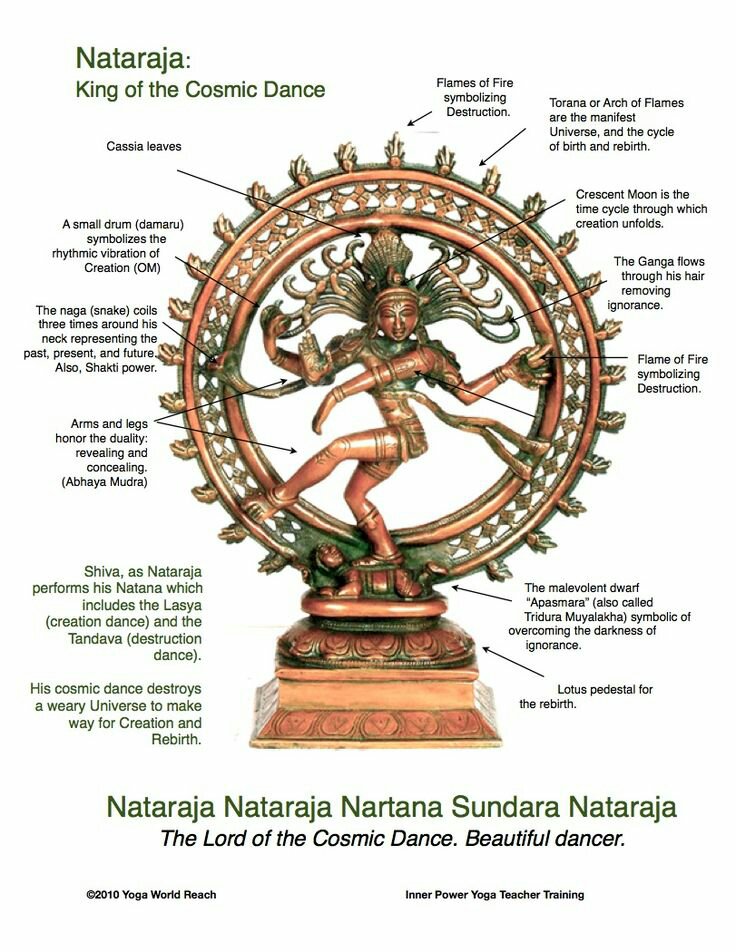
    Nadis are generally quantified at 72,000 in Human body. ( Chidambaram Nataraja temple roof had 72000 ‘

    The sanctum sanctorum housing the Nataraja statue is called the Chit Sabha or Ponnambalam. The five pillars of the Chit Sabha indicates the five senses. The roof of this Sabha contains 9 kalasas depicting the 9 dwaras (gateways) in the human body (namely 2 eyes, 2 nostrils, 2 ears, mouth, rectum, genitals). The roof has 22600 tiles denoting the number of times a person can breathe in a day. The tiles are fixed to the roof using 72000 nails depicting the number of nadis (

    Chidambaram Nataraja temple human body

    ‘Nadi is an important concept in Hindu philosophy, mentioned and described in the sources, some as much as 3,000 years old. Human body is claimed to have up to hundreds-of-thousands and even millions. The Shiva Samhita treatise on yoga states, for example, that out of 350,000 nadis 14 are particularly important, and among them, the three just mentioned are the three most vital.The three principal nadis are idapingala, and sushumnaIda (इडा, iḍā “comfort”) lies to the left of the spine, whereas pingala (पिङ्गल, piṅgala “orange”, “tawny”, “golden”, “solar”) is to the right side of the spine, mirroring the ida. Sushumna (सुषुम्णा, suṣumṇā “very gracious”, “kind”) runs along the spinal cord in the center, through the seven chakras. When the channels are unblocked by the action of yoga, the energy of kundalini uncoils and rises up the sushumna from the base of the spine.

    The nadis play a role in yoga, as many yogic practices, including shatkarmas, mudras and pranayama, are intended to open and unblock the nadis. The ultimate aim of some yogic practices are to direct prana into the sushumna nadi specifically, enabling kundalini to rise, and thus bring about moksha, or liberation.’Source . Wikipedia

    More to follow on Nadis,their attributes and functions.

    Multi Lingual Blog English Tamil Kannada Hindi Indian History Verified Vedic Thoughts Hinduism around The World Tamils History

  • Shiva Samhita Treatise On Yoga

    Shiva Samhita is one of those rare treatises about which, as usual in Hinduism,we know very little.


    Siva Samhita Treatise on Hatha Yoga
    Siva Samhita.


    This esoteric work is about the Hatha Yoga, and along with  Gheranda Samhita and Hatha Yoga Pradipika, forms the three important sources of Hatha Yoga.

    Cotents of Shiva Samhita
    Shiva Samhita Contents Image Credit.http://www.sohamyogastudio.org/


    Click on The Image to enlarge.


    This is work on Tantra Shastra.


    The authorship and date are unknown.


    Some ascribe this to the Seventeenth  Century.


    Shiva Samhita talks about the complex physiology, names 84 different asanas (only four of which are described in detail), describes five specific types of prana, and provides techniques to regulate them.

     It also deals with abstract yogic philosophy, mudrastantric practices, and meditation.

     It emphasizes that even a common householder can practice yoga and benefit from it.

    The first chapter mentions various methods of liberation and philosophical standpoints.

    The second chapter describes the nadis, the internal fire, and the working of the jiva.

    The third chapter describes the winds in the body, the importance of the guru, the four stages of the Yoga, the five elemental visualizations and four asanas in detail.

    The fourth chapter deals with the eleven mudras that can result in yogic attainments.

    The fifth chapter is the longest and most diverse—it describes obstacles to the liberation, the four types of aspirants, the technique of shadow gazing, the internal sound, the esoteric centers and energies in the body (such as the kundalini), the seven lotuses, the “king of kings of yogas”, and a global mantra.

    Shiva Samhita Download

    Shiva Samhita Heart Chakra Audio 

    Citation:

    4 Shared.com

    Sanskrit Sounds

    Enhanced by Zemanta