That Sanskrit is among the greatest of Languages, needs no explanation for people who know at least couple of languages besides Sanskrit .
Verbal Gymnastics, two languages I know, can do effectively, one Sanskrit and another Tamil.
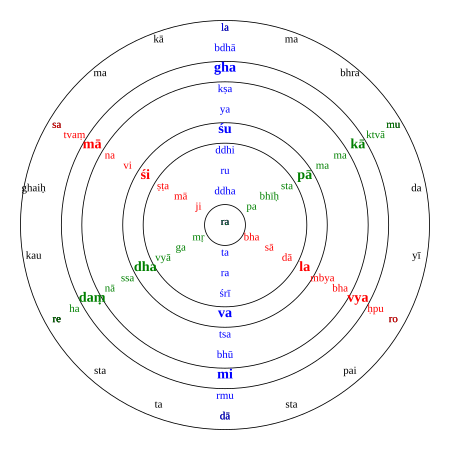
See Sanskrit drawing a wheel by a Verse.
”
Finally, it ends with a stanza (120th) in the extremely difficult “wheel design” known as cakra-vṛtta orcakrabandha,[18] wherein the syllables can be arranged in the form of a wheel with six spokes.
सत्वं मानविशिष्टमाजिरभसादालम्ब्य भव्यः पुरो
लब्धाघक्षयशुद्धिरुद्धरतरश्रीवत्सभूमिर्मुदा ।
मुक्त्वा काममपास्तभीः परमृगव्याधः स नादं हरे-
रेकौघैः समकालमभ्रमुदयी रोपैस्तदा तस्तरे ॥satvaṃ mānaviśiṣṭamājirabhasādālambya bhavyaḥ puro
labdhāghakṣayaśuddhiruddharataraśrīvatsabhūmirmudā /
muktvā kāmamapāstabhīḥ paramṛgavyādhaḥ sa nādaṃ hare-
rekaughaiḥ samakālamabhramudayī ropaistadā tastare //
In the figure, the first, second and third lines are read top-to-bottom along the “spokes” of the wheel, sharing a common central syllable, while the fourth line is read clockwise around the circumference (starting and ending where the third line ends), sharing every third syllable with one of the first three lines.
Further, the large syllables in bold (within the annuli), read clockwise, spell out śiśupālavadha-māgha-kāvyamidaṃ (“This is Śiśupālavadha, a poem by Māgha“).
More.
By the 114th stanza, this is taken to an extreme, with a celebrated example involving just one consonant:[17]
दाददो दुद्ददुद्दादी दाददो दूददीददोः ।
दुद्दादं दददे दुद्दे दादाददददोऽददः ॥dādado duddaduddādī dādado dūdadīdadoḥ
duddādaṃ dadade dudde dādādadadado’dadaḥ“Sri Krishna, the giver of every boon, the scourge of the evil-minded, the purifier, the one whose arms can annihilate the wicked who cause suffering to others, shot his pain-causing arrow at the enemy.”
The same canto also contains increasingly ingenious palindromes. The 44th stanza, for instance, has each line a palindrome:
वारणागगभीरा सा साराभीगगणारवा ।
कारितारिवधा सेना नासेधा वारितारिका ॥vāraṇāgagabhīrā sā sārābhīgagaṇāravā /
kāritārivadhā senā nāsedhā vāritārikā“It is very difficult to face this army which is endowed with elephants as big as mountains. This is a very great army and the shouting of frightened people is heard. It has slain its enemies.”[17]
The 88th stanza is a palindrome as a whole (syllable-for-syllable), with the second half being the first half reversed. This is known as pratiloma (or gatapratyāgata) and is not found in Bharavi:[18]
तं श्रिया घनयानस्तरुचा सारतया तया ।
यातया तरसा चारुस्तनयानघया श्रितं ॥taṃ śriyā ghanayānastarucā sāratayā tayā
yātayā tarasā cārustanayānaghayā śritaṃ
The 34th stanza is the 33rd stanza written backwards, with a different meaning. Finally, the 27th stanza is an example of what has been called “the most complex and exquisite type of palindrome ever invented”.[19] Sanskrit aestheticians call it sarvatobhadra, “perfect in every direction” — it yields the same text if read forwards, backwards, down, or up:
सकारनानारकास-
कायसाददसायका ।
रसाहवा वाहसार-
नादवाददवादना ॥
sakāranānārakāsa-
kāyasādadasāyakā
rasāhavā vāhasāra-
nādavādadavādanā.
sa kā ra nā nā ra kā sa kā ya sā da da sā ya kā ra sā ha vā vā ha sā ra nā da vā da da vā da nā (and the lines reversed) nā da vā da da vā da nā ra sā ha vā vā ha sā ra kā ya sā da da sā ya kā sa kā ra nā nā ra kā sa “[That army], which relished battle (rasāhavā) contained allies who brought low the bodes and gaits of their various striving enemies (sakāranānārakāsakāyasādadasāyakā), and in it the cries of the best of mounts contended with musical instruments (vāhasāranādavādadavādanā).”
Magha.
उपमा कालिदासस्य भारवेरर्थगौरवम् ।दण्डिन: पदलालित्यं माघे सन्ति त्रयो गुणाः ॥upamā kālidāsasya, bhāraverarthagauravam,daṇḍinaḥ padalālityaṃ — māghe santi trayo guṇāḥ”The similes of Kalidasa, Bharavi‘s depth of meaning, Daṇḍin‘s wordplay — in Māgha all three qualities are found.”
Citation.
http://en.wikipedia.org/wiki/Shishupala_Vadha
I shall be posting from Tamil as well.
I have read that the Ramayana has been written with only Consonants.
I think it is in Oriya,
Information please.