

I posted an article on the 18 Shakti Peetams by Adi Shankaracharya and followed it up with a Post on the The Shakti Peetam A Complete List.
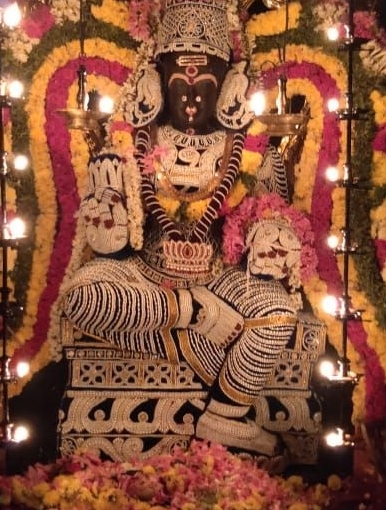
I received emails that complaining that I have included Kanchi Kamakshi as a Shakti Peeta in my 18 Shakti Peetas Post.
On posting The Shakti Peetams Complete List I have received more emails pointing out that I have not included the Kamakshi temple in the Post.
A writer who has Publisheda Book on the Shakti Peetams wanted to know the actual position of Kancipuram as a Shakti Peeta.

If one notices the complete list of the Shakti Peetas complete list, it will be noticed only Four places in the South have been named as Shakti Peetas.
1. The Bhagavathy temple in Kanyakumari,-This is thought to be situated in Yunnan province, China.
2.Sarvashail or Godavaritir, at Kotilingeswar temple on the banks of Godavari river near Rajamundry.
3. Srisailam in Shriparvat hills under Kurnool district. This is also thought to be in Shri Parvat, near Ladak, Jammu and Kashmir.
4. Shuchi, in a Shiva temple at Suchindrum 11 km on Kanyakumari Trivandrum road
This is based on Brahmanda Purana, one of the major eighteen Puranas, it mentions 64 Shakthi Peetha of Goddess Parvati in the Bharat or Greater India including present day India, Bangladesh, Nepal, Pakistan and Sri Lanka.
According to the manuscript Mahapithapurana (c. 1690 – 1720 CE), there are 52 such places. Among them, 23 are located in the Bengal region, 14 of these are located in what is now West Bengal, India, 1 in Baster (Chhattisgarh), while 7 are in what is now Bangladesh.
Rishi Markandeya composed the ‘Devi Saptashati’ or the seven hundred hymns extolling the virtues of the Divine Goddess at the shaktipeetha in Nashik. The idol is also leaning a little to the left to listen to the sages composition. The Saptashati or the “Durga Stuti” forms an integral part in the vedic form of Shakti worship.
Preserving the mortal relics of famous and respected individuals was a common practice in ancient India – seen in the Buddhist stupas which preserve the relics of Gautama Buddha. It is believed by some[citation needed] that these 64 peethas preserve the remains of some ancient female sage from whom the legend of Kali could have emerged and then merged with the Purusha – Prakriti (Shiva Shakti) model of Hindu thought..
The inclusion of more South Indian Temples is based on Adi Shankaracharya’s Astadasa Shakti Peetha Stotra,
”
Lankayam Shankari devi, Kamakshi Kanchika pure /
Pradyumne Shrinkhala devi, Chamunda Krouncha pattane //
Alampure Jogulamba, Sri shaile Bhramarambika /
Kolha pure Maha lakshmi, Mahurye Ekaveerika //
Ujjainyam Maha kali, Peethikayam Puruhutika /
Odhyane Girija devi, Manikya Daksha vatike //
Hari kshetre Kama rupi, Prayage Madhaveshwari /
Jwalayam Vishnavi devi, Gaya Mangalya gourika //
Varanasyam Vishalakshi, Kashmire tu Saraswati /
Ashtadasha Shakti peethani, Yoginamapi durlabham //
Sayamkale pathennityam, Sarva shatri vinashanam /
Sarva roga haram divyam, Sarva sampatkaram shubham //
Meaning
Goddess Shankari in Sri lanka, Kamakshi in Kanchipuram,
Goddess Shrinkhala in Pradyumna and Chamunda in Mysore
Goddess Jogulamba in Alampur, Goddess Brhamarabika in Sri Shailam,
Goddess Maha Lakshmi in Kolhapur and Goddess Eka veera in Mahur
Goddess Maha Kali in Ujjain Purhuthika in Peethika,
Goddess Girija in Odhyana and goddess Manikya in the house of Daksha,
Goddess Kama rupi in the temple of Vishnu, Goddess Madhevaswari in Allahabad,
The flame giving Goddess in Jwala muki and Mangala Gouri in Gaya.
Goddess Visalakshi in Varanasi, Goddess Saraswathi in Kashmir,
Are the 18 houses of Shakthi, which are rare even to devas.”
The Sati self-immolation was in the Himalayas and it seems logical that the Body parts were strewn all around the East and northeast of India.
Not that God is restricted by Space and time!
If we follow this logic, then Kanyakumari and the other three should not have been in the complete list of 52 Peetas as they are far down South.
We find that the Southern Temples, which are not in the original list,for example, Trincomale , Sri Lanka,do find a place in Shankaracharaya’s Sloka.
So if we go by the Puranas, Kanchi is not listed as a Shakti Peeta, while Adi Shankaracharya lists Kanchi Kamakshi as a Shakti Peeta.
http://ramanisblog.in/2013/10/15/eighteen-shakti-peeetams-by-adi-shankaracharya/
Source:
http://en.wikipedia.org/wiki/Shakti_Peethas
Related articles


please stop giving stupid answers. kali is a ferocious form of shakthi and she dint come to destroy our earth. in kanchi she is not kali she is kamakshi. ‘ka’ means saraswathi ‘maa’ means lakshmi so she is tripurasundari ok! then in the song of 18 mahasakthipeethas by adishankar prooves that kanchi is 2nd shakthi peeth of all shakthi peeth and yes as you told adishankaracharya established a srichakra not to tie her. it is for tying her anger caused by a set of people named ‘kabalikargal’ who killed maa’s devotees in front of her in the name of human sacrifice. Mr venkatakrishnan this is for you ok. please before posting conform and post.