Category: Islam

  • Ram Buddha Prophet’s Of Islam Holy Quran ?

    Ram Buddha Prophet’s Of Islam Holy Quran ?

    At times, I come across information that is startling and I can not not wish them away. It needs to be cross checked. Following is one such.Please share additional information.

    ‘Islamic traditions hold that the first Prophet of Islam and the progenitor of humanity, Hazrat Adam, descended on Sarandeep Island (now in Sri Lanka) after he was sent down from Heaven (after he ate the forbidden fruit at Eve’s urging). Since India is one of the oldest civilisations, many prophets may have been sent to guide humanity, Mufti Sadiq Mohiuddin of the department of fatwas of 135-year-old Jamia Nizamia Islamic University, told this correspondent.

    The Mufti told this correspondent that early Islamic personalities including Ibn Asakir and Allama Ibn Saad had mentioned in their sayings (Riwayat) that Adam had landed on Indian soil. Even the famous Arab traveller Ibn Batuta had mentioned in his travelogues of visiting Sarandeep island where the first prophet of Islam had descended from the Garden of Eden. Muslims believe that God had sent about 1.24 lakh prophets to all parts of the world.

    However, the names of only 25 prophets are mentioned in the Quran.
    Mufti Sadiq Mohiuddin pointed out that while Islamic scholars are of the view that India was the land of prophets, they were divided on whether Rama and Krishna were prophets of Islam.

    They may or may not have been prophets. We want to remain silent on the issue. But it is the duty of every Muslim to respect the religious personalities of other religions, he said. According to All-India Muslim Personal Law Board general secretary Abdur Raheem Qureshi, some Indian Islamic scholars believe Dhul-Kifl, one of the holy personalities mentioned in the Quran, refers to Gautam Buddha.

    There is no �p� sound in Arabic. Dhul Kifl means resident of Kifl or Kapil (Kapilavastu, where Buddha was born) Some scholars also hold that the Jain guru lord Mahavir was also a prophet.Islamic scholar Hafiz Shujat Hussain refers to the writings of the eminent thinker Moulana Tayyab Qasmi of Darul-Uloom Deoband, who had held that Rama and Krishna could also be prophets.

    We should give utmost respect to Hindu prophets as we give respect to prophets from Hazrat Adam to Hazrat Muhammad, including Hazrat Musa (Moses) and Hazrat Isa (Jesus).City Muslim scholars also quote from Subhatul Marjan Fi Tarikhe Hindustan, written by the Islamic scholar Allama Ghulam Ali Azad Bilgrami in Arabic, which describes India as the first domicile of Adam.In Ayodhya, the birth place of Rama, there is a long grave. This is said to be the burial place Adam’s son Prophet Hazrat Shish, Hafiz Shujat told this correspondent.’

    http://www.paklinks.com/gs/religion-and-philosophy/213985-ram-krishna-mentioned-quran-prophets.html

    Allah says (interpretation of the meaning):

    “Then the Shaytaan (Satan) made them slip therefrom (the Paradise), and got them out from that in which they were. We said: ‘Get you down, all, with enmity between yourselves. On earth will be a dwelling place for you and an enjoyment for a time’”

    [al-Baqarah 2:36].

    Despite that, the scholarly opinions concerning this matter differ.

    Some of them said: Adam came down in India and Hawwa’ came down in Jeddah.

    Al-Haafiz Ibn Katheer (may Allah have mercy on him) said:

    Al-Saddi said: Allah said (interpretation of the meaning): “Get you down, all” [al-Baqarah 2:36]. So they came down; Adam came down in India and the Black Stone and a handful of leaves from Paradise came down with him, and he scattered them in India, and a perfume tree grew, which is the origin of what comes from India of perfume from the handful of leaves that Adam brought down. Adam only took them because of his sorrow at leaving Paradise when he was expelled from it.

    ‘Imraan ibn ‘Uyaynah said, (narrating) from ‘Ata’ ibn al-Saa’ib, from Sa‘eed ibn Jubayr, from Ibn ‘Abbaas, who said: Adam came down from Paradise in Dahna, in the land of India.

    It was narrated that al-Hasan al-Basri said: Adam came down in India and Hawwa’ in Jeddah, and Iblees in Dastumeesaan a few miles from Basrah, and the serpent came down in Asbahaan. This was narrated by Ibn Abi Haatim.

    And Allah knows best.

    ADAM’S PEAK

    Jutting sharply skyward from the lush jungles of southwestern Sri Lanka is the 7362 foot (2243 meter) peak of Sri Pada, the ‘Holy Footprint’. Also called Adam’s Peak, the mountain has the unique distinction of being sacred to the followers of four of the world’s major religions: Hinduism, Buddhism, Christianity and Islam. Long before the development of these religions, however, the mountain was worshipped by the aboriginal inhabitants of Sri Lanka, the Veddas. Their name for the peak was Samanala Kanda; Saman being one of the four guardian deities of the island. For Hindus, the name of the mountain is Sivan Adi Padham, because it was the world-creative dance of the god Shiva that left the giant footprint (5 feet 7 inches by 2 feet 6 inches). According to Buddhist traditions from as early as 300 BC, the real print is actually beneath this larger marking. Imprinted on a huge sapphire, it was left by the Buddha during the third and final of his legendary visits to Sri Lanka. When Portuguese Christians came to the island in the 16th century they claimed the impression to be the footprint of St. Thomas who, according to legend, first brought Christianity to Sri Lanka.

    https://www.quora.com/Where-is-it-written-that-Prophet-Adam-came-from-India

    ,

    Join 4,576 other subscribers

    Rig Veda Inflenced Civilizations Outside India

    Date of Rig veda in Ramanisblog According to Ramanisblog, the date of the Rig Veda is subject to considerable debate, with modern scholarly estimates generally ranging between 2000 BCE to 1000 BCE[1]. However, Ramanisblog highlights that Hindu tradition considers the Vedas to be timeless and without a specific beginning[1]. Perspectives on Rig Veda Dating Ramanisblog…

    Keep reading

    Navavarana Pooja 1 Guru Stuthi

    Following in the Ai Generated transcript of the Navavarana Pooja Mantras . Recorded and sent to my Shishyas. This is being made public so that this secret knowledge is not lost to posterity. Those who want to be initiated may contact me through mail at ramanan50@gmail.com. Also they can contact through the comment column. If…

    Keep reading
  • Hurt Souls Should be Listened To, Kashmir Files

    Hurt Souls Should be Listened To, Kashmir Files

    Kashmir Files is neither a documentary nor a film in the conventional sense. Nor is it a propaganda film as many have you believe , for the Party in power at the center now and the Prime Minister are directly attacked.The film is A Narrative.

    A narrative that begins with a scene that numbs you, yet it is not gory. It portrays the helplessness of one, whom you know well behaves differently the way he does.What is left unsaid makes the impact.The story then,though it does not move away from the perspective of the individual,shifts to macro issues of Terrorism. It does not become preachy nor does it apportion blame on anyone directly.

    Those who had followed Kashmir issue in 1990, can vouch for the facts portrayed in the Kashmiri Files. The apathy of the Bureaucracy,the contempt with which the then Chief Minister and the Home minister of the Government of India treated the issue and the dilemma of the soldiers on whose orders to follow,their superior or the terrorists. How the decision makers in the Media did not,nor does it now,allow the facts to be made public, despite reporters filing the Facts. Cleverly manipulated history is presented as facts purveyed as Truth ,to students to instigate them. India’s past history sans Kashmir is cleverly presented to them.

    The performances are not performances,everyone lives the role and one can feel this. It is difficult to point out the best performance. Sheer characterisation of the University Professor makes Pallavi Joshi and her natural portrayal makes her effort stand out.

    And the narrative is not melodramatic.Mention must be made of the Music that sets the mood of the movie.Camera work is non intrusive and poignant.Editing is slick. Dialogues are punchy without being intentionally so.

    And of course, direction, a new way of film making that leaves now immersed without even allowing you to emote even; but leaves you with a lump in your throat.

    How insensitive and callous have we have been to the plight of our own? I felt ashamed. Holocaust happened because People remained quiet and let thugs take over.

    https://www.facebook.com/groups/348815736284882/permalink/729268778239574/

    May we not have another occasion for a film like this.

    Facts of Kashmir Files.
    ,

    Join 4,576 other subscribers
  • Recovery of True Hinduism, Acharya Maulana

    Recovery of True Hinduism, Acharya Maulana

    Interfaith Unity is one of the points by moderate(?)Islam and Pseudo Hindu Scholars and self styled secularists who want to justify Islam by comparing it to Hinduism. This they do by first acknowledging(!) the antiquity and the Truth contained in the Vedas and ends up saying that Islam is mentioned in Vedas, Muhammad is referred to in The Vedas. They talk about the Recovery of ‘True’ Hinduism.!

    Do they mean to say that if Islam or Prophet is not acknowledged or recognized, that system of Thought, Way of Living, philosophy Religion is not true?

    Validating Hinduism by Islam is like my declaring the Existence of my Great grandfather. Can anything be more silly than this?

    Another point is that to be secular, why should one should go beyond facts and justify out scriptures to others?

    And what is this Secularism? Deny other religions, especially Hinduism?

    To what end?

    To justify Islam? Why should you justify it if you believe it?

    And look at the pathetic attempt by secular historians who quote Acharya Maulana! Who gave the gentleman the title of Acharya? It needs minimum twelve years to study Vedas under a Guru, that too, the disciple leaving home and staying with the Guru. Reading some texts on Hinduism or of Hinduism does not make one an Acharya. Can one become a Maulana by reading Islamic Texts?

    If one has his faith, let him follow it, without disturbing others, Hindus or Non Hindus. Period.

    Don’t denigrate your religion by trying to justify it.

    I am providing the information that has spurred me to write. The title of the book is Now or Never!”: Inter-Faith Dialogue and the Recovery of ‘True’ Hinduism as Seen in the Writings of Acharya Maulānā Shams Navēd ‘Uthmānī ‘and it is found it jstor site, ‘ Link provided towards the close of the article. And who is this Acharya Maulana? https://www.jstor.org/stable/20837194?read-now=1&seq=1#page_scan_tab_contents

    Shams Naved Usmani (1931 – 26 August 1993) was an Indian Muslim scholar. He is known for his inter-faith dialogues. Born into the Usmani family of Deoband, Usmāni was an alumnus of the University of Lucknow and held the titles of Acharya and Maulana altogether.

    .. Usmāni studied Hindu scriptures. He has identified Noah as Manu. He has also asserted the fact that Vedas are divinely books, but have been corrupted, as the Islamic traditions hold belief about Injil and Torah. Usmāni suggests that Hindus have attributed wrong beliefs to Manu.According to Tabish Mehdi, “the results that came out of his studies, created an atmosphere of restlessness in the academic world”. His studies received a wide criticism from the academics of India.Usmāni held the titles of Acharya and Maulana altogether.
    Usmāni himself did not write any books. However, his anecdotes were collected and compiled by Abdullah Tariq. These works include Agar Abh Bhi Na Jāge To (transl. Now or Never). Usmāni died on 26 August 1993. He was survived by his wife Khadeja Naved Usmani.https://en.m.wikipedia.org/wiki/Shams_Naved_Usmani

    https://www.jstor.org/stable/20837194?read-now=1&seq=1#page_scan_tab_contents

  • Naivedya Prarthana Pradakshina Ahuthi in Pre Islamic Arabia

    Naivedya Prarthana Pradakshina Ahuthi in Pre Islamic Arabia

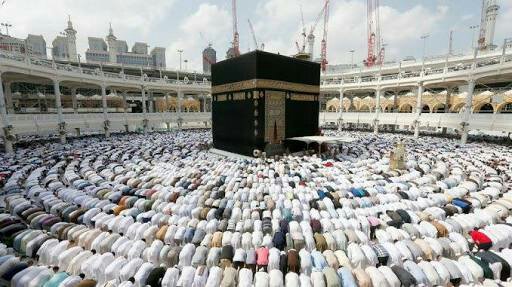
    I have written on the religious practices in Kaaba are similar to what is practiced in sanatana dharma, Hinduism.

    Vedic practices in Islam ,Kaaba

    Pre Islamic society borrowed the conceptsl of Hinduism either directly or through the Hitties/Sumeria.

    Prophet had destroyed 360 Idols in Kaaba.

    There were four Major Deities.

    Hubbol,

    Al-lat,

    Al-Uzza and

    Manat.

    (Will be writing on these Deities)

    Ghazni invaded and destroyed Somnath temple, believing that a an idol of Manat was spirited away to Somnath temple,India.

    I am quoting from Islamic source.

    My comments are in Itlalics..

    Some features of their worship of idols were:
    Self-devotion to the idols, seeking refuge with them, acclamation of their names, calling for their help in hardship, and supplication to them for fulfillment of wishes, hopefully that the idols (i.e., heathen gods) would mediate with Allâh for the fulfillment of people’s wishes.

    Performing pilgrimage to the idols, circumrotation round them, self-abasement and even prostrating themselves before them.

    This is Theertha yatra,pradakshina and prarthana of Hinduism.

    Seeking favour of idols through various kinds of sacrifices and immolation.

    ..

    Consecration of certain portions of food, drink, cattle, and crops to idols. Surprisingly enough, portions were also consecrated to Allâh Himself, but people often found reasons to transfer parts of Allâh’s portion to idols, but never did the opposite. To this effect, the Qur’ânic verses go:

    This is Naivedya and offering Aahuthi.

    “And they assign to Allâh a share of the tilth and cattle which He has created, and they say: ‘This is for Allâh according to their pretending, and this is for our (Allâh’s so-called) partners.’ But the share of their (Allâh’s so-called) ‘partners’, reaches not Allâh, while the share of Allâh reaches their (Allâh’s so-called) ‘partners’. Evil is the way they judge.” [6:136]

    Carrying favours with these idols through votive offerings of crops and cattle, to which effect, the Qur’ân goes:

    Hinduism offers cattle to deities even today.

    Dedication of certain animals (such as Bahira, Sa’iba, Wasila and Hami) to idols, which meant sparing such animals from useful work for the sake of these heathen gods. Bahira, as reported by the well-known historian, Ibn Ish, was daughter of Sa’iba which was a female camel that gave birth to ten successive female animals, but no male ones, was set free and forbidden to yoke, burden or being sheared off its wool, or milked (but for guests to drink from); and so was done to all her female offspring which were given the name ‘Bahira’, after having their ears slit. The Wasila was a female sheep which had ten successive female daughters in five pregnancies. Any new births from this Wasila were assigned only for male people. The Hami was a male camel which produced ten progressive females, and was thus similarly forbidden.

    ….

    The Arabs believed that such idols, or heathen gods, would bring them nearer to Allâh, lead them to Him, and mediate with Him for their sake, to which effect, the Qur’ân goes:

    “We worship them only that they may bring us near to Allâh.” [39:3], and

    “And they worship besides Allâh things that hurt them not, nor profit them, and they say: These are our intercessors with Allâh.” [10:18]

    in whatever Form you worship, all come to me
    -Bhagavad Gita.
    Akasaath pathitham ……sloka states,
    Just as water,whatever be its form,rivers,rivulets,rain…reaches the Ocean finally,whatever Gods/Forms you worship ,all of them reach Me…Krishna.
    This is recited thrice everyday by Brahmins while performing Sandhya vandana.

    Another divinatory tradition among the Arabs was casting of Azlam (i.e. featherless arrows which were of three kinds: one showing ‘yes’, another ‘no’ and a third was blank) which they used to do in case of serious matters like travel, marriage and the like. If the lot showed ‘yes’, they would do, if ‘no’, they would delay for the next year. Other kinds of Azlam were cast for water, blood-money or showed ‘from you’, ‘not from you’, or ‘Mulsaq’ (consociated). In cases of doubt in filiation they would resort to the idol of Hubal, with a hundred-camel gift, for the arrow caster. Only the arrows would then decide the sort of relationship.If the arrow showed (from you), then it was decided that the child belonged to the tribe; if it showed (from others), he would then be regarded as an ally, but if (consociated) appeared, the person would retain his position but with no lineage or alliance contract.

    This was very much like gambling and arrow-shafting whereby they used to divide the meat of the camels they slaughtered according to this tradition.

    Moreover, they used to have a deep conviction in the tidings of soothsayers, diviners and astrologers. A soothsayer used to traffic in the business of foretelling future events and claim knowledge of private secrets and having jinn subordinates who would communicate the news to him. Some soothsayers claimed that they could uncover the unknown by means of a granted power, while other diviners boasted they could divulge the secrets through a cause-and-effect-inductive process that would lead to detecting a stolen commodity, location of a theft, a stray animal, and the like. The astrologer belonged to a third category who used to observe the stars and calculate their movements and orbits whereby he would foretell the future. Lending credence to this news constituted a clue to their conviction that attached special significance to the movements of particular stars with regard to rainfall.

    The belief in signs as betokening future events, was, of course common among the Arabians. Some days and months and particular animals were regarded as ominous. They also believed that the soul of a murdered person would fly in the wilderness and would never rest at rest until revenge was taken. Superstition was rampant. Should a deer or bird, when released, turn right then what they embarked on would be regarded auspicious, otherwise they would get pessimistic and withhold from pursuing it.

    This is Prasna,Naimithika and Arul vaaku

    People of pre-Islamic period, whilst believing in superstition, they still retained some of the Abrahamic traditions such as devotion to the Holy Sanctuary, circumambulation, observance of pilgrimage, the vigil on ‘Arafah and offering sacrifices, all of these were observed fully despite some innovations that adulterated these holy rituals. Quraish, for example, out of arrogance, feeling of superiority to other tribes and pride in their custodianship of the Sacred House, would refrain from going to ‘Arafah with the crowd, instead they would stop short at Muzdalifah. The Noble Qur’ân rebuked and told them:

    “Then depart from the place whence all the people depart.” [2:199]

    Another heresy, deeply established in their social tradition, dictated that they would not eat dried yoghurt or cooked fat, nor would they enter a tent made of camel hair or seek shade unless in a house of adobe bricks, so long as they were committed to the intention of pilgrimage. They also, out of a deeply-rooted misconception, denied pilgrims, other than Makkans, access to the food they had brought when they wanted to make pilgrimage or lesser pilgrimage.

    They ordered pilgrims coming from outside Makkah to circumambulate Al-Ka‘bah in Quraish uniform clothes, but if they could not afford them, men were to do so in a state of nudity, and women with only some piece of cloth to hide their groins’

    This portion reminds me of Tantra ,Kaaplika worship of Shiva, Shakti.

    Reference and citation.
    https://islamreigns.wordpress.com/2015/12/17/religions-of-the-arabs/

  • Kaaba Ground Floor Plan Vedic Evidence Of  Vishnu Temple Complex

    Kaaba Ground Floor Plan Vedic Evidence Of Vishnu Temple Complex

    I have been researching Sanatana Dharma, Hinduism and its presence throughout the world.

    Over the last nine years, I have been able to find the presence of Sanatana Dharma in all world cultures and Religions.

    The basis for the findings are,

    Archeological remains,

    Etymology of the local ancient language/dialect of the region,

    References in Regional literature of the Area,Legends,

    Sociological practices,

    Tribal links to Vedic tribes,

    References in foreign literature,

    References in Indian Literature ,Puranas, Ramayana, Mahabharata in Sanskrit and references in Tamil,an ancient language of India,

    Epigraphs,

    The methodology used are,

    Astrodating,

    Carbon dating,

    Infrared studies,

    Plate tectonics,

    Geological characters,

    Thermal imaging,

    Ocean floor mapping,

    Sea level changes.

    Information is available in the web on all these and they are cross checked for veracity.

    Then I publish.

    But as the subject is vast and the time frame runs into thousands of years, I could scratch only the surface of Indian history.

    So, as and when I come across information of interest I verify facts and write.

    As this is an evolving process,many times information relating to a specific subject or temple or area,may be written at different times, about different aspects.

    So ,in this sense,the findings in this blog are not complete but are subject to updation,when new information comes through.

    Thus I have written on Arabia.

    About its,

    Hoary past,

    It’s ancient tribes,

    How it was related to Sanatana Dharma,

    How Tamil culture influenced them and how they influenced Tamils,

    How Indian God’s and Goddesses formed a part of Pre Islamic Arabia,

    How Sapthapathi was practiced there(Sapthapathi is a Hindu Marriage ritual),

    How Prophet’s Grandfather dug a well for Ganges,

    How Prophet’s uncle wrote a Poem on Shiva,Shiva Sruthi,

    How Mecca is a Hindu shrine,

    Shiva is worshipped in Kaaba,

    786 is Flipped OM,the most sacred Mantra of Hinduism….

    Now more evidence has come to light about the construction of Kaaba in Mecca.

    Prophet ordered the demolition of 360 Idols in Mecca.

    Most of them were Idols of Hindu Gods and Goddesses.

    Fearing one Idol might have been spirited away to Somnath,Ghazni Muhammad Destroyed the Somnath Temple in India.

    I will be writing details of Idols destroyed in Kaaba.

    Though the present evidence suggests that the Black Stone worshipped in Kaaba is a Shiva Kings,new evidence suggests that there could have been a huge Temple Complex,where now stands a truncated Kaaba.

    This temple housed 360 Deities.

    Lord Vishnu seems to have been another Primary Deity along with Shiva.

    The ground floorplan of Mecca is after the Vedic Principle of Temple Construction.

    It has eight points, representing the Devathas, Ashtadikpalakas.

    More on this .

    Above is the ground-plan of the hoary Kaba (Vishnu) temple constructed on the esoteric, Tantric, octagonal Vedic pattern in Mecca, Saudi Arabia.

    The eight corners occupied the images of the sentinel Vedic deities Indra, Varun, Yama, Agni, Vayu, Juber, Ishan and Nirut.

    The central square represents the present truncated Kaba, the central sanctum housing the image of the Reclining Vishnu “in labour”. Therefore this shrine is remembered even in convert, Islamic tradition as the Navel of the World.

    Its other name “Haram” is the Sanskrit term “Hariyam”, i.e. the shrine of Lord Vishnu alias Hari.

    Note the rectangular dent near the upper left corner of the central square. That marks the spot where the cylindrical Shivling stone is vertically partially embedded on the exterior of the southeast corner of the Kaba wall. Therefore perambulation of the Shivling involves circling the entire Kaba building. Even after conversion, Muslims feel compelled to observe the seven-fold ancient Vedic perambulation. The Kaba sanctum itself is always kept secretively shut to hide its Vedic interior.

    The seven-stories-high Kaba building is covered perpetually by a ghilaf, i.e. a black burqa, hiding its Vedic saffron-colour stone surface, lotus designs and what are believed to be Sanskrit inscriptions on the inner side of the sanctum walls. International pressure on the Saudi government should continue to be exerted by all countries until the Kaba is thrown open to all people as in pre-Muslim times.

    Reference and citation.

    http://hansadutta.com/VEDIC/Vishnu-statues.html