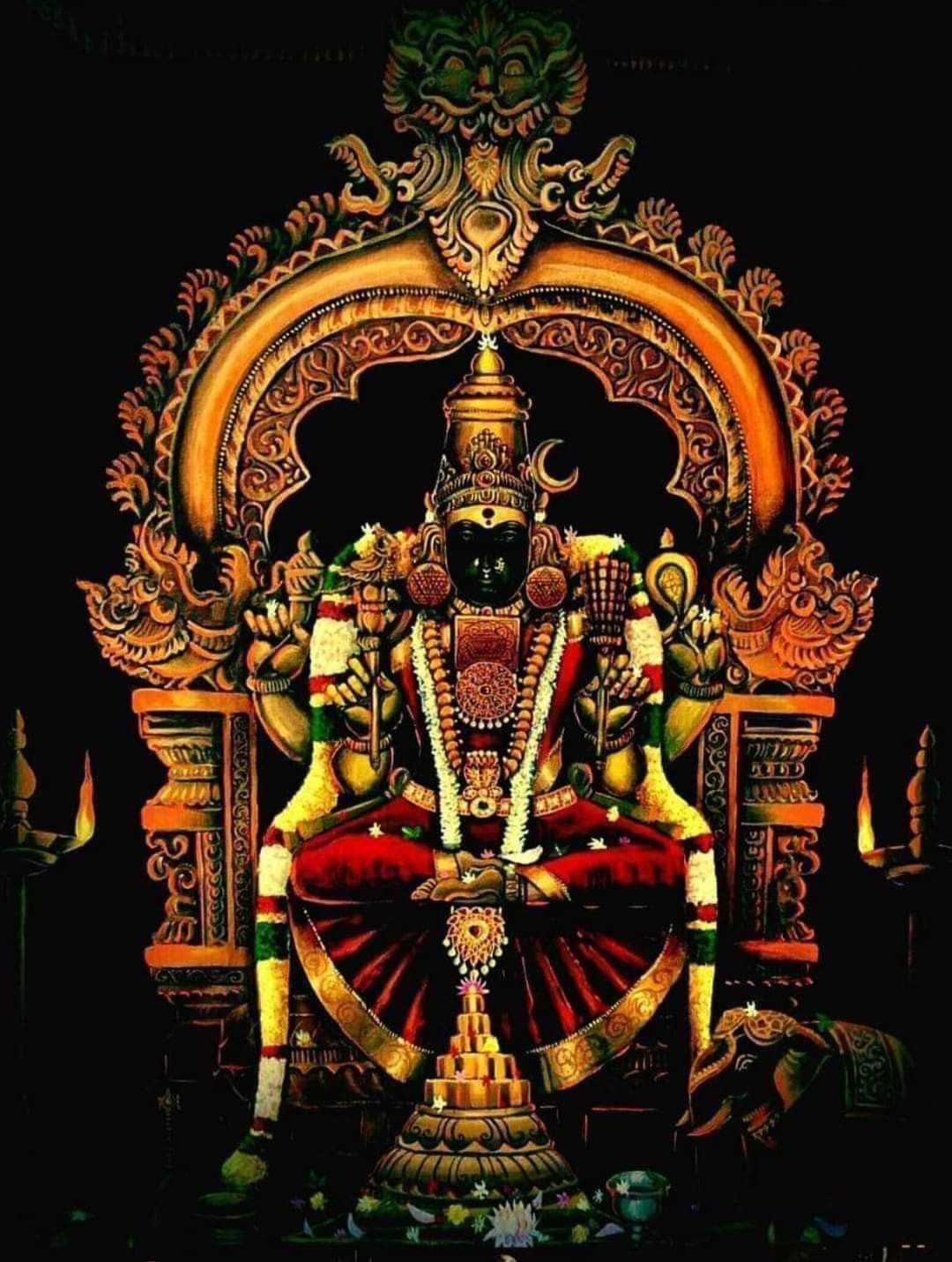
Tag: SRI Lalitha Sahasranama

  • The Sri Vidya Article I did not Write How It Came into Being?

    The Sri Vidya Article I did not Write How It Came into Being?

    # I am aware what I am writing below may make one wonder about my Sanity. Yet I am doing it as I want to know the answer.

    Even though I teach on Spirituality, I am essentially an Agnostic and will not accept anything easily. This beats me.I have checked all possible sources from where the article I could have come from , Article drafts,Translation history,Published articles , scoured my mobile storage, all my Drives.. Of No Avail.

    I have been conducting Sri Lalitha Sahasranamam , Sri Vishnu Sahasranamam , Soundaryalahari ,Abhirami anthadi, Vedic Sukta and Sundarakandam interpretation classes for over a year.
    There have been some unexplained events over the past three days.
    About two days ago, I was instructed to share some information with some selected students , which I did.
    I woke up at about 545 AM IST this morning( 1September 2023) and had an urge to look at my mobile . In the morning, I usually look at the Mobile after cup of coffee.
    The following article on Sri Vidya in Tamil was found on mobile lock screen.
    I didn’t write this. Though I have fair knowledge of Sri Vidya Upasna some information found in the article was new to me.The podcast attached to the article returns with 404!, Not found!
    The information in the article is very informative, :however typos and grammatical errors are also found in some places.
    I would be very grateful if the devs would let me know about this.
    Below is the article, translated from the original article in Tamil.

    The translated Article. Translation by Yandex Translate. I have not attempted to proof read even! It was deliberate.

    The Article.

    Primary source,
    Lalitha Sahasranama.
    Some of these texts are listed below –
    Kamakala Vilasam
    Tantraraja Tantra
    Tripurana Tantra
    Srividyarnava Tantra
    Dakshinamurthy Samhita
    Gandharva Tantra
    Eternal shodashikarnava
    Yogini Hrudaya
    Mother Mahamaya is the one who covers the world with the veil of ignorance, removes the veil of mercy and makes the whole game of creation.
    It’s a cosmic game she does for God, her Leela.Her play can be Seen in the Moon.
    The moon of that space is called Chitakasa Chandrika.
    Sources of Sri Vidya.

    Tantric texts such as Rudra Yamala explain Srividya. The Kadgagamala Stotram is a map and worship of the Sri Chakra.
    . In addition to this, many of the oral traditions have Sri Kula texts as collections or as part of the mantra Shastra texts, such as the mantra mahodati, the mantra maharnava and the Sakta texts.
    Through meditation, one’s consciousness merges into the object of meditation and perceives the Atman.
    The difference between the meditator and the object of meditation is the state of dissolution, which is called samadhi or sayujya.
    During meditation one also notices his own presence, different Envelopes of consciousness.

    There are five Kosas: Annamaya (body), pranamaya (life-being), Manomaya (mind), vignanamaya (intellect-knowledge) and Anandamaya (causality – Bliss).
    The first is blunt, the next three are subtle, and the fifth is causal.
    The God of reason dwells in all beings with his consort Maya. She hides the formless form of the divine Brahman.
    In Sadhana one himself (by performing mantra JaPa) makes the sound sound in a rhythm, with vibrations of his nadis and breathing.
    This can create a deep impression.
    This way of connecting the individual with the universe is called Mantra yoga.

    There are six centers (chakras).Kundalini is said to have initially curled up in Muladhara.
    Shes a mother. She also crosses these rivers from the Mooladhara at the base of the spine to the Ajna on the forehead, and then to the crown of the head (Sahasrara), where the personal consciousness completely merges with the cosmic consciousness.
    When you focus on the unity of Shiva and Shakti, it unites Saivism and Sakta. (Iconus)
    If one meditates on Devi as a manifestation of Brahman, the cosmic soul, it is Advaita.
    Because the spells are magically locked, it’s magical
    Goddess Lalita Sahasranama begins to be called the mother, mother of prosperity.

    The Lalita Sahasranama describes the goddess Lalita in two short phrases thus. Devotee.
    He provides everything for the benefit of the devotees.
    She is the universal mother.
    Goddess Lalita Sahasranama begins to be called the mother, mother of prosperity.
    “Sri Mata, Maharajne”
    Sri Vidya, the wisdom of Prosperity, offers the opportunity for Prosperity in this world through the shakuna Upasana and the Nirguna Upasana.
    Sri Vidya combines wisdom, devotion, karma and Rajayoga.
    Listen to the latest episode of my podcast: Kshetra, what is a holy place? Sri Lalitha Sahasranama shlokam78 https://anchor.fm/ramanispodcast/episodes/What-is-Kshetra-Sacred-Place-Sri-Lalitha-Sahasranama-Sloka-78-e2626em

    , , ,

    Join 4,576 other subscribers
  • Sri Lalitha Sahasranama Chanting Poorva Bhaga

    Sri Lalitha Sahasranama Chanting Poorva Bhaga

    Join 4,576 other subscribers

    Lalitha Sahasranama

    The Lalitha Sahasranama is a sacred Hindu text that consists of 1,000 names of the goddess Lalitha or Tripurasundari. It is considered one of the most powerful chants in Hinduism and is widely recited by devotees seeking the blessings and grace of the goddess.

    The Lalitha Sahasranama is found in the Brahmanda Purana, and it is believed to have been revealed by Lord Hayagriva, the avatar of Lord Vishnu. Each name in the Lalitha Sahasranama signifies a specific attribute or aspect of the goddess Lalitha Devi.

    Reciting or listening to the Lalitha Sahasranama is believed to bestow numerous benefits, such as spiritual upliftment, protection from negative influences, and fulfillment of desires. It is also believed to cleanse the mind and remove obstacles on the spiritual path.

    The Lalitha Sahasranama is often performed as a sacred chant, and it is considered auspicious to chant it during Navaratri, a nine-night festival dedicated to the divine feminine energy. Many devotees also recite the Lalitha Sahasranama as a form of daily prayer or meditation.

    If you are interested in chanting or learning more about the Lalitha Sahasranama, there are many resources available online and in books that provide the complete text and explanations of the various names and their meanings.

    Sri Vidya Mantra Tantra Vidyas Sources Details

    Sri Vidya is that which grants Knowledge and Prosperity or Knowledge of Prosperity.

    As Knowledge that liberates the Soul it has no equal.

    The special feature is that it grants both prosperity and Liberation n the after Life, nay, Liberates one from the cycle of births and deaths.

    In two short phrases Lalitha Sahasranama describes…

    Keep reading

    Sri Vidya Tripura Sundari Upasna Maha Shoda Nyasa

    Nyasa is a ritual where the individual touches various parts of the body with specific Mantras to purify these parts.

    In Tripurasundari Upasana, Sri Vidya as well, the performing of the ritual is mandatory.

    I have been hunting down for information on these texts and I mentally vowed six months ago. to start writing on…

    Keep reading
  • Sri Lalitha Sahasranama Poorvaanga 19 to 31 English Lecture

    Sri Lalitha Sahasranama Poorvaanga 19 to 31 English Lecture

    Sri Lalitha Sahasranama Poorvaanga Slokas 19 to 31.

    A principal text of Shakti worshipers, it describes the goddess’ various attributes in the form of names organized in a hymn. This sahasranama is used in various modes of worship of the Divine Mother such as parayana (recitations), archana, and homa. A different but less popular version[2] of the Lalita Sahasranama can also be found in the purva bhaga of the Narada Purana. The names are organized as hymns, or stotras, but are often broken into mantras to represent all 1000 names. Therefore, the Sahasranama can be chanted in stotra form, or namavali form. The Lalita Saharanama is one of the only sahasranamas that has exactly 1000 names without repetition, an aspect which cannot be seen in other Sahasranamas of gods like Vishnu, Shiva (where the total names are either lesser or more than 1000).

    Generally, sahasranamas use the artifice of adding words like tu, api, ca, and hi, which are conjunctions that do not necessarily add to the meaning of the name except in cases of interpretation. The Lalita Sahasranama does not use any such auxiliary conjunctions and is unique in being an enumeration of holy names that meets the metrical, poetical and mystic requirements of a sahasranama by their order throughout the text.

    Etymologically, Lalita means “She Who Plays”. In its root form, the word Lalita means “spontaneous” from which the meaning “easy” is derived and implicitly extends to “play”.

    Get new content delivered directly to your inbox.

    Citation. https://en.m.wikipedia.org/wiki/Lalita_Sahasranama

    Navaratri Puja 4,Days 7-9 Saraswathi,Vijaya Dashami Text Audio.

    Day 7-Bhavani.     Bhavani. Bhavani Bhujangam. Shadathara pangeruham, anthar virajath,Sushumnantharalethi thejollasanthim,Sudha mandalam dravayanthim pibanthim,Sudha moorthy meede chidananda roopam. 1 Jwalath kodi balarka bhasarunangim,Sulavanya srungara lokabhiramam,Mahapadma kinjalka madhye virajat,Trikone nishannam bhaje sri Bhavanim. 2 Kwanath Kinkini nuporoth…

    Keep reading
  • Sri Lalitha Sahasranama Nyasa Part 1

    Sri Lalitha Sahasranama Nyasa Part 1

    Sri Lalitha Sahasranama Nyasa Explained Part

    Sri Lalitha Sahasranama Nyasa Basics explained. This forms the first part on Nyasa from my class on Sri Lalitha Sahasranama.

    Aghora Pasupatha Homa Evil Eye Protection Mukthi

    Removal of Evil eye, Protection from forces that hinder Spiritual development. Protection from Black magic,Animals. Increases self confidence and self assurance. Clarity of thought.. Above all,Mukthi and Gnana are facilitated.

    Rig Veda Inflenced Civilizations Outside India

    Date of Rig veda in Ramanisblog According to Ramanisblog, the date of the Rig Veda is subject to considerable debate, with modern scholarly estimates generally ranging between 2000 BCE to 1000 BCE[1]. However, Ramanisblog highlights that Hindu tradition considers the Vedas to be timeless and without a specific beginning[1]. Perspectives on Rig Veda Dating Ramanisblog…

    Navavarana Pooja 1 Guru Stuthi

    Following in the Ai Generated transcript of the Navavarana Pooja Mantras . Recorded and sent to my Shishyas. This is being made public so that this secret knowledge is not lost to posterity. Those who want to be initiated may contact me through mail at ramanan50@gmail.com. Also they can contact through the comment column. If…

    Join 4,576 other subscribers