Tag: Solar Dynasty

  • Pandavas Kauravas Ramas Ikshwaku Dynasty

    There are, according to Puranas and Ithihasas Ramayana and Mahabharata there are two dynasties.

    One is the Inshwaku dynasty to which Lord Rama belongs.(Solar Dynasty)

    Another is Chandra Dynasty to which the Pandavas and Kauravs belong.( Lunar Dynasty)

    Ikshwaku (Ramayana) and Mahabharata Dynasty.

    familytree-_chandravansh

    Click on the Image to enlarge.

    The Kurus/Chandra dynasty is from Budha, Purururava.

    The point is in the above lineage you shall find the descendants of Ikshwaku/Rama fought along side the Kauravas and while Bhima defeated Dirghayaghna, Abhimanyu killed  Vrishdvala!


    There are two issues here.

    One is that Ramayana took place in Treta Yuga , thousands of years before Mahabharata war in Dwapara Yuga.

    How come the descendants of Ishwakhu fought with the Kauravas in Dwapara Yuga?

    And I have written earlier that Lord Rama’s death preceded Krishna’s  by a mere 250 Years!

    I have replied to that in my post Ramas death precedes Krishnas 250 years.

    Are we missing the history here and are there some Kings list of Ikshwaku missing?

    Though the lineage of Ikshwaku is provided in the Mahabharataby Vyasa, there seems to some thing missing in the Kings List as it can not account for thousands of years.

    Readers may contribute.

    Might be there are some missing links who ruled during Yuga Sandhi, the hiatus between the end of one Yuga and the beginning of another Yuga and the Ikshwaku Kings ruled in that period.

    But the Universe is in hibernation in Yuga Sandhi!

    Other wise the list is perfect.

    Another important point is Mahabharata states that Ikshwaku is considered to be elder brother of one of the daughters of Manu and she got married into Chandra Vamasa.

    ‘Mahabharata mentions the founder king Ikshwaku as a son of the great patriarch Manu. thus we have at Mbh.1.75:- Manu begat ten children namedVena, Dhrishnu, Narishyan, Nabhaga, Ikshvaku, Karusha, Saryati, the eighth, a daughter named Ila, Prishadhru the ninth, and Nabhagarishta, the tenth. Among this, princess Ila is the founder of Aila dynasty which later expanded into Puru, Bharata and Kuru linages in which the Kauravas and Pandavas are born. Thus Mahabharata consider Ikshwaku as an elder bother of Ila. It indirectly gives the impression that the Ikshwakus were older than the Ailas.’

    Source .http://ancientvoice.wikidot.com/article:ikshwaku-kings-in-mahabharata#toc5

    Rama’s Dynasty ends.

    ‘Soorya Vamsa.
    Sree Maha Vishnu
    Brahma
    Mareechi
    Kasyapa, his wife– Aditi.
    Soorya (Sun), his wife– Sanjna.
    Vaivasvsvata Manuvu, his wife– Sraddha.

    Ikshvaaku Ilaa(lady) Saryaati Subhaaga
    (later transformed (grandson)
    into Sudyumna)

    Grand son son Chyavana.
    Kaakutsa
    Ambareesha.
    Kaakutsa’s
    16th descendant
    Maandhaatha.
    Maandhaatha wife Bindumati
    He got three sons and 50 daughters
    Elder son Purukutsu
    Purukutsu’s 7th descendant Trishanka
    Trishanka’s son Harischandra
    Harischandra’s 8th descendant Sagara
    Sagara’s grand son Amsumanta
    Amsumanta’s grand son Bhageeratha
    Bhageeratha’s 5th descendant Rutuparna
    Rutuparna’s 6th descendant Khatvanga.
    Khatvanga’s grand son King Raghu.
    King Raghu’s grand son King Dasaradha
    King Dasaradha’s four sons are
    SriRama, Lakshmana, Bharata, Satrughna.
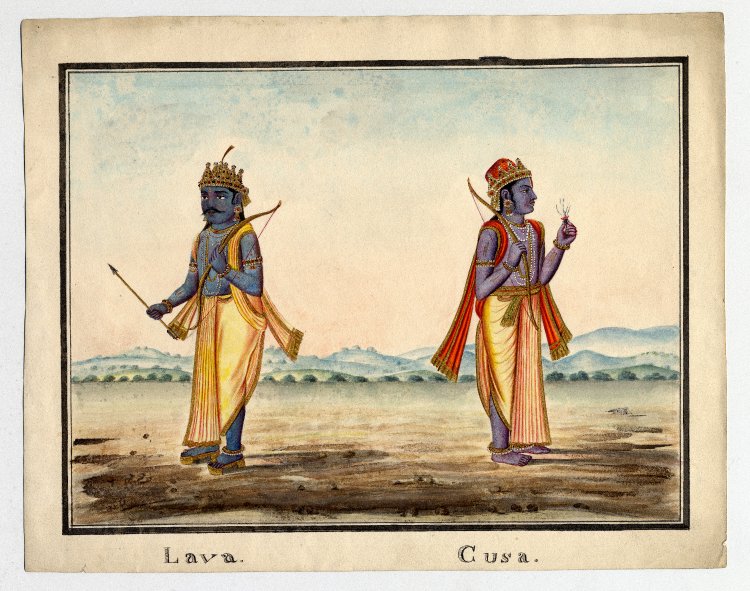
    Sri Rama’s sons, Lava and Kusa.
    Lakshmana’s sons Angada, Chandra keta.
    Bharata’s sons Daksha,Pushkala
    Satrughna’s sons Subaahu, Srutasena.

    Because all the above kings descended from the origin,Soorya (Sun), it is called Soorya Vamsa. As far as we know, in Soorya Vamsa, the last king in Tretayuga, was Sreerama Chandra. Later,in Dvaapara Yuga, there were Pandavas,Kouravas, Sri Krishna etc. Kings. They belong to Chandra Vamsa Kings'( Udyoga Parav of Mahabharta by Vyasa)’

    Source.

    http://www.telugubhakti.com/telugupages/monthly/mahabharat/content504b.htm

  • Lunar Dynasty India Chandra Vamsa of Mahabharata List

    Indian legends speak of two dynasties that ruled India, Surya, Solar and Chandra Vamsa, Lunar Dynasty.

    Lord Rama belonged to Ikshvaku of Surya,Solar Dynasty while the Kauravas and Pandavas belonged to Lunar Dynasty or Chandra Vamsa.

    However, Vivaswan, the father of Vaivaswatha Manu of Solar Dynasty has been identified as Surya Deva (The Sun).

    Chandra is said to to be a son of Atri Maharshi, (a son of Brahma) or of the ocean (Ksheera Sagara Mathanam).

    Chandra’s son Budha married Ila the daughter of Vaivaswata Manu and their son Pururavas inherited Pratishthanapura.

    Both these dynasties are related.

    The Tamil Dynasty of Cholas descended from the Solar Dynasty of Rama while Pandyas from the Chandra Vamsa, Lunar Dynasty.

    Chandra Vamsa .jpg
    Chandra Vamsa , Lunar dynasty of India. Click to enlarge.
  • Tamil Chola Kings Descendants of Manu Rama

    Tamil Chola Kings Descendants of Manu Rama

    If there is one One culture ,One advanced civilization that matches the Sanatana Dharma, it is the Tamil Culture, Literature .


    It has been in existence for such a long period that the Vedas and Puranas quote Tamil language,Culture,Spices,Pearls,Elephant Tusks, Tamil Scholars.


    Chola Dyansty Time Line.png
    Chola Dyansty Time Line.


    Valmiki has written a Tamil Classic,Vanmikar Arupthu,Vlmiki’s Sixty, a work dealing with practical life and Philosophy.


    Ramayana describes the princes from Tail Kingdom being present in Sita’s Swamvar.


    Mahabharata speaks similarly on Draupadi’s Swayamvar.


    Chera King Udiyan Chralathan fed both the Panadava and kaurava Armies during the Mahabharata War.


    The Pandya King fought along with the Pandavas as the Pandya Princess was married to Arjuna.


    Krishna  married a Pandyan Princess,Pandyah, Megasthanes says and had a daughter through her.


    Arjuna married a Pandya Princess and had a son Babruvahana, who was the only person who killed Arjuna,that Arjuna was revived is another matter.


    In its turn Tamil quotes extensively the Vedas.


    A King Sibi was the ancestor of Rama.


    There are numerous references  that speak of the close relationship of the South Dravida with the Sanatana Dharma.


    I have posted extensively on this in posts where it is warranted(Under Hinduism/Tamils)


    I have posted an article, based on archeological, geographical evidence that Lord Rama’s ancestor Vaivaswatha Manu migrated from the South to Ayodhya to found  his kingdom.


    Shiva with his son Ganesha left by the Arabian sea towards the middle east.


    Now let us consider the following .


    Tamil People settlement dates back to Palaeolithic Age.


    That is Prehistoric Age, 1,510,000 BCE until around 3000 BCE.


    A discovery of a rare fossilized baby brain in Viluppuram district, by a team of archeologists was reported in April 2003, It is estimated to be about 187,000 years – 200,000 years or older.

    Then came the Neolithic and Iron Ages.


    Considering the fact that Sibi and manu Needi were Cholas and are quoted by extensively by Puranas and Tamil Literature, there is definitely a possibility that the Cholas descended from the  Solar Dynasty.


    Cross checking with the Thirvalangadu Copperplate, the Dynasty of the Tamil Kings are traced back to Solar Dynasty.


    Genealogy from the Chola Inscriptions.


    • Manu
    • Ikshvaku
    • Vikukshi
    • Puranjaya
    • Kakutstha
    • Kakshivat
    • Aryaman
    • Analapratapa
    • Vena
    • Prithu
    • Dhundhumara
    • Yuvanasva
    • Mandhatri
    • Muchukunda
    • Valabha
    • Prithulaksha
    • Parthivachudamani
    • Dirghabahu
    • Chandrajit
    • Sankriti
    • Panchapa
    • Satyavrata
    • Rudrajit
    • Sibi
    • Marutta
    • Dushyanta
    • Bharata
    • Cholavarman
    • Rajakesarivarman
    • Parakesarin
    • Chitraratha
    • Chitrasva
    • Chitradhanvan
    • Suraguru (Mrityujit)
    • Chitraratha
    • Vyaghraketu
    • Narendrapati
    • Vasu (Uparichara)
    • Visvajit
    • Perunatkilli
    • Karikala
    • Kochchengannan

    Genealogy from the Purana Timeline.


    • Eri Oliyan Vaendhi C. 3020 BCE
    • Maandhuvaazhi C. 2980 BCE
    • El Mei Nannan C. 2945 BCE
    • Keezhai Kinjuvan C. 2995 BCE
    • Vazhisai Nannan C. 2865 BCE
    • Mei Kiyagusi Aerru C. 2820 BCE
    • Aai Kuzhi Agusi Aerru C. 2810 BCE
    • Thizhagan Maandhi C. 2800 BCE
    • Maandhi Vaelan C. 2770 BCE
    • Aai Adumban C. 2725 BCE
    • Aai Nedun jaet chozha thagaiyan C. 2710 BCE
    • El Mei Agguvan a.k.a. Keezh nedu mannan C. 2680 BCE
    • Mudiko Mei Kaalaiyam Thagaiyan C. 2650 BCE
    • Ilangok keezh kaalaiyan thagaiyan a.k.a. Ilangeezh nannan C. 2645 BCE -start of Kadamba lineage by his brother Aai Keezh Nannan
    • Kaalaiyan gudingyan C. 2630 BCE
    • Nedun gaalayan dhagayan C. 2615 BCE
    • Vaengai nedu vael varaiyan C.2614 BCE
    • Vaet kaal kudingyan C. 2600 BCE
    • Maei Ila vael varaiyan C. 2590 BCE
    • Sibi Vendhi C. 2580 BCE
    • Paru nonji chaamazhingyan C. 2535 BCE
    • Vaeqratrtri chembiya chozhan C. 2525 BCE
    • Saamazhi chozhiya vaelaan C. 2515 BCE
    • Uthi ven gaalai thagan C. 2495 BCE
    • Nannan that kaalai thagan C. 2475 BCE
    • Vel vaen mindi C. 2445 BCE
    • Nedun jembiyan C. 2415 BCE
    • Nedu nonji Vendhi C. 2375 BCE
    • Maei Vael paqratrtri C. 2330 BCE
    • Aai Perun thoan nonji C. 2315 BCE
    • Kudiko pungi C. 2275 BCE
    • Perun goep poguvan C. 2250 BCE
    • Koeth thatrtri C. 2195 BCE
    • Vadi sembiyan C. 2160 BCE
    • Aalam poguvan C. 2110 BCE
    • Nedun jembiyan C. 2085 BCE
    • Perum paeyar poguvan C. 2056 BCE
    • Kadun jembiyan C. 2033 BCE
    • Nedun kathan C. 2015 BCE
    • Paru nakkan C. 1960 BCE
    • Vani sembiyan C. 1927 BCE
    • Udha chira mondhuvan C. 1902 BCE
    • Perun kaththan C. 1875 BCE
    • Kadun kandhalan C. 1860 BCE
    • Nakka monjuvan C. 1799 BCE
    • Maarko vael Maandhuvan Aaththikko C. 1786 BCE
    • Musukunthan Vaendhi C. 1753 BCE
    • Peru nakkan Thatrtri C. 1723 BCE
    • Vaer kaththan C. 1703 BCE
    • Ambalaththu Irumundruvan C. 1682 BCE
    • Kaari mondhuvan C. 1640 BCE
    • Vennakkan Thatrtri C. 1615 BCE
    • Maarko chunthuvan C. 1565 BCE
    • Vaer parunthoan mundruvan C. 1520 BCE
    • Udhan kaththan C. 1455 BCE
    • Kaariko sunthuvan C. 1440 BCE
    • Vendri nungunan C. 1396 BCE
    • Mondhuvan Vendhi C. 1376 BCE
    • Kaandhaman C. 1359 BCE
    • Mundruvan Vendhi C. 1337 BCE
    • Kaandhaman C. 1297 BCE
    • Monjuvan Vendhi C. 1276 BCE
    • Ani sembiyan C. 1259 BCE
    • Nungunan Vendhi C. 1245 BCE
    • Maarkop perum Cenni C. 1229 BCE
    • Monjuvan Nanvendhi C. 1180 BCE
    • Kop perunar chenni C. 1170 BCE
    • Monthuvan jembiyan C. 1145 BCE
    • Narchenni C. 1105 BCE
    • Caet chembiyan C. 1095 BCE
    • Nakkar chenni C. 1060 BCE
    • Parun jembiyan C.1045 BCE
    • Venjenni C. 998 BCE
    • Musugunthan C. 989 BCE
    • Maarkop perun jembiyan C. 960 BCE
    • Nedunjenni C.935 BCE
    • Thatchembiyan C. 915 BCE
    • Ambalaththu iruvaer chembiyan C. 895 BCE
    • Kaariko chenni C. 865 BCE
    • Venvaer chenni C. 830 BCE
    • Kaandhaman, C. 788 BCE
    • Kaandhalan C. 721 BCE
    • Caetchenni C. 698 BCE
    • Vani nungunan C. 680 BCE
    • Mudhu sembiyan Vendhi C. 640 BCE
    • Peelan jembiyach chozhiyan C. 615 BCE
    • Maeyan gadungo C. 590 BCE
    • Thiththan C. 570 BCE
    • Perunar killi Porvaiko C. 515 BCE
    • Kadu mundruvan C. 496 BCE
    • Kopperunjozhan C. 495 BCE
    • Narkilli Mudiththalai C. 480 BCE
    • Thevvan go chozhan C. 465 BCE
    • Naran jembiyan C. 455 BCE
    • Nakkam peela valavan C. 440 BCE
    • Iniyan thevvan jenni C. 410 BCE
    • Varcembiyan C. 395BCE
    • Nedun jembiyan C. 386 BCE
    • Nakkan aran jozhan C. 345 BCE
    • Ambalathu irungoch chenni C. 330 BCE
    • Perunar killi C. 316 BCE
    • Kochaet Cenni C. 286 BCE
    • Cerupazhi Erinda Ilanjaetcenni, C. 275 BCE
    • Nedungop perunkilli C. 220 BCE
    • Cenni Ellagan C. 205 BCE
    • Perun gilli C. 165 BCE
    • Kopperun jozhiyav ilanjaetcenni C. 140 BCE
    • Perunar killi Mudiththalai ko C. 120 BCE
    • PerumpootCenni C. 100 BCE
    • Ilam perunjenni C. 100 BCE
    • Perungilli Vendhi aka Karikaalan I C. 70 BCE
    • Nedumudi Killi C. 35 BCE
    • Ilavanthigaipalli Thunjiya Maei Nalangilli Caet Cenni, C. 20 BCE
    • Aai Vaenalangilli C. 15 BCE
    • Uruvapakraer Ilanjaetcenni, C. 10 – 16 CE
    • 16 CE – 30 CE Kingdom ruled by a series of Uraiyur chieftains
    • Karikaalan II Peruvalaththaan, C. 31 CE
    • Vaer paqradakkai Perunar killi, C. 99 CE
    • Perun thiru mavalavan, Kuraapalli Thunjiya C. 99 CE
    • Nalangilli C. 111 CE
    • Perunarkilli, Kula mutrtraththu Thunjiya C. 120 CE
    • Perunarkilli, Irasasuya vaetta C. 143 CE
    • Vael kadunkilli C. 192 CE
    • Kochenganaan C. 220 CE
    • Nalluruththiran C. 245 CE

    Many scholars dispute this despite evidence from from the Puranas and Chola Inscriptions.


    Purana evidence is disputed despite the fact the geographical features mentioned in them, Kings reign tally with other verified facts and accredited by archeology.


    Chola inscription are also not due credence because it happens to be excavated mostly by Indians and it does not agree with the concocted story of Aryan Invasion Theory.


    What a scholarship!


    The fact that Ramas’ ancestor was from the South, the Floods mentioned in the Tamil Classics tally with this event, I am of the opinion that the Cholas descended from te common parentage of Lord Rama.


    One group migrated to North, another towards  the Middle-east and yet another survived and stayed back in the south.


    * I will be tracing the Pandya and Chra Dynasty as well.


    Citations.


  • 71 Generations Lord Krishna Family Tree

    71 Generations Lord Krishna Family Tree

    The Puranas are ancient History.

    While we accord recognition and respect Western History, we do not have the same attitude to Indian Puran.

    So much for our English Education.

    Lord Krishna Playing the fulte
    Lord Krishna

    We would believe as authentic Homer’s Iliad and Odyssey, think of Hercules as having existed but when we recover the skeletons purported to be that of Kadothgaja, we say it is non sense.

    This despite the  detailed descriptions of cities, people, Dynasties and Geographical descriptions which exist even to-day.

    I have posted details of the Manu Dynasty.

    Here is the Dynasty of Lord Krishna.

    And this includes Lord Krishna’s sons, Grandsons.

    1. Brahma
    2. Daksha
    3. Vivasvat
    4. Manu
    5. Chandra
    6. Pururava
    7. Aayu
    8. Nahush
    9. Yayati
    10. Yadu
    11. Kroshtu
    12. Vrujjinvanta
    13. Swahi
    14. Swati
    15. Rasadu
    16. Chitrarath
    17. Shashabindu
    18. Pruthusravas
    19. Antar
    20. Suyajna
    21. Ushanas
    22. Shineyu
    23. Maruta
    24. Kambalbarhis
    25. Rukmakavach
    26. Paravrushta
    27. Jayamadh
    28. Vidarbh
    29. Kray
    30. Kunti
    31. Dhashti
    32. Nivrutti
    33. Dashai
    34. Vyom
    35. Jimut
    36. Vikruti
    37. Bhimrath
    38. Rathvar
    39. Navrath
    40. Dashrath
    41. Ekadashrath
    42. Shakuni
    43. Kurambhi
    44. Devrat
    45. Devkshetra
    46. Devan
    47. Madhu
    48. Puruvash
    49. Puruhotra
    50. Anshu
    51. Satvat
    52. Bhim
    53. Bhajman
    54. Chitrarath
    55. Vidurath
    56. Shoor
    57. Sharman
    58. Pratikshatra
    59. Swayambhoj
    60. Hridik
    61. Devbhithush
    62. Shoor
    63. Vasudev
    64. KRISHNA
    65. Pradyumna
    66. Aniruddha
    67. Vajranabha
    68. Pratibahu
    69. Subahu
    70. Shantasen
    71. Shatasen
    Lord Krishna, the Dwarkadheesh, the son of Vasudev, had 80 sons. Here’s the list of the 80 sons the Lord had from his eight prime queens (ashta patraanis).
     
    Shri Krishna-Rukminiji’s Sons:
     
    1. Pradyumna
    2. Charu Deshna
    3. Sudeshna
    4. Charudeha
    5. Sucharu
    6. Charugupta
    7. Bhadracharu
    8. Charuchandra
    9. Vicharu
    10. Charu
     
    Shri Krishna-Satyabhama‘s Sons:
     
    11. Bhanu
    12. Subhanu
    13. Swabhanu
    14. Prabhanu
    15. Bhanumaan
    16. Chandrabhanu
    17. Bruhadbhanu
    18. Atibhanu
    19. Shribhanu
    20. Pratibhanu
     
    Shri Krishna-Jambavati‘s Sons:
     
    21. Samba
    22. Sumitra
    23. Purujit
    24. Shatajit
    25. Sahasrajit
    26. Vijay
    27. Chitraketu
    28. Vasumaan
    29. Dravin
    30. Krutu
     
    Shri Krishna-Nagnajiti alias Satya’s Sons:
     
    31. Veer
    32. Chandra
    33. Ashwasen
    34. Chitragu
    35. Vegavaan
    36. Vrush
    37. Aam
    38. Shanku
    39. Vasu
    40. Kunti
     
    Shri Krishna-Kalindi‘s Sons:
     
    41. Shrut
    42. Kavi
    43. Vrush
    44. Veer
    45. Subahu
    46. Bhadra
    47. Shanti
    48. Darsh
    49. Purnamas
    50. Somak
     
    Shri Krishna-Lakshmana‘s Sons:
     
    51. Prabodh
    52. Gatravaan
    53. Simha
    54. Bal
    55. Prabal
    56. Urdhvag
    57. Mahashakti
    58. Sah
    59. Oja
    60. Aparajit
     
    Shri Krishna-Mitravinda’s Sons:
     
    61. Vruk
    62. Harsh
    63. Anil
    64. Grudhra
    65. Varddhan
    66. Annad
    67. Mahash
    68. Paavan
    69. Vanhi
    70. Kshudhi
     
    Shri Krishna-Bhadra alias Shaibya’s Sons:
     
    71. Sangramjit
    72. Bruhatsen
    73. Shoor
    74. Praharan
    75. Arijit
    76. Jay
    77. Subhadra
    78. Vaam
    79. Aayu
    80. Satyak
     

    Source:

    http://www.pndwarka.com/generation-lord-dwarkadheesh.html


    Join 4,575 other subscribers

    Leave a Reply