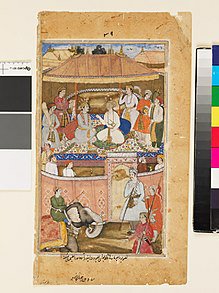
Tag: Solar Dynasty

  • Solar Lunar Dynasties Surya Chandra Vamsa From One Woman Ila, A Dravida

    There were two ancient dynasties in India.

    Other dynasties have sprung from the two.

    These two dynasties are,

    Surya Vamsa, the Solar Dynasty and

    Chandra Vamsa, the Lunar dynasty.

    Lord Rama belonged to Ikshvaku Dynasty which is the same as Surya Vamsa, Solar Dynasty.

    Pandavas and Kauravas belonged to Chandra Vamsa,Lunar Dynasty.

    When one tries to find out the origin of Man Genealogy, and the first pair , one gets stuck, either with Incest or the origin of one of the pair remaining with no visible parentage.

    I seek the indulgence of the readers for my vagueness in the foregoing sentence.

    This is to avoid that useless controversy.

    Those who can read between the lines would understand.

    Now to the point at hand.

    Ila with Budha, son of Moon,Chandra.image
    Ila with Budha, son of Moon,Chandra.

    If there were two dynasties, then who was the first one; how did the second dynasty come into play;how these two are related?

    Indian texts are clear on Cosmology and Genealogy, besides pther things.

    There are Eighteen Puranas and many Upa Puranas.

    Please read my post on list of Indian Texts.

    There may be minor variations in details among the Puranas, but all agree on essential major facts.

    Thus Genealogy and Cosmology descriptions, explanations do not have discrepancies among the Puranas.

    Thus under Genealogy, Puranas describe the dynasties and list the Kings.

    It may not be of place to mention that Cosmology and Genealogy are two of the characteristics laid down for a text to be qualified as Purana.

    Please read my article on Characteristics of Purana.

    The Firs human was Manu, He is called Vaivaswatha Manu for the present Time scale, Kali Yuga, which has a span of 4,32,000 years.

    He had one daughter and nine sons.
    Manu begot ten other children named Vena, Dhrishnu, Narishyan,Nabhaga, Ikshvaku, Karusha, Sharyati, the eighth, a daughter named Ila, Prishadhruthe ninth, and Nabhagarishta, the tenth. ( https://en.m.wikipedia.org/wiki/Shraddhadeva_Manu#Descendants )

    His son Ikshvaku was from the south of the Vindhya mountains, Dravida Desa.

    His kingdom was centered around Madagascar.

    When a Tsunami struck , Manu mediatated in a plateau near Madagascar.

    He left south with his sons for Ayodhya, where he founded the Solar Dynasty, called as Surya Vamsa.

    Manu had left his only daughter Ila in the South.

    She remained in the South,Dravida Desa.

    Her descendants ruled from the south.

    This dynasty is the Chandra Vamsa, Lunar Dynasty.

    The descendants of Ila and Ikshvaku are first cousins.

    In Hindu way of explaining relationships, children of aunt and uncle.

    Though both Ila and Ikshvaku belong to the Genealogy of Manu, the Dynasty is called Ikshvaku, Manu’s son.

    I shall write as to why.

    While the dynasty of Ikashvaku is called Solar, that of Ila is Lunar, Chandra Vamsa.

    Chandra Vamsa is named after Chandra, Moon.

    Ila was both a man and woman.

    ‘According to the Ramayana, when Ila approached Shiva for help, Shiva laughed with scorn but the compassionate Parvati reduced the curse and allowed Ila to switch genders every month. However, as a male he would not remember his life as a female and vice versa. While Ilā roamed the forest in her new form with her female attendants, Budha, the god of the planet Mercury and the son of the moon-god Chandra, noticed her. Although he had been practising asceticism, Ilā’s beauty caused him to fall in love with her at first sight. Budha turned Ilā’s attendants into Kimpurushas (hermaphrodite, lit. “is it a man?”)[10][14] and ordered them to run away, promising that they would find mates as Ilā had.

    Ilā married Budha and spent an entire month with him and consummated the marriage. However, Ilā woke one morning as Sudyumna and remembered nothing about the past month. Budha told Ila that his retinue had been killed in a rain of stones and convinced Ila to stay with him for a year. During each month she spent as a woman, Ilā had good time with Budha. During each month as a man, Ila turned to pious ways and performed austerities under the guidance of Budha. In the ninth month, Ilā gave birth to Pururavas, who grew to become the first king of the Lunar dynasty. Then, as per the advice of Budha and Ila’s father Kardama, Ila pleased Shiva with a horse sacrifice and Shiva restored Ila’s masculinity permanently.

    Another legend from the Vishnu Purana credits Vishnu of restoring Ilā’s manhood as Sudyumma. The Bhagavata Purana et al. texts tell that after Pururavas’s birth, the nine brothers of Ila – by horse sacrifice – or the sage Vasistha – the family priest of Ila – pleased Shiva to compel him to give the boon of alternate month manhood to Ila, turning him into a Kimpurusha.The Linga Purana and the Mahabharata record the birth of Pururavas, but do not narrate the end of Ila’s alternating gender condition. In fact, the Mahabharata describes Ilā to be the mother as well as the father of Pururavas.According to another account found in the Vayu Purana and the Brahmanda Purana, Ilā was born female, married Budha, then was transformed into a male called Sudyumna. Sudyumna was then cursed by Parvati and transformed once again into a female, but became a man once again through Shiva’s boon.

    In almost all versions of the tale, Ila wants to live as a man, but in the Skanda Purana, Ila desires to be a woman. The king Ela (Ila) entered Parvati’s grove at Sahya mountain and became the woman Ilā. Ilā wished to remain a woman and serve Parvati (Gauri) and Ganga, the goddess of the Ganges river. However, the goddesses dissuaded him. Ilā bathed in a sacred pool and returned as Ela, bearded and deep-voiced.’

    The Bhagavata Purana, the Devi-Bhagavata Purana and the Linga Purana declare that Ila ascended to heaven with both male and female anatomy.[18] Ila is considered the chief progenitor of the Lunar Dynasty through Pururavas and of the Solar Dynasty through his brother Iksavaku and sons Utkala, Gaya, and Vinatashva.[9][22] The marriage of Ilā, a descendant of the Sun, and Budha, the son of the Moon, is the first union of the solar and lunar races recorded in the scriptures.[11]

    Reference and citation.

    https://en.m.wikipedia.org/wiki/Ila_(Hinduism)

  • Why Tamil Kings Are From Solar Lunar Dynasty Second Capital in Pakistan

    Why Tamil Kings Are From Solar Lunar Dynasty Second Capital in Pakistan

    I visited Thiruvellarai,about fifteen kilometres from Srirangam,Tamil Nadu.

    Srirangam is the second Divya Kshetram,Sacred Dwelling Place of Lord Vishnu,the first being Vaikuntam,the Celestial Abode of Vishnu.

    I was informed by the Archaka of Srirangam that there is a older temple of Vishnu at Thiruvellarai.

    On visiting the temple I found three unique features.

    I wrote an article on this and on Indhumathi, Lord Rama’s grandmother,a Pandyan Princess.

    This temple is reported to have been built by Chola King Sibi.

    Sibi is the ancestor of Lord Rama.

    He built this temple after vanquishing Asuras,meaning powerful(Asuras are different from Rakshasas)in Dravida Desa.

    Sibi ruled from the what is now the North West Province of Pakistan.

    The founder of Ikshvaku Dynasty,Ikshvaku,to which Sibi and Rama beling belongs to Dravida Desa,that is South of Vindhya Mountains in India.

    Manu,after whom the term ,’Man’ is coined is the first Human and he was from the Dravida Desa.

    After a Tsunami,Ikshvaku left for Ayodhya in North India,founded Ikshvaku Dynasty from Ayodhya.

    The Kings of South India,Chera,Chola belong to Surya Vamsa,the Solar Dynasty of Ikshvaku.

    Some of these Kings belong to Lunar Dynasty,Chandra Vamsa.

    Now,after visiting Thiruvellarai, I had some questions.

    1.If Ikshvaku founded the Dynasty from Ayodhya,

    how is it that Tamil Kings declare that they are from Solar Dynasty?

    2.If these Kings ruled from South ,how come that Sibi ruled from the North of India,where his second capital was?

    Answer lies with Ila, daughter of Manu and sister of Ikshvaku.

    Ila,after whom the term Ezham,the Tamil word denoting Tamil land is derived from,is the founder of the Lunar dynasty.

    She was married to Budha,son of Chandra.

    Hence her offsprings belong to Lunar Dynasty.

    The Ailas of the world descended from Ila.

    Ila was given a portion of Dravida Desa,Lanka.

    Lanka is from Ila.

    There is controversy over the fact whether the present Lanka is the Lanka mentioned in the Ramayana.

    Please refer my post on Lanka is not Ramayana Lanka.

    Ila was birn a woman,became a Man,then again woman to be finally Man for a month and woman the next month.

    Those who question this transformation may note people today change genders after Surgical Procedure.

    During the period when Ila was a Man,he married and had children.

    Children through this lineage belong to Lunar Dynasty and they ruled the Matsya Kingdom from North India.

    Matsya in Sanskrit means Fish.

    Manu the first Man was advised by A Fish of the impending Tsunami.

    Hence Manu moved out , meditated in Madagascar, while his son Ikshvaku moved to Ayodhya.

    His daughter Ila moved to South after the Tsunami

    It is curious to note that the Pandya Kings’ Emblem is Fish.

    Another reference to Manu and Matsya.

    Either the offspring of Ila moved to Matsya desa at the same time when Ikshvaku moved to North,while Ila moved to South or

    Ila’s children moved to north later,but before Lird Rama.

    This cound account for Sibi having had a second capital in North India.

    Matsya Kingdom.

    Matsya Kingdom was probably founded by fishermen community who later attained kingship. The Sanskrit word Matsya means fish. Satyavati, the wife of Kuru king Santanu was from this community. King Virata, a Matsya king, founded the kingdom of Virata. He was the father-in-law of Abhimanyu the son of Arjuna. The epic Mahabharata relates the founder of Matsya kingdom to the ruler of Chedi, viz Uparichara Vasu.An interesting fact is that fishing was the main occupation of the people who lived near river Saraswati. After the Saraswati River dried up, they migrated to river Charmanwati now known as Chambal meaning fish in Dravidian languages. Krishna Dwaipayana Vyasa, was son of Satyavati who belogned to this fishermen community and yet was a Vedic scholar, thus attesting the origin of Vedas from the Saraswati basin.

    Other than the Matsya kingdom to the south of Kuru Kingdom, which falls in the Alwar, Bharatpur districts of Rajasthan, the epic refers to many other (as many as, six other) Matsya kingdoms. The Pandya Kingdom in the extreme south, also bears the icon of a fish on its official banner showing some connection with the Matsya kings. The main Matsyas under Virata had its capital named Viratanagari which is now known as Bairat in Jaipurdistrict of Rajasthan. Upaplavya was another famous city in this kingdom.

    References in Mahabharata

    Matsya is mentioned in the list of kingdoms of Bharata Varsha (ancient India) at (6,9).

    Origin of Matsya Kings

    The first Matsya king was mentioned to be the son of a Chediking named Uparichara Vasu. He was a Paurava, meaning a king beloning to the Puru dynasty (1,63). Apart from the five royal sons of this king, he had a son and a daughter born of a women of fisherman community. The male child, in due cource established the Matsya Kingdom and founded the royal dynasty called Matsya Dynasti. The female child lived as a member of fishermen community. Her descendants established as fishermen on the banks of river Yamuna, in the kingdom of Kurus. The famous Kuru king Santanu’s wife Satyavati was from this fishermen community. The author of Mahabharata, vis Krishna Dwaipayana Vyasa and the Kuru kings viz Chitrangada and Vichitravirya were the sons of Satyavati. Pandavas and Kauravaswhere the grandsons of Vichitravirya.(1,63).A king named Sahaja ruled the united Chedis and Matsyas. As per Bhima he became cause for the destruction of his own race (5,74).

    Source.

    http://ancientvoice.wikidot.com/matsya

    Ila ,Sudhyumna.

    While many versions of the tale exist, Ila is usually described as a daughter or son of Vaivasvata Manu and thus the sibling of Ikshvaku, the founder of the Solar Dynasty. In versions in which Ila is born female, she changes into a male form by divine grace soon after her birth. After mistakenly entering a sacred grove as an adult, Ila is either cursed to change his/her gender every month or cursed to become a woman. As a woman, Ilā married Budha, the god of the planet Mercury and the son of the lunar deity Chandra (Soma), and bore him a son called Pururavas, the father of the Lunar dynasty. After the birth of Pururavas, Ilā is transformed into a man again and fathered three sons.

    In the Vedas, Ilā is praised as Idā (Sanskrit: इडा), goddess of speech, and described as mother of Pururavas.

    The tale of Ila’s transformations is told in the Puranas as well as the Indian epic poems, the Ramayana and the Mahabharata.

    Source.

    https://en.m.wikipedia.org/wiki/Ila_(Hinduism)

    Ilā married Budha and spent an entire month with him and consummated the marriage. However, Ilā woke one morning as Sudyumna and remembered nothing about the past month. Budha told Ila that his retinue had been killed in a rain of stones and convinced Ila to stay with him for a year. During each month she spent as a woman, Ilā had good time with Budha. During each month as a man, Ila turned to pious ways and performed austerities under the guidance of Budha. In the ninth month, Ilā gave birth to Pururavas, who grew to become the first king of the Lunar dynasty. Then, as per the advice of Budha and Ila’s father Kardama, Ila pleased Shiva with a horse sacrifice and Shiva restored Ila’s masculinity permanently.

    Another legend from the Vishnu Purana credits Vishnu of restoring Ilā’s manhood as Sudyumma.The Bhagavata Purana et al. texts tell that after Pururavas’s birth, the nine brothers of Ila – by horse sacrifice – or the sage Vasistha – the family priest of Ila – pleased Shiva to compel him to give the boon of alternate month manhood to Ila, turning him into a Kimpurusha. The Linga Purana and the Mahabharatarecord the birth of Pururavas, but do not narrate the end of Ila’s alternating gender condition. In fact, the Mahabharata describes Ilā to be the mother as well as the father of Pururavas.According to another account found in the Vayu Purana and the Brahmanda Purana, Ilā was born female, married Budha, then was transformed into a male called Sudyumna. Sudyumna was then cursed by Parvati and transformed once again into a female, but became a man once again through Shiva’s boon.

    Source.

    https://en.m.wikipedia.org/wiki/Ila_(Hinduism)

  • History Of India 1 Ikshvaku To Chandragupta Maurya.

    History Of India 1 Ikshvaku To Chandragupta Maurya.

    Most History text books in India begin with Maurya Dynasty and Bimbisara,as if there were no history in india before that period,dismissing them as Legends and hyperbole in the imagination of Poets.

    The History conveniently begins prior to Alexander’s invasion of India.

    Alexander’s invasion of India is a myth as revealed by Greek historians.

    But the real history of India,as revealed by the Vedas,Puranas,Ramayana,Mahabharatha,Sanskrit and Tamil literature ,validated by Archeology,foreign literature,especially Greek,Etymological similarities between world languages and Sanskrit and Tamil,Astronomical /Carbon/Infrared dating of artifacts recovered in India and abroad confirm what the Indian texts say.

    To understand Indian history,one has to,

    Approach Indian texts with open mind,

    Verify them with the tools I have mentioned,

    Understand that there was no Aryan Invasion,

    Sanatana Dharma coexisted with the Tamil culture,which also followedcSanatana Dharma,

    There was no North South Divide save the wars between the usual wars between kings,

    That the history of India extends to thousands of years,

    That the Concept of Time in India is Cyclic and not linear,

    There were two major dynasties,Solar and Lunar,Suryavamsa and Chandravamsa and there were many sub dynasties,

    The Solar dynasty ,though its ancestor Manu was a Dravidian King,was established in North India,while thexLunar dynasty also flourised in south India,through Ila,Daughter of Manu.

    The South Indian  kings trace their ancestry to. Solar ,Ikshvaku Dynasty and also to Lunar dynasty,Chandra vamsa.

    The Ikshvahu dynasty frm Treta Yuga ,from million years ago extended upto Dwapara yuga and ended with King Sumitra who was defeated and driven away from Ayodhya.

    Then we find continum from that period from Magadha dynasty,which belongs to Lunar Dynasty,Chandravamsa from Bruhatradha.

    Lunar, Dynasty,Chandravmsa.image
    Lunar dynasty,Chandra vamsa.

    ‘Barhadradha Dynasty Before the Mahabharata War of 3138 B.C.

    1. Barhardradha I :-

    According to Mahabharata, Brihadradha-I, the founder of Barhadradha Dynasty was the eldest son of Uparichara Vasu , the seventh in the descent from the Great Kuru, son of Samvarna, a descendant of the Lunar Dynasty (Chandravamsajah) of kings. He founded the kingdom of Magadha probably about 3709 B.C. or 571 years before the Great war of Mahabharata at Kurukshetra between the Pandavas and the Kauravas.

    This  battle according to Mahabharata, the important Puranas, and all other ancient Hindu, Bauddha and Jaina authorities and traditions, took place. 36 years before the commencement of the Kaliyuga—the present Yuga.   Kali Yuga  began immediately after the departure of Sri Krishna, son of Vasudeva by Devaki, from this world on the 20th February, 3102 B. C., in the year Pramadhin of the Southern School of Hindu astronomers. (Vide Indian Eras By this author, Kota Venkata Chelam)

    Brihadradha married the two beautiful twin daughters of the king of Kasi; and by the blessing of a Rishi, he obtained a most powerful son by name Jarasandha. The king, after installing his mighty son Jarasandha on the throne of Magadha retired into a forest and led an ascetic life. In this context the Mahabharata gave the next prominent dynasty of Jarasandha, leaving some generations of kings in the interval between Brihadradha I and Jarasandha (or Brihadradha II). – (Vide_Mahabharata, Sabha Parva. Adhyayas 14 to 19).

    N.B:- The Matsya Purana enumerates all the names of kings between Brihadradha-I and Jarasandha or Brihadradha-II Jarasandha, son of Bhuvana was the 15 th in descent from Kuru and the tenth from Brihadradha-I, the founder of the Magadha Dynasty of kings. The following table shows the order of descent according to Matsya Purana. (Chapter 59):-

    1. Samvarna

    2. Kuru (The founder of the Kaurava Dynasty who removed his capital from Prayaga to Kurukshetra.)

    3. Sudhanvan, Parikshit, Prajana, Jaghnu or Johnu or Yaju

    4. Suhotra.

    5. Chyavana

    6. Krimi (or Kriti)

    7. Chaidya or Uparicharavasu or Pratipa

    8. (1) Brihadradha-I thefounder of the Magadha Dynasty.(3709 B.C.)

    9. (2) Kusaagra

    10. (3) Vrishabha or Rishabha.

    11· (4) Pushpavat or Punyavat

    12. (5) Pushpa or Punya

    13. (6) Satyadhrithi or Satyahita.

    14. (7) Sudhnvan II or Dhanusha.

    15. (8) Sarva

    16. (9) Bhuvana or Sambhava.

    I7. (10)Brihadradha II or Jarasandha.

    http://trueindianhistory-kvchelam.blogspot.in/2009/08/kings-of-magadha-before-great.html )

    Visit the above site which is very informative.

    ‘The Hindu Mahabharata calls Brihadratha the first ruler of Magadha. King Bimbisara of the Haryanka dynasty led an active and expansive policy, conquering Anga in what is now West Bengal.
    The death of King Bimbisara was at the hands of his son, Prince Ajatashatru. King Pasenadi, king of neighbouring Kosala and brother-in-law of King Bimbisara, promptly retook the gift of the Kashi province.
    Accounts differ slightly as to the cause of King Ajatashatru’s war with the Licchavi, an area north of the river Ganges. It appears that Ajatashatru sent a minister to the area who for three years worked to undermine the unity of the Licchavis. To launch his attack across the Ganges River, Ajatashatru built a fort at the town of Pataliputra. Torn by disagreements the Licchavis fought with Ajatashatru. It took fifteen years for Ajatashatru to defeat them. Jain texts tell how Ajatashatru used two new weapons: a catapult, and a covered chariot with swinging mace that has been compared to a modern tank. Pataliputra began to grow as a center of commerce and became the capital of Magadha after Ajatashatru’s death.’

    Haryanka dynasty (c. 600 – 413 BCE)Edit
    Bhattiya or

    Bimbisara (544-493 BCE)

    Ajatashatru (493-461 BCE)

    Udayabhadra

    Anuruddha

    Munda

    Nagadasaka
    Shishunaga dynasty (413–345 BCE)Edit
    Shishunaga (413–395 BCE)

    Kakavarna Kalashoka (395–367 BCE)

    Mahanandin (367–345 BCE)
    Nanda Dynasty (345–321 BCE)Edit
    Mahapadma Nanda Ugrasena (from 345 BCE), illegitimate son of Mahanandin, founded the Nanda Empire after inheriting Mahanandin’s empire

    Pandhuka

    Panghupati

    Bhutapala

    Rashtrapala

    Govishanaka

    Dashasidkhaka

    Kaivarta

    Dhana Nanda (Agrammes, Xandrammes) (until 321 BCE), overthrown by Chandragupta Maurya

    https://en.m.wikipedia.org/wiki/Magadha

    From Bimbisara to current day,the History of India is clear and can be studied,though some misinformaion about middlecages remain.

    I have traced the Dynasties in Northvand shall write about the Dynasties of South India,including Andhra Ikshvakus and Tamils.

    I have taken references to Sanskrit and Tamil among Indian languages as I know only these two.

    Related.

    https://ramanisblog.in/2014/12/27/kings-list-india-by-puranas-validated/

    https://ramanisblog.in/2014/12/26/lunar-dynasty-india-chandra-vamsa-of-mahabharata-list/


  • Menes First Pharoah Son of Sagara Solar Dynasty India.

    Menes First Pharoah Son of Sagara Solar Dynasty India.

    The First Pharaoh of Egypy,Menes is identified as the son of Sagara, Emperor belonging to Surya,Solar Dynasty of India.

    Menes ,the First Pharoah of Egypt was Asamanja , the son of  Emperor of Sagara.

    Sagara was  from Kosala Kingdom of India.

    One may recall his descendant ,Bhagiratha brought River Ganga to Earth.

    Lord Rama belonged to Solar Dynasty and Sagara was his ancestor.

    The Kings List of Sumeria and the Kings List of Egypt confirm this.

    The reference to Sumeria is found in Indus Valley.

    This has been brought out by researcher Waddelll in his Book.

    I have provided the link to his work at the close of this article.

    He also presents evidence to the effect that the  Sumerian Kings List and the Egyptian Kings List confirm that the Sumerians preceded the Egyptians and both these trace their ancestry to Indian Solar Dynasty.

    The study is backed by deciphering the Sumerian ,Egyptian and Indus valley Seals,Tablets,Hieroglyphics and archaeology.

    And of course, the literature of these three civilizations.

    Not surprising at all.

    Considering the facts,

    Rama,Dasaratha and Bharatha find their names in the Sumerian Kings List.

    Akkadian civilization preceded the Sumerian civilization.

    And Sage Angirasa founded the Akkadian Empire

    Hindu OM is found in Sumrian Prayer

    Tamil city found in Sumeria,Akkadian

    Naramsin of Akkad.

    Tamil city in ancient Syria


    Menes,( C  3150 BCE) is the legendary first king of Egypt who is thought to have united Upper and Lower Egypt through conquest and founded both the First Dynasty and the great city of Memphis. His name is known from sources such as Manetho’s Chronology (3rd century BCE), The Turin King List, and the Palermo Stone as well as from some scant archaeological evidence such as ivory engravings. In the early days of Egyptology, Menes was accepted as the first historical king based upon the written records. As time went by, however, and archaeological excavations failed to turn up any evidence of such a king, scholars began to question whether he had actually existed or was, perhaps, a composite figure drawn from the memory of the reigns of other kings.

    Source. http://www.ancient.eu/Men

    Menes,First Pharoah of  Egypt.


    But here it is noteworthy, that in the Indian list of kings 
    given in the Puru version of the Indian Aryan King- 
    Lists — that is in that version which preserves especially full 
    details of Menes' dynasty as Manasyu of Gopta — we find that 
    the immediate successors of Manasyu' s dynasty are Nine kings, 
    whose names equate to a considerable extent with those of the 
    Ntne kings forming the Second Dynasty in the lists of Manetho 
    and the others. And these nine kings were clearly the local 
    successors of Manasyu's dynasty in Egypt and not in Meso- 
    potamia, for they are absent in all the main-line lists of 
    the Early Aryan kings, who, we have found, were kings of 
    Mesopotamia. 1 
    
    In this Indian Puru version of the kings who immediately 
    succeeded Manasyu's dynasty, is given a string of nine 
    names of which the holders are described as the " sons " or 
    descendants of Raudrashwa, a personage who is therein 
    (MBt. I. 94) called a " brother " of Sargon (or Pra-Vira, 
    see p. 4) ; and who is stated to have married " the 
    nymph " Misri-Keshi, whose name Misri is suggestive of 
    the old name Misr for Egypt. 2 And Sargon's father was, 
    as we have seen, a Predynastic Pharaoh of Egypt. This 
    presumes that Raudrashwa was an elder brother of Sargon 
    and was resident in Egypt. And the fact that he did not 
    succeed his deposed father in the kingship in Mesopotamia 
    could be explained by his having died before the reign of 
    the usurper Zaggisi, i.e. before Sargon had attained manhood 
    and recovered his father's empire ; for Sargon being a 
    posthumous son could not have had a younger brother. In 
    this view therefore, there were resident in Egypt, contem- 
    porary with and during the reign of Sargon's or Menes'

    The first clues to these discoveries were gained by my 
    observation that Menes (as he was called by the Greeks) or 
    Manj (as he is usually called in his own Egyptian inscriptions) 1 
    appears in his due chronological position along with his 
    dynasty in the official king-lists of the Early Aryans from 
    the first king onwards, as preserved in the ancient Indian 
    epic chronicles, the Puranas. In the latter he bears the name 
    of Asa Manja, or " Manja the shooter " in the solar version 
    of these lists, and Manasyu or Mawas-the-Uniter in the lunar 
    version. 2 And the great Indian epic, the Maha-Bhaxata, in 
    supplementing the Purana chronicle account, describes 
    him as " Manasyu of the line of the Prabhu [Parda or 
    ' Pharaoh '], the royal eye of Gopta [Kopt or Egypt] and 
    of the four ends of the earth." 3 The Indian epic king-lists 
    further record that he was the son and successor of the 
    mighty world-emperor, King Kuni or Sha-Kuni or Sagara, 
    whom I had fully identified with the Mesopotamian world- 
    emperor, whose name is variously spelt Kin, Gin, Gani, 
    Guni, or Shar-Guni, a name which is arbitrarily semitized by 
    Assyriologists into " Sargon," in order to equate it with 
    the Hebrew name " Sargon " of the much later notorious 
    Semitic Assyrian king of that name in the eighth century B.C. 
    who carried the Jews into exile, and from whom they dis- 
    tinguish the former as " Sargon-the-Great." 
    
    On comparing these Early Aryan king-lists with those of 
    the Sumerians in Mesopotamia,* I observed that the latter 
    documents also recorded in the self-same chronological 
    position the dynasty of King Gin or Guni (" Sargon-the- 
    Great "), bearing substantially the same names and titles as 
    in the Indian lists and in exactly the same order ; and that 
    the names and order from " Sargon's " son Manis onwards 
    were identical with those of Menes' dynasty of Pharaohs on 
    
    1 See later. 2 See pp. ^i. 3 See p. 4 and App. I. 4 Kish Chronicle. 


    MENES AS SON OF SARGON-THE-GREAT 3 


    their own Egyptian monuments. Menes or Manj in his 
    Egyptian inscriptions usually bears the title of " Manj- 
    the-Warrior," and in the Sumerian king-lists and in his own 
    inscriptions in Mesopotamia, the son and successor of 
    " Sargon-the-Great " is styled " Manis-the-Warrior." And 
    the last king of this dynasty, bearing the same name in both 
    Sumerian and Egyptian inscriptions, has his name signifi- 
    cantly written on his own Egyptian inscription by the 
    self-same Sumerian pictographic signs as in the Sumerian 
    king-lists and in his own inscriptions as Sumerian emperor 
    in Mesopotamia. 
    
    Further comparison disclosed that Menes' father, " Sargon- 
    the-Great," along with the latter's father and grandfather 
    were identical in names and titles with the three Predynastic 
    Pharaohs who immediately preceded Menes in Egypt ; and 
    who have left there their records, seals or sealings in 
    Sumerian script. And these identities are confirmed by their 
    own Sumerian inscriptions in Egypt, and by their official 
    seals in their Indus Valley colony, in which most of them 
    bore also the title of " Pharaoh," and mention Egypt by 
    name as being within their empire. 
    
    Let us now examine the detailed proofs for these identities 
    of Menes or Manj and his " predynastic " ancestors in 
    Egypt with those of Manis and his immediate imperial 
    Sumerian ancestors in their contemporary inscriptions in 
    Mesopotamia and the Indus Valley and in the Indian epic 
    records of the Early Aryan kings. 
    
    Menes or Manis-Tusu as Manasyu the " Pharaoh 
    of Gopta " (Egypt) in the Indian Epics 
    
    The name of this Aryan king under the form of Manasyu 
    is found in the lunar version of the Indo-Aryan King-Lists, 
    and corresponds to the solar form of his name as Asa 
    Manj as or Asa Manj a in the solar main-line lists in which 
    he is No. 38 (see Table, p. 151) — the solar lists 1 being the 
    most complete and in undisturbed chronological order. 
    And " Sargon " in this Puru version is called Pra-Vira or 
    " Foremost hero," in which Vlra corresponds to his Sumerian 
    title of Pir, 2 V being a very late invented letter. 3 
    
    1 Lists of the purer Sun-worshippers. 2 WMC. 200. 3 See WAOA. 49 f . 
    ....  
    
    
    The fuller Egyptian form of Menes' name as Manj, 
    strikingly confirms the literal identity of the Egyptian with 
    the Sanskrit Manja (or Asa-Manja), the son of the Emperor 
    Sagara, that is Sargon ; and it equates also phonetically 
    with the Manis name of Sargon's son in Sumerian — the 
    affix Tusu meaning, as seen below, " The Warrior." This 
    fuller Egyptian form of Menes' name is usually disguised by 
    many English Egyptologists as Mena. But the alphabetic 
    value of the last letter is rightly rendered by the Berlin 
    school as J} which is now seen to be its proper value by 
    our trilingual comparison ; and this is confirmed by the 
    pictorial form of this Egyptian hieroglyph which pictures a 
    flowering reed, which I observed was the same sign, form, 
    sound, and meaning as the Sumerian pictograph of the 
    flowering reed word-sign with the phonetic value Gi 2 — thus 
    affording another of the many instances I have demonstrated 
    of the derivation of the Egyptian hieroglyphs from the 
    Sumerian pictographs, with the same pictographs, form, 
    phonetic value and meaning. 
    
    ....
    of the two crowns of Upper and Lower Egypt." Under 
    his other Indian name as Asa-Manja, or " Manja the 
    Shooter," is described in the Indian Chronicles, his quarrel 
    with, and disinheritance by, his father, Sagara (Sargon), 
    which, we shall find later, appears to relate to his declaration 
    of independence in Egypt during the lifetime of his father 
    in Mesopotamia ; and thus explaining why Sargon's younger 
    son succeeded his father on the Mesopotamian throne and 
    not Manis-Tusu, his eldest son, who only succeeded later. 
    
    Identity of Menes with the Aryan Emperor Manasyu 
    & Manis-Tusu, son of Sargon, confirmed
    Source and Citations. Egyptian civilization and Its Sumerian Origin Real Chronology by Waddelll
  • Dravida Lunar Culture Founded By Ila Manu Daughter Ikshvaku Dynasty

    Though Sanatana Dharma and the Tamils have mutual respect and lived together, there are some differences.

    1. The Worship of Shiva is more pronounced among the Tamils as compared to Vedas.Shiva is not mentioned directly in the Vedas but through Sri Rudram and the name of Shiva is kept in secret in Sri Rudram.There are no special Sukthas for Shiva in the Vedas whereas Shiva was /is considered as the Prime Deity among the Tamils.

    Shiva is called the Adi Siddha, the First Siddha and is reported to have founded the Vaasi Yoga, a special Technic of Yoga.

    The term Shiva is only a representation of the Vaasi Yoga.The word Vaasi when read  in the reverse or spoken fast becomes Siva.

    Shiva’s disciples on Yoga were, among others ,Agastya,Bhoga and Patanjali.

    This is from the Tamils.

    Kumarikandam
    Kumari Kandam ,The Sunken Continent

    Sanskrit mentions that Shiva means Auspiciousness and the Patanjali’s Yoga Sutra, though remains the same in essence, is different from Vaasi Yoga.

    While Shiva’s activities are limited to His Marriage with Uma and not much is heard of Him in the North Indian Texts, Tamil has a lot of references to Shiva’s Manifestations.

    His presence in Madurai is chronicled.

    His son Subrahmanya is explained in detail and He, along with Shiva and Sage Agastya are credited to have founded the Tamil Language.

    Sage Agastya and Subrahmanya are present in  South East Asian  Cultures the form  as far as New Zealand,Australia,.

    Tamil kings were present during the marriages of

    Nala and Damayanthi, which predates Ramayana,

    Rama Sita ,

    Draupadi Swayamvara, and also at

    Yudhistra’s Rajasuya Yaga,

    Tamil kings participated in the Kurukshetra , Mahabharata War,

    Krishna and Arjuna married Pandyan princesses and had children through them,

    Balarama visited south and worshiped Subrahmanya called as Murugan in the South…

    Lord Krishna attended Tamil Poets’ Conclave,Tamil Sangam…

    And Vaivaswatha Manu , ancestor of Lord Rama was a Dravida, meditated in Madagascar before migrating to Ayodhya where his son Ikshvaku founded the Ikshvaku Dynasty to which Lord Rama belongs.

    It is the Solar Dynasty of India, Suryavansh.

    Manu left for the North because of A Tsunami

    Tamil is an ancient language of India which runs parallel to Sanskrit.

    A Million year old site found near Chennai records an advanced Tamil civilization.

    The sunken harbor of Poonpuhar, Tamil Nadu, which is spoken of in detail in the Tamil Epic Cilappadikaram,is dated 20,000 years ago..

    Such an old culture refers to Sanskrit and Sanskrit in turn refers to Tamil.

    Then there is Sage Agastya who is present both in Tamil and Sanskrit.

    So is Sage Valmiki who is considered to be a Siddha and has written poems in Tamil.

    Such an intimacy between Sanatana Dharma and Tamuls yet there are differences though they present a unified picture!

    This has been a question I have been seeking  an answer to.

    The fact that Manu was from the South, Dravida.

    • One has to remember that the landmass in those ancient days was different and it has no relevance to what we call as North or South India now
    Jambudweepa,
    Jambudweepa, landmass of the Earth as explained in the Puranas. Note the change from present Landmass

    Lord Rama refused to fight against the Lemurians while he was fighting the Atlantis people saying that Lemurians were his ancestors,

    Ravana,s ancestors Malyavan and Kubera were also from the area we now call as Lemuria

    made me check.

    Vaivaswatha Manu had a daughter as well.

    She was called Ila.

    Ila was birth a Man and a woman and he/ she could change genders.

    To the skeptics , please check transgender surgeries being performed now

    While migrating to Ayodhya, Manu seems to have left his Daughter Ila in the South with a kingdom to rule.

    Ila married Budha , son of Moon.

    And The Lunar dynasty was born in India.

    Ila, daughter of Manu with her husband Budha
    Surendrapuri Temple’s Navagraha Temples, Budha with wife Ila.
    Chandra vansh
    Chandra vansh, Lunar Dynasty. Here one may find Budha, Ila is wife of Budha ) click to enlarge

    The Ikshvaku Dynasty to which Lord Rama belongs is the Solar dynasty.

    Tamil kings especially the Cholas call themselves as belonging to Solar Dynasty.

    So, while Ikshvaku Dynasty prospered in the North as Sanatana Dharma on the banks of Ganges,Sarasvathi and Sindhu, another dynasty founded by the daughter of Manu, Ila prospered in the South, Dravida Desa.

    This dynasty seems to have survived the Tsunami by staying at a higher plane near Madagascar which was a part of Lemuria.

    Saman was the brother of Ila.

    He stayed with his sister Ila in the south.

    And also in Mu civilization.

    This accounts for both the unity and diversity between Sanatana Dharma and Tamils.

    The term Elam, Tamil land seems to have originated from Ila and the descendants of Ila were ruling Elam.

    This Elam encompassed a Landmass called Kumarikandam.

    There seems to be a controversy a s to whether Lemuria and Kumarikandam are different.

    Lemuria and Kumarikandam Verified

    Ila (Sanskrit: इल) or Ilā (Sanskrit: इला) is an androgyne in Hindu mythology, known for their sex changes. As a man, he is known as Ila or Sudyumna and as a woman, is called Ilā. Ilā is considered the chief progenitor of the Lunar dynasty of Indian kings – also known as the Ailas (“descendants of Ilā”).

    While many versions of the tale exist, Ila is usually described as a daughter or son of Vaivasvata Manu and thus the sibling of Ikshvaku, the founder of the Solar Dynasty. In versions in which Ila is born female, she changes into a male form by divine grace soon after her birth. After mistakenly entering a sacred grove as an adult, Ila is either cursed to change his/her gender every month or cursed to become a woman. As a woman, Ilā married Budha, the god of the planet Mercury and the son of the lunar deity Chandra (Soma), and bore him a son called Pururavas, the father of the Lunar dynasty. After the birth of Pururavas, Ilā is transformed into a man again and fathered three sons.


    In the Vedas, Ilā is praised as Idā (Sanskrit: इडा), goddess of speech, and described as mother of Pururavas.’

    (ஈழம் என்று அழைக்கப்பட்ட  மனுவின் மகள் குமரி > ஈழம் என்னும் தமிழ் அரச குமாரி ஆண்டு வந்த. குமரி ஆட்சிசெய்த பகுதிகளை குமரிக்கண்டம் என்று அழைக்கப்பட்டு வந்தது)

    குமரிக்கண்டத்தில் இருந்த தென் இந்தியாவின் பழங்குடிகள் பழந்தமிழர்கள் என்பது கருதுகோள். சிலப்பதிகாரம் மற்றும் மணிமேகலை ஆகிய காப்பியங்களில் குமரிக்கண்டம் பின்னர் அழிவுக்குட்பட்தாக கூறப்படுகின்றது பத்தாயிரம் ஆண்டுகளுக்கு முன்பிருந்த [கி.மு.8000] பனி யுகத்தின் போது மாக்கடலில் கடல்நீர் மட்டம் குன்றிக் குமரிக் கண்டம் முழுவதும் புறத்தே தெரியும்படி மேலாக உயர்ந்திருந்தது. தமிழர் தாயக நிலப்பரப்புகளான தமிழ்நாடு, நாகதீவு>( தமிழீழம்) ஆகியவற்றில் வசித்த  தமிழனின் பிறந்தகம். ஆதித் தமிழன் வாழ்ந்த இடம் லெமுரியாக் கண்டம்.கடற்கோள் காரணமாக  லெமுரியாக் கண்டத்தின் பல பகுதிகள் கடலில் மூழ்கின.அதில் எஞ்சிய பன்னிராயிரம் தீவுகளில் ஒன்றே,>கடலில் மூழ்கிய குமரி நிலத்தின் எச்சமே இன்றைய தமிழனின் பிறந்தகம்.மேற்கூறிய சான்றுகளின்படி தற்போதைய இலங்கை தமிழகத்தின் ஒரு பகுதியே என்பதும் அங்கு வசித்தவர்கள் தமிழை தாய்மொழியாக கொண்டவர்கள் என்பதும் தெளிவாகக் புலப்படுகிறது. தமிழ் ஈழம் தமிழினத்தின் பிறப்புரிமை ! 50 ஆயிரம் ஆண்டுக்கால இலக்கிய வரலாறு கொண்ட தமிழே உலகின் முதன் மொழி! குமரிக் கண்டமே தமிழனின் பிறந்தகம். கடலில் மூழ்கிய குமரி நிலத்தின் எச்சமே இன்றைய தமிழீழம், தமிழ்ஈழம்  என்னும் நாகதீவை ஆண்ட மனுவின் மகள் ஈழம் என்னும் தமிழ் அரசகுமாரி ஆட்சி புரிந்த பகுதி> குமரிக் கண்டம் எனப்பட்டதுசிங்களவர்கள் இலங்கைத் தீவின் வந்தேறிகள்.என்பதும் கடலில் மூழ்கிய குமரி நிலத்தின் ஒரு பகுதியே இன்றைய தமிழீழம், என்பதும் தெளிவாகக் புலப்படுகிறது.

    மனுசக்கரவர்த்திக்கு ,>சமன்,என்னும் புத்திரனும்,>ஈழம், என்னும புத்திரியும்பிறந்தார்கள். மனுசக்கரவர்த்திக்கு பின் தமிழகம் இந்த இருவராலும் ஆட்சி செய்யப்பட்டு வந்தது. 

    தென்னகத்தை மகனாகிய சமனும், அவனது சந்ததியினரும், வடபாகத்தை மகளாகிய ஈழமும் அவளது சந்ததியினரும் ஆண்டு வந்தனர். மனுவின் மகளாகியஈழம் என்பவளுக்கு> குமரி என்று வேறு பெயரும் உண்டு.குமரி என்று அழைக்கப்பட்ட இந்தமனுசக்கரவர்த்தியின் மகள் ஆட்சி புரிந்த பகுதி> குமரிக் கண்டம் எனப்பட்டது. இந்தக் குமரிக் கண்டத்திலேயே  தமிழ்நாடு ,ஈழநாடு, பாண்டி நாடு, சேர நாடு, சோழ நாடு முதலிய நாடுகள் அடங்குகின்றன. ஈழம் என்னும் அரசி அட்சி புரி;ந்த பகுதியே அவளின் பெயரால் ஈழம்நாடு என்று அழைக்கப்பட்டுக் காலக்கிரமத்தில் ஈழநாடு ஆகியது. இந்த நான்கு மண்டலங்களும் ஒரு காலத்தில் ஒரே நிலப்பரப்பாகவே இருந்தன. இடையில் ஏற்பட்ட கடல்கோள்களே ஈழநாடு என்று அழைக்கப்பட்ட ஈழ மண்டலத்தை ஏனைய மூன்று மண்டலங்களிருந்து பிரித்து விட்;டன.எனினும் ஈழமண்டலமாகிய ஈழத்தில் தமிழரே வாழ்ந்து வந்தனர். பிற்காலத்தில்தான் தமிழலரல்லாதோர் இங்கு வந்து குடியேறினர் என்பதனை நாம் மறந்து விடக் கூடாது. வரலாற்றுக்காலத்துக்கு முன்பிருந்தே தமிழர்கள் ஈழத்தில் மிகவும் முன்னேற்றம் அடைந்தவர்களாகவும் நாகரீக வளர்ச்சி பெற்றவர்களுமான ஓர் இனமாக வாழ்ந்து வந்தனர்.

    தமிழர்கள் பாரம்பரியமாக வாழ்ந்துவந்த குமரிக் கண்டத்தில் உள்ள ஒரு நகரில் கன்னியாகிய குமரி (ஈழம்) ஆட்சி புரிந்தமையால் அந்நகரம் கன்னியாகுமரி என்று அழைக்கப்பட்டது. இக்கன்னியாகுமரி என்னும் பட்டினம் குமரிகண்டத்துக்குச் சிலகாலம் தலை நகராகி விளங்கியது. பிற்காலத்தில் குமரிக்கண்டத்தின் பெரும் பகுதி கடல் கொள்ளப்பட்டது. இக்கடல் கோல்களினால் நிலப்பரப்பு மாத்திரமன்றிப் பல தமிழ் சங்க மண்டபங்கள், அவைகளில் இருந்த இலக்கண இலக்கிய நூல்கள் எல்லாம் சமுத்திரத்துள் ஆழ்ந்து விட்டது, சமன் ஆண்ட பிரதேசமும் கடலுள் அமிழ்ந்தி விட்டது.மிகுதியான நிலப்பரப்பு பாரத கண்டம் பல தேசங்களாக பிரிந்தது.

    • Some gaps in the history remain.I am researching.People may contribute with authentic Links


    Reference and citations.

    http://m.ilavamcam.webnode.com/%E0%AE%88%E0%AE%B4%E0%AE%B5%E0%AE%AE%E0%AF%8D%E0%AE%9A%E0%AE%A4%E0%AF%8D%E0%AE%A4%E0%AE%BF%E0%AE%A9%E0%AE%B0%E0%AE%BF%E0%AE%A9%E0%AF%8D-%E0%AE%92%E0%AE%B0%E0%AF%81-%E0%AE%95%E0%AF%81%E0%AE%B2%E0%AE%B5%E0%AE%BF%E0%AE%B3%E0%AE%95%E0%AF%8D%E0%AE%954/


    https://en.wikipedia.org/wiki/Ila_(Hinduism)

    Budha with Ila Image credit.

    By SurendrapuriNavagraha.jpg: Arkrishnaderivative work: Redtigerxyz (talk) – SurendrapuriNavagraha.jpg, CC BY-SA 3.0, https://commons.wikimedia.org/w/index.php?curid=8306583

    https://ramanisblog.in/2014/12/26/lunar-dynasty-india-chandra-vamsa-of-mahabharata-list/