Tag: Manu

  • Manu Ancestor of Germans.

    Manu Ancestor of Germans.

    Kashyapa is regarded as the father of humanity. Vivasvan or Surya, son of Kashyapa and Aditi. Vaivasvata Manu, because he is the son of Vivasvan and Saranyu (Saṃjñā). He is also known as Satyavrata and Shraddhadeva.

    Vaivaswatha Manu

    Vaivaswatha Manu.

    1. Brahma
    2. Marichi, one of the 10 Prajapatis created by Brahma.
    3. Kashyapa, son of Marichi and his wife, Kala. Kashyapa is regarded as the father of humanity.
    4. Vivasvan or Surya, son of Kashyapa and Aditi.
    5. Vaivasvata Manu, because he is the son of Vivasvan and Saranyu (Saṃjñā). He is also known as Satyavrata and Shraddhadeva.

    The present Manvantara is named after Vaivaswatha.
    He is also called Satyavrata Manu.
    Forewarned of a Tsunami,Manu who was a King in Dravida Desa,areas south of Vindhya mountains, meditated near Madagascar and then left for Ayodhya with his son ,Ikshvaku, who founded the Ikshvaku,The solar dynasty to which Lord Rama belongs.
    Manu .
    The term Man is from Manu who is considered to be the First Man.
    World abounds in Great Flood legends and one finds it among all Religions,Judaism,Christianity,Islam,Buddhism and also among tribals and Aborigines.
    All world Literatures speak of the Great Flood.
    So the question of Migration.
    Who migrated from where?
    I have written quite a few articles on this and the migration seems to have been from around the present geographical location of India and Madagascar.
    One must remeber here that the ancient land mass wzs different from what we find today.
    So Manu or his progenies must have been present everywhere and in every culture.
    The Germanic Tribes ascribe their ancestry to Manu.
    Mannus, according to the Roman writer Tacitus, was a figure in the creation myths of the Germanic tribes. Tacitus is the only source of these myths.

    Tacitus wrote that Mannus was the son of Tuisto and the progenitor of the three Germanic tribes Ingaevones, Herminones and Istvaeones. In discussing the German tribes Tacitus wrote:

    In ancient lays, their only type of historical tradition, they celebrate Tuisto, a god brought forth from the earth. They attribute to him a son, Mannus, the source and founder of their people, and to Mannus three sons, from whose names those nearest the Ocean are called Ingvaeones, those in the middle Herminones, and the rest Istvaeones. Some people, inasmuch as antiquity gives free rein to speculation, maintain that there were more sons born from the god and hence more tribal designations—Marsi, Gambrivii, Suebi, and Vandilii—and that those names are genuine and ancient. (Germania, chapter 2)’

    According to Tacitus‘s Germania (AD 98), Tuisto (or Tuisco) is the divine ancestor of the Germanic peoples. The figure remains the subject of some scholarly discussion, largely focused upon etymological connections and comparisons to figures in later (particularly Norse) Germanic mythology.

    The Germania manuscript corpus contains two primary variant readings of the name. Root of the word is from the Hindu Vedic ‘Tvasthar’ – father of Manu. The most frequently occurring, Tuisto, is commonly connected to the Proto-Germanic root *tvai – “two” and its derivative *tvis – “twice” or “doubled”, thus giving Tuisto the core meaning “double”. Any assumption of a gender inference is entirely conjectural, as the tvia/tvis roots are also the roots of any number of other concepts/words in the Germanic languages. Take for instance the Germanic “twist”, which, in all but the English has the primary meaning of “dispute/conflict”.

    In the historical Vedic religion, Tvaṣṭṛ is the first-born creator of the universe. The Purusha Sukta refers to the Purusha as Tvastr, who is the visible form of creativity emerged from the navel of the invisible Vishvakarman. In the Yajurveda, Purusha Sukta and the tenth mandala of the Rigveda, his character and attributes are merged with the concept of Hiranyagharbha/Prajapathy or Brahma.

    Brahma was also called Tvashta and that makes Him as the ancestor of Germanic people.

    The second variant of the name, occurring originally in manuscript E, reads Tuisco. One proposed etymology for this variant reconstructs a Proto-Germanic *tiwisko and connects this with Proto-Germanic *Tiwaz, giving the meaning “son of Tiu”. This interpretation would thus make Tuisco the son of the sky-god (Proto-Indo-European *Dyeus) and the earth-goddess

    Adhitand Thithi were the wives of Kasyapa and Kasyapa’s son was Manu.

    This interpretation also points out the origin of Germanic people is Manu.

    References and Citations.

    https://en.m.wikipedia.org/wiki/Mannus

    Join 4,576 other subscribers
  • Yajneshwara Is The First Avatar of Vishnu

    The ten Avatars of Vishnu are as under,though there are minor variations in some Puranas to this list.

    The list, according to Vishnu Purana.

    Matsya,Koorma,Varaha,Nrusimha,Vamana,Rama,Parashurama,Krishna,Balarama and Kalki.

    Vishnu's Discus.
    Vishnu’s Discus.gif

    Of these, the first four were in the first yuga,Satya Yuga Sandhi.

    Of these four, Matsya is taken as the first Avatar of Vishnu.

    The Matsya cautioned Manu of the impending Great Flood , asked him to meditate and move away.

    By that time Manu had a family and had a son,though adopted, name Yagnya.

    This is an Avatar of Vishnu as he is the personification of Yagnya,Sacrifice.

    He is Yagnya,head of Yagnya,cause of Yagnya,carrier of Yagnya offering.

    ‘Yagyo Yagya-Patir-Yajva Yagyango Yagya-Vahanah

    Yagyabhrud Yagyakrud Yagyi Yagyabhrug Yagyasadhanah
    Yagyanantakrud Yagyaguhyam Annam Annada Eva Cha

    _Vishnu Sahasranama.

    ‘Vishnu has been equated to Yajna (“sacrifice”) as early as in the Vedas. The commenter on the Vedas – Sayana describes Vishnu as the lord of Yajna or the sacrificer himself.Even the Bhagvad Gita associates Vishnu to Yajna (sacrifice). Performing sacrifices is considered to equivalent to pleasing Vishnu.The Vishnu Sahasranama (“Thousand names of Vishnu”) also relates Yajna as a name of Vishnu.

    Yajneshwara (“Lord of Yajna”) is mentioned as an avatar of the Hindu god Vishnu in the Bhagavata Purana. As Yajna, Vishnu is the embodiment of the Hindu sacrifice ritual or Yajna.He was also the Indra (king of the gods) of the Svayambhuva Manvantara, era of Svayambhuva Manu.

    Yajna is the son of Prajapati Ruci and Akuti, the daughter of Svayambhuva Manu – the first Manu (progenitor of mankind).During the period of Svayambhuva Manu (Svayambhuva Manvantara), there was no qualified Indra, the post of the king of Svarga (Heaven) and king of gods. So, Vishnu incarnated as Yajna and held the post of Indra.

    Vishnu Purana tells that Yajna had a twin sister named Dakshina (“donation”). Later, Yajna married Dakshina and had twelve sons. These twelve Devas (gods) are collectively called the Yāmas ( https://en.m.wikipedia.org/wiki/Yajna_(avatar)


    Despite of the fact that Âkûti had brothers, she was handed over to the great sage Ruci on the condition that the king would get the resultant son. This was settled with the support of religious rites and the consent of his wife.


    Ruci, the most powerful great sage who was entrusted with the procreation, in his supreme concentration begot a pair of children by her who were of the greatest spiritual and brahminical strength.


    The very powerful son the daughter bore was taken to the home of the very happy Svâyambhuva Manu, while Dakshinâ was kept by Ruci.’

    1. Yagna and Dakshina got married subsequently and had 12 sons known as Tushita demigods in Swayambu manu’s time (Tosha, Pratosha, Santosha, Bhadra, Sânti, Idaspati, Idhma, Kavi, Vibhu, Svahna, Sudeva and Rocana) Yagna the Indra then. And Marichi head of sages
    2. Source.
    3. http://vipasana-vidushika.blogspot.in/2013/04/families-of-manu-kardama-prajapathi-and.html

    It is yet another pointer to Sanatana Dharma being present in the south much earlier to Vedic period.

    The philosophical explanation of Yagnya follows in another article.

    I have noticed that the name Yagnyanarayanan is present in South India , among Brahmins.

    As this Avatar preceded Matsya, which took place after Manu had a family,Yagneswara is the first Avatar of Vishnu.


  • Cholas Ancestors of Rama?

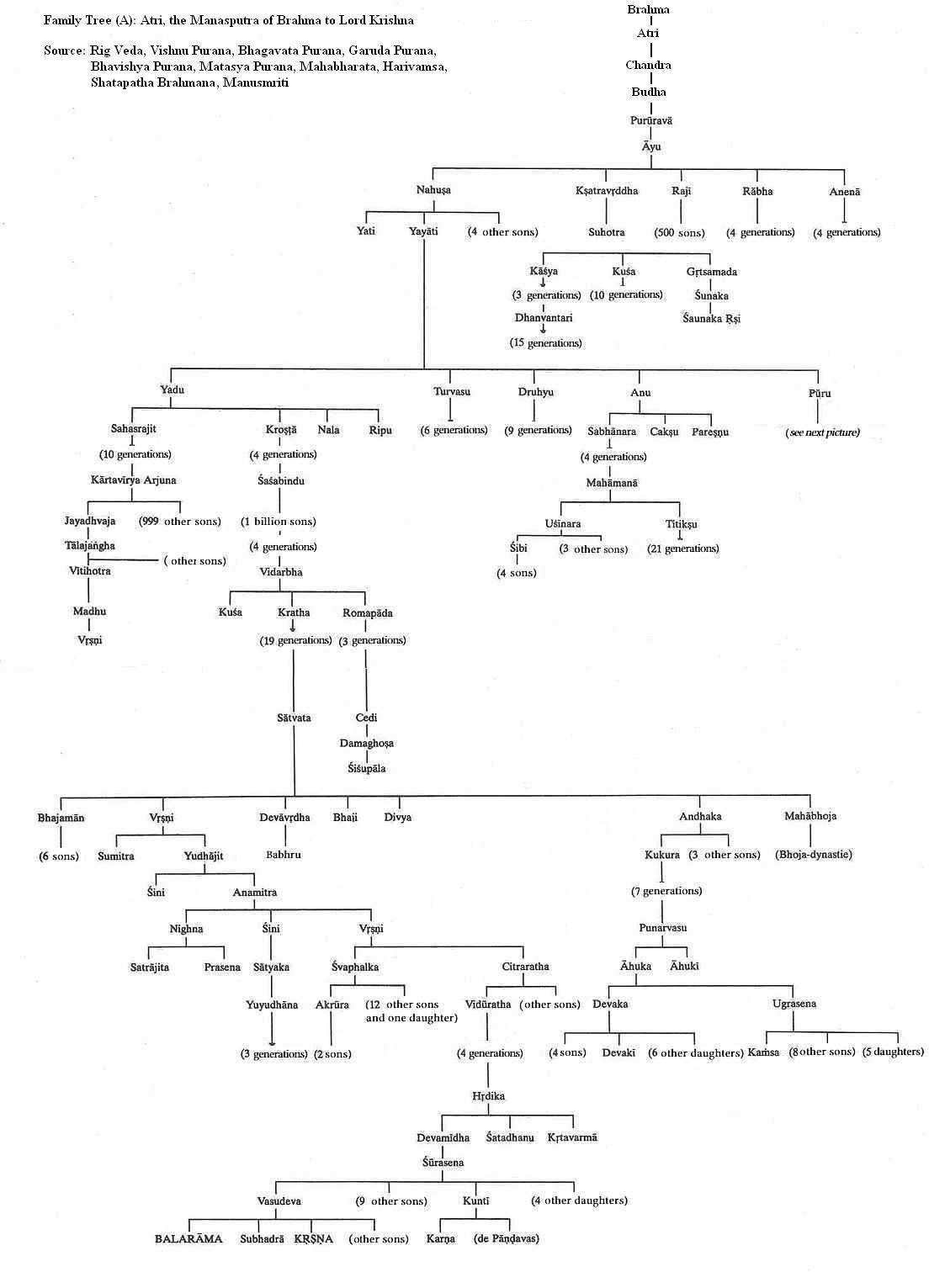
    The genealogy of Manu is very interesting.

    Manu is reported to be the first Man.

    Hence the name Manusha(Sanskrit),Manithan(Tamil), Man (English).

    Manu meditated in Madagascar while a Tsunami struck and His son Ikshvaku left for Ayodhya with his sons.

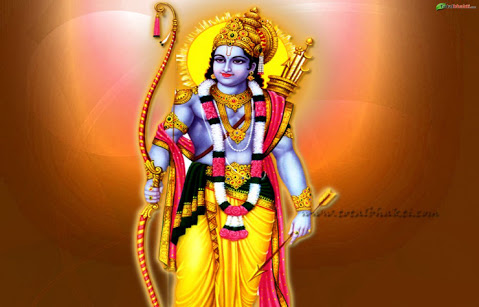
    His son Ikshvaku founded the Ikshvaku dynasty ,the Solar Dynasty , to which Lord Rama belongs.

    c3865-bm-image-751276

    But what happened to Manu’s daughters?

    A detailed research reveals interesting information.

    Manu had a daughter Ila.

    She was married to Chandra,Moon and the offspring was Budha.

    While many versions of the tale exist, Ila is usually described as a daughter or son of Vaivasvata Manu and thus the sibling of Ikshvaku, the founder of the Solar Dynasty. In versions in which Ila is born female, she changes into a male form by divine grace soon after her birth. After mistakenly entering a sacred grove as an adult, Ila is either cursed to change his/her gender every month or cursed to become a woman. As a woman, Ilā married Budha, the god of the planet Mercury and the son of the lunar deity Chandra (Soma), and bore him a son called Pururavas, the father of the Lunar dynasty. After the birth of Pururavas, Ilā is transformed into a man again and fathered three sons.

    In the Vedas, Ilā is praised as Idā (Sanskrit: इडा), goddess of speech, and described as mother of Pururavas. ‘

    She begot a son Pururavas.

    https://en.m.wikipedia.org/wiki/Ila_(Hinduism)https://en.m.wikipedia.org/wiki/Ila_(Hinduism)

    Hence the descendants of this Dynasty were called the Lunar Dynasty, Chandra Vamsa.

    The Kuru Dynasty of Mahabharata,which was named after one of the ancestors.

    Manu had a grand daughter through his daughter called Dakshina,one meaning of the term is South.

    It is probable that she was the founder of the Lunar Dynasty , she was also called Ila.

    Ila’s son was called Ellalan,who ruled the south.

    Ellalan in Tamil means ‘one who rules the boundaries’

    He was a king of the present Sri Lanka.

    Mahavamsa of Sri Lanka records that he was a Chola and a noble king.


    He was also called as Manu Needhi Chola, A Chola King in Dravida Desa.

    https://en.m.wikipedia.org/wiki/Ellalan


    Now there is the famous Emperor Sibi who belonged to Solar Dynasty.


    His date preceds Rama’s.

    ‘The words “Kumari Kandam” first appear in Kanda Puranam, a 15th-century Tamil version of the Skanda Purana, written by Kachiappa Sivacharyara (1350-1420).[3] Although the Tamil revivalists insist that it is a pure Tamil name, it is actually a derivative of the Sanskrit words “Kumarika Khanda”.The Andakosappadalam section of Kanda Puranam describes the following cosmological model of the universe: There are many worlds, each having several continents, which in turn, have several kingdoms. Paratan, the ruler of one such kingdom, had eight sons and one daughter. He further divided his kingdom into nine parts, and the part ruled by his daughter Kumari came to be known as Kumari Kandam after her. Kumari Kandam is described as the kingdom of the Earth. Although the Kumari Kandam theory became popular among anti-Brahmin anti-Sanskrit Tamil nationalists, the Kanda Puranam actually describes Kumari Kandam as the land where the Brahmins also reside, where Shiva is worshipped and where the Vedas are recited. The rest of the kingdoms are described as the territory of the mlecchas.[5]

    He ruled from the north and conquered the south, defeating his maternal cousins.

    This is recorded in the Temple history of Thiruvellarai, temple dedicated to Lord Vishnu as Pundarikaksha.

    Please read my detailed article on this.

    This Vishnu temple is older than Sri Rangam Ranganatha Temple in Tamil Nadu.

    Ramayana records that Vibhishana requested the Idol of Lord Ranganatha from Lord Rama and though Rama gave him, Vishnu,Ranganatha stayed back at Sri Rangam, where He faces Sri Lanka.

    So the Cholas were the ancestors of Rama and not the other war around.

    (I have written earlier that Cholas were descendants of Rama. As this blog is research oriented I write as I come by evidence. So there is updation and clarification and there is no contradiction.)

    Considering the facts,

    ‘Manu left for the North because of A Tsunami

    Tamil is an ancient language of India which runs parallel to Sanskrit.

    A Million year old site found near Chennai records an advanced Tamil civilization.

    The sunken harbor of Poompuhar, Tamil Nadu, which is spoken of in detail in the Tamil Epic Cilappadikaram,is dated 20,000 years ago..

    Such an old culture refers to Sanskrit and Sanskrit in turn refers to Tamil.

    Then there is Sage Agastya who is present both in Tamil and Sanskrit.

    So is Sage Valmiki who is considered to be a Siddha and has written poems in Tamil.

    Such an intimacy between Sanatana Dharma and Tamils, yet there are differences though they present a unified picture!

    This has been a question I have been seeking  an answer to.

    The fact that Manu was from the South, Dravida.

    • One has to remember that the landmass in those ancient days was different and it has no relevance to what we call as North or South India now…

    Lord Rama refused to fight against the Lemurians while he was fighting the Atlantis people saying that Lemurians were his ancestors,

    Ravana,s ancestors Malyavan and Kubera were also from the area we now call as Lemuria

    https://ramanisblog.in/2016/11/10/dravida-lunar-culture-founded-by-ila-manu-daughter-ikshvaku-dynasty/

    It may be noted that,

    Shiva worship  in the Dravida desa  preceded Vedic  period,

    The Tamils though a part of Sanatana Dharma , their methods of worship of Shiva was different,

    The Siddha system and Yoga pre date Patanjal’s Yoga Sutra.

    The influence of Tamil mode of worship in fareastern countries is greater than Vishnu worship.


    It stands to reason to postulate thar the Cholas preceded Ramayan and this can also be confirmed by the fact tha Tamil Kings were present during Damayanti’s Swayamvar.

    Nala and Damayanti predate Rama.

    One may also note thar there is Ila people in Zambia.

    A tribe in Cameroon still speak Tamil.

    Hittie civilization has its in Tamils.

    The genealogy of Manu dynasty .

    Maitreya said: Svāyambhuva Manu begot three daughters in his wife Śatarūpā, and their names were Ākūti, Devahūti and Prasūti.

    SB 4.1.2: Ākūti had two brothers, but in spite of her brothers, King Svāyambhuva Manu handed her over to Prajāpati Ruci on the condition that the son born of her be returned to Manu as his son. This he did in consultation with his wife, Śatarūpā.

    SB 4.1.3: Ruci, who was very powerful in his brahminical qualifications and was appointed one of the progenitors of the living entities, begot one son and one daughter by his wife, Ākūti.

    SB 4.1.4: Of the two children born of Ākūti, the male child was directly an incarnation of the Supreme Personality of Godhead, and His name was Yajña, which is another name of Lord Viṣṇu. The female child was a partial incarnation of Lakṣmī, the goddess of fortune, the eternal consort of Lord Viṣṇu.

    SB 4.1.5: Svāyambhuva Manu very gladly brought home the beautiful boy named Yajña, and Ruci, his son-in-law, kept with him the daughter, Dakṣiṇā.

    SB 4.1.6: The Lord of the ritualistic performance of yajña later married Dakṣiṇā, who was anxious to have the Personality of Godhead as her husband, and in this wife the Lord was also very much pleased to beget twelve children.

    SB 4.1.7: The twelve boys born of Yajña and Dakṣiṇā were named Toṣa, Pratoṣa, Santoṣa, Bhadra, Sānti, Iḍaspati, Idhma, Kavi, Vibhu, Svahna, Sudeva and Rocana.

    SB 4.1.8: During the time of Svāyambhuva Manu, these sons all became the demigods collectively named the Tuṣitas. Marīci became the head of the seven ṛṣis, and Yajña became the king of the demigods, Indra.

    SB 4.1.9: Svāyambhuva Manu’s two sons, Priyavrata and Uttānapāda, became very powerful kings, and their sons and grandsons spread all over the three worlds during that period.

    SB 4.1.10: My dear son, Svāyambhuva Manu handed over his very dear daughter Devahūti to Kardama Muni. I have already spoken to you about them, and you have heard about them almost in full.

    SB 4.1.11: Svāyambhuva Manu handed over his daughter Prasūti to the son of Brahmā named Dakṣa, who was also one of the progenitors of the living entities. The descendants of Dakṣa are spread throughout the three worlds.’

    http://vanisource.org/wiki/SB_4.1:_Genealogical_Table_of_the_Daughters_of_Manu

    Please read my articles on Daksha in Antarctica.

  • Eleven Vedic Brahmin Law Makers Of Gotra Smritis

    I have been receiving quite a few mails as to which  procedure to follow in the case of Brahmin Rituals.

    And which Veda is the Authority on these issues?

    Lineage Hinduism
    Gotra, Lineage Hinduism

    The answer is Vedas do not speak of these codes.

    Vedas are the Fundamental truths expressed by the Seers as they grasped them intuitively..

    Vedas have two aspects.

    Gnana Kanda, which talks about The Knowledge of Reality .and the ways of attaining the Reality.

    Karma Kanda deals with the duties relating to various stages of life, that of,

    Brahmacharya,The Celibate,

    Gruhstha, The married,

    Vanaprastha, Retired and meditating Life and

    Sanyasa, relinquishing of everything mundane.

    These stages are called Asramas, Stages of Life……

    All in  pursuit of Reality,Brahman

    But Varna, which is incorrectly translated as Caste, is based on Dispositions.

    They are four.

    Brahmana,

    Kshatriya,

    Vaisya and

    Sudra.

    Smritis, which came later to Vedas codified the Karma Kanda  in conjunction with the Gnana Kanda.

    Relevant portions of the Vedic Duties which would suit the individual’s disposition and also a group with the same disposition were organised and presented as Smritis.

    There are quite a few number of Smritis to be followed .

    Though all the Smritis state from the Vedas, and each one of them is an authority for all the Varnas, it is traditional for some groups to follow a specific Smriti.

    Kashtriyas, Vaisyas and Sudras are to follow Manu Smriti.

    Though Brahmins  are expected to follow Manu Smriti, it is traditional to follow eleven Smritis, including Manu Smriti.

    However in case of a conflict between Manu Smriti and the other Ten Smritis, it is traditional to follow any one of them overlooking the Manu Smriti.

    The reason is that Manu Smriti addresses mostly the issues of the duties of  king and other Varnas,though Brahminical Duties are also detailed.,it does not deal exhaustively with the procedures of Karmas as in the other Smritis.

    The Eleven Smritis Brahmins are expected to Follow are,

    Apasthambha: Apasthambha, a native of Andhra Country, belonged to Krishnayajurveda School. He belonged to fifth century BC. Apasthambha’s teachings are called Apasthambhasutra orApasthambhasmriti.

    ( *  Apasthamba came from the Lineage of Viswamitra and codified the Smriti by taking some practices from Tamil Culture and incorporated in his Smriti, Like Thalli or Mangal Sutra which is not found in the Vedas and Thaali is a Unique concept of the Tamils)
         Baudhayana: Baudhayana also belonged to Krishnayajurveda School and was an inhabitant of Andhra Country. Baudhayana’s teachings are called Baudhayanasutra or Baudhayanasmriti.
         Brihaspati: Brihaspati was probably the first jurist to make a clear distinction between civil and criminal justice. Yajnavalkya referred to Brihaspati.  However, Brihaspati is considered to belong to 200-400 AD.  Brihaspatismriti has a lot of similarities with Dhammathats of Myanmar (Burma).
       Gautama: Gautama was the most ancient sage of all Brahmin lawgivers. He was quoted by Baudhayana and belonged to Samaveda School.  Gautama’s teachings are called Gautamasutra orGautamasmriti.
        Harita: Baudhayana and Vasishta in their Dharmasutras quote Harita.  Haritasmriti or Haritasutra is an extensive work.
       Katyayana: Yajnavalkya mentions Katyayana. Katyayanasmriti is quoted in several works of Viswarupa, Mitramisra etc.  Smriti Chandrika cites 600 verses of Katyayanasutras. He may belong to the same period as Narada and Brihaspati.
        Manu: Manu is a mythical personality and is the ancestor of the entire humankind.  Manu received the code from Brahma, and communicated it to ten sages and requested Bhrigu rishi to repeat it to the other nine.  This code of conduct recited by Bhrigu is called Manusmriti.  For convenience, the British took Manusmriti as the paramount law of the Indian Continent.Manudharma is not only revered by Brahmins and Hindus, but also by Buddhists in Java, Siam and Myanamar.  Manusmriti was composed around 200 BC, around which time a revival of Brahminism took place under the rule Sungas in the North India.
       Narada: Sage Narada was probably a native of Nepal around first century AD.  Naradasmriti is the first legal code unhampered by the mass of religious and moral teachings. Some authors think that Narada belonged to Gupta period when there was a distinct revival of Brahminism and Sanskrit literature.
        Vasishta: Vasishta belonged to 3rd century BC and a native of North India. Vasishta’s teachings are called Vasishtasutra or Vasishtasmriti.
        Vishnu: Vishnu belonged to 1st or 2nd century AD. Vishnu’s teachings are called Vishnusutra or Vishnusmriti.
       Yajnavalkya: Yajnavalkya belonged to Suklayajurveda School.  He was a native of Mithila City in North Bihar and probably lived anywhere from few centuries before Christ to 200 AD.  However, some scholars think he belonged to first or second century AD.  Yajnavalkya Dharmasmriti has been subject of numerous commentaries. The most celebrated of all the commentaries ofYajnavlkyasmriti is Mitakshara and is practically the beginning of the Brahmin law and the so-called Hindu law.  Passages from Mitakshara have been found practically in every part of the Indian Continent and became an authority.  The Yajnavlkyasmriti is concise, more systematic and better arranged than the Manusmriti. From early times, commentators like Viswarupa, Vijnaneswara, Apararka, Sulapani, Mitramisra etc., from every part of India selected the Yajnavalkyasmriti as the basis of their commentaries.  Passages from Yajnavalkyasmiriti appeared in Panchatantra. ‘

    Even among these ten, one has to follow what one’s family has been following as our ancestors had taken into account the Brnch of the Vedas, Pravaras into consideration and followed a specific Smriti.”

    • Gotras are after the Saptha Rishis, The Seven Seers.

    Please read my article on Rishis, Gotras.

    Reference and Citation.

    http://www.vedah.net/manasanskriti/Brahmins.html


  • Tantra Tamils Sanatana Dharma Judaism

    When I research into the relationship / influence one over another Sanatana Dharma and Tamils, Shiva and Tamils,Shiva and Sanatana Dharma, I recall the description of Russia by Winston Churchill,

    Churchill describes Russia. Quote
    Churchill on Russia

    Russia is a riddle wrapped in a mystery inside an enigma.’
    One may replace the term Russia with Tamil and Sanatana Dharma.
    Consider the following facts.

    SAT Chakra Nirupana. Description
    SAT Chakra Nirupana

    1. Thiruvannamalai ,Tamil Nadu is 3.94 Million Years old.
    2. .Thirupati 2100 Millon years old.
    3. Jwalapuram, Cudaapah 74,000 old.
    4. Poompuhar,Tamil Nadu is 20,00 years old, at least!
    5. Million year old Kannada Brahmi script is found in Karnataka.
    6. A million year old advanced Tamil civilization site is found in Chennai.

    The riddle is all these quote the Vedas, the scripture of the Hindus!

    The Vedas refer to Tamils and others in the south as Dravidas!!

    Which precedes the other is a mystery!.

    Bathing Shiva Linga with Milk.jpg.
    Bathing of Shiiva Linga,Thanjavur

    And consider that though the worship of Shiva is prominent is North now, Vedas make only a passing reference to Shiva in the Sri Rudram .

    However Tamil Literature abounds in Shiva history.

    Shiva is believed be the founder of Tamil, an ancient language of India.

    It is a rich language with totally a different linguistic structure from the other languages of India which have their roots in Sanskrit!

    Surbrahmanya, son of Shiva is not mentioned in the Vedas as such but by the name Skanda.

    The history of Shiva stops with His marriage to Devi in North Indian Traditions.

    Nothing more is heard of Him there.

    In the south His activities are detailed and they are listed only in the Linga Purana and shiva Purana though not as detailed as in Tamil

    Sage Agastya seems to have been the bridge between the North and South.

    Lord Ram’s ancestor Vaivastha Manu meditated in the South near Madagascar.

    Shiva seems to migrated westwards from the south because of a Tsunami recorded in world literature and with more graphic description in Classical Tamil Sangam Literature.

    The finding of artifacts in the west, from Saudi Arabia onward to Arctic through Africa, Europe, Russia and again in the Urals( which date later to the findings of those found in the west)along with Ganesha confirm that Shiva traveled from the middle east towards the Arctic only to come back to India.

    And this has been misinterpreted as Aryan Invasion!

    Add to this,

    1.Lord Rama waged a war with Atlantean people in support of Lemurians to which area he belonged to.

    2.Manu tribe and later Yadava tribe migrated to middle east.

    3.Sumerian kings list mentions Rama, Dasaratha and Bharatha as Kings.

    4.Tamil practices like Makara Sankaranthis is celebrated in Central Ameirca.

    5.Hanuman temple is found in Hinduras

    6.Manu is Noah.

    ‘Twenty two tribes left India after the Mahabharata War.

    Of the 22 tribes that left the region in quick succession, the tem that preceded North met with disaster and perished.

    Out of the remaining 12 a few families dropped off and settled down in regions currently known as Iraq, Syria, Palestine, Egypt Greece and Russia.
    That great exodus took place 5,743 years ago. The Passover year which the Jews commemorate provides a tally of the period elapsed from the time they left India. … One of their monarchs was Solomon’

    Judaism has its roots in Sanatana Dharma.

    There is a research paper, probably with no access to to Bharat Varsha’s Sanatna Dharma history has made an interesting observation on the Dravidas, tantras, and Sanatana dharma, though presenting the case in reverse.

    That is Abraham sent his children to India and they met with Dravidians!

    Archeological finds of Sanatana dharma predate Judaism History.

    Hebrew Qabalah and the North Indian Tantra

    Some Qabalists believe that the Semitic mystical tradition reached well beyond the geographical boundaries of the Tigris-Euphrates Valley. Archeological evidence has shown that the trade routes between the Tigris-Euphrates and the Indus Valleys were actively traversed as early as 10,000 BCE.35 When the Indian Buddhists went to China, they were made privy by its rulers to old Chinese texts that described voyages of large junks from the South China Seas to India (at a time when the Saraswati River still ran all the way to the sea), to the Sinai Peninsula, down the western African coast, and beyond. In ancient times, traders were largely the principal conduits for transmitting a variety of information among diverse cultures, including mystical information. It is highly likely that such information traveled to and from the Indus Valley and the Sinai Peninsula along such ancient merchant routes. The arm of historical certainty as yet does not reach very far back in human history, but more and more information is coming to light that confirms worldwide sea travel by ancient Chinese, Mediterranean, and Indonesian cultures long before the relatively recent “discoveries” made by Western Europeans.

    In the Lech Lecha section of Torah B’reshith (the Book of Genesis, named “B’reshith” after its first word), several generations of Abraham’s children by Keturah and a number of his concubines are listed. Abraham divided up the branches of his family, “giving them gifts” and sending those children by his concubines “east to the east country.”36 One interpretation of this passage holds that “east country” refers to an area in Syria or Jordan. Another theory postulates that these children of Abraham emigrated east to India over long established sea or overland trade routes, where they established the monotheistic religion of Shiva/Shakti long before the invasion of the Aryans down from the Persian steppes. The sea route could have gone through the Gulf of Aqaba, down the Red Sea, through the Gulf of Aden along the coast of Yemen and Oman, across the Arabian Sea to the mouth of the Indus River, and up into the Indus Valley. In India, this religion is called Tantra, and is often referred to in the West as “the Tantras.” When the Aryans invaded Northern India in the fourteenth century BCE, they encountered a dark-skinned people inhabiting the Sandya Hills above the Indus Valley, for whom the Tantric traditions and rituals of Shiva/Shakti were centuries old.

    The Tantric tradition is one of the most poorly understood and misrepresented of the world’s mystical traditions. The written books of the Tantras (called Tantra Shastra), such as the Mahanirvana Tantra and the Satchakracidrupini, are distinct from the Vedic/Upanishadic literature of the Sanatana Dharma. Many of the primary names of the Divine in the Tantras, such as Shiva and Kali, are also found in the Hebrew Torah. The map of the Sefiroth (lit. Spheres) in the Tree of Life (etz ha-chayyim) and the map of the Chakras (lit. Wheels) of the Tantras have much in common. The Kundalini spoken of in the Tantras and the Shekhinah of the Qabalah appear to have the same function. The Kundalini is described as a coiled snake asleep at the base of the Chakric Tree. On page 12 of the Introduction to Tantra Shastra, Sir John Woodroffe says:

    Kundalini means ‘coiled.’ Hence, Kundalini, whose form is that of a coiled serpent, means ‘that which is coiled.’ She is the luminous vital energy (Jivashakti) which manifests as prana [ed. same as qi in Chinese, and ruach in Hebrew]. She sleeps in the Muladhara Chakra (Sefirah Kingdom on the Hebrew Tree of Life), and has three and a half coils corresponding in number with the three and half bindus (knots). When, after closing the ears, the sound of Her hissing is not heard, then death approaches.”

    Both the Chakric Tree Chakric Tree and the qabalistic Tree of Life have three structural channels. The central channel on the Chakric Tree is called the “Shushumna.” The central channel on the qabalistic Tree is denoted as the “Central Column.” The side channels on the Chakric Tree are called the “Ida” and the “Pingala;” and on the qabalistic Tree, the “Columns of the Right and the Left.” The side channels play a much more prominent role in the Qabalah than they do in the Tantras.

    The Kundalini, as Chitshakti (the energy of consciousness), awakens and ascends the Chakric Tree, opening the Chakric lotuses along the Shushumna on Her way to unite with Her Husband Shiva in the Ajna Chakra at the forehead. The ascent by the Kundalini is also called the Satchakrabheda, the “Piercing of the Six Centers.” In the Chintamanistava, attributed to the incarnate sage Sri Shankaracharya, it says:

    “This family woman (Kundalini), entering the royal road (Shushumna, Central Column of the Tree), taking rest at intervals in the secret places (Chakras, Sefiroth), embraces the Supreme Spouse (in the Ajna Chakra, forehead center) and makes the nectar to flow (in the Sahasrara Chakra, Sefirah Crown/Above).”

    The ascent of the Tree of Life by the Shekhinah is called Shabat (tbs, Sabbath). The Shekhinah is said to be in exile in the Lower Worlds. On the Sabbath, She ascends via the Sefiroth (Spheres) of the Central Column of the Tree of Life and unites with Her Husband Lord YHVH in the Upper Worlds. This is echoed in the song of Rabbi Yitza’aq Luria, commonly found in Hebrew prayer books:

    Lekah Dodee Likraht Calah Penay Shabat neQabalah.”
    (“Come my Beloved to meet the Bride, Face of Sabbath to receive.”)

    The meditation practices employed by both Mystical Qabalists and Tantrikas involve a coordinated use of mantra and yantra.’

    Let me add that the Tantra and yogic practices of South India are slightly different from the one practiced in the north as the system of Siddhar’s Yoga is different from Patanjali ‘s Yoga.

    The Vaasi Yoga is close to the techniques in Judaism

    *Please read my articles on each of the points I have made in this article.

    Reference and citation in Block quote

    http://www.workofthechariot.com/TextFiles/Back-Tantra.html