Tag: Indian History

  • History Of India 1 Ikshvaku To Chandragupta Maurya.

    History Of India 1 Ikshvaku To Chandragupta Maurya.

    Most History text books in India begin with Maurya Dynasty and Bimbisara,as if there were no history in india before that period,dismissing them as Legends and hyperbole in the imagination of Poets.

    The History conveniently begins prior to Alexander’s invasion of India.

    Alexander’s invasion of India is a myth as revealed by Greek historians.

    But the real history of India,as revealed by the Vedas,Puranas,Ramayana,Mahabharatha,Sanskrit and Tamil literature ,validated by Archeology,foreign literature,especially Greek,Etymological similarities between world languages and Sanskrit and Tamil,Astronomical /Carbon/Infrared dating of artifacts recovered in India and abroad confirm what the Indian texts say.

    To understand Indian history,one has to,

    Approach Indian texts with open mind,

    Verify them with the tools I have mentioned,

    Understand that there was no Aryan Invasion,

    Sanatana Dharma coexisted with the Tamil culture,which also followedcSanatana Dharma,

    There was no North South Divide save the wars between the usual wars between kings,

    That the history of India extends to thousands of years,

    That the Concept of Time in India is Cyclic and not linear,

    There were two major dynasties,Solar and Lunar,Suryavamsa and Chandravamsa and there were many sub dynasties,

    The Solar dynasty ,though its ancestor Manu was a Dravidian King,was established in North India,while thexLunar dynasty also flourised in south India,through Ila,Daughter of Manu.

    The South Indian  kings trace their ancestry to. Solar ,Ikshvaku Dynasty and also to Lunar dynasty,Chandra vamsa.

    The Ikshvahu dynasty frm Treta Yuga ,from million years ago extended upto Dwapara yuga and ended with King Sumitra who was defeated and driven away from Ayodhya.

    Then we find continum from that period from Magadha dynasty,which belongs to Lunar Dynasty,Chandravamsa from Bruhatradha.

    Lunar, Dynasty,Chandravmsa.image
    Lunar dynasty,Chandra vamsa.

    ‘Barhadradha Dynasty Before the Mahabharata War of 3138 B.C.

    1. Barhardradha I :-

    According to Mahabharata, Brihadradha-I, the founder of Barhadradha Dynasty was the eldest son of Uparichara Vasu , the seventh in the descent from the Great Kuru, son of Samvarna, a descendant of the Lunar Dynasty (Chandravamsajah) of kings. He founded the kingdom of Magadha probably about 3709 B.C. or 571 years before the Great war of Mahabharata at Kurukshetra between the Pandavas and the Kauravas.

    This  battle according to Mahabharata, the important Puranas, and all other ancient Hindu, Bauddha and Jaina authorities and traditions, took place. 36 years before the commencement of the Kaliyuga—the present Yuga.   Kali Yuga  began immediately after the departure of Sri Krishna, son of Vasudeva by Devaki, from this world on the 20th February, 3102 B. C., in the year Pramadhin of the Southern School of Hindu astronomers. (Vide Indian Eras By this author, Kota Venkata Chelam)

    Brihadradha married the two beautiful twin daughters of the king of Kasi; and by the blessing of a Rishi, he obtained a most powerful son by name Jarasandha. The king, after installing his mighty son Jarasandha on the throne of Magadha retired into a forest and led an ascetic life. In this context the Mahabharata gave the next prominent dynasty of Jarasandha, leaving some generations of kings in the interval between Brihadradha I and Jarasandha (or Brihadradha II). – (Vide_Mahabharata, Sabha Parva. Adhyayas 14 to 19).

    N.B:- The Matsya Purana enumerates all the names of kings between Brihadradha-I and Jarasandha or Brihadradha-II Jarasandha, son of Bhuvana was the 15 th in descent from Kuru and the tenth from Brihadradha-I, the founder of the Magadha Dynasty of kings. The following table shows the order of descent according to Matsya Purana. (Chapter 59):-

    1. Samvarna

    2. Kuru (The founder of the Kaurava Dynasty who removed his capital from Prayaga to Kurukshetra.)

    3. Sudhanvan, Parikshit, Prajana, Jaghnu or Johnu or Yaju

    4. Suhotra.

    5. Chyavana

    6. Krimi (or Kriti)

    7. Chaidya or Uparicharavasu or Pratipa

    8. (1) Brihadradha-I thefounder of the Magadha Dynasty.(3709 B.C.)

    9. (2) Kusaagra

    10. (3) Vrishabha or Rishabha.

    11· (4) Pushpavat or Punyavat

    12. (5) Pushpa or Punya

    13. (6) Satyadhrithi or Satyahita.

    14. (7) Sudhnvan II or Dhanusha.

    15. (8) Sarva

    16. (9) Bhuvana or Sambhava.

    I7. (10)Brihadradha II or Jarasandha.

    http://trueindianhistory-kvchelam.blogspot.in/2009/08/kings-of-magadha-before-great.html )

    Visit the above site which is very informative.

    ‘The Hindu Mahabharata calls Brihadratha the first ruler of Magadha. King Bimbisara of the Haryanka dynasty led an active and expansive policy, conquering Anga in what is now West Bengal.
    The death of King Bimbisara was at the hands of his son, Prince Ajatashatru. King Pasenadi, king of neighbouring Kosala and brother-in-law of King Bimbisara, promptly retook the gift of the Kashi province.
    Accounts differ slightly as to the cause of King Ajatashatru’s war with the Licchavi, an area north of the river Ganges. It appears that Ajatashatru sent a minister to the area who for three years worked to undermine the unity of the Licchavis. To launch his attack across the Ganges River, Ajatashatru built a fort at the town of Pataliputra. Torn by disagreements the Licchavis fought with Ajatashatru. It took fifteen years for Ajatashatru to defeat them. Jain texts tell how Ajatashatru used two new weapons: a catapult, and a covered chariot with swinging mace that has been compared to a modern tank. Pataliputra began to grow as a center of commerce and became the capital of Magadha after Ajatashatru’s death.’

    Haryanka dynasty (c. 600 – 413 BCE)Edit
    Bhattiya or

    Bimbisara (544-493 BCE)

    Ajatashatru (493-461 BCE)

    Udayabhadra

    Anuruddha

    Munda

    Nagadasaka
    Shishunaga dynasty (413–345 BCE)Edit
    Shishunaga (413–395 BCE)

    Kakavarna Kalashoka (395–367 BCE)

    Mahanandin (367–345 BCE)
    Nanda Dynasty (345–321 BCE)Edit
    Mahapadma Nanda Ugrasena (from 345 BCE), illegitimate son of Mahanandin, founded the Nanda Empire after inheriting Mahanandin’s empire

    Pandhuka

    Panghupati

    Bhutapala

    Rashtrapala

    Govishanaka

    Dashasidkhaka

    Kaivarta

    Dhana Nanda (Agrammes, Xandrammes) (until 321 BCE), overthrown by Chandragupta Maurya

    https://en.m.wikipedia.org/wiki/Magadha

    From Bimbisara to current day,the History of India is clear and can be studied,though some misinformaion about middlecages remain.

    I have traced the Dynasties in Northvand shall write about the Dynasties of South India,including Andhra Ikshvakus and Tamils.

    I have taken references to Sanskrit and Tamil among Indian languages as I know only these two.

    Related.

    https://ramanisblog.in/2014/12/27/kings-list-india-by-puranas-validated/

    https://ramanisblog.in/2014/12/26/lunar-dynasty-india-chandra-vamsa-of-mahabharata-list/


  • Improbable Is Possible Sanatana Dharma Tamil World History

    I have been researching India,its History,Sanatana Dharma,Hinduism for the past eight years.

    I have been referring Indian texts in Sanskrit,Tamil and English (these languages I know a bit).

    My search was triggered by anamolies in Indian History and culture in the prescribed text books.

    ‘Considering these facts,( I have written detailed articles on each point mentioned here),I have been pursuing my studies and I am stuck with some startling, seemingly improbable facts.

    Nothing is Improbable because I do not understand it,

    Arthur Conan Doyle quote..image
    Nothing is Improbable, Arthur Conan Doyle Quote in Sherlock Holme.

    This might shock some.

    I shall be writing a series with evidence on some of my conclusions, which might border on Wild imagination to plain Crazy!

    So the idea that One could see the world with a small device in one’s palm and communicate.!’

    When checked with resources from ancient Indian texts,foreign literature not being referred to in our curricula,archaeology,Astronomy,Astro-archeaology,Philology,Linguistics,Racial theories,Geology, and the past cultures of the world and their religion and legends,I found,

    1. Bharatvarsha existed as explained in Indian Texts,
    2. The events, characters are real,
    3. Bharatvarsha extended throughout the world,
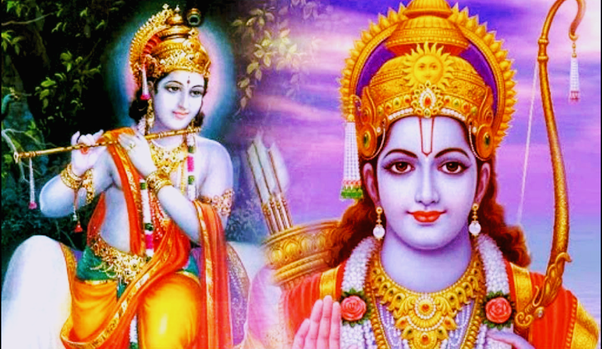
    4. Rama and Krishna were real.
    5. Rama’s name is found  in Kings List of Sumeria, along with Dasaratha and Bharatha.
    6. Rama is referred to in Atlantis Legends.
    7. Rama Tribe is found in Africa.
    8. Ramas Chapel in Iraq.
    9. Egyptian Pharoahs wore Vaishnav marks on thier body.
    10. Australian Aborigines perform Shiva Trinetra Dance even today.
    11. Ancient Tamil is spoken ,even now in Cameroon.
    12. Hindu thoughts were prevalent in Greece much before the arrival of Alexander in India.
    13. Pillars of Herules was dedicated to Krishna.
    14. Krishna Balarama and Shiva were worshipped in ancient Greece.
    15. Tamil Siddha Bhogar is found in South America.
    16. Agastya is found New Zealand.
    17. Rig Veda was compiled in the Arctic.
    18. Pradhyumna, son of Lord Krishna founded the Port city Port Barzhyn in Russia.
    19. Russia has Vedas called Perun,Perun Santis and they were nine in number.
    20. Siberians worship Ayur Devathas of Hinduism even today.
    21. Lake Baikal was Indra’s Amravathi.
    22. Kaikeyi was born in Russia.
    23. Russian language is very close to Sanskrit.
    24. Saptha Rivers, that is seven rivers as explained in Indian Texts are found in Russia.
    25. Yagnyavalka, the Sage who gave Shukla Yajur Veda lived in Russia.
    26. Caspian Sea was Kashyap Sagar.
    27. River Danube was named after Dhanu, mother of Dhanavas.
    28. Rig Vedic Mandala city is found in Arkaim, Russia.
    29. Russia was called Sthree( Women) Varsha and was a Republic.
    30. Petra Jordan Has a Shiva Temple.
    31. Arabia was Aravasthan.
    32. King Vikramaditya ruled the region.
    33. His edict is found in Kaaba.
    34. Muhammad’s Uncle wrote Siva Stuthi.
    35. Shiva Linga is in Meccan and Islam follows Vedic rituals at Kaaba.
    36. Ancient Arabians followed Tamil customs.
    37. Tamil kings extended their kingdoms to middle and far east.
    38. Cilappadikaram Nedunchezhiyan ,Pandya King was called Nebuchadnezzar I.
    39. Yadavs migrated to Israel and are the ancestors of Jews.
    40. Hittie,Elamite,Hurian,Sumerian,Minoan civilizations trace their roots to Tamils.

    Articles to follow.

    Please note that this Blog  is exploratory and research oriented in Nature.

    Alternative views with evidence welcome.

  • 293 Tamil Sangam Sites Vaigai River Madurai

    History of India reveals more surprises.

    Dating of these artifacts recovered from the sites is a challenge to C14,Carbon Dating, as C 14 is useleless in dating beyond 50,000 years.

    This,coupled with the systematic misinformation about Indian history by the Agenda filled western scholars(?) Straight from Max Mueller to present day pseudo researchers from the West,the self styled Secularists and Anglophiles,who try to muddle history of India and our general reluctance to study our regional and Sanskrit texts and our labelling them as myth ,without bothering to read them, has to led us to be unaware of our history.

    Keezhadi excavation image.
    Keezhadi archeological site ,Sivaganga dist. Tamil Nadu.

    And the north south divide,the canard of Aryan Invasion and the lie of Tamil and Dravidas being antagonistic to Vedic culture has made us look at Indian history in compartments,looking at Tamil culture,history as alien,against Indian/Vedic culture and treat it as inferior or later to Vedic/Sanatana Dharma.

    My researches over the past eight years prove all these assumptions  to be wrong.

    The Tamil/ Dravidian culture was a part Sanatana Dharma and existed along with it.

    It predatess Sanatana Sanatana Dharma, going by the findings of archelogical sites.

    For example there are,

    A million year old Advanced Tamil site in Chennai,

    In Thiruvallur,

    20,000 year old Poompuhar site in Tamil Nadu with Vedic Links,

    Sites near Palani,Andippati,Adichanallur,……..

    Now Kezhadi,in Sivaganga District,near Madurai has revealed a river civilization beneath the ground.

    And it belongs to Sangam Era.

    Sangam Era is currently dated around 3000 years ago!

    Yet Poompuhar is around 20,000 years old.

    Tamil Brahmi is older than this,as Cilappadikaram, a Classical Epic of Sangam Era was written, not in Brahmi, but in evolved later Tamil!

    Archeologists have, in 2013, have catalogued 293 towns belonging to Sangam Era in Vaigai bed!

    Time we rewrote our History.

    In a year-long survey conducted in 2013, the state Archaeology department had identified nearly 293 Sangam Age towns along the course of river Vaigai. “Our field of research included areas that fell within five kilometres from the river on both the banks, starting from the place of Vaigai’s origin in Theni district to the very end of the river in Ramanathapuram district,” says archaeologist Dr. V. Vedachalam. The places were classified as granaries, trading points, ports, habitation sites and living or dilapidated temples. Excavations were carried out at Varushanad in Theni and Azhagankulam in Ramnad.

    The excavation at Keezhadi has been carried out at two localities in the farm. “Both the places have yielded different items and we presume they represent a social hierarchy,” says Amarnath. The bigger of the two locations with more number of trenches is said to be a settlement of educated rich people, as many jewellery, fine game stones, semi-precious stones and a dozen Tamil Brahmi inscriptions have been found. “Even the brick structures appear more refined.” Beads of agate, Carnelian and quartz indicate that they had trade link with countries like Rome. The Tamil Brahmi letters found on pottery is all names of individuals such as, Thisan, Aadhan and Udhiran. “They are typical Sangam Age Tamil names,” says Amarnath.

    Reference and citation.

    http://www.thehindu.com/features/metroplus/society/keezhadi-archaeological-excavation/article7557728.ece

  • 5000 Year Dholavira Planned City Water Harvesting Astronomically Aligned

    5000 Year Dholavira Planned City Water Harvesting Astronomically Aligned

    The Ancient History of India is amazing,not merely for the accuracy of facts ,including Geographical but for the skill of the people in building not only temples but well planned cities.

    The myth that early Indians built only temples and were called ‘Barbaric’ these  barbarians built massive temple structures,where the shadow of the building falls in its base,was built in an area where no granite was available,80 tons monolithic block was hoisted at a height of around 180 feet,when pulleys were not supposed to have been known (Thanjavur),

    Temple where the pillar does not rest on the ground,(Lepakshi’

    Where the rays of the Sun fall at a specific time at a specific period;falls at the feet of the Deity..

    There are many temples of this kind.

    There are astronomically aligned temples.

    I have written on most of them.

    Please check under Temples/ Hinduism Category.

    Not only this.

    The ancient Indians built cities in concentric circles with temple at the center,Water tanks,fortification,sewage system,centralised granary,Disaster shelters..

    These were specialized by the Dravida Kings.

    The Kings of North did not lag behind.

    They matched their counterparts in the south.

    Even during Vedic period well planned cities were built.

    Treatise on Town Planning of the Vedic period is found.

    Please read my article on this.

    Now the Harappan period of Dholavira had an advanced town planning system.

    Excavations at Dholavira,Gujarat,India confirm this.

    The city had,

    16 Gates,

    4 Stadia,

    Water harvesting,

    Drainage system,

    Brick Masonry and Ceramic used.

    The city was built with mathematical precision and

    It was astronomically aligned.


    For details,I am producing excerpts from Archeological Survey of India Report.

    Fourteen field seasons of excavation through an enormous deposit caused by the successive settlements at the site for over 1500 years during all through the 3rd millennium and unto the middle of the 2nd millennium BC have revealed seven significant cultural stages documenting the rise and fall of the Indus civilization in addition to bringing to light a major, a model city which is remarkable for its exquisite planning, monumental structures, aesthetic architecture, amazing water harvesting system and a variety in funerary architecture. It also enjoys the unique distinction of yielding an inscription made up of ten large-sized signs of the Indus script and, not less in importance, is the other find of a fragment of a large slab engraved with three large signs. This paper attempts to give an account of hydro-engineering that is manifest in the structures of the Harappans at Dholavira.

    The ancient site at Dholavira (230 53′ 10″ N; 700 13’E), taluka Bhachau, district Kachchh in state Gujarat, lies in the island of Khadir which, it turn, is surrounded by the salt waste of the Great Rann of Kachchh. The ancient settlement is embraced by two monsoon channels, namely, the Manhar and Mansar. The ruins, including the cemetery covers an area of about 100 hectares half of which is appropriated by the articulately fortified settlement of the Harappans alone.

    Lying between the monsoon channels and being undulating sloping towards the south, the site was ideally suited for a settlement having artificial dams and reservoirs.

    Thee city of Dholavira in its fullest form was a precisely proportionate whole and proportionality resolved configuration following a resolute set of principles of planning and architecture with mathematical precision and, perhaps, with astronomically established orientation. Of the city, at present, three corners with partially eroded towers but fully intact inner corners have been confirmed by excavation. When measured between the inner corners, the E- W length of the city area along the northern defensive wall and N-S one along the western one worked out to 771.10 m and 616.87 m, respectively – thus giving the precise ratio of 5 : 4. Similarly, the other divisions of the city also revealed amazing ratios and proportions. The following table provides revealing information:

     Sl. No.   Division  Width  Length  Ratio
    1 City, internal 616.87 711.10 4 : 5
    2 Castle, internal at available top 92 114 4 : 5
    3 Castle, external (as per present exposure) 118 151 4 : 5
    4 Citadel (castle + bailey), external approximately (including bastions) 140 280 1 : 2
    5 Bailey, internal 120 120 1 : 1
    6 Middle Town + Stadium, internal 290.45 340.5 6 : 7
    7 Middle Town, excluding Stadium, internal 242 340.5 5 : 7
    8 Stadium, internal 47.5 283 1 : 6
    9 Lower Town, built-up area 300 300 1 : 1

    The above table inter alia reveals the proportional relationship between the castle and the city so it does in respect of intra-divisional and inter-divisional measurements. It is interesting to give another illustration: the diagonal drawn between the two opposite angles made by the north-eastern and the south-western corners of the city touched the north-western corner of the castle. While of the remaining two, the south-eastern corner is still missing, or not found out, a line, therefore bisecting the north-western angle also bisected the north-western corner of the middle town and further on cut across a crossing of four streets and finally the north-eastern corner of the castle. This could have been achieved by precise mathematical calculations and drawings which were then translated on the ground that was undulating by 13 m in gradient. It was indeed a great engineering achievement. In the whole scheme, the enwalled area of the castle became 49th (7 X 7) part of the city while its total built-up area was 25th (5 X 5) part.

    Furthermore, it is very significant that the two-thirds of the middle town and the whole of lower town were planned with bold projections and recesses just like those one finds in the layout of an Indian temple of the later ages. As a result, the city divisions were provided with a number of housing sectors and spaces. Some of latter were found to have been used for dumping domestic refuse. Another significant feature is the arterial street that ran across axially from west to east dividing all the above-mentioned units and sub-units into two equal halves, and a north-south street, perhaps somewhat staggered, further subdivided each unit….

    Seventeen gates, all built in the fortification walls with equally interesting add-on components, have been exposed so far. Their number-wise break up is: cattle 5, bailey 2, stadiums 4, middle town 1, annexe 2 and the remaining 3 belonging to the late Harappans of Stage VI. ..

    The other area in which the Harappans of Dholavira excelled spectacularly pertained to water harvesting with the aid of dams, drain, reservoirs and storm water management which eloquently speak of tremendous engineering skill of the builders. Equally important is the fact that all those features were integrated part of city planning and were surely the beauty aids, too, The Harappans created about sixteen or more reservoir of varying sizes and designs and arranged them in a series practically on all four sides. A cursory estimate indicates that the water structures and relevant and related activities accounts for 10 hectares of area, in other words 10% of the total area that the city appropriated within its outer fortification. The 13 m of gradient between high and low areas from east to west within the walls was ideally suited for creating cascading reservoirs which were separated from each other by enormous and broad bunds and yet connected through feeding drains.

    Six of the water tanks, one to east of castle and five of the series to south of it, have been fully or considerably exposed while a few others or other related features are testified in check digs. It was found to be the largest, grandest and best-furnished reservoir of rectangular shape measuring 73.40 m N-S and 29.30 m E-W (ratio 5:2) at the top while above that there should have been a 1 to 1.20 m high embankment as evidenced at four corners.

  • World During Ramayana Part 2 Uyghur Ramayana Central Asia.

    This article is in continuation of my article ‘what was happening in the world during Ramayana, Part 1 India’.

    As I wrote in that article, the landmass was different from what it is today.

    See the map below.

    There were four ancient civilizations in those ancient times,out of them evolved the others.

    One of these,were the Uighurs,presently a bone of contention between China and Russia.

    The Uighurs demand a separate State and China is against it.

    Mu was a part of Lemuria?
    MU geography

    The Indian Government, which issued a Visa to  an Uighur Nationalist, canceled it in the face of objection by China.

    The four ancient civilizations.

    1.Uighur.

    2.Atlantis.

    3.Lemuria and

    4.Rama Empire.

    These civilizations were in constant touch with each other ,either as Allies or Enemies.

    Lord Rama belonged to the Lemurians as His ancestor Satyavrata Manu, also known as Vaivaswatha Manu was in the Dravida Desa before migrating to Ayodhya, where his son Ikshvaku founded a Dynasty of the same name,to which Rama belongs,the Solar dynasty,Surya Vamsa.

    https://ramanisblog.in/2014/12/30/manu-ramas-ancestor-migrated-from-south-india-5000-bc/

    So much so Rama refused to fight againt the Lemurians when the people of Atlantis wanted him to do so.

    Please read my article Rama Dropped Atom Bomb againt Atlantis Mohenjo Daro

    During Rama’s reign Lemuria and the Uighurs were on the wane, the Lemurians were in more serious trouble than the Uighurs and the Atlantis and Rama Empires were flourishing.

    However the,Atlantian empire had internal dissensions .

    King Atlas (King Of Atlantis) and Prince Osiris (heir to the throne) desired to create secondary domains where they could re-establish the Lemurian Empire . This intention was thwarted by the actions of Osiris’ younger brother, the Emperor Seth. As present ruler of the Libyan/Egyptian Empire (that covered all of Africa), Seth decided that with the fall of Atlantis his Empire (in league with the rebel Sons of Belial) was to be its last stronghold. He made it his goal to re-establish the Atlantean Empire with himself as its all-powerful, ‘divine right’ emperor (of the world).

    ‘conflicting objectives resulted in deadly warfare between Osiris and his brother Seth. Leading Osiris’s Egyptian armies was Osiris’ eldest son Horus. After Osiris’ unfortunate ‘death’, Horus succeeded his father as king of the Libyan/Egyptian Empire. Intuitively, Horus knew what would happen when they landed in Libya. He completely distrusted his uncle. Horus persistently warned his father about Seth’s stubbornness and treachery. Osiris, believing in the goodness of the human heart, initially ignored his son’s advice. Subsequently, Osiris landed in Libya and after Seth’s abdication became Emperor’

    After the demise of Osiris, his son Horus entered into a pact with Rama Empire(Emperor Zata’ar’s eldest son, Prince Rama.) to defeat Seth, the usurper.’

    The Atlantis army met with Rama’s Army in Rishi City, now in Pakistan’

    You may refer the article in th link I have provided in the beginning of the article.

    Who are Uighurs?

    The Uyghurs (/ˈɡərz, ˈwɡərz/; Uyghur: ئۇيغۇر, Уйғур‎, ULY: Uyghur ʔʊjˈʁʊː]; Old Turkic: 𐰺𐰍𐰖𐰆; Chinese: 维吾尔族; pinyin: Wéiwúěr zú) are a Turkic ethnic group living in Eastern and Central Asia. Today, Uyghurs live primarily in the Xinjiang Uyghur Autonomous Region in China, where they are one of 55 officially recognized ethnic minorities.

    They primarily practice Islam, and are a physically diverse ethnic group ranging from Western Eurasian (Europeans, Middle Eastern) to a more East Asian appearance.

    An estimated 80% of Xinjiang’s Uyghurs live in the southwestern portion of the region, the Tarim Basin.Outside Xinjiang, the largest community of Uyghurs in China is in Taoyuan County, in south-central HunanOutside of China, significant diasporic communities of Uyghurs exist in the Central Asian countries of Kazakhstan, Kyrgyzstan, and Uzbekistan, and in Turkey’

    (https://en.m.wikipedia.org/wiki/Uyghurs )

    However ,the history of the Uyghurs is quite ancient.

    The Ksitigarbha Cult in Central Asia can be traced to Vedic Yama.

    Check the book’ The Scripture on the Ten Kings by  Stephen  F. Teiser

    The book also establishes the Buddhist roots as well.

    //ws-na.amazon-adsystem.com/widgets/q?ServiceVersion=20070822&OneJS=1&Operation=GetAdHtml&MarketPlace=US&source=ac&ref=tf_til&ad_type=product_link&tracking_id=ramasblog-20&marketplace=amazon&region=US&placement=0824827767&asins=0824827767&linkId=3920edff63d3590a37a35d60db3c8a83&show_border=false&link_opens_in_new_window=true&price_color=333333&title_color=0066c0&bg_color=ffffff

    The Uyghurs might have had a continuous feud with the Lemurians/Mu People.

    MU is beieved to be either a part of Lemuria or a distinct civilization ,though it seems to be Tamil.

    See the Map provided in the article.

    After Muslim invasion early Uyghur history is hard to come by.

    You may visit the following link to get an idea.

    http://xjubier.free.fr/en/site_pages/china/Xinjiang_Hami_pg01.html


    As this place is in China information ,as usual,brief.

    Considering these facts it may be postulated that the Uyghurs were present during Rama’s reign as evidenced by Atlantis Chronicles.

    Also by the Uyghur Ramayana.

    From the Uighur ‘Ramayana’ to see the melting of Buddhism in India epic photo


    [Summary] ‘Ramayana’ is a famous Indian epic, one of the two, in the transmission of the ancient Uighur, a simplified version of its Uighur been unearthed in Turpan, Uighur unearthed in Dunhuang Buddhist poetry, the of ‘Ramayana’ are also described. Despite the existence of these Uighur ‘Ramayana’ writing this is already very dilapidated, but is not difficult to see that although the backbone of its story from the Hindu mythology, but in the process of being accepted, and after the re-creation of the Uighurs, and Sanskrit The ‘Ramayana’ exists between the very different. Note 9 to the 15th century, the Uighur Buddhists in terms of employment of its story the same time, of a comprehensive transformation of its contents thoroughly Buddhism, becoming a Fotuhongzhuan Buddhism, a powerful weapon to promote donation.

    [Keywords:] Buddhism, Buddhist literature, the Hindu epic poem written in this Dunhuang Turfan Uighur literature

    [Abstract] Rā mayana is one of the most two famous hero-epics of India, and was translated into Uighur during the 9th to 15th centuries. Related fragments of the Uighur manuscripts had been discovered in Turpan and Dunhuang. The Uighur texts are different to master copy in Sanskrit, through them, it can be seen that among the Uighurs, Rā mayana, the popular epic and ornate poetry belongs to Buddhism instead of Brahmanism or Hindus, and was used to disseminate the Buddhism.

    [Key Words] Buddhism; Indian epics; Buddhist literature; Uighur manuscripts; Dunhuang and Turpan texts

    Mention the famous Indian epic ‘Ramayana (Rā mayana)’, people will naturally be it with the Hindu Brahmanism and later linked. In fact, the situation is not always the case, we have studied here, Turpan the Uighur ‘Ramayana’ written volume that is clearly the exception. This paper documents through the translation, textual research to explore the close relationship between literature and Buddhism, and then spy on the Indian epic Uighur Buddhist ‘Ramayana’ absorption and transformation.
    In ancient China, there are a large number of Indian books have been translated into Chinese, but apart from a few concerning the livelihood of the Department of medicine, astronomy, mathematics books, the rest almost all uniformly of the Buddhist Scriptures, for the heretics of the book, the Buddhist monks of China and India are not translated, and even the world famous Indian epic, the two ‘Mahabharata’ and ‘Ramayana’ are not translated over. [1] Fortunately, there is, but added China has translated several of minorities ‘Ramayana’. Uighur in Berlin today to write this deposit shall be left of them to Jane.
    Is now known Uighur ‘Ramayana’ time of writing this there are two: First, the examination paper fragments of a leaf type, size 30 * 95cm. Positive for the Uighur Buddhist repentance, [2] on the back of scroll bottom half of useful written in cursive style Uighur Rama story in the text before (only in the back) marked with thick black lines, between text lines on the write. The volume was the second time a German expedition in the Turpan Turpan West Jiaohegucheng received while preserving the text 34 lines, numbered Mainz 734b (T II Y 47). Second, the time of writing this fragment a leaf, keep writing 14 lines, numbered U 1000 (T Ⅲ 86-64), a German expedition in the third Turpan Turpan derived from a certain place. Both are possession of the German National Library in Berlin (Staatsbibliothek Preussischer Kulkurbesitz), by the German scholar Zieme Kanbu. [3] but long-term is not drawn to academic concerns. [4] In addition, unearthed in Dunhuang in Uighur Buddhist poetry, but also with ‘Ramayana’ related content. Is to preserve the good, the content of a more extensive piece of writing, for example the first to explore the characteristics of Uighur Rama story.
    First, the original transcription.

    And the Ten kings referred to might relate to the Ten Kings War during the Vedic period, thus dating the Uyghurs to Vedic period.