Month: February 2017

  • I Perform Sata Rudreeyam Daily Lord Krishna in Mahabharata

    I Perform Sata Rudreeyam Daily Lord Krishna in Mahabharata

    Let me narrate a legend involving Adi Shankaracharya and Devi before proceeding to the topic.

    After Adi Shankaracharya was accepted as his disciple  by Gaudapada(who is considered to be an Avatar of Vyasa,who in turn is an Avtar of Vishnu),Shankaracharya wanted to write a commentary,Bhashyam.

    (*Adi Shankara’s Guru was Govinda Bhagavadpada and both Govinda Bhagavadpada and Shankara studied under Gaudapada.
    Hence Shankara calls him Parama Guru.)

    He wanted his first work to be on Devi.

    So he fixed Devi in his mind ,meditated and asked his disciple to get the manuscript from the repository.

    When It was  brought,it was found to be the manuscript of Vishnu Sahasranama.

    Shankaracharya was annoyed and asked the disciple to bring the manuscript on Devi.

    What was brought to him,not only for the second time but the third time as well was,

    Vishnusahasranama.

    Shankaracharya meditated on Devi and She told him,

    ‘Before beginning  your work on Me,complete thee work on my  elder Brother Vishnu first’

    Thus was born the Shankara Bhashya of Vishnu.

    It can be identified as Shankara Bhashya when the phrase ‘Om Namo Bhagavathe

    Vasudevaayav’Vishnu’s Mahamantra,The Dwadasa Nama, in the Dhyana sloka before

    ‘ Santhakaaram Bhujaka Sayanam,’and this can not be found in any other  work.

    Such is the unity of Hindu thought and we have Krishna Sthuthi by

    Shiva,Mantrarajapadam by Shiva on Narasimha and Siva Stuthi by Krishna.

    Now there is something more.

    e1386-clipboard01

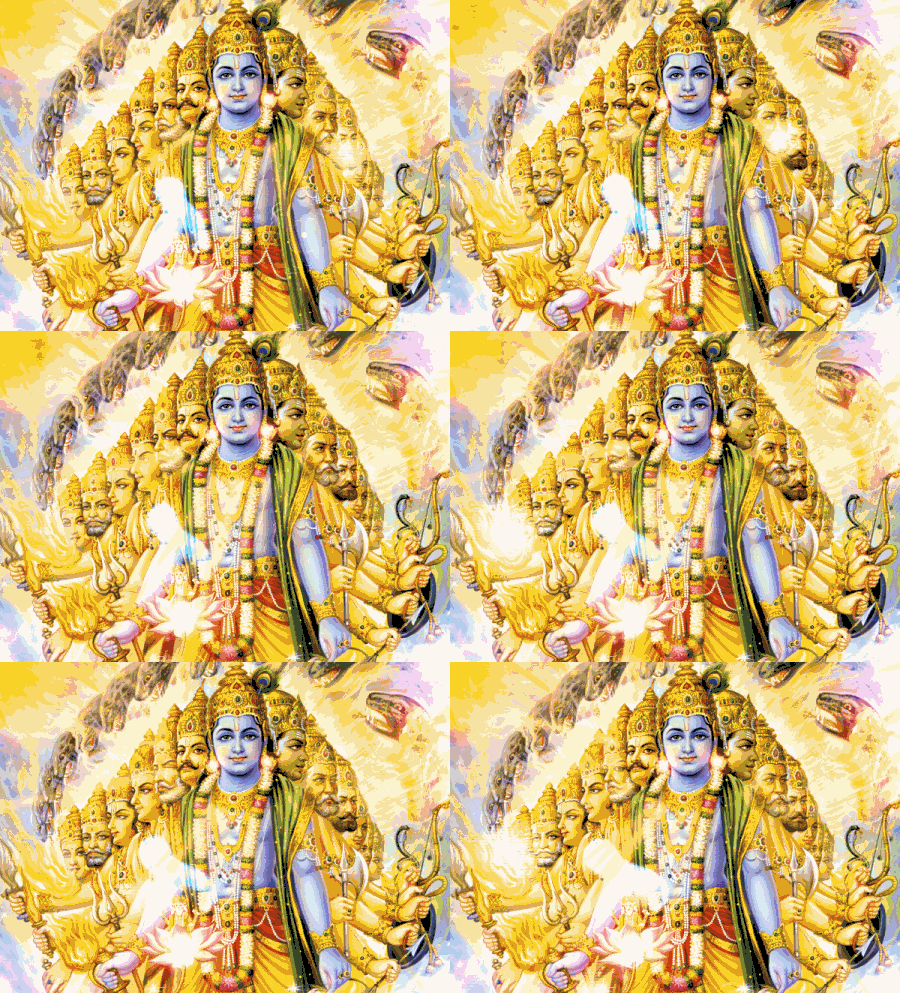
    Lord Krishna says He performs Satha Rudreeya daily.

    Satha Rudreeyam is on Rudra,an aspect of Shiva as Destroyer.

    Lord Krishna on Satha Rudreeyam.

    ‘Krishna confesses that he recites the Sata-Rudriya every morning, and explains how it is the  best way to please Shiva (Anushasana Parva).
    “Vasudeva said, ‘I shall recite to thee the good that I have acquired and the fame that I
    have won through the Grace of That High-Souled One. Verily, I shall discourse to thee
    on the topic, after having bowed unto Kapardin.

    Oh king, listen to me as I recite to thee
    that Sata-Rudriya which I repeat; with restrained senses, every morning after rising
    from bed…O sire, It is Sankara who Created All the creatures in the Universe, mobile
    and immobile.

    There is no being that is higher, O monarch, than Mahadeva. Verily, He is
    the Highest of All beings in the three worlds…Formerly, when Sankara became angry, the
    deities trembled with fear and bent their heads to Him. Without being appeased, Rudra
    placed on His bow-string a sharp and blazing arrow. Beholding His Prowess, the deities
    and the Rishis became all alarmed. Those foremost of gods began to pacify Him! Joining
    their hands in reverence, they began to recite the Sata-Rudriya Mantras. At last,
    Maheswara, thus praised by the deities, became gratified.’”
    vAsudeva uvAcha||
    hanta te kathayiShyAmi namaskRRitvA kapardine |
    yadavAptaM mahArAja shreyo yachchArjitaM yashaH ||
    prayataH prAtarutthAya yadadhIye vishAM pate |
    prA~njaliH shatarudrIyaM tanme nigadataH shRRiNu ||

    sha~NkarastvasRRijattAta prajAH sthAvaraja~NgamAH ||
    nAsti ki~nchitparaM bhUtaM mahAdevAdvishAM pate |
    iha triShvapi lokeShu bhUtAnAM prabhavo hi saH ||

    tataH praNemurdevAste vepamAnAH sma sha~Nkaram |
    punashcha sa.ndadhe rudro dIptaM sunishitaM sharam ||
    rudrasya vikramaM dRRiShTvA bhItA devAH saharShibhiH |
    tataH prasAdayAmAsuH sharvaM te vibudhottamAH ||
    jepushcha shatarudrIyaM devAH kRRitvA~njaliM tataH |
    sa.nstUyamAnastridashaiH prasasAda maheshvaraH ||’

    Five Methods of Chanting Rudra

    There are five methods of chanting Rudra viz.,

    1. Ordinary method where first Rudram is read and then Chamakam.
    2. Rudra ekadasini where after chanting Rudram, the first anuvaka of Chamakam is chanted, again after chanting Rudram the second anuvaka of Chamakam is chanted and so on till the eleventh chanting of Rudram followed by eleventh anuvaka of Chamakam.
    3. Eleven such Rudra ekadasinis makes one Laghu Rudram
    4. Eleven such Laghu Rudrams makes one Maha Rudram and
    5. Eleven such Maha Rudrams make one Athi rudram.

    Source. P.R.Ramchander
     

  • Shiva Linga As Penis Misinformation Story Vedic Rebuttal

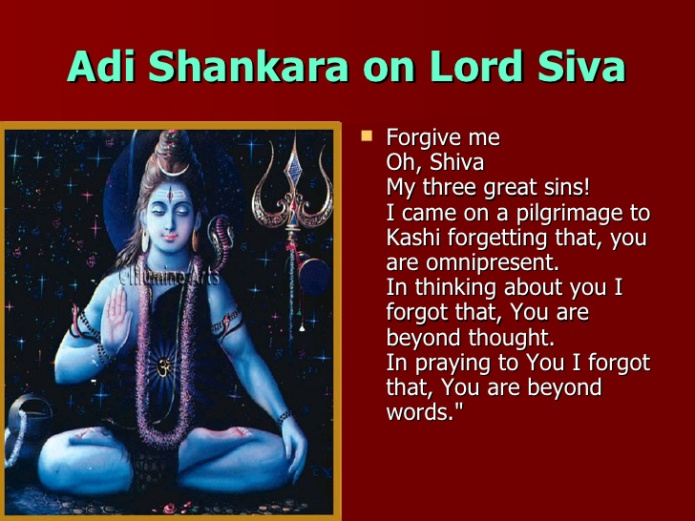
    Shiva Linga As Penis Misinformation Story Vedic Rebuttal

    On April 14,2014,I wrote an article Shiva Linga,Penis Phallus of Shiva,Rubbish

    In that article I explained how there is no basis for this outrageous interpretation of Hinduism in general and Shaivites in particular.

    I also explained the basic concept of Shiva.

    While there have been general acceptance of what I have expressed ,there were a few who hold the view that Lingam is Phallus and their refrain is that the practice is followed by the Tantra Shastra.

    Those who say this need to understand Tantra Shastra in detail.

    1.Though there are practices in Tantra where Yoni (females genital organ) and Male organ is worshipped and copulation is also practiced,one should know these practices do not have the sanction of the Vedas.

    2.These practices are called Vaamachaara,the left handed path and are set aside by Acharyas like Adi Shankaracharya.

    3. In practices indulged by  one, he is beyond sensual pleasure and performs these acts with total detachment,fixing mind on Reality.This is a rare case.

    Many,deluding themselves that they are practicing Tantra for Realization follow this path only to pleasure themselves. I have seen cases like this,where the practitioner ends up a lunatic.

    Though there are specific practices like Kaula Marga,the discipline needed to practice vairaagya,determination and mental strength is way beyond most of us.

    It is akin to saying that if you ask yourself ‘Who Am I?’,you become a Ramana Maharishi!

    So if you want to follow Hinduism,better read original texts and understand Hinduism in all aspects.

    Now as to how this ridiculous calling of Shiva “Linga as Phallus.

    One is not sure where or how this started.

    I am providing information on this here.

    First,the misinformation.

    Wikipedia write up consists of  this;

    “British missionary William Ward criticized the worship of the lingam (along with virtually all other Indian religious rituals) in his influential 1815 book A View of the History, Literature, and Mythology of the Hindoos, calling it “the last state of degradation to which human nature can be driven”, and stating that its symbolism was “too gross, even when refined as much as possible, to meet the public eye.” According to Brian Pennington, Ward’s book “became a centerpiece in the British construction of Hinduism and in the political and economic domination of the subcontinet.’

    In 1825 Horace Hayman Wilson’s work on the lingayat sect of South India attempted to refute British notions that the lingam graphically represented a human organ and that it aroused erotic emotions in its devotees.

    Monier-Williams wrote in Brahmanism and Hinduism that the symbol of linga is “never in the mind of a Shaiva (or Shiva-worshipper) connected with indecent ideas, nor with sexual love”.In contrast, Jeaneane Fowler believes the linga is “a phallic symbol which represents the potent energy which is manifest in the cosmos”.Some scholars, including David James Smith, believe that throughout its history the lingam has represented the phallus; others, including N. Ramachandra Bhatt, believe the phallic interpretation to be a later addition.M.K.V. Narayan distinguishes the Siva-linga from anthropomorphic representations of Shiva, and notes its absence from Vedic literature, and its interpretation as a phallus in Tantric sources...

    Atharva Veda on Linga.

    ‘There is a hymn in the Atharvaveda that praises a pillar (Sanskrit: stambha), and this is one possible origin of linga worship.  Some associate Shiva-Linga with this Yupa-Stambha, the sacrificial post. In the hymn, a description is found of the beginning-less and endless Stambha or Skambha, and it is shown that the said Skambha is put in place of the eternal Brahman. The sacrificial fire of the Yajna, its smoke, ashes and flames, the soma plant, and the ox that used to carry the wood for the Vedic sacrifice, gave rise to the conceptions of the brightness of Shiva’s body, his tawny matted hair, his blue throat, and the riding on the bull of the Shiva. The Yupa-Skambha gave place in time to the Shiva-Linga.[11][12] In the Linga Purana the same hymn is expanded in the shape of stories meant to establish the glory of the great Stambha and the supreme nature of Mahâdeva (the Great God, Shiva).

    Swami Vivekanada’s views.

    At the Paris Congress of the History of Religions in 1900, Ramakrishna’s follower Swami Vivekananda argued that the Shiva-Linga had its origin in the idea of the Yupa-Stambha or Skambha, the sacrificial post, idealized in Vedic ritual as the symbol of the Eternal Brahman. This interpretation was in response to a paper read by Gustav Oppert, a German Orientalist, who traced the origin of the Shalagrama-Shila and the Shiva-Linga to phallicism.According to Vivekananda, the explanation of the Shalagrama-Shila as a phallic emblem was an imaginary invention. Vivekananda argued that this explanation of the Shiva-Linga as a phallic emblem was brought forward by the most thoughtless, and was forthcoming in India in her most degraded times, those of the downfall of Buddhism.’

    Shiva Upasna Mantra.

    Om Shambhave Namah.
    Namaste astu bhagavan vishveshvaraya mahadevaya tryambakaya tripurantakaya trikagni kalaya kalagnirudraya nilakanthaya mrutyunjayaya sarveshvaraya Sadashivaya shriman mahadevaya namah.
    Om Nidhanapataye Namah Nidhanapatantikaya Namah
    Urdhvaya Namah Urdhvalingaya Namah
    Hiranyaya Namah Hiranyalingaya Namah
    Suvarnaya Namah Suvarnalingaya Namah
    Divyaya Namah Divyalingaya Namah
    Bhavaya Namah Bhavalingaya Namah
    Sarvaya Namah Sarvalingaya Namah
    Shivaya Namah Shivalingaya Namah
    Jwalaya Namah Jwalalingaya Namah
    Atmaya Namah Atmalingaya Namah
    Paramaya Namah Paramalingaya Namah
    Etath Somasya Suryasya Sarvalingaga
    Sthapayati Panimantram Pavitram
    Sadyo jatam prapadyami sadyojatayavai namo namah
    Bhave bave naati bhave bhavasmamam bhavodbhavaya namah
    Vama devaya namo jyesthaya nama shresthaya namo
    Rudraya nama kalaya nama kalavikaranaya namo
    Balavikaranaya namo balaya namo balapramathanaya namah
    Sarva bhoota damanaya namo manonmanaya namah
    Aghorebhyo thagorebhyo ghora ghora tharebhyah

    Sarvebhya sarva sarvebhya namaste astu rudra rupebhya
    Tat purshaya vidmahe mahadevaya dheemahi
    Tanno rudra prachodayaat
    Eeshana sarva vidyanaam eeshwara sarva bhootanam

    Brahmadhipati brahmanodhipati
    Brahma shivome astu sada shivoham
    Namo hiranya bahave hiranya varnyaya
    Hiranya roopaya hiranya pataye
    Vikapataya umapataye pashupataye namo namah
    Om hara hara namah parvati pataye hara hara mahadev.

    Reference and Citation.

    https://en.m.wikipedia.org/wiki/Lingam


  • Linga With Meteorite Roof Madurai Meenakshi Temple VR Tour

    Linga With Meteorite Roof Madurai Meenakshi Temple VR Tour

    I have written on Shiva Temple,Thittai,Tamil Nadu,India,where the  Stone roof,made of

    Moon Stone drips water on Shiva Linga every 24 minutes.

    There are temples in India where the roof,Vimana is made of Meteorite.

    To my knowledge, there are three such temples.

    Somasundareswara,Madurai Meenakshi Temple,

    Hanuman Temple,Lonar,Maharashtra, and

    Shiva Temple atcThiriveezhimazhalai,Thiruvarur District, Tamil Nadu.

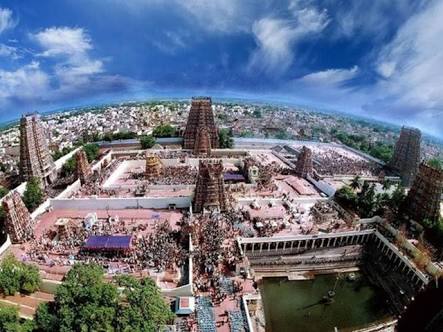
    In Madurai the roof of Somasundareswara is made of Meterorite.

    Somasundareswara,Madurai.image
    Shiva Linga,Somasundareswara,Madurai

    The legend has it that Indra,Chief of Devas built the roof.

    Tamil poems refer to this.

    This type of roof is called ‘Vinnizhai Vimanam,the roof made of Stone falling from the sky.

    Thiruvilayadal Puranam.

    திருவாலவாய்க் காண்டம்
    நாற்பத் தொன்பதாவது திருவாலவாயான படலம்
    “தேனிழி குதலைத் தீஞ்சொற் சேனெடுங் கண்ணி கோயில்
    வானிழி விமானம் பொற்றா மரைவிளை யாட்டின் வந்த
    கானிழி யிடபக் குன்றங் கரிவரை நாகக் குன்றம்
    ஆனிழி வரைவ ராக வரைமுத லழிவி லாத
    (2)
    திருவிளையாடற் புராணம்
    பாம்பு எல்லைகாட்டிய படலம் பாடல் எண் 2340
    “நுண்ணிய பொருளினு நுண்ணி தாயவர்
    விண்ணிழி விமானநின் றெழுந்து மீனவன்
    திண்ணிய வன்பினுக் கெளிய சித்தராய்ப்
    புண்ணிய அருட்கடல் ஆகிப் போதுவார்“

    4. திருப்புகலியும் திருவீழிமிழலையும்291
    ________________________________

    ஏகபெ ருந்தகை யாயபெம்மா

    னெம்மிறை யேயிது வென்கொல்சொல்லாய்

    மேகமு ரிஞ்செயில் சூழ்மிழலை

    விண்ணிழி கோயில் விரும்பியதே. 4

    38. சந்தள றேறுத டங்கொள்கொங்கைத்

    தையலொ டுந்தள ராதவாய்மைப்

    புந்தியி னான்மறை யோர்களேத்தும்

    புகலி நிலாவிய புண்ணியனே

    எந்தமை யாளுடை யீசவெம்மா

    னெம்மிறை யேயிது வென்கொல்சொல்லாய்

    வெந்தவெண் ணீறணிவார்மிழலை

    விண்ணிழி கோயில் விரும்பியதே. 5


  • Manu Ancestor of Germans.

    Manu Ancestor of Germans.

    Kashyapa is regarded as the father of humanity. Vivasvan or Surya, son of Kashyapa and Aditi. Vaivasvata Manu, because he is the son of Vivasvan and Saranyu (Saṃjñā). He is also known as Satyavrata and Shraddhadeva.

    Vaivaswatha Manu

    Vaivaswatha Manu.

    1. Brahma
    2. Marichi, one of the 10 Prajapatis created by Brahma.
    3. Kashyapa, son of Marichi and his wife, Kala. Kashyapa is regarded as the father of humanity.
    4. Vivasvan or Surya, son of Kashyapa and Aditi.
    5. Vaivasvata Manu, because he is the son of Vivasvan and Saranyu (Saṃjñā). He is also known as Satyavrata and Shraddhadeva.

    The present Manvantara is named after Vaivaswatha.
    He is also called Satyavrata Manu.
    Forewarned of a Tsunami,Manu who was a King in Dravida Desa,areas south of Vindhya mountains, meditated near Madagascar and then left for Ayodhya with his son ,Ikshvaku, who founded the Ikshvaku,The solar dynasty to which Lord Rama belongs.
    Manu .
    The term Man is from Manu who is considered to be the First Man.
    World abounds in Great Flood legends and one finds it among all Religions,Judaism,Christianity,Islam,Buddhism and also among tribals and Aborigines.
    All world Literatures speak of the Great Flood.
    So the question of Migration.
    Who migrated from where?
    I have written quite a few articles on this and the migration seems to have been from around the present geographical location of India and Madagascar.
    One must remeber here that the ancient land mass wzs different from what we find today.
    So Manu or his progenies must have been present everywhere and in every culture.
    The Germanic Tribes ascribe their ancestry to Manu.
    Mannus, according to the Roman writer Tacitus, was a figure in the creation myths of the Germanic tribes. Tacitus is the only source of these myths.

    Tacitus wrote that Mannus was the son of Tuisto and the progenitor of the three Germanic tribes Ingaevones, Herminones and Istvaeones. In discussing the German tribes Tacitus wrote:

    In ancient lays, their only type of historical tradition, they celebrate Tuisto, a god brought forth from the earth. They attribute to him a son, Mannus, the source and founder of their people, and to Mannus three sons, from whose names those nearest the Ocean are called Ingvaeones, those in the middle Herminones, and the rest Istvaeones. Some people, inasmuch as antiquity gives free rein to speculation, maintain that there were more sons born from the god and hence more tribal designations—Marsi, Gambrivii, Suebi, and Vandilii—and that those names are genuine and ancient. (Germania, chapter 2)’

    According to Tacitus‘s Germania (AD 98), Tuisto (or Tuisco) is the divine ancestor of the Germanic peoples. The figure remains the subject of some scholarly discussion, largely focused upon etymological connections and comparisons to figures in later (particularly Norse) Germanic mythology.

    The Germania manuscript corpus contains two primary variant readings of the name. Root of the word is from the Hindu Vedic ‘Tvasthar’ – father of Manu. The most frequently occurring, Tuisto, is commonly connected to the Proto-Germanic root *tvai – “two” and its derivative *tvis – “twice” or “doubled”, thus giving Tuisto the core meaning “double”. Any assumption of a gender inference is entirely conjectural, as the tvia/tvis roots are also the roots of any number of other concepts/words in the Germanic languages. Take for instance the Germanic “twist”, which, in all but the English has the primary meaning of “dispute/conflict”.

    In the historical Vedic religion, Tvaṣṭṛ is the first-born creator of the universe. The Purusha Sukta refers to the Purusha as Tvastr, who is the visible form of creativity emerged from the navel of the invisible Vishvakarman. In the Yajurveda, Purusha Sukta and the tenth mandala of the Rigveda, his character and attributes are merged with the concept of Hiranyagharbha/Prajapathy or Brahma.

    Brahma was also called Tvashta and that makes Him as the ancestor of Germanic people.

    The second variant of the name, occurring originally in manuscript E, reads Tuisco. One proposed etymology for this variant reconstructs a Proto-Germanic *tiwisko and connects this with Proto-Germanic *Tiwaz, giving the meaning “son of Tiu”. This interpretation would thus make Tuisco the son of the sky-god (Proto-Indo-European *Dyeus) and the earth-goddess

    Adhitand Thithi were the wives of Kasyapa and Kasyapa’s son was Manu.

    This interpretation also points out the origin of Germanic people is Manu.

    References and Citations.

    https://en.m.wikipedia.org/wiki/Mannus

    Join 4,575 other subscribers
  • Sanskrit Inscription Olkhon Island Baikal Lake Russia.

    Sanskrit Inscription Olkhon Island Baikal Lake Russia.

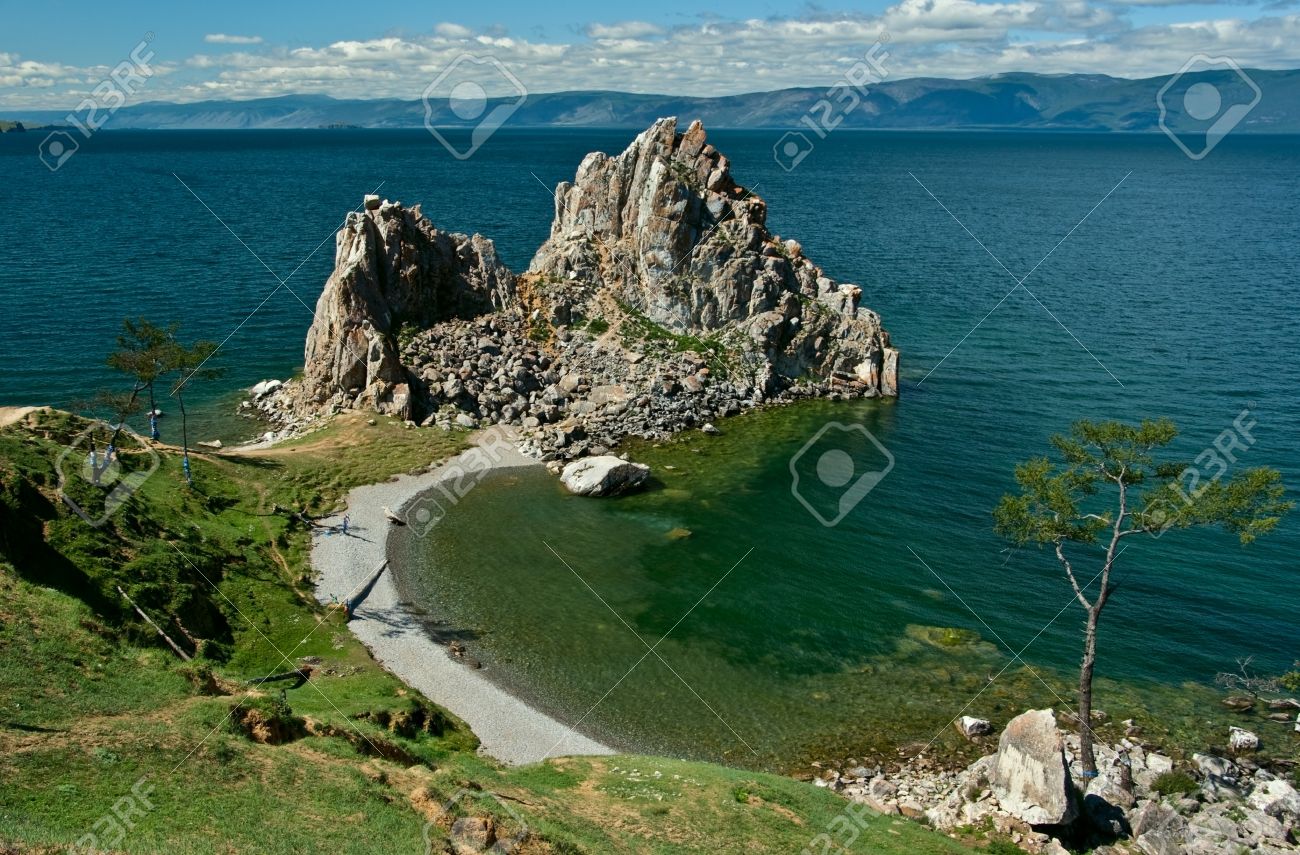
    The image above is Shaman rock and cape Burhan on Olkhon Island, Baikal Lake, Russia.

    I had written in my earlier article that there is a Sanskrit Inscription in Baikal area.

    As the article was about Krishna’s palace in Por-Byzhyn,I did not detail on the inscription.

    There is a Sanskrit inscription in Rock Shaman.

    Cape Burkhan is one of the most interesting place of Olkhon. It ends by a sacred Rock Shaman. At the foot of the Rock Shaman. At the foot of the rock there is a mysterious picture and an inscription in Sanskrit.

    Rock Shaman is one of 9 shrines of Asia (earlier it was called “Stone – Temple”) It,s located not far from Khuzhir settlement, and it,s a symbol of Baikal, one of the most famous sight of the lake – almost each film or photo – album about Baikal contains it,s picture! Rock Shaman is a two – summits rock covered with thick red lichen. In the nearest to the shore rock there is a through cave, especially worshipped by Buryats. In the ancient times it was a plase for special shaman,s rituals, and later it was Buddha,s altor.

    The name of the Rock was changed, when Buddhism came to Buryatia. It was renamed “Burkhan” –God, Buddha. Native people say, that in the beginning of xx century hundreds of Buddhish Lamas came from datsans (temples) of Zabaikalie to pray. Lamas used to say that a Mongolian God, who had moved from Mongolia many years ago looking for a shelter; lived there in the cave of the Rock; and Lamas from all 34 Buryat datsans come to the Rock to pray.’ (http://www.olhon-tur.com/en/sham.php)

    Christianity wiped out nearly all earlier practices in the area.

    However the remains of  Shamanism and Buddhism are present now.

    As communism also had a major role in destroying Religion,the evidence is is difficult to come by.

    Yet there is enough material to suggest that Shamanism is a primitive aspect of Hinduism.

    Mongolian flag.image
    Mongolian flag

    Shamana might have its origin in the Sanskrit word ‘Shramana’

    Śramaṇa (Sanskrit: श्रमण, Samaṇa in Pali) means “seeker, one who performs acts of austerity, ascetic”. The term refers to several Indian religious movements parallel to but separate from the historical Vedic religion.

    ‘Shramana’ and ‘Brahmin’ to illustrate bitter opponents whose differences came from varying religious models. Part of the Shramana tradition remained outside the Hindu fold by rejecting the authority of the Vedas; with the Jains, Buddhists, Ajivikas, and other religious groups developing as a result of this rejection. Part of the Shramana tradition was absorbed into Hindu dharma literature with a place for a renunciate sanyasi in it, in the four stages (ashramas) of life.’

    ( source.  http://www.chinabuddhismencyclopedia.com/en/index.php/Shramana)

    So the presence of Sanskrit is not surprising.

    I will be writing on Hinduism and Shamanism in detail.

    And there is mention of sky Gods,including Adhiti being worshiped alongn with 23 more deities.

    ‘Then transfer to the MRS village (an old name which stands as Russian abbreviation for Malomorskii Fishing Farm) 45 km) and crossing Olkhon Vorota (Olkhon Gates) strait to the Olkhon island while heading for  Nikita Bebcharov’s guest– house  managed  by a private family in Huzhir village.  Then you’ll have an excursion to the Burhan cape where you will visit the well – known Shamanka rock  – one of the 9 Asian sacred places called “ Rock Temple” in the past. The Burkhan Cape Shaman Rock Temple was once visited by the Dalai-Lama who had carried on special service near the Altar-of-Rock in a small cave inside the Craig that has some inscriptions in Sanskrit. By the shamanist believers the Cape is regarded to be home of the major of 13 sky deities – Khan Hate– Baabai who came to our Land as a fortune ruler. ‘
    ( source.  http://www.baikal-discovery.ru/en/index.php?option=com_content&task=view&id=23&Itemid=42 )

    Adhiti.

    The ancient Indian Hindu Mother Goddess, Aditi, is the daughter of Daksha and Veerni. She is the unbounded Sky Goddess, honored as the mother creator of life because she gave birth to the planets and the stars.

    She had twelve children that are called the twelve sovereign principles: Mitra (solidarity), Varuna (fate), Aryaman (chivalry), Daksa (ritual skill), Bhaga (the inherited share), Amsa (the gods’ given share), Tvastr (craftsmanship), Savitr (the magic power of words), Pusan (prosperity), Sakra (courage), Vivasvat (social laws), and Vishnu (cosmic law. Aditi’s children help protect humankind.

    Aditi’s name means “unbound, unlimited, and unfettered.” Aditi is revered as the unbounded love found in motherhood.

    Aditi is the guardian of all life and the supporter of all creatures. She is also the keeper of light that illuminates all life and ensures consciousness.

    Aditi is an ancient goddess, the mother of all the Indian gods. She is the Hindu mother goddess that can help you free yourself of real and perceived bounds on your happiness and joy. She can help you find a path that will bring you the happiness that you are searching for and the care that you need from a mother.

    Asvini kumaras.

    Asvini Devas,twins, are the sons of Sangya, Goddess of Clouds, daughter of Viswakarma,The Divine Architect and Surya, the Sun God, in His Avatar as Vivasvat.

    Another version says it is Chaya,Shadow, is their mother,father is Surya.

    They are Healers and given the world Narana Mantra to cure all diseases.

    Narayana Mantra

    The Shaman head is the head healer primarily.

    Genghis Khan was a Hindu and had a Vedic Flag

    In Chuan Chou, there was a Sivan Temple. In that temple, an image of Siva was consecrated under the ‘Firman’ – royal orders of ‘Sekasai Khan’.
                    This was done for the health of ‘Sekasai Khan’.
                    ‘Sekasai Khan’ in this inscription is the name of Kublai Khan himself.
                    His full name was Kublai Sekcen Khan.
                    Sekcen Khan became Sekasai Khan in Tamil.
                    The Sivan Temple was known as ThiruKathaleesvaram and the Lord of the temple was known as ThiruKathaleesvaram udaiya Naayanaar.
                    The person who executed the order was Thava ChakkaravarththikaL Sampandha PerumaL.
                    It was done on the Chithra Paurnami day of Saka Era 1203 – 1281 AD.

    Source. https://ramanisblog.in/2015/08/06/kublai-khan-consecrated-shiva-chuan-chou-hinduism-in-china/

    The Thirteen Buddhas.

    The Thirteen Buddhas (十三仏 Jūsanbutsu?) is a Japanese grouping of Buddhist deities, particularly in the Shingon sect of Buddhism. The deities are, in fact, not only Buddhas, but include bodhisattvas and Wisdom Kings.[1] In Shingon services, lay followers recite a devotional mantra to each figure, though in Shingon practice, disciples will typically devote themselves to only one, depending on what the teacher assigns. Thus the chanting of the mantras of the Thirteen Buddhas are merely the basic practice of laypeople.

    The Thirteen Buddhas are also an important part of a traditional Japanese Buddhist funeral service, with each deity having a corresponding memorial service for the deceased.[2] The thirteen in Japanese and Sanskrit and the corresponding date of their service after the death are:

    1. Fudo (Acala), 7th day
    2. Shaka (Sakyamuni), 14th day
    3. Monju (Manjushri), 21st day
    4. Fugen (Samantabhadra), 28th day
    5. Jizo (Ksitigarbha), 35th day
    6. Miroku (Maitreya), 42nd day
    7. Yakushi (Bhaisajyaguru), 49th day
    8. Kannon (Avalokitesvara), 100th day
    9. Seishi (Mahasthamaprapta), 1st anniversary
    10. Amida (Amitabha), 2nd anniversary
    11. Ashuku (Akshobhya), 6th anniversary
    12. Dainichi (Vairocana), 12th anniversary
    13. Kokuzo (Akasagarbha), 32nd anniversary

    Source. https://en.m.wikipedia.org/wiki/Thirteen_Buddhas

    Buddhism came later to Sanatana Dharma and many Buddhist practices,especially Esoteric Buddhism follows,though with modifications Tantra.

    So it comes as no surprise to me that there is Sanskrit inscription in Lake Baikal area.