Tag: Tamil History

  • Then Madurai Tamil Sangam Era In Micronesia, North of Australia

    Then Madurai Tamil Sangam Era In Micronesia, North of Australia

    Tamil Classics of the Sangam era speak of Three Conclaves of Poets (Tamil Sangam)

    According to Tamilian legends, there were three Sangam periods, namely Head Sangam, Middle Sangam and Last Sangam period. Historians use the term Sangam period to refer the last of these, the first two being legendary. So it is also called Last Sangam period (Tamil: கடைச்சங்க பருவம், Kaṭaissanka paruvam , or Third Sangam period (Tamil: மூன்றாம் சங்க பருவம், Mūnṟām sanka paruvam . The Sangam literature is thought to have been produced in three Sangam academies of each period. The evidence on the early history of the Tamil kingdoms consists of the epigraphs of the region, the Sangam literature, and archaeological data.

    Approximately during the period between 400 BC to AD 200, Tamilakam was ruled by the three Tamil dynasties of Pandya, Cholaand Chera, and a few independent chieftains, the Velir.(wiki)

    Map_FM-Nan_Madol.PNG ‎(550 × 500 pixels, file size: 18 KB, MIME type: image/png)

    *In the Light of new evidence indicating that Poompuhar, Chola Port being dated by about 20,000 years ago,

    Million year old Tamil site being found in Chennai and more evidence both archaeological in India and abroad,

    The Tamils  being considered as the forerunners of the MU civilization, which was in the periphery of Lemuria and

    Tamils being the forerunners of the Olmechs who  predate the Incas and Mayas,

    the date of the Sangam needs revision.

    The first Sangam was conducted in Then Madurai(South Madurai)

    Present Madurai, Tamil Nadu is different.

    Pohnpei island.Gif
    the unexcavated tomb of Qin Shi Huang, the first Emperor of China, and numerous other pyramids and burial mounds; and the underwater ruins of Nan Madol that surround Pohnpei Island.THEN Madurai?

    Thenmadurai was the capital of the Pandya Kings.

    Meenakshi , the presiding deity of the present Madurai was a Queen of Madurai.

    Her husband was Sundareswara, who is considered to be an Avatar of Shiva.

    Meenakshi’s father Malathdwaja Pandyan participated in the Mahabharata War at Kurukshetra as an ally of the Pandavas.

    Lord Krishna attended Tamil Sangam and he married a Pandyan Princess and  had a daughter whom he got married to a Pandyan Prince, and

     we have facts that tell us Parashurama, Balarama, Karna,Arjuna, Vidhura,and Agastya visited south Dravida Desa.

    Rama’s ancestor Vaivaswatah Manu lived in the Dravida desa and migrated to Ayodhya because of a tsunami recorded in Tamil classics,Puranas, Ramayana, Mahabharta and in foreign sources.

    Foreign sources call this as the Great Flood and this finds reference in Christianity , Judaism and the legends of all civilizations of the world.

    Manu, before migrating to Ayodhya meditated in Madagascar.

    The present South Indian land mass seems to be only a fraction of the original land of the Dravidas.

    The Land mass is being identified as Lemuria and there was another surrounding  Lemuria which was also occupied by the Dravidas.

    *It has to borne in mind that, while studying about such vast stretches of Time, the present land mass we have in India has no relevance to it.

    Because of tectonic movements, India was at one point of time near the Arctic, where the rig Veda was composed.

    Please check my article on this and also for all the statements I have made in this article.

    So Dravida desa was in Lemuria and MU.

    Tamil Kings ruled from there.

    The Tamil Nadu Kings List runs to thousands of years.

    ‘The earliest explicit discussion of a katalkol(“seizure by ocean”, possibly tsunami) of Pandyan land is found in a commentary on Iraiyanar Akapporul. This commentary, attributed to Nakkeerar, is dated to the later centuries of the 1st millennium CE. It mentions that the Pandyan kings, an early Tamil dynasty, established three literary academies (Sangams): the first Sangam flourished for 4,400 years in a city called Tenmaturai, attended by 549 poets (including Agastya) and presided over by gods like Shiva, Kubera and Murugan. The second Sangam lasted for 3,700 years in a city called Kapatapuram, attended by 59 poets (including Agastya, again). The commentary states that both the cities were “seized by the ocean”, resulting in loss of all the works created during the first two Sangams. The third Sangam was established in Uttara (North) Madurai, where it is said to have lasted for 1,850 years.

    The early Cheras, Cholas and Pandyas were ruling from there.

    There is a view that the Cholas came much later and this needs further research.

    This landmass had,

    Nakkeerar’s commentary does not mention the size of the territory lost to the sea. The size is first mentioned in a 15th-century commentary on Silappatikaram. The commentator Adiyarkunallar mentions that the lost land extended from Pahruli river in the north to the Kumari river in the South. It was located to the south of Kanyakumari, and covered an area of 700 kavatam (a unit of unknown measurement). It was divided into 49 territories (natu), classified in the following seven categories:[10]

    • Elu teñku natu (“Seven coconut lands”)
    • Elu Maturai natu (“Seven mango lands”)
    • Elu munpalai natu (“Seven front sandy lands”)
    • Elu pinpalai natu (“Seven back sandy lands”)
    • Elu kunra natu (“Seven hilly lands”)
    • Elu kunakarai natu (“Seven coastal lands”)
    • Elu kurumpanai natu (“Seven dwarf-palm lands”)’

    Lemuria had an area of 34 million Square Miles and its western boundary touched the present Greece.

    Lemuria( in my opinion Lemuria is different from Kumarikandam, please read my article on this) had three major rivers, Pahruli, Nadu aaru and Peraaru( River is called Aaru in Tamil and major mountain ranges included the Malayamarutha and Kandhamanatha .

    Please check my article Manu meditated in Madagascar where  I have explained how the eastern and western ghats of the present Tamil Nadu reach up to Madagascar.

    Then Madurai was a part of Dravida desa and the Pandyas ruled from there.

    First Tamil Sanagm was conducted in Then Madurai.

    the first Sangam flourished for 4,400 years in a city called Tenmaturai, attended by 549 poets (including Agastya) and presided over by gods like Shiva, Kubera and Murugan. The second Sangam lasted for 3,700 years in a city called Kapatapuram, attended by 59 poets (including Agastya, again). The commentary states that both the cities were “seized by the ocean”, resulting in loss of all the works created during the first two Sangams. The third Sangam was established in Uttara (North) Madurai, where it is said to have lasted for 1,850 years.’

    When Lemuria submerged during first Tamil Sangam, Then Madurai also got submerged.

    Madurai is called as Naan Maada Koodal,  city of  Skyscrapers.

    The traditional explanation of Naan Maada Koodal is what I have stated above.

    The term Koodal is Tamil also means union , as in Husband and wife and also where Oceans meet.

    In my opinion Koodal means where Oceans meet and this becomes clearer when one sees the landmass of Lemuria.

    So, the present Madurai, Tamil Nadu could not have been the Then Madurai.

    Then Madurai , in my opinion was called Koodal, where Oceans meet.

    The present Madurai is also called as Koodal managar, remnant of History.

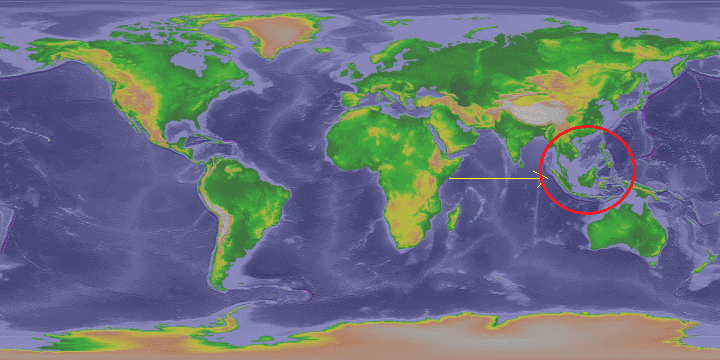
    Now archaeologists have excavated  a Town from under the sea in Micronesia.

    It is called ,Naan Madol!

    Nan Madol is a ruined city adjacent to the eastern shore of the island of Pohnpei that was the capital of the Saudeleur Dynasty until about 1628.It is in the present day Madolenihmw district of Pohnpei state, in the Federated States of Micronesia in the western Pacific Ocean. The city, constructed in a lagoon, consists of a series of small artificial islands linked by a network of canals.The site core with its stone walls encloses an area approximately 1.5 km long by 0.5 km wide and it contains nearly 100 artificial islets—stone and coral fill platforms—bordered by tidal canals.

    The name Nan Madol means “spaces between” and is a reference to the canals that crisscross the ruins. The original name was Soun Nan-leng (Reef of Heaven), according to Gene Ashby in his book Pohnpei, An Island Argosy. It is often called the “Venice of the Pacific”.

    Today Nan Madol forms an archaeological district covering more than 18 km² and includes the stone architecture built up on a coral reef flat along the shore of Temwen Island, several other artificial islets, and the adjacent Pohnpei main island coastline. The site core with its stone walls encloses an area approximately 1.5 km long by 0.5 km wide containing nearly 100 artificial islets—stone and coral fill platforms—bordered by tidal canals.

    Carbon dating indicates that the construction of Nan Madol began around 1200 AD, while excavations show that the area may have been occupied as early as 200 BC. Some probable quarry sites around the island have been identified, but the exact origin of the stones of Nan Madol is yet undetermined. None of the proposed quarry sites exist in Madolenihmw, meaning that the stones must have been transported to their current location. It has been suggested that they were floated via raft from the quarry, and a short dive between the island and the quarries shows a trail of dropped stones. However, no one has successfully demonstrated or explained the process. Some modern Pohnpeians believe the stones were flown to the island by use of black magic.

    In 1985 the ruins of Nan Madol were declared a National Historical Landmark. Currently, a greater effort is being made to preserve them’

    I postulate that Then Madurai was a part of Lemuria and it is now found as Naan Madol

    and it was located near Australia in Micronesia.

    References and citations.

    https://en.wikipedia.org/wiki/Nan_Madol

    https://en.wikipedia.org/wiki/First_Sangam

    https://en.wikipedia.org/wiki/Sangam_period#History

    .https://ramanisblog.in/2013/05/01/lemuria-home-of-tamils-in-ramayana-mahabharata/

    https://en.wikipedia.org/wiki/Kumari_Kandam

    http://atlantisrisingmagazine.com/article/where-atlantis-meets-lemuria/

  • Ruby Gold Mining By Chinese Pandya King Nediyon Madagascar 5000 BC

    When the Puranas , Ithihasas and Tamil Classics repeatedly assert the existence of a Tamil land and describe in detail the trade carried out by the Sanatana Dharma with the people of this Tamil land, I take this seriously  and do not dismiss them as Myths because it is inconvenient for my beliefs.

    Lemuria Continent
    Lemuria continent and Mu

    Sometimes, nay, most of the time, Truth is inconvenient..

    Movement of Tectonic plates,Infra red dating of Thiruvannamalai,Tirupati reveal that the former was 3.94 billion years old and the latter 2100 Million Years ancient.

    Jwlapuram Cuddapah, Andhra Pradesh, India is dated around 74000 years where Nataraja is found and this has been validated by Mount Toba’s Emission.

    The great Floods , noted by Tamil Sangam literature  finds its echoes in world literature.

    Migration to Europe at various times coincides(?) with these floods.

    Bhagavtha Purana refers to the fact that Rama’s ancestor Vaiwasvatha Manu meditated in the south and this has been found to be near Madagascar.

    Article Link provided at the close of the post.

    Manu migrated to Ayodhya and his son Ikshvaku founded the Ikshvaku Dynasty, to which Rama belongs.

    Rama’s empire one among the four earliest empires of the world.

    These four empires were,

    Uighur,

    Atlantis,

    Rama and

    Lemuria.

    Rama faced Atlantis people in a war at Seven Rishis Valley near Harappa.

    Please check my article Rama dropped a Nuclear Bomb.

    Tamil Classic which revolves around the Chola harbor of Poompuhar, Tamil Nadu which mention Krishna and Mahabharata  is dated 20,000 years ago.

    Cilappadikaram, the one of the five epics of Tamils, mentions  the land of the Tamils in the south, which had four major rivers ,Kumari Aaru, Peru Aaru, Pahruli Aaru and Kanni Aaru.

    Size of Lemuria was  34 Million Square Miles

    The Tamil texts mention that Ruby and Gold were mined here near a mountain called Meru.

    Please check my article Mountain Meru in Africa?

    The Pahruli river was excavated to irrigate the mountain valley by the Pandyan King Nediyon. Ruby was mined from the mountain Mani Malai and gold from Meru Malai. It is said that Chinese laborers were employed by the Pandyan King and when they went down the mines they appeared like a huge army of small ants, therefore, they were called “the gold mining ants”.( https://atlantisjavasea.com/tag/kapatapuram/ )

    In Madagascar Ruby and gold are being mined even today

    .’Rubies have historically been mined in Thailand, the Pailin and Samlout District of Cambodia, Burma, India, Afghanistan, Australia, Namibia, Colombia, Japan, Scotland, Braziland in Pakistan. In Sri Lanka, lighter shades of rubies (often “pink sapphires”) are more commonly found. After the Second World War ruby deposits were found in Tanzania, Madagascar, Vietnam, Nepal, Tajikistan, and Pakistan’

    Madagascar’s primary gold deposits are thought to be of mesothermal “lode” quartz-hosted type. This type of lode gold deposit is extremely valuable, accounting for nearly 20 percent of world gold deposits. The same type of deposits can also be found in Australia, Canada, Brazil and Ghana. Madagascar gold is found specifically in greenstone belts, quartz reefs and quartz veins, and as diffused mineral. Gold has also been recovered from ancient and recent alluvial accumulations and lateritic earth. The mineralization of vein deposits is mainly gold-quartz and gold-sulphide associations.

    Primary gold deposits in Madagascar predate the breaking up of Gondwana, the southernmost of the two super continents that made up Pangea. This is an important fact, as is renders regional tectonics irrelevant to the gold deposition model. Madagascar’s basement rocks- the oldest rocks in the area, have been divided into three main systems. From the youngest to the oldest these are: the Vohibory System the Graphite System, and the Androyen System. The Graphite system forms the greatest part of Madagascar’s basement and is the most consistently mineralized in gold. The Vohibory System also contains some gold districts.’

    The Sanskrit  texts are clear that the  Rubies and Gold were imported from Dravida Desa,South.

    References and citations.

    https://en.wikipedia.org/wiki/Ruby

    http://investingnews.com/daily/resource-investing/precious-metals-investing/gold-investing/gold-mining-in-madagascar/

    https://ramanisblog.in/2015/10/27/manu-meditated-malayamarutha-near-madagascar/

    https://ramanisblog.in/2013/05/01/lemuria-home-of-tamils-in-ramayana-mahabharata/


  • Kerala Nairs 18000 Years Old Nairs Gotra

     A reader wanted me t know the Gotra details of the Nairs of Kerala.

    This is a complex issue.

    Nairs , Kerala
    Warriors of Kerala

    If one removes the Goggles of regionalism and linguistic chauvinism, one can understand Indian history in its splendor.

    Though the people of Kerala formed a part of Tamil kingdom Chera, the Nairs of Kerala had a social system of their own.

    Nair comes from the word Nayaka meaning chieftain or a leader.

    They were the leaders of a group of army of the Cheras.

    ‘The Nambudiri Brahmins were at the top of the ritual caste hierarchy and in that system outranked even the kings. They regarded all Nairs as shudra. Below the Nambudiris came the Tamil Brahmins and other later immigrants of the Brahmin varna. Beyond this, the precise ranking is subject to some difference in opinion. Kodoth has placed the Samantan caste below the Kshatriya rank but above the Nairs, but Gough considers that the Pushpagans and Chakyars, both of which were the highest ranked in the group of temple servants known as Ambalavasis, were ranked between the Brahmins and the Nairs, as were several other members of the Ambalavasi group. She also believes that some Nairs adopted the title of Samantan in order to emphasise their superiority over others in their caste. The unwillingness of the higher varnas to engage in what they considered to be the polluting activities of industrial and commercial activity has been cited as a reason for the region’s relatively limited economic development’

    ‘A theory has been proposed for the origins of the caste system in the Kerala region based on the actions of the Aryan Jains introducing such distinctions prior to the 8th-century AD. This argues that the Jains needed protection when they arrived in the area and recruited sympathetic local people to provide it. These people were then distinguished from others in the local population by their occupation as protectors, with the others all being classed as out-caste. The cross-disciplinary historian Cyriac Pullapilly describes that this meant they “… were given kshatriya functions, but only shudra status. Thus originated the Nair

    Taking into consideration the caste  system of Sanatana Dharma was practiced by The Tamils , Cheras were Tamils,there was no discrimination in the Tamil land on the basis of caste , the views by western authors seem to be based on the Myth of Aryan dDravidian Theory which is now proved to be false and is a piece of disinformation to divide the people of India.

    The fact that the Group who are currently called as Nairs were entrusted with Military duties , they were Kshatriyas.

    The Nairs, Chera Period.

    Some people think the name itself is derived from nayaka, an honorific meaning “leader of the people”, while others believe it stems from the community’s association with the Naga cult of serpent worship. Christopher Fuller, an anthropologist, has said that it is likely that the first reference to the Nair community was made by Pliny the Elder in his Natural History, dating from 77 AD. That work describes what is probably the Malabar coast area wherein could be found the “Nareae, who are shut in by the Capitalis range, the highest of all the mountains in India”. Fuller believes it probable that the Nareae referred to the Nairs and the Capitalis range is the Western Ghats.’

    Matrilineal Society.

    Nairs operated a matrilineal (marumakkathayam) joint family structure called tharavad, whereby descendant families of one common ancestress lived under a single roof. Tharavads consisting of 50 to 80 members were not uncommon and some with membership as high as 200 have been reported. Only the women lived in the main house; men lived in separate rooms[clarification needed] and, on some occasions, lived in a separate house nearby. The families split on instances when they became unwieldy and during crisis among its members. When it split, the family property was separated along the female lines. The karnavan, the oldest male member in the tharavad, had the decision-making authority including the power to manage common property. Panikkar, a well-known writer from the Nair community, wrote in 1918 that,

    Authority in the family is wielded by the eldest member, who is called karnavan. He has full control of the common property, and manages the income very much as he pleases. He arranges marriages (sambandhams) for the boys as well as the girls of the family. He had till lately full power (at least in practice) of alienating anything that belonged to them. His will was undisputed law. This is, perhaps, what is intended to be conveyed by the term Matri-potestas in communities of female descent. But it should be remembered that among the Nayars the autocrat of the family is not the mother, but the mother’s brother.

    The husband visited the tharavad at night and left the following morning and he had no legal obligation to his children which lay entirely with the karnavan. In Nair families, young men and women about the same age were not allowed to talk to each other, unless the young man’s sister was considerably older than him. The wife of karnavan had an unusual relationship in his tharavad as she belonged to a different one and her interests lay there. Panikkar wrote that Karnavan loved his sister’s son more than his own and he believes it was due mainly to the instability of Nair marriages. Divorce rate was very high as both man and woman had equal right to terminate the marriage. Enangar was another family with which a tharavad remained closely related; a few such related families formed a social group whose members participated in all social activities. Nakane wrote in 1956 that tharavads as a functional unit had ceased to exist and large buildings that had once hosted large tharavads were occupied by just a few of its remnants.’

    Being  a matrilinear society, the Gotra system must have been following the Mother’s Gotra.

    Information is not available.

    People may contribute with authenric source

    The Nairs of Kerala and Bunts of Karnataka claim descent from the naga Śeṣa; these regions include the Nagavanshi clans who migrated from North India associated with the events referred to as the Sarpasatram. The Nairs were organized into various martial clans like Nambiar, Kiryathil Nair, Illathu Nair and Swaroopathil Nairs. The Illathu, Swaroopathil and Kiryathil Nairs have been classified as Kshatriyas of the Nagavanshi lineage Also claims as Nagavamsam in North costal region of Andhra pradesh state, where central government referred them under serial number 81 in NCBC (National Commission for Backward classed)

    http://www.ncbc.nic.in/User_Panel/GazetteResolution.aspx?Value=mPICjsL1aLvYBtdZSrP4uO%2bploAhiJHMitEMCkgxxsH%2f7oa9L5Zf2o2HH3BmrgcE

    However, Nairs believe them selves to Belong to Kasyapa Gotra.

    ‘Vansh/Dynasty : Nagavanshi
    Gotra : Kashyapa
    Caste : Kshatriya

    The Nair Clans of Kerala and Bunts of tulu nadu are the indigenous descendants of Anantha also these regions include the Nagavanshi clans who migrated from North India associated with the events as Sarpasatram. The Nairs were organized into various martial clans like Nambiar and Kiryathil Nair. Currently, warrior Sections of the Nair (Malayala Kshatriya) caste and Bunts of Tulu nadu claim descent from the Nagvanshi dynasty. The Nagavanshi are the known as the Serpent Dynasty.

    Nāgas originated from Kashyapa, father of Surya from whom clan of Suryawanshi kshatriyas evolved. The Nether World known as Pathala was the inhabitation of Nagas and Anantha as the Emperor of Naga, Sarpa, Uraga, and Pannaga. The Vedas do not mention Kshatriyas of either Suryavanshi, Chandravanshi, Nagavanshi, Agnivanshi or any such lineage. The Puranas constructed such genealogies. The Nāgvanshis acquired the status of Devas due to their excellent qualities, behavior and actions. Purānas mention Nāgas along with devas. Purānas mention of many Nāga Kingdoms. In ancient times Nāgas were the rulers of entire India. Mathura, Padmavati and Kantipur were capitals of Naga dynasty.

    The worshipers of Nāga were supposedly known as Nāgā or Nāgil. Nair, Bunt and some Rajput and Jat clans claim to be of Nagvanshi origin.’

    There are some interesting issues here.

    1.People of north East India and some portions of central India belong to Nagavanshi.Now we find them in the deep south.

    2.In ancient India, the landmass was different and the sea route from the North east of India to south of India was much shorter.

    There are references that Ravana visited his In Laws place in central India frequently, his wife Mandodari was from India through this short route from Lanka.

    So it needs some more research on this issue as to how the  migration took place, whether the Nagavanshis, who were also credited with having been the people of Patala Loka,deep south moved to North during the Great flood, when Vaivaswatha Manu, ancestor of Rama moved to Ayodhya.

    3.The issue of the location of the Chera Capital Vanchi.

    Considering this and the fact that Lemuria was the location of the early Tamil Kingdoms, I feel that the present theory that Karur was the Capital of Chera needs a look into.My stand is that it might have been located some where down in the Indian Ocean.

    3.The present date assigned to Nairs and Kerala needs revision.

    Chera King Udiyan Cheralatha,n particpated in the Mahabharata war.

    Poompuhar,Tamil Nadu which speaks of Chera Kingdom, the author of Cilapadikaram was the king’s brother, and Poompuhar is dated 20,000 years ago it is safe to postulate that the Nairs of Kerala, who were in the army of the Cheras date back to some 18000 years ago

    Shall dig more and write.

    References and citations.

    https://en.wikipedia.org/wiki/Nair#Social_and_political_organisation

    https://en.wikipedia.org/wiki/Chera_dynasty#Archaeological_sources

    https://en.wikipedia.org/wiki/Nagavanshi

    http://rajeshkvp.blogspot.in/2010/12/nair-gotra-lineage.html

    Image credit.

    http://historicalleys.blogspot.in/2009/08/on-origin-of-nairs.html


  • Lemuria Size 34 Million Square Miles Details Evidence

    There is skepticism about the lost continent of Lemuria.

    However there are extensive references to Lemuria in Tamil Literature of the Sangam Period .


    Kumarikandam map the sunken continet
    Kuamrikandam,Lemuri map the sunken continet

    Image credits.

    For this and the third map down .

    http://igreenis.egloos.com/m/10986014

    Multiple ancient and medieval Tamil and Sanskrit works contain legendary accounts of lands in South India being lost to the ocean. The earliest explicit discussion of a katalkol (“seizure by ocean”, possibly the sea water rise) of Pandyan land is found in a commentary on Iraiyanar Akapporul. This commentary, attributed to Nakkeerar, is dated to the later centuries of the 1st millennium CE. It mentions that the Pandyan kings, an early Tamil dynasty, established three literary academies (sangams). The first two sangams were not located in South India now but in an ancient Tamil country in the south which then sank. The first sangam flourished for 4,400 years in a city called Tenmaturai, attended by 549 poets (including Agastya) and presided over by gods like Shiva, Kubera and Murugan. The second sangam lasted for 3,700 years in a city called Kapatapuram, attended by 59 poets (including Agastya, again). The commentary states that both the cities were “seized by the ocean”, resulting in loss of all the works created during the first two sangams. The third sangam was established in Uttara (North) Madurai, where it is said to have lasted for 1,850 years. The Pandyan capital of Kapatapuram finds mention in the Ramayana and Chanakya’s Arthasastra (ca 4th century BCE).

    Atlantis map
    Atlantis boundaries. Plato. Tectonic boundary

    Nakkeerar’s commentary does not mention the size of the territory lost to the sea. The size is first mentioned in a 15th-century commentary on Silappatikaram. The commentator Adiyarkunallar mentions that the lost land extended from Pahruli river in the north to the Kumari river in the South. It was located to the south of Kanyakumari, and covered an area of 700 kavatam (a unit of unknown measurement). It was divided into 49 territories (natu), classified in seven categories: elu teñku natu(“seven coconut lands”), elu maturai natu (“seven mango lands”), elu munpalai natu(“seven front sandy lands”), elu pinpalai natu (“seven back sandy lands”), elu kunra natu (“seven hilly lands”), elu kunakarai natu (“seven coastal lands”) and elu kurumpanai natu (“seven dwarf-palm lands”).’

    Map of Lemuria
    Lemuria map with mountains, Rivers.


    ‘Multiple ancient and medieval Tamil and Sanskrit works contain legendary accounts of lands in South India being lost to the ocean. The earliest explicit discussion of a katalkol(“seizure by ocean”, possibly tsunami) of Pandyan land is found in a commentary on Iraiyanar Akapporul. This commentary, attributed to Nakkeerar, is dated to the later centuries of the 1st millennium CE. It mentions that the Pandyan kings, an early Tamil dynasty, established three literary academies (Sangams): the first Sangam flourished for 4,400 years in a city called Tenmaturai, attended by 549 poets (including Agastya) and presided over by gods like Shiva, Kubera and Murugan. The second Sangam lasted for 3,700 years in a city called Kapatapuram, attended by 59 poets (including Agastya, again). The commentary states that both the cities were “seized by the ocean”, resulting in loss of all the works created during the first two Sangams. The third Sangam was established in Uttara (North) Madurai, where it is said to have lasted for 1,850 year’

    Consider the following facts.

    1..The Vedas mention Tamil kings and goods like Sandalwood,Pearls having been imported from Dravida Desa, Dravida means Sooth.

    2.Vaivswatha Manu, the first of the present  Kali Yuga,  meditated  in  plateau near Madagascar  before migrating to Ayodhya.

    3.Ancestor of Rama, Nala visited Thirunallaru, Pondicherry. .

    The temple at Thirunallaru is dedicated to Shani, Saturn and is a place where one goes on Pilgrimage to ward off Saturn’s malfeasance.

    Nala visited  the Pond in the temple, called Nala Theertha to ward off Saturn’s effects.

    Nala Theertha is still there at Thirunallar and people follow the same tradition is followed even to day.

    4.Mahabharata refers to Nala having visited the place in the Vana Parva.

    5.Tami kings were present  in the Swayamvra of Damayanti, who later became the wife of Nala.

    6.Tami Kings were present in Sita’s and Draupadi’s Swayamvara.

    7.Madurai Meenakshi’s father fought along side the Pandavas in the Mahabharata battle.

    8.Tamil King Udiyan Cheralaathan fed both the Pandava’s and the Kaurva Army in Mahabharata war.

    9.Lord Krishna, Arjuna, Balarama,Sahadeva were on a Pilgrimage to south.

    10.Tamil Kings were present in Yudhitra’s Rajasuya Yaaga.

    11.Shiva and Subrahmanya were worshiped widely  in the south much before than the Sanatana Dharma .

    12.Patanjali who founded the Yoga System learned it from Lord Shiva/Agastya from the south.

    12.Sage Agastya  who is considered as a co founder of Tamil along with Lord Shiva and Subrahmanya (called as Murugan in Tamil) is found in New Zealand.

    13.Maoris and other aboriginal tribes  still speak a corrupted form of Tamil.

    14. Australian Tribes perform Shiva’s Trinetra dance even today.

    15.Tamil ancestry has been found among the Mu, Sumerian civilizations.

    16.Lord Ram waged a War against Atlantis when an atom bomb was dropped in Mohenjadaro.

    You may read detailed article on each of these by googling the search term +ramanan 50.

    Now to the size of Lemuria,

    Lemuria  was located to the south of Kanyakumari, and covered an area of 700 kavatam, staes Nakkerar in his commentry of Iraiynar Agapporul.

    Irayanar refers to Lord Shiva.

    This work belongs to Sangam Era of Tamil and is lost ans known by its reference to it in the later Tamil works.

    The distance from Kanykumari to Zealand is   11.204 Km.

    Kanyakumari To New Zealand Distance – 11223 Km 880 Mtrs http://www.distancesbetween.com/flight-distance/distance-from-kanyakumari-to-new-zealand/21327/ic4/

    In miles it is 7002.

    One Kavatam is equivalent to 10 Miles and seven Hundred Kavatam is 7000 Miles .

    Lemuria extended from North to South from Kanykumari to new Zealand, 7000 Miles!

    From the East to West.

    ‘There have been numerous locations picked for Atlantis, from Sweden to Indonesia. Nearly all of them are wrong. Plato was quite clear on the location. All of the others are, by definition, not Atlantis. According to Timaeus and Critias, the two dialogues which are the source of the Atlantis story, the lost island was beyond the Strait of Gibraltar, in the Atlantic Ocean. The nearest portion of Atlantis was facing a region in Southwestern Spain called Gadira. This is the region surrounding modern Cádiz (Phoenician Gadir, Roman Gades and Moorish Qādis). Most claimants ignore this very specific detail from Critias”

    That is , from to Spain, the outer most reach of Atlantis towards East to Kanykumari is,

    4941 Miles.

    (The air travel (bird fly) shortest distance between Spain and India is 7,951 km= 4,941 miles. http://www.distancefromto.net/distance-from-spain-to-india

    So the size of sunken Lemuria could have been 7000* 4941, that is  34,587,000 Square  Miles.

    References and citations.

    https://atlantisjavasea.com/tag/kapatapuram/

    https://en.wikipedia.org/wiki/Kumari_Kandam

    http://missionatlantis.com/atlantis-articles/atlantis-geology.php

    http://bharatuntoldstory.tumblr.com/post/79358239754/lemuria-continent-kumari-kandam-the-lost-ancient


  • Two Tamil Empires In India Northwest, South India? Missing History

    I have written articles in detail about the Kings of India, as listed in the Puranas and other Sanskrit texts of India.

    Kings List of India by Puranas Vaidated

    I have also listed the Kings List of Tamil from 400 BC 

    dd80b-haeckel_1868_lemuria

    Lord Krishna married a Pandyan Princess and had a daughter whom he married her off to a Pandyan Prince.

    Arjuna married a Pandyan Princess from Manalur Tamil Nadu and had a son.

    Tamil Chera King Perunchotru Udiyan Neduncheralathan fed both Pandava and Kaurava army during the Mahabharata Battle..

    Sahadeva and Balarama  were on a Pilgrimage to South and Balarama worshiped Lord Subrahmanya in Tamil Nadu.

    Parashurama established the present Kerala.

    One issue intrigued me.

    We had the Mahabharata War, there was a deluge later and Dwaraka was submerged.

    Sage Agastya took families from Dwaraka and had them settled in what is now Karnataka and those who had settled in Tamil Nadu were called ‘Velirs’ and they had small Kingdoms in places like what is now called Krishnagiri and Dharmapuri.They took sides between the Cheras, Cholas and Pandyas depending on the exigencies.

    Kanndigas from Yadava Tribe

    This would imply, at the time of the Tsunami which devoured Dwaraka, these people were moved by Agastya to South.

    The same Tsunami, called as ‘kadalkol’ in Tamil devoured the South as well.

    This Tsunami, incidentally is the third to strike the South, according to Tamil Literature and this is validated by foreign Flood legends and archaeology..

    Now the issue is if people were moved from Dwaraka and settled in Tamil Nadu, it should have been after the Tsunami died down.

    Then what happened to the Tamils living in the south during the period just before the Tsunami?

    Where did they go?

    The references to Tamil kings are found in the Ramayana which mention them as belonging to earlier period than Rama.

    To be specific Tamil Kings were present in Damayanti Swayamvara.

    There is Nala Theertha, a sacred pond where people take bath to be rid of Saturn, Shani’s influence, like Sade Saathi,seven and a half years.

    The pond is in Thirunallar, Pondicherry and is famous for Shani temple.

    Shiva worship preceded  in south even  before Vedic Period.

    While Subrahmanya and  Shiva merit only a limited mention in the Vedas, they are the principle Deities in the Dravida Desa.

    And there was a Tamil Kingdom, Elamite, now the term has become corrupted to be Elam.

    The Elamite people lived around the present Iran and spoke a Language which has been traced to Tamil.

    And some tribes in Iran speak this language which resembles Tamil even today!

    The Tamils were referred to as Dramila in Vedic texts.

    The Mediterranean Peoples (Dravidians)

    (Extracts from ‘The Original Indians — An Enquiry’ by Dr. A. Desai)

    How the Mediterranean people came to be called Dravidians makes interesting story. The Pre-Hellenistic Lycians of Asi Minor, who where probably the Mediterranean stock called themselves Trimmili. Another tribe of this branch in the island of Crete was known by the name Dr(a)mil or Dr(a)miz. In ancient Sanskrit writings we find the terms Dramili and Dravidi, and then Dravida which referred to the southern portion of India.

    South India was known to the ancient Greek and Roman geographers as Damirica or Limurike. Periplus Maris Erithroei (Periplus of the Eritrean Sea) in the second or third century AD described the maritime route followed by Greek ships sailing to the South Indian ports: “Then follow Naoura and Tundis, the first marts of Limurike and after these Mouziris and Nelkunda, the seats of government.â€

    Dramila, Dravida and Damirica indicated the territory. Then it was applied to the people living in the territory and the language they spoke, in the local parlance Tamil and Tamil Nadu or Tamilakam.’ https://2ndlook.wordpress.com/2009/04/06/dravidian-history-no-one-talks-about/

    Later texts speak of them as Dravida?

    Sibi ruled from Pakistan

    Not to forget the fact that Vaivaswatha Manu , ancestor of Rama lived in the south and moved to Ayodhya after the Tsunami.Please read my article   on this.

    Is there a subtle message here?

    Yes,

    This accounts for the missing chapters in Tamil and  Bharatvarsha History and this would reconcile the seeming inconsistencies in Indian History.

    Detailed article follows