Tag: Sri Vidya

  • Exploring the Divine: The Practice of Devi Upasna

    Exploring the Divine: The Practice of Devi Upasna

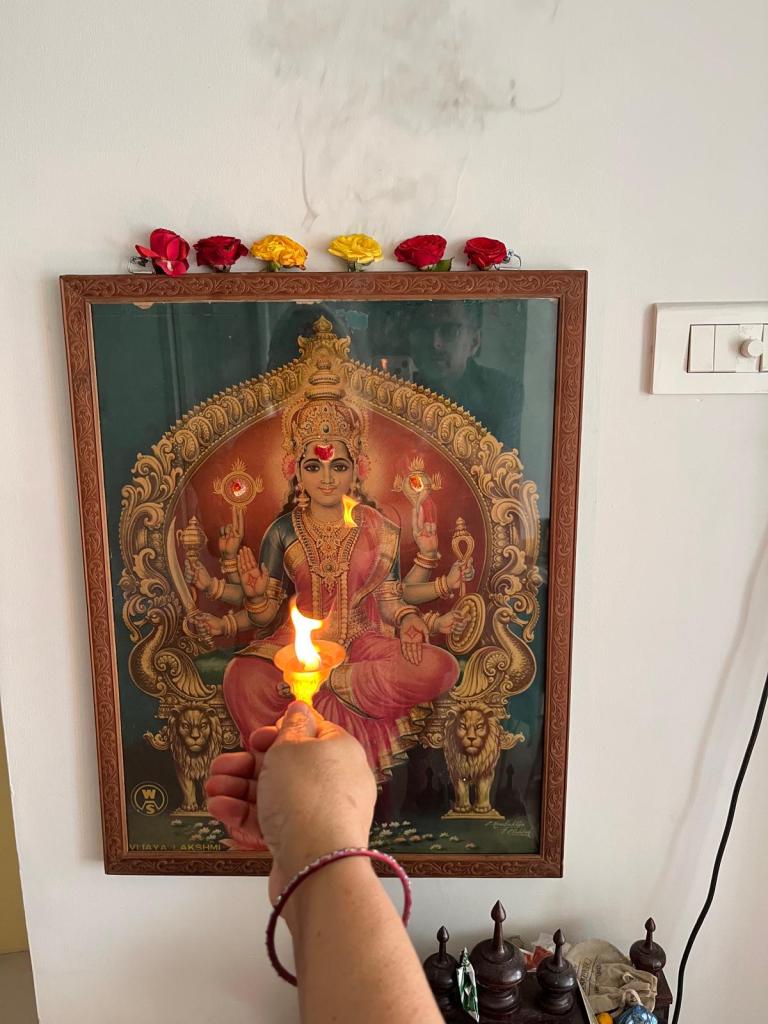
    In the vast landscape of Hindu spirituality, Devi Upasna holds a special place. Devi, meaning “Goddess” or “Divine Mother,” represents the feminine cosmic energy, often personified as various goddesses like Durga, Kali, Lakshmi, Saraswati, and many more. Devi Upasna, or the worship of the Goddess, is a profound spiritual practice that enables individuals to connect with the divine feminine and experience the boundless power, grace, and love she embodies. In this blog, we will delve into the essence of Devi Upasna and explore its significance in the spiritual journey.

    1. The Divine Feminine: The concept of the divine feminine is deeply rooted in Hindu philosophy. Devi represents the nurturing, compassionate, and creative aspect of the cosmos. Unlike traditional patriarchal views, Devi Upasna recognizes and honors the inherent strength and beauty of women, while also emphasizing the balance between masculine and feminine energies within each individual. By embracing the divine feminine, Devi Upasna invites practitioners to awaken their own inner power and tap into the universal source of energy.
    2. Methods and Rituals: Devi Upasna encompasses a wide range of practices and rituals, each with its own unique significance. These rituals may include reciting sacred mantras, performing elaborate puja (ritual worship), meditating on the form of the Goddess, or participating in devotional singing and dancing. The purpose of these practices is to create a sacred space where one can establish a deep connection with the Goddess and invoke her divine presence within oneself.
    3. Symbolism and Archetypes: Goddesses in Hindu mythology embody different qualities and archetypes, representing various aspects of the divine feminine. For example, Durga symbolizes courage and protection, Kali embodies transformation and liberation, Lakshmi represents abundance and prosperity, and Saraswati signifies wisdom and knowledge. Understanding the symbolism behind these goddesses can help practitioners align with specific qualities and seek guidance from the corresponding archetype on their spiritual journey.
    4. Devotion and Surrender: Devotion plays a central role in Devi Upasana. It is the heartfelt surrender and love towards the Goddess that allows practitioners to transcend their limited ego and merge with the divine. Devi Bhakti, or devotion to the Goddess, is not merely an external expression but a deep inward journey of self-discovery and connection. Through sincere devotion, one can cultivate a profound relationship with the Goddess and experience her grace and blessings in all aspects of life.
    5. Empowerment and Transformation: The practice of Devi Upasna offers immense potential for personal growth and transformation. By aligning with the divine feminine, individuals can tap into their innate strength, intuition, and creativity. Devi’s energy empowers practitioners to overcome obstacles, face challenges, and embrace their true potential. Moreover, Devi Upasna fosters a sense of interconnectedness, compassion, and reverence for all beings, fostering a harmonious and balanced existence.To sum up, Devi Upasna provides a sacred pathway for seekers to connect with the divine feminine and embark on a transformative spiritual journey. It is a practice that celebrates the power, beauty, and wisdom of women while reminding us all of the essential balance between masculine and feminine energies. Through devotion, rituals, and deep introspection, practitioners can cultivate a profound relationship with the Goddess, experience her divine grace, and embody her qualities in their daily lives. May Devi’s blessings inspire us to embrace our true nature and walk the path of love, compassion, and self-realization.

    Join 4,576 other subscribers

    Sri Lalitha Sahasranama Classes Online

    Sri Vishnu Sahasranama Classes Online

    Soundaryalahari Classes Online

    Abhirami Andhadhi

    Classes in Tamil English

  • Hrudayamrutham Rare Book Umanandanathar On Lalitha

    I had written on Bhaskararaya and His works on Devi Lalithambika and mentioned that his two books were published by Umanandanathar ,his disciple.

    Bhskararaya, The Man who wrote Bhashya of lalita Sahsranaama.image.jpg
    Sri Bhaskararaya


    It seems there is yet another rare book by Umanandanathar.


    The reason for this post is about the The Giant who had written Bhashya, Explanation oh Lalita Sahsranaama, Sri Bhaskararaya.


    He was born in 1690 in Bhaga, Maharashtra, India, is Mother Konamba and father Gambiraraya, a Scholar.


    Gambirraya was conferred the Title ‘Bharathi by the Vijayanagar Empire.


    He was of Viswamitra Gotra,


    Gambiraraya administered the Saraswati Mantram and had Bhaskararaya trained under Sri Narasimha Advari in Benares,Varanasi.


    Bhaskararaya was highly respected by the learned and won accolades from Kings and Scholars.


    He was married to Anandhi and Parvati.


    He  settled in Benares and wrote over 40 books on Vedanta, Mimamsa,Vyakaran,Nyaya, Smriti,Mantra Shastra.


    All the works are research papers!


    He referers to more than 150 sources for his laita Sahasranaama Bhahsya.


    He had a host of Disciplies and Umanandanathar wrote  a book on Parasuramakalpasutram and a Biography of Bhaskararaya in Bhaskara Vilaasam.


    It is called Hrudayamrutham.


    I received a communication from the granddaughter of the Publisher .


    Kaniyanoor  Late.R.Subrahmanyam published his in the late 70’s.


    I have received her permission to share it.

    Here is the book in pdf.

    HRDAYAMRTAM

    Citation,

    Lalitha Sahasranama by Bhakararaya


  • Dasa Maha Vidya Stuthi For Grand Children Wisdom

    I have written a couple of blogs on Dasa Maha Vidya, as a part of Vidya Upasna.


    I provide the Dasa Maha Vidya Stuthi below fo the benefit of Sri Vidya Upasakas.


    Mahakali
    (The goddess with ten heads , black as night and has a horrific and fearful appearance. She is represented to be standing on Lord Shiva who is lying down.She is considered to represent all the ten Maha Vidhyas. While she blesses her devotees with all their wants, worship of her is believed to remove Sani dosha)

    1.Maha devi maha kala Priya sakhi ,
    Gauri Kaushikhi nama Vikhyate ,
    Maha Kali Namosthuthe

    Salutations to Maha Kali,
    Who is the great goddess, the great companion of Lord Shiva,
    Who is well known as Gauri and Kaushiki.

    Tara Devi

    (She is blue in colour , wears a necklace of corpses . She has only one head stand on Lord Shiva . She is supposed to shower motherly instinct and is the Goddess of knowledge . She is suppose to give wisdom, profit in business and is suppose to be effective against Guru Dosha)

    2.Munda mala vibhooshithe neela rupinee ,
    Yeka jata neela Saraswathi nama Vikhyathe,
    Tara devi namosthuthe.

    Salutations to Goddess Tara ,
    Who wears the necklaces of dead bodies,
    Who is blue in colour ,
    Who is well known as Yeka Jata and Neela Saraswathi.

    Chinna mastha
    ( The very ferocious form of the goddess. She is red in colour , with severed head , drinks blood and stands on a couple in copulation. She is supposed to grant courage to fight with enemies. Magicians also worship her to cause harm to someone.)

    3.Rudhira pana priye , khaditha Siro rupini,
    Rakthakesi , chinnabala nama vikhyathe ,
    Chinnamastha namosthuthe

    Salutations to Goddess Chinnamastha ,
    Who likes to drink blood , who appears without head,
    Who is well known as Rakthakesi and Chinna bala.

    Shodasi or Laitha Maha Tripura Sundari

    She is of golden colour and is normally depicted together with Lord Shiva. Sitting on a throne or seat with four legs. She is the supreme goddess and removes the dosha due to Budha.

    4.Shodasa Kala paripoorne AAdhya Shakthi roopini ,
    Sri Vidhya Pancha vakthra nama Vikhyathe ,
    Shodasi namosthuthe

    Salutations to the Goddess Shodasi ,
    Who has completed sixteen years of age ,
    Who has the l,ook of the primeval power ,
    Who is well known as Srividhya and Panchavakthra

    Bhuvaneswari

    She is the goddess of the universe. She is normally depicted with four hands, with goad, rope and the other two showing giving boons and another protection. She removes Chandra Dosha.

    5,Pasankusa dari durgam asura samharini,
    Shatakshi sakambari nama Vikhyathe ,
    BHuvaneswari namosthuthe.

    Salutations to Goddess BHuvaneswari,
    Who holds the rope and the goad ,
    Who kills very ferocious asuras ,
    Who is well known as Shatakshi and Sakambari

    Bhairavi

    She is mother to the good people terror to bad ones. She is seen holding book, rosary, and making fear-dispelling and boon-conferring gestures. She is also known as Baala or Tripurabhairavi.

    6.Arunambara dari , pranava roopini ,
    Yogeeswari , Uma nama vikhyathe ,
    Tripura BHairavi Namosthuthe

    Salutations to Goddess Tripura BHairavi ,
    Who wears cloths of the red purple colour,
    Who has the form of letter “Om”,
    Who is well known as Yogeswari and Uma

    Dhoomavathi

    Dhumavati represents the fearsome aspect of Devi, the Hindu Divine Mother. She is of smoky colour , an old, ugly widow (I,e Withoutr Shiva) and is associated with things considered inauspicious and unattractive in Hinduism, such as the crow and the Chaturmas period. The goddess is often depicted on a horseless chariot or riding a crow, usually in a cremation ground.She is supposed to remove Rahu Dosha.

    7.Dushta abichara dwamsini , kaka dwaja Radha roode,
    Suthara thamasi nama Vikhyathe ,
    Dhoomavathi namosthuthe

    Salutations to Goddess Dhoomavathi ,
    Who destroys the attack of black magic ,
    Who rides on a chariot with flag of crow ,
    Who is well known as Suthara and Thamsi

    Bagalamukhi
    Bagalamukhi has a golden complexion and her dress is yellow. She sits in a golden throne in the midst of an ocean of nectar full of yellow lotuses. A crescent moon adorns her head. She is believed to have the power to remove Kuja Dosha,

    8.Pitambara dari shathru bhaya nivarini,
    Jwalamuki Vaishhnavi nama Vikhyathe ,
    Bagala Mukhi namosthuthe

    Salutations to Goddess BHagalamuki ,
    Who wears yellow silk cloths ,
    Who removes fear as well as enemies ,
    Who is well known as Jwalamukhi and Vaishnavi

    Matangi
    She is considered as the Tantric form of Sarasvati, the goddess of music and learning. Like Sarasvati, Matangi governs speech, music, knowledge and the arts. Her worship is prescribed to acquire supernatural powers, especially gaining control over enemies, attracting people to oneself, acquiring mastery over the arts and gaining supreme knowledge.. Those with family problems worship her to get peace .

    9.Ardha chandra dhari , Kadamba vana vasini,
    Vaagdevi Saraswathi nama Vikhyathe ,
    Matangi namosthuthe.

    Salutations to goddess Matangi,
    Who wears the crescent and lives in a garden of Kadamba trees,
    Who is well known as Vaagdevi and Saraswathi

    Kamalathmika

    She is of golden complexion, sits on a lotus flower and is bathed by four elephants, She removes the Shukra dosha.

    10.Suvarna kanthi samanvithe , maha Vishnu sahacharini ,
    BHargavi Mahalakshmi nama vikhyathe ,
    Kamala Namosthuthe

    Salutations to Goddess Kamala,
    Who has a golden aura and is companion of Maha Vishnu ,
    Who is well known as Bharagavi and Mahalakshmi

    Phala Sruthi
    Dasa maha vidhya stotram sarva shathru roga nivaranam,
    SArva sampath karam, puthra pouthradhi vardhanam.

    Effect of chanting

    This prayer addressed to the ten great Vidhyas ,
    Destroys all diseases and all enemies ,
    Gives all types of wealth and leads to increase of sons and grand sons.


    Translation by P.R.Ramchander.


    Related.

    http://ramanisblog.in/2014/04/02/devi-upasana-dasa-mahavidya-details/


    https://ramanisblog.in/2014/03/07/devi-worship-dasa-mahavidya-names-introduction/

  • Sri Vidya Tripura Sundari Upasna Maha Shoda  Nyasa

    Sri Vidya Tripura Sundari Upasna Maha Shoda Nyasa

    Devi is worshiped in the 51 Aksharas.

    I have posted an article on this in detail.

    The 51 Shakti peetas correspond to these letters.

    Soundaryalahari of Adi Shankaracharya has these letters embed in the slokas.

    Now there is the Shodha Nyasa, six fold purification of the Body and the invoking of the Goddess in the Human Body.

    Nyasa is a ritual of the Hindus.

    While performing Pooja, not to be confused with stotra or Parayana, one must have the Nyasa done.

    Nyasa is a ritual where the individual touches various parts of the body with specific Mantras to purify these parts.

    In Tripurasundari Upasana, Sri Vidya  as well, the performing of the ritual is mandatory.

    I have been hunting down for information on these texts and I mentally vowed six months ago. to start writing on Shakti again, I have published quite a few articles on on Shakti and Shakthi Peetha.

    I have found some information on these subjects which I am sharing.

    This information is rare and is not easily available.

    This information is copyrighted up to 2007.

    I am posting this information with a Link to the site in Public interst.

    If the site owner objects to this, I may have to remove this.

    I suggest, those who are interested , to have this material printed or saved in their system.

    Thou art the body of Shambhu with two breasts which are the Sun and Moon. Oh, Bhagavati, thou art the all pervading stainless one; therefore the connection between each, of thee as part and whole is the nature common to both, the same lordship and supreme bliss – Wave of Bliss (Woodroffe’s translation)

    The Sodha Nyasa (sixfold nyasa), which is part of the daily worship of Tripurasundari, is here for the first time translated into English, from the work called Nityotsava, itself a commentary on the famous Kalpasutras of Parashuram.

    Parashurama was a brahmana initiated by Lord Dattatreya into the worship of Shri Shri Mahatripurasundari Lalita Devi. The Kalpasutras provides a compendium for the worship of that Devi. Various forms of nyasa, which means ‘placing’, enter into this and all other forms of tantrika puja. The dialogue between Parashuram and Dattatreya is contained in the Tripura Rahasya, a wonderful work which is available in an English translation published by the Sri Ramana Ashram in Tiruvannamalai.

    The Sodha Nyasa in which Devi outspreads as Ganeshas, planets, 27 nakshatras (asterisms), yoginis of the seven dhatus or bodily elements of ayurveda, sidereal zodiac, and sacred sites (pithas) is described in very many agamas such as Vamakeshvara Tantra, Gandharva Tantra, Jnanarnava, The 1,000 Names of Lalita, etc.. It is described in detail in the Yogini Hridaya, itself said to form the latter part of the Vamakeshvara Tantra.

    The ritual centres the worshipper as one with She whose true nature is Chit or Consciousness Shakti. She is triple in Her manifestation as the three gunas — represented by Her three Saktis of Iccha (will), Jnana (knowledge), and Kriya (action) — and rays out as the 15 Nityas or Eternities who express the phases of the Moon or Candrakalas, and form the body of time.

    According to the tradition, Shiva, without characteristics is awareness. And Shiva is one with Shakti. Her parts as represented by the Shodha Nyasa amount to 156, and comprise all visible manifestation. She is Maya Shakti, the Matrika or letters of the alphabet Devi, the heap of words and letters which delude men and women, and also those letters transformed by awareness into mantra.

    Her yantra is the Shri Chakra, which contains all letters within its heap of petals, lotuses and lines. This yantra, which is a diagrammatic representation of the human body, is within the wheel of time.

    Worship via this ritual is intended to assist a sadhvini or sadhaka to realise her or his oneness with the Shakti, with the yantra, and with time itself in all its manifestations.

    Mahashodha Nyasa

    In this wonderful abbreviated six way nyasa, obeisance to Dakshinamurti, the Rishi, on the head; to the metre Gayatri in the mouth; to the Devi Mahatripurasundari, to Ganeshas, Planets, (27) Sidereal Constellations, Yoginis, 12 Rashis, the Sacred Sites (pithas) in the heart; obeisance to the application of this Shri Vidya limb nyasa, in the palm of the hand.

    Aim Hrim Shrim Am Kam Kham Gam Gham Nam Am Aim obeisance to the thumbs
    Aim Hrim Shrim Im Cam Cham Jam Jham Nam Im Klim, index fingers
    Aim Hrim Shrim Um Tam Tham Dam Dham Nam Um Sauh, middle fingers
    Aim Hrim Shrim Em Tam Tham Dam Dham Nam Aim Aim, ring fingers
    Aim Hrim Shrim Aum Pam Pham Bam Bham Mam Aum Klim, little fingers
    Aim Hrim Shrim Am Yam Ram Lam Vain Sam Sam Sam Ham Lam Ksham Am Sauh, front & back of hand
    (similarly for heart &c. nyasa)

    Meditation
    Radiant as 1000 rising suns, with full, magnificent breasts, wearing red garlands and clothes, smeared with red unguent, with red gems and red ornaments, holding goad, noose, bow and arrows in Her radiant four hands, with three beautiful eyes, with a gold ornament on Her head — thus we meditate on the Supreme Sundari, consisting of Ganeshas, Planets, (27) Nakshatras, (6) Yoginis, (12) Rashis, Pithas, and the letters of the alphabet.

    Thus is declared the collective form of the Shri Devi, together with Her weapons and instruments of action. Now meditate on Ganeshas, the first of the individual forms:

    Ganesha Nyasa

    Meditation: resembling the newly risen Sun, with an elephant’s face, soft eyes, holding goad, noose, and granting boons, with Shakti, of vermilion lustre, decorated with all manner of gems. One of (her) hands holds a lotus, the other touches (Ganesha’s) lingam. His trunk is coiled to the left. When meditating, the noose comes first. The Shakti holds a lotus in Her left hand, and Her right hand embraces (Ganesha’s lingam).

    Having meditated thus, nyasa should be done in the places where the letters of the alphabet reside, prefixing each with three syllables thus:

    Aim Hrim Shrim Am obeisance to the Lord of Obstacles with Shri. On head.
    Aim Hrim Shrim Am to the King of Obstacles with Hri. On forehead.
    Aim Hrim Shrim Im to the Guide with Tushti. On right eye.
    Aim Hrim Shrim Im to the Most Auspicious with Shanti. On left eye.
    Aim Hrim Shrim Um to the Heart of Obstacles with Pushti. On right ear.
    Aim Hrim Shrim Um to the Maker of Obstacles with Sarasvati. On left ear.
    Aim Hrim Shrim Rm to the Chief of Obstacles with Rati. Right nostril.
    Aim Hrim Shrim Rm to the Chief of Hosts with Medha. On left nostril.
    Aim Hrim Shrim Lm to the One Tusked with Kanti. On right cheek.
    Aim Hrim Shrim Lm to the Two Tusked with Kamini. On left cheek.
    Aim Hrim Shrim Em to the Elephant Faced with Mohini. On upper lip.
    Aim Hrim Shrim Aim to the Guileless with Jata. On lower lip.
    Aim Hrim Shrim Om to the One with Hair Twisted like a Cowrie with Tivra. On upper teeth.
    Aim Hrim Shrim Aum to the Long Faced with Jvalini. On lower teeth.
    Aim Hrim Shrim Am to the One with Pointed Ears with Nanda. On tongue.
    Aim Hrim Shrim Ah to the One with Bull as Banner with Surasa. On throat.
    Aim Hrim Shrim Kam to the Lord of Numbers with Kamarupini. On right shoulder.
    Aim Hrim Shrim Kham to Indra’s Elephant with Subhra. On right elbow.
    Aim Hrim Shrim Gam to the One with Ears Like Winnowing Baskets with Jayini. R. wrist
    Aim Hrim Shrim Gham to the three Eyed One with Satya. Base of right fingers.
    Aim Hrim Shrim Nam to the Pot Bellied One with Vignneshi. On right finger tips.
    Aim Hrim Shrim Cam to the Great Noisy One with Surupa. Left shoulder.
    Aim Hrim Shrim Cham to the four Armed Form with Kamada. Left elbow.
    Aim Hrim Shrim Jam to Sadashiva with Madavihvala. Left wrist.
    Aim Hrim Shrim Jham to the Gladdening One with Vikata. Left root of fingers.
    Aim Hrim Shrim Nam to the Ugly Faced with Puma. Left finger tips.
    Aim Hrim Shrim Tam to the Beautiful Faced One with Bhutida. Right thigh.
    Aim Hrim Shrim Tham to the Delightful One with Bhumi. Right knee.
    Aim Hrim Shrim Dam to the One Footed with Shakti. Right ankle.
    Aim Hrim Shrim Dham to the Dual Tongued with Rama. Right foot.
    Aim Hrim Shrim Nam to the Hero with Manushi. Right toes.
    Aim Hrim Shrim Tam to the Warrior with Makaradhvaja. Left thigh.
    Aim Hrim Shrim Tham to the Peaceful Faced One with Virini. Left knee.
    Aim Hrim Shrim Dam to the Boon Giver with Bhrukuti. Left ankle.
    Aim Hrim Shrim Dham to the Left Hand God with Lajja. Left foot.
    Aim Hrim Shrim Nam to the One with Crooked Trunk with Dirghagona. Left toes.
    Aim Hrim Shrim Pam to the One with two Tusks with Dhanurdhara. Right side.
    Aim Hrim Shrim Pham to the Leader of the Army with Yamini. Left side.
    Aim Hrim Shrim Bam to the Village Lord with Ratri. Back.
    Aim Hrim Shrim Bham to the Intoxicated One with Chandrika. Navel.
    Aim Hrim Shrim Mam to the Clear Headed with Sashiprabha. Belly.
    Aim Hrim Shrim Yam to Intoxication’s Vehicle with Lola. In heart.
    Aim Hrim Shrim Ram to the Ascetic with Chapala. Right collar bone.
    Aim Hrim Shrim Lam to the One with Shorn Hair with Riddhi. Shoulder hump.
    Aim Hrim Shrim Vam to the One with a Tusk with Durbhaga. Left collar bone.
    Aim Hrim Shrim Sham to the Pre-eminent One with Subhaga. Heart to right palm.
    Aim Hrim Shrim Sham to the Bull Bannered with Shiva. Heart to left palm.
    Aim Hrim Shrim Sam to the Greedy One with Durga. Heart to right foot.
    Aim Hrim Shrim Ham to Ganesha with Kali. Heart to left foot.
    Aim Hrim Shrim Lam to the One like Thunder with Kalakubjika. Heart to genitals.
    Aim Hrim Shrim Ksham to the Lord of Obstacles with Destroyer of Obstacles. On heart.

    Planet Nyasa

    Meditation: the Sun &c., in the colours red, white, red, dusky, yellow, pale yellow, black, purple, smoky. Of the form of Kamadeva, the Lord of Love, ornamented with celestial gems. His left hand rests on his left thigh, and his right hand shows the sign of giving. Meditate also on the Shaktis, with their hands dispelling fear and granting boons. Each one is highly appealing, and decked with every kind of jewel. Having meditated in this way:

    Aim Hrim Shrim Am Am Im Im Um Um Rm Rm Lm Lm Em Aim Aum Om Am Ah obeisance to the Sun with Ranuka. In heart.
    Aim Hrim Shrim Yam Ram Lam Vam to the Moon with Amrita. Centre of brow.
    Aim Hrim Shrim Kam Kham Gam Gham Nam to Mars, with Dharma. In eyes.
    Aim Hrim Shrim Cam Cham Jam Jham Nam to Mercury, with Yashasvini. Ears.
    Aim Hrim Shrim Tam Tham Dam Dham Nam to Jupiter, with Shankari. Throat.
    Aim Hrim Shrim Tam Tham Dam Dham Nam to Venus, with Jnanarupa. In heart.
    Aim Hrim Shrim Pam Pham Bam Bham Main to Saturn, with Shakti. In navel.
    Aim Hrim Shrim Sham Sham Sam Ham to Rahu, with Krishna. Mouth.
    Aim Hrim Shrim Lam Ksham to Ketu, with Dhumra. Genitals.

    Nakshatra Nyasa

    Meditation: as flame, like the fire of All Destroying Time, their hands dispelling fear and granting boons, all ornamented with jewels. Bow to Ashvini first. Having meditated thus:

    Aim Hrim Shrim Am Am obeisance to Ashvini. Forehead.
    Aim Hrim Shrim Im to Bharani. Right eye.
    Aim Hrim Shrim Im Im Urn to Krittika. Left eye.
    Aim Hrim Shrim Rm Rm Lm Lm to Rohini. Right ear.
    Aim Hrim Shrim Em to Mrigasiras. Left ear.
    Aim Hrim Shrim Aim to Ardra. Right nostril.
    Aim Hrim Shrim Om Aum to Punarvasu. Left nostril.
    Aim Hrim Shrim Kam to Pushya. Throat.
    Aim Hrim Shrim Kham Gam to Ashlesha. Right shoulder.
    Aim Hrim Shrim Gham Nam to Magha. Left shoulder.
    Aim Hrim Shrim Cam to Purvaphalguni. Back.
    Aim Hrim Shrim Cham Jam to Uttarphalguni. Right elbow.
    Aim Hrim Shrim Jham Nam to Hasta. Left elbow.
    Aim Hrim Shrim Tam Tham to Chitra. Right wrist.
    Aim Hrim Shrim Dam to Svati. Left wrist.
    Aim Hrim Shrim Dham Nam to Vishakha. Right hand.
    Aim Hrim Shrim Tam Tham Dam to Anuradha. Left hand.
    Aim Hrim Shrim Dham to Jyeshta. Navel.
    Aim Hrim Shrim Nam Pam Pham to Mula. Pelvis.
    Aim Hrim Shrim Bam to Purvashadha. Right thigh.
    Aim Hrim Shrim Bham to Uttarashadha. Left thigh.
    Aim Hrim Shrim Mam to Shravana. Right knee.
    Aim Hrim Shrim Yam Ram to Dhanishta. Left knee.
    Aim Hrim Shrim Lam to Shatataraka. Right ankle.
    Aim Hrim Shrim Vam Sham to Purvabhadrapada. Left ankle.
    Aim Hrim Shrim Sham Sam Ham to Uttara Bhadrapada. Right foot.
    Aim Hrim Shrim Lam Ksham Am Ah to Revati. Left foot.

    Yogini Nyasa

    Meditation: In the Vishuddha chakra in the cavity of the throat, in the 16 petal lotus, is Dakini, rosy, three-eyed, armed with club, sword, trident and shield, with 1 face, striking the ignorant with terror, always fond of milk food, presiding over the skin, whose form is surrounded by very beautiful Amrita &c., worshipped by auspicious holy heroes. Having meditated thus:

    Aim Hrim Shrim Dam Dim Da Ma La Va Ra Yum obeisance to Dakini.
    Aim Hrim Shrim Am Am Im Im Um Um Em Em Lam Lim Em Aim Aum Om Am Ah, Being of Skin, protect! protect me! Obeisance to you.

    The nyasa of Dakini should thus be performed in the 16 petals of the Vishuddha in the throat, with 16 golden letters. On the eastern petal first, meditate in clockwise order on the attendant Shaktis thus:

    Aim Hrim Shrim Am obeisance to Amrita; Am to Akarshini; Im to Indrani; Im to Ishani; Um to Uma; Um to Urdhvakeshi; Em to Riddhida; Em to Rikara; Lm to Likara; Lm to Likara; Em to Ekapada; Aim to Aishvaryatmika; Om to Omkara; Aum to Aushadhi; Am to Ambika; Ah obeisance to Akshara.

    Meditation: in the heart, in the 12 petal Sun lotus, meditate on Rakini with Kalaratri &c. as attendants, as having two faces, fanged, black in colour, holding rosary, trident, skull cup and damaru, three eyed, who presides over Blood, who likes greasy food, worshipped by auspicious holy heroes, who gives freedom from fear. Thus having meditated:

    Aim Hrim Shrim Ram Rim Ra Ma La Va Ra Yum obeisance to Rakini. Aim Hrim Shrim Kam Kham Gam Gham Nam Cham Ccham Jam Jham Nam Tam Tham, 0 Being of Blood, protect! protect me! Obeisance to you.

    In the Anahata, the 12 petal lotus, the golden lotus blossom of the day, one should do Rakini nyasa in the petals starting from the east, and going clockwise thus:

    Aim Hrim Shrim Kam obeisance to Kalaratri; Kham to Khandita; Gam to Gayatri; Gham to Ghantakarshini; Nam to Narna; Cham to Chanda; Ccham to Chaya; Jam to Jaya; Jham to Jhahkarini; Nam to Jnanarupa; Tam to Tankahasta; Tham to Thankarini obeisance.

    Meditation: meditate on Lakini in the 10 petal navel lotus, as having three faces, fanged, of red colour, holding dart, thunderbolt, club and the (mudra) banishing fear, very terrific, inspiring terror, the Flesh devata, liking sweetmeats, bestowing all happiness, attended by Damari and others. Thus having meditated:

    Aim Hrim Shrim Lam Lim La Ma La Va Ra Yum obeisance to Lakini. Aim Hrim Shrim Dam Dham Nam Tam Tham Dam Dham Nam Pam Pham, 0 Being of Flesh, protect! protect me!

    Thus one should do Lakini nyasa in the golden-red coloured Manipura lotus of 10 petals, and then one should place Her surrounding attendants in the various petals from the east direction:

    Aim Hrim Shrim Dam obeisance to Damari; Dham to Dhamkarini; Nam to Narna; Tam to Tamasi; Tham to Sthani; Dam to Dakshaya; Dham to Dhatri; Nam to Nari; Pam to Parvati; Pham to Phatkarini.

    Meditation: meditate in the six petal Svadishtana lotus on Kakini, with four faces, three eyes, holding trident, noose, skull, and the mudra banishing fear, ever proud, presiding over Fat, fond of mead, yellow, fond of food mixed with curd, giving desired objects, with Bandhini &c. as attendants. Thus having meditated:

    Aim Hrim Shrim Kam Kim Ka Ma La Va Ra Yum obeisance to Kakini. Aim Hrim Shrim Bam Bham Mam Yam Ram Lam, 0 Being of Fat, protect! protect me! Obeisance to yon.

    In the petals of the Svadishtana lotus, of six petals, golden in colour, in the genitals, the abode of Kakini, one should place Her retinue of Shaktis, in the east petal first:

    Aim Hrim Shrim Barn obeisance to Bandhini; Bham to Bhadrakali; Mam to Mahamya; Yam to Yashasvini; Ram to Rakta; Lam to Lamboshti obeisance.

    Meditation: meditate on Sakini, in the four petal Muladhara lotus, as having five faces, three eyes, of smoky colour, presiding over Bone, holding elephant hook, lotus, book, knowledge mudra, liking mudga beans, intoxicated with liquor, attended by the soft Varada &c. Thus having meditated:

    Aim Hrim Shrim Sham Shim Sa Ma La Va Ra Yum obeisance to Sakini. Vam Sham Sham Sam, 0 Being of Bone, protect! protect me! Obeisance to you.

    In the abode of Sakini, the golden petal Muladhara lotus, one should place Her attendants in the petals, from the East first:

    Aim Hrim Shrim Vam obeisance to Varada; Sham to Shri; Sham to Shanda; Sam obeisance to Sarasvati.

    Meditation: meditate on Hakini, between the eyebrows, in the two petal bindu lotus, as of white colour, showing the Knowledge mudra, holding damaru, lotus, rudraksha rosary, skull; abiding in the Marrow, with six faces and three eyes, with Hamsavati &c. as attendants, liking saffron flavoured food, doing good to all. Thus having meditated:

    Aim Hrim Shrim Ham Him Ha Ma La Va Ra Yum obeisance to Hakini. Aim Hrim Shrim Ham Ksham, 0 Being of Marrow, protect! protect me! Obeisance to you.

    In Hakini’s place, the two petal Ajna lotus in the middle of the forehead, in the right and left petals: Aim Hrim Shrim obeisance to Hamsavati; Ksham obeisance to Kshamavati. One should place these two Shaktis and then:

    Meditation: Meditate on the auspicious Devi Yakini, residing in the Moon in the pericarp of the 1000 petal lotus in the Brahma Randhra, the presiding devata of Semen, armed with every kind of weapon, with faces on every side, with a host of Shaktis from A to Ksha as attendants, 1000 in number, Amrita first, Kshamavati last, the first of these in the eastern direction, liking every kind of food, devoted to Para Shiva. Having meditated thus:

    Aim Hrim Shrim Yam Yim Ya Ma La Va Ra Yum obeisance to Yakini. Aim Hrim Shrim A to Ksha (51), 0 Being of Semen, protect! protect me! Obeisance to you.
    In the 1000 petals one should place Her attendants 1000 in number, Amrita first and Kshamavati last.

    Rashi Nyasa

    Red, white, yellowish white, variegated, black, orange, brown, russet, purple, black and smoky is the order they should be remembered in. Having meditated thus:

    Aim Hrim Shrim Am Am Im Im obeisance to Aries. Right foot.
    Aim Hrim Shrim Um Um to Taurus. Right of penis.
    Aim Hrim Shrim Rm Rm Lm Lm to Gemini. Right of belly.
    Aim Hrim Shrim Em Aim to Cancer. Right of heart.
    Aim Hrim Shrim Om Aum to Leo. Right shoulder joint.
    Aim Hrim Shrim Am Ah Shhm Sham Sam Ham Lam to Virgo. Right of head.
    Aim Hrim Shrim Kam Kham Gam Gham Nam to Libra. Left of head.
    Aim Hrim Shrim Cham Ccham Jam Jham Nam to Scorpio. Left shoulder joint.
    Aim Hrim Shrim Tam Tham Dam Dham Nam to Sagittarius. Left of heart.
    Aim Hrim Shrim Tam Tham Dam Dham Nam to Capricornus. Left of belly.
    Aim Hrim Shrim Pam Pham Bam Bham Mam to Aquarius. Left of penis.
    Aim Hrim Shrim Yam Ram Lam Vam Ksham to Pisces. Left foot.

    Pitha Nyasa

    White, black, red, dusky, green, yellow are, in sequence, the colours of the 50 sacred sites (Pithas). Having meditated thus, the devotee should place these Pithas using the letters of the alphabet:

    Aim Hrim Shrim Am obeisance to Kamarupa. Head.
    Aim Hrim Shrim Am Varanasi. Circle of face.
    Aim Hrim Shrim Im Nepala. Right eye.
    Aim Hrim Shrim Im Paundrardhana. Left eye.
    Aim Hrim Shrim Um Purasthira Kashmira. Right ear.
    Aim Hrim Shrim Um Kanyakubja. Left ear.
    Aim Hrim Shrim Rm Purnashaila. Right nostril.
    Aim Hrim Shrim Rm Arbudachala. Left nostril.
    Aim Hrim Shrim Rm Amritakeshvara. Right cheek.
    Aim Hrim Shrim Lm Ekamraya. Left cheek.
    Aim Hrim Shrim Em Trisrotasi. Upper lip.
    Aim Hrim Shrim Aim Kamakoti. Lower lip.
    Aim Hrim Shrim Om Kailasa. Upper teeth.
    Aim Hrim Shrim Aum Bhrigunagara. Lower teeth.
    Aim Hrim Shrim Am Kedara. Tongue tip.
    Aim Hrim Shrim Ah Chandra Puskarini. Throat.
    Aim Hrim Shrim Kam Shripura. Right shoulder joint.
    Aim Hrim Shrim Kham Omkara. Right elbow.
    Aim Hrim Shrim Gam Jalandhara. Right wrist.
    Aim Hrim Shrim Gham Malaya. Right hand finger root.
    Aim Hrim Shrim Nam Kulantaka. Right hand finger tips.
    Aim Hrim Shrim Cham Devikota. Left shoulder joint.
    Aim Hrim Shrim Ccham Gokarna. Left elbow.
    Aim Hrim Shrim Jam Maruteshvara. Left wrist.
    Aim Hrim Shrim Jham Attahasa. Left hand finger root.
    Aim Hrim Shrim Nam Viraja. Left hand finger tips.
    Aim Hrim Shrim Tam Rajageha. Right leg joint.
    Aim Hrim Shrim Tham Mahapatha. Right knee.
    Aim Hrim Shrim Dam Kolapura. Right ankle.
    Aim Hrim Shrim Dham Elapura. Right sole of foot.
    Aim Hrim Shrim Nam Koleshvara. Right foot toes.
    Aim Hrim Shrim Tam Jayantika. Left leg joint.
    Aim Hrim Shrim Tham Ujjayini. Left knee.
    Aim Hrim Shrim Dam Chitra. Left ankle.
    Aim Hrim Shrim Dham Kshirika. Left sole of foot.
    Aim Hrim Shrim Nam Hastinapura. Left foot toes.
    Aim Hrim Shrim Pam Uddisha. Right side.
    Aim Hrim Shrim Pham Prayag. Left side.
    Aim Hrim Shrim Bam Shashtisha. Back.
    Aim Hrim Shrim Bham Mayapuri. Navel.
    Aim Hrim Shrim Mam Jalesha. Belly.
    Aim Hrim Shrim Yam Malaya. Heart.
    Aim Hrim Shrim Ram Shri Shaila. Right shoulder.
    Aim Hrim Shrim Lam Meru. Back of neck.
    Aim Hrim Shrim Vam Girivara. Left shoulder.
    Aim Hrim Shrim Sham Mahendra. Heart to right hand palm.
    Aim Hrim Shrim Sham Vamana. Heart to left hand palm.
    Aim Hrim Shrim Sam Hiranyapura. Heart to right foot sole.
    Aim Hrim Shrim Ham Mahalakshmi Pura. Heart to left foot sole.
    Aim Hrim Shrim Lam Oddiyana. Heart to genitals.
    Aim Hrim Shrim Ksham obeisance to Chayachatra. Heart to top of head.

    Thus the shodha nyasa is completed.

    Citation.

    http://www.shivashakti.com/shodha.htm

    http://ramanisblog.in/2014/03/08/devis-51-alphabets-15-syllables-details/

    Aghora Pasupatha Homa Evil Eye Protection Mukthi

    Removal of Evil eye, Protection from forces that hinder Spiritual development. Protection from Black magic,Animals. Increases self confidence and self assurance. Clarity of thought.. Above all,Mukthi and Gnana are facilitated.

    Rig Veda Inflenced Civilizations Outside India

    Date of Rig veda in Ramanisblog According to Ramanisblog, the date of the Rig Veda is subject to considerable debate, with modern scholarly estimates generally ranging between 2000 BCE to 1000 BCE[1]. However, Ramanisblog highlights that Hindu tradition considers the Vedas to be timeless and without a specific beginning[1]. Perspectives on Rig Veda Dating Ramanisblog…

    Navavarana Pooja 1 Guru Stuthi

    Following in the Ai Generated transcript of the Navavarana Pooja Mantras . Recorded and sent to my Shishyas. This is being made public so that this secret knowledge is not lost to posterity. Those who want to be initiated may contact me through mail at ramanan50@gmail.com. Also they can contact through the comment column. If…

    Join 4,576 other subscribers

    Join 4,576 other subscribers
  • பாவனோபனிஷத் பொருள் பொழிப்புரை பகுதி 2


    18.

    ஏதத்வாயு  சம்சர்க்ககோபாதி–பேதேன ரேசக:பாசக :


    சோஷகோ தாக :


    ப்லாகவ இதி பிராண –முக்யத்வேன பஞ்சதசா ஜடராக்னிற் பவதி .18


    க்ஷாரக உததராக :க்ஷோபகோ ஜ்ரும்பகோ மோஹக இதி  நாக


    ப்ராதான்யேன பஞ்சவிதாஸ்தே மனுஷ்யாணாம் தேஹகா பக்ஷ்ய


    lalitha Devi and SriChakra
    Lalitha Devi


    போஜ்ய சோஜ்ய சோஷ்ய லேஹ்ய பேயாத்மக பஞ்சவித


    மன்னம் பாசயந்தி .


    ஏதாதசவக்னிகலா:சர்வக்ஞாயாத்யா  அந்தர் தசார தேவதா


    18 to 20.


    மேற்கூறிய பத்து  அக்னிகள்  பத்து தொழில்களையாற்றுகின்றன .


    அவையாவன .

    ஜாடராக்னி ,பிராணன் முதலிய ஐந்து வாயுக்களுடன் சேர்ந்து உபாதி

    பேதத்தினால் ,ரேசகம்,பாசகம் (உணவைப் பரிபக்குவம் செய்தல் ,


    சோஷகம் -உணவை உலர்த்துதல் (during digestion),


    தாஹகம்- உணவை எரித்தல்,


    ப்லாவகம் –நிறைத்தல் .(5 )


    க்ஷாரகம்,உத்தாரகம்,க்ஷோபகம் ,ஜ்ரும்பகம் ,மோஹகம்  எனப்பட்ட ஐந்து

    உப வாயுக்களுடன் , ஜாடாக்னி செய்கிறது..

    இவை மனிதரின் உடலெங்கும் பரவி , பஷ்ய,போஜ்ய ,சோஷ்ய லேஹ்ய

    ,பேய( ஐந்து விதமான உணவுகள் நாம் சாப்பிடும்  முறையை வைத்து )

    எனப்பட்ட ஐந்து வகையான உணவுகளை ஜீரணம் செய்கிறது .

    இப்பத்து அக்நிகலைகளும் , சர்வக்க்யா முதலிய பத்துக் கோணங்கள் .


    21.

    சீதோஷ்ண –சுகது : க்கேச்சா :சத்வம் ரஜஸ்தமோ


    வசின்யாதி –சக்தயோஷ்டௌ.

    குளிர் ,வெப்பம் ,இன்பம் ,துன்பம் ,ஆசை,சத்வம் ,ரஜஸ் ,தமஸ் ஆகியன வசினி முதலான  எட்டு சக்திகள் .


    22.

    சப்தாதி தன்மாத்ரா பஞ்ச புஷ்ப பாணா:


    23.மன இக்ஷு தனு:


    24. ராக : பாச :


    25.

    த்வேஷான்குச:


    ஸ்பர்சம் ,ரூபம், கந்தம் ,ரசம் , சப்தம் ஆகிய ஐந்து தன்மாத்திரைகள்

    தேவியின் கையில் உள்ள புஷ்ப பானங்கள்;


    மனமே கரும்பு வில் ;

    ஆசையே பாசமாகிய கயிறு ,

    த்வேஷமே அங்குசம் ,


    26.

    அவ்யக்த :மகத் அஹங்காரா :காமேஸ்வரி வஜ்ரேஸ்வரி


    பகமாலின்யோந்தஸ்திரி-கோணகா தேவதா :


    அவ்யக்தம்(விளக்கவொண்ணாதது),மகத்,அஹங்காரம் ஆகியவையே ,காமேஸ்வரி,,வஜ்ரேஸ்வரி மற்றும் பகமலலினி எனப்படும் உள் முக்கோண தேவதைகள் .


    27. நிருபாதிக சம்விதேவ காமேஸ்வர:


    உபாதியற்ற பிந்துவடிவான ஞானமே காமேஸ்வரர்


    28.

    சதானந்த பூர்ண :ச்வாத்மைவ பரதேவதா லலிதா

    எப்பொழுதும் பரிபூர்ண ஆனந்தமாயிருக்கும் தனது ஆத்ம ஸ்வரூபமே


    லலிதா தேவி .


    29.

    லவ்ஹித்ய   மேதச்ய சர்வச்ய விமர்ச :

    ஜீவன்  சக்தி இவற்றின் செந்நிறம் , இவ்வனைத்தின் விமர்சம் .


    30.

    அனன்ய சித்தத்வேன ச சித்தி :


    இந்த சாதைனையால் சித்தத்தை ஒருமுகப்படுத்தலே  சித்தியாகும் .


    31.

    பவானாயாக : க்ரியா : உபசார :.


    பாவனை செய்வதே உபசாரம்.


    32.

    அகம் த்வமஸ்தி நாஸ்தி கர்த்தவ்ய மகர்த்தவ்ய முபாசிதவ்ய


    மிதி விகல்பானா மாத்மனி விலாபனம் ஹோம :

    நான் ,நீ ,உண்டு , இல்லை , செய்யத்தக்கது , தகாதது ,உபாசிக்கத்தக்கது எனும் வேறுபாடுகளை எல்லாம் ஆத்மாவில் ஒடுங்க ,லயிக்கச் செய்வதே ஹோமம்.


    33.

    பாவனா  விஷயாணா மபேத பாவனா தர்ப்பணம்


    பாவனைக்கு சொல்லப்பட்ட விஷயங்களில் உயர்ந்தது தாழ்ந்தது பார்க்காமல் இருப்பதே தர்ப்பணம் .


    34.

    பஞ்சதச திதி ரூபேண காலச்ய பரிநாமவலோகன :


    பதினைந்து திதிகளின் வடிவைக் காலம் மாறி வருவதை , சாட்சியாயிருந்து ,காண்பதே காட்சி


    35.

    ஏவம். முஹூர்த்த த்விதயம் முஹூர்த்த மாத்ரம் வா


    பாவனா பரோ ஜீவன் முக்தோ பவதி ஸ ஏவ சிவ


    யோகீதி கத்யதே.


    இப்படி மூன்று முஹூர்த்தமோ , அல்லது இரண்டு முஹூர்த்தமோ ,அல்லது ஒரு முஹூர்த்தமோ ஆவது பாவனையில் நிலைத்திருப்பவன்

    ஜீவன் முக்தன் ஆவான்

    அவனே சிவயோகி எனப்படுவான் .


    36.காதி மதேனாச்சக்ர பாவனா : பிரதிபாதிதா :


    இவ்வாறு காதி மதத்தை ஒற்றி மிகவும் தனிப்பட்ட ஸ்ரீசக்ர பாவனைகள்


    விளக்கப்பட்டன


    ய.ஏவம் வேத ஸோதர்வசிரோ தீதே

    யார் இதை உள்ளபடி அறிகிறானோ அவன் அதர்வ வேதத்தின் சிறந்த உண்மையைக் கற்றவன் ஆகிறான் .


    இதத்துடன் பாவனோபனிஷத் நிறைவு பெற்றது .


    பத்ரம் கர்நேபி …… சொல்லவும்.


    Related;


    http://ramanisblog.in/2014/04/24/%E0%AE%AA%E0%AE%BE%E0%AE%B5%E0%AE%A8%E0%AF%8B%E0%AE%AA%E0%AE%A8%E0%AE%BF%E0%AE%B7%E0%AE%A4%E0%AF%8D-%E0%AE%AA%E0%AF%8A%E0%AE%B0%E0%AF%81%E0%AE%B3%E0%AF%8D-%E0%AE%AA%E0%AF%8A%E0%AE%B4%E0%AE%BF/