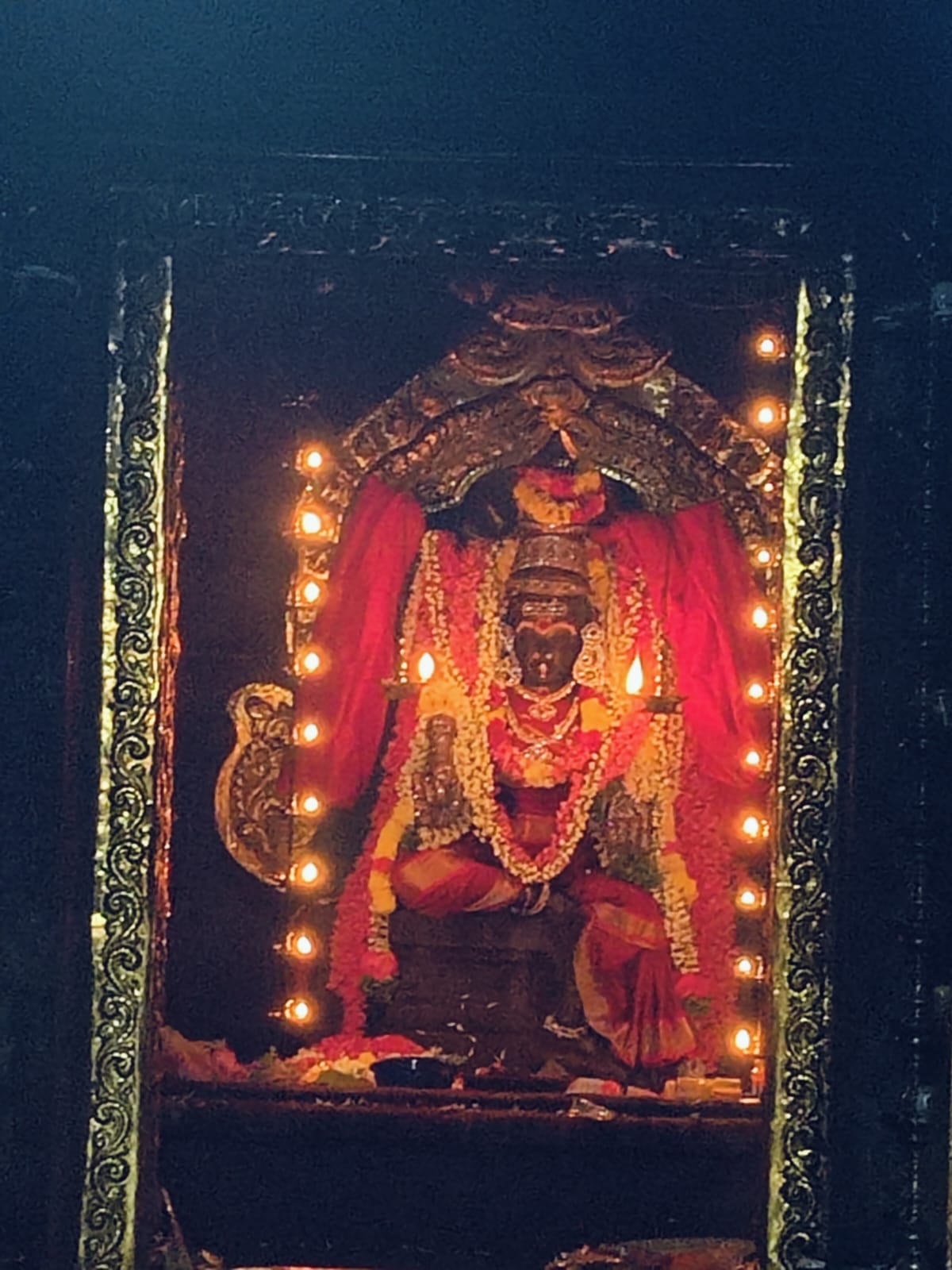
Tag: Sri Vidya

  • பாவநோபநிஷத் பொருள் பொழிப்புரை பகுதி 1

    ஸ்ரீ வித்யையின் ஆதார நூலான பாவநோபநிஷத் அதர்வ வேததினுடன் தொடர்புடையது .

    ஸ்ரீ சக்ரம் மற்றும் தந்திர முறையிலான தேவி வழிபாட்டை விளக்கும் அற்புதமான உபநிஷத்.


    ஸ்ரீவித்யா உபாசனையின் ஆழத்தை  இந்த உபநிஷத்தில் உணரலாம்.

    வேத சாரமாகவும் வித்யா உபாசனையின் மூல விளங்குவது  பாவனோபனிஷத் .

    சாக்த தத்துவம் மட்டுமன்றி அத்வைத தத்துவத்தை மிக அழகாக விளக்கும் நூல் இது.

    இந்த  உபநிஷத்தின் சம்ஸ்க்ருத மற்றும் தமிழ் வடிவம் அனைத்தும் புத்தக  வடிவிலும் பணம் கொடுத்தாலே மட்டும் படிக்க முடியும் என்ற நிலையை நான் வலைத்தளத்தில் கண்டேன்.

    அனைவரும் படிக்கும் பொருட்டு  இதனை வெளியிடுகிறேன், இரண்டு பகுதிகளாக..

    Mediafireல் மட்டும் இந்த உபநிஷத் இலவசமாக  உள்ளதாக அறிகிறேன் .

    பிழை இருப்பின் மன்னிக்கவும் .

    பிழைத் திருத்தங்களை வரவேற்கிறேன் ,

    ரகசியமான இந்த நூல்களை வெளியிடுவது தவறு என்பது சிலர் கருத்து .

    ஆனால் அறிய நூல்கள் அழிந்து போக வாய்ப்பு இருப்பதால் வெளியிடுவது சரி எனக் கருதுகிறேன்.

    ஆப்ரிக்காவின் மதமே அழிக்கப்பட்டுவிட்டது மேலை நாட்டவரால் .


    இது பற்றி எனது வலைப் பதிவில் காண்க .

    நமது தொன்மையான பொக்கிஷங்களை வெளியிட்டு அவைகளை காக்க வேண்டும்.

    வித்யா உபாசனை ரகசியமானது மட்டுமல்ல , ஆபத்தானதும் கூட.

    படிப்பது வேறு , பின்பற்றுவது வேறு .

    குரு முகமாக உபதேசம் பெற்றுத்தான் வித்யா உபாசனை செய்ய வேண்டும்.

    புத்தகம் மற்றும் வலைத்தளத்தில் படித்து விட்டு இறங்கினால் ஆபத்து..

    என்னுடைய இப்பதிவு இந்து மதத்தின், வேதத்தின்  முழு வீச்சை இளைய தலை முறைக்கு எடுத்துச் செல்லும் என நம்புகிறேன் ..

    வேதத்தின் முழுச் சாரத்தையும், சாங்க்யா, யோகா  மற்றும் நியாயா தத்துவங்களையும் இந்த உபநிஷத் அடக்கியுள்ளது.


    ஆங்கில மொழி பெயர்ப்பையும் (வாரியர் அவர்களது) கொடுத்துள்ளேன் .

    சம்ஸ்க்ருதத்தில் படிப்பது சிறந்தது..

    இல்லையெனில் நமது தாய் மொழியில் படிப்பது நன்று


    Sri Chakra of Devi
    The Sri Chakra


    பத்ரம் கர்நேபி  ச்ருணையாம தேவா;


    பத்ரம் பச்யே மோக்ஷ்மபிர் யஜஸ்திரா ரன்கைஸ் துஷ்டு வாசஸ்

    தநூஊ பி :I


    வ்யசேம தேவஹிதம் யதாயு :


    ஸ்வஸ்தி ந இந்திரோ வ்ருததச்ரவா:I


    ஸ்வஸ்தி ந :பூஷாவிச்வவேதா!


    ஸ்வஸ்தி நஸ் தார்ஷ்யோ அரிஷ்டநேமிI


    ஸ்வஸ்தி நோ ப்ருஹஸ்பதிர் ததாது I


    ஓம் சாந்தி :சாந்தி : சாந்தி ;


    ஓம்

    ஓம் ,

    தேவர்களே I


    செவிகளால் நாங்கள் நல்லதையே கேட்க வேண்டும் .


    விழிகளால் நல்லவற்றையே காண வேண்டும் .


    வலிவான உடல்களுடனும் உடல் உறுப்புக்களுடனும்,தேவர்களைத் துதித்துப் போற்றிக்கொண்டு ,அவர்களுக்கு உவப்பான ஆயுள் எவ்வளவோ ,

    அதை நாம் அடைவோமாக .

    பெரும் புகழ்பெற்ற இந்திரன் நமக்கு நன்மை அளிக்கட்டும் .

    அனைத்தையும் அறியும் சூரியன் ,நமக்கு நன்மை அளிக்கட்டும் .


    தடை படாத கதியை உடைய கருடன் ,நமக்கு நன்மை அளிக்கட்டும் .

    ப்ருஹஸ்பதி நமக்கு நன்மைகளை வழங்குவாராக .

    முவ்வகயிலும் சாந்தி நிலவுவதாக .


    1.

    ஆத்மான மகண்ட –மண்டலாகார –மாவ்ருத்ய ஸகல-ப்ரஹ்மாண்ட-


    மண்டலம்  ஸ்வப்ரகாசம் த்யாயேத்I

    ஸ்ரீ குரு சர்வ காரண பூதா சக்தி :-1


    தன்னைச் சுற்றிலும் தன் ஒளியால் அனைத்துப் பிரம்மாண்ட மண்டலங்களிலும் எல்லையின்றிப் பிரகாசிக்கும் ஆத்ம ஜோதியை த்யானம் செய்க .

    குருவே அனைத்திற்கும் காரணமான சக்தி .


    2.

    தேன நவரந்திர ரூபோ தேக :-2

    ஆகையினால் ,ஒன்பது வாயில்களுடன் தோன்றும் ,உடல் குருவின் வடிவாகும் .


    3.

    நவ சக்ர ரூபம் ஸ்ரீ சக்ரம் -3


    ஒன்பது சக்ரங்களைக் கொண்ட இதுவே ஸ்ரீ சக்ரத்தின் வடிவாகும்.


    4.

    வாராஹி பித்ருரூபா குருகுல்லா பலிதேவதா  மாதா –4


    தாதுக்களுக்கு அதிதேவதையான வாராஹி , தந்தையின் வடிவம் ;

    மாமிசத்திற்கு அதிதேவதையான வாராஹி எனப்படும் குருகுல்லா தேவி ,

    அன்னையின் வடிவம்.


    5.

    புருஷார்த்தா; சாகரா :-5

    அறம், பொருள் , இன்பம் மற்றும் வீடு எனப்படும் புருஷார்த்தங்கள் ,

    நாற்புறமும் சூழ்ந்துள்ள கடல்கள் .


    6.

    தேஹோ நவரத்ன த்வீப :-6


    உடலே நவரத்னத் தீவு .


    7.

    த்வகாதி சப்ததாது –ரோம சம்யுக்த :-7


    ஏழு தாதுக்கள் ரோமத்துடன் நவரத்தினங்கள் .

    உரோமம்  ,மாமிசம் ,இரத்தம்,மேதை ,மஜ்ஜை ,நரம்புகள் ,எலும்புகள்.


    8.


    சங்கல்பா :கலபதர்வச்தேஜ: கல்ப கோத்யானம்-7

    தெளிந்த தீர்மானமே கற்பக வ்ருக்ஷங்கள்.


    உள்ளொளி படைத்த மனமே கற்பகக் காடு .


    ரசனையா –பாவ்யமானா மதுராம்ல –திக்த –கடு –கஷாய –லவண-ரஸா:


    ஷட்த்ருதவ :-9


    நாவினால் உணரப்படும் இனிப்பு ,புளிப்பு ,கசப்பு ,உவர்ப்பு ,கார்ப்பு மற்றும் துவர்ப்பு என்னும் அறுசுவைகளும் ஆறு ருதுக்கள்.


    10.

    ஞானமர்க்யம் ஞேயம் ஹவிர் ஜ்ஞாதா ஹோதா


    ஞாத்ரு –ஞான-ஞேஞானா –மபேத-பாவனம் ஸ்ரீசக்ர பூஜனம்-


    ஞானமே சிறந்த அர்க்யம் .


    இந்திரிய அக்னியில் அர்ப்பணம் செய்யப்படும் ஞேய பொருள்களே ஹவிஸாகும்.

    தன்னைத் தானே அறிபவன் ,ஹோமம் செய்பவன் .

    அறிபவனும் ,அறிவும் ,அறியப்படுவதும் ஒன்றே என்ற பரிவற்ற மனப் பாங்கே ஸ்ரீசக்ர பூஜையாகும் .


    11.

    நியதி : ஸ்ருங்காரராதயோ ரஸா அணிமாதய :


    ஒழுக்கத்துடன் கூடிய ஒன்பது ரசங்களும் ,சேர்ந்து அணிமா முதலிய பத்து

    சித்தி தேவதைகள் .

    நவரசங்கள் .

    பயம்,,கோபம்,வெறுப்பு ,ஹாஸ்யம் ,வீரம் ,கருணை ,வியப்பு மற்றும் அமைதி .


    12.

    காம –குரோத –லோப –மோக –மத –மாத்சர்ய-புண்ய –பாப –மாயா ப்ராஹ்மாயத்-யஷ்டசக்த்ய :

    காமம் ,கோபம் ,லோபம் , மோகம் மதம் ,மாத்சர்யம் ,புண்யம் மற்றும் பாபம்  இவை  எட்டும்  மாத்ருகா சக்திகள் .


    13.

    ஆதார நவகம்முத்ரா சக்த்யா .


    மூலாதாரம் முதலிய ஆறு ஆதாரங்கள் ,இவைகளுக்கு மேலே உள்ள

    அகுல சகஸ்ராரம் ,கீழுள்ள குல சஹஸ்ராரம் ,இந்திர யோனி –உள்நாக்கு ஆகிய ஒன்பது ஆதாரங்களும் இவற்றின் சமஷ்டியாக ஒன்றும் சேர்த்து பத்து முத்ரா சக்திகள் .


    14.

    ப்ருத்வியப்ததேஜோ –வாய்வாகாச -ச்ரோத்ர –த்வக்-சக்ஷூர் –ஜிஹ்வாக்காரண-வாக் –பாணி –பாத –பாயுபச்தானி  மனோ விகாரா :

    காமா கர்ஷின்யாதி சோடச-சக்த்ய:


    நிலம் ,நீர் , நெருப்பு ,காற்று ,ஆகாயம் :

    செவி ,மெய் ,கண் ,நாக்கு ,மூக்கு ,வாக்கு :

    கை ,கால் பாயு ,உபஸ்தம் எனும் பதினைந்தும் , மற்றும் ,

    இவற்றால் மாறுபடும் மனத்துடன் காமகார்ஷினி முதலான பதினாறு சக்திகள் .


    15.

    வ்சனாதாகமான –விசர்க்கானந்த –ஹானபேதையோ பேக்ஷாக்ய-

    புத்தயோனங்க குசுமண்டத்திஷ்டவ்.

    பேசுதல் வாங்குதல் ,நடத்தல் ,கழித்தல் ரமித்தல் ஆகிய ஐந்து கர்மேந்திரியத் தொழில்களும்,தாகம் ,கிரகணம் ,உபேக்ஷை எனும் புத்தியின்  தொழில்களும் ,அனங்க குசுமா  எனப்படும் எட்டு சக்திகள்.


    16.

    அலம்புசா குஹூர் –விச்வோதரா வாரணாகமன- ஹஸ்தி ஜிஹ்வா

    யசொவதீ பயஸ்வினி காந்தாரி பூஷா சங்கினி சரசஸ்வதீதா

    பிங்களா சுஷும்னா சேதி சதுர்த்தச நாட்ய :

    சர்வ:சம்ஷன்யோபாதி  சதுர்த்தச சக்தய:

    அலம்புசா ,குஹு ,விச்வோதாரா ,வாரணா,ஹஸ்தி –ஜிஹ்வை ,யசோவதீ,


    பயச்விநீ ,காந்தாரி ,பூஷா ,சங்கினி ,சரஸ்வதி ,இடை , பிங்கலை ,சுஷும்னை  ஆகிய பதினான்கு நாட்களின் சக்திகளே சர்வ சம்க்ஷோபிணீ

    முதலிய பதினான்கு சக்திகள்.


    17.

    பிராணாபான –வ்யாநோதான –சமான –நாக –கூர்ம –க்ருகர-தேவதத்த –தனஞ்சயா தசாவயவ :

    சர்வ சித்தி –பிரதாதீ –பகிர்த்தசார தேவதா .


    பிராணன் ,அபானன்,,வியானன்,உதானன், சமானன் ,நாகன் ,கூர்மன் ,க்ருகரன் ,தேவதத்தன் ,தனஞ்சயன்  முதலிய பத்து வாயுக்களும் வெளிப்பத்துக் கோணங்களில் உள்ள தேவதைகள் .


    Bhavanopanishad.

    English Translation by Dr.A.G Krishna Warrier.


    Published by The Theosophical Publishing House, Chennai
    Om ! Gods ! With ears let us hear what is good;

    Adorable ones ! With eyes let us see what is good.

    With steady limbs, with bodies, praising,

    Let us enjoy the life allotted by the gods.

    May Indra, of wide renown, grant us well-being;

    May Pusan, and all-gods, grant us well-being.

    May Tarksya, of unhampered movement, grant us well-being.


    May Brihaspati grant us well-being.

    Om ! Peace ! Peace ! Peace !

    1. The holy Teacher is the Power (Para-Sakti) that is the cause of all.

    2. Of that Power the body with its nine orifices is the form.

    3. It is the holy Wheel in the guise of the nine wheels.

    4. The Power of the Boar is paternal: Kurukulla, the deity of sacrifice, is maternal.

    5. The (four) human Ends are the oceans (purusharthas – dharma, artha, kama and moksha).

    6- 7. The body with the seven constituents (Chile, blood, flesh, fat, bone, marrow and semen) like the skin and the hair is the island of the nine gems.

    8. Resolutions are the wish-granting trees; energy (of the mind) is the garden of the trees of plenty.

    9. The six seasons are the tastes, namely sweet, sour, bitter, pungent, astringent and saltish, which are apprehended by the tongue.

    10. Knowledge is the material for worship; the object of knowledge is the oblation; the knower is the sacrificer. The meditation on the identity of the three, knowledge, its object, and the knower, is the worship rendered to the holy Wheel.

    11. Destiny and sentiments like love are (the miraculous attainments like) atomicity, etc. Lust, anger, greed, delusion, elation, envy, merit, demerit – these constitute the eight powers of Brahma, etc. (Brahma, Maheshvari, Kaumari, Vaishnavi, Varahi, Raudri, Charmamunda and Kalasamkarsini).

    12. The nine abodes (muladhara etc.,) are the powers of the mystic gestures.

    13. The earth, water, fire, air, ether, ear, skin, eye, tongue, nose, speech, feet, hands, the organs of evacuation and generation and the modification of mind are the sixteen powers such as the pull of lust, etc.

    14. Speech, grasp, motion, evacuation, generation, and the attitudes of rejection, acceptance and apathy are the eight (entities) such as the flower of love, etc.

    15. Alambusa, kuhu, visvodara, varana, hastijihva, yasovati, payasvini, gandhari, pusa, sankhini, sarasvati, ida, pingala and susumna – these fourteen arteries are the fourteen powers such as the all-exciting, etc.

    16. The five vital breaths and the five minor breaths are the ten divinities of the outer spokes, (styled) Sarvasiddhiprada, etc.

    17. The digestive fire becomes fivefold through distinctions based on its association with this pre-eminent breath. (They are) what ejects, what cooks, what dries, what burns and what inundates.

    18. Owing to the prominence of the minor breath, these (fires) in the human body come to be styled as the corroder, the ejector, the agitator, the yawner and the deluder. They promote the digestion of the fivefold food: eaten, chewed, sucked, licked and imbibed.

    19. The ten aspects of Fire are the ten divinities of the inner spokes, Sarvajna, etc.

    20. The qualities of cold, heat, pleasure, pain, desire, sattva, rajas and tamas are the eight powers, vasini, etc.

    21. The five, rudimentary sound, etc., are the flowery shafts.

    22. Mind is the bow made of sugarcane.

    23. Attachment is the cord (that binds).

    24. Aversion is the hook.

    25. The unmanifest, the Great, and the principle of Egoism are the divinities of the inner triangle: Kameshvari, Vajreshvari and Bhagamalini.

    26. Absolute awareness, verily, is Kameshvara.

    27. The supreme divinity, Lalita, is one’s own blissful Self.

    28. Of all this the distinctive apprehension is the red glow.

    29. Perfection (ensues from) exclusive concentration of the mind.

    30. In the performance of meditation consist (various acts of) respectful service.

    31. The act of oblation is the merger in the Self of distinctions like I, Thou, Existence, non-Existence, the sense of duty and its negation, and the obligation worship.

    32. Assuagement is the thought of identity of (all) objects of imagination.

    33. The view of time’s transformation into the fifteen days (of the half lunar month) points to the fifteen eternal (divinities).

    34. Thus meditating for three instants, or two, or even for a single instant, one becomes liberated while living; one is styled the Siva-Yogin.

    35. Meditations on the inner wheel have been discussed (here) following the tenets of Saktaism.

    36. Whoso knows thus is a student of the Atharvasiras.

    Om ! Gods ! With ears let us hear what is good;

    Adorable ones ! With eyes let us see what is good.

    With steady limbs, with bodies, praising,

    Let us enjoy the life allotted by the gods.

    May Indra, of wide renown, grant us well-being;

    May Pusan, and all-gods, grant us well-being.

    May Tarksya, of unhampered movement, grant us well-being.

    May Brihaspati grant us well-being.

    Om ! Peace ! Peace ! Peace !

    Here ends the Bhavanopanishad, included in the Atharva-Veda.


    Enhanced by Zemanta
  • Sri Vidya Mantra Tantra Vidyas Sources Details

    Sri Vidya Mantra Tantra Vidyas Sources Details

    Sri Vidya is unique in Hinduism as it has the rare distinction of combining Mantra and Tantra Shastras.

    It also includes Yoga.

    Sri means Prosperity and Plenitude.

    Vidya is Knowledge.

    Sri Vidya is that which grants Knowledge and Prosperity or Knowledge of Prosperity.

    As Knowledge that liberates  the Soul, it has no equal.

    The special feature is that Sri Vidya grants both prosperity and Liberation here and in the after Life, nay, also Liberates one from the cycle of births and deaths.

    In two short phrases Lalitha Sahasranama describes Goddess Lalitha as .Bhaktha Sowbhagyadhaayini’

    One who grants every thing for the welfare of Her Devotees.

    She is The Universal Mother.

    The Lalitha Sahasranama begins addressing the Goddess as The Mother , Mother of Prosperity,

    “Sri Matha, Maharajne’

    As Knowledge of Prosperity Sri Vidya it gives scope for prosperity in this world through Saguna Upasana and for Beyond  by Nirguna Uapasana.

    Sri Vidya combines Gnana, Bhakti, Karma and Raja Yoga and synthesizes them in one format.

    It also provides for Dualism,Dwaita and Advaita in worship.

    As a Devotee if one worshps the Devi as different from the Self, it becomes Dwaita.

    When Sri Vidya is practiced as the raising of Kundalini through the Chakra in the Human Body it becomes Yoga.

    In Kunḍalini yoga, one realizes divine consciousness through the activation of the hidden energy of Kunḍalini.

    There are six centers (cakras) in the spinal channel. Kunḍalini is said to be initially coiled up at mulādhara.

    She is the Mother. She passes through these six from mulādhara at the bottom of spine to ajna at the forehead, then to the crown of the head (sahasrāra) where individual consciousness fully unites with cosmic consciousness.

    When you concentrate on the Unity of Shiva and Shakti, it Unites Shaiva and Shakta.(Aikyaanusnathaanam)

    When one meditates on the Devi as an expression of the Universal Self, Brahman, it is Advaita.

    As the mantras are mystically locked, it is Mantra Shastra.

    Sound is produced through contact, vibration and obstruction.

    This is called āhata. However cosmic hiss if one can hear is eternal and existent.

    This is called Anāhata. It is not produced by us but only heard.

    A yogi can hear this.

    In sādhana one makes the sound oneself (by doing mantra japa), in a rhythm, resonant with the vibrations of his nādis and his breath.

    Through this one will be able to discover the deeper vibration.

    This way of merging individual with cosmic is called mantra yoga.

    Mantra is said to be the sound-form of Devata (god-form).

    One realizes Devata through the chanting of mantra in mantra yoga.

    Mantra yoga concentrates on nada (sound) to strike rhythm between individual and cosmic vibration, to activate the right nādis, to expose one into the cidākāsa or daharākāsa (causal space).

    Śabda (sound) is the tanmatra (subtle attribute) of mahābhuta (primal element) ākasa (space)

    It practices Geometrical Worship, Sri Chakra, it becomes a Tantra Shastra.

    As Laya Yoga.

    Meditation is the means in laya yoga. One controls mind through the control of breath, so that full concentration is possible in meditation.

    Through meditation, one’s consciousness merges in the object of meditation and one realizes Atman.

    The state, in which the difference between the one who meditates the act of meditation and the object of meditation dissolves, is called samādhi or sāyujya.

    One also observes during meditation one’s own being, the different sheaths of consciousness.

    There are five kosas or sheaths of consciousness of being – annaMāya (physical), prānaMāya (vital-life), manoMāya (mental), vijnānaMāya (intellect-knowledge) and ānandaMāya (causal – blissful).

    The first is gross, next three constitute subtle and the fifth causal being.

    The causal being is Īśvara who resides in all beings, along with Māya His consort. She veils the unmanifest form of the divine, Brahman.

    The Mother is MahāMāya, who covers the world with veil of ignorance and lifts the veil out of grace, causing the entire play of creation.

    This is the cosmic sport She does for the Lord, Her līla. Her play, action can be seen in karanākāsa the causal space.

    She is the moon of that space, and is called Cidākāsa candrika.

    Sources for Sri Vidya.

    The Tantric texts like Rudra Yamala expound ŚrīVidyā. Khadgamāla Stotra, is the map and worship of Śrī Chakra

    .Besides there are several Śrī Kula texts in the oral traditions, either as compilations or as part of the mantra Śāstra texts like Mantra Mahodādhi, Mantra Mahārnava and Śāktā texts.

    Primary Source,

    Lalitha Sahasranama.

    A few of these texts are listed below –

    • Kāmakala vilāsa
    • Tantrarāja tantra
    • Tripurārnava tantra
    • ŚrīVidyārnava tantra
    • Jnanārnava tantra
    • Dakṣiṇamurti samhita
    • Gandharva tantra
    • Nitya shodashikarnava
    • Yogini hridaya.

    Citation.

    Hindupedia.

    Resources:

    1. Śrī Lalita Devi Caritra by Jagadguru Śrī Siddheswarananda Swami, Published in Telugu by Swayamsiddha Kali Peetham, Guntur
    2. Śrī Guru Samsmarana, The Souvenir on Centenary of Śrī C V Swami Sastriji
    Related articles
     

    Devi Mahatmiyam Durga Sapthasati Parayana Procedure

    The Devi (mother Goddess) killed Madhu and Kaidabha as Vishnu Maya (Thamasic-base), killed Mahishasura as Lakshmi (Rajashic form-materialistic) and killed Shumbha and Nishumbha in the form of Goddess Saraswathi (Sathvic-spiritual).

    All the three are combined in this Stotra.

    It consists of Chapters 74 to 86 (13 chapters) of the Markandeya Purana and has 700 stanzas.

    Sri Vidya Tripura Sundari Upasna Maha Shoda Nyasa

    Nyasa is a ritual where the individual touches various parts of the body with specific Mantras to purify these parts.

    In Tripurasundari Upasana, Sri Vidya as well, the performing of the ritual is mandatory.

    I have been hunting down for information on these texts and I mentally vowed six months ago. to start writing on…

    Draksharama Devi’s Left Cheek Shakthi Peeta

    Manikyamba devi also considered as Kula devata of vesyas.

    On every Ekadasi day Lord Bhimeswaraswamy and Manikyamba devi ekanta seva will be performed. Eight slokas will be sung by priests regarding Manikyamba devi and Bhimeswaraswamy and their romantic love story.Fridays also important days to worship Manikyamba devi. Kumkumarchana will be done in Fridays.

    Sarvajna Peetha Pakistan Shankaracharyas Throne Of Wisdom

    Adi Shankaracharya ascended the Sarvagna Peetha, Seat of Learning of Throne of Wisdom’

    Ramanujacharya visited and contemplated before embarking upon his commentary on Brahma Sutra,.

    Yet some of the best photographs of this place is by Pakistani Muslims.

    I am providing the thread of discussions found in the site.

    Join 4,576 other subscribers
  • Lalitha Sahasranama Introduction

    Lalitha Sahasranama Introduction

    The worship of Shiva and Shakti is unique to Hinduism.

    One prays the Male and the Female Principles.

    Kanchi Periyavar performing Pooja to Kanchi Kamakshi wit Bala

    Kanchi Periyavar, Kamakshi and Bala.image

    Kanchi Periyavar, Kamakshi and Bala

    Though Hinduism advocates The Realization of the Self, which is a Principle and beyond Attributes,Hinduism recommends worship of gods in the form of Idols.

    In this sense in Hinduism,God exists in Form and at the same time does not.

    For details read my post ‘God Exists, Yes And No’

    Worship of Gods in Human forms that in a form which one likes is special feature of Hinduism.

    In theory therefore there are, in this perspective, as many Gods as there are tendencies ,

    Details of Worship of Gods is also provided.

    Of the innumerable Gods and Goddesses, Adi Shankaracharya chose Six and regulated the worship , The Shanmathas.

    Please read my blog on this.

    There are various ways one can worship these Gods and Goddesses.

    Goddess Lalitha is worshiped in Four different ways

    The worship of Goddess Lalitha is called Sri Vidya.

    The Sri Vidya is to be practiced by any of the following Four ways,traditions

    1.Samayacharam. Worshiping in The Mind

    Worship is done mentally, internally and no object is used in this tradition

    2.Dakshinacharam,Worshiping through an Object, Sri Chakra or an Idol.

    3.Vamacharam is worshiping through the terrible aspects of The Divine, Laya Pradhana

    Kaulacharam is worshiping through the Human Body/parts.

    ‘Sri Lalitha Sahasranama Classes begin on Monday, 25th April,as it is an auspicious day and thereafter the classes shall be on every Sunday between 7 and 8 PM IST.
    Duration. One hour.
    Word by word meaning, Explanation with Sri Bhaskararaya’s commentary and Sri Vidya Upasna.
    Fees Rs. 800/ month. WhatsApp +919480591538’

    This includes Rituals some which are erotic in nature.

    It is Tantra Shastra.

    Ref:

    http://shaktisadhana.50megs.com/Newhomepage/Resource/essays/4traditionsofsrividya.html

    * This post and the others to follow are meant to give basic information.

    Some of the points which need elaboration ,I will do a little later.

    ‘Sri Lalitha Sahasranama Classes begin on Monday, 25th April,as it is an auspicious day and thereafter the classes shall be on every Sunday between 7 and 8 PM IST.
    Duration. One hour.
    Word by word meaning, Explanation with Sri Bhaskararaya’s commentary and Sri Vidya Upasna.
    Fees Rs. 800/ month. WhatsApp +919480591538

    Links are provided for clarification

    Enhanced by Zemanta