Tag: Temples of India

  • Swamymalai Arupadai Veedu Is Not Thiruveragam, Velimalai Kumaran Koil Is?

    Swamymalai Arupadai Veedu Is Not Thiruveragam, Velimalai Kumaran Koil Is?

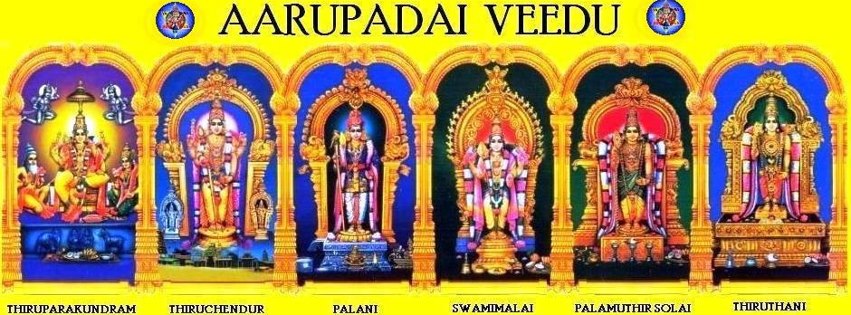
    There are six major temples dedicated to Lord Subrahmanya, called Murugan in Tamil Nadu.

    They are,

    Palani,

    Thiruparankundram,

    Thiruchendur,

    Pazhamudhir Solai,

    Thiruthani and

    Swamymalai.

    These six temples were called thus by Saint Arunagirinathar in the fourteenth century.

    I have been checking on the special temples of Murugan from Tamil Classics, Skanda Purana, Silappadikaram, one of the Five Epics of Tamil from Sangam age and Thirumurugatrupadai by Nakkeerar , the earliest hymn on Murugan in Tamil.

    I also checked with ancient Tamil Land Lemuria and Mu.

    The landmass was different then.

    Please check my articles on Lemuria, Mu, Rodina, Pangea, Sundaland.

    Now Murugan is considered to be the personification of Tamil language which was founded by Lord Shiva and Sage Agastya.

    Murugan was also involved.

    When we look at the location of the six abodes of Murugan, ஆறுபடை வீடு, we find that none of them seem to fit perfectly with the landmass associated with Murugan.

    Murugan is described as the God of Mountains and adjoining lands called Kurinji in Tamil, குறிஞ்சி.

    Thiruchendur is on the seashore.

    Palani, Thiruthani, Swamymalai and Thiruparankundram are small hills.

    Pazhamudhir Solai is a forest.

    So, going by Sangam definition I checked.

    I have found that Kumaran Kovil near Thackalay in Kanyakumari district seems to fit one of the major temples of Murugan.

    IT is in the Western Ghats, down deep south in agreement with ancient landmass and Lankan chronicles call Murugan as Kattrama and Valli the consort of Murugan.

    And Thiruveragam, the old name seems to fit Velimalai in Kumaran Koil.

    So it looks as though Swamymalai is not Thiruveragam.

    And Thiruthani is not where Murugan married Valli.

    Tiruttani constitutes one of the six Padai Veedu shrines of Skanda (Lord Subramanya), and it represents the site where Subramanya stayed after destroying the demon Surapadman. Tiruttani is said to be the place where the Lord Subramanya married Valli – one of his two consorts.

    http://murugan.org/temples/tiruttani.htm

    Here is the famous Subrahmanya (Muruga ) Temple by the name of “Velimalai Kumaraswamy Temple’. The temple was built on a hill named ‘Velimalai’. The name “Veli” was named from the malayalam word “veli” means marriage.It is the place where marriage of Murugan and Valli was done. Koravans used to come to the temple for marriage of valli ,since valli devi belongs to koravan community.Lord Muruga and his consort Goddess Valli are the main deities. It is believed that they married here. It is built on a rocky terrain about 200 feet in height.
    The rock cut temple with stone carvings is a splendid structure. A large water body is seen in the surrounding. Majority of the devotees are from Kerala state. A police party and band from Kerala state is present on certain celebrations of this grand temple. Many children get their first feed (choor\Oonu kodupu) in this temple. There is a shed for holy animals- cow, bull, peacock in the temple courtyard. Kuramakoil is one of the holiest places for Hindus. It is about 34 kilometers from Kanyakumari and around 50 km from Trivandrum airport.

    Kumarakoil is one of the important and renowned among the Murugan temples in the district of Kanyakumari Tamil Nadu. It is located near Thuckalay, 15 km from Nagercoil. Kumara Koil, also called “Kumara Shethram” and “Subramania Sthala” in Malayalam language, and “Thiruveragam” in ancient Tamil scripts is at the foot hills of the Velimalai Hills also known as “Velvi Malai”, and Merkada malai means the southern end of the western ghats. Prior to 1950, Kanyakumari District was first with Chera Kingdom (Chera Nadu) and later with Trivancore samasthanam (province) and then with present-day Kerala State. During Tamil Sangam period, Kumara Koil was known as Thiruveragam as evidenced from Thirumurugattupadai, the sangam literature written by poet Nakkeerar. The name of the temple has changed since Tamil Sangam period, under the successive rulers of the area. Thus, Kumara koil is also known as Thiruveragam (Thiru Earagam), Malai Nattu Oru Thiruppathi, Subramania Sthala, Kumara Shethra etc.

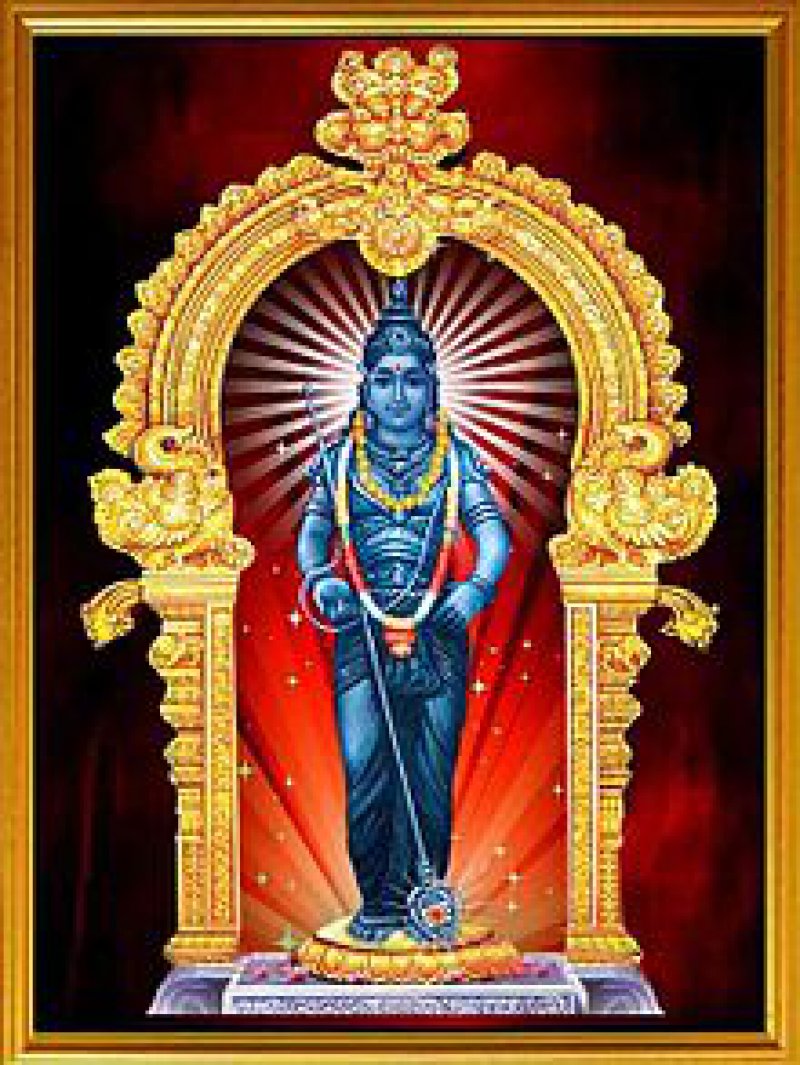
    The temple is built on the foot hills of Veli Malai where, according to legends, Lord Muruga enacted a drama to win the heart of Valli the divine child found in the hillock by Nambi Arasan, a chieftain ruled over the place with Thirukurangudi (Valliyoor) as his capital. The temple faces east and can be reached by a flight of thirty eight steps. Beyond the comparatively small but beautiful rajagopuram, Veerabagu and Veeramagendra stand guard of the Lord. The statue of Muruga in the Moolasthanam is in standing posture…..

    In the history of the temple written by Shri Annalar Adigal, it is stated that, the present day Kerala was known as Malay Nadu(Sandalwood Country-Malay in sanskrit means sandalwood)aka MalayAlaya ( Abode of Sandalwood). The present day Veli malai was known as Velvi malai. Before that it was known as Merkadamalai, means last part of the western ghats. As an evidence, he refers to a stone carving found in Thirunanthikarai, about ten miles from Kumarakoil wherein it reads ‘Rajaathitha Thevan Perumpadai Nayagar Malai Nattu Nanthikarai Puthur’ and another stone carving found at Thiruvithangode, reads “Malaimandalathu Ravivarmaraya Kulasekaraperuman peruntheruvil chetti Velayuthaperuman” These evidences conform to the assertion of Nachinarkiniyar that Earagam is Malai Nattu Oru Thirupathi
    Velimalai is the southern tip of western ghats and Kumarakoil is in the foothills of Velimalai There are ample evidence to show Kumarakoil is the Earagam referred to in Silappadikaram.

    Prof. N.K. Mangala Murugesan in his book “Muruganin Arupadai veedugal” write, As per Thirumurugattupadai, in Earagthu Murugan temple, the Brahmins who observed a bharamacharya viradha for forty eight years sang veda mantras and the Aruchagas wearing wet lower garments and saying the six letter manthra (ohm saravanabhava) performed archanas. This practice is in vogue in Kumara shetram even now. On this basis, Earagam is Kumara shethram or Subramania Sthala besides the western ghats.

    The Tamil epic “Silappathykaram” written by Illangovadigal refers four shetras (temples) as Padai veedu of Lord Muruga. Silappathikaram Vanji Kandam refers to,-“seerkezhu Senthilum, Sengodum, Venkuntum, Eragamum Neenga Eraivankai Vel …..” These are perhaps Thruchendur, Palani, Thirupparankuntam, Kumarakoil (Thiruveragam) situate in present-day Madurai, Thoothukudi and Kanyakumari Districts. Some say that venguntu is Swamimalai. How it could be that scholars like Elangovadigal omit the place at which murugan married Deivanai, that too very near to the city of Madurai which is the theme centre of Silappathikaram. After burning Madurai, Kannagi went alongside Vaigai river and reached Western ghats. There, the people saw Kannagi and enquired about her. They exclaimed that you are like our Valli, but you are in distress. Who are you? Mangala Devi Koil dedicated to Kannagi by the Madurai King Cheran Chenguttuvan is in the Mangaladevi mountains alongside Periyaru river. This enhance the belief that Valli was brought up in western ghats.

    Nachinarkuenier who had written meaning (arumpathavurai) for the poetry Thirumurugattupadai asserted that Earagam is ‘Malai Nattu Oru Thiruppathi’. Malai Nadu means Cheralam now known as Kerala. Veli Malai was part of Travancore Samasthanam in olden days. The place was part of Cherala Nadu when Silapathigaram was written. After Independence too this place was part of the present Kerala State. After a prolonged agitation under the leadership of great leaders like Nesamani Nadar, Ponnappa Nadar etc., the taluks of Thovalai, Agastheeswaram, Kalkulam, Vilavancode, and half of Neyyatinkarai were ceded to Tamil Nadu. In the intermittent period, when Earagam was with Cheralam, the scholars like Arunagirinathar ( 15th century) a staunch devotee of Lord Muruga was probably interested in creating one of the padai veedu in the vicinity of Kumbakonam, one of the temple cities in Tamil Nadu. In the belief that the people of Tamil Nadu had lost track of Thiruveragam, one of the Padai Veedu referred to in ancient scriptures, he had written that Earagam is Swami Malai, without considering the fact that Illangovadigal, lived thousands of years before him had written that Earagam is in Chera Nadu. Swami malai is in erstwhile Chola Nadu. The temple dedicated to Lord Muruga there is in the top of a man made hillock and the existing landmarks and practice referred to about Earagam in Thirumurugattupadai is lacking there.

    Reference and Citation.
    https://en.m.wikipedia.org/wiki/Kumarakovil

  • Present Arupadai Veedu Six Murugan Temples are Not What The Original Was?

    Present Arupadai Veedu Six Murugan Temples are Not What The Original Was?

    On a careful study of the Skanda Purana other Puranas Tamil Sangam work Thirumurukatruppadai by Nakkerar, (earliest work on Lord Subramanya as Murugan) and Silappadikaaram, one of the Five Tamil Epics), I have a few doubts about the present Arupadai Veedu, ஆறுபடை வீடு, the six important temples of Subrahmanya, called Murugan in Tamil.

    This was reinforced when I visited Subrahmanya Temple in Kukke, Karnataka.

    Kukke is from Sanskrit word Kukkuda, meaning Cock, the Flag of Lord Subrahmanya.

    We have Kumara Parvatha, beneath which this temple is located.

    The River is Kumara dhara.

    Just about two hours from there is Dharmasthala, a special Kshetra of Shiva.

    And further down the Western Ghats lie the two hundred and forty seven temples of Shiva established by Parashurama.

    And Murugan is associated with Hills and surrounding areas, called Kurinji, குறிஞ்சி land in Tamil.

    Though the present Arupadai of Muruga lists six places,

    அழைக்கப்படுகின்றன. இந்த ஆறு இடங்கள்:

    1. திருப்பரங்குன்றம், Thiruparankundram
    2. திருச்செந்தூர் அல்லது திருச்சீரலைவாய், Thiruchendur,
    3. திருவாவினன்குடி (எ) பழனி, Palani
    4. திருவேரகம் (எ) சுவாமிமலை சுவாமிநாதசுவாமி கோயில், Swamy Malai, Thiruveragam.
    5. திருத்தணி அல்லது குன்றுதோறாடல்
    6. பழமுதிர்சோலை Pazhamudhir Solai

    Of these, Thiruchendur is on the seashore, where Subrahmanya slew Surapadma of Mahendragiri( curious to find Mahendra Parvatha in Odisha ) and Thiruchendur is on the shores of Bay of Bengal.

    Number one, three, Five are relatively small hills unlike Kumara Parvatha.

    And Pazhamudhir Solai, near Madurai is a forest.

    And the evidence from what is stated in the beginning of this articles points to Thiruveragam is in Kerala.

    That is where Murugan married Valli.

    Will write on this.

    *Please note that this article is an articulation of my doubts and is not a conclusion, based on ancient landmass of Lemuria Rodina. Scholars may contribue

  • Britisher Who Saw Lord Shiva Renovated Shiva Temple  Baijnath Agar Malwa

    Britisher Who Saw Lord Shiva Renovated Shiva Temple  Baijnath Agar Malwa

    Hinduism advocates God as A Principle,Beyond Attributes.

    The underlying principle of Life and Universe,both known and Unknown lies in all these,they in It,yet It is beyond them.

    It is the Reality,Brahman.

    This Brahman is without beginning and end.

    It is Infinite.

    It is beyond words,thoughts.

    It Immanent and as well all Pervasive.

    It can be felt and Realized.

    There are various methods tried to Realize Brahman,also known as the Self.

    There are as many paths,methods to Realize Brahman as many individuals and individual dispositions are.

    To understand this principle and realize Brahman as a Priniple,Beyond Attributes is possible only for a few.

    Brahman is Realized and not Known in the manner of our knowing mundane things.

    It is,for short of words, I use this term, Experienced.

    Experiences,all of them need not be through our sense organs alone.

    However as this understanding of Brahman as Principle,Hinduism has suggested the method of Realizing Brahman through worship of Personal God,called Easwara.

    Please read my article on Iswara Pranidhana,Yoga.

    In this method God is related as Preceptor,Father,Mother,Guru,Friend,Lover……

    The mind relates to things it likes.

    So one is advised to choose the Devatha as he pleases,in consultation with a Guru,who can guide him in choosing what is best .

    This worship of Personal God is called Saguna Aradhana,while the realization process of Brahman as The Absolute is called Nirguna Aradhana.

    According to Vedas,the authority for Hindus on Spirituality,Saguna Aradhana leads to Realization.

    Many Gods are found in Hindu traditions because of this thought,though the substratum of all is,One.

    Among many Gods/Goddesses,three are called the Trimurthis,the Trinity.

    Brahma,Vishnu and Shiva,representing Potential,Kinetic and Potentio-kinetic energy respectively.

    And the Trimurthis are attributed with all human and beyond human Attributes.

    The prayers addressed to them Delivers.

    I have written  articles on The Sage who spoke from the Grave,Goddess Meenakshi leads by hand,Goddess Abhirami plays,how,all documented.

    Here is another such recorded fact.

    A Britisher’s prayer to Shiva was answered and her husband saw Lord Shiva.

    And the couple renovated the Shiva Temple.

    Read on.

    BAIJNATH MAHADEV MANDIR, AGAR
    • This Mandir is located on the bank of the Banganga river.
    • The construction of this Mandir was started 1528 and completed in 1536.
    • Height of this Mandir is about 50 feet from ground level with 4 feet High kalash.
    • There is 17 feet deep kund(well) on the back side of the Mandir.

    History:-

    The British ruled India for hundreds of years, and built many churches and cathedrals. But in the 1880s, a Shiva temple in Agar Ma lwa, Madhya Pradesh, was rebuilt by Lt. Col. Martin — the only temple ever made by an Englishman in India.

    Col. Martin was in the Afghan wars. He used to regularly write to his wife, informing her of conditions there. It was a long war, and gradually the colonel’s letters stopped. Mrs. Martin, who then lived in the cantonment of Agar Malwa, was besides herself with grief, fearing the worst.

    She would spend time riding for hours to calm herself. One day she rode her horse, past the temple of Baijnath Mahadev. It was in a decrepit state. It was the time of arti, and the sound of conches and the chanting of mantras compelled her to stop. She went inside to see the worship of Lord Shiva taking place. The priests saw the grief on her face and asked her what was wrong. Mrs. Martin narrated her sad story. The Brahmins told her that Lord Shiva listens to sincere prayers of all devotees and saves them from difficult situations. She was advised by one of the priests to start chanting the mantra: “Om Namah Shivaya” for 11 days. The Englishwoman prayed to Lord Shiva for the colonel’s safe return, promising she would rebuild the temple if he came home safe from the war. On the 10th day, a messenger arrived from Afghanistan with a letter from her husband. It read, “I was regularly sending you letters from the battlefield but then suddenly the Pathans surrounded us. I thought there was no way of escape. Suddenly I saw an Indian yogi with long hair, wearing a tiger skin carrying a trident. He had an awe-inspiring personality and he started wielding his weapon against the Afghans who ran away from the field in fright. With his grace what was certain death our bad times turned into victory. Then the great yogi told me that I should not worry and that he had come to rescue me because he was very pleased with my wife’s prayers.”

    Tears of joy and gratitude welled up in Mrs. Martin’s eyes as she read the letter. Her heart was overwhelmed. She fell at the feet of Lord Shiva’s image and sobbed. After a few weeks Lt. Col. Martin returned and his wife told him her story. The couple became devotees of Lord Shiva. In 1883, they donated Rs 15,000 to renovate the temple. This information is engraved on a slab kept in the Baijnath Mahadev Temple.

    The Martins sailed for England with the firm resolution that they would make a Shiva temple at their home and pray to him till the end of life. And they did.

    How to Reach:-

    01 By Air 109 km away Indore Airport (IDR)Indore, Madhya Pradesh
    149 km away Bhopal Airport (BHO)Bhopal, Madhya Pradesh
    02 By Rail 50 km away Shajapur (SFY)Shajapur, Madhya Pradesh
    50 km away Tarana Road (TAN)Tarana , Madhya Pradesh
    65 km away Ujjain (UJN)Ujjain, Madhya Pradesh

    Nearest:-

    Nearest Name Distance ( in Kms)
    Airport INDORE 110
    Railway Station SHAJAPUR 50
    Railway Station UJJAIN 65
    Bus Stand AGAR 00

     Reference and citation.

    http://www.agarmalwa.mp.gov.in/baijnath-mandir/

  • Nineth Century Chola Temple Bethuru Davangere Karnataka

    As one reads Indian history one is amazed at the antiquity of India and its rich culture.

    The problem is that many are not aware of these facts thanks to Invaders and the manipulated History of India by them, who never seem to date anything about India before Christ and the self-styled left historians(?) of India, who have no time to check Indian sources and archaeological sites, but would accept a history of India by James Stuart Mill was by Rajaraja Chola. \nNow I find there is a Temple for Shiva in Bethuru, four kilometres from Davangere, Karnataka, on the way to Jagalur. \nThe temple is reported to have been built in the Eighth Century AD. from England, without visiting India!

    I have listed the Chola temples in Bangalore with the earliest being dated at 1035 AD.

    It was by Rajaraja Chola.

    Now I find there is a Temple for Shiva in Bethuru, four kilometres from Davangere, Karnataka, on the way to Jagalur.

    The temple is reported to have been built in the Eighth Century AD.

    However on checking up, it transpires that Vijayalaya Chola built this.

    Vijayalaya Chola was a king of South India Thanjavur( 850 870 CE) and founded the imperial Chola Empire.[1] He ruled over the region to the north of the river Kaveri.'(Wikipedia)

    Not surprising.

    This temple was built by the Cholas between the 8th and 9th centuries, post the weakening of the Badami Chalukyas and before the rise of Rashtrakutas. Later in the 11th century, this temple under went a few additions under the Kalyana Chalukyas. Many hero-stones found here which are now kept near the temple belong to the Kalyana Chalukyas. The most pleasing sight here is that of a beautiful carving on the ceiling panel of ‘Gajasura Samara/ Gajasurasamhara’ (depiction of Lord Shiva slaying the elephant demon Gajasura) in the central portion, surrounded by the Ashtadikapalas. The temple is dedicated to Lord Shiva in the form of a Linga, with murtis of goddesses Saraswathi and Sapthamatrikas and Lord Subramanya kept in the Navaranga of the temple. The Shikara of the temple is a perfect example of early Cholan architecture. This temple definitely needs and deserves more care and maintenance in order to be preserved for future generations.

    Source. http://teamgsquare.blogspot.in/2017/11/a-chola-temple-in-heartland-of.html?m=1

  • Five Burning Ghat Shiva Temples

    Five Burning Ghat Shiva Temples

    I wrote an article on Sri Vanchiyam Siva Temple where a burning ghat is located near the temple.

    And this temple is not closed when death occurs in the street where the temple is nor is the temple closed during Eclipses, which is a standard practice in Hindu temples.

    I shall be writing a clarification on this in a separate article.

    Shiva is His form as Rudra is associated with Death and described as living in Smasanam, Burning ghat.

    The ashes of the corpse is smeared by Him all over His body.

    The association of Burning ghat with Shiva is more prevalent in South India than North India.

    Th

    Thirukkadayur Temple.image
    Thirukkadayur Temple.

    ough there are Bhairava Temples in the North indicating Shiva’s association with Burning Ghats and there is the association of Varanasi, Benares with Burning Ghat, there seems to be no clear classification of such temples in Sanskrit texts as much as in Tamil texts.

    Tamil literature abounds in such references.


    And specific temples are grouped as Smasanam Temples.

    There are four such temples in Tamil Nadu.

    1.Thiruvattanam,Thirukkadavur,near Mayuram Tamil Nadu.

    This town is famous for the temple of Abhirami and அமிர்தகடேஸ்வரர். Amirthakadeswarar.

    The smasanam is located slighly away from the temple and many miss it.

    And one prays for longevity and has Sashtiapthapoorthy performed at Thirukarukavur.

    2.Kachi Mayanam. Mayanam in Tamil is burning ghat.

    One finds Siva associated with Burning ghat here too.

    3.Srivanchiyam..

    4.Navalur Mayanam.

    5.Sirkazhi.

    Shall be writing in detail on each of these.

    In some of these places streets have sprung between burning ghat and the temples