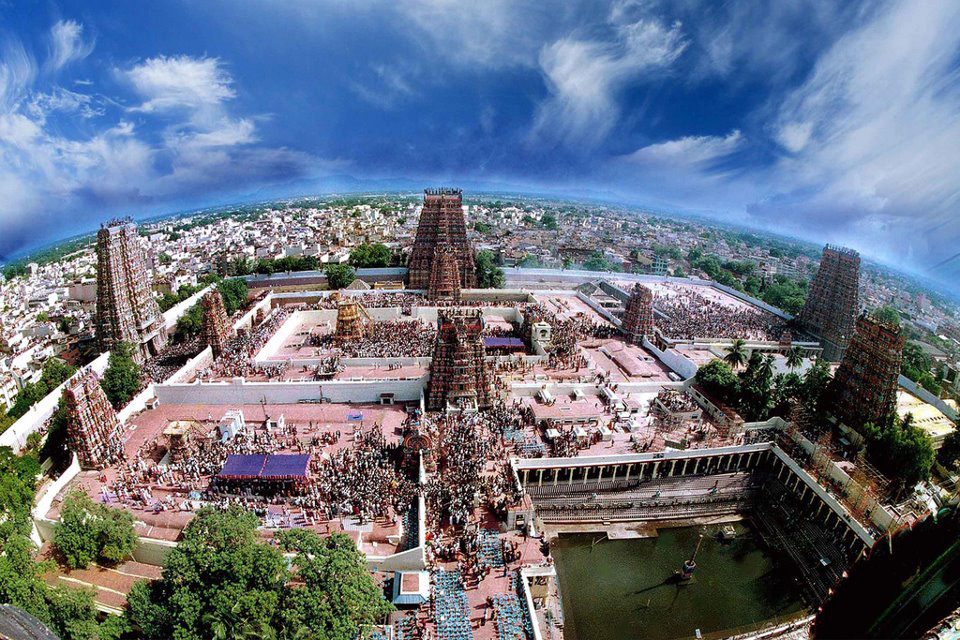
Tag: Temples of India

  • Shiva Abhishek Ghee Turns Butter Shiva Gange Temple

    Apart from the spiritual point of view,Hindu temples are repositories of Innovative Architecture and house sites of Events that defy logic.

    People call them as Miracles.

    However those who know the ancient wisdom handed over through generations orally know that none of these ancient texts call any happenings,which might appear to be away from our daily Life,are Miracles;for the Hindus nothing in the world is a Miracle for it is Natural.

    There is nothing called Paranormal in Hinduism.

    Everything in the Universe is Natural.

    When we come across things which we do not see in our daily Life,we tend to call them as Miracles.

    Fact is that we are perceiving them anew.

    That’s all.

    What human mind is capable of conceiving is possible.

    ( That the world has only Relative Existence is an issue of philosophy and this blog has covered that topic)

    Thus we have,

    Shiva lingas that change colors daily/Five times a day)

    Ganesha Idol that remains white during the waxing of the Moon and black during the waning of the moon.

    Narasimha idol that consumes Jaggery water,

    Temple Ghee remains unspoilt for an year and lamp keeps on burning in a temple that opens once a Year.

    I can keep on adding.

    Please read my articles on temples by Googling temples of India+ramanan 50.

    There is a temple near Tumkur, Karnataka,where Ghee poured on Shiva linga as Abhisheka, Holy Bathing,turns into Butter.

    This temple is around 54 Kilometers from Bengaluru and 19 Kilometres from Tumkuru.

    Airport. Bangalore.

    Railway Station.Bangalore,Tumkur.

    Buses available from Bangalore to Tumkur.

    One has to trek the hill.

    Autos,Buses available from Tumkur.

    Shiva Gange .image.

    Shiva Gange Shiva Ghee turns butter,

    Image credit. http://www.indiatravelblog.com/resources/3613-Sivaganga-Sivagange-hills-Hilly-retreat.aspx

    An interesting miracle happens here is that when an abhisheka is performed on Shivalinga with ghee, the ghee turns to butter. Devotees can see the miracle live during abhisheka.It is said that the ghee that turns to butter has medicinal powers and can cure many ailments. According to legend there exists a secret tunnel that extends from the sanctum sanctorum (Garba Griha) of this temple to the Gavi Gangadhareshwara temple in Bengaluru, around 50 kilometers from this temple.

    …..

    Shivagange is a mountain peak with a height of 804.8 meters or 2640.3 feet and Hindu pilgrimage center located near Dobbaspet, in Bengaluru Rural district India. It is situated 19 km from the town of Tumakuru and 54 km from Bengaluru. The sacred mountain is shaped as a shivalingaand a spring flows near locally called “Ganga”, thereby giving the place its name. It is also known as Dakshina Kashi (Kashi of the South) and place is having various temples such as Gangadhareshwara temple, Sri Honnammadevi Temple, Olakal Teertha, Nandi Statue, Patalagange, A historical rock statue of Nandi or Basavanna carved on top of a steep rock is considered as a spell binding sculpture because of its narrow location.

    Source.

    https://en.m.wikipedia.org/wiki/Shivagange

  • Brahma Vishnu Shiva in Linga Moonreswara Temple Athanallur

    Brahma Vishnu Shiva in Linga Moonreswara Temple Athanallur

    The acrimony between those who follow Shaivism and Sri Vaishnavas, I thought, is a thing of the past.

    I saw a comment recently in a Facebook group of which I am a member that triggered a heated debate between Shaivites and Vaishnavas.

    It all started with a comment by a member that those who worship Lord Shiva, must boycott the Discourses by Sri Velukkudi Krishnan,a Vaishnavite,who delivers lectures and is quite popular.

    The comment observed that Sri. Krishnan ridicules Lord Shiva and insults Him, when He is extolling the virtues of Shiva.

    ( I discussed with Sri.Krishnan on his twisting Bhagavad Gita to suit Vaishnavism.

    His reply ”Swamin,Pressures’!

    I was attending a series of lectures by Sri.Krishnan on Bhagavata Gita in Malleswaram Bangalore,some three years back with my childhood friend who is a staunch Vaishnava)

    This is not something new.

    About three or four years back one of my friends,Sri.Srinivasan,( he is no more),from Bombay wrote to me that one of the Acharyas of Sri Vaishnavam, in his discourse had stated that visiting Shiva temple by a Vaishnava would attract Brahmahathi Dosha,that is a sin equivalent to killing a Brahmin ,and one needs to perform Prayaschitta,including Homa.

    He wanted my opinion on this.

    Dakshinamoorthy, Moonreswar temple,Athanallur.
    Dakshinamoorthy


    I wrote an article on this stating that there is no sanction for this in the Vedas,they do not speak of Shaivism or Vaishnavism.

    I followed up this article with Shiva Stuthi by Krishna and His caution to His followers and Vishnu stuthi by Shiva.

    And there is Mantrarajapadam, which wards off Evil,on Lord Narasimha by Rudra.

    It is foolish and ridiculous to differentiate between Shiva and Vishnu.


    There are many temples where Shiva and Vishnu exist togethet,though in different sanctums.

    Eg. Govindaraja in Chidambaram Nataraja temple.

    And there is Sankaranarayana Temple ,Sakaran koil,near Tirunelveli,Tamil Nadu,where Shiva and Vishnu are found in one Image in the sanctum.

    There is a temple in Suchindiram,near Kanyakumari,Tamil Nadu,where Brahma,Vishnu and Shiva are in one idol.

    There is a little known temple in Tamil Nadu where one can find Brahma,Vishnu and Shiva in one Shiva linga in the sanctum.

    This is called Moonreswarar temple,Moonreswarar meaning Three Gods.

    • God Moondreeshwarar
    • Goddess Maragadambika
    • Dakshinamurti in a rare and different posture
    • Brahma, Vishnu and Shiva in the form of a Shiva Linga
    • Tombs (Samadhis) of Siddhars inside the temple
    Legend:

    As per the advice from Lord Shiva during his marriage, the sage Agastya travelled to South India. He first landed in Podhigai hills. Later, he visited this site. Many saints followed him. Some of the Siddhars liked the place and stayed here. Hence, this temple is also considered asSiddhar Peetham.
    This ancient temple of Lord Shiva is located at the outskirts of Athalanallur village on the way to Tirupudaimarudur. Unfortunately, this extraordinary temple, which is supposed to be the highlight of the village, remains unknown. It is not easy to locate this temple. Even the local people are unaware of this temple. It is located at a distance of around 400 meters from the famous Aadi Moolam Gajendra Varadan temple.
    The temple, which badly needs maintenance, is east facing. It does not have tower. Instead, there is a beautiful Nalkal (four pillared) mandapa in front of the temple.
    The prakara has the idols of Dakshinamurti, Chandikeshwarar, Surya, Chandra, Bhairava, Bhadra, Sura Deva, Sapta Matas, Durga and Adhikara Nandi. There are two sub shrines dedicated to Ganesha and Subramanya-Valli-Devasena.
    Dakshinamurti is in a rare and different posture. He is found in the sitting posture with his right leg hanging down and his left leg folded on top of his right leg; his left foot is facing upwards which is a rare posture.
    The temple also houses two samadhis of Siddhars; Shiva Linga idols are installed on those samadhis. Three sub shrines of Shiva Lingas are also found in this temple; it is also believed that due to these three sub-shrines of Shiva Lingas which are located together, the main deity is named as Moondreeshwarar.

    How to reach.

    Nearest Railway Station: Veeravanallur
    Nearest Airport: Tirunelveli
    How to reach: Well connected by road from Ambasamudram and Veeravanallur; public transportation is not dependable
    Hotel: Few options in Ambasamduram and no option in this village; more options in the nearby city Tirunelveli

    Restaurants: Only few options in the nearby Ambasamudram town.

    Source.

    http://indiancolumbus.blogspot.com/2014/07/Moondreeshwarar.html?m=1

  • Ramanis Posts ‘Outrageous’?

    Ramanis Posts ‘Outrageous’?

    I received an an interesting comment on my article

    ‘Abraham Descendant of Brahmins, Kashmir Kaul

    ‘I have been reading your blog posts forvthe past six months but this post is outrageous. Just because some sounds are similar that does not account vfor ancestry’

    I receive a lot of comments,most of them complimentary.

    But I value comments like the one above.

    True,most of my findings seem outrageous even to me.

    But the evidence is compelling.

    In the post referred to, I can state that if one were to read all my articles,this article may not be surprising.

    The Arabian civilization borrowed from Mesapotamia,and Hitties.

    Most of us might not even heard of these ancient civilizations because they are not taught in schools.

    These civilizations are traced back to the Tamils and Sanatana Dharma.

    These civilizations had extensive trade relations with India and Tamils.

    Thirty thousand year old Poompuhar,Tamil Nadu had trade relations with Greece.

    That it is thirty thousand year old is not my finding.

    It is by Archeolgists.

    Krishna’s Dwaraka is dated 32,000 years.

    Agastya moved from the North to South,crossing the Vindhyas around 5100 BC and this corresponds to Lord Rama’s Date.

    Jwalapuram,Cuddapa,Andhra Pradesh is dated 74,000 years ago.

    Early Roman settlements have been excavated near Madurai,Tamil Nadu.

    Lord Vishnu’s Idol  was unearthed in Russia.

    It is dated before Christ was thought of.

    The Construction of Chichen Itza resembles Madurai Meenakshi temple.

    Roman Emperors with Sri Vaishnavas are found in Egypt.

    Australia provides evidence of ancient people with Vaishnava Marks.

    Cookes Island,New Zealand,Nazca Lines of Peru are accurately described in the Kishkinta Kanda of Ramayana.

    So are Wormholes described in the Ramayana.

    Thirty nine archeological sites have been found in India that prove Mahabharata.

    Ramayana landmarks described by Valmiki are exactky the same even today!

    Greek Historians Strabo,Megasthanes describe Krishna and Shiva concepts having been appropriated and modified by Greeks.

    Rig Veda is dated at 5000 years ago and is considered as the First Literary Work Of The World.

    The first two lines of Purusha Smitha,A Vedic Mantra,when properly understood produces Electricity.A Bangalore Company is producing Batteries on this principles.

    Pi Value was found by Indians.

    Pi value is found in a prayer to Krishna.

    Korean Queen was from Ayodhya.

    Chatur Veda is found in Vietnam.

    Cambodia had Hindu Temole Angkor Vat.

    Siberians worship Ayur Devatas of Hinduism.

    Australian tribes perform Shiva Trinetra Dance even today.

    Aerial view of St.Peters ,Vatican looks like Shiva Linga with Base,Avudayar.

    Kublai Khan consecrated a Shiva Temple in Mangolia.

    Look at the architecture of Hindu temples.

    Sculptures that look as Man in the frontal view and woman from behind,

    Idols that change colors once a fortnight,five times a day,

    Water drips on the Idol from somewhere which has no water source,

    Idols that seem to look only at you,

    Stone pillars that make basic seven notes of Carnatic Music,

    Stone pillar that supports Roof does not rest on the ground,

    Sun’s Rays fall on the Idol on a specific day:Specific Time,

    Five Shiva Temples aligned at the same longitude,

    Out of 23 Geometrically aligned sacred sites of the world,seven beling to Hinduism and the others converted from Hinduism,

    Gayatri Mantra produces Sri Yantra,

    Chamaka explains DNA strands…

    The list is endless.

    Sounds outrageous.

    Yes.

    But proved.

    But people do trust blindly history of Christ,Prophet,whose existence is not proved as scientifically as Rama’s or Krishna’s.

    They take Bible as Gospel,which was complied three hundred years after the supposed Christ,by Constantine for political purposes.

    Not the Vedas,which are dated by Etymology,references in Foreign sources of that time or immediately after that.

    This statement is by the West.

    Such is our Slavish mentality and contempt for our Culture and History imposed by Invaders and Colonialists, we refuse our hoary past and brand ourselves Liberals to seek acceptance by the West.

    For such intellectual giants, I have provided sources whom they adore,the West, in my articles.

    Less of Indian sources.

    But,

    I shall continue my journey of ‘outrageous posts’, so long as they remain disproved, ridicules notwithstanding.

    :Asato Ma Sat Gamaya, lead me from Untruth to Truth’

    Posts on Pre Islamic Religion and Practices follow.

    For more Outrageous Posts Part 1, 41 articles


  • Bhuvarahaswamy Temple Near Melkote

    India has about 800,000 Temples.

    Thanks to Rationalists,(in India Rationalists are those who deny Hinduism and abuse only Hinduism,never open their mouths about Christianity or Islam),new temples are springing up ,not only in India but abroad.

    There are two kinds.

    One is basically a ruse to grab land( Christians and Muslims also indulge in this) by installing an Idol and as the visitors increase a temple /Church/Masjid is built.In the case of Islam,in lieu of Idol a green flag is installed initially.

    The second one is built by Mutts, Religious Organisations.

    Some of them are sanctified by Kumbabhisheka performed according to Agamas.

    These are very few.

    I normally visit temples referred to in ancient Sanskrit /Tamil Texts and over five hundred years old.

    The power of a Temple is directly proportional to the sanctity of construction and the Mantras chanted.

    At times on the recommendation of close friends ,I visit temples that have been built by Religious Organisations.

    For instance,the Ayyappa Temple in Tiruchirapalli.

    I had written on this.

    One such temple I visited recently is the Sree Bhuvarahaswamy Temple, about thirty kilometers from Melkote, Karnataka.

    This temple ,built by Madhwa organisation, is very beautiful and poojas are done properly.

    The temple complex complex is under construction.

    The Moolavar is Bhuvarahaswamy holding Bhudevi and it is a giant sized Vigraha.

    Though the infrastructure is yet to improve, sanitation and parking facilities are available.

    Free food is offered between twelve and one pm.

  • Murugan Married Valli Kumarakoil Padai Veedu, NOT At Thiruthani?

    Murugan Married Valli Kumarakoil Padai Veedu, NOT At Thiruthani?

    Among the six Major Subrahmanya Temples in Tamil Nadu( Subrahmanya is called Murugan in Tamil), Thiruthani is believed to be the place where Subrahmanya married Valli.

    Thiruthani is in the northern parts of Tamil Nadu and a small hillock.

    But historical evidence suggests that it is not so and Murugan married Valli in Kumaran Koil in Kanyakumari District, Tamil Nadu and it was a part of Ancient Chera Kingdom of the Tamils.

    Nachinarkiniyar , a commentator of ancient Tamil Grammar mentions this fact.

    Silapaddikaram, one of the Five Epics of Tamil penned by the brother of the Great Chera King Cheran Chengkuttuvan, mentions this as well.

    He was Illangovadigal.

    So Thiruthani is not the place where Lord Murugan married Valli and it was Kumaran Koil.

    Wherever there is a hill, there is an abode for Lord Murugan.’ True to this saying, there is a beautiful temple for Lord Murugan at the foothill of Velimalai, on the southern tip of the Indian subcontinent, fifteen kilometers northwest of Nagercoil on the road to Thiruvananthapuram, bordering the town of Padmanabhapuram.

    Set in scenic surroundings, the temple is renowned among all the Murugan temples in Kanyakumari District. There are many versions as to how the hill derived its name veli malai. Vel was the surname for the Ay rulers. The Ay kingdom was a medieval Hindu feudal kingdom on the Malabar coast of South India. The hill that belonged to the Ay rulers came to be called as Velimalai. It is also known as Velvi Malai since Lord Murugan performed a yagna of sublime love, for the purpose of union of jivatma with Paramatma.

    Kumarakovil is also known as Kumara Kshetram and Subrahmanya Sthala in Malayalam. The early Tamil epic Cilappatikkaram refers to the temple as Chera Nattu Aeragam.

    Kumarakovil is a very ancient temple, as attested by the massive sculpture of Lord Murugan in a style dating from the Buddhist period. Buddhism probably flourished from 650-850 CE in Kerala. However, the available inscriptions about the temple date from from the 18th century CE only.

    The temple is accessed through a flight of forty steep steps. Lord Murugan graces the devotees with His consort Valli. He is faces the east and said to be facing Sthanumalayan (Lord Siva) of Suchindram. The idol of Lord Murugan is a monolithic sculpture measuring eight feet and eight inches in height. Its long ears indicate that it belongs to the Buddhist period. Goddess Valli who adorns the sanctum is six and a half feet tall. Nandipadam and Murugan Padam on the top of the hill are believed to be the imprints of Nandi and Murugan.

    Kalyana Vinayakar, who aided His brother in His marriage with Valli is in the right side of the entrance to the inner circumambulatory path. On the western circumambulatory path there is a shrine for Kasi Lingam and on the southern circumambulatory path there are shrines for Mahadevar, Sivakami and Chadikeswarar. The unique feature of this temple is that there is a shrine for Daksha, the maternal grandfather of Lord Murugan.

    The sacred tree of the temple is a venerated vengai tree that is a hundred years old. Here, Arumuga Nayinar (Lord Murugan) is flanked by both His consorts, Valli and Deivayanai. This temple is associated with the legends of Valli’s marriage with Murugan. This is said to be the birth place of Valli.

    Valli guhai is on the top of the hill which is two kilometers off the main temple, Valli sunai, a pond where Valli took bath, Valli colai, the millet field that Valli guarded, and kizhavan colai is where Murugan came in the disguise of an old man to woo Valli. The protocol of worship offered here is Kerala Tantram.

    Celestial Wedding
    The divine wedding of Valli and Murugan is celebrated with great fervor in the Tamil month of Panguni (March-April) and is attended by thousands of pilgrims all over the state. Kuravar Patukalam, the war waged by Valli’s relatives against Murugan, is colourfully re-enacted during the divine wedding. The seven-day festival begins in the star of Anuradha in the month of Panguni. On the day of the wedding Manavalakkumaran (processional deity) seated in a palanquin proceeds towards Tiru Kalyana Mandapam which is at a distance of two kilometers from the temple. After the celestial wedding the deities are taken in procession back to the temple.

    En route we witness the ceremonial Kuravar patukalam. Kuravas (tribal folk of the hill) wage a war against Lord Murugan in line with the legend associated with Murugan and Valli’s marriage. When the wedded couple reaches the rear entrance of the temple, Kuravas surrender to Lord Murugan and happily consent to the marriage. Then Lord Murugan is propitiated with abhishekam and deeparadhanai and a formal wedding is celebrated at night in the decorated temple mandapam bedecked with flowers. During the marriage, Valli colai, Vatta colai, Kizavan colai…etc are given as gifts to Lord Murugan from the bride’s side. This gift list is read aloud in the assembly. Kum-kum, honey and millet flour are given as prasadam after the divine wedding.’

    Source. http://murugan.org/temples/kumarakoil.htm

    The temple is considered to be one of the “Padai veedu” (the places where the Lord showered devine powers) of Lord Muruga. The sangam literature “Thirumurugattu Padai” written by poet Nakkeerar refers to the place unique in the sense that the devotees there wear only wet clothes only in the lower part of their body and enter the temple in the early morning with flowers to have oblation. This unique feature of worship is being followed there at Kumaran Koil till date. Prof. N.K. Mangala Murugesan in his book “Muruganin Arupadai veedugal” write, As per Thirumurugattupadai, in Earagthu Murugan temple, the Brahmins who observed a bharamacharya viradha for forty eight years sang veda mantras and the Aruchagas wearing wet lower garments and saying the six letter manthra (ohm saravanabhava) performed archanas. This practice is in vogue in Kumara shetram even now. On this basis, Earagam is Kumara shethram or Subramania Sthala besides the western ghats.

    The Tamil epic “Silappathykaram” written by Illangovadigal refers four shetras (temples) as Padai veedu of Lord Muruga. Silappathikaram Vanji Kandam refers to,-“seerkezhu Senthilum, Sengodum, Venkuntum, Eragamum Neenga Eraivankai Vel …..” These are perhaps Thruchendur, Palani, Thirupparankuntam, Kumarakoil (Thiruveragam) situate in present-day Madurai, Thoothukudi and Kanyakumari Districts. Some say that venguntu is Swamimalai. How it could be that scholars like Elangovadigal omit the place at which murugan married Deivanai, that too very near to the city of Madurai which is the theme centre of Silappathikaram. After burning Madurai, Kannagi went alongside Vaigai river and reached Western ghats. There, the people saw Kannagi and enquired about her. They exclaimed that you are like our Valli, but you are in distress. Who are you? Mangala Devi Koil dedicated to Kannagi by the Madurai King Cheran Chenguttuvan is in the Mangaladevi mountains alongside Periyaru river. This enhance the belief that Valli was brought up in western ghats.

    Nachinarkuenier who had written meaning (arumpathavurai) for the poetry Thirumurugattupadai asserted that Earagam is ‘Malai Nattu Oru Thiruppathi’. Malai Nadu means Cheralam now known as Kerala. Veli Malai was part of Travancore Samasthanam in olden days. The place was part of Cherala Nadu when Silapathigaram was written. After Independence too this place was part of the present Kerala State. After a prolonged agitation under the leadership of great leaders like Nesamani Nadar, Ponnappa Nadar etc., the taluks of Thovalai, Agastheeswaram, Kalkulam, Vilavancode, and half of Neyyatinkarai were ceded to Tamil Nadu.

    Source. https://en.m.wikipedia.org/wiki/Kumarakovil