Information about temples of India never ceases to amaze me.The intimacy with which God is related to by people is unique to Santana Dharma.
Though the Vedas,one of the sources for Sanatana Dharma,enunciates the Concept of Reality as The One Beyond Attributes , A Principle that is beyond Mind , the worship, the emotional connect of people to God in Hinduism is beyond one’s comprehension, if one is not a practising Hindu. Realising Brahman, The Reality, as A Principle by various practices is Nirguna Aradhana, worshipping It one beyond Attributes,though the term worship is not correct in place of Aradhana.As Dwelling upon A principle that is beyond Attributes is ,it appears to human Mind,a tough proposition, Hinduism suggests the practice of relating to Personal God/ Goddess. This method is called Sabina Aradhana,that is relating to a Personal God,Iswara, with Name, Form and Attributes in Perfection/ In Full measure.The Name and form might be that of reator,sustainer,destroyer,Father,Mother,Lover,Spouse, …That depends on one’s likes . If you can easily connect to Mother, the Concept of God is Mother and all the qualities we find and we expect to find in Mother to our Happiness, those qualities are ascribed to God, in this case,Goddess.The same process applies to other relations as well.One connects to this form emotionally without any mental blocks and rationalisation as reason belongs to mind and not to 💓.One relates to this concept of God easily and strongly. This is the power of Saguna Aradhana. Hindu texts state that this mode of relating to the Reality, is akin to one doing pre Kindergarten before obtaining PhD. One can not get PhD, without kindergarten, though it might look unnecessary after obtaining PhD.Hindus sastras declare that when one relates to Reality through Sabina Archana thus, one would migrate to Nirguna Aradhana, without one realising it. Thus one one Experiences Reality. That is what Matters.
So much the relationship between Man and God is, God is treated with all the attributes of Man and all emotions one undergoes, one’s elations, pains are ascribed to Him and they are celebrated in Temples. This includes The early morning waking up, Brushing up of teeth,taking bath…Not only this, God marries and it is celebrated. Though God is Eternal and Unborn, His Birthday is celebrated.
Thus one finds Festivals in In Indian temples,celebrating these events,called Utsavams.The Utsavams are performed for the idol specially made . This is is different from the Deity in the Sanctum. The Deity in the Sanctum is never moved and the Deity is called Moolavar.Every temple has its festivals.And these Festivals are many, spread over the twelve months of a Year.
Srirangam Festival
The Sri Rangam Temple, the second most Holy Shrine of Sri Vaishnavas, the first being Vaikuntam located celestially,is the second largest temple in the world, next to Angkovat, Cambodia. In terms of being the largest Functioning Temple Srirangam Takes the pride of place.
I shall be writing in detail about Srirangam Temple.
Srirangam celebrates Three Hundred Twenty two Festivals in one Year. I will post about some important festivals of Srirangam in the succeeding post.
Find below details regarding the festival details in Srinrangam, in PDF format. You may download it. This relates year 2019 -2020.However, you can refer it as it contains detailed information on Srirangam Temple, including Individual deities in the temple.This is in Tamil. Am looking for English version. Readers may contribute.
The call to have the temples freed from Government control is overdue because of.
The Atheistic Attitude of The Government.
Secular attitude towards only Hindu temples.
Appointment of Atheists and people belonging to other Faiths as Thakkars,Trustees and they are political appointees.
Mismanagement of Temple funds
Misappropriation of Temple Funds.
Neglect of temple traditions.
Diversion of temple funds to other departments like social welfare.
Leasing temple lands to partymen in a fixed tender practices.
Non recovery of lease amounts due to temples.
No Independent Audit.
While under the guise of secularism and respect for Religions, Religions like Christianity and Islam are treated better than Hinduism in the land where it is born Hindu temples come under under the HR& CE department, Government of Tamil Nadu, and under some other name in other States of India. Mosques and Churches do not come under the control of the government. While the Wakf boards and Church adminstration look after their properties, manage and look after them ,Hindu temples can not do so. Even for buying Pooja materials, the priests have to depend on the temple adminstration,which may or may not accede .Temple lands can be disposed of by the department.Temple lands are being occupied by squatters and Madras High court had come heavily on the attempt by the government to legalize squatting.
Check the information below.
‘ temples under the control of the Hindu Religious and Charitable Endowments (HR&CE) Department, only 331 have an annual income of more than ₹10 lakh. There are 34,099 temples with an annual income of less than ₹10,000. There are thousands of temples where just one puja is performed. This, despite owning vast tracts of land and other properties, registered in their name. ..
…..According to the data available with The Federal, the department has nearly 5 lakh acres of both dry, wetlands and rainfed lands, 22,600 buildings and 33,665 sites in its possession.
“We have more than 44,000 temples across the state. Each and every one of them needs to be consecrated once in 12 years. But only 600 of them are affluent. The remaining are located in villages and in an ailing condition. Poojas are conducted at least once a day in these ailing temples for which they need funds. Keeping their condition in view, the state government has deposited ₹1 lakh in the account of around 1,500 Aadi Dravida temples (for scheduled castes) to enable their maintenance through the interest money. The government also diverts surplus funds from affluent temples to the poor ones,” Bharathi adds.
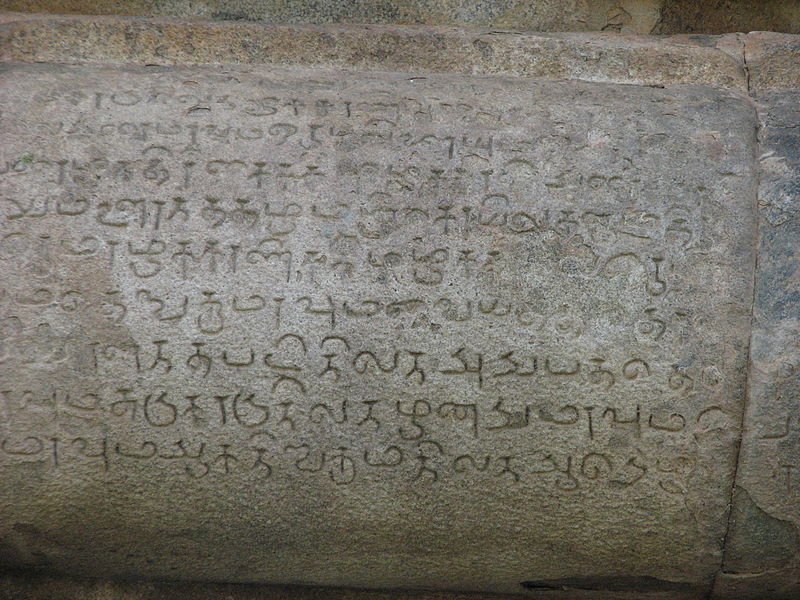
This is the fourth article in the series about Sri Rama’s Temples,which are older than Ram temple in Ayodhya,India. Madhurantakam Tamilnadu,Erikatha Rama temple is from 7th century AD;Kodandarama temple at Gandharvakkottai is from 9 Century AD; Rama’s Chapel in Ur, Iraq is dated at 3800 BC.
The temple of Rama at Rajim, Chattisgarh ,Rajiv Lochan Temple belongs to 7th Century AD as evidenced in the temple inscriptions.
‘The Rajiv Lochan Vishnu Mandir is an ancientVishnutemple located at Rajim. A 7th century CE inscription recording the construction of the temple, and dated to the reign of the king Vilasatunga, has been found here. Vilasatunga probably belonged to a branch of theNala dynasty.
I have written on Indian temples which baffle science.
There are temples where the Shiva Linga changes colors five times daily,Ganesha remains black during the fifteen days of the waning moon, Krishna and white during waxing moon, Shukla Paksha,where in the same temple water in the temple tank remains black and white according to Shula Paksha and Krishna Pakshsa,Temple where Vishnu idol looks like make when seen in front and female when looked from behind, Narasimha idol which gobbles up fifty percent of Jaggery water irrespective of the Vessel from which it is drawn and throws it up,the atomic composition of Palani Subrahmanya is not known…
The list is endless!
Siva Temple, Thiruneelakkudi
There is yet another temple where the Shiva Linga absorbs entire Oil when abhisheka is performed.
‘This sivasthalam temple is located 13 Kms from Kumbakonam. The temple is located on the road side at Tiruneelakudi on the Kumbakonam – Karaikkal road. From Mayiladuthurai, travel upto Aduthurai on the way to Kumbakonam, and then take a branch road from there to reach Thiruneelakkudi (3 Kms. from Aduthurai).
Another unique feature is that the Bilva leaves here have five petals instead of three!
‘(திருநீலக்குடி நீலகண்டேஸ்வரர் கோயில்) is a Hindu temple located at Thanjavur district of Tamil Nadu, India. The historical name of Tiruneelakkudi is Thennalakudi . The presiding deity is Shiva. He is called as Neelakandeswarar. His consort is Oppilamulaiyal.
However,the Puranas and Smritis refer to temple construction.
It may be noted that the Smritis do not have the same authority as Vedas.
Smritis are traditions being followed.
In case of conflict between Veda and Smritis,Vedas are the deciding authority.
One may find references to Temple building in Puranas.
Also how to construct divine images.
Agni Purana describes methods of constructing Shiva Lingam.
Puranas are ancient history and as such they are facts and they are not the final authority.
However they are sign posts for Righteous Living
So the concept of Temples is not a part of Vedas.
This ,as mentioned in my earlier article,is a later Concept.
And this concept seems to have been of Dravidian origin.
The earliest temple of Murugan is found in Saluvarkuppam, Pondicherry,India.
It is dated around Fourth century BC.
The Guruvayur temple of Lord Krishna was built by a Chola king.
‘The Temple is constructed B.C 3000(Around 5000 years oldest Temple) According to legends, the deity worshipped here is more than 5000 years old. But there are no historical records to establish it. In the 14th century, “Kokasandesam” (a Tamil literary work), references to a place called Kuruvayur are made. As early as the 16th century (fifty years after Narayaniyamwas composed) many references to Kuruvayur are seen’
And the temples of South India seem to be more ancient and are of different architecture.
Shiva worship in Tamil seems to have preceded the Vedas.
(This is a contentious issue as it is difficult to say which language , Sanskrit or Tamil,is more ancient.)
Thiruvananthapuram ,Abode of Shiva is 3.94 Billion years old.
Tirupati is 2100 Million Years old.
The worship of Vedic deities are found in ancient Tamil literature.
The Tamils classified Land into five Regions.
Kurinji,Mountaneous Region,God Murugan,
Marutham, Paddy fields,Indra.
Mullai,Forest land, Vishnu,Maayon,
Neydhal,Seashore,God Varuna and Paalai,Desert,God Kotravai,Durga.
One finds these in the oldest Tamil work available, Tholkappiyam,A book on Tamil Grammar.
So the concept of Personal God’s are present both in Sanskrit and Tamil
Curiously,Shiva is not mentioned in Tholkappiyam as God of a specific land area!
This point made me arrive at the hypothesis that Shiva was a human being and that He was the First to Realize Brahman through Vaasi Yoga!
Temple description abounds in Tamil literature.
Silappadikaram,one of the Five Tamil Epics mentions this.
Temple for Kotravai and Indra.
Now Poompuhar remains are dated to be 11000 Years ago!
Now on the find of the material being dated 11000 Years sets the Tamil History and the Sanatana Dharma back at least by 20,000 years.
But the Tamil Sangams are dated at
“that the first two of which were held in cities since “taken by the sea”, and the third of which was held during the 5th century BC in the present-day city of Madurai.'(wiki).
Silappadikaram has been dated to likely belong to the beginning of Common era.
They also stop at a temple where “Aiyai, goddess of hunters” is being worshiped. When leaving the city of Puhar, Kannagi and Kovalan pass by “the great Vishnu temple”, “seven Buddhist Viharas”, and “wandering Jain monks” (26) all within close proximity to each other showing the obvious acceptance of multiplicity. At the time of Kannagi and Kovalan “Brahmanism (Hinduism), Jainism, and Buddhism – were at the time harmoniously coexisting in the south” (Adigal VIII).
Description: This is one of the 2 Shivastalams in the ancient Chola seashore capital of of Poompuhaar, a popular tourist destination, the other one beingTiruchaaikkadu.. Pallavaneeswaram is the 10th in the series of Tevara Stalangal on the northern banks of the river Kaveri in the Chola region of Tamilnadu. Temples in existence in Puhaar have been mentioned in the ancientTamil work, Silappadikaaram. This is a shrine at the confluence of the Kaveri with the ocean. Poompuhaar was once a hoary port of the Cholas and is now a tourist attraction. The remnants of Puhar are seen under the ocean. Kovalan and Kannaki of Silappatikaram are said to have been born here.The Temple:This is a small temple with a 5 tiered Rajagopuram and a single prakaram. A Pallava king’s association with the temple lends the name.
You must be logged in to post a comment.