Tag: Tantra Sastra

  • Etheric Auric Bodies Energy Fields Explained

    Etheric Auric Bodies Energy Fields Explained

    I had written some articles on the esoteric aspects of Indian systems of Thought. Under this comes Tantra Sastra, Energy explanation, Pancha Kosas, that is the five sheaths of Living Beings, Vibration as related to Mantras, Formation of Mantras by combination of Sounds and the presence of Sookshma Sareera,that is Subtle Body.

    Following information is based on Hindu texts including Vedas,Tantra Sastra and Buddhism.

    Our Soul,Atman is surrounded by five sheaths. They are,

    • Annamaya Kosa, Sheath made up of the essence of Food.
    • Pranamaya Kosa,which consists of Breath,that sustains Life.Prana is present in every part and Cell of our body. It’s absence denotes death.
    • Manomaya Kosa,which is made up of the thoughts in our minds.
    • Vigyanamaya Kosa,that is made up of the Tendencies, Dispositions,Awareness( knowledge)
    • Anandamaya Kosa,that is the State of Bliss,which is an Attribute of Reality,Brahman.The other Attributes are Being(Sat), Knowledge (Chith)
    • These three attributes of Reality are expressed in the Pancha Kosas.
    Three levels of Body

    Now Mind and Matter differ only in degree ,not in kind. Everything in the Universe vibrates,right from the atom to galaxies.Motion is the Attribute of Universe and also Reality.So also inertia.Both together make the universe work.This is represented by Sakthi ( Kinetic/motion) and Siva( Potential Energy). Motion creates Vibration. Also Vibration creates motion and which precedes, we do not know.

    Matter,that is Atoms,vibrate, move.All atoms do not vibrate in the same Frequency just as the components light,VIBGYOR do not have the same Frequency. Higher the frequency, the Light becomes invisible at the higher band, Ultraviolet.Lower the frequency, they become Infra Red. Both are not visible to naked eyes.

    We can perceive objects only when our mind is tuned to the frequency with which the Object vibrates or has the same Frequency.This is the reason for some people possessing the ability of Clairvoyance Claiaudience and the like.

    Our physical body is composed of five elements,Earth,Water,Fire,. Air and Ether.The basic components of these are called pancha Tanmatras and they are responsible for each of these elements’ Qualities,like the quality of Fire is to offer Light and Burn. These principles which are present in the Universe are also present in individual bodies. When these components, or the Atoms which form a part of thereof, vibrate, energy field is created.

    These energy fields are visible. There are , surrounding our Physical forms,Etheric Bodies,Auric Bodies and Aura.

    These are the results of Vibrations happening in our bodies which creates Energy fields.

    Buddhism postulates three levels.Physical, Etheric and Auric.

    There are some schools of thought which talk of seven levels corresponding to seven chakras.# I am yet to study this in detail from original source and hence I shall limit to Three Levels.

    Broadly speaking, there are two bodies, as I said at the beginning of the article, Sthula Sareeara,The Gross/ Physical Body,and the Sookshma Sareera,Subtle Body. Subtle body, Sookshma Sareera is called Astral Body. The Astral body vibrates at a higher frequency and ,unlike the Gross/ Physical Body, is not bound by Space and Time. So, the Astral body can travel in Space while physical body is at rest at one place.Thatvis one can travel long distances without moving away from where he,his physical body is.

    One can see the Etheric and Auric Bodies and can know about their physical and mental health.

    I shall write on how to do Astral travel , how to interpret Hues and energy fields.And how to measure Energy,Etheric fields.

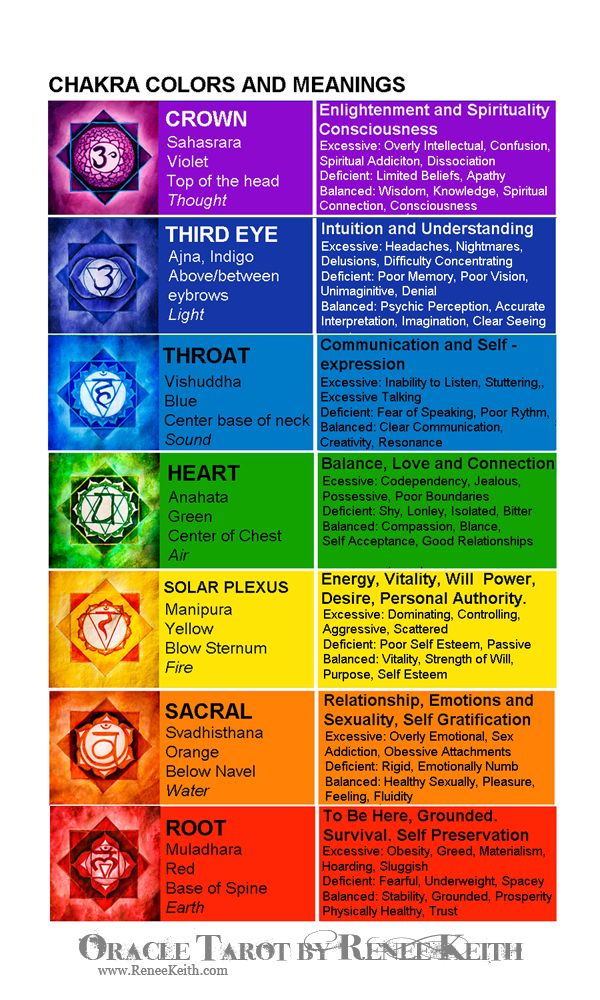
    Featured image from..https://oracletarot.wordpress.com/chakra-cards/

    Image in the article from. https://www.wikihow.com/See-Auras

  • Universe in Body Qualities Water Fire Air Earth Space By Siva

    The inquisitiveness of Man keeps him going. Accepting things as they are is the Attribute of the Realized Soul that arises from Supreme knowledge. But not all are blessed to Realise Reality.As ordinary mortals we are intrigues by things, events and wonder why Things/Events are what the Are and How.

    Answer to both questions are difficult. We can always describe,explain how things are as we perceive them but Not Why they are So. We can not move away from our standpoint of Perception and Observe the Observer and Observed.This is answered by Higher Physics and now by Quantum that when we Perceive, without forsaking our standpoint of Perception as the Observer, we alter the Observed. And the Observed similarly alters our Perception.To put in in common man’s language,when we see a thing ,we Change what we see and what we see( The Thing) changes us, at least in this act of Perception.

    So what we Perceive or Observe is not Really what is Out There.It is different.

    There are numerous people Perceiving the same Object. But to each one of them it is different.So multitude of Perception Is. If , and there are,more Objects to be Perceived by Many people,there are / will be many Perceptions. Possibly we can not count them. That is Infinity.

    But as our logic compels us to think that if there be infinite number of Perceptions,with each Perceiver and the Perceived influencing each other,then there must be something which lies underneath and All Pervading,( both Perceiver, Perceived and the process of Perception).

    In which case that is Universal.And it is reflected in the individual.

    This is exactly what Sanatan Dharma postulates when it talks about Cosmology and the Five Elements of Nature,Earth,Water,Fire,Air and Ether( Akasa ,which is Space )

    Everything in the Universe, both Living and Non living,Conscious or otherwise ,are composed of these Five Elements of Nature.

    How are these Five Elements of Nature found and reflected in Human Body.

    Siva answers this to Parvati thus in Jana Sankalani Tantra

    Uma said, Lord! Speak of the characteristics of the microcosm! Talk of the five elements and the twenty-five qualities. (19)Ishvara said-The five qualities of earth (Prithvi) according to Brahma Jnana are bone, flesh, nails, skin and hair. (20)Knowers of Brahma Jnana say that semen, blood, marrow, urine and faeces are the five gunas of water. (21)The knowers of Brahma Jnana say sleep, hunger, thirst, fatigue and idleness are the five qualities of fire. (22)According to Brahma Jnana, holding, shaking, throwing, expanding and contracting are the five qualities of air. (23)The knowers of Brahma Jnana say desire, anger, delusion, shame and greed are the five qualities of space. (24)Air comes from space, fire comes from air, water comes from fire, and earth comes from water. (25)Earth dissolves into water, water dissolves in fire, fire dissolves in air and air dissolves in space. (26) Janasankalani Tantra
    Text Link here
    Buy book at Google Books

  • How To Invoke Shiva in Devi Worship

    How To Invoke Shiva in Devi Worship

    Recently I was asked by a reader in Twitter how to add in Shiva in Devi worship , especially in Devi Tantra Sadhana.

    Shiva is included in Shakti.Shiva is Jada and Devi is Shakti and only when they are together, they become effective.

    Shiva is the Inert principle and Devi is the Driving Force.

    This does not mean one is powerless. Shiva and Shakti are like word and meaning, one is not complete without another. Trying to argue one is higher than the other is not the path of the Sadhaka, Practitioner.

    Wherever Shiva is present Devi is there and wherever Devi is present Shiva IS.

    Therefore, there is no necessity of specially invoking Shiva in Devi Upasna.Shiva is embedded and present Devi Upasna.

    For more on this and on Japa,Parayana and signs of Mantras helping spiritual evolution of a Sadhaka, watch the video.

  • Tantra  Forty One Devis Sixty Texts To Follow List

    While there are four suggested ways to realize the Self/God, based on one’s disposition,there is yet another approach the goal of Life,Realization of Self.

    This is based on the processes that evolved from following any of the four paths,Gnana,Karma,Raja and Bhakthi Yogas.

    One must remember that the term Yoga means Union,that is the union of the individual self with the Universal Self.

    Hence there is no question of debating which Yoga is superior.

    One follows a Yoga that suits one’s disposition.

    While following a Yoga, the processes might vary,though basics remain the same,the tools one develops as he goes along and the processes are as many as there are individual dispositions.

    One such process that belongs to this categorization is Tantra.

    Tantra finds a place in the Vedas,though they are not stated explicitly.

    In Tantra one finds an amalgam of all four yogas.

    And there are three processes to Realize self through Sound ,the fundamental principle of the Universe and Abstract Thought.

    Mantras,Sounds,

    Yantra,Geometrical patterns to facilitate abstract thinking to still Chitta and

    Tantra, an amalgam of all yoga and the above two.

    The Tantra also uses physical senses to realize Self.

    There are innumerable treatises on Tantra Shastra.

    I have written on authentic texts to follow in Tantra.

    Devi,Shanmugha,Lakshmi,Shiva,Bhairava are some of the Deities invoked.
    I have written a few articles on Tantra ,detailing procedures,texts and Deities.

    Lalitha Tripurasundari image.image
    Lalitha Tripurasundari

    As the subject is vast and complex , I keep updating.

    Also, I do not write with a preset notion on what I write.

    I write when I feel the urge,the topic presents itself and material pops up as it were.

    I write, not that I know much, but I seem to get information at specific time.

    It is since a year I wrote on Devised and Tantra.

    A reader has been asking a specific intricate question on Tantra for the past year.

    I hope I shall answer him through my articles in the present burst.

    Hope he reads this article,though his specific query is yet to be answered here.

    The Tantra Sastra,though deals with Deities with Form,in essence it is with Principles and Abstract Thought.

    The symbolism is Jewel or Flame,Lustre.

    These are expressions of experiences which can not be described.

    The source for deatils is given below.

    A scholarly site.

    https://archive.org/stream/TantrasOfTheReverseCurrent27HinduTextsAbstractedMichaelMagee/Tantras_of_the_Reverse_Current_27_Hindu_Texts_Abstracted+Michael+Magee_djvu.txt

    Now to the Central figures,

    Central Figure

    
    1. Jvalamukh! 2. Tripurasundarl 3. Kalika 4. Jat! 5. Jatinl 6. Jvalin! 7. 
    Jalandhar! 
    
    Ten Petals - the ten flames or Jvalas 
    
    8. Brahml 9. Ugratara 10. Bhadrakal! 11. Matang! 12. Kaumar! 13. 
    Narasimh! 14. Kulakamin! 15. Varah! 16. Durga 17. Sambhavl 
    
    Eight Petals - the Eight Maidens 
    
    18. Maya 19. Baindavesvarl 20. Mrdan! 21. Bhlrunda 22. Bhagavasa 23. 
    Bhagarupin! 24. Bala 25. Mohini 
    
    Sixteen Petals - the sixteen flames or Jvalas 
    
    26. Varum 27. Krt! 28. Karun! 29. Kucar! 30. Kunta 31. Kumbhesvarl 
    32. Kunt! 33. Kuhu 34. Kutila 35. Kutsita 36. Kunth! 37. Kulika 38. 
    Kuvar! 39. Kulasundar! 40. Varah! 41. Vatyal! 
    
    Earth Square 
    
    42. Vasuki 43. Narasimha 44. Ganesa 45. Dharmaraja 46. Dadhisamudra 47. 
    Lavanasamudra 48. Sudhasamudra 49. Kslrasamudra 50. Plthatrayasana 51. 
    Rudrabjaplthasana 52. Savasana 53. Padmasana 54. Dispelling fear 55. 
    Granting boons 56. Arrow 57. Holding lotus 
    
    DS Daksinamurti Samhita 
    
    J Jnanarnava Tantra 
    
    N Nityotsava 
    
    YoH YoginI Hrdaya 
    
    SN Srlnathanavaratnamalika 
    
    Gu Guhyakallkakhanda 
    
    KT Kalltantra 
    
    KaT Kankalamalinltantra 
    
    Nir Niruttaratantra 
    
    GuS Guptasadhanatantra 
    
    SSP Siddhasiddhantapaddhati 
    
    Yo Yogavisaya 
    
    AKu Akulavlratantra 
    
    Kula Kulanandatantra 
    
    JK Jnana Karika 
    
    BT Brhannllatantra 
    
    Ta Tararahasya 
    
    BrT Brhat Tantrasara 
    
    S Saktanandatarangini 
    
    De Devlrahasyatantra 
    
    Me Merutantra 
    
    YoT Yoginltantra 
    
    RuY Rudrayamala 
    
    KDh Kamadhenutantra 
    
    MV Malinlvijayottaratantra 
    
    NT Netratantra 
    
    UT Uddamaresvaratantra 
    
    KC Kulacudamanltantra
       MaK Mahakalasamhita
    KiY Kiss of the Yogini 
    MT Matrkabhedatantra 
    Ga Gandharvatantra 
    Ta Tantrarajatantra 
    NiS Nityasodasikarnava 
    VT Vamakesvaratantra 
    KJN Kaulajnananirnaya 
    ORC Obscure Religious Cults 
    YoV Yogavija 
    Kar Karunamaya 
    
    
    DeR Devlrahasyatantra 
    MeT Merutantra 
    YoT Yoginltantra 
    RT Rudrayamalatantra 
    HTS Hindu Tantric and Sakta Litera- 
    ture 
    
    SaS Sakti and Sakta 
    PR Pancaratraraksa 
    LT Laksmltantra 
    TAB The Alchemical Body 
    Sau Saundaryalahari 
    KP Kalikapurana 
    KV Kaulavalmirnaya 
    PoT Principles of Tantra 
    GaV GanesavimarsinI 
    WGK Worship of the Goddess accord- 
    ing to the Kalikapurana 
    SS Siva Sutras 
    
    SVA Shri Vilakshan Avadhoot 
    
    ST Saradatilaka 
    
    TT Todalatantra 
    
    GoL The Garland of Letters 
    
    MaN Mahanirvanatantra
  • Jana Sankalani Tantra,Secrets of Pranava OM

    Jnana Sankalini Tantra is a beautiful and meaningful dialogue between Lord Shiva and his consort, Parvati. In Tantric practices, both Shiva and Parvati are worshipped together, since the former represents consciousness and the latter, in the form of shakti, symbolizes energy.

    In tantric meditation, inner bliss can be obtained by arousing energy latent in humankind, and uniting it with Shiva. Tantra uplifts consciousness in order to embrace the cosmic spirit.

    Aspects of divinity Shiva and Shakti, play creates the entire universe.

    The Jnanasankalini Tantra is a brief work of 107 shlokas (verses) which outlines the dynamics of this interplay.

    The secrets of Pranava OM is described.


    Translation
    Mahadevi questioned Maheshvara, the Deva of all devas, the World Guru, sitting on the peak of Mount Kailasha: Speak to me of knowledge! (1)
    Devi said – Deva! what is creation and how is creation destroyed? What is the Brahma Jnana beyond creation and destruction? (2)
    Ishvara answered – Creation comes from that beyond words (avyakta) and returns to that beyond words at (the time of) destruction. Brahma Jnana is the avyakta, beyond creation and destruction. (3)
    From the syllable Om comes everything, the fourteen vidyas, mantra, puja, dhyana, action and non-action. (4)
    The four vedas, the six limbs of veda, mimamsa, nyaya, dharma shastra and puranas are the fourteen Vidyas. (5)
    For as long as these Vidyas are known, (true) knowledge is not. On knowing Brahma Jnana one is strong in all other knowledge. (6)
    The vedas and the puranas are like common whores but the Shambhavi Vidya is concealed like a Kula Shakti. (7)
    All knowledge is in the body, all devatas are in the body, all sacred bathing spots are in the body, known through the words of a guru. (8)
    Self-knowledge is the cause of happiness and liberation for a man, not dharma, not karma and not the reciting of mantra. (9)
    Just as there is potential for fire in wood, as there is scent in flower and nectar in water, so in the centre of the human frame is Deva, devoid of good or bad. (10)
    The Ida is the Ganges and the Pingala is the Yamuna. In the centre of the Ida and the Pingala is the Sushumna, the Sarasvati. (11)
    The union of the three is known as the king of bathing places. Whosoever bathes there is released from all badness. (12)
    Devi said-Maheshvara, what is Khecari Mudra? What is Shambhavi Vidya? What is knowledge of the self? Tell me of that! (13)
    Ishvara said-A steady mind without external support, steady breath without restraint, steady seeing without looking, that resembles Khecari Mudra. (14)
    Like a child or a fool’s mind drifts in sleep and dream, even without actually being asleep, so a man who wanders similarly without support knows Shambhavi Vidya (15)
    Devi said-Devadeva, Natha of the Cosmos, Parameshvara, tell me the differences between the different darshanas, each separately. (16)
    Ishvara said-The tridandins are devoted to practice of the vedas. The Shaktas worship Prakriti, the Buddhists follow the void. (Shunya). (17)
    The Carvakas, although knowing the tattvas, are atheistic prattlers, denying the existence of the source of all. (18)
    Uma said, Lord! Speak of the characteristics of the microcosm! Talk of the five elements and the twenty-five qualities. (19)
    Ishvara said-The five qualities of earth (Prithvi) according to Brahma Jnana are bone, flesh, nails, skin and hair. (20)
    Knowers of Brahma Jnana say that semen, blood, marrow, urine and faeces are the five gunas of water. (21)
    The knowers of Brahma Jnana say sleep, hunger, thirst, fatigue and idleness are the five qualities of fire. (22)
    According to Brahma Jnana, holding, shaking, throwing, expanding and contracting are the five qualities of air. (23)
    The knowers of Brahma Jnana say desire, anger, delusion, shame and greed are the five qualities of space. (24)
    Air comes from space, fire comes from air, water comes from fire, and earth comes from water. (25)
    Earth dissolves into water, water dissolves in fire, fire dissolves in air and air dissolves in space. (26)
    Creation comes from the five tattvas and is dissolved into them. Greater than the five tattvas is that which is above them, without stain. (27)
    The organs of touch, taste, smell, sight and hearing are the five tattvas of the senses. Mind (manas) is the tattva that gives birth to them. (28)
    The entire macrocosm is situated in the centre of the body. That with form is destroyed while that without form is indestructible. (29)
    Whosever’s mind is fixed on the formless becomes one with the formless. Therefore, by every means, reject that with form. (30)
    Devi said-Adinatha, tell me of the seven dhatus. What are they? What is Atma? What is the inner Atma (Antaratma)? What is the Supreme Atma (Paramatma)? (31)
    Ishvara said-Semen, blood, marrow, fat, flesh, bones and skin are the seven (dhatus) in the body. (32)
    The body is Atma. Mind is the Antaratma and Paramatma is the Shunya (void) where the mind dissolves. (33)
    Blood is the mother dhatu and semen is the father dhatu. The Shunya dhatu produced from vital breath is the foetus. (34)
    Devi said-Tell me of the nature of speech. How is it produced and how is it dissolved? (35)
    Ishvara said-Vital breath comes from the Avyakta, mind arises from vital breath. Speech comes from mind and is dissolved into mind. (36)
    Devi said-Where does the sun dwell? Where does the moon dwell? Where does vital breath dwell? Where does mind dwell? (37)
    Ishvara said-The moon is at the root of the palate. The sun is at the root of the navel. Vital breath is above the sun and mind is below the moon. (38)
    The Cit is above the sun and the jiva is above the moon. Mahadevi, this is to be learned from the mouth of a guru. (39)
    Devi said-Where is Shakti? Where is Shiva? Where is Time? What causes ageing? (40)
    Ishvara said-Shakti is within (Patala). Shiva is without. Time is in space and causes ageing. (41)
    Devi said-What wants to eat? What wants to drink? What stays awake in waking, dream and deep sleep? (42)
    Shiva said-Vital breath wants food. Food is consumed by fire. Vital breath is awake during waking, dream and deep sleep. (43)
    Devi said-What causes karma? What causes bad deeds. Who does bad deeds? How is one liberated from bad deeds? (44)
    Shiva said-The mind does bad deeds. The mind is stained by bad deeds. That mind, having become itself, does neither good nor bad. (45)
    Devi said-How does an embodied soul (jiva) become Shiva? What is cause and effect? Speak to me, of your grace! (46)
    Ishvara said-Bound by delusion jiva, freed from delusion Sadashiva. You are cause and effect. Enlightenment is different from you. (47)
    Folk subject to tamasa wander to this sacred place and that sacred place, thinking that Shiva is here, Shakti is elsewhere, mind is somewhere else and vital breath is somewhere else again. (48)
    O Beauteous One, they do not realise the sacred place within the body. How then, can they be liberated? (49)
    Veda is not the vedas, the eternal Brahma is veda. Whosoever knows the Brahma Vidya is a brahmin, skilled in the vedas.(50)
    After churning the four Vedas and all the scriptures, the yogis have extracted their essence, leaving pandits to drink the butter milk which remains. (51)
    All the scriptures are like dirty leavings with everyone speaking of knowledge. The Brahma Knowledge beyond words is not dirty leavings. (52)
    The path of Brahma is the ultimate tapas and not ordinary tapas. Whosoever knows the upper semen, he is a deva. (53)
    Meditation is not meditation unless the mind is united with Shunya. He who does so becomes happy and liberated, no doubt. (54)
    Sacrifice (homa) is not homa unless it is samadhi, in which the vital breaths are sacrificed in the fire of Brahma. That is the true sacrifice. (55)
    Good and evil acts give rise to good and evil consequences. Therefore, by every means, a wise man rejects them. (56)
    For as long as ignorance prevails, so long does caste and family matter. After knowing Brahma Jnana, one is free from all distinctions of caste. (57)
    Devi said-Shankara, I do not understand this knowledge you have spoken of. Devesha, remove my doubts! Tell me how the mind is dissolved. (58)
    Shankara said-It is said that Brahma Jnana is like dreamless sleep in which is dissolved mind, speech and actions. (59)
    Brahma Jnana, it is said, is a state of one-pointedness, without anxieties, peaceful, free of delusion and bestowing a child-like nature. (60)
    In the next line I will declare that spoken by the knowers of the truth. Yoga is the the rejection of all thoughts and concerns. (61)
    One who reaches samadhi for a split second or even half a split second destroys the evil of a hundred births instantly. (62)
    Devi said-Deva, what is Shakti and what is Shiva. Tell me about this! Reveal the nature of Jnana! (63)
    Shakti dwells in the moving mind and Siva dwells in the steady mind. He who is established in the steady mind becomes accomplished while living in the body. (64)
    Devi said-Where are the three Shaktis? Where are the six cakras? Where are the twenty one macrocosms? Where are the seven underworlds? (65)
    Ishvara said-The upper Shakti is in the throat, the lower Shakti is in the anus. The middle Shakti is in the navel and the Shakti above these is without description. (66)
    The adhara cakra is in the anus, the SvadhishÖhana is near the penis. I have spoken previously of the distinctions of the cakras. Hail to that above the cakras! (67)
    The top half of the body is called Brahmaloka, below that is Patalaloka. The body resembles a tree with the roots at the top and the branches below. (68)
    Devi said-Parameshvara, Shiva, Shankara, Ishana. Speak to me! What are the ten vital breaths and what the ten doors? (69)
    Ishvara said-Prana is in the heart, apana is in the anus, samana is in the navel region and udana is situated in the throat. (70)
    Vyana is spread throughout the body, Naga moves upward, Kurma is situated in the tirthas. (71)
    Krikara is in crying, Devadatta is in yawning, Dhananjaya is in singing and roaring. (72)
    According to the yogis, these vital breaths have no support. The nine doors are clear and the tenth door is the mind, it is said. (73)
    Devi said-Speak to me of the characteristics of the nadis spread throughout the body. Tell me of the ten nadis arising from Kundalini Shakti. (74)
    Ishvara said-Ida, Pingala and Sushumna go upwards. Gandhari, Hastijihva and Prasava move below. (75)
    Alambusha and Yasha are situated to the right. Kuhu and Shankhini are situated to the left. (76)
    Various nadis, amounting to seventy two thousand, arise from these ten and exist in the body, it is said. (77)
    Only a yogi with knowledge of the nadis is a true yogi. Devi, nadi knowledge gives siddhi for yogis. (78)
    Devi said-Bhutanatha, Mahadeva, Parameshvara, speak to me! What are the three devas? What are the three bhavas? What are the three gunas? (79)
    Ishvara said-The Rajobhava is Brahma. The Sattvabhava is Hari, The Krodhabhava is Rudra. These three devas are the gunas. (80)
    These three devas, Brahma-Vishnu-Maheshvara, are one. Whosoever thinks of them as different in nature is never liberated. (81)
    Brahma is like semen, Hari is like vital breath and Rudra is like mind. The three devas are the gunas. (82)
    Brahma is compassionate, Hari is pure and Rudra is fiery. The three devas are the gunas. (83)
    With one meaning, they are the same thing, supreme Brahma, the cosmos, all which moves and does not move. Whosoever thinks of them as different in nature is never liberated. (84)
    I am creation. I am time. I am Brahma. I am Hari. I am Rudra. I am Shunya. I am everywhere. I am without distinction. (85)
    I am the soul of all, o Devi. I am free from desire, I am space. I am my pure own nature, without stain, there is no doubt of it. (86)
    He who has controlled his senses and courageous is a Brahmacari and a true pandit, speaking truth, devoted, generous, steady of mind. (87)
    The path of Brahma is the root of tapas. Compassion is the root of duty. Therefore, by every means, rest in the path of compassionate duty. (88)
    Devi said-Yogeshvara, Jagannatha dear to Uma as life itself, speak of veda, twilight worship, tapas, meditation, and sacrifice. (89)
    Isvara said-One thousand ashvamedha and one hundred vajapeya sacrifices are not equal to even a sixteenth fraction of the greatness of Brahma Jnana. (90)
    Travelling to the sacred tirthas and bathing there does not amount to a sixteenth fraction of the greatness of Brahma Jnana. (91)
    No friend, no son, no father and no relatives can ever equal the guru, the revealer of the supreme thing. (92)
    Learning, tirthas, and gods and goddesses (devatas) can never equal the guru, the revealer of the supreme thing. (93)
    A disciple who has received a single syllable (of a mantra) from a guru can never find anything in the world to repay that debt. (94)
    The Brahma Jnana is secret knowledge and should not be revealed to anyone but a devoted soul. (95)
    The wise should reject mantra, puja, tapas, dhyana, homa, japa, animal sacrifice, nyasa, and all acts. (96)
    Associating with others has many defects, not associating with others has many qualities. Therefore, by every effort, the wise should reject the company of others. (97)
    The letter a is sattvik, the letter u is rajasik and the letter m is tamasik, these three are Prakriti itself. (98)
    The indestructible is Prakriti, Ishvara is Prakriti and is itsef indestructible. From Ishvara came Prakriti which is triple in nature. (99)
    Prakriti is Shakti, the Maya, the cause of creation and destruction, the Avidya, the Mohini, whose form is sound. (100)
    A is the Rigveda, the letter u is the Yajurveda and the letter m is the Samaveda. (101)
    The Om should be known as the three nadas. The letter a is Bhuloka, the letter u is Bhuva and the letter m is Svarloka, it is said. In these three letters the Atma manifests. (102-103)
    The letter A is earth and yellow in colour, the letter u is like lightning and space, and the letter m is white and heavenly. For sure the single Om pervades everything and is Brahma itself. (104-105)
    Those seated in a steady position, who meditate daily and are free of worries and imaginings, are yogis and not otherwise, Shiva said. (106)
    Whoever hears this or reads this every day becomes pure and free of all problems and resides in the Shiva heaven. (107)
    Translated By A.G.Krishna Warrier.