Tag: sita

  • Rama Evacuates Ayodhya By Pushpaka Vimana

    As I understand from the Ramayana, Lord Rama completed his last Journey on the earth , after the demise of Lakshmana, by entering the Sarayu River.

    I have come across information that Rama evacuated Ayodhya from the banks of by a Pushpaka Vimana flying North.

    Rama proceeded first with his Royal entourage and the people of Ayodhya followed suit.

    This process took three days.

    Rama and Sita in Pushpaka Vimana.jpg
    Rama and Sita in Pushpaka Vimana.

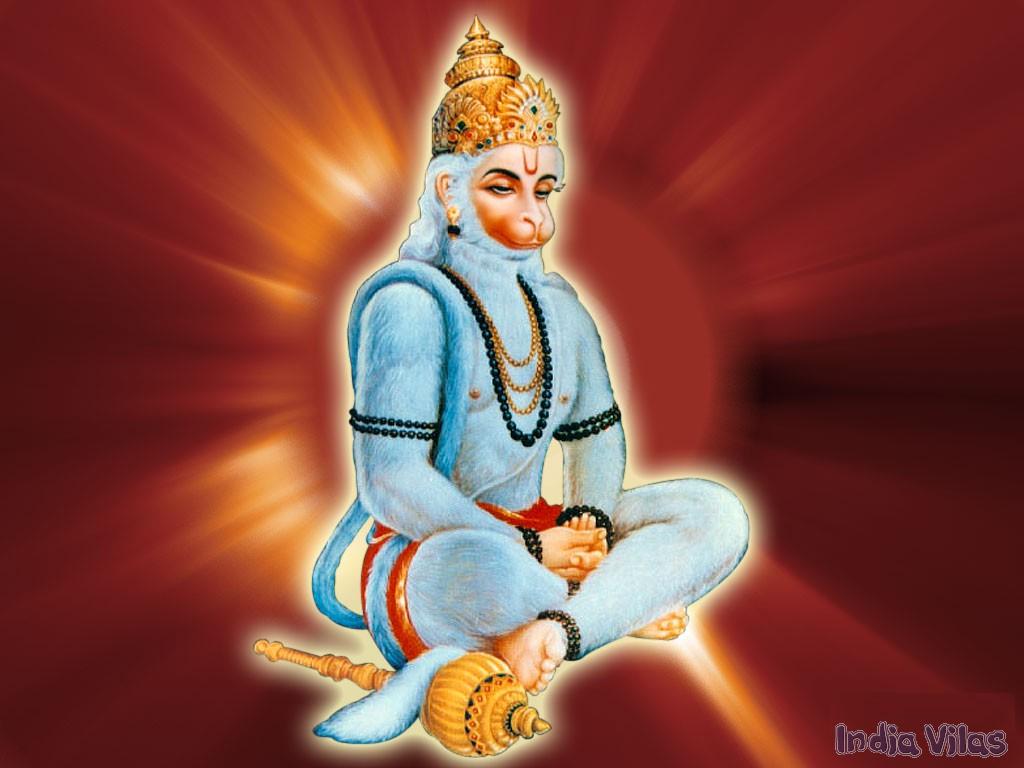
    His last thoughts before boarding the craft was that of Hanuman whom he had not seen the whole day!

    He advised his son Lava to rule the kingdom from Shrawasti (Sahet-Mahet ) as capital and till the period of Buddha, this place continued to be the capital of Kaushal estate. Subsequently, in the Maurya period as well this Kaushal estate (province of Magadh empire) was the capital.


    The city of Kushawati, which is in  the Vindhya region, was established for the rule of the  other son Kush and thereafter till date it is famous as  Mahakaushal…

    “It has also been mentioned in the Ramayana that after Lord Sri Rama, Ayodhya would again be  inhabited during the times of Rishabh.

    He was the first Tirthkar of Jains and is also known as Adinath.

    Citation.


    How the Rama Empire Disappeared.


     http://jayasreesaranathan.blogspot.in/2010/10/history-of-ram-janma-bhumi-temple-at.html

    “It is so believed amongst the Hindus that the credit for inhabitance of Ayodhya for third time, goes to Vikramaditya, king of  Ujjain.

    It appears from paper no. 107C-1/10, 107C-1/28,

    107C-1/35, 107C-1/55 filed in this suit that he had built 360 temples in Ayodhya.


    https://ramanisblog.in/2012/10/13/last-days-of-rama-date-of-death/

  • Not Born In Ayodhya Rama Invaded Babylon Ravana Is Hammurabi ?

    The study of the Indus seals from Harappa makes interesting observations.

    A research  a paper on Vedic Seals by N. S. Rajaram, presented at a recent conference of leading historians on Vedic history, states that , quoting M.V.Krishna Rao, an Archeologist that Rama was not born in Ayodhya but in Haryana, India.

    Babylonian King Hammurabi.jpg
    Hammurabi.

    Rama invaded Babylon and defeated the great Babylonian King, Hammurabi.

    ‘ Rama was born not in Ayodhya, but in the present state of Haryana. He further claims that according to his study of the seals, Rama invaded Babylon and defeated and killed the famous Babylonian ruler Hammurabi whom he equates with Ravana! This account, if true, would call for a radical revision of both Indian and Babylonian history. Hammurabi is a well-known historical figure. He is known to have died in 1750 BC of natural causes and not killed in battle. His date therefore is too late to have found mention in the Harappan seals.’

    Lord Rama.jpg
    Lord Rama In Sumeria

    Ranajitpal states, from different sources that,

    “If Ram-Sin is identified as Rama his greatest Amorite enemy Hammurabi must be Ravana or Ravi-anna. This presents some difficulties although Valmiki’s version of the the abduction of Sita probably has more to do with poetic imagination than history. However, that she was the chief priestess of the moon-temple at Ur may have been at the root of some events of the politically turbulent era. There is a possibility that at some stage Ur was captured by Hammurabi. The chief-priestess of Ur was inviolable under Sumerian law and the fact that Ravana did not dishonour Sita may show his regard for law. The Battle between Khammu-ravi and Ram-Sin who led a group of Ten-Kings was one of the most famous events of Sumerian history. Whether the name Sin-Mubalit of Hammu-rabi’s father links him with Mahabali, a name of Bali, is uncertain but this may even be true. The Ramayana describes Ravana’s clashes with Bali which are clearly poetic in nature. Even here the fact that Bali carries Ravana in his lap may reveal his true relationship. Much has been written about Khammuravi that is undoubtedly true but in a sense Ram-Sin’s contribution has been underplayed. The great Assyriologist C. J. Gadd, however, termed Ram-Sin’s reign as the golden age of Sumer.’

    The fact that Rama’s and Bharata’s Names are found in the Sumerian Kings List adds to the Mystery.

    Hanuman In Sumeria.

    As the cuneiform symbol for ‘ilu’ can also be read as ‘an’, the name Ilu-ma-ilu who was an adversary of the Hammurabi dynasty can also be read as Hanuman. Jona Oates also writes the name as Iliman which supports this. Hanuman leader of the Vanaras, is called Maruti which may link him to the Martus or Maruts of the Sumerian texts. The Martus were the Amorites of modern writers. The best known Amorite was Hammurabi who must have been a distant kin of Iliman or Hanuman. The original character of the Maruts, the chief among the Vedic Indra’s personal attendants is vague and shadowy in early Vedic literature. The Maruts were associated with the vedic god Rudra and were said to be the messengers of death, their name being derived from the root √mar, to die. The Maruts were said to be storm-gods. “

    Citation.

    Archeology Online

    Rama King of Sumeria

  • Rama’s Four Wives Lakshmana Kills Ravana, Jain Ramayana

    There are over 300 versions of the Ramayana and Valmiki himself had written many of them.

    Other Religious sects of India,Buddhism and Jainism have adapted this to suit their Philosophy.

    Jain Ramayana.jpg
    Jain Ramayana.

    “Depending on the methods of counting, as many as three hundred versions of the Indian epic poem, the Ramayana, are known to exist. The oldest version is generally recognized to be the Sanskrit version attributed to the sage Valmiki.’


    Rama with Kodanda,Bow.jpg
    Lord Rama
    • Adhyatma Ramayana or spiritual Ramayana is extracted from the Brahmananda Purana, traditionally ascribed to Vyasa.
    • Vasistha Ramayana (more commonly known as Yoga Vasistha) is traditionally attributed to Valmiki.
    • Laghu Yoga Vasishtha, by Abhinanda of Kashmir, is an abbreviated version of the Yoga Vasistha.
    • Ananda Ramayana is traditionally attributed to Valmiki. While it briefly recounts the traditional story of Rama, it is composed primarily of stories peripheral, though related, to Valmiki’s narrative. These include Ravana’s abduction of Sita and Rama’s installment of the Shiva Lingam at Rameswaram.[6]
    • Agastya Ramayana is also traditionally attributed to Agastya.
    • Adbhuta Ramayana.


    The Jain Ramayana in short.


    “According to the Jain version of Ramayana, Dasharatha, the king of Saketa had four queens: Aparajita, Sumitra, Suprabha and Kaikeyi. These four queens had four sons. Aparajita’s son was Padma, and he became known by the name of Rama. Sumitra’s son was Narayana: he became to be known by another name, Lakshmana. Kaikeyi’s son was Bharata and Suprabha’s son was Shatrughna. Furthermore, not much was thought of Rama’s fidelity to Sita. According to Jain version, Rama had four chief-queens: Maithili, Prabhavati, Ratinibha, and Sridama. Furthermore, Sita takes renunciation as a Jain ascetic after Rama abandons her and is reborn in Heaven. Rama, after Lakshmana’s death, also renounces his kingdom and becomes a Jain monk. Ultimately, he attains Kevala Jnana omniscience and finally liberation. Rama predicts that Ravana and Lakshmana, who were in fourth hell, will attain liberation in their future births. Accordingly, Ravana is the future Tirthankara of next half ascending time cycle and Sita will be his Ganadhara.”

    Citation.

    http://en.wikipedia.org/wiki/Versions_of_Ramayana

    Rama

    Jain Ramayana

    Jainism

  • Mount Ararat Baghdad In Ramayana

    If one wants to know about the lands and people of the world during Sanatana Dharma, the best source, in my opinion, is the set of instructions given by Sugriva to his army of vanaras in search of Sita, who was abducted by Ravana.

    He gives such detailed descriptions, ably captured by Valmiki, that one can identify the Lands even today.

    I have posted on Peru where Nazca Lines resemble the Trishul of Lord Shiva,Arkaim in Russia.

    In the course of his directions Sugriva directs a group of his army bound for west to search for Sita in a mountain where the sun sets.

    Ancient City Arkaim.jpg
    Ancient City Arkaim.

    Sugreeva, (the ‘vanara’ commander) directs the ‘vanaras’ to go west from the Vindya mountains of India, right up to the fourth quarter of the (Arabian) sea, via a point described as ‘where the Sindhu falls into the sea’ – which may point to either where the Indus falls into the Arabian Sea at Karachi in Pakistan or to where the Narmada falls into the Arabian Sea. Sindhu is the Sanskrit name of Indus, butsindhu also means ‘river’. Going along this route, the fourth quarter of the sea would bring the Vanaras to the ‘Persian Gulf’.

    Valmiki description of a coastal mountain by the name ‘Hemgiri’ – high with its peak touching the sky, and also a waterlogged mountain by the name ‘Paariyatra’ indicates that the ‘vanaras’ were probably taking a sea-side route along the Persian Gulf. Valmiki also describes a Mount ‘Vajra’, which he says shines like a diamond – possibly a reference to the peaks of what is today known as the Zagros Range.

    ancient Baghdad.jpg
    Ancient Baghdad.

    After crossing the fourth quarter of the Ocean, the ‘vanaras’ are told that they will see a structure on Mt. Chakravan, which looks like a ‘wheel with a thousand spokes’. The Ramayana says that the city or structure was built on this mountain by the ‘celestial architect’ ‘Vishwakarma. This suggest a megalithic circular wheel like structure atop a mountain…


    Another option is the city of Yerevan in Armenia. Yerevan is one of the oldest continually inhabited cities of the world. Yerevan has been built and rebuilt over the ruins of older cities over the centuries – but its basic plan even today remains circular as it was in the ancient times. The city is spread out now but historically the city was located at the heart of the Armenian Highland in Kotayk canton of Ayrarat province.

    The Ramayana say that a at distance of 64 ‘yojanas’ (a yojana has been taken to mean a distance of anywhere between 6 to 15 km) from this city, the Vanaras will encounter a peak by the name ‘Varaaha’. This may well be Mt. Ararat of today. Mt. Ararat is visible from Yerevan. Also, over the millennia the name ‘Chakravan’ may have distorted to ‘Yerevan’ and ‘Varaaha’ to ‘Ararat’. 

    The Ramayana then mentions a city by the name ‘Pragjyotish’ which was the abode of the demon ‘Naraka’. Though there are no cities with a name close to ‘Pragjyotish’ in the Armenian region, but there sure is a town by the name ‘Narek’ located close to Mt. Ararat.

    Another possibility is that Valmiki may have been referring to a pre-historic city, on the ruins of which Baghdad was built later. Present day Baghdad was built on the ruins of ancient Baghdad which was first built in 700 AD. But is it possible that there was a city already existing thousands of years before 700 AD and was mentioned in the Ramayana. Sketches of ancient Baghdad comes uncannily close to Valmiki’s description.

    Some scholars have suggested that there is also a possibility that when the ‘vanaras’ head west and then continue their journey along a mountain range, they could be moving northwards along the Zagros and further to the Ural range. In that case, could the ancient city that the ‘vanaras’ saw be ‘Arkaim’ in the Urals. It has even been debated that ancient Arkaim was not a city at all, and that it was a weapon-storage facility!

    Citation.

    http://vediccafe.blogspot.in/2013/05/where-is-chakravan-city-of-ramayana.html

  • 2000 Years Old City Lava Ruled Jain Buddhist Sacred City Shravasti

    Yet another proof that the Ramayana was real and not a fantasy.

    That Ramayana was real, I had posted in detail through a couple of articles and an article about Rama’s son Lava having founded Lahore,Pakistan.

    The City Shravasti was the place in Kosala Kingdom from where Lava ruled from.


    Very little is known of the city of Shravasti until it rose to fame during the Gupta Period with its association with Buddhism and Jainism. Maheth, sprawling over an area of 400 acres, is identified with the remains of the city of Shravasti. Excavations led to the discovery of massive gates and ramparts and many other remains of the ancient city which speak volumes of the prosperity of Shravasti.

    The Sobhanath Temple is a Jain temple one must visit on tours to Shravasti. This place is believed to be and is revered as the birthplace of Jain prophet Swayambunatha. This is a major tourist attraction and pilgrimage spot for the Jains.Saheth another place to be visited on tours to Shravasti Uttar Pradesh in India, was once the site of the famous Jetavana monastery; the place houses numerous ancient shrines, stupas and monasteries spreading over an area of 32 acres. One of the earliest Stupas, probably dating back to 3rd century BC, is said to have contained relics of the Buddha. Excavations also revealed a colossal statue of Lord Buddha, which has been kept at the Indian Museum in Kolkata……

    Shiva Linga in Shravasti.jpg
    Shiva Linga in Shravasti.


    Archaeologists in eastern India have discovered the remains of an ancient temple where the Buddha used to preach.

    The discovery of the 2,000-year-old shrine at Shravasti, the capital of the ancient Koshal kingdom in what is now Uttar Pradesh state, was reported by a team from the state Archaeological Survey of India (ASI).

    Birendra Nath, a superintending archaeologist of the ASI, says the find has shed light on life at the time of the Buddha two millennia ago.

    He says the Buddha stayed for four months at Shravasti and delivered most of his sermons there.

    “The excavation sites have unveiled one of the most important cities of ancient India called Shravasti, which was the capital of the Koshal kingdom of King Premjit – a contemporary of Lord Buddha,” Mr Nath said.

    He says the Shravasti site was first identified by Sir Alexander Cunningham, a British archaeologist, in 1861.

    A large number of terracotta earthenware, human figurines, beads, plaques, seals, copper and silver coins and objects of bone and ivory were discovered.

    Mr Nath says the temple hints at the existence of a well-planned town with good drainage and brick-layered wells.

    The Buddha, an Indian prince born as Gautama Siddharta, is believed to have lived from about 563 BC to 483 BC.”

    References in the Ramayana, Mahabharata.

    Anathapindika's Stupa Shravasti Ruins.jpg
    Anathapindika’s Stupa in Shravasti


    During the period of the ancestors of Raghava Rama, there was only one Kosala kingdom. It had its capital at Ayodhya, identified as the Ayodhya town near Faizabad in Uttar Pradesh state of India. During the reign of Dasaratha, the father of Rama, Dakshina Kosala came into prominence. It was situated in the Madhya Pradesh state of India. Dasaratha married his eldest wife Kausalya from this kingdom.

    Raghava Rama’s son’s Lava and Kusa, inherited each half of the Kosala kingdom, with Ayodhya as its capital. Thus, this Kosala split into two parts; one ruled by Lava, with capital at Sravasti, to the north of Ayodhya and the other by Kusa at Kusavati, believed to be towards the east of Ayodhya.

    The Indian epic Mahabharata is the window to this era.

    During the time of Kurukshetra War, and the reign of Pandavas and Kauravas, we find mention of numerous kingdoms with the name, Kosala (as per the references in Mahabharata).

    The mothers of Dhritarashtra and Pandu, viz Ambika and Ambalika, where described to be Kosala princesses. They were some times described as princesses from Kasi Kingdom, Kasi and Kosala being a single kingdom (often denoted as Kasi-Kosalas) during the time of Mahabharata.

    Then Satyavati and Bhishma and the Kosala princesses were all gratified with the presents Pandu made out of the acquisitions of his prowess. And Ambalika in particular, upon embracing her son of incomparable prowess, became very glad.

    • Mahabharata, Book 1, Chapter 188

    Kosala king was present in this event

    ………the highly intelligent Vatsaraja, the king of Kosala, Sisupala and the powerful Jarasandha, these and many other great kings—all Kshatriyas celebrated throughout the world—have come, O blessed one (Panchali), for thee.

    • Mahabharata, Book 2, Chapter 14

    The eighteen tribes of the Bhojas, from fear of (Magadha King) Jarasandha, have all fled towards the west; so also have the Surasenas, the Bhadrakas, the Vodhas, the Salwas, the Patachchavas, the Susthalas, the Mukuttas, and the Kulindas, along with the Kuntis. And the king of the Salwayana tribe with their brethren and followers; and the southern Panchalas and the eastern Kosalas have all fled to the country of the Kuntis. So also the Matsyas and the Sannyastapadas, overcome with fear, leaving their dominions in the north, have fled into the southern country. And so all the Panchalas, alarmed at the power of Jarasandha, have left their own kingdom and fled in all directions.


    Jain Link.

    History of Shravasti teerth begins with the formation of Janpad’s by Yugadidev Shri Adishwar Prabhu. This place was the capitol city of North Kaushal Janpad. Many Jain Kings such as King Jitari, the father of third Teerthankar Shri Sambhavnath Bhagwan and others past here after Bhagwan Adinath. King Prasanjeet ruled this place at the time of Bhagwan Mahaveer. He was a loyal follower of Prabhu Veer. The main listener of Prabhu Veer King of Magadh Samrat Shrenik has wedded the sister of King Parasanjeet. This was also called by the names of Kunal Nagari and Chandrikapuri in the old days. Many Jain temples and Stoops (pillars) were present in this city. It is specified in history that greater king Samrat Ashok and his grand son King Samprati also constructed many temples and Stoops at this holy place. This teerth place is also descripting in “Brihatkalp”. Chinese traveler Fahiyan has also described this holy place in his memories of traveling India during 5th century BC. One more Chinese traveler during 7th century BC, Hun-Yen-Sang, has described this place as Jet van Monastery. Later this was called as Manikapuri. This was ruled by King Mayurdhwaj during 900 AD, by King Hansdhwaj during 925 AD, by King Makardhwaj during 950 AD, by King Sudhavadhwaj during 975 AD and by King Suhridhwaj during 100 AD. All of them were Jain Kings belonging to Bhar Vansh

    Citation.

    http://www.dhamurian.org.au/cultures/buddhatemple1.html

    http://shravasti.nic.in/history.asp

    http://en.wikipedia.org/wiki/Kosala_Kingdom#Era_of_Treta_Yuga