Tag: Rama

  • Vasishta Kaundinya Gotra Migrated from Sumeria DNA Study

    Vasishta Kaundinya Gotra Migrated from Sumeria DNA Study

    *Evidence substantiating information found in Puranas and Ithihasa, Ramayana and Mahabharata are now being validated by Astronomy, Astroarcheology , Epigraphy, Archeological finds, Tectonic plates movements,C4dating, Infra-red analysis, Stratification studies.

    Before going into the Research find,let us look at some seemingly contradictory facts mentioned in the Puranas and Ithihasa.

    And cross check them with references in ancient Tamil literature.

    On Sage Vasishta.

    1.Vasishta appears in Ramayana and not much of him is heard since.

    2.Yet , Vasishta is one of the Sapthapathi,who are eternal.

    Atri,Bhrigu,Kutsa, Vasishta,Gautama,Kashyapa and Angirasa

    3. Vasishta is found in Ancient Tamil literature.

    4.Though Sanatana Dharma is reported to have sprung from the north of the Vindhya Mountains,latest finds prove that the Founder of Ikshvsku Dynasty, Ikshvsku’s Father Manu was from the South of Vidhyas.

    5..Emperor Aja of Ikshvsku clan married a Pandya princess from South.

    6.Chola kings of South trace their lineage to Ikshvsku Dynasty.

    7.Cholas call themselves from Kashyapa Gotra.

    8.Sage Viswamitra banished his sons to Dravida Desa,south of Vindhya.

    9. Their descendant Apasthamba composed the Apasthamba Sutras, which are followed by Brahmins of South India.

    10.Parashurama settled families from Dwaraka to Kerala.

    11.Sage Agastya settled seventy two families on the present border area of Tamil Nadu and Kerala.

    12.The Tamil homeland Lemuria is 230 million years old.

    13. Rama refused to wage war against the Dravidas as they were his ancestors.

    14. Lord Rama fought with the Atlantis people at seven Rishi valley currently in Pakistan

    15.Chola king SibiChola king Sibi ruled from the present NWFP of Pakistan.

    It was his second capital.

    He was ancestor of Lord Rama.

    He built a temple for Vishnu as Pundarikaksha at Thiruvellarai near Srirangam, Tamil Nadu.

    16. When a Tsunami struck south,Lord Shiva,Ganesha and Vasishta migrated to Arctic via what is now middle East, Europe,America.

    Rig Veda was composed in Arctic.

    Then they reentered India.

    One must remember the landmass then, was different from what it is today.

    Lemuria million years ago

    17.Rama’s empire covered the world.

    18. Sanatana Dharma was present throughout the world.

    19.People of Bharathavarsha were spread throughout the world.

    20. They remigrated from wherever they were to the present India,mostly from Sumeria.

    21. Names of Dasaratha,Rama and Bharatha are found in Sumerian Kings List.

    Now the research on Vasishta and Kaundinya Gotta migrated from middle East towards India , South India through Bolan Pasd.

    This study is based on DNA presence.

    Abstract

    A rare R1a1 Y-haplogroup (Y-HG) L657 clade subtype designated as LPKSTR is found in most male members of a clan of “founder” families within the Goud Saraswat Brahmin community in Lotli town in Western India. TMRCA calculations using pairwise comparisons to control cohorts suggested a probable migration history distinct from the canonical narrative for medieval migration of orthodox Brahmin families to South India. Using Y-HG centroid analysis, chi-square analysis of TMRCA distributions and archeological find-spots, and discriminant function analysis we show that the parental Z93 L342.2 subclade in which LPKSTR occurs originated in West Asia and that LPKSTR individuals migrated toward the southeast by a Bolan Pass route distinct from the traditionally presumed route of Brahmin ingress into the Indian subcontinent. The proposed migration route is supported by archeological, toponymic, numismatic, linguistic, iconographic, and literary data. Lastly, we present cultural metrics demonstrating that these LPKSTR lineages retained distinct family practices with respect to literacy, religious practice, and emigration not shared with orthodox Brahmins of canonical geographic origin within the same community, despite centuries of intermarriage. Long-term transmission of differentiated family practices within a patrilineal endogamous community has rarely been documented.

    It is notable that Rig Vedic Book 7 is ascribed to the sage Vasishta, whose affiliation with the mainly Iranic sun-worshipping Mitra-Varuna tradition is nevertheless codified in the Hindugotra system and became especially popular in the medieval assimilation of sun-worshipping Iranic peoples (Huna, Maitraka, and Gurjar) in Gujarat and the Western states []. LPK Brahmins follow the Kaundinya gotra of the Vasishta group. Moreover, Brahmins of the Vasishta gotra occur in significantly higher numbers along the western side of the subcontinent (Supplementary File S42). Taken together, these observations support the possibility of Mitra-Varuna antecedents for LPKSTR LPK families..

    Source and credits.

    Research Article

    Genetic and Cultural Reconstruction of the Migration of an Ancient Lineage

    1Mayflower Organization for Research and Education, Sunnyvale, CA, USA
    2Department of Forensic Medicine and Toxicology, All India Institute of Medical Sciences, New Delhi 110029, India
    3Department of Pediatrics, University of Oklahoma Health Sciences Center, Oklahoma City, OK, USA

    Received 10 May 2015; Revised 24 August 2015; Accepted 25 August 2015

    Academic Editor: Peter J. Oefner

    Copyright © 2015 Desmond D. Mascarenhas et al. This is an open access article distributed under the Creative Commons Attribution License, which permits unrestricted use, distribution, and reproduction in any medium, provided the original work is properly cited.

    https://www.hindawi.com/journals/bmri/2015/651415/

    PS. I have provided some links for points mentioned,not all.

    Please check related posts in each article or search the term +ramanan50 for more articles.

  • Did Rama Worship Shiva Rameswaram?Valmiki Purana References

    Did Rama Worship Shiva Rameswaram?Valmiki Purana References

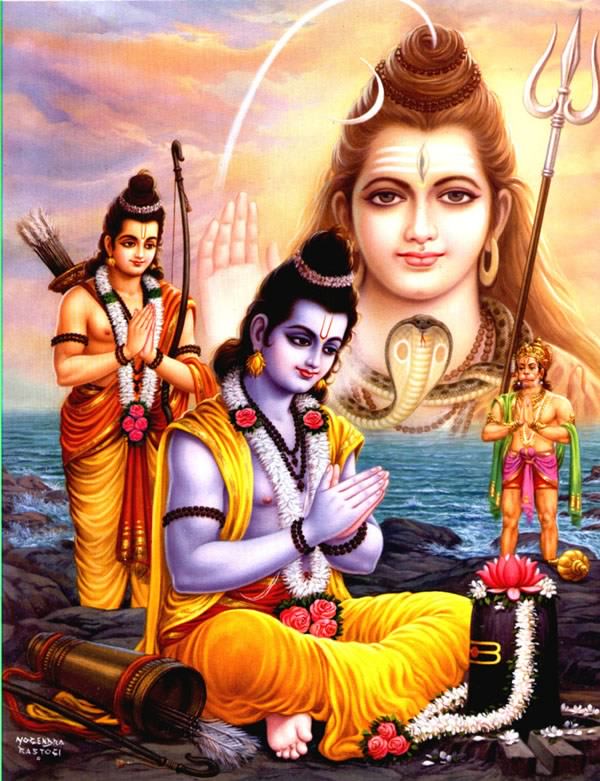
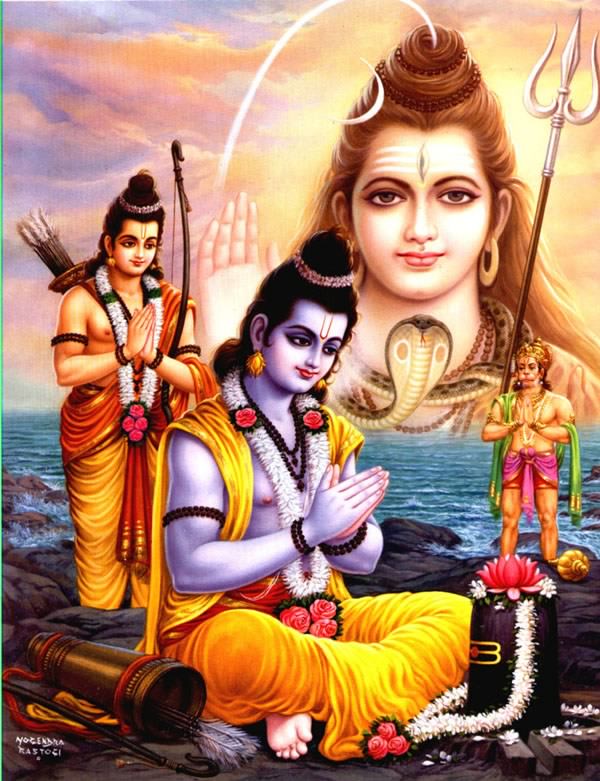
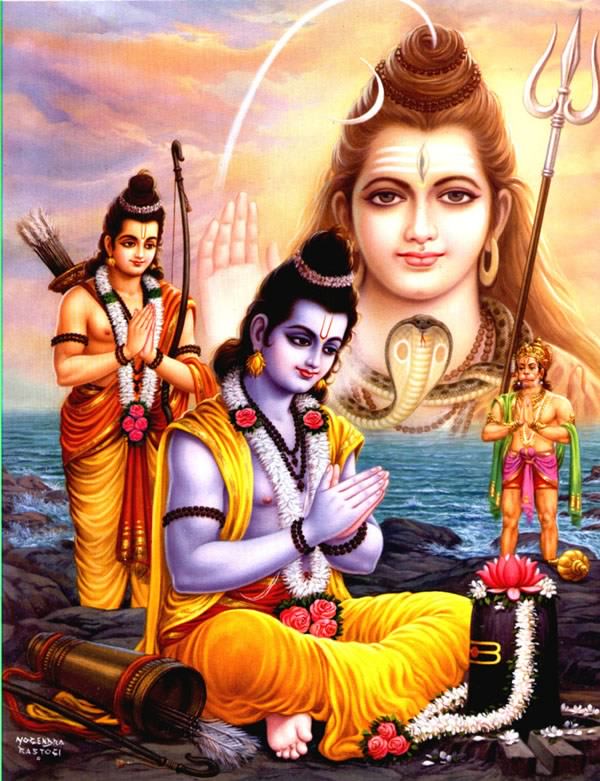
    There is uncertainty about the information whether Lord Rama worshipped Lord Shiva and installed Shiva Lingam at Rameswaram.

    Valmiki Ramayana does not specify to the fact directly.

    But it states Rama worshipped Shiva at Rameswaram.

    That Rama installed a Shiva lingam is referred to in Adhyatma Ramayana,Shiva Purana,Linga Purana,Skanda Purana, Padma Purana,Ramacharitamanas by Tulsidas and Shiva Daridra Dahana Stotra.

    etat = this; (is the island); kukShau = located in the middle; samudrasya = of the ocean; skandhaavaara niveshanam = where my troops were stationed; atra = at this place; puurvam = formerly; prabhuH = the Lord; mahaadevaH = Shiva (the supreme deity); akarot = bestowed; prasaadam = his grace; (on me).

    “See this island, located in the middle of the ocean, where my troops were stationed. At this place, the lord Shiva (the supreme deity) formerly bestowed his grace on me.”

    Valmiki Ramayana,Yuddha Kanda,Sarga 123,Sloka 19.

    https://ramanisblog.in/2017/02/28/lord-rama-worshiped-shiva-valmiki-ramayana/

    Here is how Yuddha Kanda of Adhyatma Ramayana of Brahmanda Purana narrates the event:

    सेतुमारभमाणस्तु तत्र रामेश्वरं शिवम् ।
    संस्थाप्य पूजयित्वाह रामो लोकहिताय च ॥ १॥
    प्रणमेत्सेतुबन्धं यो दृष्ट्वा रामेश्वरं शिवम् ।
    ब्रह्महत्यादिपापेभ्यो मुच्यते मदनुग्रहात् ॥ २॥
    सेतुबन्धे नरः स्नात्वा दृष्ट्वा रामेश्वरं हरम् ।
    सङ्कल्पनियतो भूत्वा गत्वा वाराणसीं नरः ॥ ३॥
    आनीय गङ्गासलिलं रामेशमभिषिच्य च ।
    समुद्रे क्षिप्ततद्भारो ब्रह्म प्राप्नोत्यसंशयम् ॥ ४॥

    During the construction of bridge, Rama installed Mahadev and worshipped him calling by the name Rameshwar Mahadev. He described his glory, “If someone visits the bridge (setubandh), and prostrates to Rameshwar mahadev he is liberated of the severest of sin of killing Brahmins.” Rama stated, “One should bathe here in sea, and having darshan of Rameshwar Mahadev, he should go to kashi, to fetch ganga water. Offering the Ganga water of Kashi over Rameshwar Mahadev, he should throw the pot in sea. Thus, he is bound to get salvation.

    One may get confused whether Rama installed idol form or Linga form. But it is Linga form and Lord Rama himself states it in Padma Purana Patala Khanda chapter 104:

    विभिषणः कथमसौबद्धः श्रृंखलयानृभि: । मत्स्थापितंशिवलिङ्गंदृष्ट्वारामेश्वरंत्वहो ।।

    Oh, how is it that Vibhisana seeing the Linga of Shiva, (called) Ramesvara and installed by me, is bound with chains.

    In the above verse Rama tells “Mat Sthapitam Shiva Linga”… ie. That Shiva Linga installed by me.

    https://hinduism.stackexchange.com/questions/14349/what-is-the-story-of-rameshwaram-jyotirlinga/14350#14350

    In the Chapter 3 of Brahma Kund (3rd Canto of Skanda Purana)

    “Describing how Sri Ram had installed Rameshwar linga, Sutji said–‘ After killing Ravan, Sri Ram enthroned Vibhishan as the king of Lanka. While returning to Ayodhya he made a brief stop at Gandhamadan mountain. Since the thought of having killed a brahmin (Ravan) kept on tormenting him, he decided to atone for his sins. In consultation with sages, Sri Ram decided to perform the ‘Pratishtha’ of Shiva Linga at the most auspicious ‘Muhurat’ and commissioned Hanuman to bring the Linga from Maha Deva at Kailasa Mountain. But Unfortunately however Hunuman could not meet the deadline of the Muhurat for the Consecration of the Linga and Devi Sita had to prepare a Sand Linga that was set up as a temporary stop-gap but in reality that became the real Linga . Meanwhile Hanuman returned from Kailasa but was highly disappointed and felt that all his efforts proved futile. Sri Rama consoled Hanuman also did the Pratishtha of the Linga brought by Hanuma.”

    Rama instructed that Hanuma lingam should be worshipped first since it was brought by Lord Hanuman – the tradition continues even today.

    In Chapter 18 of Koti Rudra Samhita of Shiva Purana It is said that

    “Lord Rama After reaching Rameswaram beach and he was thirsty. When he was drinking water there he heard a celestial voice “you are drinking water here without worshipping me”’. Rama recognized that voice was of Lord Siva. Then he made a Sivalingam with beach sand and worshipped Lord Siva. He prayed Lord Siva to bless him to win the war, and vanquish Ravana. Lord Siva blessed Rama accordingly. He also prayed Lord Siva to reside eternally at Rameswaram so that entire mankind should benefit from it. Lord Siva agreed to Rama’s prayer and manifested Himself as Ramanatha Jyothirlingam and stayed there for eternity.”

    According to a legend from Linga Purana,

    “on the advice of Rishis, Rama wanted to consecrate at Rameswaram a shrine for Lord Siva to wash off the Brahmahatsya dosha – the sin of killing Ravana, a Brahmin. An auspicious time for the ceremony was fixed. Rama rushed Hanuman to Kasi to bring a Sivalingam. The auspicious time for the installation had neared, but Hanuman had not returned, Sita made a Sivalingam out of sand and the puja was performed to this Lingam at the stipulated time. It was consecrated as Ramalinga. Meanwhile, Hanuman returned from Kasi with two Lingams. He was disappointed that the ceremony was already over. In anger, he tried to uproot the sand Sivalingam with his tail, but in vain. Rama pacified Hanuman and installed one of the Lingams brought by Hanuman from Kasi to the left of Ramalinga, and ordered that all pujas be first performed for this Sivalingam, called Kasilingam or Viswanathalingam.”

    This priority in puja is followed even today.

    Reference in Shiva Daridra Dahana Stotram” composed by Rishi Vasistha.

    “Ramapriyaya Raghu nada Vara Pradhaya,” meaning “Who is dear to Rama ,Who granted boons to Rama’

    सैल बिसाल आनि कपि देहीं। कंदुक इव नल नील ते लेहीं।।
    देखि सेतु अति सुंदर रचना। बिहसि कृपानिधि बोले बचना।।
    परम रम्य उत्तम यह धरनी। महिमा अमित जाइ नहिं बरनी।।
    करिहउँ इहाँ संभु थापना। मोरे हृदयँ परम कलपना।।
    सुनि कपीस बहु दूत पठाए। मुनिबर सकल बोलि लै आए।।
    लिंग थापि बिधिवत करि पूजा। सिव समान प्रिय मोहि न दूजा।।
    सिव द्रोही मम भगत कहावा। सो नर सपनेहुँ मोहि न पावा।।
    संकर बिमुख भगति चह मोरी। सो नारकी मूढ़ मति थोरी।।

    The monkeys brought huge mountains, which were received like playballs by Nala and Nila. When the All-merciful saw the exceedingly beautiful construction of the bridge, He smiled and observed thus: ìThis is a most delightful and excellent spot; its glory is immeasurable and cannot be described in words. I will install (an emblem of) Lord Sambhu here: it is the crowning ambition of My heart. Hearing this the lord of the monkeys despatched a number of messengers, who invited and fetched all the great sages. Having installed an linga of Lord Shiva and worshipped It with due solemnity, He said, “No one else is so dear to Me as Shiva. An enemy of Shiva although he calls himself a devotee of Mine, cannot attain to Me even in a dream. He who is opposed to Shankara and yet aspires for devotion to Me, is doomed to perdition, stupid and dull-witted as he is.”

    Then the 2nd Doha states:

    संकर प्रिय मम द्रोही सिव द्रोही मम दास।
    ते नर करहि कलप भरि घोर नरक महुँ बास।।2।।

    Men, who, though devoted to Shankara, are hostile to Me and even so those who are enemies of Shiva but votaries of Mine shall have their abode in the most frightful hell till the end of creation.

    Then the Chaupai of 2nd Doha states:

    जे रामेस्वर दरसनु करिहहिं। ते तनु तजि मम लोक सिधरिहहिं।।
    जो गंगाजलु आनि चढ़ाइहि। सो साजुज्य मुक्ति नर पाइहि।।
    होइ अकाम जो छल तजि सेइहि। भगति मोरि तेहि संकर देइहि।।
    मम कृत सेतु जो दरसनु करिही। सो बिनु श्रम भवसागर तरिही।।


    राम बचन सब के जिय भाए। मुनिबर निज निज आश्रम आए।।
    गिरिजा रघुपति कै यह रीती। संतत करहिं प्रनत पर प्रीती।।
    बाँधा सेतु नील नल नागर। राम कृपाँ जसु भयउ उजागर।।
    बूड़हिं आनहि बोरहिं जेई। भए उपल बोहित सम तेई।।
    महिमा यह न जलधि कइ बरनी। पाहन गुन न कपिन्ह कइ करनी।।

    They who will behold Lord Ramesvara will, on quitting the body, go direct to My sphere in heaven. And a man who takes the water of the Gangå and pours it on the Lord will attain liberation in the form of absorption into My being. Again, whosoever adores the Lord in a disinterested spirit and without guile, will be blessed by Sankara with devotion to Me. And he who sees the bridge erected by me will be able to cross the ocean of worldly existence without any exertion. Ramas words gladdened the heart of all and the great sages returned each to his own hermitage. Girijå, (says Sankara,) such is the way of the Lord of the Raghus: He ever loves those who take refuge in Him. The clever Nala and Nila constructed the bridge and by Råma’s grace their renown spread far and wide. Those very rocks that not only sink themselves but cause even other things to sink alongwith them floated like so many rafts. This is, however, not ascribed to any miraculous power of the ocean, nor to a virtue of the rocks themselves, nor again to any skill of the monkeys.

    Source.The Lanka Kanda 1st Dohas

    https://hinduism.stackexchange.com/questions/14405/what-are-the-salient-features-of-rameswaram-shivalinga-mentioned-in-ramacharitmasalient-features-of-rameswaram-shivalinga-mentioned-in-ramacharitma

  • Ravana History by Brahmin Somachandra Odisha in Gold

    Ravana History by Brahmin Somachandra Odisha in Gold

    I am checking on the history of Ravana from Sri Lanka.

    Though some information is yet to be cross checked, I am providing information that have been checked and will be writing more.

    Ravana who was killed by Lord Rama was a Brahmin.

    He was also considered to be part Yaksha.

    He was also part of the Dravidas of the South and the Naga Loka was considered to be under him.

    He was a Sanskrit scholar and an ardent devotee of Lord Shiva.

    He ruled vast stretches of territory which included the now sunk Atlantis.

    His father in law, Maya built a city in Atlantis.

    Maya is also credited with having built Indraprastha, now called Delhi, capital of India.

    Ravana had his reserve Army in Atlantis, The Americas.

    Ravana is mentioned in Ramayana in detail and all the Eighteen Puranas of India, Mahabharatha, and classics of regional languages of India.

    Not only Hindu texts refer to him but Buddhist texts as well.

    He was called Ravana Buddha, Buddha denoting Enlightened one.

    He wrote Shiva Tandava Stotra, treatises on Astrology and Ayurvedateachers veda.

    He is reported to have conquered territories not covered by the Ikshvaku dynasty of Lord Rama.

    Information of Ravana abounds in Sinhala , Ceylon.

    One such work is Ravana Tales.

    Ravana tales was written in Gold plate by a Brahmin, Somachandra Sri Bharathi from Odisha, India.

    `Ravana Saga’ were based on the ola manuscript `Ravana

    Tales’. The readers will wonder what this `Ravana Tales’

    is? What is its history? This concluding chapter is intended

    to provide the answer to such concerns.

    Dr. Mirandi Obeysekere explains it as follows.

    The original Ravana Tales had been written on gold

    plates by Somachandra Sri Bharathi, an erudite Brahmin of

    Kälinga Dash (presently known as Orissa) to be presented

    to King Khallatanaga (110-104 BC) of Murunda dynasty.

    However, he could not fulfill his wish as the King died

    before the writing was completed.

    Prince Marina, the elder son of King Khallatanaga

    ascended the throne following the demise of his father

    and the book was presented to him. Prince Marina was at

    that time ruling in Girandurukotte with Mirandi Villa as

    his centre of administration.

    This book of gold sheaves was later inherited by his

    elder son Prince Marina Senadhilankara and had since then

    been passed over to the senior member of the succeeding

    generation. Accordingly, it came into the possession of

    the Chieftain Mildew Marina Senadhilankara who was

    the Chieftain of Eva region. Subsequently it was inherited

    by Marina Mahakappina Lanni Bandana Senadhilankana

    who was a chieftain of Eva region, from his father Mildew

    Marina Senadhilankara.

    Erudite successors of this dynasty subsequently

    contributed additional pages written on silver and copper

    sheets to the original book of Sotuachandra Sri Bharathi.

    The book contains factual information about King

    Ravana, ancient Kshatriya (royal) families of Canna,

    Brahmanic lineage, Naga, Yaksha, Diva clans, ancient

    medicine, incantations, illangam and illangam (ancient battle

    craft). The contents of the book were subsequently re-

    written on Ala leaves and the original gold and copper

    sheets had been donated to Mahiyangana temple.

    The donation had been done by Adigar Wickramasinghe

    (1515-1542 AD), son of General Rajaguru Marina

    Mahakappina Lanni Bandana Kenadhilankara. Adigar

    Wickramasinghe served as the Chief Adigar (Mama

    Adikaratn) of King Jayaweera I (1514- 42 AD)’

    Reference and Citation.

    https://ravana1.wordpress.com

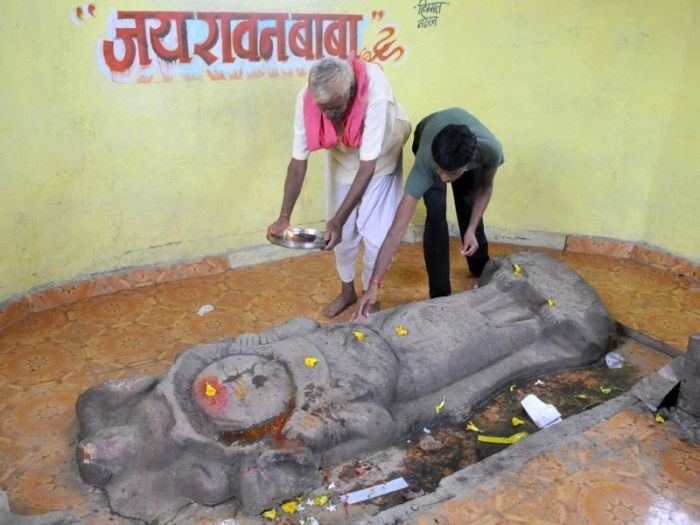
    Image credit.

    http://www.india.com/buzz/6-ravana-temples-in-india-you-need-to-visit-atleast-once-in-your-life-609985/

  • Rama Name Equals Thousand Names Of God Numerical Explanation

    Sri Rama of Ikshvaku Dynasty worshipped in Hinduism.
    Sri Rama.

    Ramayana is a historical fact, validated by archeology, Astronomy and, Literary references from contemporary literature from India and from around the world of ancient times.

    Ramayana has over three thousand versions.

    Some of them are in foreign languages of the Far East. Please read my articles on Ramayana, and Rama.

    Be that as it may.

    Ancient Indian texts have minimum four meanings.

    1.Literal meaning.

    2.An Allegory to indicate a Spiritual fact.

    3.A hidden meaning indicating Tantra Sastra.

    4.Explaining a scientific fact.

    Apart from the words/letters of Characters indicate abstract qualities.

    In some cases these names are mysticallly locked sounds.

    They have the power to heal.

    This is because of the Resonance the Sound creates.

    I have written on the Breath of Earth measured is identical to the Resonance of OM.(Schumann Resonance)

    Please read my articles on Mantras.

    Though there are many names for Individual God(Saguna Brahman), sometimes  there is more than one name for One God, some names are more powerful.
    One such powerful name is Rama.

    Probably because of this fact the sound of Rama in various forms is found in many cultures.

    For the worship of RA.

    Rama nama is declared to be so powerful that it is rated higher than Lord Rama Himself.

    For more on Rama Nama please read my article on this.

    The reference to Rama Nama is found at an important point in Vishnu Sahasranama, which along with Lalitha Sahasranama is rated as best among Mantra and Tantra Sastra combined.

    Vishnu Sahasranama chanting is guaranteed to provide you mental peace, apart from many other things.

    There are two methods of reciting Vishnu Sahasranama.

    One is starting from the beginning to the end, with

    Arthaa vishanna chanted twice.

    The shorter version is to begin at the beginning and skip Phala Sruthi.

    That is after Vanamaali Gathisaarngi…, you go to

    EASWARA Uvacha, declaration by Lord Shiva

    And continue to till the end as in the first method.

    All the fruits that accrue are described in the phalasruthi.

    But even when you skip the phalasruthi in the second method of chanting, you get all the benefits by the single sloka of EASWARA Uvacha.

    What is that special sloka?

    राम राम रामेति रमे रामे मनोरमे ।
    सहस्रनाम तत्तुल्यं रामनाम वरानने ॥
    Raama Raama Raame[a-I]ti Rame Raame Manorame |
    Sahasra-Naama Tat-Tulyam Raama-Naama Vara-[A]anane ||

    Meaning:
    1: By meditating on “Rama Rama Rama” (the Name of Rama), my Mind gets absorbed in the Divine Consciousness of Rama, which is Transcendental,
    2: The Name of Rama is as Great as the Thousand Names of God (Vishnu Sahasranama).

    The sloka is special because the Speaker is Easwara(Shiva) and the one who is spoken  about is Vishnu as Rama.

    Easwara means personal God.

    Vishnu is One supports everything.

    One interpretation of this sloka, which is popularly accepted is

    ‘Chanting Rama nama accounts to chanting the whole Vishnu Sahasranama (1000 names of Vishnu). :

    The other explanation is that chanting Rama Nama is equivalent to chanting God’ s Name thousand Times.

    Here Sahasranama is interpreted as Thousand Names, which is etymologically correct and not specific to only Vishnu Sahasranama.

    The Numerical Explanation.

    According to Sanskrit scriptures, there is a principle in which sounds and letters are associated with their corresponding numbers.
    Ra denotes number 2 (Ya – 1, Ra – 2, La – 3, Va – 4 … )

    Ma denotes number 5 (Pa – 1, Pha – 2, ba – 3, Bha – 4, Ma – 5)
    So Rama – Rama – Rama becomes 2 * 5 * 2 * 5 * 2 * 5 = 1000amayana the Indian Epic is not a figment of imagination in the fertile mind of a poet.

    * In the sloka each of the sounds RA and MA occurs thrice.

    Hence the above calculation.
    Reference and Citation.

    https://www.quora.com/What-are-some-mind-blowing-facts-about-Lord-Rama

    Additional information on Sanskrit Numerals1″to and Equivalent Alphabets.

    ‘ Sanskrit RA and number 2 marked below as #

    Sanskrit Ma and 5 marked as *

    I have provided this information to clarify the Numerical interpretation of RA and MA.

    Sanskrit scholars and Linguistic specialists as I am a novice.

    Source of the following information.

    https://www.sanskrit-trikashaivism.com/en/learning-sanskrit-writing-ancient-sanskrit-characters-1/422

    Numbers
    Numbers
    Numbers (variants included)Uno (variante)n/an/an/aCinco (variante 1)or Cinco (variante 2)n/an/aOcho (variante)Nueve (variante 1)or Nueve (variante 2)or Nueve (variante 3)n/a
    Transliteration12 #345 *67890
    Consonants
    Gutturals     
    Gutturals (variants)n/akha (variant)n/an/an/a     
    Transliterationkakhagaghaṅa     
    Palatals     
    Palatals (variants)n/an/an/ajha (variant 1)or jha (variant 2)n/a     
    Transliterationcachajajhaña     
    Dentals     
    Dentals (variants)n/an/an/adha (variant)n/a     
    Transliterationtathadadhana     
    Labialsम *     
    Labials (variants)n/an/an/abha (variant)n/a     
    Transliterationpaphababhama     
    Semivowelsर #      
    Semivowels (variants)n/an/ala (variant 1)or la (variant 2)va      
    Transliterationyaralava     
  • Advaita Ramayana Adhyaatma Ramayana  Pdf

    Advaita Ramayana Adhyaatma Ramayana Pdf

    Over a Thousand versions of Ramayana ,one of the two Great Epics of India,the other being Mahabharataha!

    Of these versions many are in Sanskrit in which it was composed and that too by the same author,Sage Valmiki.

    Some versions are meant for Higher Beings,some abridged,and some short and some stressing the Abstract Reality embodied in Lord Ramachandra,the Emperor of India.

    Ramachandra was also the Emperor of the entire landmass on Earth and He is mentioned in ancient texts of the world including the Sumerian Kings List.

    He was also referred to as RA and Rama worship is found in Americas ,Africas and ancient Europe.

    While there are various versions in Sanskrit, in regional languages of India and in the Far East,all of them are in agreement with the fact that he was a Historical personality and not a figment of imagination of a creative poet.

    Notwithstanding language barriers and the varied locations where/in which the Ramayana is composed,basic facts mentioned by Sage Valmiki in his Ramayana are adhered to.

    In some versions certain changes are made in the narrative to enhance the quality of the literary work and the poets ensure that hints are made available in the text that there are such variations from Valmiki Ramayana.

    While some of these versions enhance the quality of the work through characterisations,some provide more details in respect of Geography:some include the regional customs.

    As the very name Ramayana implies Ramayana is the ‘Path of Rama’.

    Rama Ayana meaning Path followed by Rama.

    The Path travelled by Rama during his life was marked as Ideal and as such is recommended for people as it is deemed to be the Righteous one.

    As Rama was not a fictional character,the writers felt that it would be more authentic to present Rama as the Ideal one to follow for He was Real.

    There are some versions which are subtle and they convey the message of various philosophical concepts of Hinduism that are to be practiced by one to Realize the Self,Brahman.

    One can read the Valmiki Ramayana as History and also as an explanation of Karma yoga and lokayata,the worldly way of performing one’s duties in accordance with Dharma,come what may.

    There are some versions that stress on the Divine aspect of Rama and emphasize Bhakti yoga,the Path of Surrender to God.

    Saint Tulsidas’s Ramcharitamanas belongs to this category where RamaBhakti takes priority and as Bhakti yoga implies Duality or Qualified Duality.

    Dwaita and Visishtadvaidha,are two aspects of the Reality,Brahman as explained in the Vedas.

    The other system Vedic Thought on Reality needs to be brought out.

    This Thought is Advaita,the system that explains the Reality as One,non dual, Advaita.

    This aspect is brought forth in Adhyaatma Ramayana.

    It is said to have been composed by Veda Vyasa,the compiler of the Vedas and the Puranas.

    There is also a view that Adhyaatma Ramayana was composed during the middle ages.

    Adhyaatma Ramayana stresses Advaita system of them,made popular later by Adi Shankaracharya .

    The Advatic thought runs through Adhyaatma Ramayana and the Rama Gita, where Rama’ discourse on Reality to Lakshmana is pure Advaidha.

    The term Adhyaatma Ramayana indicates it to be Advaidha.

    the Sanskrit scriptures have a very precise definition of the word spirituality (adhyatma): “aatmani adhi iti adhyatma”, meaning all that which is performed in accordance with the wishes of the soul (aatma)is spirituality.

    From Bhagavad Gita, 8.3 : अक्षरं ब्रह्म परमं स्वभावोऽध्यात्ममुच्यते । means:

    The indestructible, transcendental living entity is called Brahman, and his eternal nature is called adhyātma, the self.

    The text represents Rama as the Brahman (metaphysical reality), mapping all saguna (attributes) of Rama to the nirgunanature (ultimate unchanging attributeless virtues and ideals). Adhyatma Ramayana raises every mundane activity of Rama to a spiritual or transcendent level, the story into symbolism, thus instructing the seeker to view his or her own life through the symbolic vision for his soul, where the external life is but a metaphor for the eternal journey of the soul in Advaita terminology.

    The book is aimed to be used as a guide and a ready source of instruction for a spiritual seeker, as it presents the Ramayana as a divine allegory.

    Adhyaatma Ramayana has Seven Cantos,Chapters,4500 verses.

    Apart from this there are variations to Valmiki Ramayana in Adhyaatma Ramayana.

    These are,

    Comparison with Valmiki Ramayana

    In a study of Adhyatma Ramayana it is essential to know where it differs from the Valmiki Ramayana.

    Valmiki’s object seems to describe Rama as an ideal human character though he accepts him as an avatarof Maha Vishnu; but the divinity of Rama is always kept latent. This objective of Valmiki is made clear at the very beginning of the epic in verses 1 to 18 of Chapter 1 of Bala Kanda. Here Valmiki asks Narada the following questions:

    1. “Who in the world today is a great personage, endowed with all virtues, who is courageous, who knows the secret of Dharma, who is grateful, who is ever truthful and who is established in sacred observances”?

    2. “Who has great family traditions, who has got sympathy for all creatures, who is most learned, who is skilful, and whose outlook is ever kindly”?

    3. “Who is courageous, who has subdued anger, who is endowed with splendor, who is free from jealousy, who, when angry in the field of battle, is a terror even to the Devas”?

    In reply to this question, Sage Narada narrated in brief the entire Rama Katha which formed the basis for Valmiki to expand and make it a vast, beautiful and unique epic poem of great literary value which came to be called Valmiki Ramayana. (Narada’s brief exposition of Rama Katha to Valmiki is called ‘Sankshepa Ramayana’ which is used in many households for the purpose of daily recitation).

    The object of an epic which begins with such a description of its hero is obviously to give us a picture of human perfection. But this does not mean that Valmiki did not recognize divinity in his hero. When a person is described as a Deity, it happens that ordinary human beings start worshipping him and are not inclined to treat him as a role-model to imitate and follow. This probably must have been the reason for Valmiki to propound the divinity of Rama in subdued tones and paint him prominently as a great human being with all the human frailties and weaknesses so that the people at large may learn from his life.

    While Valmiki’s great epic is the saga of Rama in respect of its direct approach, Adhyatma Ramayana is a direct elaboration of its spiritual implications. In the former Rama is a great hero, in the latter he is a deity- Maha Vishnu, covered in thin apparel – held before all to worship. This is made clear in the very first chapter of the book entitled ‘Sri Rama Hridaya”.

    The text of Adhyatma Ramayana projects Rama as the Supreme Self; but while doing so it takes care to see that Rama is also a Personal Deity, the Supreme Isvara, who is to be prayed and sought after by all those who seek knowledge of non-duality. It teaches Bhakti of the most intensive type and stresses that through devotion to Rama alone the saving Jnana would arise in the Jiva. The teaching of the Adhyatma Ramayana is an extension of the declaration of the Svetasvatara Upanishad, “it is only in one who has supreme devotion to God and to his spiritual teacher that this truth – knowledge of the non-dual Self – when taught will shine”.

    Thus to establish Rama’s divine status, as an object of worship and devotion and to teach that Bhakti and Jnana are not only reconcilable but always go together is the prime object this great text. In order to achieve this objective, the Adhyatma Ramayana, while sticking to the main trends and incidents of the Rama Katha described in Valmiki’s epic, makes various deviations in the course of its extensive narration. A few such instances are cited below.

    ….

    The major alteration in the fact of the story found in the Adhyatma Ramayana is the introduction of a “Shadow Sita” throughout the period of her abduction. The real Sita disappears into fire just before the golden deer episode. Tulasidasa also follows the Adhyatma Ramayana in this respect.

    Compare Tulasi’s Sri Ramacharitamanasa, Aranya Kanda, Doha 23 and the Chopai: “When Lakshmana had gone to the woods to gather roots, fruits and bulbs, Sri Rama, the very incarnation of compassion and joy, spoke with a smile to Janak’s daughter (Sita):- Listen my darling, who have been staunch in the holy vow of fidelity to me and are so virtuous in conduct: I am going to act a lovely human part. Abide in fire until I have completed the destruction of the demons.”

    “No sooner had Sri Rama told Her everything in detail than she impressed the image of the Lord’s feet on Her heart and entered into the fire, leaving with Him only a shadow of Hers, though precisely of the same appearance and the same amiable and gentle disposition. Lakshmana, too, did not know the secret of what the Lord had done behind the curtain.”

    In the Adhyatma Ramayana, Sita emerges from the fire at the end of the war when the shadow Sita enters into it. (The whole drama is preplanned and enacted at the bidding of Sri Rama Himself).

    Other alterations in the Adhyatma Ramayana include: Ravana treats Sita with the respect due to a mother and Sri Rama establishes a Sivalinga at the site of the bridge to Lanka.

    The major contribution of the Adhyatma Ramayana lies in the casting of Rama in the role of the spiritual teacher and in the several exquisite hymns sung in praise of Rama. There are four occasions when Rama assumes the role of the teacher and gives philosophical disquisition.

    Rama reveals himself as four-handed Mahavishnu at his very birth, a feature that is not seen in Valmiki

    Sage Valmiki depicts Sri.Rama as an ideal man while admitting his divinity, whereas Sage Vyasa present him as the Supreme Being incarnate with the full remembrance of his divinity and the recognition of it by all wise men.

    In response to Lakshmana’s questions on different occasions he teaches knowledge, devotion and detachment, methods of worship and the way of emancipation. In reply to Kaushalya’s query, Rama teaches the three Yogas of Karma (action), Jnana (knowledge) and Bhakti (devotion).

    The well known Ramagita is part of Adhyatma Ramayana. It contains teachings on Advaita Vedanta. The real contribution of this work is in its repeatedly propounding the doctrine that Rama is Brahman the Absolute and that Sita is His Maya-shakti or Prakriti, thereby raising the personality of Rama to the highest level and providing a firm base to the worship of Rama.

    Ahalya the wife of Sage Gautama is in invisible form in the Valmiki Ramayana, whereas in the Adhyatma she has been depicted in the rock form.

    In the Ayodhya Kanda of Adhyatma Ramayana the section opens with a visit of Sage Narada to Sri. Rama to remind him of the purpose of his incarnation, which Sri. Rama acknowledges. All these incidents are not in Valmiki.

    In the Adhyatma, banishment of Sri Rama is accomplished by the Devas through Goddess Saraswathi, by possessing the two women i.e. maid servant Manthara and Kaikeyi. In Valmiki this incident is explained as a simple court intrigue.

    Sage Valmiki’s evil past has been explained in detail in Adhyatma, but not in the other.

    In Adhyatma, Lakshmana requests Rama to instruct him on the means of attaining Salvation. Rama also gives him an elaborate discourse on Jnana and Bhakti, conveying the quintessence of Vedanta. This is not there in Valmiki Text.

    According to Adhyatma, Ravana is aware of the fact that Sri. Rama in human form is Lord Vishnu incarnated to kill him. Ravana is also aware of the fact that destruction at Sri. Rama’s hand is easier way of gaining salvation than through spiritual practices (devotion through confrontation – an example for vidvesha bhakti).

    In Adhyatma – unknown to Lakshmana, Rama informs Sita that Ravana will be coming to abduct her, and that therefore he is handing her over to the Fire deity Agni for safe custody, till he takes her back again. In her place Maya Sita is left in Asrama, and it is this illusory Sita that Ravana abducts. This is unknown in the Valmiki.

    In Valmiki, it is Kabandha who advises Sri. Rama to make friends with Sugreeva and gives details about the place of his residence, whereas in Adhyatma it is ascetic Sabari who first tells Rama about Sugreeva and informs him that Sita is confined in Ravana’s palace.

    After the death of Vali it is Hanuman who consoles Tara in Adhyatma Ramayana, whereas in Valmiki Sri. Rama gives her an elaborate advice of philosophy of Vedanta and the practice of devotion, besides consoling her.

    In Adhyatma while Rama is staying at Mount Pravarshana after the coronation of Sugreeva, he gives an elaborate discourse to Lakshmana on the ritualistic worship of Lord Maha Vishnu (i.e Himself), thus revealing his identity with the Supreme Being openly.

    Swayamprabha comes to meet Rama and praises Him, identifying him as Supreme Being. According to the advice of Rama she goes to Badari to attain Mukthi.. This episode is absent in Valmiki.

    Sampati gives an elaborate discourse to the monkeys who meet him He quotes Sage Chandramas, while telling about the divinity of Sri. Rama. This incident is available in Adhyatma only.

    A conspicuous addition in the Adhyatma is Rama’s installation of the Sivalinga in Rameswara, before the construction of Sethu for the success of the enterprise. Rama also declares about the merit of Pilgrimage to Rameswara and Sethu Bandha here. These elaborations are not available in Valmiki.

    Sri Rama is well aware of his divinity during the Nagapasa missile episode and Garuda’s arrival to release them. In Valmiki, Rama is not aware of his Divinity till the end when Brahma imparts that knowledge to him.

    Kalanemi obstructs Hanuman while he is on his way to bring Mritasanjivani, a herb that can revive one who is almost dead. This incident is absent in Valmiki.

    Narada praises Rama after the death of Kumbakarna in Adhyatma. This is absent in Valmiki.

    Killing of Maya Sita by Indrajit and illusion created thereon by black magic is available in Valmiki but not in Adhyatma

    Before going to battle Ravana, for gaining invincibility in fighting, begins fire rite, as per the advice of his guru Sukra. This rite is blocked and stopped by the monkeys. These incidents are absent in Valmiki Ramayana.

    Rama cuts down the heads of Ravana repeatedly, but could not kill him. Vibhishana informs Rama that Ravana has got amrita deposited in his umbilicus and that until it is removed he cannot be killed. This is available in Adhyatma Ramayana. But in Valmiki Ramayana as per the advice of Sage Agasthya Rama chants Adhithya Hrudaya and worships Lord Soorya to kill Ravana.

    According to Adhyatma on the death of Ravana, his spirit, having luminosity of lighting enters into Rama and attains salvation. This explanation finds no place in Valmiki.

    After the death of Ravana, Sita’s fire ordeal is only to replace the Maya Sita by Rama. The whole event is given the appearance of a real ordeal in Valmiki.

    In Adhyatma Ramayana every one praises and chants the hymn on Rama starting from Vamadeva, Valmiki, Bharadwaja, Narada, Viradha, Sarabanga, Sutikshna, Agasthya, Viswamitra, Vasishta, Jatayu, Kabhanda, Sabari, Swayamprabha, Parasurama, Vibhishana, Hanuman etc. This is absent in Valmiki.

    Reference and block quote citation.

    Visit the following link for quality information on Hinduism.

    http://stotraratna.sathyasaibababrotherhood.org/adr2.htm

    For download of Adhyaatma Ramayana in Sanskrit with English Translation by MSri. Munilal