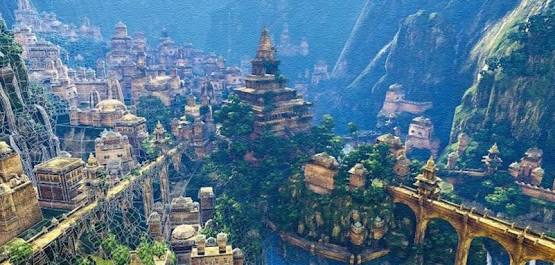
Tag: Mu civilization

  • Uyghur Civilization Dravida Shiva Sanatana Dharma Connected?

    I have written about ancient civilizations,which have been dismissed as myth not long ago.

    Now ancient history is getting a new look,thanks to new findings in archaeology around the World and the availability of information worldwide,thanks to Internet.

    People or Nations find it no longer easy to stem the flow of information.

    Earlier history was written with a political agenda,be it the compilation of the Old Testament by Constantine,or the misinformation about Indian History.

    Now it is difficult to misinform people and the research findings are for everyone to access.

    The problem lies in the fact that the one who finds something new is unable to link the information found anywhere else because he may not be familiar about a fact,event,records of another culture.

    For instance the sea floor anamoly in Newzealand was linked to the Great Flood mentioned in Tamil classics,thanks to the input provided to me by a Researcher in Oceanography in New zealand.

    Thanks to him I was able to corroborate the fact that Poompuhar in Tamil Nadu can be dated 30,000 years back.

    Similarly I could get valuable inputs from US on the presence of Sanatana Sharma in the Caribbean and the connection of Italy with Hinduism from a Researcher in Italy.

    So even though information is available in the web,it needs some effort to link information available elsewhere.

    Fortunately,two oldest Languages,Sanskrit and Tamil provide enough data.

    Resources available around the world indicate the presence five ancient civilizations.

    Uyghur Flag.Image.
    Uyghur Flag.

    Uyghur,

    Atlantis,

    Hyperborean,

    Lemuria and

    Rama Empire.

    Of these I have touched upon Hyperborean civilization,written in detail about Lemuria being 230 Million years old,Rama Empire covering the world,Atlantis and Ramayana connection and Lemurians being the ancestors of Rama.

    It is essential that one remembers that the landmass of ancient age was different from what it is today.

    There was no Europe,Americas,Africa,Australia or Asia as we know of them now.

    In this connection I have written on Rodina,Pangea,Lemuria,all being Super Continents.

    There was another area lying in the periphery of Lemuria,the Home of Tamils.

    It also had Tamil Culture.

    The area was called MU.

    The MU civilization was quite advanced and a document linking Tamils with MU people is reported to be in a room in Ekambareswara Temple,Kanchipuram,Tamil Nadu.

    This has been brought forth by Churchward in his research works.

    There seems to have been an advanced civilization ,which we can point at some point NorthEast of Australia,going by the present map of the world.

    This civilization extended towards the west encompassing the entire land mass,including what is now Africa,Atlantic and Americas.

    On the northern side it seemed to have extended to Arctic through China,Russia.

    (Remember all these events were before the Himalayas formed some forty million years ago.

    And Shiva’s Marriage with Parvati took place after the fformation of Himalayas. ) 

    At that point of time evolution seems to have taken place in this region and an advanced culture developed.

    Then three Great Floods struck and people had to migrate.

    Manu,the ancestor of Lord Ramayana moved north of Vindhya mountains and Manu’s son Ikshvaku founded the Surya balsa,The Solar Dynasty.

    Some people were left behind and among them was Ila,daughter of Manu and she founded the Lunar Dynasty,Chandra Vamsa.

    One curious information at this juncture is that Shiva worship seems to have been prevalent during this period and this period predates The,Vedic age.

    One finds only an indirect reference to Shiva in the Vedas,in the Sri Rudram addressed to Rudra as ‘Nama Sivaaya cha,Sivadharaaya Cha’

    Shiva seems to have left the area during the flood ,along with his son Ganesh towards the west traversing all the way to Arctic where The Rig Veda was composed.

    One can find references to Shiva in The Middle east,Africa,Americas ,Europe and Russia.

    I have written articles on these in detail.

    After the Rig Veda was composed Shiva seems to have returned to India from the Arctic through Russia,Iran.

    One can find references to Ganesha and Shiva in Azherbaijn as well.

    This entry by Shiva was interpreted as Aryan Invasion.

    Shiva’s other son Subrahmanya,called Murugan traveled towards the east.

    Note the letter MU,the first letter of Murugan.

    In classical Tamil the prefix of MU indicates very ancient.

    Elders are called Moothoor,Old age as Mudhumai and Madurai was called as Madurai Moodhoor.

    In the process of Shiva returning to India he passed through the area,which probably had a civilization or Shiva founded one.

    It was the Uyghur Civilization.

    I am providing excerpts from an article on Uyghur Civilization below and the Link.

    I shall be writing more on Uyghur ,Dravidas,and Santana Sharma.
     

     Uyghur Empire was possibly the first, and unquestionably the largest, most important, and most powerful of all the colonial empires belonging to Mu. Colonization commenced just north of Burma more than 70,000 years ago.

    The Uyghur Empire stretched its powerful arms from the Pacific Ocean across Central Asia and into Eastren Europe from the Caspian Sea on. This was before the British Isles became separated from the continent of Europe.

    The southern boundary of the Uyghur Empire was along the northern boundaries of Cochin China, Burma, India, and Persia,and this was before the Himalayas and the other Asiatic mountains were raised.

    Their northern boundary extended into Siberia, but how far there is no record to tell. Remains of their cities have been found in the southern parts of Siberia.

    Legendary history states that the Uyghurs extended themselves all through the central parts of Europe. The Book of Manu, an ancient Hindu book, says: ” The Uyghurs had a settlement on the northern and eastern shores of the Caspian sea.”

    They settled in northern Spain, northern France, and far down into the Balkan region. The late archeological discoveries in Moravia are Uyghur remains, and the evidences in which ethnologists have based their theories that man originated in Asia have been marks left by the advancing Uyghurs in Europe.

    Chinese legend tells that the Uyghurs were at the height of their civilization about 17,000 years ago. This date agrees with geological phenomenon.

    An ancient record in a monastery states: “The capital City of the Uyghurs with all its people was destroyed by a flood which extended throughout the eastern part of the Empire, destroying all and everything.” This ancient record is absolutely corroborated by geological phenomena.

     ancient record in a monastery states: “The capital City of the Uyghurs with all its people was destroyed by a flood which extended throughout the eastern part of the Empire, destroying all and everything.” This ancient record is absolutely corroborated by geological phenomena.

    At the time the Uyghur Empire was at its peak, the mountain had not been raised and what is now the Gobi Desert (Teklimakan)was a rich well-watered plain. Here the capital city of the Uyghurs was situated, almost due south from Lake Baikal. In 1896 a party of explorers, upon information received in Tibet, visited the site of the ancient city of Khara Khota. They had been told that the Uyghur capital city lay under the ruins of Khara Khota. They dug through these ruins and then through a stratum of boulders,gravel and sand fifty feet in thickness, and finally came upon the ruins of the capital city.

    The history of the Uyghurs is the history of the Aryan races, for all of the true Aryan races descended from Uyghur forefathers. The Uyghurs formed chains of settlements across the central parts of Europe back in Tertiary Times. After the Empire was destroyed by the great magnetic cataclysm and mountain rising, the surviving remnants of humanity or their descendants again formed settlements in Europe. This was during the Pleistocene Time. The slaves, Tautens, Celts, Irish,Bretons and Basques are all descended from Uyghur stock. The Bretons,Basques, and genuine Irish are the descendants of those who survived the magnetic cataclysm and mountain raising.

    Some Chinese records, bearing a date of 500 B.C. Describe the Uyghurs as having been “light-haired, blue-eyed people.” ” The Uyghurs were all of a light complexion, milk-white skin, with varying color of eyes and hair. In the north blue eye and light hair predominated. In the south were found those with dark hair and dark eyes.”

    The Uyghurs had reached a high state of civilization and culture.They knew astrology, mining, the textile industries,architecture, mathematics, agriculture, writing, reading, medicine, ect. They were experts in decorative art or silk, metals, and wood, and they made statues of gold, silver, bronze, and clay and this was before the history of Egypt commenced.

    The history of Central Asia is the history of the Uyghurs. The Uyghur people are a distinct, vibrant cultural element of Central Asia. Whether you examine the role of Uyghur scholars in Genghis Khan’s court as administrators, peruse the artistic wonders of their architectural accomplishments involving the Buddhist, Christian or Islamic periods, or read translations of the numerous written works on medicine,history or just their humor, one cannot but realize the unique and vital contributions of the Uyghur people to history.[Jack Churchward]

    Currently, the majority of the Uyghur people live under the rule of the Chinese government. I would be remiss were I not to mention that this centuries’ old culture is under attack. Uyghur language text books are banned from classrooms and book burnings have consumed thousands of books, just for being correct about history. [Jack Churchward]

    In the late 1930s, Turkey’s Independence leader Ataturk promoted research on Mu and other lost continents, in the hope of establishing connections between the Turkish civilization and other ancient cultures, such as the Uyghur, Indian, Mayan, and Aztec.

    I have written on the relationship between Tamils,Mayans and Aztecs.

    And the Gobekli Tepe Temple was built by Brahmins.

    Caspian sea was Kashyap Sagar.

    River Danube was named after Chanukah,mother of Dhanavas.

    Block Quote image and reference.

    http://www.uighur.nl/uyghur-history/

  • Tamils Homeland Lemuria Kumarikandam Three Million Years Old

    Tamils Homeland Lemuria Kumarikandam Three Million Years Old

    I had written about the antiquity of Tamils and its close connections to Sanatana Dharma.

    One intriguing fact,I have mentioned in many articles,is about Shiva Worship.

    While Shiva is mentioned rarely in the Vedas directlty,save Srirudram,no Sukthas directly addressed to Shiva,Tamil literature speaks extensively about Shiva.

    While the legend of Shiva is limited to His Marriage with Uma(Parvathi,daughter of Himavan,Daksha) her self immolation in the sacrificial fire in the Yagnya conducted by Her father,And Shiva carrying the body of UMA and the coming into being of the 108 Shakti Peetas,the Tamil literature speaks of 64 Avatars of Shiva,His formulation of Tamil as a language,his sons,apart from Ganesha,Murugan(Subrahmanya)Veerabaahu,Navaveeras,Rudrasena.

    And Shiva is called the First Yogi with Sage Agastya,Bhogar and Patanjali as His disciples among others.

    Rama is reported to have worshipped Shiva in many places in South India,including Rameswaram.

    This probably is one of the strongest clues that Shiva cult preceded Ramayana.

    The Sangam classics,dated around 3000 BC,speak of Shiva.

    In the light of archelogical findings at Poompuhar,Tamil Nadu sets the Sangam classics by 30,000 Years.

    So this is another clue.

    The next is Tamil being spoken ,even today,in Afghanisthan as a dialect and in Nortwest frontier province of Pakistan.

    I had written that Tamils had a second Capital in the Nortwest of India.

    Kind Sibi,a Chola king ruled from there.

    He invaded the south and built a Temple in Thirivellarai,near Srirangam,Tamil Nadu for Pundarikaksha,(Vishnu).

    Sibi and Manu(not Manusmriti Manu) were Cholas and ancestors of Lord Rama

    *please read my articles on these.

    So we have two issues.

    Tamils preceded Ramayana.

    They were present in the northwest of India.

    There is evidence that the Tamils lived somewhere near the Gulf of Cambay,Gujarat.

    Shall write a detailed article on this.

    The present article is about the date of Tamils,whose homeland was Lemuria,/Kumarikandam,/MU)

    These three could have been one landmass are different but what can not be disputed is that the land was Tamils homeland.

    How old is this land and the people?

    Before proceeding further it would be relevant to know about the geographical landmarks provided in Tamil classics.

    Sangam literature mentions ‘Thrivengadam’Vada Vengadam’ as the Nothern boundary of Tamil Homeland.

    Currently,Tirupati is taken as Venkatam.

    This forms a part of Seshacham range of hills and it dates back to 200 million years.

    Himalayas were formed only about 70 million years ago.

    The reference to Himalayas are not found in Lemuria.

    What we have now in Tamil is the works belonging to the The Third Tamil Sangam and one finds reference to Himalayas.

    The earlier works belonging to second and first Tamil Sangam were lost due to Tsunami.

    They could have contained more references to Lemuria.

    The reason why Himalayas is not found in Lemuria is because Himalayas was not formed then while Seshachalalam, Vada vengadam was in existence.

    I shall be writing on the mountains,rivers of Lemuria as found in Tamil classics.

    In as much as Vengadam is mentioned and not Himalayas,it is safe to postulate that Tamils refer to a period when Seshachalam was in existence and Himalayas yet to be Formed.

    Thiruvannamalai,which has a Shiva temple representing Shiva as Fire is 3.94 Billion years old.
    Thirupati,Seshachalam is 2100 million years old.

    Thirupati Balaji aarthi. image
    Thirupati Balaji,Seshachachalam.

    These dates have been verified by Tectonics and Infrared imaging technology.

    Now more evidence about Lemuria,Home of Tamils,being 200 million years old.

    Featured image credit. http://www.theeventchronicle.com/study/lemuria-australia-pacific/#

    This page created for  trivia and commentary regarding the Tretya Yuga [Silver Age]and the continent of Mu, or Lemuria. [- E.M.]

    *Trivia: “[….] The Tretya Yuga, or Silver Age, came after the breakup of the previous age, when Lemuria, by earthquakes and tidal waves, went down under the seas. [….]” [Based on: Paul Twitchell, The Shariyat-Ki- Sugmad, Book Two, p. 113, Second Edition – 1988] 

    *Trivia: “[….] These records tell us that the legendary paradise of man, thought of as the Garden of Eden, was laid on the lost continent of Lemuria which was sunk by earthquakes and tidal waves fifty thousand years ago. [….]” [Based on: Paul Twitchell, The Shariyat-Ki- Sugmad, Book Two, Second Edition – 1988, p. 107]

       Considered to be Earth’s first great civilization, Mu [Lemuria] could naturally be placed in the *Golden Age [about 3,891,102 B.C. – 2,163,102 B.C.] in order to fit a popular mythological paradigm of four [Gold, Silver, Bronze, Iron] great ages. My dates for these four ages [Yugas] were figured by using 3,102 B.C. as a starting date for Kali Yuga [Iron Age] and subtracting the appropriate fractions from 4,320,000 years to determine the rest. Most remarkable, perhaps, is the fact Paul Twitchell appeared to suggest two dates [separated by nearly 2 million years] for the destruction of Lemuria: roughly 2 million B.C. & 50,000 B.C. What are the reasons for these two dates? Can a continent sink twice? Or, during his research, was Paul Twitchell faced with more than one popular paradigm concerning the beginning of civilization? [- E.M.]

    * See: pp. 16 and 98 (or Index page reference for Yuga / Satya) The Shariyat-Ki-Sugmad, Book One, by Paul Twitchell; p.77 (or Index page reference for Age / Golden) The Shariyat-Ki-Sugmad, Book Two, by Paul Twitchell; pp. 55 and 163 (or Index page reference for Satya Yuga & Tretya Yuga) The ECK-VIDYA Ancient Science of Prophecy, by Paul Twitchell.

    *Trivia: “[….] The destruction of the kingdom of Lemuria and all its colonial empire came about by gas pockets under the crust of the earth some hundreds of thousands of years ago. It was a land of the Aryans who spread the empire throughout the world. [….]” [Based on: Paul Twitchell, The Shariyat-Ki- Sugmad, Book Two, seventh printing, 1982, p. 97 & eighth printing, 1986, p. 97 ]

    *Trivia: “[….] The destruction of the kingdom of Lemuria and all its colonial empire came about by gas pockets under the crust of the earth that formed some hundreds of thousands of years ago. [….]” [Based on: Paul Twitchell, The Shariyat-Ki- Sugmad, Book Two, Second Edition – 1988, p. 112]

    *Note: “Paul Twitchell died in September, 1971.” [– E.M]

       The foregoing two sections of text appear not entirely the same. The newer edition [1988] contains the words that formed. To me [at least for now], this appears to suggest that [hundreds of thousands of years ago] gas pockets were formed under the crust of the earth. The older version of this text [1982 & 1986], however, “appears to suggest” it was the destruction of Lemuria that happened hundreds of thousands of years ago. That is, before the beginning of the Tretya Yuga about 2 million B.C. [- E.M.]

    Col. James Churchward suggests a starting date for Mu [Lemuria] at about 200,000 B.C. He bases this date, allegedly, on ancient Nacaal tablets. According to the position of certain stars recorded on those tablets [according, that is, to the conclusion of certain astronomers], he thus determines the date. On the other hand, the final destruction of Mu, according to Churchward, appears to have taken place between 10,000 & 11,000 years B.C.” [- E.M.]

       So here we have a case of popular apparent history for one of the oldest recorded civilizations on earth. One that, according to such history, apparently sank beneath the waves of the Pacific Ocean anywhere from 2 million to 10,000 years B.C.
    Even more astonishing, perhaps, is the classic church story about how the Garden of Eden and the beginning of the world began at just around 4,000 B.C. Only in the last two hundred years have other older dates for creation really begun to gain public attention. Writers contemporary with the 20th and 21st centuries were once engaged with promoting dates of between ten and fifteen thousand years B.C. for the Biblical flood; not to mention the beginning of man on earth – which probably goes back even further. Of course, some contemporary authors now favor the idea of all four Hindu yugas corresponding – more or less – with the popular 5,000-plus-year cycle for Mayan “suns”, which could have the oldest of them beginning around the 4th millennium B.C.
    Obviously, a paradigm shift has been taking place for a number of years. A regular see-saw of dates, or a “hall of mirrors” that “seems to matter”. [- E.M.]

    Source. 

    http://mirrorh.com/mu.html 

  • Tamils Ancestors Of Australian Tribes?Linguistic Phonetic Evidence.

    Tamils Ancestors Of Australian Tribes?Linguistic Phonetic Evidence.

    I have writeen about the Tamils’connection to Australia and how Lemuria could have relevance to it.

    The landmass of Lemuria encompassed Australia aswell.

    The Dravidians, meaning people from the south were the people who inhabited these areas.

    lemurya_mu_atlantis_buyuk_boy

    The MU people were in the periphery of Lemuria,some consider  that to be different landmass and they were a part of Tamils.

    The Tamil Classics speak of Tamil Poets’Conclave, there were three in number,called Tamil Sangam in ancient times.

    One of these Sangams was conducted in Thenmadurai and it was located in the west of Australia and the landmass covered Indonesia as well.

    The Australian Boomerang was a Tamil Weapon.

    Please read my articles on thce in every Five 5000 years.

    Shiva was worshiped as a Prtimary Deity in Dravida Desa even before the Sanatana Dharma.

    Australian aborigines perform the Shiva’s Trinetra Dance, The Third Eye Dance even today.

    DNA eveidence also links the Dravidians to Australia.

    Agastya is found in New Zealand.

    Agastya Star, Star Canopus has a special significance to New Zealand Tribes.

    This Star is visible in the southern latitudes once in 5000 years.

    There are other pointers to the fact that the Tamils were the ancestors of Australian tribes.

    One such is  linguistic and phonetic study.

    I am quoting excerpts from a research paper below which strengthens the case that the Tamils were the ancestors of the Australian tribes.

    I shall advance arguments further from the evidence of Nishada Kindoms of India shortly.

    Perhaps most similar to Australian languages are the Dravidian languages of southern India. Tamil, for example, has five places of articulation in a single series of stops, paralleled by a series of nasals, and no fricatives (thus approaching the Australian proportion of sonorants to obstruents of 70% to 30%). Approaching the question from the opposite direction: according to the latest WHO data on the prevalence of chronic otitis media (Acuin 2004:14ff), Aboriginal Australians have the highest prevalence in the world – 10-54%, according to Coates & al (2002), up to 36% with perforations of the eardrum. They are followed – at some distance – by the Tamil of southern India (7.8%, down from previous estimates of 16-34%) to develop.
    – Andrew Butcher
    Genetic Evidence for Australian Aboriginals were Dravidians
    The experiments were regarding the early coastal migration of human beings to Australia . Because, according to our theory, the first time man migrated from Africa was to Australia . India proved a critical turning point for us as genetic testing of isolated Indian populations produces a key genetic marker [one of the genetic changes] linking India as a crossroad for the journey of man to both Australia and Central Asia. So we were looking in the south of India because most Indian scientists said that the oldest population in India stayed in south India . And we found out in our experiments that these people were Dravidians.
    Reference and citation.
    Spencer Wells, Phd
  • Secret Chambers Ekambareswara Temple Key To Lost Mu Civilization?

    Secret Chambers Ekambareswara Temple Key To Lost Mu Civilization?

    I have been researching into the origins of Shiva worship in the South.

    I have been referring to, apart from  Sanskrit texts, Tamil Texts,Temple architecture and Temple histories of south and north India.

    In this search,I have noticed that there were at least two tsunamis mentioned in the Tamil Classics.

    The great Flood is present in almost all the civilizations of the world.

    And there are more interesting  nuggets of information.

    1.The Sanatna Dharma spread in South East Asia and Westwards of India seem to have been from the South.

    2.Rama’s ancestor Satyavrata Manu migrated from the South to the North and his son Ikshvaku founded the Ikshvaku Dynasty.

    3.The South Asian spread of Santana Dharma seems to have preceded the spread int he west.

    4.The remains of Tamil Culture is found in all the Asian countries , New Zealand and Australia.

    5.The Incas whose ancestors were Tamils and they came later than the Africans.

    6.The ancestors of the Africans, the Olmecs’ ancestors were Tamils from Godavari Kumtis.

    7.This leads to the discrepancy in dating the Tamils and these Cultures.

    8. Once we are able to distinguish between the Two Floods, we can see some light in this search.

    The Southern part of India, below the Deccan Plateau/ Vindhya/Satpura Mountains seems to have separated from the landmass of India twice, one each at each Flood.

    The earliest one formed the Kumari Kandam, which has been referred to by the Tamil Classics.

    This spread was east wards towards reaching to Australia.

    Later came the Lemuria, which had the Atlantis a part of it.

    I have been trying to find the connection between the Mu Civilization and the Tamils.

    Detailed Post on this follows shortly.

    In the meantime I stumbled on some information I thought worth sharing.

    The theory of the Lost Civilization of Mus was floated by James Churchward, a patented inventor, engineer.

    ‘he had found evidence of a lost civilisation: Mu. Mu was said to have been the Pacific equivalent of Atlantis, though Churchward said it was a colony of Mu. The first man to write about Mu was Augustus LePlongeon, who in archaeological circles has the distinction of being the first to make a photographic record of the ruins of Chichen Itza. In his books “Sacred Mysteries Among the Mayans and Quiches” (1886) and “Queen Moo and the Egyptian Sphinx” (1896), LePlongeon related his decipherment of the so-called “Troano Codex”, which he claimed showed that the Maya were the ancestors of the Ancient Egyptians. The Mayans had originated from a lost civilization, Mu, which was on par with Atlantis, and which had been destroyed by a volcanic eruption. He added that Queen Moo – clearly linked with Mu – had travelled from this continent to Egypt, where she had gone down into the history books under her new name of Isis. Unfortunately, when the Mayan language was deciphered several decades later, it was learned that LePlongeon’s interpretation of this document was completely erroneous, sometimes even using letters that were in fact no such thing. Jack Churchward, a descendent of James Churchward, states that LePlongeon relied on the translation of Brasseur de Bourbourg. Jack Churchward received an email from one of de Bourbourg’s descendants, who stated that the translation was done by channelling a spirit, which explains why LePlongeon erred so much when he interpreted the document based on this translation.
    LePlongeon did put the lost civilization of Mu on the books, but left it to Theosophist Helena Blavatsky to popularize the lost continent, claiming it was the mystical birthplace of occult traditions. But the man who brought Mu from theory and speculation to reality was James Churchward, who claimed to have found hard physical evidence for the continent’s existence, when he was shown a secret library in India…

    Chruchward reported that he found manuscripts signifying the connection between the Tamils and the Mus ina secret chamber in Ekambareswarar Temple, Kanchipuram,Tamil Nadu.

    He had found some Tablets too.

    ‘Churchward’s discovery became famous when a major article on it appeared on November 10, 1924 in the “New York American” newspaper. In it, the central framework of Churchward’s claims about Mu was put forward. The civilisation was labelled “Empire of the Sun”. It was once a civilisation that had 64 million inhabitants, known as the Naacals, the priestly brotherhood, keepers of the sacred wisdom, who lived 50,000 years ago. All known ancient civilisations – India, Egypt and the Mayas – were decayed remnants of its many colonies.
    In 1926, at the age of 75, Churchward published “The Lost Continent of Mu: Motherland of Man”. Where was Mu? It extended from north of Hawaii to the Fijis and Easter Island. Geologists find it hard to imagine dry land here, as the area is crossed by the so-called Andesite Line, making it geologically unlikely there was a landmass here. As Churchward never produced any evidence for his visit to the Naacal Library, several people treat his claims with scepticism.
    So was Churchward a liar, or someone with genuine experiences? To understand the man better, it is noted that some aspects of the Mu legend are original to Churchward, some aren’t. It was LePlongeon who had first written about the “Nacaal”, in 1896, where he identifies them as Maya adepts and missionaries, with the word Naacal meaning “the exalted”. But LePlongeon therefore identified their homeland as Central America, not Mu in the Pacific Ocean, which was specific to Churchward.
    What about his relationship with Blavatsky? They both claimed that in India, they had been exposed to “lost knowledge”. In the case of Blavatsky, her source of lost knowledge was the “Book of Dzyan”, supposedly written in Atlantis and presented to her by the Indian Mahatmas.
    Indeed, though it could be argued that Churchward merely copied from the likes of Blavatsky and LePlongeon in his exploit of Mu, at the same time, it could be said that his story is totally true and that it confirms Blavatsky’s assertions and that Churchward spent several decades cementing his case before he went public and wrote his series of books on the subject.
    Churchward was living in India in the 1880s, before he moved to the United States in 1889. It is during his time in India when he allegedly made contact with these Indian adepts – allowing for a period of roughly a decade where he could befriend, learn and study the language – more than sufficient time. Churchward said he studied the language which was said to be Mankind’s original language, which had labelled “Naga-Maya”, for more than two years
    After having read the Naacal documents, he continued his searches for further information. In Burma, he visited an ancient Buddhist temple in search of the missing records, carrying letters of introduction from the Indian high priests with whom he studied…

    ‘His story truly hinges on whether or not he acquainted an Indian priest and saw numerous rare tablets. As a result, for years, the story of Churchward therefore remained a legend, while his books were reprinted. But never, anything new was found that might change the status quo. That changed when the German independent researcher, author and travel agency manager Thomas Ritter claimed he had entered a “secret library” underneath Sri Ekambaranatha temple in Kanchipuram, India in which he has found evidence of the lost civilisation of Mu.
    He claims that on July 23, 2010, he was contacted by one Pachayappa, who invited him to enter the underground complex – and even allowed him to photograph some of its contents! Ritter states how “at chamber no. 4 the priest only allowed me to take pictures from two tablets, not from all this books there. The two tablets he showed me, are a little bit damaged. But you can see clearly the inscriptions.”
    These two tablets are the so-called Naacal tablets, which James Churchward claimed to have seen many decades before. When Ritter published the material, there was immediately a torrent of disbelief, not helped by the realization that what Ritter apparently showed was a tablet unearthed in Byblos (Lebanon), discovered by French archaeologist Maurice Dunand. Because of the small amount of writing on the tablets, they have so far not been deciphered, though the script is identified – Proto-Byblian – and therefore not related to India. Indeed, the tablet presented by Ritter is in the Beirut Museum (Cat. 16598) and not a secret library in India.
    Ritter claims that in July 2010, he was not welcomed by the usual young priest Narjan, whom he knew well, but an elder man, Pachayappa, who unlike Narjan, did not speak English. Pachayappa took him down into the underground structures of the temple complex. Ritter states: “Before an iron-bound door he stopped and pointed with some gesture to the bottom: ‘Rishi place!’” Then he opened the door, behind which the Nacaal library was located.
    Whether Ritter is lying or not, he has at least specifically identified a temple as the location of the library: the Sri Ekambaranatha Temple in Kanchipuram, in the state of Tamil (India). The gate of the temple complex measures more than sixty metres tall, making it the largest temple tower in Southern India, and is made from granite, decorated with the images of gods, goddesses and heroes. The complex is a Hindu temple dedicated to Lord Shiva and is one of the five major Shiva temples, each of which representing a natural element. The Sri Ekambaranatha Temple represents the element earth. The temple’s history dates back to at least 600 AD, though could be older and is notorious for its “hallway with a thousand pillars”, as the temple’s inner walls are decorated with an array of 1,008 Shiva lingams, a symbol of the male energy.
    But Ritter has drawn attention to the subterranean system of this complex, where he claims there are ten chambers. In nine of these chambers, they stored the tablets. Each room measured 25 meters long and 15 meters wide, with the ceiling quite low – he could touch it when he stretched his arm out. Pachayappa claimed that the inscriptions detailed the Rishi Puranas, the lives of the culture bringers of Ancient India. Inside were black granite tables, and there were tens of thousands of stone tablets. Ritter notes that “both sides of such postcard-sized stone tablets engraved with tiny lines were narrow characters covered in an unfamiliar script. Other plates showed fine geometric patterns on running, technical drawings, maps and astronomical images.” When he asked what they contained, he said it was the legacy of the Seven Sages.
    In the first three chambers, the tablets are made from black granite, in the next three from gold. Each golden tablet was fourteen by ten centimeters, and about two to three milimeters thick and were bound like a book.
    In the final three rooms, he found silver and bronze tablets that were hard to read, so Ritter used a handkerchief to polish the tablet, restoring it to its original state.
    Ritter claims he was only allowed to photograph two tablets. All of these chambers have inscriptions, describing the lives and deeds of the rishis, and has produced photographs of these inscriptions.
    The tenth room was located at the end of the corridor. In the middle of the room rose a column of about 1.50 m high from a solid black material, and according to Pachayappa, the material was not stone. Behind the lingam were statues of the Seven Rishis, placed in a semi-circle, and were made from a shimmering metal, which Ritter thought could be gold or silver-plated. One of them he was able to identify as Aghasthiya, who is always depicted as a dwarf.’

    Kanchipuram Residents, please contribute.

    Citations.

    Secret Chamber in Ekambareswarar Temple

    https://ramanisblog.in/2015/07/31/ancestors-of-africans-olmechs-tamils-komati-from-godavari/

  • Kumarikandam, Lemuria Are Not the Same

    While one reads about the lost continents of Lemuria and Kumarikandam, one is likely to assume that both are the same.

    This is due to the hazy impression one gets about the Tsunami that was the cause for the massive upheaval in the south of the Vindhyas, the Dravida Desa.

    Geographical Position of Mu.jpg Geographical Position of Mu.


    Lemuria, Map.jpg hypothetical sketch of the monophyletic origin and extension of the twelve races of Man from Lemuria over Earth.” From Haeckel, Natürliche Schöpfungsgeschichte, Plate XV. Note the differences in the German version (1868) without Lemuria and the English version (1876) with Lemuria, after 1870 Haeckel adopted and promoted the idea of a sunken continent in the Indian Ocean.

    There  (three?) were two Tsunamis mentioned in the Tamil Classics, Silappadikaram, Manimeghalai and Jivaka Chintamani.

    Since there were at least two references to Tsunamis and four references to earth quakes in Sangam Tamil and post Sangam Tamil verses we can be sure of some natural catastrophes. The reason for the doubts about their existence came from the big number of kings, big number of poets they sponsored and the years the kings ruled. If we take those years as exaggerated or coded language then we can reconcile the contradictions.

    Adirakku Nallar, the commentator of Tamil epic Cilappatikaram had given the geography of the Tamil Land that was devoured by the sea. He wrote that there were seven big areas and each one was divided into seven smaller areas. Seven is a sacred number for Hindus and this type of land division is already in Hindu mythologies. When the first Tamil Sangam at South Madurai went into the sea ,they moved south and established the second academy at Kapatapuram. When that was also devoured by the sea they moved further south and established the third Tamil Sangam in modern Madurai. During the second academy Tolkappiyam was written by Tolkappiyar. At present Tolkappiyam  is the oldest available Tamil work, which is grammar book. Scholars date it to first century BC or AD. Some kings and poets who were part of First (Murinjiyur Mudinagarayar) and Second Sangam wrote a few poems which are included in Sangam corpus of Tamil literature ( Panamparar, Kakkaipatiniyar).

    Any student of linguistics will easily find out that their poems were not very old as claimed by the commentator. The language of Tolkappiyam and verses by Muda Thirumaran (King during second Tamil Sangam) and Murinjiyur Mudinagarayar (First Tamil Sangam)betray their age. The language was not very different from other Sangam poems. If we apply the thumb rule followed by Max Muller to date the Vedic literature (two hundred years for language changes) both Tolkappiyam and other Sangam works will be grouped under the same period. Tolkappiyar himself indirectly says that he compiled whatever materials available at that time. He adds in hundreds of places the journalist’s cliché “they say”, “it is said that”. This makes it clear that he was not the one who wrote every bit of the book, but it was only a compilation. If we go by his language we can’t put him back any further than first century. His colleague Panamparar wrote the introduction (prefatory verse) for his treatise. His language was not archaic either.

    The commentator of “Iraiynar Agapporul” gives a full account of the three Tamil Sangams .In the background of this linguistic evidence and in the absence of any historical proof, the claim that the  First Tamil Sangam existed for 4400 years under  89 kings and 4449 poets composed poems wont command any credibility. It is the same story about Second Tamil Sangam which existed for 3750 years  under  59 kings and 3700 poets. The third Tamil Sangam existed for 1850 years.’….

    I am of the opinion that the dates mentioned around 1 Ad or even 5000 BC may not be correct, considering the references one finds about the Tamils in the Vedas,  when Rig-Veda has been dated around 5000 years ago, the date of Tamils should have been pushed earlier.

    Based on the evidence available about the two Tsunamis, it is quite probable, the break of the South, Tamil Nadu could have been in two phases.

    One when Lemuria got disengaged from the Indian Mass.

    The other, Kumarikandam.

    Considering the facts that,

    Manu Precede Daksha,

    This Manu, of Kali Yuga, Satyavrata Manu, migrated from the South to Ayodhya,

    Manu’s are for Manvantaras and hence precede the known history,

    Shiva worship was present in the South even before the Tsunamis,

    The relics of Shiva Ganesha and Murugan are found in the Middle east, Europe, Americas, Russia and Africa,

    Vishnu relics are found in New Zealand and Australia,

    it is probable that these two landmasses  were separated b considerable length of Time.

    I am looking into which one was submerged earlier b referring ti archeological, Astronomical and linguistic evidence from various cultures from the East and West of the Present India.

    Lemuria or Mu is the name of a hypothetical continent that allegedly existed in one of Earth’s oceans, but disappeared at the dawn of human history. The concept and the name were proposed by 19th century traveler and writer Augustus Le Plongeon, (1825-1908), who claimed that several ancient civilizations, such as those of Egypt and Mesoamerica, were created by refugees from Mu – which he located in the Atlantic Ocean. Egypt was founded by Queen Moo, a refugee from the land’s demise. Other refugees supposedly fled to Central America and became the Mayans.

    After his investigations of the Maya ruins in Yucatan, Le Plongeon claimed that he had translated ancient Mayan writings, which supposedly showed that the Maya of Yucatan were older than the civilizations of Greece and Egypt, and additionally told the story of an even older continent. Le Plongeon actually got the name “Mu” from Charles Etienne Brasseur de Bourbourg who in 1864 mistranslated what was then called the Troano Codex using the de Landa alphabet. That was wrong as recent translations of the Troano Codex have shown it to be treaties on astrology. Brasseur believed that a word that he read as Mu referred to a land submerged by a catastrophe. Le Plongeon then identified this lost land with Atlantis, and turned it into a continent which had supposedly sunk into the Atlantic Ocean:..

    Churchward claimed that more than fifty years prior, while he was a soldier in India, he befriended a high-ranking temple priest who showed him a set of ancient “sunburnt” clay tablets, supposedly in a long lost “Naga-Maya language” which only two other people in India could read. Having mastered the language himself, Churchward found out that they originated from “the place where man first appeared – Mu.” The 1931 edition states that “all matter of science in this work are based on translations of two sets of ancient tablets:” the clay tables he read in India, and a collection 2,500 stone tablets that had been uncovered by William Niven in Mexico.

    Churchward gave a vivid description of Mu as the home of an advanced civilization, the Naacal, which flourished between 50,000 and 12,000 years ago, was dominated by a “white race” that was superior in many respects to our own. At the time of its demise, about 12,000 years ago, Mu had 64,000,000 inhabitants and many large cities, and colonies in the other continents.

    Churchward claimed that the landmass of Mu was located in the Pacific Ocean, and stretched east-west from the Marianas to Easter Island, and north-south from Hawaii to Mangaia. He claimed that according to the creation myth he read in the Indian tablets, Mu had been lifted above sea level by the expansion of underground volcanic gases. Eventually Mu was completely obliterated in almost a single night after a series of earthquakes and volcanic eruptions, “the broken land fell into that great abyss of fire” and was covered by “fifty millions of square miles of water.

    Churchward claimed that Mu was the common origin of the great civilizations of Egypt, Greece, Central America, India, Burma and others, including Easter Island, and was in particular the source of ancient megalithic architecture. As evidence for his claims, he pointed to symbols from throughout the world, in which he saw common themes of birds, the relation of the Earth and the sky, and especially the Sun. Churchward claims the king of Mu was Ra and he relates this to the Egyptian god of the sun, Ra, and the Rapanui word for Sun. He claimed to have found symbols of the Sun in Egypt, Babylonia, Peru and all ancient lands and countries – it was a universal symbol.

    Churchward attributed all megalithic art in Polynesia to the people of Mu. He claimed that symbols of the sun are found depicted on stones of Polynesian ruins, such as the stone hats (pukao) on top of the giant moai statues of Easter Island. Citing W.J. Johnson, Churchward describes the cylindrical hats as spheres that seem to show red in the distance, and asserts that they represent the Sun as Ra. He also incorrectly claimed that some of them are made of “red sandstone” which does not occur in the island. The platforms on which the statues rest (ahu) are described by Churchward as being platform-like accumulations of cut and dressed stone, which were supposedly left in their current positions awaiting shipment to some other part of the continent for the building of temples and palaces.He also cites the pillars erected by the Maori of New Zealand as an example of this lost civilization’s art work. In Churchward’s view, the present-day Polynesians are not descendants of the dominant members of the lost civilization of Mu, responsible for these great works, but survivors of the cataclysm that adopted the first cannibalism and savagery in the world.

    Churchward’s Books

    Volume 1The Lost Continent of Mu set out Churchward’s theory utilizing a “vast knowledge of science, ancient art and history, mythology and the occult” to recreate the splendor and doom of this hidden antediluvian world. Lemuria or Mu was about 5,000 miles long and 3,000 miles wide. The Garden of Eden was not in Asia but on a now sunken continent in the Pacific Ocean. The Biblical story of Creation came first not from the peoples of the Nile or the Euphrates Valley but from this now-submerged continent, Mu – the Motherland of Man…

    When ones across the archeological evidence in the areas beig called once belonging to Lemuria, indicate a confirmed Hindu presence and the apread of Tamil culture.

    Kumari Kandam Evidence.

    According to Silappadhikaram, one of the Five Great Epics of Tamil Literature written in 2nd century CE, states that the “cruel sea” took the Pandiyan’s land, part of which was present between the rivers Pahruli and the mountainous banks of the Kumari. These rivers are said to have flowed in a now-submerged land.

    Adiyarkkunallar, a 12th-century CE commentator on the epic, explains this reference by saying that there was once a land to the south of the present-day Kanyakumari, which stretched for 700 kāvatam from the Pahruli river in the north to the Kumari river in the south.
    The modern equivalent of the measurement kāvatam, which is also known as kātam in Tamil, is a distance of 6.25 miles (10.06 km).[

    Kanakkathikaram, a 15th century Tamil Mathematical literary work which is in the form of poems, defines the length of 1 kāvatam(1 kātam) as 24,000 muzham(33,000 feet, 6¼ miles) and it also defines the time taken to cover it which is the distance that can be covered by normal walk in 7½ Nāzhigai or 1 Sāmam(equivalent to 3 hours).
    So, the distance of 700 kāvatam is equivalent to 4,375 miles (7,041 km) in modern day measurements.

    This land was divided into 49 nadu(countries), or territories, which he names as seven coconut territories (elutenga natu), seven Madurai territories (elumaturai natu), seven old sandy territories (elumunpalai natu), seven new sandy territories (elupinpalai natu), seven mountain territories (elukunra natu), seven eastern coastal territories (elukunakarai natu) and seven dwarf-palm territories (elukurumpanai natu).
    All these lands, he says, together with the many-mountained land that began with KumariKollam, with forests and habitations, were submerged by the sea.
    Two of these Nadus or territories were supposedly parts of present-day Kollam and Kanyakumari districts.

    Citations.

    http://www.crystalinks.com/lemuria.html

    https://ramanisblog.in/2015/03/03/lemuria-kumari-kandam-verified-different-landmass/

    http://tamilandvedas.com/2012/03/20/three-tamil-sangams-myth-and-reality-2/