Tag: History of India

  • Rome To Tamilakam Trade Route Description. 12000 Years Ago

    It is often assumed that Indian and Relations with Europe,especially with Italy, Greece began with the arrival of Alexander in India.

    This is incorrect.

    Trade relations between Greece and Vedic India are found during Vedic times, as evidenced in Vedas,Purans,Ranayana and Mahabharata.

    Ionians were called as Yavanas.

    Tamil Kings, Chera,Chola and Pandyas carried on trade relationship with Europe , the latest date being 87 BC.

    This date has been arrived at by referring Western Sources Pliny , The Elder, Arrian and Strabo, Grrek Historians.

    The point to be noted is that they declare that trade continued with Tamilakam during the Period of Augustus and not ‘it began from the time of Augustus’.

    Fact that Tamilakam was described extensively in Greek literature,that Sanskrit and Tamil texts belonging to period earlier to 87 BC, more specifically by Silappadikaram.

    Now Poompuhar which has been excavated in Tanil Nadu, which is referred to by ancient western writers, has been dated around 12000 years ago, , it is reasonable to propose that trade between Tamilakam / India and Rome/ West existed 12000 years ago, conservatively.

    ‘The trade route taken by ships from Rome to Tamilakam has been described in detail by the writers, such as Strabo and Pliny the Elder. Roman and Arab sailors were aware of the existence of the monsoon winds that blew across the Indian Ocean on a seasonal basis. A Roman captain named Hippalus first sailed a direct route from Rome to India, using the monsoon winds. His method was later improved upon by merchants who shortened the voyage by sailing due east from the port of Cana or Cape Guardafui, finding that by this way it was possible to go directly from Rome to Tamilakam. Strabo writes that every year, about the time of the summer solstice, a fleet of one hundred and twenty vessels sailed from Myos Hormos, a port of Egypt on the Red Sea, and headed toward India. With assistance from the monsoons, the voyage took forty days to reach the ports of Tamilakam or Ceylon. Pliny writes that if the monsoons were blowing regularly, it was a forty-day trip to Muziris[39] from Ocelis located at the entrance to the Red Sea from the south. He writes that the passengers preferred to embark at Bacare (Vaikkarai) in Pandya country, rather than Muziris, which was infested with pirates.

    The ships returned from Tamilakam carrying rich cargo which was transported in camel trains from the Red Sea to the Nile, then up the river to Alexandria, finally reaching the capital of the Roman empire. Evidence of Tamil trading presence in Egypt is seen in the form of Tamil inscriptions on pottery in Red Sea ports.
    Imports and exports

    Fine muslins and jewels, especially beryls (vaiduriyam) and pearls were exported from Tamilakam for personal adornment. Drugs, spices and condiments as well as crape ginger and other cosmetics fetched high prices. Even greater was the demand for pepper which, according to Pliny, sold at the price of 15 denarii (silver pieces) a pound. Sapphire, called kurundham in Tamil, and a variety of ruby were also exported. The other articles exported from Tamilakam were ivory, spikenard, betel, diamonds, amethysts and tortoiseshell. The Greek and Arabic names for rice (Oryza and urz), ginger(Gingibar and zanjabil) and cinnamon (Karpion and quarfa) are almost identical with their Tamil names, arisi, inchiver and karuva.[41] The imports were mostly luxury items such as glass, gold and wine. Horses were imported from Arabia.

    Reference and citation.

    https://en.m.wikipedia.org/wiki/Economy_of_ancient_Tamil_country#Foreign_trade

  • Kashmir,Kasyapapura Kaspapyros Kaspeiria 50000 Years Old Mammoth Fossil. Missing

    Kashmir,Kasyapapura Kaspapyros Kaspeiria 50000 Years Old Mammoth Fossil. Missing

    Kashmir, India was the abode of Sage Kasyapa.

    It is quite ancient and the origin of the name of Kashmir was from Sage Kasyapa.

    In peace, sons bury their fathers. In war, fathers bury their sons.” Greek Philosopher, Herodotus” On Kashmir.

    One of the neanings of the Sanskrit word Kasyapa is Turtle.

    The Turtle name figures in ancient legends in connection with Earth and it is stated that the Earth is on the back of the Turtle.

    The Eight Mammoths,Elephants support the Earth, one each for one direction, according to Hindu Puranas.

    Sage Kasyapa is one of the Seven Seers,who transcend Time and live even after the Dissolution of the Universe,Pralaya.

    These seven Seers change fir Each Manvantara,A Time Scale of Hinduism,which runs into thiusands of years.

    For details on Seven Seers,Saptha Rishis and Manvantara, please read my articles on these.

    Kasyapa is found in world legends,and is not restricted to India.

    Caspian Sea is named after him, Kashyap Sagar.

    He is also found in Europe,and Newzealand.

    Kaśyapa, alternatively kacchapa, means “turtle” in Sanskrit. According to Michael Witzel, it is related to Avestan kasiiapa, Sogdian kyšph, New Persian kašaf, kaš(a)p which mean “tortoise”, after which Kashaf Rūd or a river in Turkmenistan and Khorasan is named. Others trace it to Tokarian Bkaccāp (“brainpan”), Polish kacap (czerep, “brainpan”, “hardliner”), Tokarian A kāccap (“turtle”, “tortoise)’

    ..n some Puranas, Kashyapa is said to have drained the Kashmir valley to make it inhabitable. Some interpret this legend to parallel the legend of Buddhist Manjushri draining Nepal and Tibet, wherein the “draining” is an allegory for teaching ideas and doctrines, removing stagnant waters of ignorance and extending learning and civilization into the valley. The Sindh city Multan (now in Pakistan), also called Mulasthana, has been interpreted alternatively as Kashyapapura in some stories after Kashyapa. Yet another interpretation has been to associate Kashyapa as River Indus in the Sindh region. However, these interpretations and the links of Multan as Kashyapapura to Kashmir have been questioned.

    Source.

    https://en.m.wikipedia.org/wiki/Kashyapa

    Kashmir name.

    The Sanskrit word for Kashmir was káśmīra. The Nilamata Purana describes the Valley’s origin from the waters, a lake called Sati-saras.A popular, but uncertain, local etymology of Kashmira is that it is land desiccated from water.

    An alternative, but also uncertain, etymology derives the name from the name of the sage Kashyapa who is believed to have settled people in this land. Accordingly, Kashmir would be derived from either kashyapa-mir (Kashyapa’s Lake) or kashyapa-meru (Kashyapa’s Mountain)..

    In the Rajatarangini, a history of Kashmirwritten by Kalhana in the mid-12th century, it is stated that the valley of Kashmir was formerly a lake. According to Hindumythology, the lake was drained by the great rishi or sage, Kashyapa, son of Marichi, son of Brahma, by cutting the gap in the hills at Baramulla (Varaha-mula).When Kashmir had been drained, Kashyapa asked Brahmins to settle there. This is still the local tradition, and in the existing physical condition of the country, we may see some ground for the story which has taken this form.The name of Kashyapa is by history and tradition connected with the draining of the lake, and the chief town or collection of dwellings in the valley was called Kashyapa-pura, which has been identified with Kaspapyros of Hecataeus (apud Stephanus of Byzantium) and Kaspatyros of Herodotus (3.102, 4.44).Kashmir is also believed to be the country meant by Ptolemy‘s Kaspeiria...

    The earlier researches traced the History of Kashmir to 3920 CE based on archeological site ubearthed.

    Earliest Neolithic sites in the flood plains of Kashmir valley are dated to c. 3000 BCE. Most important of these sites are the settlements at Burzahom, which had two Neolithic and one Megalithic phases. First phase (c. 2920 BCE) at Burzahom is marked by mud plastered pit dwellings, coarse pottery and stone tools.

    However the fossil find of a Mammoth is dated around fifty thousand years ago.

    Indian geologists say they have unearthed the 50,000-year-old fossil of an elephant in the state of Jammu and Kashmir.

    The fossil was discovered in a field of saffron at Gallander, east of Srinagar, the state’s summer capital, by geology students who immediately called in experts.

    The geologists say this indicates that Kashmir, situated on the edge of the Himalayas, had a warm climate several thousand years ago.

    The find consists of a skull measuring 5ft by 4ft (1.5m by 1.2m) with complete lower and upper jaws, a broken tusk measuring and a vertebra...

    Hence it may be deduced that Kashmir is about 59,000 Years old.

    Source.

    http://news.bbc.co.uk/2/hi/south_asia/913788.stm

    .https://en.m.wikipedia.org/wiki/History_of_Kashmir

    . In Kashmir, the valley of Kashmir, it appears it was many years
    ago a lake. Now, there is an ancient Sanskrit manuscript that tells of
    a lake that existed in that area, so that account is there in some ancient
    writings. Now, according to modern geological reporting, about 40,000
    years ago Kashmir was indeed a lake in the valley of Kashmir in northern
    India. It was covered by a huge lake and it was blocked on the southern
    end by a little range of mountains. And at a certain point, something
    happened and it broke open and the lake drained out. That happened
    about 40,000 to 50,000 years ago. So, it is interesting that you’ve got
    this ancient historical record that talks about this lake. And if it is to be
    taken literally, then it means that somebody must have seen this lake
    as it existed 50,000 years ago and wrote about it.”

    http://www.hinduism.co.za/oldest.htm#NASA%20Images%20Discover%20Ancient%20Bridge%20Between%20India%20

    Fossil missing!

    In 2007, the mammoth was “secretly” removed from its makeshift tin shed at the excavation site and shifted to University of Jammu. The fossil had become a bone of contention between Universities of Kashmir and Jammu, with former accusing latter of “clandestinely” shifting it without their knowledge in 2007.

    For several years, the mammoth skull with complete lower and upper jaws and a broken tusk was gathering dust in corridor of the Jammu University’s Geology department. The fossil was later shifted to newly set up Wadia Museum of natural history in the varsity.

    .

    was shocked to learn from the Jammu University authorities that the mammoth is not there,” said Khalid Bashir Ahmad, a former KAS officer who retired as secretary Cultural Academy.

    Bashir said during his research for a write up, he had sought information on the mammoth from Jammu University through an RTI application on November 22, 2017.

    Bashir said he had asked for details about how the fossil reached Jammu University. “I had also sought information on the action taken against the person who removed it from Galandhar since his act was unauthorized and illegal,

    http://m.greaterkashmir.com/news/front-page/where-is-kashmir-s-50-000-year-old-mammoth/274009.html

  • India 1.5 Million Years Old First Human Migration from Southern Coast India

    India 1.5 Million Years Old First Human Migration from Southern Coast India

    Ever since I wrote about the presence of evidence of early Indian history, I have been searching for further authentic information.

    I had earlier written on,

    A Million year old Advanced Tamil site near Chennai, India,

    Poompuhar, Tamil Nadu being 30,000 years old,

    Lemuria, home of Tamils, 230 Million years,

    Jwalapuram, Andhra, India, 74,000 years,

    Thiruvannaamalai, Tamil Nadu 3.94 billion years,

    Thirupathi, Andhra Indiay, 2100 million years,

    Bengal was in existence and was ruled by kings 25,000 Years ago,

    Dwaraka is at least thirty years old,

    I had also written on the fact that the first human migration took place from India and earliest Human DNA had been traced to Madurai, Tamil Nadu, India.

    Kindly search Google +relevant search term from the above for details.

    Now I have come across evidence that suggest human habitation of India 1.5 millions years ago.

    The peopling of India refers to the migration of Homo sapiensand earlier hominids into the Indian subcontinent. Evidence of human populations in India may stretch as far back as

    1,500,000 years before today.

    Modern humans settled India in multiple waves of early migrations, over tens of millennia. The first migrants came with the Southern Coastal dispersal, ca. 60,000 years ago, whereafter complex migrations within south and southeast Asia took place. With the onset of farming the population of India changed significantly by the migration of Dravidians and the Indo-European, while the migrations of the Munda people and the Tibeto-Burmese speaking people also added new elements

    Source. https://en.m.wikipedia.org/wiki/Peopling_of_India

    ‘Acheulian stone tools which is about 1.51 million years old, have been discovered in Chennai near Attirampakkam. These stones were found by researchers from the Chennai-based Sharma Centre for Heritage Education.

    The discovery indicates that early humans (hominins), used these tools. The tools are much older than those found in Europe. These tools are also found in several countries in South Asia, including India, Nepal, and Pakistan.

    More than hundreds of different tools have been discovered from the Attirampakkam site. The most common ones are hand-axes, cleavers and small flakes. The stone axes are elongated teardrop or ovate-shaped with bifacial symmetry.

    Unlike the hand-axes, the cleavers have broad cutting edges.

    https://www.newsreporter.in/million-years-old-acheulian-tools-were-found-in-chennai

    The fact that Lemuria existed and migration took place from the south of present India gets strengthened.

    • . 60,000 BCE – 32,768 BCE
      Human habitation of India.
    • 5,500 BCE
      Cotton cultivation begins in India.
    • c. 5,000 BCE – c. 1,500 BCE
      The Indus Valley (or Harappan) Civilization.
    • c. 5,000 BCE
      Evidence of religious practices in the Indus Valley.
    • c. 4,000 BCE
      Indian village of Balathal inhabited.
    • c. 4,000 BCE
      Farming settlements are established in the Indus Valley.
    • c. 3,300 BCE
      Early Harappan Civilization of India practices burial of the dead.
    • c. 3,000 BCE – c. 2,600 BCE
      The rise of the great Indian cities of Mohenjo Daro and Harappa.
    • c. 3,000 BCE
      First signs of urbanization in the Indus Valley.
    • c. 2,800 BCE
      Later Harappan Civilization turns to cremation over burial.

  • Indians Righteous Free Never Invaded, Arrian Greek Historian 2 BC

    Indians Righteous Free Never Invaded, Arrian Greek Historian 2 BC

    History of India handed over and is still being taught is filled with inaccuracies and misinformation.

    Rulers of India, The British and Mughals were responsible then.

    Now we have psudeo secularists.

    The first history of India was James Stuart Mill, after of John Stuart Mill, the Mathematician Philosopher.

    James Mill wrote the History of India, sitting in England at a salary of one thousand two hundred pounds per year.

    He took seven years.

    He never visited India.

    Yet he asserts that Indians were a barbaric race, steeped in superstions.!

    The book begins with a preface in which Mill tries to make a virtue of having never visited India and of knowing none of its native languages. To him, these are guarantees of his objectivity, and he boldly claims –

    A duly qualified man can obtain more knowledge of India in one year in his closet in England than he could obtain during the course of the longest life, by the use of his eyes and ears in India.

    However, Mill goes on in this preface to say that his work is a “critical, or judging history”, encompassing singularly harsh attacks on Hindu customs and a “backward” culture which he claims to be notable only for superstition, ignorance, and the mistreatment of women.

    https://www.google.co.in/amp/s/ramanan50.wordpress.com/2015/01/11/how-indian-history-was-distorted-the-first-history-of-india/amp/

    Other writers and missionaries followed suit to describe in the foulest terms.

    Let us see what earlier Historians have to say on India and Indians.

    The following excerpt is from the Greek Historian Arrian(2 BC),in His book Indica.

    • The southern Indians resemble the Ethiopians a good deal, and, are black of countenance, and their hair black also, only they are not as snub-nosed or so woolly-haired as the Ethiopians; but the northern Indians are most like the Egyptians in appearance.”
    • “No Indian ever went outside his own country on a warlike expedition, so righteous were they.”
    • “Indians do not put up memorials to the dead; but they regard their virtues as sufficient memorials for the departed, and the songs which they sing at their funerals.”
    • “This also is remarkable in India, that all Indians are free, and no Indian at all is a slave. In this the Indians agree with the Lacedaemonians. Yet the Lacedaemonians have Helotsfor slaves, who perform the duties of slaves; but the Indians have no slaves at all, much less is any Indian a slave.”
    • “The Indians generally are divided into seven castes, the wise men, farmers, herdsmen, artisans and shopkeepers, soldiers, overlookers, and government officials including army and navy officers.”
    • “The Indians in shape are thin and tall and much lighter in movement than the rest of mankind.”

    Reference and Citation.

    https://en.m.wikipedia.org/wiki/Indica_(Arrian)
    Arrian; Martin Hammond (Translator); John Atkinson (Translator) (2013). Alexander the Great: The Anabasis and the Indica. Oxford University Press. pp. xi–xiv. ISBN 978-0-19-958724-7.

  • First Tribes Dynasties of The World Solar Lunar Origin Details

    First Tribes Dynasties of The World Solar Lunar Origin Details

    When one reads History one has to take facts as they are, bearing in mind the geographical differences between then and now, the conditions existing during the period of study.

    Unfortunately in India both seem to be at a premium.

    People while reading Indian history were and still are dependent on foreign sources with agenda.

    Most of the history taught in India is dis/misinformation by the rulers for over five hundred years.

    This includes the Mughals and the British.

    The Mughals had to keep their religion and empire intact and hence taught what was in their interests.

    The Britishers had the same approach.

    They went two steps further.

    They first divided people based on Religion.

    And introduced English. And they had psudeo researchers like Max Mueller to infiltrate Hinduism to make Indians lose respect for their texts.

    Some of these Missionaries outwardly Embraced Hinduism and propagated Christianity.

    People like Veeramamunivar in Tamil.

    The nett result is Indians do not refer Indian texts and even if they do, they do so through English!

    So Indian history looks to be confused and looks like fables.

    But if one were to study Indian texts diligently with the approach that there was no south, north divide, nor was a linguistic chavunism.

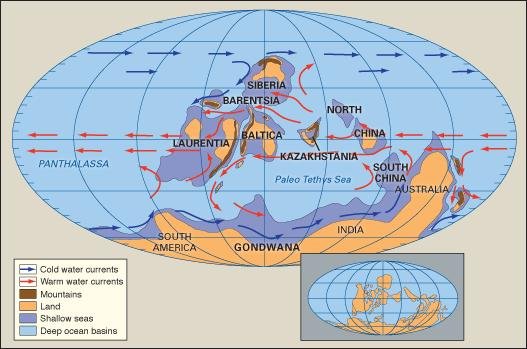
    And the land mass of Ancient times was different.

    With this, let us look at Indian history.

    The first major world war in indiay, called ten Kings war, Dadarjaniya war between two warring groups.

    Essentially there were two major tribes or groups in India.

    IT is worth remembering that the first Human being was Manuywho belonged to the southern hemisphere, called Dravida டிச.

    The term Man is from Manu.

    Manu had sons and a daughter.

    When a Tsunami struck South, he, along with his son left for Ayodhya.

    His son Ikshvaku founded the Surya Vamsa, Solar dynasty.

    His daughter, Ila, who was left behind in South, here south meaning from the Saraswathi valley to the present south india, running through the coast of Arabian sea, which was not called thus then.

    She married Chandra and had a son Budha.

    Then came Puru.

    This is the Lunar Dynasty, Chandra Vamsa.

    All dynasties of India can be traced back to these two dynasties including the Tamil Kings Chera, Chola and Pandyas.

    Please read my articles on Solar, Lunar and Tamil dynasties.

    There were sub dynasties like Yadu, Thurvasa.

    Some of these migrated outside Bharata kanda and settled around the world.

    Hence we find remains of Hinduism everywhere in the world.

    India’s name Bharat or Bharat-Varsh is named after a descendant of the Puru dynasty King Bharat.

    There were two main Vedic cultures in ancient India. The first was a northern kingdom centered on the Sarasvati-Drishadvati river region dominated by the Purus and the Ikshvakus. The second was a southern culture along the coast of the Arabian Sea and into the Vindhya Mountains, dominated by the Turvashas and Yadus and extending into groups yet further south. These northern and southern groups vied for supremacy and influenced each other in various ways as the Vedas and Puranas indicate. The northern or Bharata culture ultimately prevailed, making India the land of Bharata or Bharatavarsha and its main ancient literary record the Vedas, though militarily the Yadus remained strong throughout history….. ‘

    According to Puranic legend the Chandravanshi lineage is:
    Brahma -> Atri -> Chandra -> Budha (married to Manu’s daughterIla) -> Pururava -> Ayu -> Nahusha -> Yayati -> Puru andYadu

    King Yayati’s elder son Yadu had officially lost the title to govern by his father’s command since he had refused to exchange his youth with his father. Thereby, he could not have carried on the same dynasty, called Somvanshi. Consequently, the generations of King Puru, Paurav or Puruvanshi were the only one to be known as Somvansa.

    Yayati divided up his kingdom into five quarters (VP IV.10.1708). To Turvasha he gave the southeast (Bay of Bengal); to Druhya the west Gandhara; to Yadu the south (By Arabian sea); to Anu the north Punjab; and to Puru the center (Sarasvati region) as the supreme king of Earth’

    Luna dynasty (also known as Somavansha, Chandravansha and as Ailas) is one of the four principal houses of the Kshatriya varna, or warrior–ruling caste.This legendary dynasty was descended from the moon (Soma or Chandra), ,

    According to the Mahabharata, the dynasty’s progenitor Ilaruled from Prayag, while his son Shashabindu ruled in the country of Bahli.

    The great sage Vishvamitra the son of king Gadhi of Kanyakubja dynasty was a descendant of Amavasu, the son of Pururava of Chandravansha clan.

    Ila’s descendants, the Ailas (also known as Chandravansha), were a dynasty of kings of ancient India. Pururavas, the son of Budha was the founder of this dynasty.

    Reference and Citations.

    https://en.m.wikipedia.org/wiki/Lunar_dynasty

    https://en.m.wikipedia.org/wiki/Puru_(Vedic_tribe)