Tag: Bharathavarsha

  • Russian Influence on India,India  Part of Bharatha Varsha

    Russian Influence on India,India Part of Bharatha Varsha

    Russia and India have shared a special relationship throughout history, with the former being a significant contributor to India’s economic and political growth. While India has always been known as a land of cultural and religious diversity, few know about its traditional ties with Russia.

    The roots of Indian and Russian relations can be traced back to the ancient times when India was part of a larger region called ‘Bharatha Varsha.’ This region, consisting of present-day India, Pakistan, Bangladesh, Nepal, and parts of Tibet, was a cultural hub that fostered diverse philosophical and religious traditions.

    One of the significant contributions of Russia to India was in the field of literature. The Russian classics were translated into Indian languages, which played a significant role in shaping Indian literature.

    Another area of Russian influence on India is in the form of defense and technology. Russia remains one of India’s leading weaponry suppliers, including the acquisition of Sukhoi fighter jets, naval missiles, and tanks.

    The Indian and Russian relationship continues to flourish as both nations remain committed to strengthening their partnership. As the world becomes increasingly geo-politically complex, the bond between these two nations proves critical in maintaining stability and creating a peaceful world for future generations.

    I recently came across a research paper by a Russian researcher stating that Russia, not India, was responsible for giving the world the Vedas, Vimanas, philosophy, and sciences. This claim did not surprise me because of various pieces of evidence that suggest a strong connection between ancient Russia and India.

    Ancient India
    Ancient India , image by AI .

    Listen to the article below

    For instance, it is believed that the Vedas were composed in the Arctic, and Shiva and Ganesha left India through the western part of India, traveled to the Arctic to compose the Rig Veda, and returned to India through Russia. The Rig Vedic Swasthik Mandala City can be found in Arkaim, Russia, and Siberians worship Ayur Devatas, which many Hindus may not be aware of.

    Krishna’s son Pradhyumna founded the city of Port Baijn in Russia, which was called Sthree Varsha or the land of women ruled by women. Lake Baikal is also considered Vaikanasa Theertha, and Indra’s city Amravathi was in Russia. Moreover, the Russian Veda is known as Santi Veda, and the Caspian Sea is referred to as the Kashyap Sagar.

    Interestingly, India is referred to as Bhata Kande in the Sankalpa recited before any religious function. Bhata Kande means the continent of Bharatha, an ancient Indian emperor, and the land mass of which it forms a part is referred to as Bharatha Varsha. However, the term Bharatha Kande refers to Bharata’s continent to indicate India, suggesting a larger landmass beyond India.

    The Hindu system of tagging refers from the bigger to the smaller, indicating that Bharatha Kanda is Greater India. Therefore, Bharatavarsha, which is mentioned irrespective of where one lives, even in the US, Australia, or Europe, should refer to a larger landmass than Bharatha Kanda. This larger landmass is believed to be described in the concept of Bhu Mandala, the Earth. Geology has proven the existence of supercontinents like Pangea, Archea, and Rodinia, suggesting that the landmass in ancient times was quite huge.

    According to a research paper by a Russian researcher on the history of the world, it was Russia that gave the Vedas, Vimanas, philosophy, and sciences to the world, not India. The author of the paper suggests that the Vedas were composed in the Arctic, and Shiva and his son Ganesha traveled through the western world before arriving at the Arctic to compose the Rig Veda. They then returned to India through Russia. Additionally, the author claims that many Hindu deities and cities are found in Russia and that Lake Baikal is Vaikanasa Theertha.

    The author also explores the concepts of Bharatha Kanda and Bharatavarsha in Hinduism. The author suggests that Bharatavarsha encompasses the world and includes present-day Russia. Furthermore, the author suggests that the home of people in the Bhu Loka was Bharatavarsha.

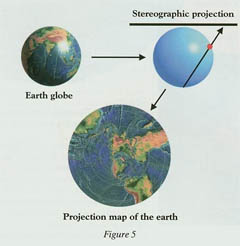
    The Bhagavatam describes Bhu-mandala as a planisphere, or a polar-projection map of the Earth globe. The stereo-graphic projection method can be used to map a modern Earth globe onto a plane, resulting in a flat projection called a planisphere. Bhu-mandala can be viewed as a stereo-graphic projection of a globe, similar to ancient Indian globes. The purpose of these globes was astronomical, rather than geographical.

    In conclusion, the author suggests that present-day Russia was the cradle of Hinduism and that Bharatavarsha encompassed the world, including India and Russia. The author also explores the concept of Bhu-mandala as a planisphere and stereo-graphic projection of a globe in Hinduism.

    This article was rewritten by www.chat .openai.com from my article Bharathavarsha is not India.

    The present Article is translated into Podcast by https://readloud.net/english/british/1-male-voice-brian.html

    Some interesting articles in the following links.

    https://en.m.wikipedia.org/wiki/Hinduism_in_Russia

    https://swarajyamag-com.cdn.ampproject.org/v/s/swarajyamag.com/amp/story/world%2Fancient-bonds-to-esoteric-doctrines-some-forgotten-hindu-russian-connections?amp_gsa=1&amp_js_v=a9&usqp=mq331AQIUAKwASCAAgM%3D#amp_tf=From%20%251%24s&aoh=16795417003388&referrer=https%3A%2F%2Fwww.google.com&ampshare=https%3A%2F%2Fswarajyamag.com%2Fworld%2Fancient-bonds-to-esoteric-doctrines-some-forgotten-hindu-russian-connections

    https://hinduexistence.org/2012/12/25/anti-iskcon-hindu-propaganda-status-of-hindus-in-present-russia-moscows-only-iskcon-temple-facing-threat-to-demolish-under-the-sanction-of-orthodox-christian-church/hindu-influence-in-russia-2/

    18 Million views,8708 Articles.

    Join 4,576 other subscribers

    Leave a Reply

    Subscribe to my podcast

  • Bharatavarsha Is Not India

    Recently I came across a research paper by a Russian researcher on the history of the world that it was Russia which gave  the Vedas, The Vimanas, Philosophy And the sciences to the world and not India.

    I was not surprised.

    Because,

    The Vedas were composed in the Arctic,

    Shiva with his son Ganesha left India through the western part of India, traveled through the western world before arriving at the Arctic to compose the Rig Veda .

    He returned to India with His son through Russia,

    Rig Vedic  Swasthik Mandala City is found in Arkaim, Russia,

    Siberians worship Ayur Devatas,(many Hindus are not aware of these Devathas!)

    Krishna’s son Pradhyumna founded the city of Port Baijn,

    Russia was called Sthree varsha, Land of women ,ruled by women,

    Lake Baikal is Vaikanasa Theertha,

    Indra’s city Amravathi was in Russia,

    Russian Veda is Santi Veda

    Caspian sea is the Kashyap Sagar……

    and there is another puzzle,

    In Sankalpa,which a Hindu recites, which  points out where he is when he performs his duties (please read my article on this, Sankalpa, Geo-tagging),  States,

    Aadhya Brahmanah,

    Dwdheeya Paraarthe,

    Swetha Varaha Kalpe,

    Vaivaswatha Manvantare,

    Astavikum Sathi tha me.

    Kali Yuge,

    Pradhame padhe.

    Jambooth Dweepe,

    Bharata Varshe,

    Bharata Kande,

    Merooh,…………’

    The point is it is already stated as Bharatha Varshe as a land mass .

    then why the the term Bharatha kande, Bharata’s Continent to indicate India?

    Hindu system of tagging is from the  Bigger to to smaller.

    If Bharatha Kanda is India,Greater India , what is Bharat Varsha?

    It should be a bigger landmass.

    Evidence of super  continents like Pangea, Archea, Rodinia are proved by Geology .

    The land mass was quite huge.

    So the reference to Bharatavarsha is to a larger landmass than Bhartaha Kanda, the land of Bharatha, currently referred to as India.

    Another pointer in this direction is that, it is tradition to say Bharatavarsha, irrespective of here one lives, even if he were to be  in the US, Australia or Europe.

    The answer to the puzzle lies in the description of Bhu Mandala, The Earth.

    Bhu Mandala, description of Earth. Hinduism
    Bhu Mandala, description of Earth.

    The region within the shell  is called the Brahmanda, or “Brahma egg.” It contains an earth disk or plane—called Bhu-mandala—that divides it into an upper, heavenly half and a subterranean half, filled with water.Bhu-mandala is divided into a series of geographic features, traditionally called dvipas, or “islands,” varshas, or “regions,” and oceans.

    Earth , Bhu Mandala Projection.
    Earth , Bhu Mandala Projection.

    In the center of Bhu-mandala is the circular “island” of Jambudvipa, with nine varshasubdivisions. These include Bharata-varsha, which can be understood in one sense as India and in another as the total area inhabited by human beings. In the center of Jambudvipa stands the cone-shaped Sumeru Mountain, which represents the world axis and is surmounted by the city of Brahma, the universal creator.

    We begin by discussing the interpretation of Bhu-mandala as a planisphere, or a polar-projection map of the Earth globe. This is the first model given by the Bhagavatam. A stereo-graphic projection is an ancient method of mapping points on the surface of a sphere to points on a plane. We can use this method to map a modern Earth globe onto a plane, and the resulting flat projection is called a planisphere

    Projection of Earth
    Projection of Earth

    We can likewise view Bhu-mandala as a stereo-graphic projection of a globe

    Inner Portion of Bhu Mandala
    Inner Portion of Bhu Mandala

    In India such globes exist. In the example shown here .

    Greater India shown in BhuLoka.
    Greater India shown in BhuLoka.

     the land area between the equator and the mountain arc is Bharata-varsha, corresponding to greater India. India is well represented, but apart from a few references to neighboring places, this globe does not give a realistic map of the Earth. Its purpose was astronomical, rather than geographical..”

    Hence, considering these facts it is reasonable to postulate that the Bharatavarsha encompassed the world and indeed the present Russia was the cradle of Hinduism.

    Bharatha Kanda was a part of Bharatavarsha, which included the present Russia.

    And the home of people in the Bhu Loka was Bharatavarsha.

    I  shall be writing on Jamboodweepa,astronomical projection of the world in Hinduism.

    Reference and Citation.

    Material quoted here is in Public interest and for spreading the scientific base of Sanatana Dharma and no commercial motive is intended

    http://www.krishna.com/universe-vedas

    Copy Right Note by Krishna.com.

    Krishna.com grants you a limited license to access and make personal use of this Site and not to download (other than page caching) or modify any portion of it, except with express written consent of Krishna.com. You may print or download Materials on the Site for your personal, non-commercial use, provided you keep intact all copyright and other proprietary notices. You may not engage in systematic retrieval of data or other Materials from this Site to create or compile, directly or indirectly, a collection, compilation, database or directory without express written permission from the BBTI. Nor may you mirror on your own site the home page or results pages of this Site. Use of the Materials on this Site for any purpose not expressly permitted in these Terms and Conditions of Use is prohibited.

    Related.

    Sankalpam Geo Tagging

    Super continent Hinduism