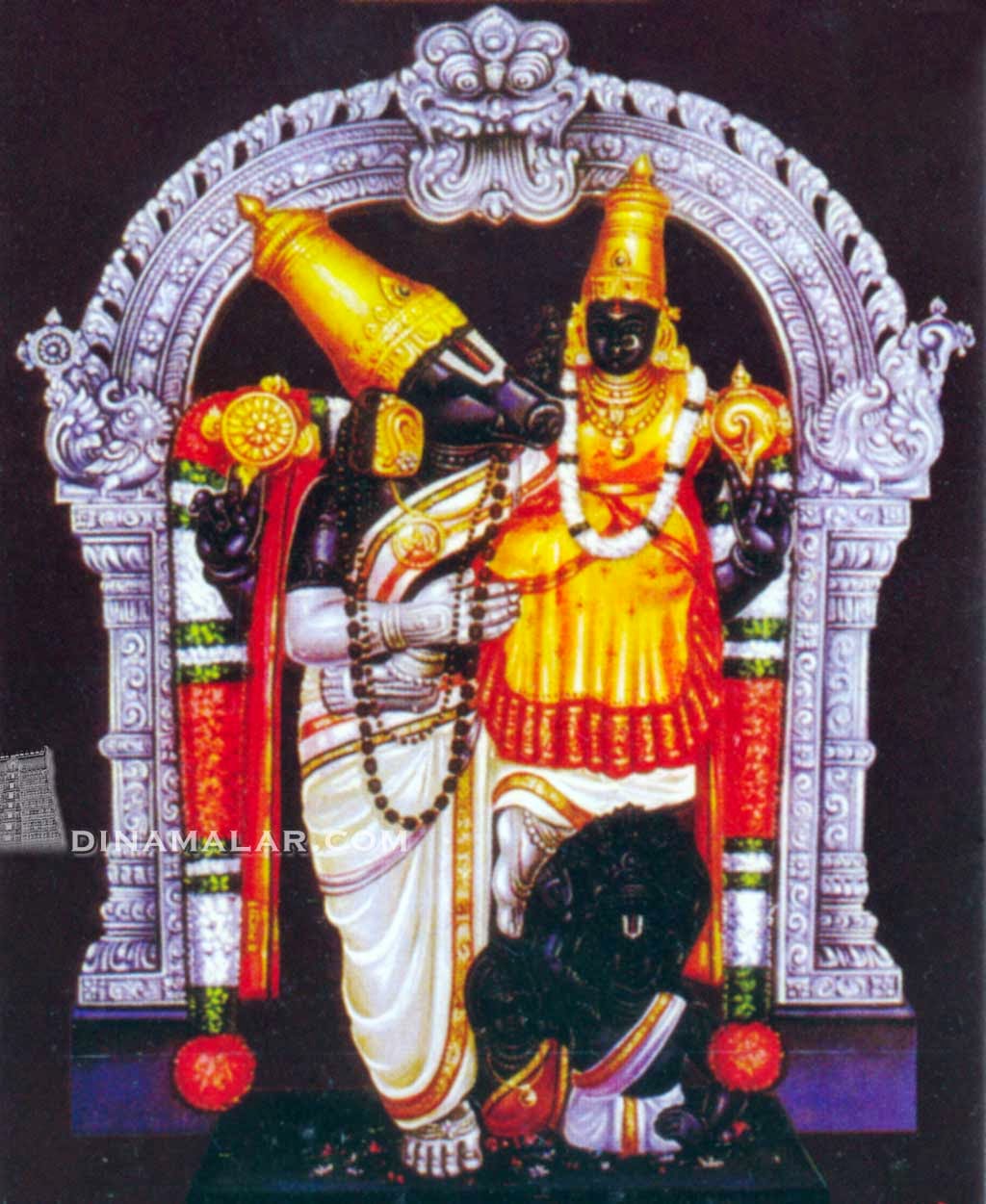
Tag: Bhakti Yoga

  • Approach God Mother Amba Thaayaar Details

    Approach God Mother Amba Thaayaar Details

    The approach to God and Goddess in Hinduism is highly personal.

    One can experience Godhood through either emotions or Reason.

    Reason is a double edged sword.

    The moment you think you have arrived at a conclusion,your mind questions you and you become indecisive.

    Mind is constantly in turmoil.

    Hinduism calls Mind,which is also called one of the senses of Perception,is an impediment to self realisation or reaching God.

    The use of Intellect,which operates at a higher level than Mind, in self realisation or God,comes under Gnana and Karma Yoga.

    These two Yogas are difficult to practice.

    The Emotional route to Self Realisation or God is Bhakti Yoga.

    Bhakti Yoga needs one important approach.

    That of emotional attachment.

    And the Will to surrender to God.

    This ,too,is difficult.

    Hinduism has devised a way to facilitate this.

    Whatever one may say,it is heart that rules over reason.

    So Hinduism approaches the issue from this angle.

    It allows people to relate to God through personal relationship.

    You can worship God as Mother,Father, Brother, Sister,Friend,Guide,Lover….

    Human beings warm to relationships.

    Once when one is attached to God in this frame of Mind,realising God becomes easy.

    One such intimate relationship is Mother.

    This relationship is universal and supercedes all relationships.

    Therefore Hinduism relies heavily on this concept.

    Those who follow Saivism call Goddess as Amba,meaning Mother.

    And those who follow Vaishnavam call Goddess as Thaayaar,Mother.

    The male representation of God concept is incomplete without the female aspect God,Goddess.

    Shiva is conceived with Shakti and Vishnu with Sri,Lakshmi.

  • Ultimate Prayer For Vishnu Grace Gajendra Moksha

    What is the purpose of Prayer?

    One prays whe one is faced with a problem one can not surmount.

    It may be by persons or events beyond our control.

    Prayer is highly individualistic and personal.

    Vishnu's Discus.
    Vishnu’s Discus.gif

    Prayers are the tools through which we connect to God/Reality.

    One approaches God in the Form he is comfortable with in communicating.

    One may not hear the answer.

    But I have experienced that prayers are heard.

    Sometimes what we pray, we may not get.

    I recall Shakespeare thus,


    ‘We, ignorant of ourselves, Beg often our own harms, which the wise powers Deny us for our good; so find we profit By losing of our prayers.’ Shakespeare.

    How true?

    When I look back now on the Prayers that remained unanswered in the past,I realize that in the broad masaic of one’s life, in this case, mine,they remained best unanswered.

    Had they been answered the way I wanted them to be, I would in a sorry shape now.

    In short,Prayers, answered to our liking or not,are boons.

    One gets relieved of the tensions associated with problems once he prays.

    That is enough.

    But self styled Raionalists who are self made, who know what would happen next, when they would die, may try to explain away by saying that the process of prayer is Catharisis and it is a psychological process and it has nothing to do with prayer.

    Me?

    I am not a rationalist.

    I go by what has worked for me and I do not call what I can not understand as  non sense and unscientific.

    My issue is not to find faults with others’ value systems but to find solution to my problem.

    This is my approach.

    Hinduism understands the emotional needs and what emotional connect can mean to an individual facing crisis.

    So there are prayers.

    At the same time Hinduism states that one can not escape the fruits of one’s actions,thus effectively nullifying Prayer.

    Yet prayers have delivered.

    How?

    I do not know.

    And there are people who have followed mantras and visited Virupaksha Temple in Mulabagal for Autism Cure, reported marked improvement in the children.

    They followed procedures detailed in this blog.

    Three have reported improvement.

    Apart from my personal experiences,readers of this blog, who have been childless , some ,for over twelve years,have been blessed with child after following the Shasti vrata as explained in this blog.

    The number of people who were blessed, as of now, is 12.

    I can only say that it is the result of their faith and meticulous following of the procedures.

    The ultimate prayer one must follow is that wants nothing in return.

    This is what is most useful for what we need keeps on changing and the more one gets,sadder he becomes later because of what he asked for.

    So God knows what is good for you and you need not ask for it for a mother knows what is needed for the child.

    I recall a commentary on the last sloka of Soundaryalahari by Adi Shankaracharya.

    Pradeepajjwaalaabhirdivasakaraneeraajanavidhihi
    Sudhaasootheyshchandropalajalalavairarghyarachanaa!
    Svakeeyairambhobhihi Salilanidhisouhithyakaranam
    Thvadeeyaabhirvaagbhisthava Janani Vaachaam Sthuthiriyam!”
    Literal Meaning:” Just as doing ‘niraanjana'( the flame waving ritual)to the sun is only the offering of his own light to him; just as making an offering of arghya to the moon with water that oozes out of the moon-stone is only to give back what belongs to the moon, and just making ‘tharpana’ (water-offering) to the ocean is to return what belongs to it, -so is, O source of all Learning, this hymn is addressed to Thee composed of words that are already Thine.”.
    The commentator says thus.
    ‘It is mandatory for sloka grammar that one should offer some thing to be favoured with Your Grace.
    But what can I offer you which is not Thine?
    Everything in the Universe including my body, mind ,speech and mind are Yours.
    So what can I offer that is not yours?
    Yes, I can offer my ignorance.
    This , I offer to you.
    Hold on,
    Even this I can not for even this ignorance is yours for nothing can be beyond You.
    In this spirit please accept mt prayers.
    What an approach to prayer and God!
    One can find similar thought in the Gajendra Stuthi of Lord Vishnu by an elephant.
    In my view one of the greatest prayers for self realization and surrender to God.
    The Gajendra Stuthi.
    GAJENDRA’S PRAYERS OF SURRENDER TO LORD VISHNU ::
    [Skandha 8 Chapter 3]

    गजेन्द्र उवाच
    shri-ganjendra uvachaGajendra said:

    ॐ नमो भगवते तस्मै यत एतच्चिदात्मकम् ।
    पुरुषायादिबीजाय
    परेशायाभिधीमहि॥2॥
    om namo bhagavate tasmai yata  etac chid-atmakam

    purushayadi-bijaya pareshayabhidhimahi  -2

    यस्मिन्निदं यतश्चेदं येनेदं
    य इदं स्वयम्|
    योऽस्मातपरस्माच्च परस्तं प्रपद्ये स्वयम्भुवम्।।३।।
    yasminn idam yatash chedam yenedam  ya idam svaya yo ‘smat parasmach cha paras
    tam  prapadye svayambhuvam -3

    जिनके प्रवेश करने पर (जिनकी चेतना को
    पाकर) ये जड शरीर और मन आदि भी चेतन बन जाते हैं, “ॐ” शब्द के द्वारा लक्षित तथा
    सम्पूर्ण शरीरों में प्रकृति एवं पुरुष रुप से प्रविष्ट हुए उन सर्वसमर्थ परमेश्वर
    को हम मन-ही-मन नमन करते हैं।।२।।
    जिनके सहारे यह विश्व टिका है, जिनसे यह
    निकला है, जिन्होंने इसकी रचना की है और जो स्वयं ही इसके रुप में प्रकट हैं-फिर भी
    जो इस दृश्य जगत् से एवं उसकी कारणभूता प्रकृति से सर्वथा परे (विलक्षण) एवं
    श्रेष्ठ हैं-उन अपने-आप-बिना किसी कारण के-बने हुए भगवान् की मैं शरण लेता
    हूँ।।३।।
    I salute the Supreme, Omnipotent  Lord, who is denoted by the mystical syllable OM, who forms the bodies a prakriti,  and dwells in them as purusha, the Self-efficient Lord, from whom this  universe emanates, and in whom it lives, who is verily the universe itself, yet  beyond it as its unmanifest cause.
    *****

    यः स्वात्मनीदं निजमाययार्पितं क्वचिद्विभातं क्व च
    तत्तिरोहितम्।
    अविद्धदृक् साक्ष्युभयं तदीक्षते स आत्ममूलोऽवतु मां
    परात्परः।।४।।
    yah svatmanidam  nija-mayayarpitam kvachid vibhatam kva cha
    tat tirohitamaviddha-drik sakshy ubhayam  tad ikshate sa atma-mula
    ‘vatu mam parat-paraha – 4

    अपनी संकल्प-शक्ति के द्वारा अपने ही स्वरुप
    में रचे हुए और इसीलिये सृष्टिकाल में प्रकट और प्रलयकाल में उसी प्रकार अप्रकट
    रहनेवाले इस शास्त्रप्रसिद्ध कार्य-कारण रुप जगत् को जो अकुण्ठित-दृष्टि होने के
    कारण साक्षी रुप से देखते रहते हैं-उनसे लिप्त नहीं होते, वे चक्षु आदि प्रकाशकों
    के भी परम प्रकाशक प्रभु मेरी रक्षा करें।।४।।
    He is the unimpeded Awareness and  the Witness of all, who by his own Maya (power) has established in Himself this  universe, which is seen in its manifested condition and not-seen in its causal  state by others, but is witnessed by Himself in both these conditions. He is  the Self-conscious awareness, from whom all other centers of self-conscious  awareness (Jivas) arise.  I seek refuge  in that Being, transcending all the highest human conceptions of Him.
    *****

    कालेन
    पञ्चत्वमितेषु कृत्स्नशो लोकेषु पालेषु च सर्वहेतुषु।
    तमस्तदाऽऽसीद् गहनं गभीरं
    यस्तस्य पारेऽभिविराजते विभुः।।५।।
    kalena pancatvam iteshu  kritsnasho
    lokeshu paleshu cha sarva-hetushu
    tamas tadasid gahanam gabhiram  yas
    tasya pare ‘bhivirajate vibhuhu – 5

    समय के प्रवाह से सम्पूर्ण लोकों के
    एवं ब्रह्मादि लोकपालों के पंचभूतों में प्रवेश कर जाने पर तथा पंचभूतों से लेकर
    महत्तत्त्वपर्यन्त सम्पूर्ण कारणों के उनकी परमकारणरुपा प्रकृति ही बच रही थी। उस
    अन्धकार के परे अपने परम धाम में जो सर्वव्यापक भगवान् सब ऒर प्रकाशित रहते हैं, वे
    प्रभु मेरी रक्षा करें।।५।।
    When all the worlds and their illuminaries  and protectors like Brahma had been dissolved or reduced to their primeval  state by the power of Time and only the fathomless darkness or ignorance in the  shape of the Unmanifest  prevailed, at  that time He, the Supreme Light of Consciousness shone undimmed over such  darkness.
    *****

    न यस्य देवा ऋषयः पदं
    विदुर्जन्तुः पुनः कोऽर्हति गन्तुमीरितुम्।
    यथा नटस्याकृतिभिर्विचेष्टतो
    दुरत्ययानुक्रमणः स मावतु।।६।।
    na yasya deva rishayah padam  vidur jantuh
    punah ko ‘rhati gantum iritum
    yatha natasyakritibhir  vicheshtato
    duratyayanukramanah sa mavatu – 6

    भिन्न-भिन्न रुपों में नाट्य करने वाले
    अभिनेता के वास्तविक स्वरुप को जिस प्रकार साधारण दर्शक नहीं जान पाते, उसी प्रकार
    सत्त्वप्रधान देवता अथवा ऋषि भी जिनके स्वरुप को नहीं जानते, फिर दूसरा साधारण जीव
    तो कौन जान अथवा वर्णन कर सकता है-वे दुर्गम चरित्र वाले प्रभु मेरी रक्षा
    करें।।६।।
    The spectators in a drama do not  understand the identity of an actor because of his make up and diverse actions  on the stage. So too, the Gods and the Sages do not comprehend Him, The Lord,  who is disguised in His own Yoga Maya. How then an ordinary person, much less  an animal like me, can understand or describe anything about His inscrutable  ways? May that Lord, whom none knows, in truth and in reality, protect me!
    *****

    दिदृक्षवो यस्य
    पदं सुमंगलं विमुक्तसंगा मुनयः सुसाधवः।
    चरन्त्यलोकव्रतमव्रणं वने भुतात्मभूताः
    सुह्रदः स मे गतिः।।७।।
    didrikshavo yasya padam  sumangalam vimukta-sanga
    munayah susadhavaha
    charanty aloka-vratam avranam  vane bhutatma-bhutah
    suhridah sa me gatihi. – 7

    आसक्ति से सर्वथा छूटे हुए, सम्पूर्ण
    प्राणियों में आत्मबुद्धि रखने वाले, सबके अकारण हितू एवं अतिशय साधु-स्वभाव मुनिगण
    जिनके परम मंगलमय स्वरुप का साक्षात्कार करने की इच्छा से वन में रहकर अखण्ड
    ब्रह्मचर्य आदि अलौकिक व्रतों का पालन करते हैं, वे प्रभु ही मेरी गति हैं।।७।।

    Let that Lord be my refuge, whom  the sages, giving up all attachments for worldly attractions, wandering in the  forests and performing incessant penances, search for.
    *****

    न विद्यते यस्य च जन्म कर्म वा न नामरुपे
    गुणदोष एव वा।
    तथापि लोकाप्ययसम्भवाय यः स्वमायया यः
    तान्यनुकालमृच्छति।।८।।
    na vidyate yasya cha janma  karma va na nama-rupe
    guna-dosha eva va tathapi lokapyaya-sambhavaya  yaha sva-mayaya tany
    anukalam ricchati – 8

    जिनका हमारी तरह कर्मवश न तो जन्म होता है और न
    जिनके द्वारा अहंकारप्रेरित कर्म ही होते हैं, जिनके निर्गुण स्वरुप का न तो कोई
    नाम है न रुप ही, फिर भी जो समयानुसार जगत् की सृष्टि एवं प्रलय (संहार)-के लिये
    स्वेच्छा से जन्म आदि को स्वीकार करते हैं।।८।।
    He who has neither birth nor
    actions to perform, neither name and form nor is subject to the Gunas of  Prakriti,  and yet assumes all these  through His inherent power of Maya from time to time for the creation, preservation  and dissolution of the universe – to that Supreme Being, I bow down !
    *****

    तस्मै नमः परेशाय
    ब्रह्मणेऽनन्तशक्तये।
    अरुपायोरुरुपाय नम आश्चर्यकर्मणे।।९।।
    tasmai namah pareshaya brahmane  ‘nanta-shaktayearupayoru-rupaya nama  ashcarya-karmane – 9

    उन अनन्तशक्तिसम्पन्न परब्रह्म परमेश्वर को नमस्कार
    है। उन प्राकृत आकार रहित एवं अनेकों आकारवाले अद्भुतकर्मा भगवान् को बार-बार
    नमस्कार है।।९।।
    To Him, the Brahman, the  formless, who, yet assumes infinite forms and performs amazing deeds, to that Supreme Being, I bow down!
    *****

    नम आत्मप्रदीपाय साक्षिणे परमात्मने।
    नमो गिरां
    विदूराय मनसश्चेतसामपि।।१०।।
    nama atma-pradipaya sakshine  paramatmanenamo giram viduraya manasash  chetasam api.-10

    स्वयंप्रकाश एवं सबके
    साक्षी परमात्मा को नमस्कार है। उन प्रभु को, जो मन, वाणी एवं चित्तवृत्तियों से भी
    सर्वथा परे हैं, बार-बार नमस्कार है।।१०।।
    I bow down to the Lord who cannot be reached by speech or by the mind or by diverse mental faculties and who
    remaining as a witness to all phenomena of the world, illumines it!

    *****
    सत्त्वेन प्रतिलभ्याय नैष्कर्म्येण विपश्विता
    नमः कैवल्यनाथाय
    निर्वाणसुखसंविदे।।११।।
    sattveno pratilabhyaya naishkarmyena  vipashcita namah kaivalya-nathaya nirvana-sukha-samvide  -11

    विवेकी पुरुष के
    द्वारा सत्त्वगुण विशिष्ट निवृत्तिधर्म के आचरण से प्राप्त होने योग्य, मोक्ष-सुख
    के देने वाले तथा मोक्ष-सुख की अनुभूति रुप प्रभु को नमस्कार है।।११।।
    I bow down to the Lord who is  attainable by a wise man through purity of mind, to the Lord who is the bestower  of final beatitude, who is Wisdom and Bliss.

    *****

    नमः शान्ताय घोराय मूढाय गुणधर्मिणे।
    निर्विशेषाय साम्याय नमो
    ज्ञानघनाय च।।१२।।
    namah shantaya ghoraya mudhaya  guna-dharmine nirvisheshaya samyaya namo  jnana-ghanaya cha -12

    सत्त्वगुण को
    स्वीकार करके शान्त, रजोगुण को स्वीकार करके घोर एवं तमोगुण को स्वीकार करके मूढ-से
    प्रतीत होने वाले, भेदरहित; अतएव सदा समभाव से स्थित ज्ञानघन प्रभु को नमस्कार
    है।।१२।।
    I bow down to the Lord who  through assumption of three Gunas appears as calm and peaceful (due to absence  of desire, greed, and anger), who is terrible (on account of destroying the  wicked), who is devoid of all distinctions, who is without any modifications,  remains same always and in all places and who is wisdom crystallized.
    *****

    क्षेत्रज्ञाय
    नमस्तुभ्यं सर्वाध्यक्षाय साक्षिणे।
    पुरुषायात्ममूलाय मूलप्रकृतये
    नमः।।१३।।
    ksetra-jnaya namas tubhyam sarvadhyakshaya  sakshine purushayatma-mulaya mula-prakritaye  namaha – 13

    शरीर, इन्द्रिय आदि के
    समुदायरुप सम्पूर्ण पिण्डों के ज्ञाता, सबके स्वामी एवं साक्षीरुप आपको नमस्कार है।
    सबके अन्तर्यामी, प्रकृति के भी परम कारण, किंतु स्वयं कारण रहित प्रभु को नमस्कार
    है।।१३।।
    I bow down to the Lord who is the  Knower of the field (body), who is presiding over and witnessing everything,  who is the source of spirit and matter ( atman and prakriti) and who is the  Original Being (Mula Prakriti).

    *****

    सर्वेन्द्रियगुणद्रष्ट्रे सर्वप्रत्ययहेतवे।
    असताच्छाययोक्ताय
    सदाभासाय ते नमः।।१४।।
    sarvendriya-guna-drashtre sarva-pratyaya-hetave asata cchayayoktaya sad-abhasaya  te namaha -14

    सम्पूर्ण इन्द्रियों
    एवं उनके विषयों के ज्ञाता, समस्त प्रतीतियों के कारणरुप, सम्पूर्ण जड-प्रपञ्च एवं
    सबकी मूलभूता अविद्यारुप के द्वारा सूचित होने वाले तथा सम्पूर्ण विषयों में
    अविद्यारुप से भासने वाले आपको नमस्कार है।।१४।।
    I bow down to the Lord, who is  the perceiver of all organs of perception and their objects, who makes all
    the  concepts and precepts possible, whose true nature is made known by bestowing  consciousness to the ego (I-sense) just as the   substance  behind a shadow.
    *****

    नमो नमस्तेऽखिलकारणाय निष्कारणायाद्भुतकारणाय।

    सर्वागमाम्नायमहार्णवाय नमोऽपवर्गाय परायणाय।।१५।।
    namo namas te‘khila-karanaya nishkaranayadbhuta-karanaya sarvagamamnaya-maharnavaya
    namo‘pavargaya  parayanaya -15

    सबके कारण किन्तु स्वयं कारणरहित तथा कारण
    होने पर भी परिणामरहित होने के कारण अन्य कारणों से विलक्षण कारण आपको बारम्बार
    नमस्कार है। सम्पूर्ण वेदों एवं शास्त्रों के परम तात्पर्य, मोक्षरुप एवं श्रेष्ठ
    पुरुषों की परम गति भगवान् को नमस्कार है।।१५।।
    You are the cause of all the  causes, but you yourself are not the effect of any cause. You are the wonderful
    cause because the ordinary causes undergo change when they become the effects,  but you produce the world without undergoing any change. You are the scriptures  and you are the ocean into which all the scriptures flow. You are the bliss of  salvation and the refuge of great souls. I bow down to you.
    *****

    गुणारणिच्छन्नचिदुष्मपाय तत्क्षोभविस्फूर्जितमानसाय।
    नैष्कर्म्यभावेन
    विवर्जितागमस्वयंप्रकाशाय नमस्करोमि।।१६।।
    gunarani-cchanna-chid-ushmapaya
    tat-kshobha-visphurjita-manasaya
    naishkarmya-bhavena vivarjitagama
    svayam-prakashaya namas karomi -16

    जो त्रिगुणरुप काष्ठों में छिपे हुए
    ज्ञानमय अग्नि हैं, उक्त गुणों में हलचल होने पर जिनके मन में सृष्टि रचने की
    बाह्यवृत्ति जाग्रत् हो जाती है तथा आत्मतत्त्व की भावना के द्वारा विधि-निषेधरुप
    शास्त्र से ऊपर उठे हुए ज्ञानी महात्माऒं में जो स्वयं प्रकाशित रहते हैं, उन प्रभु
    को मैं नमस्कार करता हूँ।।१६।।
    I bow down to you. who are the  spiritual fire of consciousness which remains hidden in the fire-wood of  prakriti’s gunas. When the equilibrium of gunas is disturbed, there arises in  you the will to create. You shine by your own luster in the minds of those who  having given up the scriptures and actions prescribed in them and keep  themselves engaged in your contemplation.
    *****

    मादृक्प्रपन्नपशुपाशविमोक्षणाय मुक्ताय
    भूरिकरुणाय नमोऽलयाय।
    स्वांशेन सर्वतनुभृन्मनसि प्रतीतप्रत्यग्दृशे भगवते बृहते
    नमस्ते।।१७।।
    madrik  prapanna-pashu-pashu-vimokshanaya muktaya
    bhuri-karunaya namo‘layaya
    svamshena sarva-tanu-bhrin-manasi
    pratita-pratyag-drishe bhagavatebrihate Namaste -17

    मुझ-जैसे शरणागत
    पशुतुल्य (अविद्याग्रस्त) जीव की अविद्यारुप फाँसी को सदा के लिये पूर्णरुप से काट
    देने वाले अत्यधिक दयालु एवं दया करने में कभी आलस्य न करने वाले नित्यमुक्त प्रभु
    को नमस्कार है। अपने अंश से सम्पूर्ण जीवों के मन में अन्तर्यामी रुप से प्रकट रहने
    वाले सर्वनियन्ता अनन्त परमात्मा आपको नमस्कार है।।१७।।
    I bow down to you who bless  ignorant creatures like me by severing our binding fetters of ignorance; who  are ever free yourself and ever- watchful in bestowing your mercy to save the  devotees and who by an atom of yourself shine in all embodied beings as  individualized self-consciousness without any mutilation to yourself as the  Absolute Being and the Absolute Will.
    *****

    आत्मात्मजाप्तगृहवित्तजनेषु सक्तैर्दुष्प्रापणाय गुणसंगविवर्जिताय।

    मुक्तात्मभिः स्वह्रदये परिभाविताय ज्ञानात्मने भगवते नम ईश्वराय।।१८।।

    atmatma-japti-griha-vitta-janeshu  saktair dushprapanaya
    guna-sanga-vivarjitaya
    muktatmabhih sva-hridaya  paribhavitaya
    jnanatmane bhagavate nama ishvaraya -18

    शरीर, पुत्र, मित्र, घर,
    सम्पत्ति एवं कुटुम्बियों में आसक्त लोगों के द्वारा कठिनता से प्राप्त होने वाले
    तथा मुक्त पुरुषों के द्वारा अपने ह्रदय में निरन्तर चिन्तित ज्ञानस्वरुप,
    सर्वसमर्थ भगवान् को नमस्कार है।।१८।।
    I bow down to you who are the
    embodiment of Pure consciousness and the Lord of all who, though indweller of
    all, are difficult to approach by those who are attached to their own body, to
    relations like wife, children, kith and kin, and to possessions like property
    wealth etc. You are beyond the gunas of prakriti though functioning through
    them and who are immediately perceived in the cavity of their hearts by those
    who  are free from ignorance.
    *****

    यं धर्मकामार्थविमुक्तिकामा
    भजन्त इष्टां गतिमाप्नुवन्ति।
    किं त्वाशिषो रात्यपि देहमव्ययं करोतु मेऽदभ्रदयो
    विमोक्षणम्।।१९।।
    yam  dharma-kamartha-vimukti-kama bhajanta ishtam gatim
    apnuvanti
    kim chashisho raty api deham  avyayam karotu me‘dabhra-dayo
    vimokshanam – 19

    जिन्हें धर्म, अभिलषित भोग, धन एवं मोक्ष की कामना से
    भजने वाले लोग अपनी मनचाही गति पा लेते हैं, अपितु जो उन्हें अन्य प्रकार के अयाचित
    भोग एवं अविनाशी पार्षद शरीर भी देते हैं, वे अतिशय दयालु प्रभु मुझे इस विपत्ति से
    सदा के लिये उबार लें।।१९।।
    O Lord! You gave Dharma, Artha,  Kama and Moksha
    to those who seek them from you and even bestow them with final  Bliss. You, who
    are so merciful, may be pleased to liberate me from the grip of  the crocodile
    and also from the cycle of births and deaths.
    *****

    एकान्तिनो यस्य
    न कञ्चनार्थं वाञ्छन्ति ये वै भगवत्प्रपन्नाः।
    अत्यद्भुतं तच्चरितं सुमंगलं
    गायन्त आनन्दसमुद्रमग्नाः।।२०।।
    ekantino yasya na  kanchanartham vanchanti ye
    vai bhagavat-prapannaha
    aty-adbhutam tach-charitam  sumangalam gayanta
    ananda-samudra-magnaha – 20

    जिनके अनन्य भक्त- जो वस्तुतः एकमात्र उन
    भगवान् के ही शरण हैं- धर्म, अर्थ आदि किसी भी पदार्थ को नहीं चाहते, अपितु उन्हीं
    के परम मंगलमय एवं अत्यन्त विलक्षण चरित्रों का गान करते हुए आनन्द के समुद्र के
    गोते लगाते रहते हैं।।२०।।
    Your devotees who take refuge in  you do not ask
    for anything except you. They are immersed in the ocean of bliss  by singing
    your glories and wonderful stories.
    *****

    तमक्षरं ब्रह्म परं
    परेशमव्यक्तमाध्यात्मिकयोगगम्यम्।
    अतीन्द्रियं सूक्ष्ममिवातिदूरमनन्तमाद्यं
    परिपूर्णमीडे।।२१।।
    tam aksharam brahma param  paresham avyaktam
    adhyatmika-yoga-gamyam
    atindriyam sukshmam ivatiduram  anantam adyam
    paripurnam ide – 21

    उन अविनाशी, सर्वव्यापाक, सर्वश्रेष्ठ, ब्रह्मादि के
    भी नियामक, अभक्तों के लिये अप्रकट होने पर भी भक्तियोग द्वारा प्राप्त करने योग्य,
    अत्यन्त निकट होने पर भी माया के आवरण के कारण अत्यन्त दूर प्रतीत होनेवाले,
    इन्द्रियों के द्वारा अगम्य तथा अत्यन्त दुर्विज्ञेय, अन्तरहित किन्तु सबके आदि
    कारण एवं सब ऒर से परिपूर्ण उन भगवान् की मैं स्तुति करता हूँ।।२१।।
    I glorify
    that Imperishable  Being, the Brahman, the overlord of Brahma and others, the
    one who is not  perceivable by the senses and the mind, the Being who is
    attainable only by  meditation, the Being who is subtle and infinite, the one
    though closest to all  but appears to be far to the ignorant, the one who is
    ancient, without  beginning or end and who is fully perfect.
    *****

    यस्य ब्रह्मादयो देवा वेदा लोकाश्चराचराः।
    नामरुपविभेदेन फलव्या च कलया
    कृताः।।२२।।
    yasya bramadayo deva veda  lokash characharaha

    nama-rupa-vibhedena phalgvya  cha kalaya kritaha – 22

    ब्रह्मादि समस्त
    देवता, चारों वेद तथा सम्पूर्ण चराचर जीव नाम और आकृति के भेद से जिनके अत्यन्त
    क्षुद्र अंश के द्वारा रचे गये हैं।।२२।
    Brahma and the other gods, the
    Vedas, living and non-living beings with varied names and forms are all made
    out of a small part of the Supreme Being.
    *****

    यथार्चिषोऽग्नेः
    सवितुर्गभस्तयो निर्यान्ति संयान्त्यसकृत् स्वरोचिषः।
    तथा यतोऽयं गुणसम्प्रवाहो
    बुद्धिर्मनः खानि शरीरसर्गाः।।२३।।
    yatharchisho‘gneh savitur  gabhastayo
    niryanti samyanty asakrit sva-rochishaha
    tatha yato‘yam guna-sampravaho
    buddhir manah khani sharira-sargaha – 23

    जिस प्रकार प्रज्वलित अग्नि से
    लपटें तथा सूर्य से किरणें बार-बार निकलती हैं और पुनः अपने कारण में लीन हो जाती
    हैं, उसी प्रकार बुद्धि, मन, इन्द्रियाँ और नाना योनियों के शरीर-यह गुणमय प्रपञ्च
    जिन स्वयंप्रकाश परमात्मा से प्रकट होता है और पुनः उन्हीं में लीन हो जाता
    है।।२३।।
    As the sparks of a fire or the  shining rays of the sun emanate
    from  their source and merge into it again and again, the mind, the
    intelligence,  the senses, the gross and  subtle material bodies, and the
    continuous   transformations of the different modes of nature all emanate from
    the  Lord and  again merge into Him.
    *****

    स वै न
    देवासुरमर्त्यतिर्यङ् न स्त्री न षण्ढो न पुमान् न जन्तुः।
    नायं गुणः कर्म न
    सन्न चासन् निषेधशेषो जयतादशेषः।।२४।।
    sa vai na  devasura-martya-tiryan na
    stri na sandho na puman na jantuhu
    nayam gunah karma na san na  casan
    nishedha-shesho jayatad ashesaha – 24

    वे भगवान् वास्तव में न तो देवता
    हैं, न असुर, न मनुष्य हैं न तिर्यक् (मनुष्य से नीची-पशु, पक्षी आदि किसी) योनी के
    प्राणी हैं। न वे स्त्री हैं न पुरुष ऒर न नपुंसक ही हैं। न वे ऐसे कोई जीव हैं
    जिनका इन तीनों ही श्रेणियों में समावेश न हो सके। न वे गुण हैं न कर्म, न कार्य
    हैं न तो कारण ही। सबका निषेध हो जाने पर जो कुछ बच रहता है, वही उनका स्वरुप है और
    वे ही सब कुछ हैं। ऐसे भगवान् मेरे उद्धार के लिये आविर्भूत हों।।२४।।
    That
    Lord is certainly not a Deva  or Asura or a human being or a beast or a male or
    a female or of neuter gender.  He is neither an attribute nor an action, neither
    cause nor effect, neither a  being (sat) nor a non-being (asat) He is what
    remains after  everything has been negated (neti, neti) and constitutes all. May
    all  glories go to Him!
    *****

    जिजीविषे नाहमिहामुया
    किमन्तर्बहिश्चावृतयेभयोन्या।
    इच्छामि कालेन न यस्य विप्लवस्तस्यात्मलोकावरणस्य
    मोक्षम्।।२५।।
    jijivishe naham ihamuya kim antar  bahish
    chavritayebha-yonya
    icchami kalena na yasya  viplavas
    tasyatma-lokavaranasya moksha – 25

    मैं इस ग्राह के चंगुल से छूटकर जीवित
    रहना नहीं चाहता; क्योंकि भीतर ऒर बाहर-सब ऒर से अज्ञान के द्वारा ढके हुए इस हाथी
    के शरीर से मुझे क्या लेना है। मैं तो आत्मा के प्रकाश को ढक देने वाले उस अज्ञान
    की निवृत्ति चाहता हूँ, जिसका कालक्रम से अपने-आप नाश नहीं होता, अपितु भगवान् कि
    दया से अथवा ज्ञान के उदय से होता है।।२५।।
    I have no desire to live on in
    this world. Of what use is life in this elephant body wherein veils of
    ignorance hide the spiritual vision both from within and without?  It is not
    from the crocodile threatening my  life that I pray for release, but from this
    obstructive screen of ignorance  hiding the awareness of my spiritual self – an
    unhelpful veil that Time cannot  undo but only illumination can. For, Time will
    put an end to the physical body  but not to ignorance which persists till your
    grace removes it.
    *****

    सोऽहं विश्वसृजं विश्वमविश्वं
    विश्ववेदसम्।
    विश्वात्मानमजं ब्रह्म प्रणतोऽस्मि परं पदम्।।२६।।
    so‘ham
    vishva-srijam vishvam avishvan  vishva-vedasam
    vishvatmanam ajam brahma
    pranato‘smi  param padam – 26

    इस प्रकार मोक्ष का अभिलाषी मैं विश्व के
    रचयिता, स्वयं विश्व के रुप में प्रकट तथा विश्व से सर्वथा परे, विश्व को खिलौना
    बनाकर खेलने वाले, विश्व में आत्मारुप से व्याप्त, अजन्मा, सर्वव्यापक एवं
    प्राप्तव्य वस्तुओं में सर्वश्रेष्ठ श्रीभगवान् को केवल प्रणाम ही करता हूँ-उनकी
    शरण में हूँ।।२६।।
    Now, fully desiring release from  material life, I bow
    down to Him, who is the creator of the universe, who is  Himself the form of the
    universe and who is nonetheless transcendental to this  cosmic manifestation for
    whom the world is a toy, an object of sport, who is  the soul of the universe,
    who is unborn, all pervading and the Supreme Being,  Brahman.
    *****

    योगरन्धितकर्माणो ह्रदि योगविभाविते।
    योगिनो यं प्रपश्यन्ति योगेशं तं
    नतोऽस्म्यहम्।।२७।।
    yoga-randhita-karmano hridi  yoga-vibhavite

    yogino yam prapashyanti yogesham  tam nato‘smy aham – 27

    जिन्होंने
    भगवद्भक्तिरुप योग के द्वारा कर्मों को जला डाला है, वे योगी लोग उसी योग के द्वारा
    शुद्ध किये हुए अपने ह्रदय में जिन्हें प्रकट हुआ देखते हैं, उन योगेश्वर भगवान् को
    मैं नमस्कार करता हूँ।।२७।।
    I bow down to that Lord of Yoga,  who is seen in
    the core of the heart by the yogis who have purified and freed themselves  from
    the agitations of past karma by practicing bhakti.
    *****

    नमो
    नमस्तुभ्यमसह्यवेगशक्तित्रयायाखिलधीगुणाय।
    प्रपन्नपालाय दुरन्तशक्तये
    कदिन्द्रियाणामनवाप्यवर्त्मने।।२८।।
    namo namas tubhyam  asahya-vega-
    shakti-trayayakhila-dhi-gunaya
    prapanna-palaya  duranta-shaktaye
    kad-indriyanam anavapya-vartmane – 28

    जिनकी त्रिगुणात्मक
    (सत्त्व-रज-तमरुप) शक्तियों का रागरुप वेग असह्य है, जो सम्पूर्ण इन्द्रियों के
    विषयरुप में प्रतीत हो रहे हैं, तथापि जिनकी इन्द्रियाँ विषयों में ही रची-पची रहती
    हैं- ऐसे लोगों को जिनका मार्ग भी मिलना असम्भव है, उन शरणागतरक्षक एवं अपार
    शक्तिशाली आपको बार-बार नमस्कार है।।२८।।
    You have formidable strength. The
    force of your three kinds of energy – sattva, rajas and tamas, is irresistible.
    You are the protector of those who take refuge in you. You manifest yourself as
    the objects of the senses. You are unapproachable by those who are unable to
    control their senses. I bow down to you again and again.
    *****

    नायं
    वेद स्वमात्मानं यच्छक्त्याहंधिया हतम्।
    तं दुरत्ययामाहात्म्यं
    भगवन्तमितोऽस्म्यहम्।।२९।।
    nayam veda svam atmanam yach-chaktyaham-dhiya
    hatam
    tam duratyaya-mahatmyam bhagavantam  ito‘smy aham – 29

    जिनकी अविद्या नामक शक्ति के कार्यरुप अहंकार से ढके हुए अपने स्वरुप को यह जीव जान
    नहीं पाता, उन अपार महिमावाले भगवान् की शरण आया हूँ।।२९।।
    I offer my
    respectful obeisance  to that Supreme Being, whose Yoga Maya creates the
    ego-sense which hides the  real Self from all in the world and whose glory and
    power are endless.
    *****

    :: Salvation of Gajendra  ::

    When
    the King Elephant, Gajendra,  thus invoked the DIVINE, without any form or
    particular attributes, none of the  Deities like Brahma and others, who are
    conscious about their forms, characteristics  etc.did not go to the rescue of
    the elephant. It was Sri Hari who includes in  Himself all the deities, who came
    to the scene. Seeing Sri Hari on His vehicle  Garuda, with discus in hand, the
    elephant plucked a lotus flower with his trunk  and lifted it up and said
    “Narayana, Precepptor of all, Bhagavan, You, endowed  with all powers and
    excellences, I bow down to you.”.

    Alighting from Garuda, Bhagavan
    dragged the elephant out of water and killed the crocodile with the discus in
    the presence of all Celestials who showered flowers on the Bhagavan.
    (8.3.30-33)

    Gajendra, in his previous life  was a great devotee of Sri
    Hari called Indradyumna who was also a great king.  One day, when Indradyumna
    was busy with his austerities, the great Sage Agastya,  came to visit the king.
    Indradyumna did  not notice the sage. This enraged Agastya who cursed the king
    to become an  elephant in his next birth. Indradyumna was soon born as an
    elephant. But as a  result of his worship of Sri Hari, he had his memory
    restored at the last  moment of his current life which enabled him to pray Sri
    Hari to get himself  released from the clutches of the crocodile.

    The
    crocodile, who was none but a  leading Gandharva by name HuHu, turned into that
    form under the curse of a  sage, now attained freedom from the curse by the
    Lord’s touch and became a  beautiful Gandharva. He sang in praise of the Lord,
    who freed him from all the  sins,

    :: Conclusion ::

    Thus was
    the King Elephant  released and given a place among the Lord’s attendants. Sri
    Hari told the King:  “Whoever glorifies me early in the morning everyday, with
    this Stotra which you  sang, will be freed from all sins and I will grant them a
    pure understanding  before the end of their lives.” With these words Mahavishnu,
    the Prime Mover of  all the senses, sounded His divine conch and ascended His
    Garuda vehicle to  depart. The salient point to note in the whole hymn is the
    following appeal of  Gajendra to The Lord. “I am not asking you to save me from
    the clutches of the  crocodile, or that I should survive this attack! I am aware
    that I not only have  a body of an elephant but also a fat mind of an elephant!
    What is the use of  keeping this life? I want to be liberated from my Ignorant
    Mind which hides the  resplendent soul! I can only be saved by Your Grace!”

    श्री मद्भागवत के अष्टम स्कन्ध में गजेन्द्रमोक्ष की कथा है। द्वितीय अध्याय
    में ग्राह के साथ गजेन्द्र के युद्ध का वर्णन है, तृतीय अध्याय में गजेन्द्र कृत
    भगवान् के स्तवन और गजेन्द्रमोक्ष का प्रसंग है और चतुर्थ अध्याय के गज-ग्राह के
    पूर्वजन्म का इतिहास है। श्रीमद्भागवत में गजेन्द्रमोक्ष-आख्यान के पाठ का
    माहात्म्य बतलाते हुए इसको स्वर्ग तथा यशदायक, कलियुग के समस्त पापों का नाशक,
    दुःस्वप्ननाशक और श्रेयःसाधक कहा गया है। तृतीय अध्याय का स्तवन बहुत ही उपादेय है।
    इसकी भाषा और भाव सिद्धान्त के प्रतिपादक और बहुत ही मनोहर है।
    स्वयं भगवान् का
    वचन है कि ‘जो रात्री के शेष में (ब्राह्ममुहूर्त के प्रारम्भ में) जागकर इस
    स्तोत्र के द्वारा मेरा स्तवन करते हैं, उन्हें मैं मृत्यु के समय निर्मल मति (अपनी
    स्मृति) प्रदान करता हूँ’।

    ॐ असतो मा सद्गमय । तमसो मा ज्योतिर्गमय ।।
    मृत्योर्मामृतं गमय । ॐ शान्ति शान्ति शान्ति ।।

    Om asato maa sadgamaya.
    Tamaso maa jyotir-gamaya. Mṛityor-maa-mṛitan gamaya. Om shaantiḥ shaantiḥ
    shaantiḥ.

    Reference:
    1. Srimad Bhagavata (2nd  Volume) – Swami
    Tapasyananda
    2. Srimad Bhagavatam – Swamy Srikrishna Das

    Reference , citation.
  • Why No Tantra Sastra In Sri Vaishnavam

    We are aware of Tantras in Saivism but there seems to be no Tantras associated with Sri Vaishnavam.

    We have Tantras of Ganesha, Subrahmanya, Devi,Shiva to cite a few.

    There seems to be a Narayana Tantra and I am researching on this.

    And there is
    Vaishnava-Sahajiya is a form of tantric Vaishnavism that centred in Bengal, India. It had precursors from the 14th century, but originated in its definitive form in the 16th century. Vaishnava-Sahajiya is generally considered as a ‘left-hand path‘ (Sanskrit:vāmācāra) and apostate (Sanskrit: apasampradaya; see Sampradaya) from the “orthodox” or vedic standpoint, though followers claim that this view stems from a superficial understanding. There are both right-handed and left-handed Vaishnava-Sahajiyas Dakshinachara may be rendered into English as “right (Dakshina) (path to) attainment (chara)”, while Vamachara may be rendered into English as “left (vama) (path to) attainment (chara)”. The Dakshinacharyas (“Right Attainers”) are the ones that practice the Panchamakara (‘Five Ms’) symbolically or through substitutions, whilst the Vamacharyas (“Left Attainers”) are the ones that practice it literally'( wiki)

    Lord Krishna with Calf. Image
    Krishna with Calf

    There is Narayana  Tantra which deals with Tantra.

    Even in this only basic aspect is referred.

    There is no elaborate description of Tantra  Sri Vaishnavam.

    One finds elaborate description of Tantra  aspects of Hinduism in Saivite texts, Shiva, Shakti,Ganapati,Subrahmanya.

    But this aspect is noticeably absent in Sri Vaishnavam.

    When one checks with the Vedas the Tantric aspect is found, though not in greater details.

    They are hidden in the Mantras which ,later have been explained by the Bhasyas,the elaborate commentaries.

    One also finds detailed texts in Tamil, including that that of Siddhas about Tantras.

    There is a school of thought which believes the Tantras might have been in vogue even before the Vedas!

    Such being  the case, why no Tantra system is found in Sri Vaishnavam?

    Vedas, unlike other Religions, is born out of Experience, Anubhuthi and Intutuion.

    The experiences are were recorded by the experienced/Realized Souls.

    As Hinduism is fundamentally a personal one and not an Institutionalized one, the experiences are vast.

    Individuals realized Brahman through Many ways.

    As Lord Krishna states that One chooses the method according to one’s Swabhava, Disposition.

    All different forms of worship, the attempt to realize Brahman, The Reality were categorised braodly into four.

    Gnana Yoga, Path of Knowledge, where one realizes through wisdom and discrimination,

    Karma Yoga, Path of Action, by performing dispassionate action,

    Raja Yoga, by discipling the Mind, through Physical and mental discipline and 

    Bhakti Yoga, path of surrendering oneself to Reality or God.

    While Gnana Yoga is an Intellectual approach, Karma Yoga is an active approach which has more to do with co ordination of intellect and mind,Raja Yoga , co ordination of Body with Mind/Intellect, The Bhakti Yoga is to tally emotional, which probabaly is by far the most removed from Reasoning or Intellectual approach.

    Despite our assertion and belief, it is emotion that really rules us.

    It takes a conscious and deliberate, though a difficult one, step to follow the three Yopgas, Gnana,Karma and Raja.

    But Bhakti Yoga is natural and easy to follow iof one is truly a believer.

    Emotions , if one were to analyse, do not stand to reason.

    If one were to analyse, emotions have no meaning.

    But practiacl life teaches us otherwise.

    We are ruled by emotions as they are instinctive and they are there for one’s welfare.

    So Bhakti Yoga is very effective and it calls for total surrender to God/Reality.

    The worhip of Vishnu leans more on Bhakti Yoga as the system of Visishtadwaita determines it.

    To put it simply, with out going into philosophical differnces beteween Advaita and Visistatdwaita, Visistadwaita never really asubcribes to the view that one becomes the Reality or one, by getting rid of Ignorance, Avidya, one returns to the orginal state of Brahman.

    So the emphasis on worship of the Supreme Power, Narayana, Visnhu or Krishna.

    But, when one takes the stand of Advaita, one being a part of the ONE Reality. one starts practices taking on this premise that He is the Reality and engages himself in different systems of pratcie, Gnana, Karma ,Raja and Bhakti Yoga, depending on one’s dispostion,Swabhava.

    As an extension of this thought, the Tamtra ,Yantar worship is more pronounced in Shaivism and not in Sri Vaishnavism.

    Later Bhakti Yoga developed by Seerrs like Chiatanya in the north of Vindhyas and by the Azhwars in Tamil Nadu dveloped the system of Bhakti yoga in elaboration to such an extent that the worhsip has been more or less restrcicfted to this emotional approach to Reality.

    So much the Krishna Cult, especially ISKCON, quote Caitanya and excerpts form srimand Bhagavtham to  recoomend only Bhakti to Krishna, Vishnu though the Vedas do not support this exclusively.

    ‘ Tantra in Vaishnavism implies that Krishna Radha is an additional form of Shiva and Shakti. According to the Vaishnavas Krishna and Radha are two manifestations of a single absolute reality. The concept of Siva-Sakti in Tantra is supposes to have inspired the moulding of Krishna-Radha. A close relation with Shakta is revealed in the Panchratra works of the Vaishnavas. In both the traditions Lakshmi is considered as the Supreme Energy who resides in Muladhara. Similarly the Panchratra works provide for Nyasas as a means of Sadhana. 


    The body is regarded as the abode of God in Tantra. In the different chakras supposed to be within the body Saktidhama and Sivadhama are considered. In some Vaishnava Samhitas, MathuraVrindavan are regarded as the abode of God. Gokula has been described as God’s abode which is in the shape of a thousand-petalled lotus in some Puranas. In Tantra this lotus is called Sahasra- Padma which is believed to be within the head. The description of Vishnu and his Sakti, Lakshmi and their abode in the Brahma samhita is Tantric in spirit. 


    No one can introduce any new system into the Vedic way of life; if one does so out of malice, he is to be known as a pāṣaṇḍī, or atheist. In the Vaiṣṇava Tantra it is said:

    yas tu nārāyaṇaṁ devaṁ
    brahma-rudrādi-daivataiḥ
    samatvenaiva vīkṣeta
    sa pāṣaṇḍī bhaved dhruvam
    (CC.2:18:116)
    Although it is forbidden, there are many pāṣaṇḍīs who coin terms like daridra-nārāyaṇa and svāmi-nārāyaṇa, although not even such demigods as Brahmā and Śiva can be equal to Nārāyaṇa.
    (Srimad Bhagavatam—–4:19:23—–purport).

    Sometimes in revealed scriptures Lord Śiva is described as being nondifferent from the Supreme Personality of Godhead. The point is that Lord Śiva and Lord Viṣṇu are so intimately connected that there is no difference in opinion. The actual fact is, ekale īśvara kṛṣṇa, āra saba bhṛtya: “The only supreme master is Kṛṣṇa, and all others are His devotees or servants.” (CC.1:5:142) This is the real fact, and there is no difference of opinion between Lord Śiva and Lord Viṣṇu in this connection. Nowhere in revealed scripture does Lord Śiva claim to be equal to Lord Viṣṇu. This is simply the creation of the so-called devotees of Lord Śiva, who claim that Lord Śiva and Lord Viṣṇu are one. This is strictly forbidden in the Vaiṣṇava-tantra: yas tu nārāyaṇaṁ devam (CC.2:18:116). Lord Viṣṇu, Lord Śiva and Lord Brahmā are intimately connected as master and servants. Śiva-viriñci-nutam (S.B.11:5:33). Viṣṇu is honored and offered obeisances by Lord Śiva and Lord Brahmā. To consider that they are all equal is a great offense. They are all equal in the sense that Lord Viṣṇu is the Supreme Personality of Godhead and all others are His eternal servants.
    (Srimad Bhagavatam—–4:30:38—–purport).

    There are many Vaiṣṇava families in Bengal whose members, although not actually born brāhmaṇas, act as ācāryas by initiating disciples and offering the sacred thread as enjoined in the Vaiṣṇava tantras. For example, in the families of Ṭhākura Raghunandana Ācārya, Ṭhākura Kṛṣṇadāsa, Navanī Hoḍa and Rasikānanda-deva (a disciple of Śyāmānanda Prabhu), the sacred thread ceremony is performed, as it is for the caste Gosvāmīs, and this system has continued for the past three to four hundred years. Accepting disciples born in brāhmaṇa families, they are bona fide spiritual masters who have the facility to worship the śālagrāma-śilā, which is worshiped with the Deity. As of this writing, śālagrāma-śilā worship has not yet been introduced in our Kṛṣṇa consciousness movement, but soon it will be introduced in all our temples as an essential function of arcana-mārga (Deity worship).
    (Sri Caitanya Caritamrta—–1:7:45—–purport).

    References and citations.

    http://www.indianetzone.com/52/tantra_vaishnavism.htm

    http://www.iskcondesiretree.com/group/krishnaconsciousness/forum/topics/teachings-from-vaishnava-tantras

    https://ramanisblog.in/2015/07/07/vishnu-tantra-yantra-mantra-remove-obstacles/

  • Intellectual Bhakti Kalidasa’s Genius Vagarthaviva

    Bhakthi is a form of worshiping God.

    Bhakti is Love tinged with Devotion, Mind, Heart and Soul.

    It is an emotional bond.

    God as Man and woman.Jpg
    Man Woman God,Shiva and Sakthi

    Like Music Bhakthi can transport you into God’s.

    Hinduism attaches importance to Bhakthi, mostly emotional as a means of being with God, Realizing the Ultimate Cause.

    There are other means too.

    Path of Knowledge, Gnana Yoga, where one is wise enough to realize the transient nature of things and the Permanence that is God/Reality.

    Path of Action, where the renunciation of the fruits of action, at the mental level itself, is Karma Yoga.

    Raja Yoga , the path of controlling breath by strict practices.

    All these paths are from experience.

    Logic plays a secondary role.

    And these have delivered results as the Lives of Great souls reveal.

    I have noticed a fact that there seems to be two approaches even in bhakti.

    When I go through some inspired Sanskrit Poems, Tamil Verses, in the Bhakthi Bhava, the approach of Love  of/to God,I find there are two distinct types.

    One is Bhakthi tinged with Reason and Intellectual approach.

    Another is total emotional immersion in the Love of God.

    And example of an intellectual bhakti may be discerned in Kalidas’s first sloka of Raghuvamsa , which set about describing the Dynasty of Lord Rama.

    Curiously the work that is about to talk about Lord Hari,Vishnu , begins with a Sloka on Lord Shiva and Parvathi.

    This is the sloka.

    The genius of Kalidasa lies in that this poem is open for Twenty Five meanings!


    वागर्थाविव संपृक्तौ वागर्थप्रतिपत्तये|
    जगतः पितरौ वन्दे पार्वतीपरमेश्वरौ||
    Vag-arthou-iva-samprukthou-vag-artha-prati-patthaye-jagathah-pitarou-vande-parvathi-paramesvarou”
     I salute the parents of the world, Parvati and Parameswara, who are inseparable like the “vAk” (word) and “artha”(its meaning); to gain expertise in the right understanding of the words and their meanings.

    ‘The verse is addressed to many deities depending on how we interpret it. Thus:

    1. Parvathi parameshwarau  means divine Mother Parvathi and Lord Shiva. Very simple! This is the original intended meaning by Shri Kalidas.  All other meanings are our interpretations. Arrangement(anvaya): Vagrthapratipattaye vagarthaviva sampriktau jagatah pitarau parvatiparameshwarau vande |
    2. Sampruktau Parvathi Parameshwarau:  inseparable or conjoined (samprukatu) Lord Shiva and Shri Devi. What is the deity? Lord Ardha Nareeshwara! i. e. the deity in which right half is Lord Shiva and left half is Shri Devi. Just amazing! Right?  Arrangement(anvaya): Vagrthapratipattaye  jagatah pitarau vagarthavivasampriktau parvatiparameshwarau vande |
    3. Parvathipa – rameshwarau: Pravathipa means Lord Shiva and Rameshwarau means Lord Vishnu. In other words, it represents popular deity Hari –Hara(Lord Vishnu and Lord Shiva). sampriktau suggests that Hari and Hara are intricately connected together. Arrangement(anvaya): Vagrthapratipattaye  jagatah pitarau vagarthavivasampriktau parvatipa-rameshwarau vande |
    4. Parvathipa – rameshwarau: Parvathipa means Lord Shiva accompanied with Parvathi Devi. Rameshwaru means Lord Vishnu with Ramaa(Shri Lakshmi). Arrangement(anvaya): Vagrthapratipattaye  jagatah pitarau vagarthavivasampriktau parvatipa-rameshwarau vande |
    5. Vagarthau parvathipa rameshwarau:  Saraswati Devi is Vak and Artha is Brahma.Parvathipa : Parvathi Devi and Lord Shiva. Rameshwarau: Shri Lakshmi and Lord Vishnu. This is par excellence! It represents the Hindu Trinity Lord Brahma, Lord Vishnu and Lord Shiva along with their consorts Saraswati Devi, Lakshmi Devi and Parvathi Devi. Arrangement(anvaya): Vagrthapratipattaye  jagatah pitarau iva(sthithau),  sampriktau, vagarthau parvatipa-rameshwarau (cha) vande | HereVagartha indicates Brahma accompanied by Saraswati Devi. Samprikta refers to Lord Brahma and Lord Hari-Hara. It says, Lord Brahma, Hari(Lord Vishnu) and Hara(Lord Shiva) are intricately connected together.


    What are we Praying for in the verse?

    Again, it depends on how we interpret! Let us see.

    1. Vagarthah  pratipattaye:  Vak also means word and speech. Artha means meaning. So, the entire phrase says – To know the word and its meaning. In other words, to get expertise in literary skills.  It also means – to know speech and its meaning to get proficiency in oratory skills. This is the original meaning  as intended by Shri Kalidasa.
    2. Vak also means The Holy Vedas. So, the word vagartha means: meaning of the Vedas. Now, vagartha pratipattaye means to access the meaning of the Vedas. All others below are our insights.
    3. Pratipaataye vagartha:  Pratipattaye means to access. Vagartha :  inseparable Lord Shiva and Parvathi Devi. They together form the Universal Self. Accessing means to merge with them. In other words, we intend to merge with the Universal Self, i.e. to achieve liberation(moksha).  This is the real goal of yoga and the highest purpose of human life.
    4. Vak-artha, pratipattaye: Vak also means Shri Devi  or Kundalini Devi  who gives liberation(moksha) and artha  means prosperity or material enjoyment(bhoga). Shruti(The Vedas) says – Devim vacham ajanayanta devah etc. Remember, Shridevi is the consort(power) of Lord Shiva who is the ruler of liberation(moksha). It is well-known that Shri Lakshmi is the presiding deity of prosperity and material comforts.
    5.  Vak, artha  and pratipattaye: As said earlier, Vak  symbolizes liberation(moksha),Artha  is material enjoyment(bhoga) and Pratipatti means Knowledge.  Together, these three represent three presiding deities Parvathi Devi, Lakshmi Devi and Saraswati Devi respectively. Caution: This meaning is based on vagartha (word and its meaning) only. So, may not be grammatical.

    Mathematically, how many meanings are possible now? 5 x 5 = 25! You may pick your combination and pray now! Is it not magical and amazing!?  Hats off to the Great Poet Shri Kalidasa!!

    Citation.

    https://rudrakshayoga.wordpress.com/2013/03/20/vagarthaviva-a-magical-verse-from-poet-kalidasa-one-prayer-25-meanings-part-3/

     
  • Villages Of Silence Ghoshala, Manali

    Lord Krishna says in the Bhagavad Gita, that among secrets “I am Silence”

    dando damayataamasmi neetirasmi jigeeshataam |
    maunam chaivaasmi guhyaanaam jnyaanam jnyaanavataamaham || 38 || Chapter 10

    Among means of subjugation, I am punishment and among seekers of victory, I am strategy. Also, among the secrets I am silence and among the wise, I am knowledge.


    Silence is one of the Attributes of Brahman, The Reality.

    Ghoshala Village .India.jpg
    Ghoshala Village, near Manali,India


    The Modifications of the Mind, Chitta Vrutti’ -when it falls still, the Mind Becomes still and  this is real Silence.

    This is what is required for a practitioner of Yoga and this is the goal of Yoga.

    An indication how this is taken seriously can be seen in Ghoshala, a village near Manali.


    “Thousands of villagers of Goshal, Burua, Shanag, Kulang, Majhach, Palchan, Kothi, Ruar and Solang are observing this annual custom for many decades. Villagers, on the day of Lohri, seal the doors of temple of Rishi Gautam, Rishi Vyas and Kanchan Nag after keeping a pitcher full of soil close to the idol, chanting mantras. The doors will be opened on the 42nd day when the pitcher would be brought out of the temple and a small fair would be organized in Goshal village. Priests, oracles and local residents will then pour the soil of the pitcher on ground and will make a forecast about the fate of the world for the next one year, based on the special signs in soil.

    Villagers believe that noise can disturb the deities during these special 42 days. So, they will not even see television during this period. Agricultural works will be stopped and mobile phones would be put into silent mode. In Goshal village, where Rishi Gautam is believed to have meditated by the banks of river Bipasha (now Beas) for years, people do not even rear roosters, sources said. This followed the episode involving Lord Indra, who had guised himself as a rooster and outraged the modesty of Ahilya, wife of Rishi Gautam.

    Citation.

    http://timesofindia.indiatimes.com/india/Nine-Manali-villages-fall-silent-to-facilitate-divine-assembly/articleshow/28723805.cms