Tag: Agastya

  • Agastya Dry Battery Procedure Proved California Scientists Video

    I have written on Advanced Scientific Concepts in Hinduism.

    On the concepts relating to,

    • Basic and advanced Mathematics,
    • Physics,light,sound,electricity,gravity,space,Quantum mechanics,
    • Chemistry,Organic and Inorganic,
    • Botany,
    • Zoology,
    • Biology,
    • Geriatrics,
    • Medicine,
    • Surgery,Nano surgery,Platic surgery,Stem cell,IVRF,
    • Space technology,
    • Theory on Dynamics of Motion,
    • Fluid Dynamics,
    • Cosmetic surgery,
    • Inter stellar travel,
    • Space suit and armour,
    • Designing of air crafts,…….
    • Advanced Astronomy…

    List is endless.

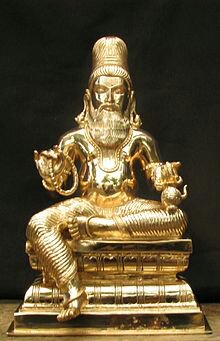
    Agastya sculpture.image
    Sage Agastya


    Please google search term +ramanan50 to get required articles.

    I had written on how the first two sentences of the Purusha Sukta produces electricity,input at 110V,output 330 V.

    I have written how sage Agastya,in his Agastya Samhita,described the process to produce batteries.

    Formula for Electric battery in Agastya Samhita an Ancient Hindu text by The ancient text of Agastya Samhita describes the method of making electric battery, and that water can be split into oxygen and hydrogen. Modern battery cell resembles Agastya’s method of generating electricity. For generating electricity, Sage Agastya had used the following material: 1.One earthen pot 2.Copper plate 3.Copper sulphate 4.Wet saw dust 5.Zinc amalgam His text says : “Sansthapya Mrinmaya Patre Tamrapatram Susanskritam Chhadyechhikhigriven Chardrarbhih Kashthpamsubhih. Dastaloshto Nidhatavyah Pardachhaditastah Sanyogajjayte Tejo Mitravarunsangyitam” संस्थाप्य मृण्मये पात्रे ताम्रपत्रं सुसंस्कृतम्‌। छादयेच्छिखिग्रीवेन चार्दाभि: काष्ठापांसुभि:॥ दस्तालोष्टो निधात्वय: पारदाच्छादितस्तत:। संयोगाज्जायते तेजो मित्रावरुणसंज्ञितम्‌॥ Which means, “Place a well-cleaned copper plate in an earthenware vessel. Cover it first by copper sulfate and then by moist sawdust. After that, put a mercury-amalgamated zinc sheet on top of the sawdust to avoid polarization. The contact will produce an energy known by the twin name of Mitra-Varuna. Water will be split by this current into Pranavayu and Udanavayu. A chain of one hundred jars is said to give a very effective force. (p. 422)” When a cell was prepared according to Agastya Samhita and measured, it gives open circuit voltage as 1.138 volts, and short circuit current as 23 mA. Anen Jalbhangosti Prano Daneshu Vayushu Evam Shatanam Kumbhanamsanyogkaryakritsmritah. if we use the power of 100 earthen pots on water, then water will change its form into life-giving oxygen and floating hydrogen. Vayubandhakvastren Nibaddho Yanmastake Udanah Swalaghutve Bibhartyakashayanakam. If hydrogen is contained in an air tight cloth, it can be used in aerodynamics, i.e. it will fly in air. (Today’s Hydrogen Balloon) Process Of Electroplating by Maharshi Agastya in Agastya Sanhita: Excerpt from “Technology of the Gods: The Incredible Sciences of the Ancients” – By David Hatcher Childress “In the temple of Trivandrum, Travancore, the Reverned S. Mateer of the London Protestant Mission saw ‘a great lamp which was lit over one hundred and twenty years ago’, in a deep well in side the temple. ……. On the background of the Agastya Samhita text’s giving precise directions for constructing electrical batteries, this speculation is not extravagant.”

    अगस्त्य संहिता में एक सूत्र हैः

    संस्थाप्य मृण्मये पात्रे ताम्रपत्रं सुसंस्कृतम्‌।
    छादयेच्छिखिग्रीवेन चार्दाभि: काष्ठापांसुभि:॥
    दस्तालोष्टो निधात्वय: पारदाच्छादितस्तत:।
    संयोगाज्जायते तेजो मित्रावरुणसंज्ञितम्‌॥

    अर्थात् एक मिट्टी का बर्तन लें, उसमें अच्छी प्रकार से साफ किया गया ताम्रपत्र और शिखिग्रीवा (मोर के गर्दन जैसा पदार्थ अर्थात् कॉपरसल्फेट) डालें। फिर उस बर्तन को लकड़ी के गीले बुरादे से भर दें। उसके बाद लकड़ी के गीले बुरादे के ऊपर पारा से आच्छादित दस्त लोष्ट (mercury-amalgamated zinc sheet) रखे। इस प्रकार दोनों के संयोग से अर्थात् तारों के द्वारा जोड़ने पर मित्रावरुणशक्ति की उत्पत्ति होगी।
    यहाँ पर उल्लेखनीय है कि यह प्रयोग करके भी देखा गया है जिसके परिणामस्वरूप 1.138 वोल्ट तथा 23 mA धारा वाली विद्युत उत्पन्न हुई। स्वदेशी विज्ञान संशोधन संस्था (नागपुर) के द्वारा उसके चौथे वार्षिक सभा में ७ अगस्त, १९९० को इस प्रयोग का प्रदर्शन भी विद्वानों तथा सर्वसाधारण के समक्ष किया गया।
    अगस्त्य संहिता में आगे लिखा हैः

    अनेन जलभंगोस्ति प्राणो दानेषु वायुषु।
    एवं शतानां कुंभानांसंयोगकार्यकृत्स्मृत:॥

    अर्थात सौ कुम्भों (अर्थात् उपरोक्त प्रकार से बने तथा श्रृंखला में जोड़े ग! सौ सेलों) की शक्ति का पानी में प्रयोग करने पर पानी अपना रूप बदल कर प्राण वायु (ऑक्सीजन) और उदान वायु (हाइड्रोजन) में परिवर्तित हो जाएगा।
    फिर लिखा गया हैः

    वायुबन्धकवस्त्रेण निबद्धो यानमस्तके उदान स्वलघुत्वे बिभर्त्याकाशयानकम्‌।
    अर्थात् उदान वायु (हाइड्रोजन) को बन्धक वस्त्र (air tight cloth) द्वारा निबद्ध किया जाए तो वह विमान विद्या (aerodynamics) के लिए प्रयुक्त किया जा सकता है।
    स्पष्ट है कि यह आज के विद्युत बैटरी का सूत्र (Formula for Electric battery) ही है। साथ ही यह प्राचीन भारत में विमान विद्या होने की भी पुष्टि करता है।

    Process Of Electroplating by Maharshi Agastya in Agastya Sanhita:-

    “Technology of the Gods: The Incredible Sciences of the Ancients” – By David Hatcher Childress

    “In the temple of Trivendrum, Travancore, the Reverned S. Mateer of the London Protestant Mission saw ‘a great lamp which was lit over one hundred and twenty years ago’, in a deep well in side the temple. ……. On the background of the Agastya Samhita text’s giving precise directions for constructing electrical batteries, this speculation is not extravagant.”

    आपको यह जानकर आश्चर्य होगा कि आज की अनेक आधुनिक तकनीकों का वर्णन हमारे प्राचीन ग्रंथों में मिलता है। शुक्र नीति के अनुसार आज के इलेक्ट्रोप्लेटिंग के लिए “कृत्रिमस्वर्णरजतलेपः” शब्द का प्रयोग करते हुए इसे “सत्कृति” नाम नाम दिया गया है – “कृत्रिमस्वर्णरजतलेप: सत्कृतिरुच्यते”।

    अब यह बताना चाहते हैं कि अगस्त्य संहिता में विद्युत्‌ का उपयोग इलेक्ट्रोप्लेटिंग के लिए करने की विधि दर्शाते हुए निम्न सूत्र मिलता हैः

    यवक्षारमयोधानौ सुशक्तजलसन्निधो॥
    आच्छादयति तत्ताम्रं स्वर्णेन रजतेन वा।
    सुवर्णलिप्तं तत्ताम्रं शातकुंभमिति स्मृतम्‌॥

    अर्थात्‌- लोहे के पात्र में रखे गए सुशक्त जल (तेजाब का घोल) का सानिध्य पाते ही यवक्षार (सोने या चांदी का नाइट्रेट) ताम्र को स्वर्ण या रजत से आच्छादित कर देता है। स्वर्ण से लिप्त उस ताम्र को शातकुंभ स्वर्ण कहा जाता है।’

    Source. https://ramanisblog.in/2013/11/11/electricity-in-hinduism-texts-agashtya-samhita/

    On Electrical Battery.

    Sansthapya Mrinmaya Patre Tamrapatram Susanskritam
    Chhadyechhikhigriven Chardrarbhih Kashthpamsubhih
    Dastaloshto Nidhatavyah Pardachhaditastah
    Sanyogajjayte Tejo Mitravarunsangyitam

    Anen Jalbhangosti Prano Daneshu Vayushu
    Evam Shatanam Kumbhanamsanyogkaryakritsmrita-Agasthya Samhita.

    Place a well-cleaned copper plate in an earthenware vessel. Cover it first by copper sulfate and then moist sawdust. After that put a mercury-amalgamated-zinc sheet on top of an energy known by the twin name of Mitra-Varuna. Water will be split by this current into Pranavayu and Udanavayu. A chain of one hundred jars is said to give a very active and effective force.

    By the way, mitra is cathode and varuna is what we call anode today, Pranavayu is oxygen and udanavayu is hydrogen.

    How to Use this Battery for pace ship.

    When the ‘Upfaced’ is filled in an Airproof Bag and the bag is tied to the head at the vehicle ,the ‘Upfaced’, due to its lightness carries the vehicle in the Sky.

    How to Airproof the Baloon

    Dip the Silk bag into the Bark of the ree that Drips Milk(probably Rubber)

    After dipping thus once dip this in Tannin Juice.

    After Drying coat it with Wax and then with a specific mixture made of Lime and Sugar.

    Chemists may look into the Chemical aspects of this.

    How to Electroplate.

    This great Light (Laser?)  plates the Copper  with Gold or Silver in the presence of Acidified Water and the metal that is combined with Saltpeter.

    The saltpeter is either Gold Nitrate, Gold chloride or Gold Cyanide.

    The paper was by Dr.Varam Kokanur at the meet of the American Chemical Society in Detroit Michigan.

    Dr.Kokanur studied in Bombay University,University of Minnesota,a Shevlin Fellow in Chemistry and holds a number  degrees.’

    Source. https://ramanisblog.in/2015/03/18/space-ship-dry-batteries-production-agastya-samhita/

  • Cholas Ancestors of Rama?

    The genealogy of Manu is very interesting.

    Manu is reported to be the first Man.

    Hence the name Manusha(Sanskrit),Manithan(Tamil), Man (English).

    Manu meditated in Madagascar while a Tsunami struck and His son Ikshvaku left for Ayodhya with his sons.

    His son Ikshvaku founded the Ikshvaku dynasty ,the Solar Dynasty , to which Lord Rama belongs.

    c3865-bm-image-751276

    But what happened to Manu’s daughters?

    A detailed research reveals interesting information.

    Manu had a daughter Ila.

    She was married to Chandra,Moon and the offspring was Budha.

    While many versions of the tale exist, Ila is usually described as a daughter or son of Vaivasvata Manu and thus the sibling of Ikshvaku, the founder of the Solar Dynasty. In versions in which Ila is born female, she changes into a male form by divine grace soon after her birth. After mistakenly entering a sacred grove as an adult, Ila is either cursed to change his/her gender every month or cursed to become a woman. As a woman, Ilā married Budha, the god of the planet Mercury and the son of the lunar deity Chandra (Soma), and bore him a son called Pururavas, the father of the Lunar dynasty. After the birth of Pururavas, Ilā is transformed into a man again and fathered three sons.

    In the Vedas, Ilā is praised as Idā (Sanskrit: इडा), goddess of speech, and described as mother of Pururavas. ‘

    She begot a son Pururavas.

    https://en.m.wikipedia.org/wiki/Ila_(Hinduism)https://en.m.wikipedia.org/wiki/Ila_(Hinduism)

    Hence the descendants of this Dynasty were called the Lunar Dynasty, Chandra Vamsa.

    The Kuru Dynasty of Mahabharata,which was named after one of the ancestors.

    Manu had a grand daughter through his daughter called Dakshina,one meaning of the term is South.

    It is probable that she was the founder of the Lunar Dynasty , she was also called Ila.

    Ila’s son was called Ellalan,who ruled the south.

    Ellalan in Tamil means ‘one who rules the boundaries’

    He was a king of the present Sri Lanka.

    Mahavamsa of Sri Lanka records that he was a Chola and a noble king.


    He was also called as Manu Needhi Chola, A Chola King in Dravida Desa.

    https://en.m.wikipedia.org/wiki/Ellalan


    Now there is the famous Emperor Sibi who belonged to Solar Dynasty.


    His date preceds Rama’s.

    ‘The words “Kumari Kandam” first appear in Kanda Puranam, a 15th-century Tamil version of the Skanda Purana, written by Kachiappa Sivacharyara (1350-1420).[3] Although the Tamil revivalists insist that it is a pure Tamil name, it is actually a derivative of the Sanskrit words “Kumarika Khanda”.The Andakosappadalam section of Kanda Puranam describes the following cosmological model of the universe: There are many worlds, each having several continents, which in turn, have several kingdoms. Paratan, the ruler of one such kingdom, had eight sons and one daughter. He further divided his kingdom into nine parts, and the part ruled by his daughter Kumari came to be known as Kumari Kandam after her. Kumari Kandam is described as the kingdom of the Earth. Although the Kumari Kandam theory became popular among anti-Brahmin anti-Sanskrit Tamil nationalists, the Kanda Puranam actually describes Kumari Kandam as the land where the Brahmins also reside, where Shiva is worshipped and where the Vedas are recited. The rest of the kingdoms are described as the territory of the mlecchas.[5]

    He ruled from the north and conquered the south, defeating his maternal cousins.

    This is recorded in the Temple history of Thiruvellarai, temple dedicated to Lord Vishnu as Pundarikaksha.

    Please read my detailed article on this.

    This Vishnu temple is older than Sri Rangam Ranganatha Temple in Tamil Nadu.

    Ramayana records that Vibhishana requested the Idol of Lord Ranganatha from Lord Rama and though Rama gave him, Vishnu,Ranganatha stayed back at Sri Rangam, where He faces Sri Lanka.

    So the Cholas were the ancestors of Rama and not the other war around.

    (I have written earlier that Cholas were descendants of Rama. As this blog is research oriented I write as I come by evidence. So there is updation and clarification and there is no contradiction.)

    Considering the facts,

    ‘Manu left for the North because of A Tsunami

    Tamil is an ancient language of India which runs parallel to Sanskrit.

    A Million year old site found near Chennai records an advanced Tamil civilization.

    The sunken harbor of Poompuhar, Tamil Nadu, which is spoken of in detail in the Tamil Epic Cilappadikaram,is dated 20,000 years ago..

    Such an old culture refers to Sanskrit and Sanskrit in turn refers to Tamil.

    Then there is Sage Agastya who is present both in Tamil and Sanskrit.

    So is Sage Valmiki who is considered to be a Siddha and has written poems in Tamil.

    Such an intimacy between Sanatana Dharma and Tamils, yet there are differences though they present a unified picture!

    This has been a question I have been seeking  an answer to.

    The fact that Manu was from the South, Dravida.

    • One has to remember that the landmass in those ancient days was different and it has no relevance to what we call as North or South India now…

    Lord Rama refused to fight against the Lemurians while he was fighting the Atlantis people saying that Lemurians were his ancestors,

    Ravana,s ancestors Malyavan and Kubera were also from the area we now call as Lemuria

    https://ramanisblog.in/2016/11/10/dravida-lunar-culture-founded-by-ila-manu-daughter-ikshvaku-dynasty/

    It may be noted that,

    Shiva worship  in the Dravida desa  preceded Vedic  period,

    The Tamils though a part of Sanatana Dharma , their methods of worship of Shiva was different,

    The Siddha system and Yoga pre date Patanjal’s Yoga Sutra.

    The influence of Tamil mode of worship in fareastern countries is greater than Vishnu worship.


    It stands to reason to postulate thar the Cholas preceded Ramayan and this can also be confirmed by the fact tha Tamil Kings were present during Damayanti’s Swayamvar.

    Nala and Damayanti predate Rama.

    One may also note thar there is Ila people in Zambia.

    A tribe in Cameroon still speak Tamil.

    Hittie civilization has its in Tamils.

    The genealogy of Manu dynasty .

    Maitreya said: Svāyambhuva Manu begot three daughters in his wife Śatarūpā, and their names were Ākūti, Devahūti and Prasūti.

    SB 4.1.2: Ākūti had two brothers, but in spite of her brothers, King Svāyambhuva Manu handed her over to Prajāpati Ruci on the condition that the son born of her be returned to Manu as his son. This he did in consultation with his wife, Śatarūpā.

    SB 4.1.3: Ruci, who was very powerful in his brahminical qualifications and was appointed one of the progenitors of the living entities, begot one son and one daughter by his wife, Ākūti.

    SB 4.1.4: Of the two children born of Ākūti, the male child was directly an incarnation of the Supreme Personality of Godhead, and His name was Yajña, which is another name of Lord Viṣṇu. The female child was a partial incarnation of Lakṣmī, the goddess of fortune, the eternal consort of Lord Viṣṇu.

    SB 4.1.5: Svāyambhuva Manu very gladly brought home the beautiful boy named Yajña, and Ruci, his son-in-law, kept with him the daughter, Dakṣiṇā.

    SB 4.1.6: The Lord of the ritualistic performance of yajña later married Dakṣiṇā, who was anxious to have the Personality of Godhead as her husband, and in this wife the Lord was also very much pleased to beget twelve children.

    SB 4.1.7: The twelve boys born of Yajña and Dakṣiṇā were named Toṣa, Pratoṣa, Santoṣa, Bhadra, Sānti, Iḍaspati, Idhma, Kavi, Vibhu, Svahna, Sudeva and Rocana.

    SB 4.1.8: During the time of Svāyambhuva Manu, these sons all became the demigods collectively named the Tuṣitas. Marīci became the head of the seven ṛṣis, and Yajña became the king of the demigods, Indra.

    SB 4.1.9: Svāyambhuva Manu’s two sons, Priyavrata and Uttānapāda, became very powerful kings, and their sons and grandsons spread all over the three worlds during that period.

    SB 4.1.10: My dear son, Svāyambhuva Manu handed over his very dear daughter Devahūti to Kardama Muni. I have already spoken to you about them, and you have heard about them almost in full.

    SB 4.1.11: Svāyambhuva Manu handed over his daughter Prasūti to the son of Brahmā named Dakṣa, who was also one of the progenitors of the living entities. The descendants of Dakṣa are spread throughout the three worlds.’

    http://vanisource.org/wiki/SB_4.1:_Genealogical_Table_of_the_Daughters_of_Manu

    Please read my articles on Daksha in Antarctica.

  • Siddha Idol Performs Pooja Itself Meditating Siddha Disappears


    Siddhars are Realized Souls.

    Though there reported to be thousands of them, Eighteen of them are regarded as Primary Siddhas.

    The first Siddha is Lord Shiva, whose disciple was Nandeswara and his disciple was Sage   Agastya.

    I have wriiten on the Siddhas in detail and on the abodes of Siddhas,especially of Chaturagiri,Tamil Nadu.

    Chaturagiri and Kolli hills are said to be inhabited by the Siddhas and are reported to be visible at nights sometimes and on specifc days like the Full Moon.

    They perform poojas and there are authentic accounts of poojas being performed by them by people noticing the flowers being found at the feet of the Idol in a temple locked at night.

    People have reported hearing the sound of bells in the dead of the night inside the locked Sanctum Sanctorum.

    Most of them have been verified and validated.

    Siddhas transcend Space Time constraints,both being an instrument and impediment of the Mind.

    Please read my articles on Perception, Time non linear and Cyclic.

    In our parlance they live eternally.

    They can materialize and dematerialize.

    I have written an article how a man dematerialized whose hands I was holding.

    The Siddhas follow a specific system mainly the Vaasi Yoga.

    Kindly read my article Vaasi Yoga is Shiva.

    They also have other technics which are trasnsmitted to the spiritually deserving.

    In return they ask for nothing.

    If one’s desire to meet a Siddha is strong he shall reach the seeker.

    The works of the Siddhas is in Tamil language.

    I shall provide a complete list shortly.

    The language is simple but the inner meaning needs hardwork.

    They are also physicians and surgeons.

    Trilinga Swamigal who lived in North India was also present in south India as Kuzhandai Swamigal with whom my father and aunt were closely in touch.

    Kuzhandai Swamigal was in south India,spent most of his time in Madurai.

    I have recorded some facts known to my family.

    6f42db7c143e4e384875f80fd65d65d52

    They lived in their mortal frames during late eighteenth and early nineteenth century.

    Even today there are reports of these Siddhas performing poojas in Chaturagiri and Kolli Malai.

    There are caves in these regions and Siddhas perform poojas, not only for Gods,especially Shiva but perform poojas for the other Siddhas.

    One such pooja was conducted by a Siddha to Siddha Korakkar.

    In the following video by Zee Tamil as a part of Investigative Journalism a man, obviously a Siddha performing pooja to Siddha Korakkar.

    He sits and meditates.

    Garland moves on its own and adorns Korakka.

    Flowers fall at his feet while the Siddha performing the pooja is away from the Flowers.

    The cave resonates with OM.

    The camphor lights on its own.

    And once the Siddha completes his meditation,and raises both his hands in prayer to Korakkar, the Siddha who has been meditating and raising hands dematerialized.

    This has been captured in Video by Zee Tamil in their serial Naminaal Nambungal, Belive it It or Not.

    Watch the Video.

  • Vedas Complied In The Arctic Why How By Whom ? Part 2

    Sage Agastya came to South twice.

    He came to South when Shiva asked him to go to south to balance the earth when Shiva married Uma in the Himalayas.

    This is dated around 40,00,000 thousands years ago.

    The next time he came down to south was around 5000 BC.

    The dates have been arrived at by tracking the movement of Star Canopus,called Agastya,which is visible in the southern lattidues once on 5000 years.

    Please check my articles on these.

    The fact that Shiva had to send him to an area which was far off is mentioned in the Puranas,especially the Skanda,Linga,Shiva  Purana stating that the place he had to go was Dravida.

    The tone and tenor convey a distant land, not a geographically adjacent one.

    lotus-sculpture_2164_26360029

    8.One may notice that Shiva is not mentioned directly in the Vedas as Vishnu and others are.He, however , is repeatedly mentioned in the Tamil Classics.

    He was called the ‘Ancient of the Ancients’

    The Shiva cult precedes Sanatana Dharma as is evidenced from the Earliest Tamil works like Agathiyam,written by Agastya and Tholkaapiyam by Tholkappiyar.

    Both Agastya and Tholkaapiyar were Rishis, as declared by them.

    They refer Shiva as the primary deity.

    Rama,Krishna,Vishnu are also mentioned and their period is mentioned.

    But not Shiva’s.

    He is mentioned as beyond Time.

    This indicates that Shiva cult was present  in the south even before  Shiva’s marriage with Uma in the Himalayas.

    In the Shiva cult of the early times the Vedas,though mentioned, are not assigned a date.But the texts are clear that Shiva as a separate Entity though not in conflict with the Vedas is mentioned as the Ancient One.

    9.The Avatars of Shiva are not in vogue in the north as much as in the south.

    They are called Thiruvilayadal in Tamil and they are documented.

    They are 64 in numbers.

    Please read my article on this.

    These avatars are reported to have taken place in the Tamil ,Dravida Region.

    They,at least most of them,took place in Madurai.

    This is not the present Madurai ,Tamil Nadu.

    This refers to Then (south) Madurai which was devored by  the sea.

    This was in Lemuria,and Then Madurai is mentioned along with Kapatapuram and Vanchi.

    The Shiva worship was prevalent there before Rama and Krishna worship.

    This speaks of a parallel system of philosophy in the south,though not at variance with the the Vedas.

    10.Lord Shiva is considered to be the founder of the Tamil language.

    He founded the language along with Sage who wrote the First  Tamil book on Grammar,Agathiyam.

    The Tamils conducted Poets’s Conclaves.

    There were three such Conclaves,Tamil Sangam.

    The first one was presided over by Shiva and the third one by Subrahmanya,his son,who is also considered to be a co founder of Tamil.He was called Murugan.

    The Tamil Sangam was attended by Lord Krishna.

    He participated as a special invitee.

    Please read my article on this.

    This indicates the Shiva worship, presence preceded Krishna’s.

    11.Lord Shiva got married to, in one of His avatars,to Meenakshi of Madurai.

    Shiva, in this Avatar, was called Chokkanatha,Sundareswara in Sanskrit.

    Meenakshis father Malayadwaja Pandya participated in the Mahabharata war alongside the Pandavas.

    The marriage ceremony was conducted through the Vedic rites.

    This is specifically mentioned.

    This is of importance as the marriage was not conducted the Tamil way.

    This means the Vedic custom did not take deep roots then.

    12.Rama finds references in the ancient classics of the Tamils.

    He,as in the case of Krishna,was treated as a human being,though he was worshiped later.

    This again confirms that the Vedic people were considered as from the north with a culture,though similar from the north,Aryavarth,Meaning from a ‘Blemishless place’

    13.Rama worshiped Shiva as Ramanatha at Rameswaram, Tamil Nadu after killing Ravana.

    14.Ravana was from the Dravida desa and a Brahmin.

    He married Mandodari from the north overcoming objections to the marriage of Mandodari to a Dravida.

    15.Ravana learnt the Vedas and recited them at Kailash, the Abode of Shiva .

    16.Ravana built the Shiva Temple at Koneswaram, Sri Lanka which anti dates Indian temples..

    17.Rama’s,ancestor Vaivaswatha Manu was from Dravida Desa and he migrated to Ayodhya and his son Ikshvaku founded the Ikshvaku Dyasty.

    18.Vaivaswatha Manu meditated in Madagascar.

    19.Shiva temples,which are quite ancient,are quite numerous as compared to North.

    20.While Shiva’s marriage with Uma and Shiva’s loneliness because of the loss of Sati and Shiva as an ascetic is known in the north, not much of Him is heard there as in the south,about His sons,Ganesha and Subrahmanya,which is detailed in the south

    21.Vasi yoga is the predecessor of Patanjali’s Yoga Sutra and this was revealed in the South by Shiva.

    22.The Siddhas,the Enlightened souls, from the south had  a distinct system of Shiva worship and they were aware of Vedas. Patanjali,Agastya and Valimiki were Siddhas and have wriiten philosophical treatises in Tamil.

    Valmiki mentions in his Tamil poem that he was a Vedic Brahmin.

    23.The Avatars of Vishnu,(Parashurama,Vamana,Kurma and Varaha)took place in the south.Of these,Kurma and Varaha took place just after The Vedas were compiled.

    24.The migration to north seems to have been necessitated because of Great flood in each yuga and Puranas/ ithihasas/Tamil classics assert this.

    25.Thiruvannamalalai,Tamil Nadu is 3.64 billion years old and Jwalapuram,Cuddapah,Telengana,which houses Nataraja is 74,000 years old.

    I can go on adding.

    What happened after the flood and the compilation of the Vedas will be detailed in the forthcoming article.

    Vedas Complied In The Arctic Why How By Whom ? Part 1

  • Kalaripayattu Warfare By Shiva Developed by Parashurama Agastya

    Parashurama and the saptarishi Agastya(for a differnt kalpa) are regarded as the founders of kalaripayattu, the oldest martial art in the world. Parashurama was a master in the art of weaponry, as taught to him by Shiva. As such, he developed northern kalaripayattu or vadakkan kalari, with more emphasis on weapons than striking and grappling. Southern kalaripayattu was developed by Agastya and focuses more on weaponless combat. Kalaripayattu is known as the ‘mother of all martial arts’.Bhragava Rama popularly known as Parashurama is the descendant of Bhrigu, one of the Seven Seers, Saptha Rishis., who codify the sacred texts for Humans for every Kalpa.

    Kalaripayattu, form of self efense
    Kalaripayattu , self defense warfare by Shiva.

    He is also known as,

    • Ramabhadra (रामभद्र) – gracious Rama
    • Bhargava (भार्गव) – descendant of Bhrigu
    • Bhrigupati (भृगुपति) – lord of Bhrigu dynasty
    • Bhriguvanshi (भृगुवंशी) – he who belongs to Bhrigu lineage
    • Jamadagnya (जामदग्न्य) – son of Jamadagni

    Rama was born to Sage Jamadagni an Renuka.

    Rama was a staunch Shiva Devotee of Shiva and Lord Shiva granted him the Axe, the weapon wielded by Rama.

    This Rama who is also an Avatar of Lord Vishnu is called Bhargava Rama,of Bhargava lineage and Parashurama , , the wielder of Axe, Parashu to distinguish him from his later Avatar Lord Rama.

    Not much of Parashurama has come to light except that he exterminated Kshatriyas, lost to Lod Rama and taught Brahmastra to Karna.

    Parashurama, slong with Sage Agastya were the bridges to the Dravidian cultures.

    They strode like colossus.

    Parashurama was responsible for creating Konkan, maharastra, Goa and Kerala regions of India.

    He provides a wealth of information on ancient history of South India.

    I shall deal with them separately in the coming articles.

    Today we speak of Judo, Jujitsu and other forms of defense Technics and warfare.

    And the these are attributed to the Chinese.

    Not so.

    Parashurama  and Sage Agastya were the founders of these Martial Arts.

    Parashurama and the saptarishi Agastya are regarded as the founders of kalaripayattu, the oldest martial art in the world. Parashurama was a master in the art of weaponry, as taught to him by Shiva. As such, he developed northern kalaripayattu or vadakkan kalari, with more emphasis on weapons than striking and grappling. Southern kalaripayattu was developed by Agastya and focuses more on weaponless combat. Kalaripayattu is known as the ‘mother of all martial arts’.

    Bodhidharma, the founder of Zen Buddhism, also practiced kalaripayattu. When he traveled to China to spread Buddhism, he brought the martial art with him, which in turn was adapted to become the basis of Shaolin Kung Fu..

    References and citations.

    https://en.m.wikipedia.org/wiki/Parashurama

    • I have used the present tense for Parashurama as He is a Chiranjeevi