Tag: பூம்புகார்

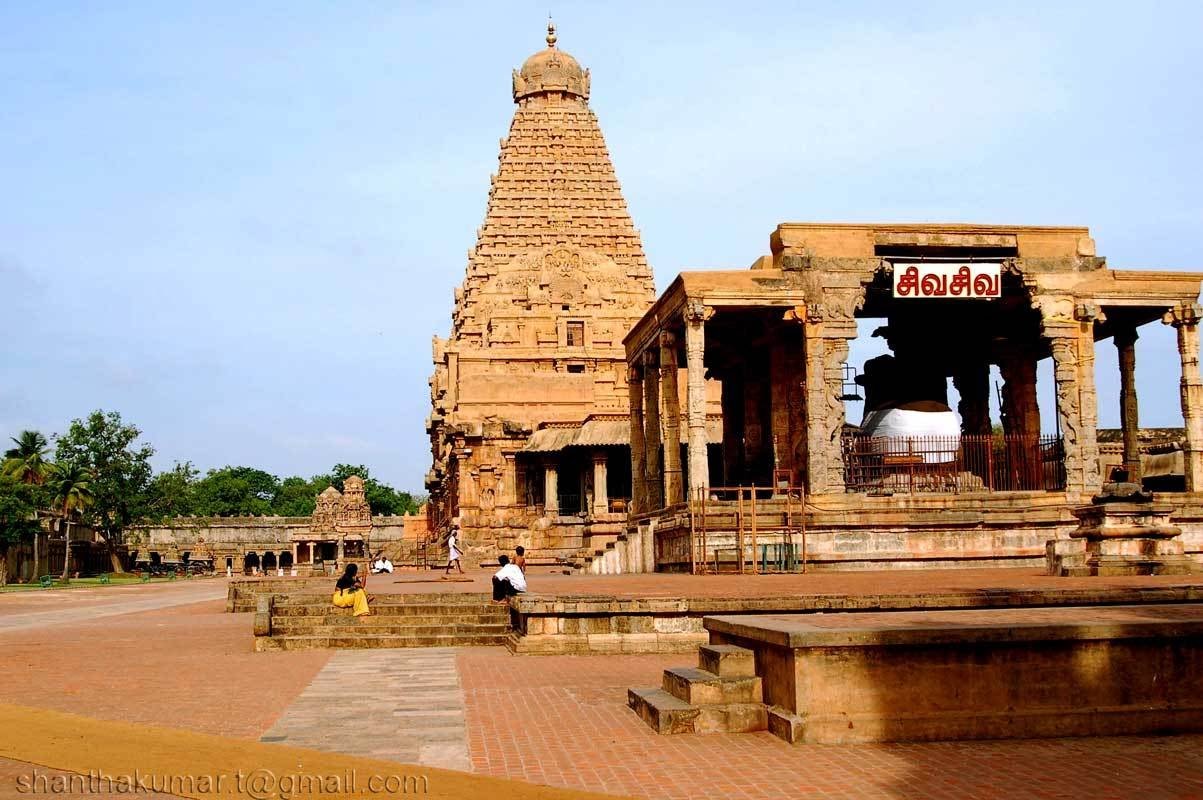
  • Kumbakonam Western Gateway Dated 23000 BC

    Kumbakonam Western Gateway Dated 23000 BC

    I have written on the fact that,

    Thiruvannamalai ,Tamil Nadu being 3.94Billion years old,

    Thirupathi, Andhra Pradesh,2100 Million years,

    Jwalapuram,Cuddapha,Telengana,74,000 years,

    Varanasi (Benares),world’s oldest continuously inhabited city,

    Thiruvananthapuram,25,000 years.

    Now to the city of Kumbakonam,city of Temples in Tamil Nadu.

    The Hindu Puranas mention Kumbakonam as the place,where the top portion of the Pot containing Amrith(Nectar),fell when the Pot was not by an arrow.

    The top portion of the Pot fell at an incline (angle)

    The name in Tamil means the place where the Pot fell at an angle.

    Kumbha-Pot;Konam-Angle.

    The earliest reference to Kumbakonam in Tamil Literature occurs in the Sangam literature,Puranaanuru, an anthology of four Hundred poems that speaks of the valour of Tamil Kings,among other things.

    குண திசை நின்று குடமுதல் செலினும், (20).
    குடதிசை நின்று குணமுதல் செலினும்,
    வடதிசை நின்று தென்வயின் செலினும்,
    தென்திசை நின்று குறுகாது நீடினும்,
    யாண்டும் நிற்க வெள்ளி; யாம்
    வேண்டியது உணர்ந்தோன் தாள் வாழியவே! (25)
    திணை – பாடாண்
    துறை – வாழ்த்தியல்
    இயற்றியவர் – புலவர் கோவூர் கிழார்
    அரசர் – சோழன் குளமுற்றத்துத் துஞ்சிய கிள்ளி வளவன்’

    ( http://garuda-sangatamil.com/pages/third/first10-10.php )

    This poem on the Chola king refers to West as Kuda Thisai ,குட திசை.

    Tamil Literature calls the area adjoining the Arabian sea as in The West,கு

    அரபிக்கடலை எல்லையாகவுடைய தமிழ் நாட்டு நிலப்பரப்பைத் தமிழர் குடக்கு என்றனர். கரை ஓரம் குடம் போல் குழிந்தும் அருகில் தென் வடலாக மேற்கு மலைத் தொடரும் உள்ள நிலப் பரப்பு இது. மேற்கு நோக்கிப் பாயும் சிற்றாறு களும் கிழக்கு நோக்கியும் பாயும் பெரிய ஆறுகளும் தோன்றும் மலை மேற்குத் தொடர்.

    ( http://keetru.com/index.php/2010-06-24-04-31-11/ungal-noolagam-mar-2015/28316-2015-04-19-04-30-55 )

    Kumbakonam was referred to as Kudavaayil in Silappadikaram,one of the Five epics of Tamil.

    So the term Kudavaayil means the a Gateway to the West.

    Vaayil means entrance.

    Most of the Chola Trade was carried through Poompuhar on the eastern seaboard.

    The city was also called Kudavaayil or the Gateway to The East,

    But Trade was also carried out through western ports on the Arabian sea.

    Chera kings used this route.

    But for the Chola’s,whose Ports were in the East,had to reach the western ports .

    And they used Kumbakonam as the Entry point to the western Ports.

    The early Chola,Karikal Valavan held Court in Kumbakonam.

    Anbil Plates also refer Kumbakonam as Kudavaayil.

    Silappadikaaram,the Epic in which action takes place refers to Poompuhar and Kumbakonam.

    Poompuhar is dated about 11,000 years ago.

    The place is called Poompuhar. It lies on southeast India’s Coromandel coast facing the Bay of Bengal between modern Tamil Nadu and Sri Lanka. Its immediate offshore area has been the subject of marine archaeological investigations by India’s National Institute of Oceanography since the 1980’s — and numerous non-controversial finds of man-made structures dated between the third century AD and the third century BC have been made in the “inter-tidal zone” close to shore at depths down to 6 feet (approximately 2 metres).

    These finds of structures in shallow water (some so shallow that they are exposed at low tide) have been quite widely written-up in the archaeological literature. But for some reason other discoveries that the NIO has made in deeper water off Poompuhar have attracted no attention at all. Most notably these other discoveries include a second completely separate group of structures fully three miles from the Poompuhar shore in water that is more than 70 feet (23 metres) deep. The lack of interest is surprising because to anyone with even minimal knowledge of post-glacial sea-level rise their depth of submergence is – or should be – highly anomalous. Indeed according to Glenn Milne’s sea-level data the land on which these structures were built last stood above water at the end of the Ice Age more than 11,000 years ago.

    Is it a coincidence that there are ancient Tamil flood myths that speak of a great kingdom that once existed in this area called Kumari Kandam that was swallowed up by the sea? Amazingly the myths put a date of 11,600 years ago on these events — the same timeframe given by Plato for the end of Atlantis in another ocean.

    https://ramanisblog.in/2015/03/02/poompuhar-find-sets-tamilhinduism-by-atleast-20000-years/

    So,Kumbakonam,which has the earliest references to it in Puranaanuru,which is about Five thousand years before Poompuhar reference,must be at least Twenty-five thousand years.

    That is 23,000 BC.

    Image Credit. http://www.kmphtrips.com/#!/destinationDetails/Kumbakonam

  • 11000 Years Old Tamil Port Poompuhar Confirms Manu Migration

    The more one digs deeper into  Indian /Tamil History, I no longer consider them as Legends or Mythologies as there is enought evidence on the ground in India and abroad to warrant this conclusion, one is amazed as to how Sanatana Dharma and Tamil were intertwined and how accurate are the Hindu Puranas.

    Wharf At Poompuhar.Image.gif
    Wharf At Poompuhar, Tamil Nadu

    An old port  Poompuhar, mentioned in early Tamil Classics, especially in detail in the Silappadikaram, has been found and it reveals a Man made Port of 11000 Years!

    Poompuhar was a bustling port of the Chera Kings of then Tamil Nadu and was a centre of Tamil Culture where A festival of Indra was celebrated annually,

    It was called Indra Vizha, The Festival of Indra. more as Thanks giving to the God of Thunder Indra for granting Rains.

    This Poompuhar was als a Ship Building Yard where the Sultans of Constantinople had their Ships built, observes Ptolemy

    Please read my Post Naval Department of Tamils Ancient India.

    Now the Ikshvaku Dysaty, of which Lord Rama is a descendant, lists the Kings of the Dynasty.

    I am providing a Link to my article at the end of this Post.

    Sixty kings preceded Lord Rama.

    In Hindu Puranas the Full Life of an individual is 120 years(I am not, now taking into account the legend of Treta Yuga where Human beings lived longer).

    The father of Ikshvaku, Satyavrata Manu, also called Vaivasthava Manu, migrated from the South to Aydhya and his son Ikshvaku founded the Ikshvaku Dynasty.

    Manu left because of a Tsunami.

    The city of Poompuhar which is dated now as being 11000 years old was deluged by a Tsunami.

    This is echoed in the great flood that devoured the Atlantis/

    Please read my post on Gondwana.

    This proves that the expression of Great Ocean Surge, Kadal Kol, was not a figment of Tamil Poets and Sanskrit’s imagination as the Poompuhar evidence and the mention of Satyavrata Manu having migrated to Ayodhya.

    A difference of about 2200 years for such a huge time scale may be attributed to my wrong calculation or the dating of Poompuhar may have tolerance in dates..

    Lord Rama’s Lineage.Ikshvaku Dynasty.

    • Ikshwaku – Manu’s successor was the founder of the Ikshvaku dynasty. Ikshwakufathered 101 children of whom most illustrious were Vikukshi, Nimi and Danda. Ikshvaku’s 50 children were protector of northern countries while 48 were prince of southern countries. Nimi was ruler of Mithila region and started the kingdom of Janaka. After death of Ikshwaku, his son Sasada succeeded him. According to Jain sources, Ikshvaku was Rishab Deva.
    • Sasada – Named Vikuksi at birth, he was called Sasada after eating Hare-meat meant for a rite himself (Sasada means Hare-eater). Though abandoned by Ikshvaku, he became the successor due to Vasistha. Vikuksi had 500 sons who guarded northern regions led by Sakuni and 58 sons who guarded southern regions led by Visati. The Brahma Purana says Sasada’s son was Kakutstha and Kakutstha’s son was Anenas. However, the Vishnu Purana says Sasada’s son was Puranjaya (Paranjaya in Shrimad Bhagavatham) and Puranjaya’s son was Anenas. From Puranjaya / Kakutstha and Anenas the lineage is as follows:
    • Puranjaya (Vishnu Purana and Shrimad Bhagavatham / Kakutstha (Brahma Purana)
    • Anenas
    • Prithu
    • Viswagaswa, rendered Virasva and Vistarasva by Brahmapurana.
    • Ardra
    • Yuvanaswa
    • Srasvata – He founded the city of Srasvati.
    • Vrihadaswa (also spelled Brihad-Ashwa).
    • Kuvalayswa – He defeated demon Asura Dhundu. His sons (21000 in number) perished except three – Dridhaswa, Chadraswa and Kapliswa. Haryyaswa, the eldest son of these three succeeded to the throne.
    • Haryyaswa
    • Nikumbha
    • Sanhatswa – rendered Samhatasva in Brahma Purana. He had 2 sons, Akrasava and Krisasva, and a daughter Haimavati whose son was Prasenajit. The Brahma Purana proceeds with the genealogy tables from Prasenajit with the same names as in Vishnu Purana and Shrimad Bhagavatam below. However, since Prasenajit is the son of Haimavati in Brahma Purana, this would make the line to have descended from Haimavati (a female) as per Brahma Purana.
    • Krisaswa – The Vishnu Purana and Shrimad Bhagavatam says Prasenajit was Krisasva’s son.
    • Prasenajit married Gauri. As per Brahmapurana, he had 2 sons Yuvanaswa and Mandhatri. However, as per SB and Vishnu Purana, Mandhatri was Yuvanaswa’s son.
    • Yuvanaswa (he was second Yuvanaswa)- According to Vishnu Puarana, Yuvanaswa had no children, so the sages, took pity on Yuvanaswa and instituted a Yagya to help him procure progeny. One night, Yuvanaswa feeling thirsty and not wanting to disturb anybody, went in search of water. In darkness, he accidentally drank the consecrated water. In the morning the sages found the vessel containing the consecrated water to be empty and pronounced that a mighty son will be born to the queen who has drunk this water. Then Yuvanaswa told the sages about he having drunk the water. Accordingly, Yuvanaswa conceived a child in his belly. Upon birth of a male child, he was worried as to who would nurse the child. Lord Indra appeared and said – Mam Dhyasti i.e. I would be his nurse, and hence the boy was named Mandhatri.
    • Mandhatri – He married Chaitarathi / Bindumati, daughter of Sasabindu. He is supposed to be a mighty monarch who conquered seven continent and bought them under his dominion. A verse in Vishnu Purna is translated as “From the rising to the going down of the sun, all that is irradiated by his light, is the laand of Mandhatri* As per Brahmapurana he had 2 sons, Purukutsa and Mucukunda; and Trasdasya was the son of Purukutsa. From Purukuta the line follows in the same manner as SB and Vishnu Purana. However, SB and Vishnu Purana provide additional names between Mandhatri and Purukutsa as below:
    • Ambrisha (son of Yuvanaswa)
    • Yuvanaswa (third)
    • Purukutsa and Harita
    • Trasadasya (Son of Purukutsa and Narmada). According to Brahmapurana Narmada was Trasadasyu’s wife. One Kurusravana is described as the son of Trasadasyu in Rigveda 10.33 and hence Keith supposes that the Kurus existed in the Rg-Veda.[6] It remains a controversy as to whether Vedic literature knows of an enmity between the Kurus and the Pancalas, which we know of in the Mahabharata. Trasadasyu’s son was Sambuta.
    • Sambhuta
    • Anaranya – He was supposedly slain by Ravana.
    • Prishadaswa
    • Haryyaswa
    • Sumanas
    • Tridhanwan. In Brahmapurana, Tridhanwan is posited as the son of Sambuta, and the names in between Sambhuta and Tridhanwan as provided by SB and Vishnupurana are absent.
    • Trayyaruna
    • Satyavarta (also known as Trishanku). He was banished by his father Trayaruna and went to live with Svapakas. He killed Vasistha‘s cow. Brahmpurana says Vishwamitra made him ascend to heaven with his physical body.
    • Harishchandra. Also called Traishankava as the son of Trisanku.
    • Rohitaswa, also called Rohita.
    • Harita (Second Harita)
    • Chunchu, also spelled Chanchu, Cancu, Chamchu, Campa. Manusmrithi mentions Chenchu who have been explored for their links with the tribe Andhras
    • Vijaya
    • Ruruka
    • Vrika
    • Bahu (also known as Bathuka) – His kingdom was overrun by neighbouring tribe of Haihayas and Talajangha. He was expelled to the jungle with his queens where Sage Aurva gave them shelter. As per Brahmapurana, Bahu was not very righteous. One of his queens, Yadavi, gave birth to Sagara together with poison (gara).
    • Sagara – he had 6001 sons. Sagara recaptured his father’s kingdom and defeated the tribes of Haiheyas, Talajhanghas, Sakas, Pahlavas and Paradas. He shaved off the hair of Sakas halfway, that of Yavanas and Kambhojas totally, the Paradas had to wear their hair loose, and the Pahlavas had to wear moustaches. All of the following had to give up recitation; and were deprieved of their Kshatriya-hood and their dharma: Sakas, Kambhojas, Yavanas, Paradas, Konisarpas (Kalasarpas), Mahishakas, Cholas and Keralas. Sagara performed Ashvamedha and the horse disappeared near the coast of the South-eastern ocean. There they found Sage Kapila resting. According to the Vishnu Purana, Sagara’s sons killed Kapila. According to the Brahma Purana, Kapila is an avatara of Vishnu and burnt up Sagara’s sons and spared 4 of them—Barhiketu, Suketu, Dharmaratha, Panchananda. Then Kapila blessed Sagara, who went on to perform 100 Asvamedhas and begot 60,000 sons. One of the sons, named Panchajana entered the brilliance of Narayana and became King. His son Amsumat succeeded him.
    • Ansumat – the grandson of Sagara and son of Asmanjas / Panchajana.
    • Dilīpa.
    • Bhagiratha – Bhagiratha bought the river Ganges to earth from Heaven.
    • Sruta
    • Nabhaga
    • Ambarisha
    • Sindhudwipa
    • Ayutaswa
    • Rituparna, a friend of Nala.
    • Sarvakama
    • Sudasa, supposedly a friend of Indra.
    • Saudasa (also known as Mitrasaha, Kalmshapada and Kamlasapada Saudasa).

    After Saudasa, the Brahmapurana gives the descent until Raghu as follows:

    • Saudasa
    • Sarvakarman
    • Anaranya
    • Nighna
    • Anamitra and Raghu
    • Dulidaha, the son of Anamitra
    • Dilipa
    • Raghu

    After Saudasa, the Vishnupurana gives the descent until Raghu as follows:

    • Saudasa
    • Asmaka
    • Mulaka –  (also derogatorily called Narikavacha (one who uses ladies for armour) since he was surrounded and concealed by women when his enemies came searching for him). [In present times Mulaka is (1) name of a jangam tribe in Andhra Pradesh that claims to be Kapus / Balijas; and (2) alternate name used by Mulakanadu Brahmins ]
    • Dasratha (he was not the father of Rama)
    • Viswasaha
    • Khatwanga or Dileepa
    • Dirghabahu
    • Raghu

    After Raghu, all the puranas give the descent as follows:

    • Aja, son of Raghu.
    • Dasaratha – He was father of Rama.
    • Rama