This might b news to people who may not be aware of the many versions of Ramayana, some of them by Valimiki himself.
It is said that there are Sata Koti, 100 Crore Ramayanas, probably meaning innumerable-I am not confident of stating this, there might be even this number as many!
Valmiki, not being satisfied with The Ramayana we know he had written wrote some more Ramayan where he narrated more incidents from the Ramayana and about the character of Rama.
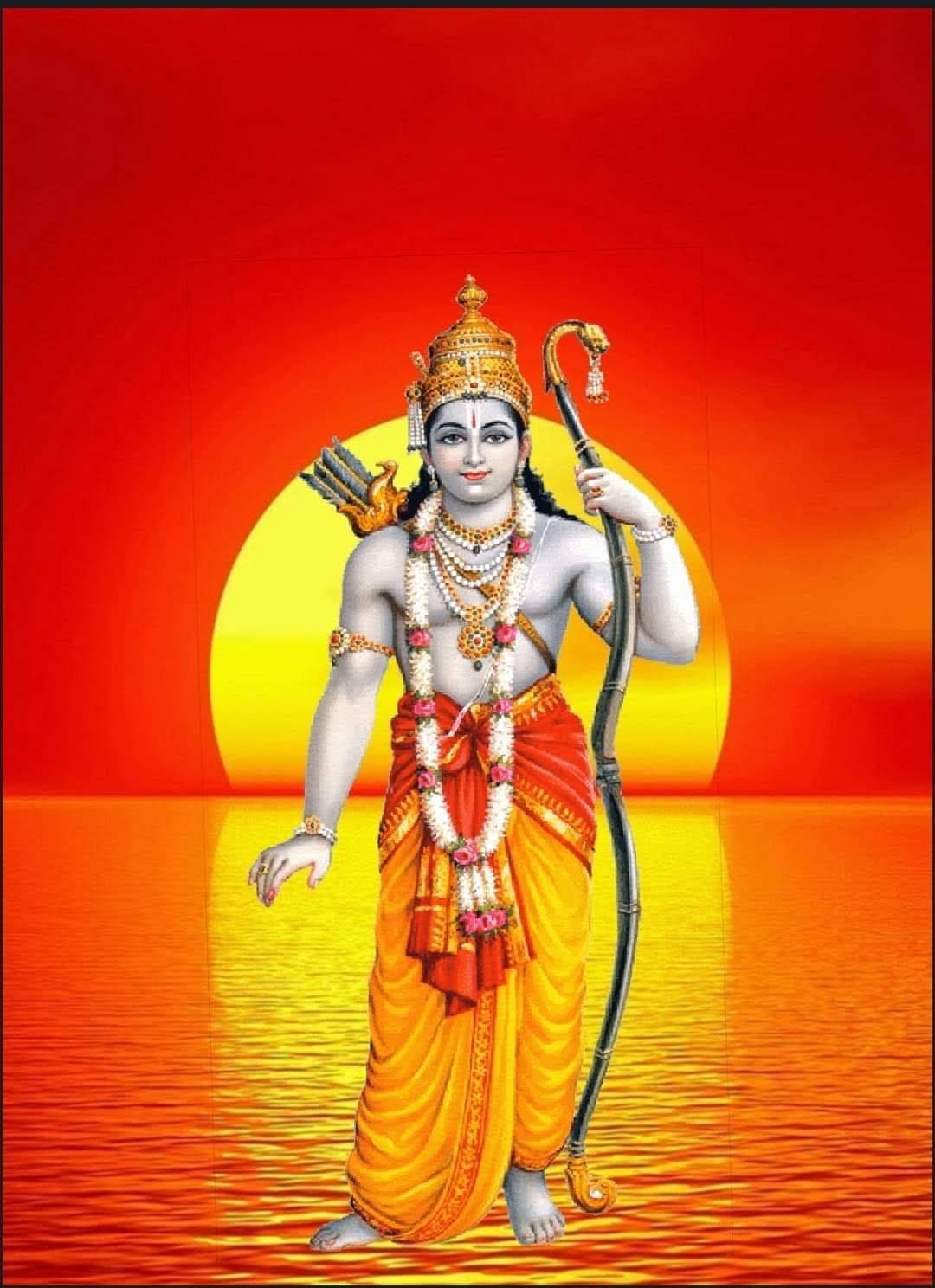
Ananda Ramayanam (12,252 slokas),
Adyatma Ramayana is said to be part of the Satakoti Ramayanam.
Ananda Ramayanam was written by Sri Valmiki himself.
It is believed that Sri Valmiki felt sad that he left out some important details of Sri Rama's
life in his original work, and wrote Ananda Ramayanam to get peace
of mind.
There are 9 kandams in Ananda Ramayanam:
1. SAra KAndam (has the sAram or the juice of Rama charitam)
2. YAtrA KAndam (Sri Rama's yAtras after His pattAbhishekam)
3. YAga KAndam (Sri Rama's asvamedha yAgam)
4. VilAsa KAndam (Sri Rama's and Sita's daily life)
5. Janma KAndam (Birth of Lava and Kusa)
6. VivAha KAndam (Weddings of Sri Rama's and his brothers' sons)
7. RAjya KAndam (fights with other asuras, expansion of kingdom, rajya pari-
palanam)
8. ManOhara KAndam (slokas, Rama nama mahima etc.)
9. Poorna KAndam (Sri Rama and others leaving for Sri Vaikuntam).
Here is the narration about Kausalya, Rama's mother being abducted by Ravana.
This reminds of the indent involving Kamsa, Devaki and Vasudeva, when kamsa imprisoned Devaki and Vasudeva, to ensure that Lord Krishna was not born!
The narration by Valimiki about Kausalya does not contradict or affect the Ramayana as we know.
Stories from Sara Kandam - Chapter 1:
1.1 Story about Dasaratha and Kausalya:
Valmiki's original Ramayana starts with Dasaratha ruling Ayodhya as a great
king and desiring to do asvamedha yaga with his wives (Balakandam 5-8 sargas).
Ananda Ramayanam goes many years prior to that and starts with Dasaratha and
Kausalya's marriage.
It is the time when Dasaratha's marriage with Kausalya is being fixed.
Dasaratha is enjoying himself on the Sarayu river in a boat.
Ravana calls for Brahma and asks Him who will cause his (Ravana's)
death. Brahma tells him that Lord Narayana will be born to Dasaratha
and Kausalya as Rama and will kill Ravana. He also tells him
that Dasaratha and Kausalya are going to be married in 5 days.
Ravana gets on his pushpaka vimana with several asuras and goes to Ayodhya,
fights with Dasaratha and breaks the boat Dasaratha is in. Dasaratha and
Sumantra somehow escape holding on to a piece of the boat and float down
the Sarayu river, reach the Ganges and eventually the ocean.
Ravana proceeds to fight Kausalya's father (the Kosala king) and abducts
Kausalya. On the way to Lanka, he decides to hide Kausalya in a safe
place and leaves her in the custody of a shark, after placing her in a
box. The shark carries the box in its mouth. Sometime later, the
shark happens to encounter another shark. It places the box in a nearby
island and starts fighting. In the meantime, Dasaratha and Sumantra, who
are floating in the ocean, discover this box and open it. They are
surprised to see Kausalya. Dasaratha marries Kausalya immediately in
gandharva vivaha fashion and all the three stay put in the box, exchanging
stories. The shark carries the box again into the ocean.
Ravana calls Brahma and boasts that he has killed Dasaratha and abducted
Kausalya. Brahma laughs and tells him that they have already been married.
The angered Ravana calls for the shark and opens the box; out come the
three people. The scared Ravana tries to kill them with his sword. Brahma tries
to console him saying, " You put only one girl in the box and now she has
become three. Is it not possible that many more will be coming out of the box?
Rama could be one of them. Just close the box and send it to Ayodhya".
So, Ravana asks his servants to leave the box near Ayodhya. The box is
discovered by the people of Ayodhya. The Kosala king gives his daughter,
Kausalya, in marriage to Dasaratha in a formal ceremony.
Thus ends this episode with a happy ending, as will be the characteristic of
most events in Ananda Ramayanam.
1.2 Story behind the two boons given to Kaikeyi:
Valmiki's original Ramayanam version:
Once, Dasaratha helps the Devas in their fight with asuras. Dasaratha
takes Kaikeyi with him. Valmiki Ramayanam - Ayodhya Kandam -
9th sargam sloka 16 states that Kaikeyi takes Dasaratha away from the
battlefield when he becomes tired and swoons in his chariot. She attends to
him and gets him back to good health. Dasaratha subsequently wins the war
with the asuras. The pleased Dasaratha grants her two boons, which she
chooses to use later.
Ananda Ramayanam gives a different story.
During the Deva-asura fight, the stick or support that holds the wheel to
the chariot, breaks in Dasaratha's chariot and the chariot is about to
collapse. Kaikeyi places her left hand in the place of the wheel-holder,
in order to help her husband proceed without interruption. Finally, Dasaratha
is victorious and being pleased with Kaikeyi's help, grants her two boons.Connected to this story is the following anecdote about Kaikeyi:Once, Kaikeyi, when she is very young, makes a paste out of coal and applies
it on the face of a sage, for fun. He curses her saying "later in life,
you will be put to shame - no one would like to see your face even". Kaikeyi
gets scared and brings a stick to him, so he can punish her. The pleased
sage grants a boon - " you left hand will be as strong as iron and will
never fail in any instance". "
Citation.
http://www.ramanuja.org/sv/bhakti/archives/apr97/0052.html
Image Credit.shirdisaibaba100.blogspot.com
Subsequent to my articles on the so-called western scholars on misinterpreting Hinduism, I had a thought it was not right on my part to condemn them singularly without really checking up whether their vilification of Hinduism, under the garb of promoting it was intentional.
When I started searching to find out where Max Mueller learnt Sanskrit, I landed with an atrocious piece of disinformation, which deeply hurt me.
(I will be posting on Ma Mueller’s Sanskrit learning later.)
Lord Rama’s Mother had indulged in animal Sex during a Yaga!
This was found, quoting the Satapatha Brahmana,Ramayana.
I am quoting the rebuttal.
Those who know Sanskrit and the Sathapatha Brahmana may contribute on this issue.
This is the price Hindus have to pay for not studying their Scriptures, allowing others to insult them.
The solution lies in studying our scriptures in Sanskrit, our Father tongue. our mother tongues may vary, but Father is One.
The information.
“I. The sexual ritual of the asvamedha yajna quoted from the Vedas (Satapatha Brahmana). II. Lord Rama’s mom & co-moms participate in the queen-horse sexual ritual of the asvamedha in the Valmiki Ramayana. I. The sexual ritual of the asvamedha yajna quoted from the Vedas.
The priests supervising the asvamedha: the officiant (adhvaryu), overseer (brahman), cantor (udgatri) and the invoker (hotri).
The king’s wives which participate in the queen-horse copulation ceremony of the asvamedha: the chief wife (mahishi), favourite wife, rejected wife and the fourth wife.
The Satapatha Brahmana, quoted below, offers clear instructions on how the queen-horse copulation ritual of the asvamedha is to be conducted; the king’s chief wife (the mahishi) is to copulate with the carcass of the horse while the priests and all the participants curse each other in degenerate language:
“A cloth, an upper cloth, and gold is what they spread out for the horse, and on that they ‘quiet’ him.
When the sacrificial animals have been ‘quieted’, the (king’s) wives come up with water for washing the feet — four wives, and a maiden as the fifth, and four hundred women attendants.
When the water for washing the feet is ready, they make the chief queen (Mahishi) lie down next to the horse, and they cover the two of them up with the upper cloth as they say the verse, ‘Let the two of us cover ourselves in the world of heaven’, for the world of heaven is where they ‘quiet’ the sacrificial animal.
Then they draw out the penis of the horse and place it in the vagina of the chief queen, while she says, ‘May the vigorous virile male, the layer of seed, lay the seed’; this she says for sexual intercourse.
While they are lying there, the sacrificer insults the horse by saying, ‘Lift up her thighs and put it in her rectum.’ No one insults (the sacrificer) back, lest there should be someone to act as a rival against the sacrificer.
The officiant (Adhvaryu) then insults the maiden: ‘Hey, maiden, hey, maiden, the little female bird …’ and she insults him back: ‘Hey, officiant, hey, officiant, that little bird….’
And then the overseer (Brahman) insults the chief queen: ‘Hey, chief queen, hey, chief queen, your mother and father climb to the top of a tree….’ She has as her attendants a hundred daughters of kings; they insult the overseer in return: ‘Hey, overseer, hey, overseer, your mother and your father play in the top of a tree….’
Then the cantor (Udgatri) insults the king’s favourite wife: ‘Hey, favourite, hey, favourite wife, raise her up erect….’ She has as her attendants a hundred royal women; they insult the cantor in return: ‘Hey, cantor, hey, cantor, raise him up erect….’
Then the invoker (Hotri) insults the rejected wife: ‘Hey, rejected wife, hey, rejected wife, when inside her tight crack….’ She has as her attendants a hundred daughters of bards and village headmen; they insult the invoker in return: ‘Hey, invoker, hey, invoker, when the gods see that miserable penis….’ Then the carver (Kshatri) insults the fourth wife: ‘Hey, fourth wife, hey, fourth wife, when the deer eats the barley, (the farmer) does not hope to nourish the animal….
‘ She has as her attendants a hundred daughters of carvers and charioteers; they insult the carver in return
: ‘Hey, carver, hey, carver, when the deer eats the barley, (the farmer) does not hope to nourish the animal….’
These insulting speeches are for all kinds of attainment, for through the horse sacrifice all desires are achieved. Thinking, ‘With all kinds of speech we will achieve all kinds of desires’, they make the chief queen get up.
Then the women walk back the way they came, and the others utter at the end a sweet-smelling verse, the verse that begins, ‘I praise Dadhikravan.
‘ For the life-span and the gods go out of those who speak impure speech in the sacrifice. Thus they purify their speech to keep the gods from going out of the sacrifice.” – Satapatha Brahmana 13:5:2:1-10. [O’Flaherty, Wendy D. Textual Sources for the Study of Hinduism. Pub.: University of Chicago Press. ISBN 0-226-61847-1. pp.16-17]. II.
Lord Rama’s mom & co-moms participate in the queen-horse sexual ritual of the asvamedha in the Valmiki Ramayana. King Dasaratha: Lord Rama’s father. Kausalya:
Rama’s mom. Kaikeyi & Sumitra: Rama’s co-moms. To ensure the birth of sons, King Dasaratha conducted both the asvamedha and the putrakamesti yajnas.
The following quote from the Valmiki Ramayana details the first of the two sacrifices that King Dasaratha conducted — the asvamedha yajna, in particular the queen-horse sexual portion of the sacrifice.
Although all three of King Dasaratha’s wives were united with the carcass of the horse, Rama’s mom Kausalya was the one who had the honor of spending a whole night with the dead animal’s genitals plugged in her vagina:
“The prescribed victims — snakes, birds, the horse, and aquatic animals — were bound at the place of immolation; each was dedicated to a specific divinity as is set forth in the ritual texts.
The priests then bound them all to the posts in the manner set forth in the ritual texts.
Three hundred beasts in addition to Dasaratha’s jewel of a horse were bound there to the sacrificial posts.
Kausalya walked reverently all around the horse and then with the greatest joy cut it with three knives.
Her mind unwavering in her desire for righteousness,
Kausalya passed one night with the horse. The priests — the hotr, theadhvaryu, and the udgatr — saw to it that the second and the juniormost of the king’s wives, as well as his chief queen, were united with the horse.
Then the officiating priest, who was extremely adept and held his senses in check, removed the fat of the horse and cooked it in the manner prescribed in the ritual texts.
At the proper time and in accordance with the ritual prescriptions, the lord of men then sniffed the fragrance of the smoking fat, thereby freeing himself from sin.
Then, acting in unison, the sixteen brahman officiating priests threw the limbs of the horse into the fire, in accordance with the ritual injunctions. In other sacrifices, the oblation is offered upon branches of the plaksa tree, but in the Horse Sacrifice alone the apportionment of the victim is made on a bed of reeds.
The Horse Sacrifice is known as the Three-Day Rite; for both the kalpasutra and thebrahmanas refer to the Horse Sacrifice as a rite lasting for three days.” – Ramayana 1:13:24-33. [Goldman, Robert P. The Ramayana of Valmiki: an Epic of Ancient India. Balakanda (vol. 1). Pub.: Princeton University Press. ISBN 0-691-06561-6. pp.151-152]. The Rebuttal.
There are 13 verses in Rig Veda 1/163 that deal with Aswamedha Yajna. Before I deep dive,atleast those Hindus that may not know what yajna means need to know that the word means sacrifice. Sacrifice downot mean slaughter of horse or man,as many ignorant people assume but it is symbolic. No hors gets killed or nobody has sex with animals,as Steve portrayed it. Rig Veda 10/130 establishes the base of what a sacrifice is & Atharvana Veda 7/5 explains how this universe is the result of God’s sacrifice (tying back to Purusha Sukta). Where Aswamedha yajna is concerned,horse is a mere external symbol.The horse of the ashvamedha is homologized in a grandiose fashion with the sun and with a primordial cosmic horse that represents the entire universe. The hymns will have both metaphorical and factual allusions, metaphorical with reference to the sun (this horse is a primordial horse) and factual with reference to the actual sacrifice. The same idea and the conception of horse as the universe, is explained in detail in chapter 1 of Brihadaranyak Upanishad. The horse,in the Vedas is force of conciousness and cow is the light of conciousness. To refute Steve,let me first post the Rig Vedic verses and then deal with Ramayan and his charge that queens had sex with the horse. Here are the Rige vedic hymns on Aswamedha Yajna. I am curious where these verses talk aboy someone having sex with the horse. Rig Veda 1/163 1.How worthy of telling and how superb your birth, O Steed, when first you whinnied, on seeing the light, as you rose from the ocean of sea or of space with your eagle wings and limbs of swift gazelle. 2. This Steed, the gift of Death, Trita has harnessed, while Indra was the first of all to mount him, the Gandharva first to grasp in his hands the reins. From the substance of the Sun, O Gods, you fashioned this Steed. 3. You, O Steed, are Death, you the Sun; you by a secret decree are Trita; by only a little are you distinguished from Soma. You have, they say, three connections in heaven. 4. In heaven, they say, you have three connections, three in the waters and three within the ocean. You resemble, O Steed, the Lord of the Waters, for there, they say, is your highest birthplace. 5. Here, Racehorse, are your haunts for bathing; here are the traces of your champion hooves. Here I have seen the blessed reins that guide you, which those who guard Cosmic Order cherish. 6. Your innermost self I have perceived in spirit, a Bird from heaven who directs his course on high. I have seen you rearing your winged head and advancing by dust-free paths, fair and easy to travel. 7. There I have seen your exalted form seeking to obtain food in the track of the Cow. When mortal man approaches you for enjoyment, the great devourer of plants has awakened. 8. Behind you, O Horse, come a chariot, the hero, an offering of cows, and a troupe of fair maidens. Desirous of your friendship, many follow. With splendid courage the Gods have endowed you. 9. His horns are of gold, his feet of iron; he is fleet as thought and swifter than Indra. The Gods are gathered for this sacred meal, offered to the one who first of all mounted this Stallion. 10. Like swans, the celestial coursers form a line when they, the steeds, reach the heavenly arena, the end of their lengthened row being motionless, while those in the center still proceed. 11. Your body, O Steed, flies as with wings; your spirit moves quickly like the wind. Your horns are found in sundry places, advancing in the forests with a jumping motion. 12. The fleet-footed Steed, his mind recollected and thoughts directed godward, advances to the place of sacrifice. A ram of his kindred is led before; next come sages and minstrels.”
I shall be posting in detail on Aswamedha and Puthramaeshti Yagas.
You must be logged in to post a comment.