Tag: Tamil people

  • Tamil Nadu Was Not The Whole Tamil Kingdom Sakat Dvipa

    It is an accepted but incorrect history that the Present day Tamil Nadu was inhabited by the three Dynasties of Tamil Kings, Chera ,Chola and Pandyas.


    There is sufficient eveidence in the Epics,Ramayana and Mahabharata that the area of the Tamils as much more than the present Tamil Nadu.


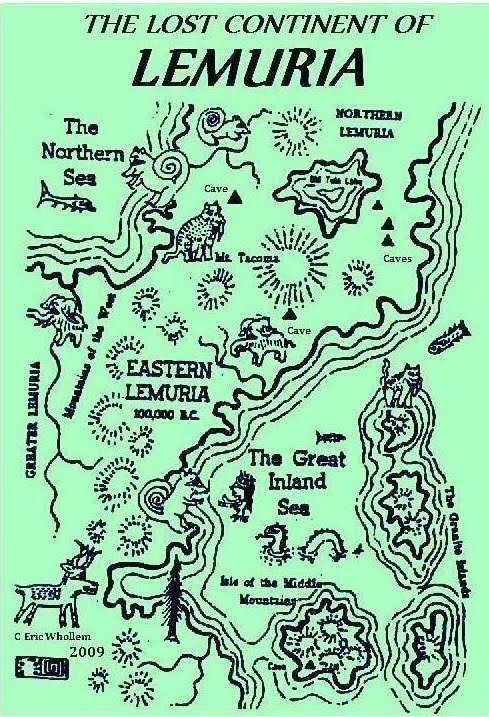
    Lemuria ith Bathymetric Studies
    Kumari Kandam Bathymetric studies. Image Credit.http://kumari-kandam.blogspot.in/


    While people give much credence to the names of kings mentioned in Tamil Sangam literature, the same attention has not been paid to the geographical description found therein.


    Lets us take the description of the Five Divisions of Land according to Tholkappiyama nd other Grammatical works.


    .

    The land mass here the Tamils lived as divided and named into Five distinct geographical entities.


    1.Kurinji-Hilly Terrain.

    2.Mullai-Forests.

    3.Marutham-Plains.

    4.Neydal-Seashore and

    5.Palai-Desert Region.


    One can n find these five regions is the present Tamil Nadu as it is to-day.


    The present conception of Lemuria or Kumari Kandam might explain this phenomena.


    This was a large landmass that got submerged in, possibly a tsunami.


    View. 1.

    There was a mountain chain  south of the Tamraparani River,which was an extension of the Wastern ghats.


    It as submerged in the sea.


    That as called the Malaya Parvatha and there are references to it in the Mahbharata and Ramayana.


    There was a king called Malayathvaja, whose daughter as Meenakshi and legend has it that she married Lord Shiva.


    That is now being called a Madurai , which is erroneous.


    The Madurai here Malayathaja ruled as The Madurai(South Madurai) which submerged.


    This continuation of the Western Ghats , Malaya Parvatha is called Sakatdvipa.


    One Sarangathdja fought with Asathama, after Drona as killed, in the Mahabharata War.


    There are refernces to the Pandyas being adorned with Sandalood paste obtained from the Malayamarutha.(Raja Suya Yaga, Mahabharata)


    This Sakat Dvipa resembled the ears of a Hare and it as described as hanging from the Bharatavarsha(Mahabharrata).


    This Malayaparvatham was reported South of Tamraparani,currently in Tirunelveli District.


    Silappathikaram also mentions that the sandalwood paste as from the forests where the Western Ghats and the Malaya Parvata meet.


    Kumari Kandam ith Cities.jpg
    Kumari Kandam ith Cities.


    Sakatdvipa was 25,600,000 mile


    The 49 lands

    This land was divided into 49 Naadu, or territories (probably of the size of small districts) between Kumari river and Pahruli / Prahuli / Pakruli river. These are named as seven coconut territories (Ezhu Tenga Natu), seven Madurai territories (Ezhu Maturai Natu), seven old sandy territories (Ezhu Mun-palai Natu), seven new sandy territories (Ezhu Pin-palai Natu), seven mountain territories (Ezhu Kunra Natu), seven eastern coastal territories (Ezhu Kuna Karai Natu) and seven dwarf-palm territories (Ezhu Kurum Panai Natu). All these lands, together with the many-mountained land that began with Kumari-Kollam, with forests and habitations, were submerged by the sea.

    Two of these submerged Nadus or territories of Kumari Kandam were supposedly parts of present-day Kollam and Kanyakumari districts.

    The above description match perfectly with  Kumari Kandam map developed using bathymetry studies since it shows the western extent of Kumari Kandam along the coast of Kerala where lies Kollam.

    இன்றைக்கு மஹேந்திர மலை என்பது திருக்குறுங்குடி என்னும் வைணவ திவ்விய தேசத்தில் இருக்கிறது. இங்கிருந்துதான் அனுமன் இலங்கைக்குத் தாவிச் சென்றிருக்கிறான். இந்தப் பகுதியைப் பற்றிச் சொல்வதற்கு முன்னாலேயே, தாமிரபரணி ஆற்றைக் கடந்தபின் மலய பர்வதத்தின் தொடர்ச்சியாக சொல்லப்பட்ட இடத்தில் கவாடபுரம் என்னும் பாண்டியன் தலைநகரைப் பற்றி சுக்ரீவன் சொல்கிறான். இது தென்கடலுடன் இணையும் மேற்குத் தொடர்ச்சி மலைப் பகுதியாகும். இந்தப் பகுதியைப் பற்றிய சுவையான தகவல்களை அடியார்க்கு நல்லார் மூலம் நாம் அறிகிறோம்.
    சிலப்பதிக்கார உரையில் (8-1), ஏழேழ் நாற்பத்தொன்பது நாடுகள் பற்றி அவர் கூறியதை முந்தின பகுதியில் கண்டோம். அவை எல்லாம் கடலுக்குல் அமிழ்ந்தன என்கிறார். அவற்றுடன் கடலுக்குள் அமிழ்ந்த பிற பகுதிகளில்,
    ’குமரி கொல்லம் முதலிய பன்மலை நாடும், காடும், நதியும், பதியும்,
    தட நீர்க் குமரி வட பெருங்கோட்டின்காறும் கடல் கொண்டு அழிதலால்’ என்கிறார்.
    குமரி கொல்லம் முதலிய பன் மலை நாடு என்று சொல்லவே, மலய பர்வதத்தை ஒட்டி அமைந்துள்ள இன்றைய கொல்லம் என்னும் கேரளப் பகுதி பாண்டியன் வசம் அந்நாளில் இருந்திருக்கிறது என்று தெரிகிறது. அந்த இடத்தில் குமரியின் வட பெருங்கோடு இருந்தது என்றும் இதன் மூலம் தெரிகிறது”.
    கோடு என்றால் மலைச் சிகரம் என்றும் பொருள். நீர்க்கரை என்றும் ஒரு பொருள் உண்டு. இங்கு குமரி ஆற்றைச் சொலல்வில்லை. ஏனெனில் இதே விளக்க உரையில், முதலிலேயே பஹ்ருளி ஆற்றையும், குமரி ஆற்றையும் சொல்லி அதற்க்கிடையே உள்ள தூரத்தையும் அடியார்க்கு நல்லார் சொல்லி விட்டார். எனவே இங்கு குமரிக் கோடு என்றதும், வட பெருங்கோடு என்றதும்,
    குமரி மலைத் தொடரின் வடக்கில் உள்ள மலைச் சிகரமான குமரி என்னும் சிகரம் என்றாகிறது. அது கொல்லத்தை ஒட்டி அமைந்திருக்கிறது. இவை எல்லாம் உண்மையே என்பதை இந்தியப் பெருங்கடலின் அடிவாரத்தைக் காட்டும் படங்களில் காணலாம்.”
    So the Tamil Kingdoms referred to included Lemuria and the present Tamil Nadu formed only a Part.
    Most interesting fact is that the Sanatana Dharma flourished there and I willl be posting archeological  evidence.


    https://ramanisblog.in/2014/03/07/india-puranic-names-its-current-names/

    http://kumari-kandam.blogspot.in/2012/05/blog-post.html

  • Killing Of Tamils What Is Wrong In Handling The Issue

    Some people who are interested, definitely no politicians,in the resolution of the Sri Lanka Tamils issue have been in touch with me.


    Tamils Raped Killed Lanka.jpg
    Tamils Raped Killed Lanka.


    Killing Of Tamils Lanka.jpg
    Killing Of Tamils Lanka.


    They are trying their best in their own way to bring in awareness among the people of world about the injustice meted out to the Tamil People in Lanka and the massacre of the Tamils in Sri Lanka.


    These people, in their personal capacity are bringing this matter to the attention of the US Government , the Congress members of the US,Members of the


    EU and Australia.


    They had asked for my views on these issues.


    My views are.


    The Lankan issue , in my opinion, has not brought forth to the Public forcefully.


    Mere publishing of shocking videos/images and news items of sufferings of the individuals.


    The issue has not gone home to people it ought to.


    You cross Nayudupet or Kuppam in Andhra, no body talks about this at all.


    I am settled in Bangalore.


    When I ask my friends in Karnataka about the Tamils issue, their answer is..


    ‘This is not new.Tamils a create problems wherever they go and they get the punishment.


    Moreover, Sri Lankan Tamils are anti Hindus and anti Indians.


    They killed our Prime Minister.


    Let us talk about some thing else”


    This is not the view of Kannadigas alone.


    Wherever I go in the North, I get similar feedback.


    Why?

    1.Too much emphasis has been given to the word Tamils and not on the human right issue.


    2.Why the Tamils have been treated this way and what their problems are, have not been clearly brought forth.


    People talk about LLC and no body talks about Sirimavo agreement with India.


    Nor the fact that the Tamils have been denied basic Rights in Lanka.


    That they are treated as menials and second -rate citizens in their own country.


    That their lands are grabbed.


    Sinhalese are brought in to show that Sinhalese are in majority.


    Their language Tamil is being slowly erased from the Island.


    That Hinduism is systematically wiped out by destroying  Temples, Cultural Centers.


    Employment opportunities and schooling are denied to the Tamils.


    For the Conduct of a minor  Hindu Religious function Governmental permission is required in Tamil areas of Jaffna.


    Children and women are raped and killed.


    Torture , Repression and killing of people is not restricted to Tamils.


    Now Tamils are exterminated , nearly, it is the turn of Muslims and Christians.


    Not to leave political dissenters like JVP, or the Media.


    The Matale Mass grave speak of the killing of JVP, it might have included Tamils as well.


    These facts are not known to public in a manner that they can understand.


    Pouring out emotions will be of no help.


    This is a practical issue that needs practical approach and the first step is presentation facts and presenting them to the suitable audience who matter,


    The issue of Lankan Tamils being anti Hindu is ill founded.


    These are the people who propagated Shavisam and Kaumaram in Lanka and  Far East.


    Major donors of famous temples are Lankan Tamils.


    Then why this perception.


    In Diplomacy it is not organised facts alone that guarantee people’s ears but how and through whom it is presented.


    The Tamil issue is being presented by Karunanidhi and DK , who are known to be anti Hindus.


    People perceive the people and the issue they promote are also anti Hindus.


    more to follow…..


  • Rig Veda a Tamil Panchang, Almanac Another Misinformation


    I posted how a group has consistently been twisting facts and are misinterpreting Tamil literature,Vedas and the link between them.


    Ancient Map of India, Vedic roots.Image.jpg.
    Ancient Map of India, Vedic roots.


    Considering the Nature of the sources, the best one can say about Tamil and Vedic Link is that while Tamil, which is now found to be at least 20,000


    years old(the time frame ranges from 17000 to 50000 years!) , they quote the Vedas Purans and Purans , in turn quote Tamils and Tamil Kings, is that


    both Tamil and Sanskrit are influenced by each other but which influenced what and when and how much is not clear.


    Such being the case, some who call them Scholars,(political appointees,)  mislead people into thinking that there is no link  between Tamil and Vedas.


    Once the internal evidence from Tamil Sangam Literature surfaced, they have started saying that Tholkappiyar was influenced by Sanskrit and Vedas!


    In the same breath they say that Rig Veda is  a Tamil Panchangam.


    If that were so why hate The Vedas and deny its link to Tamil?


    There was an article that Rig Veda is Tamil.


    If the view that Rig Veda is a Tamil Almanac, why refuse to accept the Veda,s deny that there is a Link between the Vedas and Tamil and in that case


    what happens to the Aryan Invasion Theory?( which of course is a Fraud)


    This sort of misinformation does not stop here.


    They go the extent of saying that no other earlier work in Tamil  (apart form Thokaapiyam) mentions the Vedas.


    This by Prof. A.Ramasamy Former Vice-Chancellor  in an article in DMK Mouthpiece  Risingsun weekly!


    Can there be anything more nonsensical?


    Keep off Politics from Tamil.


    You know neither Tamil nor, Politics, but lust for power and propensity for Corruption.


    An academician must not stoop to the level of one who sells……?!


    Read this.


    “That essentially, and more or less completely, the Rig Vedic cultural elements are of Dravidian provenance (more correctly Tamilian, the Indus


    valley civilisation being apparently a proto-Tamilian one), and that it may not be too far-fetched to describe the Rig Veda as a sort of Tamil


    Panchangam.”


    Thus the convincing arguments of M. Sundarraj lead to the inference that Tolkappiyam precedes Rig Veda…


    K. Nedunchezhiyan elaborately discusses the age of Tolkappiyam in his well-researched Tamil work titled Tolkappiyam – Tirukkural: Kaalamum Karuthum. He endorses the views of M. Sundarraj and proceeds to point out further influences of Tolkappiyam on Rig Veda. Tolkappiyam divides a year into six seasons, each having two months. Rig Veda also divides a year into six seasons which, according to
    K. Nedunchezhiyan, was due to the influence of Tolkappiyam. Tolkappiyar mentions Varunan as the sea-god. Rig Vedic Aryans were not sea-farers; yet, Varunan is mentioned as a sea-god in Rig Veda. K. Nedunchezhiyan opines that this was also due to the influence of Tolkappiyam. He further states two reasons for the influence of Tolkappiyam on Rig Veda. One is that Rig Veda was compiled in Tamil Nadu; and the other is that Rig Veda followed the Tamil letter tradition. So, he concludes that the age of Tolkappiyam is prior to Rig Veda.
    Kodinilai, Kandhazhi, and Valli, referred in the Verse 88 – Porul of Tolkappiyam, according to S. Ilakkuvanar, “are interpreted by some scholars as to denote Sun, Fire and Moon, the worship of which appears to be prevalent in ancient Tamil Nadu”. ..

    Therefore, almost all Tamil scholars agree that Tolkappiyam belonged to the last phase of the Second Tamil Sangam held at Kapatapuram, which was engulfed by the sea around 1500 B.C. Therefore, we may safely conclude that Tolkappiyam might have been written in 1500 B.C.”


    Real Research.


    The second Sangam (iṭaicaṅkam)idaichangam was convened in Kapatapuram.


    This Sangam lasted for 3700 years and had 59 members, with 3700 poets participating.


    There were 59 Pandiya kings starting from Vendercceliyan to Mudattirumaran were decedents and rulers of that period.[1] 


    This city was also submerged in sea. Ramayana and Arthasastra of Kautalya corroborates the existence of a city named kavatapuram.


    There is a reference to a south Indian place called kavata by sugriva in a verse which runs something like ‘having reached Kavata suitable for

    Pandiya’.


    The place kavata is also mentioned by Kautalya in Arthasastra.


    The grammar followed was budapuranam,agattiyam,tholkaapiyam,mapuranam and isainunukkam.


    The poems attributed to second academy are Kali,Kurugu,vendali and viyalamalai ahaval.


    The third Sangam (kaṭaicaṅkam)kadaichangam was purportedly located in the current city of Madurai and lasted for 1850 years.


    There were 49 Pandiya kings starting from Mudattirumaran (who came away from Kabadapuram to present Madurai) to Ukkirapperu valudi were


    decedents and rulers of that period.[2] 


    The academy had 49 members, and 449 poets are described as having participated in the Sangam.[3] 


    The grammars followed were agattiyam and tholkappiyam.


    The poems composed were Kurunthogai,Netunthogai, kurunthogai nanooru, narrinai nanooru, purananooru, aingurunooru,padirrupaatu,


    kali,paripaadal,kuttu,vari,sirrisai and perisai.(wiki)


    Citation,

    Age of Tholkappiyam.

    Links.

    1.  P.T. Srinivasa-iyengar, 1929, p.231
    2. Jump up^ P.T. Srinivasa-iyengar, 1929, p.231-232
    3. Jump up^ Zvelebil 1973b, p. 47


    Enhanced by Zemanta
  • Tamil Group Hid Tamil History Veda References


    There is a Saying in Tamizh, one of the oldest languages of the world ,along with Sanskrit,


    ‘Doesn’t matter if I lose one of my eyes, the other should lose both their eyes’


    Map of some settlements of archelogical importance in Tamil Nadu.Image.jpg.
    Map of some settlements of archaeological importance in Tamil Nadu.


    This is what I felt when I searched for information about the antiquity of Tamizh.


    One does not get enough information on the Web.


    Or in the Public domain in the form of Books , Articles.


    As compared the touted , fraudulent love for Tamizh to make a living and vicious hatred for the Brahmins and the North, driven by the lust for power, a

    Group in Tamil Nadu has been systematically suppressing a portion of History of the Tamizh which speak about the Vedas and The Purans.


    This group,boot-lickers of the British Raj,fueled by the false and dis-proven Theory of Aryan Invasion , mainly promoted by the Justice party,


    purported to look after the welfare of the Tamils(interestingly


    the Leaders of the Party were not Tamils, but Telugu Theagaraya Chettiar and a Malayali!)


    suppressed the truth.


    The self-styled rationalist Periyar, EVR, Leader of the Tamils(again self-proclaimed)Karunanidhi and his minions were abetting this fraud.


    Their intention was to hide the fact that the Tamils had strong roots with The Sanatana Dharma.


    What they forgot(Really?)  is that in the process the Richness and the cultural Heritage, even the Date of the Tamil Sangam Literature was made to look recent!


    Let me quote.

    It is a fact that archaeology in the South has so far unearthed little that can compare to findings in the North in terms of ancientness, massiveness or sophistication�: the emergence of urban civilization in Tamil Nadu is now fixed at the second or third century BC, about two and a half millennia after the appearance of Indus cities. Moreover, we do not have any fully or largely excavated city or even medium-sized town�: Madurai, the ancient capital of the Pandya kingdom, has hardly been explored at all�; Uraiyur, that of the early Cholas, saw a dozen trenches�;[5] Kanchipuram, the Pallavas� capital, had seventeen, and Karur, that of the Cheras, hardly more�; Kaveripattinam,[6] part of the famous ancient city of Puhar (the first setting of the Shilappadikaram epic), saw more widespread excavations, yet limited with regard to the potential the site offers. The same may be said of Arikamedu (just south of Pondicherry), despite excavations by Jouveau-Dubreuil, Wheeler, and several other teams right up to the 1990s.[7]


    We have a peculiar situation too as regards Southern India, and particularly Tamil Nadu. Take any classic account of Indian history and you will see how little space the South gets in comparison with the North. While rightly complaining that �Hitherto most historians of ancient India have written as if the south did not exist,�[ 1]Vincent Smith in his Oxford History of India hardly devotes a few pages to civilization in the South, that too with the usual stereotypes to which I will return shortly. R.�C. Majumdar�s Advanced History of India,[2] or A.�L. Basham�s The Wonder That Was India[3] are hardly better in that respect. The first serious History of South India,[4] that of K.�A. Nilakanta Sastri, appeared only in 1947. Even recent surveys of Indian archaeology generally give the South a rather cursory treatment….


    But there is a second reason for this poor awareness�: scholars and politicians drawing inspiration from the Dravidian movement launched by E.�V. Ramaswamy Naicker (�Periyar�) have very rigid ideas about the ancient history of Tamil Nadu. First, despite all evidence to the contrary, they still insist on the Aryan invasion theory in its most violent version, turning most North Indians and upper-caste Indians into descendants of the invading Aryans who overran the indigenous Dravidians, and Sanskrit into a deadly rival of Tamil. Consequently, they assert that Tamil is more ancient than Sanskrit, and civilization in the South older than in the North. Thus recently, Tamil Nadu�s Education minister decried in the State Assembly those who go �to the extent of saying that Dravidian civilization is part of Hinduism� and declared, �The Dravidian civilization is older than the Aryan.�[8] It is not uncommon to hear even good Tamil scholars utter such claims..


    1. Tolkappiyam is placed at two extremities – 1000 BCE and 7th to 9th centuries CE.
    2. The existence of “Tamil Sangams” based on the internal evidences of the literature and “Iraiyanar Agapporul” is accepted by one group of scholars and denied by the other.
    3. Megalithic culture related to Tamil culture – According to Asko Parpola the Dravidian languages came to India from the west through Iran about 700 BCE with the carriers of the Megalithic culture. He repeats that “one of the most widely supported hypotheses” was the one that was proposed in 1953 by Christoph von Furer-Haimendrof3
    4. Such Megalithic culture distributed all over South India including Tamilnadu and which persisted well into the first centuries of the Christian era.
    5. The last phase of the Megalithic culture (c.300-100 BCE) does overlap the period of Old Tamil Culture (c.100 BCE – 600 CE), which in its militaristic idealization of warfare (including such elements as the horse and iron weapons) closely resembles the martial character of the Megalithic culture (in which weapons were regular grave goods).
    6. Megalithic invasion of Tamizhagam – Asko Parpola4 also talks about a “Megalithic invasion” of Tamizhagam. To bring the “invading Dravidians” from Iran like “Aryans”, he proposes another hypothesis that the Dravidians could not have arrived in India as late as the Megalithic culture is clear from the fact that there is evidence in the Vedic texts for the presence of Dravidian languages in the Punjab already in the second millennium BCE.
    7. Thus, the Tamil language could have developed only after 500-300 BCE, and could have been written down after 300 BCE, so that the literature evolved had been upto 1st century to 7tth cent.CE.

    Therefore, the dating of Sangam literature should be decisive one in connecting it with Mahabharat incidences. The extensive usage of Mahabharat incidences as simile, metaphor and comparison in the literature clearly proves that it has reached South India definitely before or during 500-300 BCE. Otherwise, the Sangam Poets could not have adopted to use in such a manner…

    The references about and of Mahabharat in the Sangam literature have been of the following nature:

    1. Connecting the Tamil Kings of Tamizhagam with Mahabharata.
    2. Direct references to Mahabharata.
    3. Indirect references to Mahabharata.
    4. Other references of simile types.

    The usage of Mahabharata, characters, episodes etc., prove that the Sangam Poets had been well aware of the work during the material period. Though, the Great War was fought in the North separated by thousands of kilometres, its percolation to South down and its recording in the Tamil literature has been unique. Unless, there had been some relation between the Tamils and Mahabharata, the Poets could not have registered its presence positively in their poems.

    The Contemproneity of Cheraman Peruncheraladhan

    Muranjiyur Naganar, while singing the praise of Cheraman Peruncheraladhan, records that he offered food without any limit to the fighting armies of The Five and The Hundred (this is the usual expression used) implying Pandavas and the Kauravas, till the latter fell down dying (Puram.2.13-16). The following questions arise in the context10:

    1. Whether the reference is historical or mere poetic exaggeration to eulogize the King to get Gifts.
    2. Whether, the food was offered at the Site or he made any arrangements, if so in what way?
    3. Why no cross-reference is found in the Mahabharata itself, had a Chera King did such a service?

    In any case, the Poet knew the following facts:

    1. The Pandavas were refused their land, which was due to them.
    2. They got angry because of this and decided to fight.
    3. They fought with Kauravas.
    4. The Kauravas fell dying in the battlefield.
    5. As the Chera, Cholas and Pandyas have been mentioned in the text of Mahabharata giving their details of participation in Rajasuya, the Great war etc.
    6. Thus, in historical perspective, a Chera King might have participated in the War and he might have been given the charge of feeding the army, which the poet describes in his own way.

    The Relation of Velir with “Tuvarai” and Krishna

    Kapilar records certain details about Irngovel (Puram.201:8-12), which are to be scrutinized critically:

    1. Irungovel was born from a Yagna Pit (Tadavu) of a Rishi living in the North.
    2. He ruled a city named “Tuvarai”, which had walls made of Copper like material.
    3. He used to give alms without any discrimination.
    4. He descended from the “Velir dynasty”, which had in existence for 49 generations before him.

    The following points are noted after critical observation:

    1. If we take 15/20/25 years as the reign of each generation, then the Velir must have been ruling since 500 +735 / 500+980 / 500+1225 or since 1235 / 1480 / 1725 BCE. Incidentally, which tallies with the “Tramiradesa Sanngatham” that threatened the territories of Kharavela as recorded in the Kharavela / Hathigumpa inscription.
    2. Surprisingly, the Kharavela’s inscription records that he defeated a confederacy of Dravidian Kings, which was threatening his territorial integrity. And that confederacy was 1300 years old during his reign.
    3. Interestingly, scholars have hitherto been mentioning that it was 103, 113, 130 or 300 years old, but, actually, the inscription reads that it was 1300 old.
    4. If we consider that “Tuvarai”11 was a famous town in Mysore as revealed through inscriptions existing in 12th century CE, then, the reign of first generation comes to 1st cent.BCE / 3rd cent.CE /4th cent.CE, which contradicts the Sangam chronology.
    5. If we place the first dynasty at par with Mahabharata period, then, each dynasty must have ruled for nearly 40 years (3102-1000=2102/49=42 years), which may not be accepted by the modern scholars.

    Thus, the 1700-1400 BCE period appears to be reasonable. Then, the Chera King might not be offering food to the soldiers of the Great War as claimed by the Poet, if c.3100 BCE is taken as the date of Mahabharat War and he might have done so.


    Citation.

    Michel Danino, Voice of Dharma


    Maha Sangam Hindu Website


    Enhanced by Zemanta
  • He Blesses Even Those Who Curse Him Subrahmanya

    The Embodiment of Beauty, Murugan in Tamil,  the Best among Brahmins, is a God who Blesses you even when you Curse Him…In Tamizh.


    Murugan,Subrahmanya.Image.jpg.
    Murugan,Subrahmanya.


    He is described as the God of Tamil , His Father, Shiva, gave the langauge Tamil and Murugan was the chief among the poets Sammelan in the Tamil Sangam Era.


    So close was Lord Murugan considered by the Tamils, so attached to Him were/are  they to Him, He is praised as a Toddler.


    He is described as so accessible to those to the Tamil Language that He Blesses even those who Curse Him in Tamil, says Saint Arunagirinathar.


    மொய் தார் அணிகுழல் வள்ளியை வேட்டவன், முத்தமிழால்
    வைதாரையும் ஆங்கு வாழ வைப்போன், வெய்ய வாரணம் போல்,
    கை தான் இருபது உடையான் தலைப் பத்தும் கத்தரிக்க
    எய்தான் மருகன், உமையாள் பயந்த இலஞ்சியமே!


    முத்தமிழால் வைதாரையும் ஆங்கு வாழ வைப்போன்-He Blesses even Those who curse Him in Tamil.

    moii-thaar aNi-kuzhal vaLLiyai vEttavan muth-thamizhaal

    vai-thaarai-yum anggu vaazha vaip-pOn veyya vaaraNam pOl

    kai-thaan irupadhu udai-yaan thalai paththum kaththarikka

    ei-thaan marugan umaiyaaL baya-ndha ilang-chiyamEy


    The God who married Valli who wears flowers,

    In her pretty hair around which bees fly,

    The god who is the nephew of Lord Rama,

    Who cut off  the ten heads of Ravana,

    Who resembled an exuberant elephant,

    And the God who is the stream of Goddess Parvathi,

    Would be present  and bless the one with happiness,

    Even if ill is told of him in the three Tamils*.


    (Translation by P.R.Ramachander)


    Citation.

    http://stotraratna.sathyasaibababrotherhood.org/m15.htm


    Enhanced by Zemanta