Tag: Subrahmanya temples

  • Where Sivas Bow Tip Fell Temple Predicts Events Sivanmalai Subrahmanya

    Where Sivas Bow Tip Fell Temple Predicts Events Sivanmalai Subrahmanya

    This article is another one on the series on Temples where inexplicable phenomena are observed even today.

    Science can not explain it.

    Temples where,

    Idols change colors daily/once in one and a half hours/once in fifteen days,

    Musical pillars,

    Where ghee turns butter while performing Abhisheka,

    Celestial light appears on a fixed date,

    Ghee kept in the closed sanctum does not get spoiled for an year,the lamp keeps burning ,

    Where fruit follows leaves,no intermediary stage,

    Idol drinks Jaggery water,

    ….

    We have a temple where Universal events are predicted.

    This happens when one places a specific object in a Box.

    An individual is intimated through a dream to place an object in a box meant for this.
    Some changes are noticed after sometime.

    It indicates of things to come.

    When water was placed in a vessel,Small Kumba,it overflowed.

    This was followed by the Tsunami that struck India.

    When gold/Turmeric was placed,price of Gold shot up and never came down to the previous level.

    When a fistful of Sand was placed,price of Rice went up.

    These have been narrated by a person in the town,who is a reliable witness.

    The procedure followed is ,

    Lord Subrahmanya would appear in a dream to someone in around Kangeyam,Paramathi,Thiruppur,Vellakkovil and Thennilai.

    He/she would come to the temple and explain the dream.

    The priest would then write down the item to be placed in the Box with the Name,address and the date and time.

    Then they would have a flower,either white or red by a child from the crowd and if white flower is picked,the item would be placed in the box.

    Source.

    https://tamil.oneindia.com/art-culture/essays/2011/02-prophetic-sivan-malai-tample-aid0128.html

    The Sivamalai of today is also known as Sivamamalai, Sivachalam, Sivathri, Sivasailam, Sivagiri, and Shakthi Sivamalai. The deity is so powerful because it is supposed to be an integrated embodiment of Siva, Vishnu, Brahama, Murugan, Vinayaka and Indra. In each “yuga” ( the Hindu term to mean eon) Sivamalai has been referred to with special names. Panamalai. Vellimalai, Sembumalai, and now in the Kali yuga as Kamarupa Jothigiri. Such is the antiquity of this sacred mountain.

    The Names of The Deity :

    Devotion to the deity manifests in many ways. One of them is giving the Lord new names in each era. Perhaps this is a sign of people’s love of the deity. It is also likely that poets and thinkers came up with new names as days went by, and found many ways to re-kindle the Bhakti of pilgrims. Here are the various names by which Sivamalai Murugan is known as : Kandaswami, Kangeyan, Guhan, Kumarar, Guruswami, Shanmukhan, Sivathrinathan, Saravanan, Sravanabavan, Sivasubramanaian, Sivachalan, Sivachalapathi, Sevalavan, Duraiswami, Maragathamayuran, Murugan, Murugayyan, Muthayyan, Vadivelan, Vallimanalan, Veluswami, Visakar, Velayudhan, Velan, and Kalyanasubramaniar.

    Origin of Sivamalai :

    One of the well known myths associated with Siva is his conquest of Tripuram – the three celestial cities which the Asuras (demons) had taken over, and wreaked havoc over them. The Devas ( celestial gods) appealed to Siva for help and asked him to save them from the demons. Siva made mount Meru his bow, and Vasuki the serpent his bow-string and prepared to wage war against the Asuras. The very tip of Siva’s bow ( Mount Meru) fell on earth and that became Sivamalai according to legend. It is also known as Sakthimalai because Parvathi the goddess did penance once on this hill.

    The sage Agastya came to this mountain and performed penance in order to gain knowledge about the Agamas. He also created a natural spring on this mountain from the waters of the Ganga which he brought in his Kamandalam. It is said this miracle took place on Karthigai Pournami day ( full moon in the month of Karthigai) and thus it is venerated by devotees as a special day.
    Source.

    http://www.sivanmalaimurugan.tnhrce.in/history-sivanmalai.html

    The five special poojas that are conducted daily are called the AINDU KALA VISESHA POOJAKKAL. They are:

    ► Vizha Pooja ( 6 am)

    ► Kala Sandhi Pooja ( 9 am)

    ► Ucchi Kala Pooja ( 12 noon)

    ► Sayaratchi Pooja ( 6 pm)

    ► Artha Samam Pooja ( 8 pm)

    Monthly poojas.
    Every month during Amavasai, Shasti, and Kiruthigai, special poojas are performed when devoties visit the temple in large numbers to seek the blessings of Sivamalai Andavar.

    Contact information.

    Address: Arulmigu Subramanyaswamy Temple, Sivanmalai Post, Kangayam 638701, Tirupur District. Tamilnadu.

    Office : 04257 – 220680

    Hill Temple : 04257 – 220630

    Fax : 04257 – 223630

    E-Mail ID : sivanmalaikovil@yahoo.com

    Check phone number.

    Source.

    http://srimurugan.org/sivanmalai.html

    How to reach Sivanmalai.

    Nearest Railway Station :

    • Tirupur (24 KMs)
    • Coimbatore (85 KMs via Palladam), Erode (45 KMs via Arachalur)
    • All Express and Trunk Route trains to the South pass through these two stations.

    Nearest Airport :

    • Coimbatore
    • This airport is well connected to Chennai, Bangaluru, Mumbai, & Delhi
    • Star Hotels are availble at Erode, Tirupur & Coimbatore, Tamil Nadu,India.

    http://www.sivanmalaimurugan.tnhrce.in/

  • Present Arupadai Veedu Six Murugan Temples are Not What The Original Was?

    Present Arupadai Veedu Six Murugan Temples are Not What The Original Was?

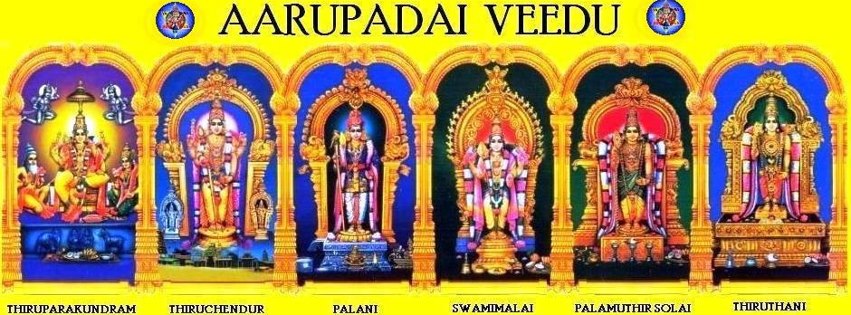
    On a careful study of the Skanda Purana other Puranas Tamil Sangam work Thirumurukatruppadai by Nakkerar, (earliest work on Lord Subramanya as Murugan) and Silappadikaaram, one of the Five Tamil Epics), I have a few doubts about the present Arupadai Veedu, ஆறுபடை வீடு, the six important temples of Subrahmanya, called Murugan in Tamil.

    This was reinforced when I visited Subrahmanya Temple in Kukke, Karnataka.

    Kukke is from Sanskrit word Kukkuda, meaning Cock, the Flag of Lord Subrahmanya.

    We have Kumara Parvatha, beneath which this temple is located.

    The River is Kumara dhara.

    Just about two hours from there is Dharmasthala, a special Kshetra of Shiva.

    And further down the Western Ghats lie the two hundred and forty seven temples of Shiva established by Parashurama.

    And Murugan is associated with Hills and surrounding areas, called Kurinji, குறிஞ்சி land in Tamil.

    Though the present Arupadai of Muruga lists six places,

    அழைக்கப்படுகின்றன. இந்த ஆறு இடங்கள்:

    1. திருப்பரங்குன்றம், Thiruparankundram
    2. திருச்செந்தூர் அல்லது திருச்சீரலைவாய், Thiruchendur,
    3. திருவாவினன்குடி (எ) பழனி, Palani
    4. திருவேரகம் (எ) சுவாமிமலை சுவாமிநாதசுவாமி கோயில், Swamy Malai, Thiruveragam.
    5. திருத்தணி அல்லது குன்றுதோறாடல்
    6. பழமுதிர்சோலை Pazhamudhir Solai

    Of these, Thiruchendur is on the seashore, where Subrahmanya slew Surapadma of Mahendragiri( curious to find Mahendra Parvatha in Odisha ) and Thiruchendur is on the shores of Bay of Bengal.

    Number one, three, Five are relatively small hills unlike Kumara Parvatha.

    And Pazhamudhir Solai, near Madurai is a forest.

    And the evidence from what is stated in the beginning of this articles points to Thiruveragam is in Kerala.

    That is where Murugan married Valli.

    Will write on this.

    *Please note that this article is an articulation of my doubts and is not a conclusion, based on ancient landmass of Lemuria Rodina. Scholars may contribue

  • Daily Worship of Five Deities Panchayatana Puja

    In Hinduism Paarayana is different from Puja.

    Paarayana is the recitation of a particular Sloka, Sahasranama, or Astothra of one Deity or any number of Deities daily.

    In this, one need not follow very strict rules of Puja, like Dhik Bandana, Kavacham.

    This can be performed at any time , preferably in the morning or in the evening.

    A Naivedya is to be offered with Aarthi,(Naivedya and mantras  please read my post on Naivedya)

    It is recommended that either Honey ar dried Grapes be offered.

    These two are suggested for they do not have any Dosha  or deity specific.

    In a Puja strict rules are followed and normally the Puja is initiated by a Guru.

    One has to wear Pancha kachcham(How to wear a Pancha Kachcham, please read my post )

    Poojas are performed either in the mornings or evenings.

    It is recommended that Siva Pooja be performed in the evening; others may be performed either in the morning or in the evening.

    It is customary to offer a specific Naivedya for a  particular Deiy; Modhaka for Ganesha,Sarkarai Pongal for Ambika/Vishnu and Maha Naivedyam  for Siva.

    ( Maha Naivedya- Hot cooked Rice with a spoon ful of Ghee on top of it with two teaspoonful of cooked Thoordal)

    There is another specific Puja where Deities representing the Five elements of Nature, Earth, Water, Fire, Air and Ether are worshiped daily .

    This is to be performed in the morning.

    As this Puja has Five Deities, this is called the Panchayatana Puja.

    Idols placement In Panchayatnana Pooja.image
    Panchayatnana Pooja idols placement

    This was made popular by Sri Adi Sankaracharya.

    There is a misconception that only those who worship Siva alone can perform this.

    It  is incorrect.

    The reason for the prevalent view is that people mistake the term ‘Smartha‘ means those who worship Siva.

    Smartha is One who follows the Smriti, that which is retained by Memory, as against Sruthi that which heard(Vedas)

    We have a host of Smritis,

    Narayan Smriti,

    Smarta Smriti.

    Manu Smriti,

    Sukra Smriti. Bruhaspati Smriti.

    All those who follow either of these my perform the Panchayatana Puja.

    Sankaracharya systematised the worship into Six Systems, The Shan Mathas(read my post on this)

    In the Panchayatana Puja,Subrahmanya is not included, but it may be included by having a small Silver Spear(Vel) or a small Silver Snake Idol.

    The Sankalpa depends on one’s desires.

    The best sankalpa is praying for the welfare of all beings, living and non Living.

    The mantras for each Devata may be Astothra .

    Sahasranama is  time-consuming.

    The Five elements and the represented Murthis.

    Akasa -Ether/Space-Vishnu.

    Agni-Fie-Ambika.

    Vayu, Air-Aditya.

    Prithvi, Earth-Siva.

    Jala, Water -Ganapati

    Here on may find the Vedic representation of the principles of nature.

    This may sound slightly different as Aditya  represents Vayu, while Vishnu who is normally associated with Prithvi is seen representing Space as Vishnu is an Amsa of Parama Purusha who represents Space as well.

    ‘Akasyatipo Vishnu Agnischaiva Maheswari,

    Vayo Suryah  Kshtir  Isah Jalan Nyasa Ganathipa’

    There is school of thought which prescribes different  ways of placing the idols in the Puja.

    One is:

    Shiva panchayata

    Vishnu                Surya

          Shiva

    Devi                    Ganesh

    Vishnu panchayata

    Shiva                 Ganesh

          Vishnu

    Devi                 Surya

    Surya panchayata

    Shiva                 Ganesh

     Surya

    Devi                 Vishnu

    Devi panchayata

    Vishnu                 Shiva

            Devi

    Surya                 Ganesh

    Ganesh panchayata

    Vishnu                 Shiva

              Ganesh

    Devi                     Surya

    That is to place the Murthy which one traditionally worships as prescribed by his Kula Sampradaya.

    The other method is to place the Ishta Devata, Preferred personal God in the center and  place all the others around it.

    Some use natural Stones instead of Murthis.

    For..

    Surya Crystal from Vallam Tamil Nadu.

    Ganesha  Red Sonebhadra from Sone,Bihar.

    Vishnu Saligrama from Gandaki, Nepal.

    Shiva, Bana Linga from Narmada, M.P.

    Ambika Swarnamukhi from Swarna Mukhi from Andhra Pradesh.

    if you  plan to use small Idols ensure that they are not taller than your thumb.

    Panchayatana Puja Procedure.

    Start with Ganapati, Adithya,Subrahmanya,Ambika, Shiva and Vishnu.

    Follow the Link for detailed mantras for Panchayatana Puja.

    http://viprayuva.org/joomla/index.php/puja-sangraham/149-laghu-panchayatana-puja