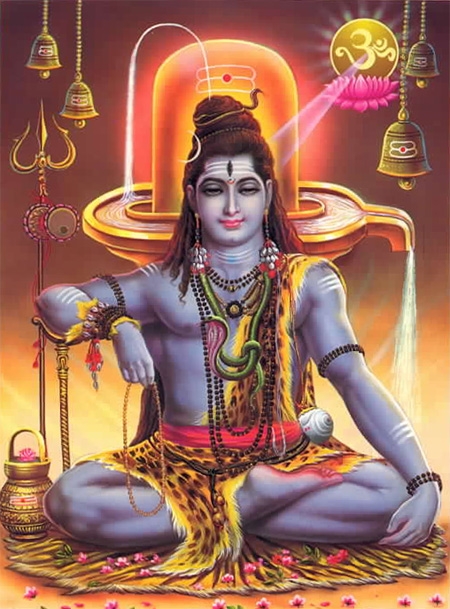
Tag: Sanatana Dharma

  • History Content Secular Indians Are Worried About List

    There is an uproar among the self-styled Secular Elite of India about th news of some changes that may be effected in Indian History Text Books.

    Mind you, this is not even finalised.

    Indian National Flag.jpeg
    Indian National Flag.

    These apologists for Secularism, which , in my opinion, is as cowardly as Non ALignment, are raising a uproar hollering that they would accept only facts as History and not historicised Legends-I can not understand this double peak, Can you?

    What are they concerned about the facts that are untrue and fantasies?

    Sanatana Dharma is the name of Hinduism.

    It dates back to , at  least 5000 BC.

    Vedas are the oldest literature available.

    They teach for Humanity, not for a Group.

    They do not advocate either Untouchability casteism.

    That India is the country which never invaded other Countries.

    Indian Sanatana Dharma was practiced in Burma, Singapore, Indonesia, Malaysia,Vietnam,Cambodia,Laos,Fiji,Japan,New Zealand,Polynesian islands,Australia,Middle East, Turkey,Bulgaria, Rumania,Yugoslavia,Italy,Germany,Rome,Spain, Portugal,France,

    England, Scandinavian Countries,Russia, China,Africa, North America, South America and Central America.

    That Evidence has been found to support these facts.

    That indian texts indicate their proficiency in Physics,Astrophysics ,Quantum Physics,Chemistry, Mathematics, Astronomy, Calculus,Trignometry,Architecture, Music, Dance,Ship Building, Medicine,Cloning,Stem Cell Research,Para Psychology, Psychology, Sociology,Botany, Biology,Space Technology, Space Travel, metallurgy, Water Management,,Linguistics,Agriculture,…….

    * please check my posts on these topics filed under Hinduism, Science, Astrophysics.

    That Lord Ram and Krishna were not figments of imagination as Jesus is, but Historical figures whose existence  is authenticated.

    That Ramayana and Mahabharata were not stories but facts, history.

    Puranas are not non sense but a chronicle of Human evolution..

    That Islam has destroyed temples, raped Indian women, plundered India,

    That the present Muslims were forced to convert to Islam by sword,

    That The Taj  Mahal was built ona Shiva Temple,

    That Vikramaditya ruled the world,

    That Sanskrit is the Mother of all languages and is the most suitable for even the modern computing,

    That tamil, another ancient Indian Language is as old as Sanskrit,

    That india was culturally One,

    That there was no Aryan Invasion,

    That there was no entry of Aryans through the Khyber Pass,

    That Lord Rama’s ancestor Satyavrata Manu migrated to North from the South,

    That the British falsified History,

    That Macaulay introduced english in India to divide the Indians and make them lose their respect for their Culture and Religion,

    That the British committed the genocide of indians, some  one billion Indians.

    That the British carted away indian artefacts,

    That  Max Mueller was a Missionary and misinterpreted the Vedas,

    That indians were converted to christianity and are being converted,

    That Gandhi was not the only one who fought for Indian Independence,

    That the role of Malaviya, Tilak,Sardar Vallabhbhai Patel are suppressed,

    That Nehru was instrumental in creating Jammu and Kashmir problem,

    That Gandhi blackmailed the Government into granting Pakistan, with disproportionate assets,

    That Indira Gandhi was a Russian Mole,….


    And more….

    All under the garb of Secularism.


    http://ramanisblog.in/2014/12/17/saraswati-is-benzaiten-japanese-god-of-eloquence/

  • Who Are South Indian Brahmins, Five Vedic Families

    Though the culture of India is one, one that is based on Hinduism,there are minor differences in practices by the people.

    The four castes, which is a loose  and incorrect translation of the word Varna, follow uniform code, though they might be quite far off from each other, despite no written scripture for such practices.

    However one finds some differences in the practices followed by them,though they follow the general spirit of the Vedas and Smritis.

    Take the instance of Brahmins .

    Brahmins Population distribution in India Interactive Map. Image
    Distribution of Brahmins in India. Interactive Map by Joshua Project

    The Brahmins of South India, Iyers and Iyengars do not generally have surname following their names as is the case in North India.

    The terms Iyer and Iyengars are unique to Tamil Nadu.

    Then one case divisions among the Brahmins in South India.

    In Tamil Nadu, there are Iyers, with sub groups like Ashtasahasrama, Brahathcharanam,Vadama, and Vathima.

    In Andhra one has Mulukanadu and the like.

    In Karnataka also there are subdivisions.

    Why such differences from the North indian Brahmins and among the Brahmins of South Indian themselves?

    There are some references.

    One states that Sage Viswamitra had his fifty sons ostracised to Dravida Desa for questioning his authority and these people intermarried with the Dravidas.

    One of their descendants, Apasthamba compiled the Vedas in yet another form in the form of Sutras, called the Apasthamba Sutras.

    This sutra incorporates some practices of the Dravidians like the wearing of Mangal Sutra in a Marriage.

    This practice is not present in Vaidika system of marriage.

    Then we have the difference in the Veda Paatas, the specific branch and the recitation.

    One finds the near absence od the Ataharva Veda in the South and the Shukla Yajur is followed by a few people in Tamil Nadu.

    In Tamil Nadu, one finds Krishna Yajur and Sama Veda being practiced more.

    In Andhra and Karnataka , Rig Veda and Krishna Yajur, in Andhra Rig And Sama Veda.

    Why?

    Though there is yet another reference of Brahmins having been in the South around 5000 BC and even before this, why there is such a difference in practices?

    Did Brahmins live in the South or did they migrate from the North?

    “Battles mentioned in the Rig Veda, whether between those called Aryans or Dasyus, are largely between the “five peoples” (pancha manava). These five are identified as the Turvashas, Yadus, Purus, Anus and Druhyus, which the Puranas describe as oRiginating from the five sons of Yayati, an early Vedic king in the lunar dynasty descended from Manu, and the son of Nahusha. These peoples, both Dasyus and Aryans, are also called Nahushas in the Rig Veda.(*24) Of the five the main people of the Rig Veda are the Purus who are usually located on the Sarasvati river or the central region. The Yadus are placed in the south and west in Gujarat, Rajasthan and Maharashtra up to Mathura in the north. The Anus are placed in the north. The Druhyus are placed in the west and the Turvasha southeast. These are the directions given to them in the Puranas.

    In the original Puranic story there were two groups of people, the Devas and Asuras, or godly and ungodly people, who had various conflicts. Both had Brahmin gurus, the Angirasas for the Suras (Devas) and the BhRigus for the Asuras. Both these Brahmin groups we might add were responsible for many teachings in ancient India, including the Upanishads. The battles between the Devas and Asuras involved a struggle between their gurus.

    King Yayati, the father of the five Vedic peoples and a follower of the Angirasas, had two wives, Devayani, the daughter of Shukra of the BhRigu seers, and Sharmishta, the daughter of Vrisha Parvan, king of the Asuras. Turvasha and Yadu were sons of Yayati by Devayani of the BhRigus. Anu, Druhyu and Puru were sons of Yayati by Sharmishta of the Asuras.(*26) Yayati’s story shows that the five Vedic people were born of an alliance of Aryan and Asuric kings, and their Angirasa and BhRigu seers.

    Vrisha Parvan and Shukra appear to have come from southwest India, Gujarat, as the BhRigus were descendants of Varuna, God of the sea, and have always been associated with this region of India (for example, their city BhRigukaccha or modern Baruch near Baroda). In the Puranic story their territory bordered on that of Yayati, who happened upon both Devayani and Sharmishta, while hunting.

    Hence three of the original five Vedic peoples had Asuric blood in them through their mother. Puru, whose group ultimately predominated, had Asuric blood, whereas the Yadus, who were most criticized in Vedic and Puranic literature, had no Asuric blood but rather that of the Brahmins. In this story we see that both groups of people – thought by the Aryan invasion theory to be the invading Aryans and the indigenous peoples – had the same religion and ancestry.

    These five peoples were styled either Arya or Dasyu, which mean something like good or bad, holy or unholy according to their behavior. Their designation can shift quickly. The descendants of an Aryan king can be called Dasyu or its equivalent (Rakshasa, Dasa, Asura, etc.), if their behavior changes.

    For example, in the most important battle in the Rig Veda, the famous battle of the Ten Kings (Dasarajna), victorious Sudas, regarded as a Puru king, and located on the Sarasvati river, includes among his enemies called Dasyu groups of the five Vedic peoples like the Anus, Druhyus, Turvashas, and even Purus.(*27) However, the sons of Sudas themselves fall and in Brahmanical and Puranic literature are themselves called Rakshasas or demons for killing the sons of the great rishi Vasishta.(*28) Meanwhile the Kavashas, a seer family, listed among the defeated enemies of Sudas (*29) appear again in the Brahmanas and Upanishads as the chief priests of the famous dynasty of Kuru kings, particularly Tura Kavasheya, the purohit for King Janamejaya.(*30) The BhRigus, who were among those defeated by Sudas, appear as prominent teachers in later Vedic and Puranic lore as already noted. Such shifts would be impossible if Aryan and Dasyu were simply racial terms. Aryans and the Dasyus are not a racial or linguistic but a religious or spiritual divide, which changes along with human behavior.”

    The Puranas make the Dravidians descendants of the Vedic family of Turvasha, one of the older Vedic peoples. These ancient historians did not feel any need to limit the Vedic people to one linguistic group. The Vedas portray the large region of north India which must have been as complex culturally then as today. In fact the Puranas regard the Chinese, Persians and other non-Indic peoples to be descendants of Vedic kings. The Vedas see all human beings as descendants of Manu, their legendary first man.

    Thus one sees that the Brahmins were the residents of Dravida and there was also a group that moved in, sent in by Viswamitra(History of the Tamils by PT.Srinivasa Ayengar).

    Thus one can assert that the Brahmins of the South are the descendants of Yayati of Lunar Dynasty.

    Citation.

    http://www.indiaforum.org/india/hinduism/aryan/page17.html

  • Kings List India By Puranas Validated

    Indians believe the Timeline of India’s History as explained by William Jones and his followers, though their theory on the dates assigned to events and persons have been proved to be incorrect by many references and most importantly by archeology.


    If one were to mistrust the Hindu scriptures, the Nastika System of jainism which denies the authorit of the Vedas, has provided informationwhich tallies with the timeline and events portayed by the Puranas.


    Secondly the Archeological finds dispprove the dates assined by William Jones and others and show that the events and people had happened/lived much before the dates indicated by them


    Our history textbooks tell us that Magadha (not Ayodhya) was one of India’s first kingdoms and that Buddha and Mahavira were contemporaries who lived in/ around Magadha around 600 BCE. However, when we visit the sites of India’s so-called earliest centres of civilization (e.g., Sarnath where the Buddha preached his first sermon), we see evidence from the Jain tradition that its earlier Tirthankaras8 were already living in that city hundreds of years ago.9 On top of this, the Jains appear to share the same hoary past as the Hindus do, with their first Tirthankara (Rishabhadeva) believed to be the king of Ayodhya more than 20 generations before Mahavira.

    In addition to the Jain tradition, the history preserved in our native chronicles – the Puranas – appears to have some support from archaeology as well. Although most of the sites described in the Puranas are now populated and hence cannot be excavated, the few non-inhabited sites (e.g., Dwaraka) exhibit evidence of ancient civilizations. This begs the question as to whether we should truly discard the traditions preserved in India’s native chronicles or take the trouble to re-examine them in a new light. This essay presents the chronology of India as preserved by its native historians and tests the validity of this chronology when compared to independent accounts of ancient India.


    The accepted chronology of ancient India is based on William Jones’s identification of Sandrocottus with Chandragupta Maurya, the first king of the Mauryan empire. This identification serves as the basis for determining the era of Buddha, the dates of the subsequent kings of Magadha and of other kingdoms of India. According to this chronology, Chandragupta Maurya ascended the throne of Magadha around 315 BCE. However, the Puranas as well as Megasthenes’s account of the milieu he lived in present a compelling case for debunking this identification and associating Sandrocottus with Chandragupta I, the founder of the Imperial Guptas. According to the Puranas, Chandragupta Maurya was crowned in 1538 BCE, Ashoka was crowned in 1489 BCE, and Chandragupta I ascended the throne of Pataliputra around 315 BCE in time to be the monarch referred to as Sandrocottus when Megasthenes arrived in Pataliputra in 302 BCE. This essay presents the evidence for this Puranic chronology and aims to resolve other conundrums in Indian history, such as the age of Vikramaditya and Adi Sankara, with this revised timeline.”


    Then one has the astronomical data.


    This authenticates the Puranic Data.


    The problem with the astronomical data is that celestial events occur repeatedly at a fixed intervals and as such the difficulty lies in matching a particular astronomical event with the events described by our Puranas.


    Then one has Kalpas, a Kalpa being one day f Lord Brahma, the Creator and He creates 14 Manvantaras.


    This crestes additional dificulties to identify the Manvanatara, Kalpa and a particular event.


    This one can resove by referring to the Sankalpa being used by the Hindus for every religious  event.


    Please read my post Geo Tagging, Sankalpa.


    I became curious to check all these because i has found a refernce stating that Satyavrata Manu , the ancestor of Lord Rama migrate from the South to North because of a Tsunami.


    He went to Ayodhya and founded the Dynasty called Ikshvaku.


    There are five floods recoreded in Indian legends, both in Sanskrit and Tamil.


    This we can resolve by matching this information with references found in other texts and by archeology.


    The following verified information spurred me to search and arrive at a Kings List of India according to Puranas ans Tamil Classics.


    1.Lord Rama’s Date of Birth, Marriage,Exile, Ramayana War.

    2.Mahabharata War.

    3.Agasthya’s crossing over to South through the Vindhyas.

    4.Tamil Classics’s refernce to Tsunamis.

    5.The ancestry of Tamil Cholas to Manu and of Pandyas antiquity.

    6.The feeding of the armies of Kauravas and Pandavas by a Tamil King, Udiyan Neduncheralaathan.

    7.The artifacts and archeological finds of the remnants of Sanatana Dharma throuhout the world.


    And the Bhagavata reference to Satyavrata Manu leaving th south for the North because of a Tsunami.


    I have posted articles on all these issues,under Hinduism.


    List of Kings.


    India Kings List.jpg
    List of Indian Kings according to Puranas after primay creation. Click to enlarge.


    Kings,descendants of Vivasvat.jpg
    List of kings in the Vaivasvata (descendants of Vivasvat) Manvantara as stated in the Vishnu Purana.Click to enlarge.


    Indian Kings list upto Mahabharata War.jpg.
    List upto Mahabharata War.List of kings in the Vaivasvata Manvantara until the Great War as stated in the Vishnu Purana.Click to enlarge
    Kings List after Mahabharata War.jpg
    List of Kings in Kali Yuga(present Yuga). List of kings in the Kaliyuga (after the Great War) as stated in the Vishnu Purana.Click to enlarge
    Second List of Kings after Mahabharata War.jpg
    List of kings in the Kaliyuga (after the Great War) as stated in the Vishnu Purana. The Vidisha list is from the Vayu Purana.Click to enlarge.


    One may note that the Solar and Lunar dynasties married among themselves.

    The list incldes the names of Bimbisara, father of Ashoka.

    Reference and citations.

    http://bharatbhumika.blogspot.in/2014/08/puranic-chronology-of-india.html


    http://ramanisblog.in/2014/12/03/world-history-timeline-by-rigveda/

  • Lunar Dynasty India Chandra Vamsa of Mahabharata List

    Indian legends speak of two dynasties that ruled India, Surya, Solar and Chandra Vamsa, Lunar Dynasty.

    Lord Rama belonged to Ikshvaku of Surya,Solar Dynasty while the Kauravas and Pandavas belonged to Lunar Dynasty or Chandra Vamsa.

    However, Vivaswan, the father of Vaivaswatha Manu of Solar Dynasty has been identified as Surya Deva (The Sun).

    Chandra is said to to be a son of Atri Maharshi, (a son of Brahma) or of the ocean (Ksheera Sagara Mathanam).

    Chandra’s son Budha married Ila the daughter of Vaivaswata Manu and their son Pururavas inherited Pratishthanapura.

    Both these dynasties are related.

    The Tamil Dynasty of Cholas descended from the Solar Dynasty of Rama while Pandyas from the Chandra Vamsa, Lunar Dynasty.

    Chandra Vamsa .jpg
    Chandra Vamsa , Lunar dynasty of India. Click to enlarge.
  • Bharatwaja Hinduism Gods in Japan Religion

    During my research about the presence of Sanatan Dharma throughout the world,information about two countries has been very difficult to obtain.


    Japan and China.


    Three factors are responsible for this.

    Shiva Linga in Japan.jpg
    Shiva Linga in Toganji Temple,Nagoya, Japan


    One is that these cultures are ancient and their philosophy, religious literature is , as in Hinduism cloaked in allegory.


    The third reason is that the influence of Buddhism and its offshoot in the later stages in Japan.


    In the case of China, the advent of Communism ensured that the information is suppressed.


    In this article , the influence of Sanatana Dharma on  Religion in Japan, Japanese language.


    What strikes one is the use of Hindu Gods’ names .


    Common Terms: Sanskrit/Chinese/Japanese

    Archarya – Master Achali Ajari
    Dharma – Law FA Ho
    Pratima – movement warrior techniques of the Hindu ksatreyas Hsing
    Kata
    Sunyatapani –  Tang-Shou Karate/To De
    Dharmahasta  Chuan Fe Kempo
    Marga – The Way Tao  Do
    Guhya-Sutra Mi-Ching Mikkyo
    Nagarjuna Lung Shu Ryuju/Ryusho/Ryumyo
    Mudra – ritual gesture  Yin In
    Mandala a special zone or area Mantolo Mandara
    Vajramukti  Ching Kang, Chieh T’o Kongogedastsu
    Sangha – congregation or group followers Seng So
    Narya – strong or manly Na-Li Nara, Naha
    Nata  Na-Pa, Na-Ra Nara, Napa, Nafa
    Yoga – to yoke Yui Cha Yu Ga”


    Ganesha is worshiped as Shoten or Shoden (Holy God) in Buddhist Temples.

    Sarasawti is worshiped as Benten.(read my post)

    Visvakarma, the Divine Architect of Hinduism is called Bishukatsuma as the God of Carpenters.

    Yama, God of Death in Hinduism is Emma- O, the King of Hell.


    Samudra Manthan, Churning of the Ocean of Milk in Japan.


    “According to author Donald A. Mackenzie: “The Indian form of myth of the Churning of the Milky Ocean reached Japan. In a Japanese illustration of it the mountain rests on a tortoise, and the supreme god sits on the summit, grasping in one of his hands a water vase. The Japanese Shinto myth of creation, as related in the Ko-ji-ki and Nihon-gi, is likewise a churning myth. Twin deities, Izanagi, the god, and Izanami, the goddess, sand on “the floating bridge of heaven” and thrust into the ocean beneath the “Jewel Spear of Heaven”. With this pestle they churn the primeval waters until they curdle and form land.”

    (source: Myths of Pre-Columbian America – By Donald A. Mackenzie p.190-191).


    The distinguished Japanese scholar, Mr. J. Taka Kusu, says: ” But I should like to emphasize the fact that the influence of India, material and intellectual, must have been much greater in an earlier period than we at present consider to have been the case. There were, for instance, several Indians, whom the Kuroshiwo current, washing almost the whole southern coast, brought to the Japanese shore.” He further says, ” It cannot be denied that several Indians came to Japan, especially in view of so many Indians finding their way to China by sea.”

    He then relates how a Brahmin Bodhisen Bharadvaja, known generally as the “Brahmin Bishop” came with another priest from India via Champa (Cochin China) to Osaka, then to Nara, where they met another Indian ascetic and taught Sanskrit to the Japanese. “His monastery and tombstone, with a written eulogy, still exist in Nara. Just at the time a Japanese alphabet or syllables is said to have been invented. The fifty syllables, Gojuin, are arranged by a hand, evidently with a practical knowledge of Sanskrit method.”


    Citation.

    http://www.salagram.net/VWHChinaJapanKorea.html