Tag: Prophet

  • Vedic Practices In Kaaba Islam

    It is curious to know that the history of Arabia  before the advent of Prophet Muhammad  is blank.

    The Pre Prophet  Arabian history is summed up in the statement that the Arabs were Nomads, warring tribes and worshiped Pagans.

    shivlingam Abhisheka in Thanjavur,Tamil Nadu India.
    Shiva Linga Abhisheka Being performed at Thanjavur Big Templend the doors of the Kaaba.

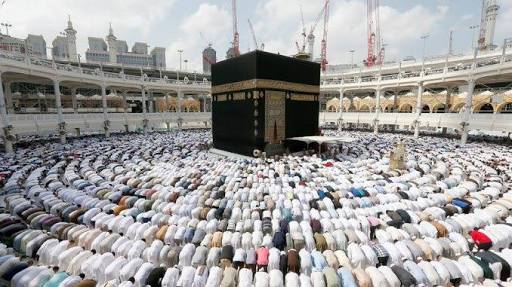
    Islamic History records that Muhammad, after his return from Medina destroyed 360 Idols in Kaaba.

    This was done with the help of Seven allies with whom Muhammad formed an alliance and these people were tribal chiefs.

    The early unruly and warring tribes of Arabia was subjugated by King Vikramaditya of India in 100 BC.

    He established Hindu Dharma and laid the foundation of Sanatana Dharma in Arabia.

    Along with other idols , he also installed a Shiva Linga in Kaaba.

    it is believed that Jats from India were entrusted with the protection of the Kaaba temple.

    And they also doubled up as physicians.

    ‘It is mentioned in the Abadis i.e., the authentic traditions of Prophet Mohammad compiled by Imam Bukhari that the Indian tribe of Jats had settled in Arabia before Prophet Mohammad’s times. Once when Hazrat Ayesha, wife of the Prophet, was taken ill, her nephew sent for a Jat physician for her treatment. This proves that Indians enjoyed a high and esteemed status in Arabia. Such a status could not be theirs unless they were the rulers. Bukhari also tells us that an Indian Raja (king) sent a jar of ginger pickles to the Prophet. This shows that the Indian Jat Raja ruled an adjacent area so as to be in a position to send such an insignificant present as ginger pickles. The Prophet is said to have so highly relished it as to have told his colleagues also to partake of it. These references show that even during Prophet Mohammad’s times Indians retained their influential role in Arabia, which was a dwindling legacy from Vikramaditya’s times.9slaram, net)

    There is yet another evidence that priests were sent from Kerala by the King Cheraman Peruman Nayanar to perform Poojas in the Kaaba temple.

    He was a contemporary of Prophet.

    As a matter of fact this is the only solid historical evidence from external sources for the existence of Prophet.

    Ibn Battuta accounts say that Calicut King( Kerala,India) Cheraman Perumal had a head priest cum accounts in-charge at the Shiva Temple ( called PAGAN temple by the west ) at Mecca which was a watering oasis for the camels , enroute to Jerusalem and Petra.

    May 2026
    M T W T F S S
     123
    45678910
    11121314151617
    18192021222324
    25262728293031

    For whatever reasons, the disturbed King decided to make a trip to Mecca , as soon as he heard that Mohammed founded Islam and installed a black stone , on the SE corner of the Kaaba.

    He took a ship from Calicut to Salalah and form there went by caravan route to Mecca. He met Mohammed , and the Islamic grapevine says that he was impressed by Islam and got converted from Hindu to Muslim.

    The King’s court at Calicut does NOT record this conversion, though messages were sent fast by carrier pigeons and hawks. The Encyclopedia Islamia admits as much when it says: “Muhammed’s grandfather and uncles were hereditary priests of the Kaaba temple which housed 360 Vedic idols!” The encyclopedia Britannica records this too.( Captain Ajit Vadakayil)

    That the Kin was converted to Islam is not corroborated.

    The Vedic Practices in Kaaba that are observed even today.

    Kaaba doors open at Pradosha Time, between 4. 30 and 5. 30 PM.

    1.The perambulation  in the anti clock wise direction around the Kaaba is the Hindu practice of perambulating  Shiva in the anti clockwise direction direction during pradosha, the sacred day to worship Shiva.

    2.Shiva Linga,after Abhisheka(bathing the Deity, is dried by slightly applying Silk Cloth .

    “One of my Pakistani Second Engineers, who had done religious studies in Khandahar and in Iran for many years , told me that every time he went to Mecca his friends and relatives would gives him dozens of silk handkerchiefs , to rub on the black stone . And every time he spent some time hurriedly doing that , he would get whipped quite severely by someone who was paid to do this (to time usurpers )( captain Ajith Vadakayil)

    3. In Hinduism deities are to be worshiped by wearing unstitched cloth, Dhoti.

    The Muslim garment worn in Kaaba is without stitches.

    ‘As the pilgrim proceeds towards Mecca he is asked to shave his head and beard and to don special sacred attire that consists of two seamless sheets of white cloth. One is to be worn round the waist and the other over the shoulders. Both these rites are remnants of the old Vedic practice of entering Hindu temples clean- and with holy seamless white sheets.’

    4. Ganga Water is sacred for Hindus and those ho visit Varanasi bring the Ganga River water in a Brass vessel. Of late people bring this in a plastic bottle.

    Another Hindu tradition associated with the Kaaba is that of the sacred stream Ganga (sacred waters of the Ganges river). According to the Hindu tradition Ganga is also inseparable from the Shiva emblem as the crescent moon. Wherever there is a Siva emblem, Ganga must co-exist. True to that association a sacred fount exists near the Kaaba. Its water is held sacred because it has been traditionally regarded as Ganga since pre-Islamic times (Zam-Zam water).

    [Note: Even today, Muslim pilgrims who go to the Kaaba for Haj regard this Zam-Zam water with reverence and take some bottled water with them as sacred water.]-Salagram.net.

    5.Namaz and Pancha Maha Yagnyas.

    Recital of the Namaz five times a day owes its origin to the Vedic injunction of Panchmahayagna (five daily worship- Panch-Maha-Yagna) which is part of the daily Vedic ritual prescribed for all individuals.

    6.Anga suddhi. Purification of the parts of the Body.

    Muslims are enjoined cleanliness of five parts of the body before commencing prayers.

    This derives from the Vedic injuction

    ‘Shareer Shydhyartham Panchanga Nyasah’

    7.Etymological similarities.

    Kaaba temple from Kabaaleeswara( Shiva)

    Eed means worship and Griha means ‘house’, the Islamic word Idgah signifies a ‘House of worship’ which is the exact Sanskrit connotation of the term. Similarly the word ‘Namaz’ derives from two Sanskrit roots ‘Nama’ and ‘Yajna’ (NAMa yAJna) meaning bowing and worshiping.

    8.Vratas and Months.

    The Muslim month ‘Safar’ signifying the ‘extra’ month (Adhik Maas) in the Hindu calendar. The Muslim month Rabi is the corrupt form of Ravi meaning the sun because Sanskrit ‘V’ changes into Prakrit ‘B’ (Prakrit being the popular version of Sanskrit language). The Muslim sanctity for Gyrahwi Sharif is nothing but the Hindu Ekadashi (Gyrah = elevan or Gyaarah). Both are identical in meaning.

    Four months of the year are regarded as very sacred in Islamic custom. The devout are enjoined to abstain from plunder and other evil deeds during that period. This originates in the Chaturmasa i.e., the four-month period of special vows and austerities in Hindu tradition. Shabibarat is the corrupt form of Shiva Vrat and Shiva Ratra. Since the Kaaba has been an important centre of Shiva (Siva) worship from times immemorial, the Shivaratri festival used to be celebrated there with great gusto. It is that festival which is signified by the Islamic word Shabibarat.

    The Islamic term ‘Eed-ul-Fitr’ derives from the ‘Eed of Piters’ that is worship of forefathers in Sanskrit tradition. In India, Hindus commemorate their ancestors during the Pitr-Paksha that is the fortnight reserved for their remembrance. The very same is the significance of ‘Eed-ul-Fitr’ (worship of forefathers).

    The Islamic practice of observing the moon rise before deciding on celebrating the occasion derives from the Hindu custom of breaking fast on Sankranti and Vinayaki Chaturthi only after sighting the moon.

    Barah Vafat, the Muslim festival for commemorating those dead in battle or by weapons, derives from a similar Sanskrit tradition because in Sanskrit ‘Phiphaut’ is ‘death’. Hindus observe Chayal Chaturdashi in memory of those who have died in battle.

    The Islamic practice of Bakari Eed derives from the Go-Medh and Ashva-Medh Yagnas or sacrifices of Vedic times. Eed in Sanskrit means worship. The Islamic word Eed for festive days, signifying days of worship, is therefore a pure Sanskrit word. The word MESH in the Hindu zodiac signifies a lamb. Since in ancient times the year used to begin with the entry of the sun in Aries, the occasion was celebrated with mutton feasting. That is the origin of the Bakari Eed festival.

    [Note: The word Bakari is an Indian language word for a goat.]

    9. Shiva Stuthi by Muhammds’ Uncle.

    The Shiva Sloka

    Kafavomal fikra min ulumin Tab asayru
    Kaluwan amataul Hawa was Tajakhru
    We Tajakhayroba udan Kalalwade-E Liboawa
    Walukayanay jatally, hay Yauma Tab asayru
    Wa Abalolha ajabu armeeman MAHADEVA
    Manojail ilamuddin minhum wa sayattaru
    Wa Sahabi Kay-yam feema-Kamil MINDAY Yauman
    Wa Yakulum no latabahan foeennak Tawjjaru
    Massayaray akhalakan hasanan Kullahum
    Najumum aja- at Summa gabul HINDU

    Translation.

    The man who may spend his life in sin
    and irreligion or waste it in lechery and wrath
    If at least he relent and return to
    righteousness can he be saved?
    If but once he worship Mahadeva with a pure
    heart, he will attain the ultimate in spirituality.
    Oh Lord Shiva exchange my entire life for but
    a day’s sojourn in India where one attains salvation.
    But one pilgrimage there secures for one all
    merit and company of the truly great.

    Citation and References.

    http://ajitvadakayil.blogspot.in/2009/07/vedic-practises-in-mecca-ajit-vadakayil.html

    http://www.salagram.net/VWHMid-East.html

    Join 4,576 other subscribers

    ← Back

    Thank you for your response. ✨

  • Vikramaditya Installed Shiva Linga In Kaaba?

    I have written articles that Kaaba, Saudi Arabia houses Shiva Linga and 786, sacred to Muslims is flipped OM, the Hindu sacred letter.

    And Kaaba is Kabaaleswara Temple, one can find the famous Kabaleswara temple in Chennai, Tamil Nadu, Chennai.

    Umar-Bin-E-Hassham, an Uncle of Prophet Muhammad. had written Shiva Stuthi, Hymn in Praise of Lord Shiva.


    c5a0d-muhammad2bshiva2b252852529
    Siva Stuthi by  Umar Bin E Hassham

    It is recorded in Islamic History that prophet destroyed 360 idols in Kaaba after he returned from Medina.

    These included idols of Saraswathi, Ganesha, Vishnu and Navagrahas.

    Worship of these Gods was prevalent  in Arabia before the advent of the Prophet.

    How come the Linga was spared from destruction?

    Prophet’s ancestors were worshipers of Shiva and were entrusted with the maintenance of the Kaaba temple.

    Who installed the Shiva Linga in Kaaba?

    Obviously the Linga should have been installed before the arrival of the Prophet.

    There is only one King from India, then called Bharata Varsha, who defeated  the Afghans and other Kings in the north and north west of India,

    And that was,

    empireofvikramaditya1
    Empire of vikramaditya included Arabia

    King Vikramaditya,

    His inscriptions are found in Kaaba.

    Vikramaditya’s inscription in Kaaba.

    “Itrashaphai Santu Ibikramatul Phahalameen Karimun Yartapheeha Wayosassaru Bihillahaya Samaini Ela Motakabberen Sihillaha Yuhee Quid min howa Yapakhara phajjal asari nahone osirom bayjayhalem. Yundan blabin Kajan blnaya khtoryaha sadunya kanateph netephi bejehalin Atadari bilamasa- rateen phakef tasabuhu kaunnieja majekaralhada walador. As hmiman burukankad toluho watastaru hihila Yakajibaymana balay kulk amarena phaneya jaunabilamary Bikramatum”.
    (Page 315 Sayar-ul-okul).
    [Note: The title ‘Saya-ul-okul’ signifies memorable words.]

    Translation.

    “…Fortunate are those who were born (and lived) during king [Vikramaditya’s] reign. He was a noble, generous dutiful ruler, devoted to the welfare of his subjects. But at that time we Arabs, oblivious of God, were lost in sensual pleasures. Plotting and torture were rampant. The darkness of ignorance had enveloped our country. Like the lamb struggling for her life in the cruel paws of a wolf we Arabs were caught up in ignorance. The entire country was enveloped in a darkness so intense as on a new moon night. But the present dawn and pleasant sunshine of education is the result of the favour of the noble king Vikramaditya whose benevolent supervision did not lose sight of us – foreigners as we were. He spread his sacred religion amongst us and sent scholars whose brilliance shone like that of the sun from his country to ours. These scholars and preceptors through whose benevolence we were once again made cognizant of the presence of God, introduced to His sacred existence and put on the road of Truth, had come to our country to preach their religion and impart education at king Vikramaditya’s behest…”

    Pre-Islamic Arabian poet Bintoi’s tribute to king Vikramaditya is a decisive evidence that it was king Vikramaditya who first conquered the Arabian Peninsula and made it a part of the Indian Empire. This explains why starting from India towards the west we have all Sanskrit names like Afghanisthan (now Afghanistan), Baluchisthan, Kurdisthan, Tajikiathan, Uzbekisthan,  Iran, Sivisthan, Iraq, Arvasthan, Turkesthan (Turkmenisthan) etc.

    Historians have blundered in not giving due weight to the evidence provided by Sanskrit names pervading over the entire west Asian region. Let us take a contemporary instance. Why did a part of India get named Nagaland even after the end of British rule over India? After all historical traces are wiped out of human memory, will a future age historian be wrong if he concludes from the name Nagaland that the British or some English speaking power must have ruled over India? Why is Portuguese spoken in Goa (part of India), and French in Pondichery (part of India), and both French and English in Canada? Is it not because those people ruled over the territories where their languages are spoken? Can we not then justly conclude that wherever traces of Sanskrit names and traditions exist Indians once held sway? It is unfortunate that this important piece of decisive evidence has been ignored all these centuries.

    Another question which should have presented itself to historians for consideration is how could it be that Indian empires could extend in the east as far as Korea and Japan, while not being able to make headway beyond Afghanisthan? In fact land campaigns are much easier to conduct than by sea. It was the Indians who ruled the entire West Asian region from Karachi to Hedjaz and who gave Sanskrit names to those lands and the towns therein, introduce their pantheon of the fire-worship, imparted education and established law and order.

    It may be that Arabia itself was not part of the Indian empire until king Vikrama , since Bintoi says that it was king Vikrama who for the first time brought about a radical change in the social, cultural and political life of Arabia. It may be that the whole of West Asia except Arabia was under Indian rule before Vikrama. The latter added Arabia too to the Indian Empire. Or as a remote possibility it could be that king Vikramaditya himself conducted a series of brilliant campaigns annexing to his empire the vast region between Afghanisthan and Hedjaz.'( salagram.net)

    The King’s court at Calicut does NOT record this conversion, though messages were sent fast by carrier pigeons and hawks. The Encyclopedia Islamia admits as much when it says: “Muhammed’s grandfather and uncles were hereditary priests of the Kaaba temple which housed 360 Vedic idols!” The encyclopedia Britannica records this too. ( Captain Ajit Vadakayil) 

    As there were no Indian Kings before Vikramaditya who conquered the Arabs,Vikramaditya’s Inscription being found in Kaaba and the Idol was there before the advent of Prophet,Vikramaditya it was, who installed the idol of Shiva in the form of Linga.

    King Vikramaditya was an ardent devotee of MahaDeva of Ujjain.

    King Viramaditya is dated variously between First and Fourth Century BC.

    Look at the video taken surreptitiously at Kaaba.

    Notice the Mark/scar on the Linga.

    I shall be writing on the origin of this Shiva Linga.


    Citation and references..

    http://ajitvadakayil.blogspot.in/2009/07/vedic-practises-in-mecca-ajit-vadakayil.html

    http://www.salagram.net/VWHMid-East.html

    Mr.Nagendra Naik in Facebook.

    Vikramaditya inscrption Kaaba, Ramani’s blog

  • Shiva Linga In Kaaba Opens At Pradosha Video Pakistani Web Site

    I have written a few articles on  Shiva Linga in Mecca OM is 786,

    Muslims Worship Shiv Lingam At Mecca Masjid Al Haraam Says Islamic Site,

    Prophets Uncle wrote Siva Sthuthi, A Prayer On Lord Shiva,

    Sapthapathi of the Marriage ceremony of the Hindus and Navagrahas in Arabia,

    Aravasthan is Arabia and some more articles.

    shivlingamuzzien
    Inside Kaaba(left) and Shiva Abhishekam(Right)

    The Prophet, after signing a treaty with tribes the Medina Treaty, stormed Mecca and destroyed 360 Idols housed there.

    There is Kaaba Stone which is believed to have been of Abrahamic times.

    People are not permitted to take videos or  photographs of the inside of the room.

    The room seems to contain an Idol, the worship of which is prohibited in Islam.

    Now let us see what a a surreptitiously taken video and an article  in a web site run by Pakistani Defense Think Tank say.

    Video is below.

    One can see an Idol resembling Shiv Linga there.

    And watch the Video, and look at the clock for the time of opening the Room.

    5.20 to 5.45!

    Shivas Pradosha Time!


    The article from Pakistan Defense Thin Tank Site.

    ‘Arabia is an abbreviation. The original word even today
    is Arbasthan. It originates in Arvasthan. As observed earlier
    Sanskrit “V” changes into “B”. Arva in Sanskrit means a horse.
    Arvasthan signifies a land of horses, and as we all know Arabia
    is famous for its horses.

    slide7

    In the 6th and 7th centuries A.D. a wave of effecting a
    complete break with the past spread over West Asia. All links
    with the past were broken, images smashed, scriptures des-
    troyed, education discontinued and the entire West Asian
    region took a plunge in abyssmal ignorance which lasted for
    centuries thereafter and perhaps persists to a certain extent
    even today because if in the whole world modern scientific and
    educational developments find stubborn and entrenched resis-
    tance anywhere it is in the West Asian countries. It is said
    that the late Saudi Arabia ruler could not permit a radio
    broadcasting station opened in his own capital because of
    oposition from his Maulavis. He then resorted to a stratagem.
    Once while he had his council of Maulavis in attendance he had
    a radio set switched on to a program of Koranic recitation
    broadcast from a small transmitting station set up earlier
    without much ado. The Maulavis were delighted, so goes the
    report, to hear the word of Allah coming to them as if from
    nowhere. The king told them that what objections could they
    have to a mechanism which broadcast the word of Allah. The
    Maulavis agreed and the small radio broadcasting project was
    at last ratified.

    According to Encyclopaedia Britannica and Encyclø-
    paedia Islamia the Arabs are ignorant of their own history of
    the pre-Muslim era. By a strange euphemism they call it a
    period of ignorance and darkness. Probably no other country
    in the world has deliberately written off a 2,500 year period of
    their own history by systematically stamping out and snapping
    all links with the past. They have wiped the memories of pre-
    Muslim era off their minds. So while they chose to remain
    ignorant of their past ironically enough it is they who dub the
    pre-Muslim era as a period of ignorance.

    Fortunately we can still trace the history of that pre-
    Islamic Arabia. It is a well known adage that there is no such
    thing as foolproof destruction of all evidence. The pre-Islamic
    history of Arabia is the story of Indian Kshatriyas over that
    land, with the people following the Vedic way of life.

    In our attempt to reconstruct the story of pre-Islamic
    Arabia we begin with the name of the country itself. As
    explained earlier the name is fully Sanskrit. Its central
    pilgrim centre, Mecca is also a Sanskrit name. Makha in
    Sanskrit signifies a sacrificial fire. Since Vedic fire worship
    was prevalent all over West Asia in pre-Islamic days Makha
    signifies the place which had an important shrine of fire
    worship.

    Coinciding with the annual pilgrimage of huge bazaar
    used to spring up in Makha i.e. Mecca since times immemorial.
    The annual pilgrimage of Muslims to Mecca is not at all an
    innovation but a continuation of the ancient pilgrimage. This
    fact is mentioned in encyclopedias.

    VIKRAMADITYA

    Evidence is now available that the whole of Arabia was
    part of the great Indian King Vikramaditya’s vast empire. The
    extent of Vikramaditya’s empire is one of the main reasons for
    his world wide fame. Incidentally this also explains many
    intriguing features about Arabia. It could be that
    Vikramaditya himself had this peninsula named Arvasthan if
    he was the first Indian monarch to capture it and bring it
    under his sway

    Citation and references source.

    http://defence.pk/threads/exclusive-was-pre-islamic-arabia-hindu-nation-un-told-arabian-tales.265608/

  • Godmen Prophets Not Approved by Vedas Smritis Hinduism

    Of late there has been a proliferation of godmen in Hinduism, offering salvation and performing miracles.

    There are corporate Gurus, whose background is murky, who address world leaders, in the garb of Hinduism.

    Their qualification is a few words of Hindu thoughts, some quotes and slick marketing.

    There are Gurus for Yoga.

    Yoga has become a school exercise!

    Idiots like me imagine one has to follow Patanjali, who lays down strict code of conduct ad diet for yoga sadhana.

    Today what one needs is a few mumbo-jumbo , basic lines in yoga and slick marketing.

    Horrible!

    Self styled godmen.jpg. Self styled godmen.

    Please check my Posts on yoga Sutras of Patanjali.

    Hinduism does not approve of Prophets, Godmen.

    Sanatana Dharma, Hinduism is personal.

    It does not allow brokers between you and God,after all He is your father.

    You do not need a broker to talk to your father.

    Nor does Hinduism believe in Prophets.

    Vedas and Smritis do not approve of or condone these Godmen or Prophets.

    There is no concept of Prophet or Godmen in Hinduism.

    One strives to realize Oneself.

    Paths travelled by great men are shown.

    They are only indicative.

    Each Man/woman has to find His/Her salvation.

    It is purely personal and determined by one’s disposition, Swabhava.

    No one can convert any one , in the real sense ,against his swabhava, Nature.

    Lord Krishna, in The Bhagavad Gita, Chapter 18, towards the close of the discourse to Arjuna, in the battle field of Mahabharata, says to Arjuna,

    I have briefed you the secret of secrets, you decide what to follow, according to your nature, after analysing what is good for you’

    This comes from Lord Krishna, an Avatar of Vishnu!

    Arthur osbourne records thus on his discussion with Ramana Maharishi, the great Saint of this century.

    When asked about his not accepting Sishyas , Disciples,Ramana Maharishi replied.

    ‘Who is a Guru and who is a Sishya?

    All are Brahman.

    and if you are hungry, only you should eat, not Me.

    So search for reality on you’

    • Though the article has received acceptance, there have been some comments in Facebook communities and by way of personal omments to my mail ID, about me questioning the Guru system of Hinduism

    What I have written here is about Godmen and Prophets, who have no place either in Sruthi and Smriti.

    However the Guru systemws practised during the Veidc and subsequent periods to teach Vedas and guide individuals in the Dharmic path, with no intent on the part of the teacher to ern money.

    And the concept of Guru, Acharya and Updhyaya are laid down.

    Excerpt from my earlier Post.

    Vedas have Chapters.

    One who teaches these parts is called Upaadhyayaa.

    He takes compensation for this service.

    ‘एकदेसम तु  वेदस्य वेदान्गान्यबी  वा पुन:: यूअध्यापथि वृथ्यर्थं  उपाध्याय: स  उच्च्यथे I’-Manu Smriti.

    Whereas one who does Brahmopadesam at the time of Upanayana and follows up with Teaching of the vedas is Called Acharya.

    Guru is one who seeks you out, if your yearning is sincere.

    He knows your yearnings ,assesses your capacity and initiates you in the process that suits you, for individuals are unique ,so are the paths to Realization.

    Guru is the Mentor while others are facilitators to study Veda

    Guru Acharya Upadhyaya

    If people believe in Godmen and at  later date they come to know that they have been misled, there is no point in blaming Hinduism as Hinduism, I repeat does not approve of Godmen and Prophets.

    It may be of interest to note that even Lord Rama and Krishna were not worshiped in the same way we worship them today, during their time.

    They were respected because of their actions, in the case of Krishna ,He was even abused!

    Everyone was ( at least many were) engaged in following Dharma as enshrined in the Vedas and were attempting to realize self.

    https://ramanisblog.in/2015/07/15/rama-not-worshiped-in-krishna-mahabharata-times/

    https://ramanisblog.in/2015/07/18/whom-did-lord-rama-worship/

  • Sapthapadi Sarasvathi Navagraha Tamil Sangam Pre Islamic Arabia

    The word Arava means ‘Horse’ in Sanskrit and Sthan means ‘land’ as in Afghanistan, Turkistan, Kurdistan, Ghabulisthan, Kazakstan.


    Arabia comes from the word Arvasthan.

    Mecca houses the Shiva Linga.image.jpg
    Mecca and Shiva Linga Thanjavur,Tamil Nadu.


    Saravsathi Sculpture i British Museum, from Saudi Arabia..jpg
    Saravsathi Sculpture i British Museum, from Saudi Ar


    This image from pre-Islamic Saudi Arabia, displayed at the British Museum, shows goddess Sarasvati riding a swan carrier.


    Probably no other country in the world has deliberately written off a 2,500 year period of their own history by systematically stamping out and snapping all links with the past. They have wiped the memories of pre-Muslim era off their minds. So while they chose to remain ignorant of their past ironically enough it is they who dub the pre-Muslim era as a period of ignorance.


    King Vikramadithya’s Empire included what is now called Saudi Arabia.

    Please read my Post Vikramadhiya’s Empire.

    Mecca houses Shiva Linga  and 786 is Om Flipped ,read my post on this.


    ” Lord Shiva and Mata Parvati  are our parents .


    Lord Shiva is the first messenger of Muslims  and  we  do not deny this fact.”UHF Muslim preacher said,


    “Our first Prophet of God Shiva ‘, is accepted and the truth is right”.


    Jamiat Ulema chief Mufti Muhammad Ilyas 

    http://www.saharasamay.com/nation-news/676568891/lord-shiva-is-first-muslim-prophet-says-mufti-muhammad-ilyas.html


    In Istanbul in Turkey, there is a famous library called Makteb-e-Sultania which is reputed to have the largest collection of ancient West Asian literature.

    In the Arabic Section of that library is an anthology of ancient Arabicpoetry.

    That anthology was compiled from an earlier work in A.D. 1742 under the orders of the Turkish ruler Sultan Salim.

    The anthology is known as SAYAR-UL-OKUL. It is divided into three parts, the first part contains biographic details and the poetic compositions of pre-Islamic Arabian poets.

    The second part embodies accounts and verses of poets of the period beginning just after Prophet Mohammad up to the end of Banee- Ummayya dynasty.

    The third part deals with later poets up to the end of Khalifa Harun-al-Rashid’s times.

    Incidentally “Banee” means “Vanee” and Ummayya as in Krishnayya are Sanskrit names.

    Abu Amir Abdul Asamai, a distinguished Arabian bard who was the Poet Laureate of Harun-al-Rashid’s court has
    compiled and edited the anthology.

    The first modern edition of Sayar-ul-Okul anthology was printed and published in Berlin in A.D. 1864.

    A subsequent edition was published in Beirut in A.D. 1932.

    This work is regarded as the most important and authoritative anthology of ancient Arabic poetry.

    It throws considerable light on the social life, customs, manners and entertainment forms in ancient Arabia.

    The book also contains an elaborate description of the ancient Mecca shrine, the town and the annual fair known as OKAJ which used to be held there every year.

    This should convince readers that the annual Haj of the Muslims to the Kaaba is only a continuation of the old fair and not a new practice.

    But the OKAJ fair was far from a carnival.

    It provided a forum for the elite and learned to discussthe social,religious,political, literary and other aspects of the
    Vedic culture then pervading Arabia.

    Sayar-ul-Okul asserts that the conclusions reached at those discussions were widely respected throughout Arabia. Mecca, therefore, followed the Varanasi tradition of providing a seat for important discussions among the learned while the masses congregated there for spiritual bliss. The principal shrines at both Varanasi in India and at Mecca in Arvasthan were Shiva temples. Even to this day the central object of veneration at both Mecca and Varanasi continues to be the ancient Mahadeva emblems. It is the Shankara stone which Muslim pilgrims reverently touch and kiss in the Kaaba.

    As the pilgrim proceeds towards Mecca he is asked to
    shave his head and beard and to don a special sacred attire.
    This consists of two seamless sheets of white cloth. One is to
    be worn round the waist and the other over the shoulders.
    Both these rites are remnants of the old Vedic practice of
    entering Hindu shrines, clean-shaven and with holy seamless
    spotless white sheets.

    The main shrine in Mecca which houses the Shiva emblem is known as the Kaaba. It is clothed in a black shroud.
    This custom could also originate from the days when it was thought necessary to discourage its recapture.

    According to encyclopaedias Britannica and Islamia the Kaaba had 360 images.

    Traditional accounts mention that one of the deities among the 360 destroyed, when the shrine was stormed, was that of Saturn, another was of the moon and yet another was one called Allah.

    In India the practice of Navagraha puja that is worship of the nine planets is still in vogue.

    Two of these nine are the Saturn and the moon.

    Besides, the moon is always associated with Lord Shankara. A Crescent is always painted across the forehead of the Shiva emblem. Since the presiding deity at the Kaaba shrine was Lord Shiva i.e. Shankara, the crescent was also painted on it. It is that crescent which is now adopted as a religious symbol of Islam. Another Hindu tradition is that wherever there is a Shiva shrine the sacred stream of Ganga that is the Ganges must also co-exist. True to that tradition a sacred fount exists near the Kasba. Its water is held sacred because it was regarded as but another Ganga since pre-Islamic times. Muslim pilgrims visiting the Kaaba shrine go around it seven times.

    In no other mosque does this perambulation prevail. Hindus invariably perambulate around their shrines.

    This is yet another proof that the Kaaba shrine is a pre-Islamic Shiva temple where the Hindu practice of perambulation is still meticulously observed.

    Allah is a Sanskrit word. In Sanskrit Allah, Akka and Amba are synonyms. They signify a goddess or mother.

    The term Allah appears in Sanskrit chance while invoking goddess Durga i.e. Bhavani.

    The Islamic word Allah for God is therefore not an innovation but the ancient Sanskrit appellation retained and continued to be used by Islam.

    The seven perambulations too are significant. At Hindu wedding ceremonies the bride and bridegroom go round the sacred fire seven times, the Sapthapadi.

    The practice of seven perambulations around the Kaaba shrine in Mecca is, therefore, a Hindu Vedic custom.

    It is also a proof that Mecca was Makha or the shrine of the sacred fire around which worshippers made seven perambulations.

    SAYAR-UL-OKUL tells us that a pan-Arabic poetic symposium used to be held in Mecca at the annual Okaj fair in pre-Islamic times.

    All leading poets used to participate in it.
    Poems considered best were awarded prizes.

    The best poems engraved on gold plate were hung inside the temple. Others etched on camel or goat skin were hung outside. Thus for
    thousands of years the Kaaba was the treasure-house of the best Arabian poetic thought. This tradition was of immemorial antiquity.

    But most of the poems got lost and destroyed during the storming of the Kaaba by prophet Mohammed’’s forces.

    The custom of conducting a Poets’Conclave is of Tamil Origin and it is called Tamil Sangam.

    Tamil History is split as Sangam Era and later Poems.

    Obviously this indicates the Dravidian’s influence in the Middle east.

    This must have happened when Shiva and His son Ganesha left the South due to a Tsunami and traveled towards the Middle east

    Please read my post on this.

    SAYAR-UL-OKUL is a poem by UMAR-BINE-HASSNAM
    (Poetic Title: ABBUL-HIQAM meaning Father of Knowledge).
    He was an uncle of prophet Mohammed. He refused to get converted to Islam.

    He died a martyr at the hands of Muslim fanatics who wanted to wipe out non-Muslims.

    This poem was adjudged as the best in the annual fair at Kaaba.

    This was a Hymn on Shiva.

    Refer my Post on this

    Citation.


    http://defence.pk/threads/exclusive-was-pre-islamic-arabia-hindu-nation-un-told-arabian-tales.265608/


    I shall be posting a detailed article on the History of Kaaba.

    In the meanwhile, I would like to share a Poem, Stuthi on Lord Shiva by Umar-Bin-E-Hassham, an Uncle of Prophet Muhammad.

    Muhammad’s uncle was one of the resident priests of the Shiv temple known as “Kaaba”.”

    https://ramanisblog.in/2015/02/09/shiva-sthuthi-by-prophets-uncle-umar-bin-e-hassham/