Tag: Kumbakonam Temples

  • Koothanur Saraswati Temple By Tamil Poet Darshan Contact Details

    Koothanur Saraswati Temple By Tamil Poet Darshan Contact Details

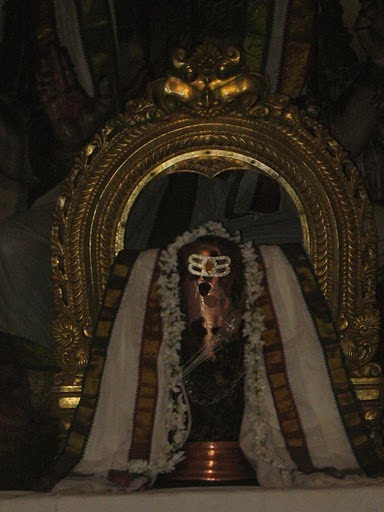
    There are very few temples for Saraswati, Goddess of Speech .There are three levels of speech, Gayathri,Savitri and Saraswati.Gayatri is at the Conceptual level,Savitri is at the point of vocalising and Saraswati is responsible for Speech.She is also the Goddess of Wisdom. She is full of Sathva Guna,symbolised by White attire of Saraswati.The temple of Mahasaraswati is at Koothanur also called as Thirukkothanur.This temple is quite ancient. The town was gifted by Rajaraja Chila Il, to great Tamil Poet Ottakkoothar.

    Koothanur is the birthplace of the Tamil poet Ottakoothar. There is another reason for the name of this place which is Rajaraja Chola II gifted this village for koothan’s poem because he is a great poet. So this village is called Koothan + oor = Koothanur. In India, Koothanur became an important tourist spot. Vijayadasami festival is celebrated in Koothanur which is one of the most important festivals in this temple.

    https://en.m.wikipedia.org/wiki/Koothanur
    Thirukkothanur Saraswati temple.

    The temple was built by a renowned Tamil poet of yore, Ottakoothar, and the town itself is named after him as Koothanur. Koothar was gifted this land by the Chozha kings, under whom he had served as the chief court poet. Kulothungan, Vikraman, Rajarajan II were all glorified by the presence of Ottakoothar in their court. It was on this land that he raised a temple to Vani, without whose grace he would never have been half as good a poet. However, the truth is that the land was indeed chosen by Saraswathi herself for the very purpose.It was a time when Dakshayini had been reborn to Parvatharajan as Parvathi. Having attained a suitable age for marriage, she of course chose to unite with her lord, Parameshwara. Intending to please Shiva with her severe tapas, she went into a forest filled with sacred Vilva trees and began her penance to gain Shiva’s hnd. The place known as Vilvavanam was soon blooming and blossoming with flowers and birds. Such was the benefit of Parvathi’s presence and her intense penance.

    Immensely pleased with Parvathi, Shiva decided to approach Parvatharajan and ask for her hand in marriage. However, there was one major flaw in the plan- Ganga. The second wife of Shiva, eternally sat in his matted locks, trickling down the Himalayas and flowing across the bosom of Bharatha. In the event that Parvatharajan came to know of this existence of another woman in Shiva’s life, it would be a very sticky situation indeed. Therefore, to avoid further disasters, Shiva turned Ganga into a young girl and himself into a Brahmin. He then handed over Ganga to Bhaskara Muni to take care of her while he supposedly went on a pilgrimage tour. Bhaskara Muni, who himself was involved in a penance to please Shiva, accepted the responsibility and took care of Ganga like his own daughter.

    One day, by the playings of fate, Bhaskara Muni went down to the Arisol Aaru (river) to do his daily ablutions. Having forgotten to bring his Kamandala with him, he shouted to Ganga, “Oh Daughter, can you please get me my Kamandala from the ashrama?” Ganga too obediently brought out the Kamandala to Bhaskara Muni. Suddenly, at that very moment, realizing her previous self, and to the utter surprise of Bhaskara Muni, Ganga joined into the Arisol Aaru, Bhaskara Muni was totally flabbergasted at the sight and could only blink in return. Things turned out to be more complicated, when Shiva returned back as the Brahmin and asked Bhaskara Muni for his daughter back. The Muni remained silent out of fear, not letting a word out. But when Shiva threatened him that he would complain to the King about this, things got really nasty and Bhaskara Muni narrated the unfortunate turn of events. He was trembling with the fright and the sheer shock of the sudden disappearance of a young lady. Not wanting to test his devotee any further, Shiva appeared before Bhaskara Muni in his true form and blessed him. The place where Ganga merged with the Arisol Aaru came to be known as Rudragangai. Since Gauri had performed her penance there, it is also known as Gaurivanam. Eons passed by, peaceful and quiet, until one day, at Brahma Loka a verbal battle broke out between Brahma and Vani. “It is because of me that Brahma Loka has attained so much popularity and fame”, argued Brahma. “No way dear, it is due to my presence that the flag of Brahma Loka flies high. The moment I leave, the place loses its sheen”, defended Saraswathi. Quite soon, the tempers rose high and in a fit of rage, the cursed each other. As a result of the curse, they were born to a Brahmin named Punyakeerthi, as daughter and son. The son was named Bagukanthan and the daughter, Shraddhai.  When they had attained a marriageable age, Punyakeerthi, as a responsible father, took efforts to find suitable matches. It was then that Brahma and Saraswathi realized their previous positions, and aghast at the complexity of the situation they prayed to Shiva to save them from this.Saraswathi”, cried a voice from the heavens, “Go to the Rudragangai River near Gaurivanam and merge in there with the waters. In the times to come, you will soon be honored with a temple near Arisol Aaru. Stay there as MahaSaraswathi and shower your grace on those who come to you.

    Brahma too was relieved from the curse. “Mahadeva, it would be really great if you think over your previous curse of me not having any temple on earth”, he requested Shiva. “Brahma, though you will not have any temples on earth, in all Pitr Karmas you will be invocated with the Brahma Pooja. People will worship you this way”, offered Shiva and disappeared.

    And so Saraswathi went to the Rudragangai and merged herself with it. It is a different story that much later when Yamuna was suffering from the doshas of the people who bathed in her, Krishna suggested that she be relieved of them by bathing in the Rudragangai and meditating on Shiva. And so Yamuna too joined into the Rudragangai. With the confluence of Ganga, Yamuna and Saraswathi into the Arisol Aaru, the place came to be known as Dakshina Triveni Sangamam.It was on such a sacred spot that Koothar chose to build his temple for Sakalakalaavalli, the Mistress of all Arts. Located on the Mayiladuthurai-Thiruvarur route, near a village named Poonthottam, Koothanur is a small work of wonder. With a three-tiered gopuram, the humble temple is located by the Koothanur Agrahaaram.

    Source.https://kshetrapuranas.wordpress.com/2009/10/04/koothars-own-town-koothanur/amp/

    Koothanur Saraswathi Temple is open from 7 AM to noon. From 4 PM to 08:30 PM.

    Address: Kumbakonam Main Road, Koothanur, Tiruvarur District, Tamil Nadu.

    Contact details. You may contact Srim Raju Kurukkal at 094443 50759. He is at Thirumeyachur ,which is about fifteen minutes away. He shall guide for Darshan at Mahasaraswati temple at Koothanur and also at Thirumeyachur.

    Parking Facilities: Ample car parking around the temple compound is enough to accommodate a lot of vehicles

    Nearest Airport: Trichy International Airport  – 126 km

    Nearest Railway station: Thiruvarur – 21 km. One can cover Koothanur,also called Thirukkothanur from Myladuthurai,which is about half an hour’s drive and Kumbakonam ,which is about an an hour.Good hotel facilities are available at Kumbakonam, Myladuthurai ,Thiruvarur..

  • Siva Color Change Timings Directions Panchavarneswara Thirunallur

    Siva Color Change Timings Directions Panchavarneswara Thirunallur

    Address and Temple Timings.

    Sri Kalyana Sundareswarar (Panchavarneswarar) Temple, Tirunallur-614 208, Valangaiman Taluk, Kumbakonam, Thanjavur district. The temple is open from 7.30 a.m. to 12.00 a.m and 5.30 p.m. to 8.00 p. m.

    Panchavarneswara Moolasthanam

    I had written an article about Panchavarneswara Temple, Thirunallur.There I had covered basic information. I am providing more details here as to how to reach the place as many people in the area , including those at Swamymalai, Kumbakonam, Thirukkadavur are not aware. This I experienced when I visited this temple last week.

    Thirunallur Panchavaneswara temple details
    Panchavarneswara Temple Thirunallur.
    Schedule of Colour change in Siva linga.

    Color change time.

    • 6 am to 8.24 am Copper.
    • 8.25 am to 10.48 am Pink
    • 10.49 to 1.12 pm Molten Gold
    • 1.13 to 3.36 pm. Emerald Green
    • 3.37 pm to 6 pm. Indescribable Color

    The temple is in Thirunallur near Mayuram. One can reach the temple from Kumbakonam, Mayuram.It is about 20 minutes from Swamymalai. It is about three kms from Sundaraperumal Koil.

    Contact for Darshan.

    Temple Kurukkal is Sri. Ayya swamy.You may call him at +91 94868 13059.If you are unable to reach him you may contact Sri. Vinoth who runs a shop in the temple premises. His number 094436 68306/+91 94429 88445.

    Sthala Puran, References in Thevaram,Thiruvasakam .

    As per sthala puranam, Kunthi, the mother of Pandavas is associated with this temple.  She had incurred two very peculiar doshas.  As she begot sons through the Panchaboothas and abandoned Karna in the river, doshas got attached to her.  When she consulted Sage Narada ( some say that it was Romesa Rishi), he advised her to take bath in the seven seas ( Saptha Sagara) to get relief.  Kunthi expressed her helplessness as she was an old lady.  Then Naratha advised her to pray to the Lord of Kailash in the form of Kalyanasundareswarar at this place and He would provide further guidance.  Kunthi came to this place and started praying to the Lord. 
    In the mean while, Narada brought the waters from the seven seas and mixed them with the Theertham of this temple and advised Kunthi to continue the Pooja after taking bath in the theertham.  When she did it, she got redemption.  As the waters of the seven seas are mixed, this temple tank is called Saptha Sagara theertham and it is believed to be as holy as the Mahamaga tank of Kumbakonam.  As Kunthi was born under the Magam star, a visit to this temple is suggested for those born in the Magam star.  There is an old saying in Tanjavur District ( Magam pirandadu Nalluril, Mamangam pirandadu Kumbakonathil- While Magam originated in Nallur, Mamangam is from Kumbakonam).  Thus, this temple is considered as holy as any of the temples associated with Mahamagam. Similarly pregnant ladies visit this temple and conduct bangle ceremony in the Ashta Bhuja Maha Kali shrine for ensuring safe delivery.  Devotees who wish to perform such special poojas may get in touch with the Priest through 93631 41676.
    This is one of the rare temples where one can have darshan of the Lord at different times in different colours.  He changes colour every six nazhigais ( one nazhigai= 24 minutes).  It starts at 6 am with copper, then red, then golden colour and then emerald green.  From 3.37 pm to 6 pm, the lingam appears in a colour as desired/perceived by the devotee.  As He changes colour five times, He is also called Panchavarneswarar.  ( There is a similar named Lord in Uraiyur in Trichy).  The change of colour takes place only in the top portion of the Lingam.  The middle portion alternates between shades of green and blue while the bottom portion always remains black.
    Sage Agasthaya is also connected with this temple.  We know the well known story of Shiva Parvathy marriage and Agasthya’s travel to South to balance the earth.  When he reached this place, he wanted to see the wedding pose of the Lord and the Mother.  He installed a lingam by the side of the main deity ( which was known as Sundaralingam) and started worshipping.   The Lord showed the wedding scene to the sage and hence He is called Kalyanasundareswarar and the Mother, Kalyanasundari.  The Lingam worshipped by Agasthya could be seen on the right of the Main Lingam in the sanctorum and both the Lingams stand on a single platform (avudai), a very unique thing not seen in any other temple.  Behind the Lingam, we see Shiva and Parvathi in wedding dress in sitting posture.   These two Murthis are in Sudhai form.  In the sanctorum we also see Brahma on the right of Shiva ( officiating priest) and Vishnu on His left ( brother of the bride).  Hence in the same Moolasthanam, we get the darshan of not only the Trimurthis but also the Mother.  Readers may bring to my notice if there is any other temple having this unique congregation in the Moolasthanam.
    There is also another legend that when there was a contest between Vayu and Adiseshan regarding their respective strengths, the former blew away two of the peaks from Kailash and one of them fell here ( Sundaragiri) and the other one fell in Aavur.  The Lord appeared here as a Swayambu below the Vilva tree and He is called Sundaralingam.https://wanderingtamil.blogspot.com/2017/12/thirunallur-panchavarneswarar-temple.html?m=1

    https://www.dharisanam.com/temples/sri-kalyanasundareswarar-temple-at-thiru-nallur

  • Temple Where First Embryo Fell Karuvi Shiva Temple

    Temples in India have history dating back to thousands of years.

    Ancient history is called Purana in Sanskrit.

    Puranas are of two kinds.

    One is Main Puranas and another is

    Minor,called Upa Puranas.Thete are eighteen Puranas.

    Apart from this each temple had its history,called sthala Purana, history of the place.

    There are over 33000 temples in Tamil Nadu under the HR & CE department of the Government.

    These are mainly old temples.

    During the course of my writing this blog, researching Indian History, I have,to my surprise,found that the information,events provided in the Puranas and the two Ithihasas, Ramayana and Mahabharata tally and there is no contradiction!

    Unfortunately,most of the temples built by our ancestors have been demolished by Islam and British invaders, rulers.

    Those that survived were neglected by the Secular Government,which ,in essence means destroying Hinduism.

    Many grand ancient temples are facing ruin.

    I propose writing on these so that we can restore them.

    I am of the view that we need not build new temples and can concentrate on restoration of these grand temples,we will be restoring History.

    Those who have information on such temples may forward me details with photos and contact number of the Temple Gurukkal or the administrator.

    The information will be gratefully acknowledged in the article.

    I have written on colour changing Siva in Virupaksha temple, Karnataka and another one in Tamil Nadu.

    I will be writing on one such temple near Chennai.

    Now there is a Shiva Temple near Myladuthurai,Tamil Nadu.

    This temple is reported to be the place,where the First Embryo fell on the earth.

    The original name in Tamil is Karuvizhundhanadhapuram.

    கருவிழுந்தநாதபுரம்.

    Means place where the Embryo Fell.

    The temple is in a dilapidated condition.

    A Gurukkal comes from a nearby and performs Pooja.

    How to reach .

    By Air. Thiruchirapalli.

    By Train.Myladuthurai/Kumbakonam.

    By Bus,Car.From Myladuthurai to Poompuhar road,one has to take a turn in the Chavadi koottu road,(Four road Junction), before The place Karuvi.

    One would find a small road towards the temple.

    Information , image from.

    http://shivabelievers.blogspot.com/2016/06/blog-post.html?m=1

    This site contains information on such temples and the author is doing a great service.

    -Krishnaarppanam.

  • Kumbakonam Western Gateway Dated 23000 BC

    Kumbakonam Western Gateway Dated 23000 BC

    I have written on the fact that,

    Thiruvannamalai ,Tamil Nadu being 3.94Billion years old,

    Thirupathi, Andhra Pradesh,2100 Million years,

    Jwalapuram,Cuddapha,Telengana,74,000 years,

    Varanasi (Benares),world’s oldest continuously inhabited city,

    Thiruvananthapuram,25,000 years.

    Now to the city of Kumbakonam,city of Temples in Tamil Nadu.

    The Hindu Puranas mention Kumbakonam as the place,where the top portion of the Pot containing Amrith(Nectar),fell when the Pot was not by an arrow.

    The top portion of the Pot fell at an incline (angle)

    The name in Tamil means the place where the Pot fell at an angle.

    Kumbha-Pot;Konam-Angle.

    The earliest reference to Kumbakonam in Tamil Literature occurs in the Sangam literature,Puranaanuru, an anthology of four Hundred poems that speaks of the valour of Tamil Kings,among other things.

    குண திசை நின்று குடமுதல் செலினும், (20).
    குடதிசை நின்று குணமுதல் செலினும்,
    வடதிசை நின்று தென்வயின் செலினும்,
    தென்திசை நின்று குறுகாது நீடினும்,
    யாண்டும் நிற்க வெள்ளி; யாம்
    வேண்டியது உணர்ந்தோன் தாள் வாழியவே! (25)
    திணை – பாடாண்
    துறை – வாழ்த்தியல்
    இயற்றியவர் – புலவர் கோவூர் கிழார்
    அரசர் – சோழன் குளமுற்றத்துத் துஞ்சிய கிள்ளி வளவன்’

    ( http://garuda-sangatamil.com/pages/third/first10-10.php )

    This poem on the Chola king refers to West as Kuda Thisai ,குட திசை.

    Tamil Literature calls the area adjoining the Arabian sea as in The West,கு

    அரபிக்கடலை எல்லையாகவுடைய தமிழ் நாட்டு நிலப்பரப்பைத் தமிழர் குடக்கு என்றனர். கரை ஓரம் குடம் போல் குழிந்தும் அருகில் தென் வடலாக மேற்கு மலைத் தொடரும் உள்ள நிலப் பரப்பு இது. மேற்கு நோக்கிப் பாயும் சிற்றாறு களும் கிழக்கு நோக்கியும் பாயும் பெரிய ஆறுகளும் தோன்றும் மலை மேற்குத் தொடர்.

    ( http://keetru.com/index.php/2010-06-24-04-31-11/ungal-noolagam-mar-2015/28316-2015-04-19-04-30-55 )

    Kumbakonam was referred to as Kudavaayil in Silappadikaram,one of the Five epics of Tamil.

    So the term Kudavaayil means the a Gateway to the West.

    Vaayil means entrance.

    Most of the Chola Trade was carried through Poompuhar on the eastern seaboard.

    The city was also called Kudavaayil or the Gateway to The East,

    But Trade was also carried out through western ports on the Arabian sea.

    Chera kings used this route.

    But for the Chola’s,whose Ports were in the East,had to reach the western ports .

    And they used Kumbakonam as the Entry point to the western Ports.

    The early Chola,Karikal Valavan held Court in Kumbakonam.

    Anbil Plates also refer Kumbakonam as Kudavaayil.

    Silappadikaaram,the Epic in which action takes place refers to Poompuhar and Kumbakonam.

    Poompuhar is dated about 11,000 years ago.

    The place is called Poompuhar. It lies on southeast India’s Coromandel coast facing the Bay of Bengal between modern Tamil Nadu and Sri Lanka. Its immediate offshore area has been the subject of marine archaeological investigations by India’s National Institute of Oceanography since the 1980’s — and numerous non-controversial finds of man-made structures dated between the third century AD and the third century BC have been made in the “inter-tidal zone” close to shore at depths down to 6 feet (approximately 2 metres).

    These finds of structures in shallow water (some so shallow that they are exposed at low tide) have been quite widely written-up in the archaeological literature. But for some reason other discoveries that the NIO has made in deeper water off Poompuhar have attracted no attention at all. Most notably these other discoveries include a second completely separate group of structures fully three miles from the Poompuhar shore in water that is more than 70 feet (23 metres) deep. The lack of interest is surprising because to anyone with even minimal knowledge of post-glacial sea-level rise their depth of submergence is – or should be – highly anomalous. Indeed according to Glenn Milne’s sea-level data the land on which these structures were built last stood above water at the end of the Ice Age more than 11,000 years ago.

    Is it a coincidence that there are ancient Tamil flood myths that speak of a great kingdom that once existed in this area called Kumari Kandam that was swallowed up by the sea? Amazingly the myths put a date of 11,600 years ago on these events — the same timeframe given by Plato for the end of Atlantis in another ocean.

    https://ramanisblog.in/2015/03/02/poompuhar-find-sets-tamilhinduism-by-atleast-20000-years/

    So,Kumbakonam,which has the earliest references to it in Puranaanuru,which is about Five thousand years before Poompuhar reference,must be at least Twenty-five thousand years.

    That is 23,000 BC.

    Image Credit. http://www.kmphtrips.com/#!/destinationDetails/Kumbakonam

  • Kumbakonam Panchakrosha Shiva Temples

    I have written on Two Panchakrosha Temples of Lord Shiva, Varanasi and around Tirunelveli ,Tamil Nadu,India

    There are two more such group of temples,each group consisting of Five Shiva temples, which are located in about 6.5 Km or five miles (Panchakrosha) and are endowed with the Immanent presence of Lord Shiva in both animate and inanimate beings.

    Visiting them on the same day brings in the blessings of the ancestors (Pitrus0 and Prosperity.

    Mahalinga swamy Tiruvidaimaruthur
    Mahalingam, Thiruvidaimaruthur


    They are.

    Ujjain and

    around Kumbakonam ,Tamil Nadu.

    The Panchakrosha Temples around Kumakonam are,

    Swamimalai,

    Thirunageswaram.

    Karuppur,

    Darasuram and

    Thiruvidaimaruthur.


    1.Swamymalai.

    Thiruverakam, popularly known as “Swamimalai” is located at a distance eight kilometers from Kumbakonam in Thanjavur district on the northern banks of the river Cauvery. It is one of the six famous abodes (Arupadaiveedu) dedicated to Lord Muruga (also spelt Murugan). Lord Muruga preached Pranava mantra “ OM ” to Lord shiva and that why he is called “Swaminathan”.

    The temple is built on an artificial hill and is reached by a flight of steps. It is believed that the sixty steps of the temple ascending to the sanctum sanctorum represent the sixty months of the ancient Tamil calendar. Lord Shiva enshrined at the foot of the hillock is known as “sundaresar” and the Devi is known as “Meenakshi”.

    Temple Timings.

    5 to 12 Noon and 4 to 10 pm

    2.Thirunageswaram.

    Sri Naganathaswamy Temple or Rahu Sthalam is one of the 9 Navagraha Temples in Tamil Nadu and is associated toLord Rahu (Raaghu Bhagvan).

    It is 7 km east of Kumbakonam on the Kumbakonam – Nannilam Road, in Thanjavur District, Tamilnadu.

    The main presiding deity of Thirunageswaram Rahu Temple is Lord Naganathaswamy (Lord Shiva)

    Consort Giri Gujambika (Goddess Parvathi) who is enshrined with Goddess Lakshmi and Goddess Saraswati by Her side.

    Rahu Bhagavan is seen with his two consorts Nagavalli and Nagakanni.

    Here Lord Shiva was worshipped by Rahu (Raghu) and got relived of a curse.

    A unique feature of Naganatha Swamy temple is that Lord Rahu is seen with human face. While in other places, Lord Raaghu is worshipped with a serpent face.

    Milk turns blue when Abhisheka is performed.

    3.Karuppur.

    Koranattu Karuppur Shiva temple and Petti Kali amman

    Location: 3 kms from Kumbakonam in the Chennai highway
    Main deity:
    Sundareswarar with Abhirami ammai

    Significances:
    A big box, containing a beautiful half portion (hip to head) wooden image of the Goddess Kali, now being called Petti kali amman, with eight hands which was floating on the river Cauvery, drifted ashore here. She is kept in the temple and being worshipped. The box is opened only once in a year with all rituals.

    4.Darasuram.

    Location:  Darasuram near Kumbakonam,Tamil Nadu
    Built in: 12th Century
    Built By:  Raja Chola the second
    Completed By : Pandya Rulers
    Dedicated to: Lord Shiva,Airavateshwara
    Entry:Free
    Photography: Allowed.
    Temple Timing: 6:00 Am to 10 Pm
    Best time to Visit: all time
    Nearest Railway Station: Kumbakonam
    Nearest Air Port: Trichy.

    5.Thiruvidaimaruthur.

    Thiruvidamaruthur , A Saivite Kshetra, is located  8Km  from Kumbakonam and about forty minutes drive from Myladuthurai.

    The Temple is dedicated to Lord Mahalingam,Siva in Linga Form.

    It is one of the Panchakrosha Sthalas. The Ammbal Shrine is one of the Sakthi Bheetas. Chakkara Maha Meru is installed here.

    Temple Timings.

    6 to 12 Noon and

    4 to 9 PM.

    I have written in detail about Thiruvidaimaruthur.

    I shall be writing in detail about each of these temples.

    • There are variations to this list of Panchakrosha Sthalams.

    Citation and reference.

    https://shanthiraju.wordpress.com/around-kumbakonam-2/

    Related.

    https://ramanisblog.in/2014/10/28/invisible-rama-kills-visible-vaali-enacted-in-sculpture/

    https://ramanisblog.in/2012/09/01/thiruvidaimaruthur-mahalingam-and-brahmahathi/