Tag: Kerala history

  • Cochin Kerala Protected By Chinese Emperor

    Cochin Kerala Protected By Chinese Emperor

    Couple of Nations know how to preserve their History in Asia.

    They are China and Japan.

    These two countries were relatively free of the systematic destruction of their culture by the West,while other countries in Asia, including and especially India allowed their History to be either wiped out or distorted with misinformation to such an extent that it is well neigh impossible to convince the people of these countries of their hoary past.

    India has a unique past and I have been unraveling its past through this blog for the past ten years.Aware that people trust foreign sources rather than indigenous ones,I have , mostly,been providing references from Foreign Researchers, Literature in addition to evidence from Archeology, Astronomy,Archeo-Astronomy,Cultural affinity,Customs.

    However much one tries,the History of China and Japan of yore is difficult to unravel.

    But they have referred to and recorded facts about India.

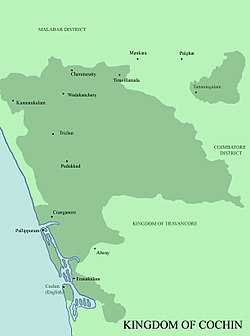
    Now I am providing information from Chinese Ming Dynasty that it protected Cochin,Kerala around 14th Century.

    Cochin was a protectorate under Chinese.

    Kerala,of which Cochin is a part,was preceded by the Chera Emperors of South India who find mention in Ramayana and Mahabharata.

    ‘On the Malabar coast during the early 15th century, Calicut and Kochi were in an intense rivalry, so the Ming dynasty of China decided to intervene by granting special status to Kochi and its ruler known as Keyili (可亦里) to the Chinese. Calicut had been the dominant port-city in the region, but Kochi was emerging as its main rival. For the fifth Ming treasure voyage, Admiral Zheng He was instructed to confer a seal upon Keyili of Kochi and enfeoff a mountain in his kingdom as the Zhenguo Zhi Shan (鎮國之山, Mountain Which Protects the Country).Zheng He delivered a stone tablet, inscribed with a proclamation composed by the Yongle Emperor himself, to Kochi.

    https://en.m.wikipedia.org/wiki/Kochi

    Ming Treasure Voyages

    On 14 November 1416, the Yongle Emperor returned to Nanjing.On 19 November, a grand ceremony was held where the Yongle Emperor bestowed gifts to princes, civil officials, military officers, and the ambassadors of 18 countries.On 19 December, the eighteen ambassadors were received at the Ming court.On 28 December, they visited the Ming court to take their leave and were bestowed robes before their departure.That day, the Yongle Emperor ordered the undertaking of the fifth voyage, which had the avowed objective to return the 18 ambassadors and to reward their kings.

    Admiral Zheng He and other unnamed people had received orders to escort the ambassadors back home.They carried imperial letters and many gifts for several kings.The King of Cochin received special treatment, because he had sent tribute since 1411 and later also sent ambassadors to request the patent of investiture and a seal.The Yongle Emperor granted him both requests, conferred to him a long inscription (allegedly composed by the emperor himself), and gave the title “State Protecting Mountain” to a hill in Cochin

    https://thereaderwiki.com/en/Treasure_voyages

  • Lord Krishna Dynasty Ruled From Thiruvananthapuram, Vizhinjam?

    The history of India is not what we are taught in text books.

    The Dates are deliberately pushed forward to give Christianity an edge in terms of antiquity.

    Ramayana, Mahabharata,Tamil classics are dated at ridiculously later dates.

    Ramayana is dismissed as Myth,Rig Veda ,acknowledged as the oldest literary work,is dated around 5000 BC!

    Archeological finds push these dates back, especially the finding of,

    Poompuhar,Tamil Nadu,11000 years,

    Tamil site near Chennai, India,A million years,

    Adichanallur,Anbil plates,Keezhadi,to cite a few.

    Based on the available evidence these

    could be dated at least 11000 years back.

    And we have Tamil classics,Sangam Literature.

    Tamil classics refer to Ramayana, Mahabharata and Lord Krishna repeatedly.

    Early Tamil Chera King,Udhiyan Cheralaathan fed the Kaurava and Pandava armies during the Mahabharata war.

    Madurai Meenakshi’s father Makaratdwaja,also called Saranga fought along side the Pandavas in the Mahabharata war.

    The Three Crowned Kings of Tamilakam trace their origin to Solar and Lunar Dynasties.

    Lord Rama belonged to Ikshvsku Dynasty,the Solar Dynasty.

    His ancestor,Manu,the first human,was from South India.

    He moved to Ayodhya with his son Ikshvsku, because of a Tsunami in the South of Vindhya Mountains.

    Ikshvaku founded the Solar Dynasty,Surya Vamsa.

    Mani’s daughter,Ila,who was left in the South founded the Lunar Dynasty,Chandra Vamsa.

    The Tamil kings belonged to one of these two dynasties.

    The origin of the ancient Tamil kings is interesting.

    Chola inscriptions refer Cholas to be of Solar Dynasty of Lord Rama and Cholas state they belong to Kashyap Gotra.

    Of of the three crowned kings,Moovendar,Pandyas are reported to be more ancient.

    So are the Cheras.

    Chera and Pandya took part in Mahabharata war.

    Then we have the daughter of Manu,Ila,who founded the Luna Dynasty.

    Ila Dynasty spread throughout the world,Ailas.

    Sri Lanka,which was a part of India in those ancient times was the centre of this Kingdom.

    So we have these two dynasties spread throughout the world.

    Atlantis legends mention Rama kingdom and Sumerian Kings’ List mention Dasaratha,Rama and Bharatha.

    There is one more Dynasty which has gone unnoticed.

    The Ila.

    This Dynasty,with evidence surfacing now,seems to have co existed with the Tamilakam Moovendar and could have preceded them.

    They were called Ay Dynasty and they ruled from Vizhinjam,now called Thiruvananthapuram, Kerala.

    I have written earlier that Padmanabha Swamy temple, Kerala is about 25000 years old.

    Ay in Tamil means mother.

    It could denote the Ila Dynasty.

    Ay in Tamizh means Mother.

    The Ay Dynasty ruled from from Vizhinjam.

    The had a special relationship with Lord Krishna and Krishna was their family deity.

    Ayar in Tamil means Yadava,the community Lord Krishna belongs to.

    Taking into consideration that Krishna Married a Pandyan princess and had his daughter Married to a Pandyan princess,it is possible and more than probable that the offspring of Krishna’s daughter ruled from Vizhinjam, Thiruvananthapuram.

    Another important line of chieftains of Tamil Nadu during the sangam period with whom krishna was intimately associated was the Ay. The were known to call krishna as their god.Krishna is accepted as their chief god by the Ay.

    Reference.

    https://en.m.wikipedia.org/wiki/Ay_kingdom

    Vizhinjam dates back to the rule of the Ay dynasty. Circa 850 AD – 1400 AD, the region was the scene of many battles between the Chera dynasty(Kulasekhara) and the Cholas, and Vizhinjam, the then capital, was sacked by the Cholas.

    When the kings of the Ay dynasty shifted their capital to Vizhinjam, they built a fort dating to the eighth or ninth century. A preliminary investigation by a team of archaeologist under Dr. Ajit Kumar, University of Kerala, has revealed the fort might have originally been 800 m² in area. The fort’s wall can be found on the northern and western (seaside) parts and has been constructed using large boulders set in mud mortar. The wall, with a wide base, tapers on its way up. Even now this part of Vizhinjam is known as Kottapuram, (“Kotta” in Malayalam means Fort. According to Dr. Ajit, one important clue in dating the fort is that the walls have no battlements or `loop holes’ (holes to place cannons in). This is typical of early forts, he says. Another complex of walls, near the present Our Lady of Good Voyage Church, probably relates to the Portuguese period.

    https://en.m.wikipedia.org/wiki/Vizhinjam

  • Kerala Kingdoms Date Back to Ramayana Mushika Ays

    Kerala Kingdoms Date Back to Ramayana Mushika Ays

    Contrary to popular belief,there were five Kingdoms of the Tamils and not three kingdoms,Chera,Chola and Pandya.

    The five Kingdoms are,

    Chera,

    Chola,

    Pandya,

    Mushika and

    Ay.

    While the Chera Kingdom extended ,

    ‘By the early centuries of the Common Era, civil society and statehood under the Cheras were developed in present-day western Tamil Nadu. The location of the Chera capital is generally assumed to be at modern Karur (identified with the Korura of Ptolemy). The Chera kingdom later extended to the plains of Kerala, the Palghat gap, along the river Bharathappuzha and occupied land between the river Bharathappuzha and river Periyar, creating two harbour towns, Tondi (Tyndis) and Muciri (Muziris),where the Roman trade settlements flourished.

    The Chola and Pandya Kingdoms were in the interior parts of the present Tamil Nadu.

    The western coastal areas were ruled by Cheras,Mushikas and Ays Dynasties.

    As the first Chera has been mentioned as having participated in the Mahabharata battle, Chera kingdom is mentioned in the  Aitreya Aranyaka of the Rig Veda Ramayana,Sumerian texts and by various historians of Greece,these Kingdoms are to be dated at least towards 5000BC,when Ramayana took place.

    For date of Ramayana,please read my article on the date of Ramayana.

    Rama’s ancestor Satyavrata Manu,also called as Vaiwasvatha Manu was from  the south of Vindhya mountains and the region where he reigned was located  near and included Madagascar.

    And this was a part of Lemuria/MU.

    So the date of these Chera kingdoms,of which the present State of Kerala was a part,may safely pushed back to 5000 BC.

    And the landmass then was different,it was in Lemuria/MU.

    lemuria

    ‘The Cheras were an ancient Dravidian royal dynasty of Tamil origin. The first to establish an historical ruling dynasty in the area, they ruled wide-ranging areas of Tamil Nadu and Kerala in south-eastern and south-western India respectively, areas that had been settled since at least 5000 BC, when Neolithic carvings had been left in Edakkal Caves. Chera territory included regions such as Venad, Kuttanad, Kudanad, Pazhinad, and others, encompassing the area between Kanya Kumari in the south to Kasargod in the north (now in the far north of Kerala). Also included in this list are Palghat, Coimbatore, Salem and Kollimalai, although they quite probably did not rule all of these areas at all times as ancient borders could be quite fluid at times. Their core territory was in Kerala, while the later rise of the Pallavaspushed them out of Tamil Nadu. However, they did establish a capital at Vanchi, which was known by the Romans as Muzris after an active sea-borne trade sprang up between the two powers.’

    The first Chera King was Vanavaramban” Perumchottu Uthiyan Cheralathan.

    He took part in the Mahabharata War as the provider of food both to Pandava and Kaurava armies.

    He had two sons,each ruling a part of Chera kingdom.

    Mushika Kingdom.

    ‘The Mushika Kingdom (Mushaka Rajya, also called Ezhimalai Rajya, Puzhinadu, Kolathunadu, Chirakkal Rajya among the more common names) was an ancient kingdom of the Tamil Sangam period in present-day Kerala, India, ruled by a royal dynasty of the same name. Its dominions, for most of its recorded history, covered the present-day regions of Northern Kerala, Tulunadu and Coorg, between the western slopes of the Western Ghats in the East and the Arabian Sea in the West.It was one of the five primary ruling dynasties in the ancient Tamilakam of recorded history, and in the Tamil Sangam Period, along with the Cheras, the Pandyas, the Cholas and the Ays. Ezhimalai Nannan was the most powerful ruler of Ezhimalai. He expanded the kingdom to include Gudalur and Coimbatore in his lifetime.

    Reference to Mushikas in Mahabharata.

    The Mahabharata mentions the Mushika as one of the kingdoms of South India, and is grouped with the Cheras, Pandyas and Cholas.The Mushika Dynasty in the Mahabharata indicates the Ay Dynasty in Thiruvananthapuram area possibly before the formally known Mushika Dynasty branched out.

    The Tamil Sangam period is replete with mention of the Mushika Family, and especially that of their most famous ruler Nannan, who had his capital at Pazhi (Pazhayangadi).

    The Greek traveler Strabo, who lived around 100 BCE, mentions the kingdom of Mushika in his accounts. The Greek geographer Ptolemy mentions the Ay Dynasty, the mother dynasty of Nannan (Mushika) in the Second Century C.E, and refers to it as “Aoi”

    Ays.

    The Ay dynasty (I / Ai dynasty) (later known as the Venad and subsequently the Thiruvithamkur Dynasty) ruled parts of southern India from the early Sangam age, which spanned from c. 3rd century BC to c. 4th century AD, till the Independence of India. At their zenith, the dynasty ruled an area extending from Tiruvalla in the north to Nagercoil in the south including western Ghats inn the east.One part of the Ayi Kingdom was headquartered in Mavelikkara while another was headquartered at Periyaoor, later called Keezhperoor, Aykudi, Alwarkurichi,Tenkasi (Ayiraperi village), .

    References and citations.

    https://en.m.wikipedia.org/wiki/Ay_kingdom

    https://en.m.wikipedia.org/wiki/Chera_dynasty

    https://en.m.wikipedia.org/wiki/Mushika_Kingdom


    This king is mentioned in the eighth decade of the century by the poet Arisil Kilar after winning a great victory at Takadur against the Adiyaman and two great kings. However, his position in this list is highly subject to change, and he is never shown in the same place twice in other lists. He also goes by the name of Karuvar-Eryia-ol-val-ko-Perunceral Irumporai. It seems likely that he is the son or descendant of Yanaikat-sey Mantaran Cheral (of the second century AD), but the Barr List places him first (as does the Pillai list), ahead of the more traditional founder of the dynasty, Perumchottu Uthiyan Cheralathan, who is shown as the third ruler.

    The succession after Peruncheral is where things become really complicated. The kingdom appears to divide in two or, more probably, forms a boundary region that is governed by a junior member of the royal house. Each of Peruncheral’s sons gain a throne of their own with one, seemingly the Vanavar (Vanavarambanas) branch, being the senior.

    Natuvan (or Antuvan) Cheral Irumporai and Udiyan Cheral have been connected together as those two sons, since they are already accepted as being brothers. However, it is not certain that Peruncheral is their father. The accepted story is that Udiyan, carrying the dynastic name Vanavaramban, succeeds his father and conquers territory to the north, but he later places his brother Antuvan in charge there to begin a co-ruling ‘dynasty’ while he rules the main kingdom

    Source.http://www.historyfiles.co.uk/KingListsFarEast/IndiaCheras.htm