Tag: Islam and Hinduism

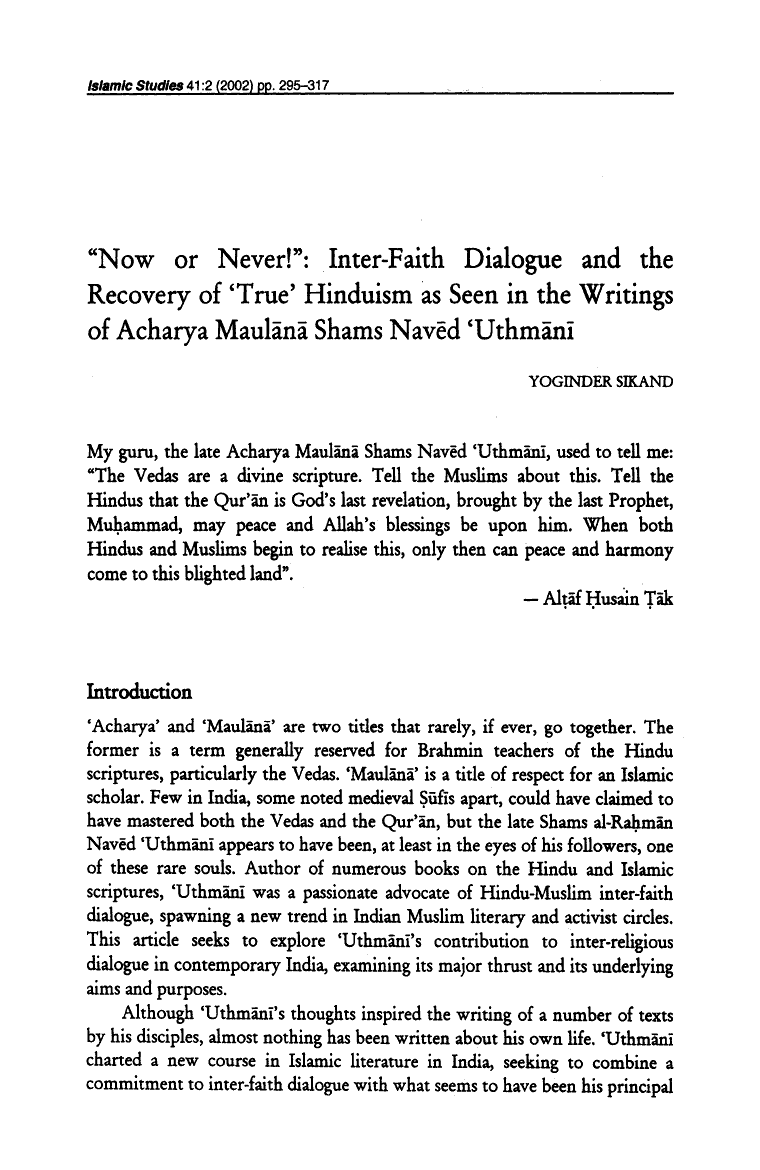
  • Recovery of True Hinduism, Acharya Maulana

    Recovery of True Hinduism, Acharya Maulana

    Interfaith Unity is one of the points by moderate(?)Islam and Pseudo Hindu Scholars and self styled secularists who want to justify Islam by comparing it to Hinduism. This they do by first acknowledging(!) the antiquity and the Truth contained in the Vedas and ends up saying that Islam is mentioned in Vedas, Muhammad is referred to in The Vedas. They talk about the Recovery of ‘True’ Hinduism.!

    Do they mean to say that if Islam or Prophet is not acknowledged or recognized, that system of Thought, Way of Living, philosophy Religion is not true?

    Validating Hinduism by Islam is like my declaring the Existence of my Great grandfather. Can anything be more silly than this?

    Another point is that to be secular, why should one should go beyond facts and justify out scriptures to others?

    And what is this Secularism? Deny other religions, especially Hinduism?

    To what end?

    To justify Islam? Why should you justify it if you believe it?

    And look at the pathetic attempt by secular historians who quote Acharya Maulana! Who gave the gentleman the title of Acharya? It needs minimum twelve years to study Vedas under a Guru, that too, the disciple leaving home and staying with the Guru. Reading some texts on Hinduism or of Hinduism does not make one an Acharya. Can one become a Maulana by reading Islamic Texts?
    If one has his faith, let him follow it, without disturbing others, Hindus or Non Hindus. Period.

    Don’t denigrate your religion by trying to justify it.

    I am providing the information that has spurred me to write. The title of the book is Now or Never!”: Inter-Faith Dialogue and the Recovery of ‘True’ Hinduism as Seen in the Writings of Acharya Maulānā Shams Navēd ‘Uthmānī ‘and it is found it jstor site, ‘ Link provided towards the close of the article. And who is this Acharya Maulana? https://www.jstor.org/stable/20837194?read-now=1&seq=1#page_scan_tab_contents

    Shams Naved Usmani (1931 – 26 August 1993) was an Indian Muslim scholar. He is known for his inter-faith dialogues. Born into the Usmani family of Deoband, Usmāni was an alumnus of the University of Lucknow and held the titles of Acharya and Maulana altogether.

    .. Usmāni studied Hindu scriptures. He has identified Noah as Manu. He has also asserted the fact that Vedas are divinely books, but have been corrupted, as the Islamic traditions hold belief about Injil and Torah. Usmāni suggests that Hindus have attributed wrong beliefs to Manu.According to Tabish Mehdi, “the results that came out of his studies, created an atmosphere of restlessness in the academic world”. His studies received a wide criticism from the academics of India.Usmāni held the titles of Acharya and Maulana altogether.
    Usmāni himself did not write any books. However, his anecdotes were collected and compiled by Abdullah Tariq. These works include Agar Abh Bhi Na Jāge To (transl. Now or Never). Usmāni died on 26 August 1993. He was survived by his wife Khadeja Naved Usmani.https://en.m.wikipedia.org/wiki/Shams_Naved_Usmani

    https://www.jstor.org/stable/20837194?read-now=1&seq=1#page_scan_tab_contents

  • Ninety Nine Names Of Allah With Palasruthi and Parihara

    Ninety Nine Names Of Allah With Palasruthi and Parihara

    Curious similarities between Hinduism and Islam may be noticed and it appears that Islam has borrowed concepts from Pre Islamic Arabian culture and civilization.

    This in turn has its roots in Sumerian Civilization.

    Sumerian civilization is from Vedic and Tamil culture.

    Please read my articles on this.

    Kaaba is A Shiva Temple,

    786 is Flipped OM,

    Prophet’s Uncle composed a Poem on Shiva,

    Prophet’s Grandfather dug a well as Ganges,

    The Triad of Goddesses of Pre Islamic Arabia,Al-Uzza,Al-Lat and Menat, reminds one of the Three Devis of Hinduism, Saraswathi, Lakshmi and Durga

    Kaaba opens at Pradosha time of Shiva,

    Emperor Vikramadhitya’s inscription is found in Kaaba,

    Muslims circumbulate at Kaaba as Hindus do,but in the anti clock wise direction and for seven times .

    I have written on the above points with credible sources,most of them Islamic.

    Now one more similarity.

    Hindu Gods are worshiped with Hundred names,Asthtotra; Sahasranama,One thousand names;Trisathi,three hundred names.

    These contain the Attributes of God most of them as Principles or qualities of the Reality,Brahman.

    And these also consist of the Attributes of the Reality with Attributes,Saguna Aaradhana,Reality as Personal God.

    Allah of Islam considers as The Only God,without Form.

    Islam also has names/Attributes of Allah.

    These are taken from the Koran and the commentaries on The Koran,Hadiths.

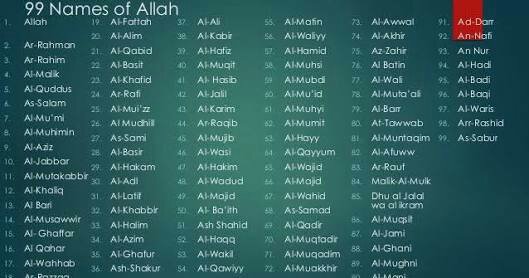
    These names are Ninety Nine.

    One may note that the Nirguna or the Attribute less/beyond Attributes is assigned to Allah.

    Hindus may notice both Nirguna and Saguna names in all Sahasranamas.

    In most of them these are mixed.

    One can find these Nirguna and Saguna Aradhana, described separately in Lalitha Sahasranama.

    Reference and citation.

    https://en.m.wikipedia.org/wiki/Names_of_God_in_Islam

    Ninety Nine Names of Allah.

    Al-Asma-ul-Husna ( اَلاسْمَاءُ الْحُسناى ) The 99 Most Beautiful Names and Attributes of Allah the Almighty
    He is Allah, the Creator, the Inventor, the Fashioner; to Him belong the best names. Whatever is in the heavens and earth is exalting Him. And He is the Exalted in Might, the Wise. Surat Al-Hashr 59:24
    And to Allah belong the best names, so invoke Him by them Surat Al-A’raf 7:180
    Allah – there is no deity except Him. To Him belong the best names. Surat Taha 20:8
    Narrated Abu Huraira: Prophet Muhammad SAW said, “Allah has ninety-nine names, i.e. one-hundred minus one, and whoever knows them will go to Paradise.” Sahih Al-Bukhari – Book 50 Hadith 894
    Abu Huraira reported Prophet Muhammad SAW as saying: Verily, there are ninety-nine names for Allah, i.e. hundred excepting one. He who enumerates them would get into Paradise. And Hammam has made this addition on the authority of Abu Huraira who reported it from Prophet Muhammad SAW that he said: “He is Odd (one) and loves odd number.” Sahih Muslim – Book 35 Hadith 6476
    It is not possible to perfectly translate the names and attributes of Allah from their original Arabic into English. However, here are some fairly close definitions.
    Al-A’raj related from Abu Hurayra (raziAllahuanhu) that the Messenger of Allah (Sallalahualaywasallam) said “Allah has ninety-nine names, one hundred less one. Whoever memorises them will enter the Garden.” [Chapter 100, 6957 Bukhari]
    Abu Huraira reported: The Messenger of Allah, peace and blessings be upon him, said, “Allah has ninety nine names and whoever preserves them will enter Paradise.” Source: Ṣaḥīḥ Muslim 2677
    Benefits of Reciting The Most Beautiful Names of Allah
    1. Allah (The Name of Allah)
    If you recite this name of Allah 1000 times daily, Allah will remove all doubts and uncertainities from your heart and instill determination and faith.
    2. Ar-Rahmaan (The Compassionate)
    If you recite this name of Allah 100 times daily after every Salaah (prayer), Allah will remove hard-heartedness and negligence from your heart. Insha-Allah.
    3. Ar-Raheem (The Most Merciful)
    If you recite this name of Allah 100 times daily after every Salaah (prayer), Allah will safeguard you against all calamities and maladies. Insha-Allah.
    4. Al-Malik (The Sovereign)
    If you recite this name of Allah abundantly every day after Zawaal (the time of mid-day immediately before Duhr prayer), Allah will give you abundant wealth. Insha-Allah.
    5. Al-Quddoos (The Most Holy)
    If you recite this name of Allah abundantly every day, Allah will cure you of all spiritual sickness. Insha-Allah.
    6. As-Salaam (The Bestower of Peace)
    If you recite this name of Allah abundantly, Allah will protect you from all calamities and maladies. If you recite it 115 times and blow on a sick person, Allah will restore his health. Insha-Allah.
    7. Al-Mu’min (The Granter of Security)
    If you recite this name of Allah 630 times in times of fear, Allah will protect you from all calamities, mishaps and losses. If you write it on paper (or engrave it on a silver ring) and keep it with you (as Ta’weez) , your physical and spiritual safety will remain the responsibility of Allah. Insha-Allah.
    8. Al-Muhaymin (The Protector)
    If you offer 2 rakaat Salaah after ghusl and read, with sincerity, this name of Allah 100 times, Allah will purify you physically and spiritually. If you recite it 115 times, Allah will acquaint you with the unseen. Insha-Allah.
    9. Al-‘Azeez (The Mighty)
    If you recite this name of Allah 40 times each day for 40 days, Allah will grant you honor and self-sufficiency. If you recite it 41 times daily with constancy, Allah will grant you honor and self-sufficiency, if you are being treated with dishonor. Insha-Allah.
    10. Al-Jabbaar (The Compeller)
    If you recite this name of Allah 226 times every morning and evening, Allah will safeguard you against the oppression of tyrants and despots. Insha-Allah.
    11. Al-Mutakabbir (The Majestic)
    If you recite this name of Allah constantly, Allah will grant you honor and greatness. If you read it continually before any task, it will be accomplished. Insha-Allah.
    12. Al-Khaaliq (The Creator)
    If you recite this name of Allah 100 times for 7 days, Allah will safeguard you against all adversities. If you form the habit of reciting it regularly, Allah will appoint an angel who will worship Allah continuously on your behalf. Insha-Allah.
    13. Al-Baari’ (The Maker)
    If a barren woman fasts for 7 days and each day, after making iftaar with water, reads (Yaa-Baari-Ul Musawwiru) 21 times, Allah will grant her male children. Insha-Allah.
    14. Al-Musawwir (The Fashioner of Forms)

    If a barren woman fasts for 7 days and each day, after making iftaar with water, reads (Yaa-Baari-Ul Musawwiru) 21 times, Allah will grant her male children. Insha-Allah.

    15. Al-Ghaffaar (The Forgiver)
    If you recite this name of Allah 100 times after Jumma Salaah (prayer), you will soon begin to perceive Allah’s forgiveness. If you say (Yaa-Ghaffaaru Ighfirli) daily after Asr Salaah (prayer), Allah will include you amongst those whom he has forgiven. Insha-Allah.
    16. Al-Qahhaar (The Subduer)
    If you recite this name of Allah continually, Allah will free you from the love of this world and, instead, Allah’s love will become inborn in your heart. Insha-Allah.
    17. Al-Wahhaab (The Bestower)
    If a poverty stricken person recites this name of Allah continuously or writes it and keeps it on him (as Taaweez) or recites this name of Allah 40 times in the last sajdah of Salaat-ud-Doha (Chast prayer), Allah will free him from poverty in an unexpected and amazing manner. Insha-Allah.
    For particular need to be fulfilled, observe sajdah 3 times in the courtyard of the house or Masjid ( Masjid) and then lift your hands (as in Du’a) and recite this name of Allah 100 times, Allah will fulfill your need. Insha-Allah.
    18. Ar-Razzaaq (The Provider)
    Before Fajr Salaah (prayer), if you blow in all four corners of your house beginning from the right-hand corner while facing Qiblah, after reciting this name of Allah 10 times in each corner, Allah will open the doors of rizq (sustenance) for you; sickness and poverty will never enter your home. Insha-Allah.
    19. Al-Fattaah (The Opener)
    If you recite this name of Allah 70 times by placing both your hands on your bosom after Fajr Salaah (prayer), Allah will illumunate your heart with the Noor of Imaan. Insha-Allah.
    20. Al-‘Aleem (The All-Knowing)
    If you recite this name of Allah abundantly, Allah will open the gates of knowledge and wisdom for you. Moreover, your heart will be filled with the Ma’rifah (cognizance) of Allah. Insha-Allah.
    21. Al-Qaabid (The Withholder)

    If you

    write this name of Allah (with saffron or by the mere action of your finger) on four morsels of bread each day for 4 days and eat them, Allah will safeguard you against hunger, thirst, injuries, pain etc. Insha-Allah.
    22. Al-Baasit (The Expander)
    If you recite this name of Allah 10 times daily by lifting your hands towards the heavens (as in Du’a) after Salaat-ud-Doha (Chast prayer) and thereafter pass your hands across the face (as when finsihing Du’a), Allah will grant you self-sufficiency and independence. Insha-Allah.
    23. Al-Khaafid (The Abaser)
    If you recite this name of Allah 500 times, Allah will fulfill your needs and remove all your difficulties. If you fast for 3 days and on the fourth day say this beautiful name 70 times while sitting in seclusion, you will gain victory over your enemy. Insha-Allah.
    24. Ar-Raafi’ (The Exalter)
    If you recite this name of Allah 100 times in the middle of the fourteenth night of every lunar month, Allah will grant you self-sufficiency and independence of the entire creation. Insha-Allah.
    25. Al-Mu’iz (The Bestower of Honor)
    If you recite this name of Allah 40 times after Maghrib Salaah (prayer) on every Monday and Friday, Allah will grant you honor and reverence. Insha-Allah.
    26. Al-Mudhil (The Humiliator)
    If you make Du’a for protection after reciting this name of Allah 75 times, Allah will protect you from the evils of envious persons, oppressors and enemies. Insha-Allah.
    If you fear a particular enemy then, after reciting this name of Allah 75 times, you may observe sajdah and invoke Allah’s help against the enemy in the following manner: “O Allah! Protect me from the evils of so and so.”, Allah will grant you protection. Insha-Allah.
    27. As-Sami’ (The All-Hearing)
    If you recite this name of Allah 500 times or 50 times on Thurday after offering Salaat-ud-Doha (Chast prayer), Allah will surely grant your Du’as. Insha-Allah. It is necessary that no talking be done during the course of reciting it.
    If you recite this name of Allah 100 times on a Thursday between the Sunnah and Fardh of Fajr Salaah (prayer), Allah will favour you with with His special blessings. Insha-Allah.
    28. Al-Baseer (The All-Seeing)
    If you recite this name of Allah 100 times after the Jumma Salaah (prayer) constantly, Allah will grant strength to your eye-sight and Noor (light) to your heart. Insha-Allah.
    29. Al-Hakam (The Judge)
    If you recite this name of Allah 99 times while in the state of Wudhu during the last portion of the night, Allah will cause your heart to perceive all secrets and to be filled with Noor (light). If you recite this name on a Friday night in such a manner that you grow euphoric and ecstatic then Allah will cherish your heart with manifestations and inspirations. Insha-Allah.
    30. Al-‘Adl (The Just)
    If you write this name of Allah (with saffron or by the mere action of your finger) on 20 pieces of bread on the day or night of Jumma and consume it, Allah will cause the entire creation to become subservient to you. Insha-Allah.
    31. Al-Lateef (The Most Affectionate, The Knower of Subtleties)
    If you recite this name of Allah 133 times daily, Allah will grant abundance in your rizq (sustenance) and cause all your tasks to be accomplished without difficulties. If you are afflicted with poverty, misery, sickness, loneliness or any adversity, then you should make Wudhu in the proper manner and offer 2 rakaat Salaah (prayer) and then bearing in mind the objective, recite this name of Allah 100 times. Allah will surely grant you deliverance. Insha-Allah.
    32. Al-Khabeer (The All-Aware)
    If you recite this name of Allah continually for seven days, you will begin to perceive hidden secrets. If you have insatiable desire for pleasure, recite this name of Allah continually. Allah will free you from such base desires. Insha-Allah
    33. Al-Haleem (The Forbearing)
    If you write this name of Allah on paper, soak it in water and then sprinkle or rub the water on something, then Barakah (Allah’s blessing) will be imparted to it and Allah will safeguard it against all calamities. Insha-Allah
    34. Al-‘Azeem (The Magnificient)
    If you recite this name of Allah constantly, you will be graced with great honor and dignity. Insha-Allah.
    35. Al-Ghafoor (The Forgiving)
    If you recite this name of Allah frequently, all your maladies, sorrow and grief will be removed. Barakah (Allah’s blessing) will be imparted to your wealth and offsprings.
    As related in a hadith, if you recite (Yaa-Rabbigh- firli) 3 times while in sajdah, Allah will forgive all your past sins and any sins that you may commit in future. Insha-Allah.
    36. Ash-Shakoor (The Grateful)
    If you recite this name of Allah 41 times while facing any difficulties (financial, physical, spritual, mental etc), Allah will grant deliverance soon. Insha-Allah.
    37. Al-‘Aliyy (The Highest)
    If you recite this name of Allah daily and constantly and keep with you a written copy of it, Allah will exalt you, grant affluence and fulfill all your desires. Insha-Allah.
    38. Al-Kabeer (The Greatest)
    If you have been dismissed from a post, then fast for seven days and each day recite this name of Allah 1000 times, Allah will reinstate you to your post and grace you with honor and dignity. Insha-Allah.
    39. Al-Hafeez (The Preserver)
    If you recite this name of Allah daily and constantly, and keep with you a written copy of it, Allah will protect you from all hazards, losses and harmful things. Insha-Allah.
    40. Al-Muqeet (The Sustainer)
    If you recite this name of Allah 7 times and blow in a bowl of water and drink it yourself or allow someone else to drink from it or to take a deep breath from the bowl, Allah will fulfill all your desires soon. Insha-Allah.
    41. Al-Haseeb (The Reckoner)
    If you fear any human being or any thing, recite (Hasbiyallaahul- Haseebu) 70 times in the morning and 70 times at night for eight days starting from Thursday, Allah will grant you protection against the evil of the person or thing you fear. Insha-Allah.
    42. Al-Jaleel (The Exalted)
    If you write (Yaa Jaleelu) on a paper with saffron or musk and keep it with you as a Ta’weez, Allah will give you honor, greatness, rank and dignity. Insha-Allah.
    43. Al-Kareem (The Generous)
    If you wish to be revered and honored by the Ulama and pious people recite this name of Allah continually and fall asleep. Allah will fulfill your wish. Insha-Allah.
    44. Ar-Raqeeb (The Watchful)
    If you recite this name of Allah 7 times each day and blow on yourself and your family, Allah will protect you and your wealth from destruction and calamities. Recite this name of Allah all the time to be safeguarded at all times. Insha-Allah.
    45. Al-Mujeeb (The Responsive)
    If you recite this name of Allah constantly, you will perceive that all your Du’as are being granted. Insha-Allah.
    46. Al-Waasi’ (The All-Encompassing)
    If you recite this name of Allah repeatedly, Allah will grant you spiritual and material self-sufficiency and independence. Insha-Allah.
    47. Al-Hakeem (The Wise)
    If you recite this name of Allah constantly, Allah will open the doors of knowledge and wisdom for you. If you want a particular task to be accomplished recite this name Of Allah frequently and constantly. Insha-Allah.
    48. Al-Wadood (The Most Loving)
    If you recite this name of Allah 1000 times, blow on food, and consume it along with your spouse, Allah will settle all your disputes and differences and create a strong bond of love and affection . Insha-Allah.
    49. Al-Majeed (The Most Glorious)
    A person who has contracted a fatal disease such as pox, leprosy etc. should fast on the 13th, 14th and 15th of the lunar month and after breaking fast recite this name of Allah profusely, blow on water and drink it. He will soon be cured. Insha-Allah.
    50. Al-Baa’ith (The Resurrector)
    If you place your hand on your bosom and recite this name of Allah 101 times at bedtime, your heart will become alive with knowledge and wisdom. Insha-Allah.
    51. Ash-Shaheed (The Witness)
    If you wish your disobedient wife or children become obedient, place your hand on their forehead and recite this name of Allah 21 times and blow on them. They will soon become obedient. Insha-Allah.
    52. Al-Haqq (The Truth)
    If your family member is missing or absconding or if your belongings have been stolen, write this name of Allah on all 4 corners of a square paper. At the time of Sehri place the paper on your palms and lift it toward the heavens and make Du’a. The missing person or the stolen goods will be returned soon, free from any harm or damage. Insha-Allah.
    53. Al-Wakeel (The Trustee)
    If you fear any calamity caused by an act of Allah, recite this name of Allah repeatedly, you will be protected from all calamities. Insha-Allah.
    54. Al-Qawiyy (The Most Strong)
    If you are genuinely oppressed or victimized, recite this name of Allah profusely with a view to counteracting the oppressor. Allah will render you proctection. Insha-Allah. This should never be done if circumstances do not warrant.
    55. Al-Mateen (The Firm)
    If a lady’s breasts do not yield milk, write this name of Allah on a piece of paper, soak it in water and make her drink it. Her breasts will abound in milk. Insha-Allah.
    56. Al-Waliyy (The Patron)
    If your wife is of ill character, recite this name of Allah constantly in her presence. She will soon become of good character. Insha-Allah.
    57. Al-Hameed (The Praiseworthy)
    If you recite this name of Allah in seclusion 93 times for 45 days, all your evil habits and bad qualities will change into good habits. Insha-Allah.
    58. Al-Muhsee (The Reckoner)
    If you recite this name of Allah 20 times daily and blow it on 20 pieces of bread and consume it, Allah will make the entire creation subservient to you. Insha-Allah.
    59. Al-Mubdi’ (The Originator)
    If you place your hand on the stomach of your pregnant wife and recite this name of Allah 99 times at the time of Sehri, she will not have a miscarriage or give birth prematurely. Insha-Allah.
    60. Al-Mu’eed (The Restorer)
    If a person is lost, recite this name of Allah 70 times in each corner of the house during the night when everyone is asleep. The missing person will either return within 7 days or his whereabouts will be known within that period. Insha-Allah.
    61. Al-Muhyee (The Giver of Life)
    If you are sick, recite this name of Allah repeatedly, your health will be restored. If you recite this name of Allah repeatedly and blow on a sick person, his health will be restored. If you recite this name of Allah 89 times and blow on yourself, Allah will safeguard you against all obstacles and bondages. Insha-Allah.
    62. Al-Mumeet (The Giver of Death)
    If you have no control over yourself, place your hand on your bosom and recite this name of Allah continuously before falling asleep. Allah will give you the strength to control yourself. Insha-Allah.
    63. Al-Hayy (The Ever-Living)
    If you desire sound health recite this name of Allah 3000 times daily. If you are sick, write this name of Allah in a bowl with musk and rose water, then wash the inscription with water and drink it, Allah will soon cure you. Insha-Allah.
    64. Al-Qayyoom (The Self-Subsisting Sustainer of All)
    If you recite this name of Allah continuously, you will attain honor and dignity amongst people. If you recite this name of Allah constantly in seclusion, you will become wealthy. If you continuously recite (Yaa Hayyu Yaa Qayyoomu) after Fajr until sunrise, your laziness will vanish. Insha-Allah.
    65. Al-Waajid (The Finder)
    If you recite this name of Allah continuously while having food, the food will become a source of strength, illumination and Noor (light) for your heart. Insha-Allah.
    66. Al-Maajid (The Glorious)
    If you recite this name of Allah in seclusion to such an extent and in such a manner that you become euphoric, the Noor (light) of Allah will soon become evident in your heart. Insha-Allah.
    67. Al-Waahid/Al- Ahad (The One)
    If you desire good and pious children, write this name of Allah and keep it with you all the time, Allah will fulfill your desire. Insha-Allah.
    68. As-Samad (The Eternally Besought)
    If you place your head in Sajdah at the time of Sehri and recite this name of Allah 115 or 125 times, Allah will grant you spiritual and physical truthfulness. If you recite this name of Allah constantly in the state of Wudhu, Allah will soon make you independent of the entire creation. Insha-Allah.
    69. Al-Qaadir (The Omnipotent)
    If you offer 2 rakaat Salaah (prayer) and recite this name of Allah 100 times, Allah will humble and disgrace your enemies (provided you are justified). If you recite this name of Allah 41 times before undertaking a difficult task, the difficulty will be removed. Insha-Allah.
    70. Al-Muqtadir (The Powerful)
    If you recite this name of Allah 20 times after waking up from sleep, Allah will ensure all your tasks are fulfilled efficiently. Insha-Allah.
    71. Al-Muqaddim (The Expediter)
    If you recite this name of Allah abundantly at the time of war or during a righteous struggle in the path of Allah, Allah will give you courage to make advances and safeguard you from the enemy. If you recite this name of Allah at all times, you will be come obedient and submissive to Allah. Insha-Allah.
    72. Al-Mu’akhkhir (The Delayer)
    If you recite this name of Allah frequently, you will soon resort to genuine repentance. If you recite this name of Allah 100 times daily, you will become dear to and a favorite of Allah. Insha-Allah.
    73. Al-Awwal (The First)
    If you desire male children, recite this name of Allah 40 times daily for 40 days, Allah will fulfill your desire. If any wayfarer recite this name of Allah 1000 times on a Friday, he will soon return to his people safe and sound. Insha-Allah.
    74. Al-Aakhir (The Last)
    Recite this name of Allah 1000 times daily, Allah will fulfill your wish. Insha-Allah.
    75. Az-Zaahir (The Manifest)
    If you recite this name of Allah 500 times daily after Ishraaq Salaah (prayer), Allah will cause your eyes and heart to be filled with Noor (light). Insha-Allah.
    76. Al-Baatin (The Hidden)
    If you recite this name of Allah 33 times daily, you will soon begin to perceive the deeper secrets of Allah and a strong bond of love and affection will form between you and Allah. If you recite (Huwal-Awwalu Wal-Aakhiru Wad-Dhaahiru Wal-Baatinu Wahuwa Alaa Kulli Shaiyyin Qadeer) continously after offering 2 rakaat Salaah, all your needs will be fulfilled. Insha-Allah.
    77. Al-Waalee (The Governer)
    If you recite this name of Allah repeatedly, Allah will safeguard you from all unexpected calamities. If this name of Allah is inscribed in a new earthen cup or jug and it is filled with water and the water is sprinkled in the house, the house will be safeguarded against all calamities. If you wish to subdue another person recite this name of Allah 11 times, Allah will fulfill your wish. Insha-Allah.
    78. Al-Muta’ aalee (The Most Exalted)
    If you recite this name of Allah continously, Allah will solve all your problems soon. If a woman recites this name of Allah abundantly during her menstruation, Allah will relieve her from all ailments. Insha-Allah.
    79. Al-Barr (The Source of All Goodness)
    If you are in the habit of taking intoxicants or committing adultery or indulging in any other evil, recite this name of Allah 7 times daily. Allah will guide you. If you recite this name of Allah excessively, Allah will expel the love of this world from your heart. If you recite this name of Allah 7 times and blow on your child soon after birth, Allah will grant your child protection from calamities until puberty. Insha-Allah.
    80. At-Tawwaab (The Acceptor of Repentance)
    If you desire that Allah guide you to sincere repentance, recite this name of Allah 360 times daily after Salat-ud-Doha (Chast prayer), Allah will fulfill your desire. If you recite this name of Allah abundantly, all your tasks will be accomplished without any difficulty. If you recite this name of Allah 10 times in the presence of a tyrant, you will soon be freed from the opression of the tyrant. Insha-Allah.
    81. Al-Muntaqim (The Avenger)
    If you are justified and desire to take revenge against your enemy, but haven’t the power to do so, recite this name of Allah continously for 3 Fridays, Allah Himself will take revenge on your behalf. Insha-Allah.
    82. Al-‘Afuww (The Pardoner)
    If you recite this name of Allah abundantly, Allah will forgive you. Insha-Allah.
    83. Ar-Ra’oof (The Most Kind)
    If you desire that the entire creation become affectionate towards you (and vice-versa), recite this name of Allah repeatedly. If you desire that your anger be subdued, recite Darood 10 times and this name of Allah 10 times. If you recite Darood 10 times and this name of Allah 10 times and blow on an angry person, his anger will be subdued. Insha-Allah.
    84. Maalik-ul-Mulk (The Owner of Sovereignity)
    If you recite this name of Allah constantly, Allah will grant you wealth, self-sufficiency and independence. Insha-Allah.
    85. Dhul-Jalaali Wal-Ikraam (Majestic and Benevolent)
    If you recite this name of Allah constantly, Allah will grant you honor, dignity and self-sufficiency. Insha-Allah.
    86. Al-Muqsit (The Just)
    If you recite this name of Allah constantly, Allah will protect you from evil doubts created by the Shaytaan. If you recite this name of Allah 700 times for a purpose, Allah will fulfill it. Insha-Allah.
    87. Al-Jaami’ (The Gatherer)
    If your family or relatives are scattered (due to war, earthquate, floods or other calamities), take bath at the time of Doha (Chast), lift your gaze toward the heavens and recite this name of Allah 10 times closing one finger each time, until all 10 fingers are closed. Afterwards pass your hands across your face as when completing Du’a. The disperse members of your family will soon come together. Insha-Allah.
    88. Al-Ghaniyy (The Self-Sufficient)
    If you recite this name of Allah 70 times daily, Allah will grant you self-sufficiency and Barakah in your wealth. If you are afflicted with physical or spiritual sickness or any difficulty, recite this name of Allah abundantly and blow on your entire body. Allah will soon heal you and relieve you of your difficulty. Insha-Allah.
    89. Al-Mughnee (The Enricher)
    If you recite Darood 11 times, recite this name of Allah 1111 times, recite Darood again 11 times and then Surah Muzzammil (Surah 73) after Fajr or Isha Salaah (prayer) , you will be granted both material and spiritual wealth. Insha-Allah.
    90. Al-Maani’ (The Preventer of Harm)
    If you have any disputes with your spouse, recite this name of Allah 20 times while lying down on the bed, the dispute will be settled and love and affection will result. If you recite this name of Allah constantly, Allah will safeguard you against all calamities. If you recite this name of Allah for any legitimate purpose, Allah will fulfill it. Insha-Allah.
    91. Ad-Daar (The Distresser)
    If you recite this name of Allah 100 times on the eve of Jumma (Friday), Allah will safeguard you against all physical and spiritual calamities and draw you nearer to Allah. Insha-Allah.
    92. An-Naafi’ (The Propitious)
    If you recite this name of Allah abundantly during travel, Allah will safeguard you against all hazards. If you recite this name of Allah 41 times before a task, it will be accomplished efficiently. If you recite this name of Allah prior to intercourse, Allah will grant you good and pious children. Insha-Allah.
    93. An-Noor (The Light)
    If you recite this name of Allah 1001 times after reciting Surah Noor (Surah 24), you heart will be illuminated with the Noor (light) of Allah. Insha-Allah.
    94. Al-Haadee (The Guide)
    If you raise both hands (as in Du’a) while lifting your gaze toward the heavens and recite this name of Allah several times and then pass both your hands on your face (as when completing Du’a), Allah will grant you complete guidance and associate you with the devout and pious. Insha-Allah.
    95. Al-Badee’ (The Originator)
    If you are in grief, recite (Yaa-Badee-us- Samaawaati- Wal-Ardh) 1000 times, Allah will soon grant you relief from your misery. If a particular task is to be undertaken, but you are not certain as to its feasibility, recite this name of Allah before falling asleep, you will receive guidance in a dream. Insha-Allah.
    96. Al-Baaqee (The Everlasting)
    If you recite this name of Allah 1000 times on the night of Jumma (Friday), Allah will grant you protection and accept all your good deeds. Insha-Allah.
    97. Al-Waarith (The Ultimate Inheritor)
    If you recite this name of Allah 100 times at sunrise, Allah will protect you against all sorrows, hardships and calamities and you will die as a Mu’min (believer). If you recite this name of Allah 1000 times between Maghrib and Isha Salaah (prayer), Allah will safeguard you from confusions, agitations and disturbances. Insha-Allah.
    98. Ar-Rasheed (The Guide to the Right Path)
    If you are unsure how to complete a particular task or are unable to work out plans for the task, recite this name of Allah 1000 times between Maghrib and Isha Salaah (prayer), the plan will become evident to you in a dream or by instinct. If you recite this name of Allah daily, Allah will safeguard you against all mishaps and grant you financial progress. Insha-Allah.
    99. As-Saboor (The Patient One)

    If you recite this name of Allah 100 times before sunrise, Allah will safeguard you against all calamities for the remainder of the day and prevent your enemies from uttering a single word against you. If you are in difficulty, recite this name of Allah 1020 times, Allah will soon provide you relief and contentment of the heart. Insha-Allah.

    Source.

    http://hajjandumrahnews.blogspot.in/2016/11/99-names-of-allah-in-english-meaning.html

  • Prophet Illusionist Establish “Terrible Demoniac Religion Bhavishya Purana and Rebuttal

    There are eighteen Puranas in Hinduism .

    Purana means very old.

    These consist of anthologies of the Universe.

    For more read my posts on Puranas.

    Of these eighteen Puranas, Garuda,Kalki and Bhavishya Purana deal with the Future.

    Garuda Purana speaks more about where the soul travels after death and Kalki Purana about the Avatar that is yet to manifest and the conditions of the earth then.

    Bhavishya Purana contains some references to Prophet Muhammad and Islam.

    I am producing relevant portions here.

    Islam in Bhavishya Purana.jpg
    Islam in Bhavishya Purana.Click to enlarge.
    Meaning of the term Milecha.jpg
    Sanskrit Milecha meaning

    There is a view that the translation may be incorrect.

    Few points come out of these verses.

    1. Mahamad (Muhammad) has been called an Acharya (a spiritual teacher) of Mlecchas (the illiterate people).
    2. The King Bhoj (innocent Indian people) will yearn to follow Prophet Muhammad with all humility and accept him as their teacher.
    3. Muhammad is the destroyer of the Devil. Tripurasur in Puranic mythology stands for the Devil.
    4. Muhammad is a dweller of the desert. It cannot refer to Lord Shiva of the Puranas because his abode is said to be the Mount Kailash in the Himlayas and not the desert.
    5. The Prophet will be given protection against his enemies, by the fellow Mlecchas.
    6. Raja Bhoj washed the Prophet with Ganges water and Panchgavya. Since this is a vision, it cannot be taken literally but must be taken as symbolic for honour.
    7. He is called as the embodiment of divine qualities.”

    *This can be seen in the second Link.

    Citation.

    http://bhavishyapuran.blogspot.in/

    * https://bhavishyapuran.wordpress.com/

    Shri Suta Gosvami said: In the dynasty of king Shalivahana, there were ten kings who went to the heavenly planets after ruling for over 500 years. Then gradually the morality declined on the earth. At that time Bhojaraja was the tenth of the kings on the earth. When he saw that the moral law of conduct was declining he went to conquer all the directions of his country with ten-thousand soldiers commanded by Kalidasa. He crossed the river Sindhu and conquered over the gandharas, mlecchas, shakas, kasmiris, naravas and sathas. He punished them and collected a large ammount of wealth. Then the king went along with Mahamada (Muhammad), the preceptor of mleccha-dharma, and his followers to the great god, Lord Shiva, situated in the desert. He bathed Lord Shiva with Ganges water and worshipped him in his mind with pancagavya (milk, ghee, yoghurt, cow dung, and cow urine) and sandalwood paste, etc. After he offered some prayers and pleased him.
     
    Suta Goswami said: After hearing the king’s prayers, Lord Shiva said: O king Bhojaraja, you should go to the place called Mahakakshvara, that land is called Vahika and now is being contaminated by the mlecchas. In that terrible country there no longer exists dharma. There was a mystic demon named Tripura(Tripurasura), whom I have already burnt to ashes, he has come again by the order of Bali. He has no origin but he achieved a benediction from me. His name is Mahamada(Muhammad) and his deeds are like that of a ghost. Therefore, O king, you should not go to this land of the evil ghost. By my mercy your intelligence will be purified. Hearing this the king came back to his country and Mahamada(Muhammad) came with them to the bank of the river Sindhu. He was expert in expanding illusion, so he said to the king very pleasingly: O great king, your god has become my servant. Just see, as he eats my remnants, so I will show you. The king became surprised when he saw this just before them. Then in anger Kalidasa rebuked Mahamada(Muhammad) “O rascal, you have created an illusion to bewilder the king, I will kill you, you are the lowest…”
     
    That city is known as their site of pilgrimage, a place which was Madina or free from intoxication. Having a form of a ghost (Bhuta), the expert illusionist Mahamada(Muhammad) appeared at night in front of king Bhojaraja and said: O king, your religion is of course known as the best religion among all. Still I am going to establish a terrible and demoniac religion by the order of the Lord . The symptoms of my followers will be that they first of all will cut their genitals, have no shikha, but having beard, be wicked, make noise loudly and eat everything. They should eat animals without performing any rituals. This is my opinion. They will perform purificatory act with the musala or a pestle as you purify your things with kusha. Therefore, they will be known as musalman, the corrupters of religion. Thus the demoniac religion will be founded by me. After having heard all this the king came back to his palace and that ghost(Muhammad) went back to his place.
     
    The intelligent king, Bhojaraj established the language of Sanskrit in three varnas – the brahmanas, kshatriyas and vaisyas – and for the shudras he established prakrita-bhasha, the ordinary language spoken by common men. After ruling his kingdom for 50 years, he went to the heavenly planet. The moral laws established by him were honored even by the demigods. The arya-varta, the pious land is situated between Vindhyacala and Himacala or the mountains known as Vindhya and Himalaya. The Aryans reside there, but varna-sankaras reside on the lower part of Vindhya. The musalman people were kept on the other side of the river Sindhu.
     
    On the island of Barbara, Tusha and many others also the followers of Isamsiha were also situated as they were managed by a king or demigods.
     
    ~~~~~~~~~~~~~~~~~~~~~~~~~~~~~~~~~~~~~~~~~~~~~~~~~~~~~~~~~~~~Note This


    Lord Shiva said: O king Bhojaraja, you should go to the place called Mahakakshvara, that land is called Vahika and now is being contaminated by the mlecchas. In that terrible country there no longer exists dharma. There was a mystic demon named Tripura(Tripurasur), whom I have already burnt to ashes, he has come again by the order of Bali. He has no origin but he achieved a benediction from me. His name is Mahamada(Muhammad) and his deeds are like that of a ghost.

    According to Bhavishya Purana Muhammad was the rebirth of Tripurasura the Demon.

    Tripurasura was killed by Shiva in his(Tripurasura’s) past life.

    ~~~~~~~~~~~~~~~~~~~~~~~~~~~~~~~~~~~~~~~~~~~~~~~~~~~~~~~~~~~~

    Tripurasura’s Past life (Mythology[not from bhavishya purana])

    source(http://www.ashtavinayaktemples.com/temple.asp?serialno=3&tempid=T009)

    Tripurasur was the son of Sage Gritsamad. One day the sage sneezed and from this was created a young boy who the Sage brought up as his own son. The sage taught the boy the Ganana Twam, Ganesh Mantra. Equipped with this mantra the boy meditated intensely on Lord Ganesh who ultimately blessed him. He was given three pura-s of gold silver and iron. Since he was the owner of these three pura-s he was given the name Tripur. Ganesh also bestowed on Tripur to be the most powerful, who none but Lord Shiva himself could destroy and after being destroyed by Lord Shiva he would attain mukti-salvation.
    This boon made Tripur proud and he brought havoc in the entire world. He conquered the Nether world and then proceeded to takeover Heaven. He defeated Indra the king of heaven. His aggression made Lord Brahma hide in a lotus and Lord Vishnu in the Shirsagar. He soon also took over Lord Shiva’s Kailash Parvat and thus became the King of all the three worlds. The gods wondered on how to vanquish Tripurasur. Lord Narada told them that, since he had been granted a boon by Lord Ganesh himself it would be very difficult to vanquish him. He advised them to meditate on Lord Ganesh. Pleased Lord Ganesh decided to help the Gods.
    Disguised as brahmin he visited Tripurasur and told him that he was a very enlightened Brahmin and could make for him three flying planes. Riding these he woud be able to go anywhere he wished within minutes. The planes could only be destroyed by Shiva.In return Lord Ganesh asked him to get him the statue of Chintamani which was at the Kailash Mountain. Lord Shiva refused to give the statue to Tripurasur’s messenger. The angry Tripurasur himself went to get the statue. A fierce battle started between him and Lord Shiva. He destroyed everything that belonged to the Lord Shiva who too retired to the Girikandar.
    Lord Shiva too realized that he was unable to destroy Tripurasur because he had not paid his respects to Lord Ganesh. He recited the Shadaakshar Mantra to invoke Ganesh. On doing so from his mouth emerged Gajanan to grant Shiva a boon. Shiva continued his invocation of Ganesh who ultimately directed him on how Tripurasur could be killed. Lord Shiva was asked to recite the Sahastranam and then direct an arrow at the three pura-s of Tripurasur.
    Lord Shiva followed these instructions and finally vanquished Tripurasur.
    The place where Lord Shiva invoked Lord Ganesh he also created a temple for him. The town surrounding this temple was called Manipur. The village Ranjangaon is considered to be the place where Lord Shiva himself sought the blessings of Ganesh and ultimately destroyed Tripurasur.

    ~~~~~~~~~~~~~~~~~~~~~~~~~~~~~~~~~~~~~~~~~~~~~~~~~~~~~~~~~~~~

    The truth in mythology is not in its medium (the story) but in its message .

    -http://www.suite101.com/article.cfm/mythology/113974

    ~~~~~~~~~~~~~~~~~~~~~~~~~~~~~~~~~~~~~~~~~~~~~~~~~~~~~~~~~~~~

    This prayer (chalisa) praises the Lord Shiva (Related to Tripurasura killing)

    Tripurasur sang yuddha machayi,
    sabahin kripa kari leen bachayi.

    By fighting and killing the Demon Tripurasur,
    You forgave everybody and saved the Gods.

    Excellent Rebuttal by Iskcon desire.

    n this article we will take a look at some of the verses in the Vedas that some people, such as Dr. Zakir Naik, say that Mohammed is mentioned or foretold in them. This is a summary based on the research by Dr Radhasyam Brahmachari and others, and shows that these verses in fact do not speak of Prophet Mohammed, but are used in a way that is based on mistranslations to justify that idea.

    First of all, the Rig-Veda is globally recognized and accepted as the oldest book created by man and hence if it could be shown that there is mentioning of Prophet Mohammed in that text, it will be immensely helpful to paint the Arabian Prophet as a divine personality. Not only that, it will be helpful to deceive the Hindus and convert them to Islam. So, it does not become difficult to understand what has inspired Dr Zakir Naik and others to discover the mentioning of Mohammed in the Rig-Veda and in other Vedic texts. But as his investigation culminated into a failure, he had no other way but to apply stupid arguments to befool the kafirs and infidels but to twist the meanings and translations into something different, all the while acting most scholarly and convincing. 

    First of all, we should see what the Rig-Veda actually says about Prophet Muhammad. It should also be mentioned at the outset that two Sanskrit words śaṃsata and narāśaṃsa play the central role in these arguments of such people as Zakir Naik. According to him, the word śaṃsata stands for an individual who praises. In Arabic, such an individual is calledAhammad, the other name of Prophet Muhammad. Therefore, wherever he could find the word śaṃsata, he took it as the mentioning of their Prophet.  

    According to him, the second word narāśaṃsa means an individual who is to be praised or who is praiseworthy. The Arabic word Muhammad means a man who is praiseworthy. So, wherever he could have found the word narāśaṃsa in any Sanskrit texts, he took it to be a mentioning of Muhammad.

    In fact, both the Sanskrit words śaṃsata and narāśaṃsa stand for a deity or God, who is praiseworthy. According to Sāyana, the most reputed commentator of the Vedas, the wordnarāśaṃsa means a deity or a respectable entity (not a man) that deserves to be praised by man.

    However, we should have a closer look to see what Zakir Naik has to say. According to him, the verses (1/13/3), (1/18/9), (1/106/4), (1/142/3), (2/3/2), (5/5/2), (7/2/2), (10/64/3) and (10/182/2) of the Rig-Veda contain the word narāśaṃsa, and hence mention Muhammad, and the verse (8/1/1) of the Rig-Veda contains the word śaṃsata (Ahmmad), or the other name of Muhammad. So here he begins with another blatant lie and says that the word śaṃsata stands for a man who praises, the Arabic equivalent of Ahammad and hence mentions Muhammad. The said verse (8/1/1) of the Rig-Veda reads:

    Mā cidanyadvi śaṃsata sakhāyo mā riṣṇyata l
    Indramitstot ā vṛṣaṇaṃ sacā sute muhurukthā ca śaṃsata ll (8/1/1) 

    “Glorify naught besides, O friends; so shall no sorrow trouble you. Praise only mighty Indra when the juice is shed, and say your lauds repeatedly.” (Translation: R T H Griffith; The Hymns of the Ṛgveda, Motilal Banarsidass Publishers, Delhi; 1995, p-388). So the word śaṃsata (praiseworthy) in the above verse refers to deity Indra, and not a man who praises (Ahammad) as claimed by Dr Zakir Naik. 

    We shall now see what the verses containing the word narāśaṃsa say. In Rig-Veda, a verse is refered as (x/y/z), where x stands for Mandala, y stands for Sukta and z stands for the Verse or Ṛk. The verse (1/13/3) of Rig-Veda, as mentioned above, belongs to 13th Sukta of the 1st Mandala. It should also be noted here that every Sukta of the Rig-Veda is dedicated to a deity. The presiding deity of the 13th Sukta of the 1st Mandala is Agni (the God of Fire). The verse says:

    Narāśaṃsamiha priyamasminajña upahvaye l
    Madhujihvat haviṣkṛtam ll (1/13/3) 

    “Dear Narāśaṃsa, sweet of tongue, the giver of oblations, I invoke to this our sacrifice.” (tr: ibid, p-7)

    As Agni is the deity of the entire 13th Sukta, there is no doubt that the word narāśaṃsa (praiseworthy to man) in the verse refers to Agni. One should also note that the wordnarāśaṃsa does not signify a man who is praiseworthy, as some people claim. 

    The verse (1/18/9) of the Rig-Veda says:
    Narāśaṃsaṃ sudhṛṣṭamamapaśyam saprathastam l
    Divo na sadmakhasam ll (1/18/9) 

    “I have seen Narāśaṃsa, him most resolute, most widely famed, as ‘twere the Household Priest of heaven.” (tr: ibid, p-11)

    The 18th Sukta, to which the verse belongs, is dedicated to Brahmaṇaspati, the Priest of heaven and hence the word narāśaṃsa (praiseworthy to man) in this verse refers toBrahmaṇaspati, the Priest of heaven.

    The verse (1/106/4) of the Rig-Veda says:
    Narāśaṃsaṃ vajinṃ vajayinniha kṣayadvīraṃ pūṣaṇaṃ summairī mahe l
    Rathaṃ na durgādvasava sudānavo viśvasmānno ahaṃso niṣpipartana ll (1/106/4) 

    “To mighty Narāśaṃsa, strengthening his might, to Pūṣaṇa, ruler over men, we pray with hymns. Even as a chariot from a difficult ravine, bountiful Vasus, rescue us from all distress.” (tr: ibid, p-69)

    The 106th Sukta of 1st Mandala, to which the verse belongs, is dedicated to the Viśvadevas, and hence the word narāśaṃsa (praiseworthy to man) in this verse refers to theViśvadevas, again not to Mohammed. 

    The verse (1/142/3) of the Rig-Veda says:
    śuci pāvako adbhuto madhvā yajñaṃ mimikṣati l
    narāśaṃsasthrirā divo devo deveṣu yajñiyaḥ ll (1/142/3) 

    “He wondrous, sanctifying, bright, sprinkles the sacrifice with mead, thrice, Narāśaṃsa from the heavens, a God amid Gods adorable.” (tr: ibid, p-98)

    The 142nd Sukta, to which the verse belongs, is dedicated to the deity Āprī, and hence the word narāśaṃsa in this verse refers to Āprī. Most of the scholars agree that Āprī is the other name of Agni and hence the word narāśaṃsa in this verse refers to Agni, the god of fire.

    The verse (2/3/2) of the Rig-Veda says:
    Narāśaṃsaḥ prati dhāmānyañjan tisro div prati mahṇā svarciḥ l
    Ghṛtapruṣā manasā havyamundanmūrdhanyajñasya sanamaktu devān ll (2/3/2) 

    “May Narāśaṃsa lighting up the chambers, bright in his majesty through threefold heaven, steeping the gift with oil diffusing purpose, bedew the Gods at chiefest time of worship.” (tr: ibid, p- 132)

    Like the earlier one, 142nd Sukta of 1st Mandal, this present 3rd Sukta of 2nd Mandala, is dedicated to the deity Āprī or Agni and hence the word narāśaṃsa in this verse refers toAgni the Fire God. 

    The Verse (5/5/2) of Rig-Veda says: 
    Narāśaṃsaḥ suṣūdatīmṃ yajñamadābhyaḥ l
    Kavirhi madhūhastāḥ ll (5/5/2) 

    “He, Narāśaṃsa, ne’er beguiled, inspireth this sacrifice; for sage is he, with sweets in hand.” (tr: ibid, p- 240)

    This 5th Sukta of 5th Mandala is also dedicated to Āprī or Agni and hence the word narāśaṃsa in this verse refers to Agni the Fire God. 

    The verse (7/2/2) of Rig-Veda says:
    Narāśaṃsasya mahimānameṣamupa stoṣāma yajatasya yajñaiḥ l
    Ye sukratavaḥ śucayo dhiyandhāḥ svadanti devā ubhayāni havyā ll (7/2/2) 

    “With sacrifice to these we men will honor the majesty of holy Narāśaṃsa – to these the pure, most wise, the thought-inspires, Gods who enjoy both sorts of our oblations.” (tr: ibid, p- 334)

    Again this 2nd Sukta of 7th Mandala is dedicated to Āprī or Agni, and hence the word narāśaṃsa in this verse refers to Agni the Fire God. 

    The verse (10/64/3) of the Rig-Veda says:
    Narā vā śaṃsaṃ pūṣṇamagohyamagni deveddhamabhyarcase girā l
    Sūryāmāsā candramasā yamaṃ divi tritaṃ vātamuṣasamaktumaśvinā ll (10/64/3) 

    “To Narāśaṃsa and Pūṣaṇ I sing forth, unconcealable Agni kindled by the Gods. To Sun and Moon, two Moons, to Yama in the heaven, to Trita, Vāta, Dawn, Night and Aśvins Twain.”(tr: ibid, p- 578)

    This 64th Sukta of 10th Mandala is dedicated to the Viśvadevas, and the word narāśaṃsa in this verse refers to the Viśvadevas. 

    The verse (10/182/2) of Rig-Veda says:
    Narāśaṃso na avatu prayāje śaṃ no astvanuyajo habeṣu l
    Kṣipadaśtimapa durmati hannathā karadyajamānāya śam ṣoḥ ll (10/182/2). 

    “May Narāśaṃsa aid us at Prayāja; blest be out Anuyāja at invokings. May he repel the curse, and chase ill-feeling, and give the sacrificer peace and comfort.” (tr: ibid, p- 650)

    The 182nd Sukta of 10th Mandala, to which the above verse belongs, is dedicated to Vṛhaspati, and hence the word narāśaṃsa refers to Vṛhaspati, the Priest of the Gods.

    Another verse (1/53/9) of the Rig-Veda says, 
    Tvametāñjanarājño dvirdaśābandhunā suśravasopajagmaṣaḥ l
    ṣaṣtiṃ sahasrā navatiṃ nava śruto ni cakreṇa rathyā duṣpadā vṛṇak ll (1/53/9)

    “With all-outstripping chariot-wheel, O Indra, thou far-famed, hast overthrown the twice ten Kings of men, with sixty thousand nine-and-ninety followers, who came in arms to fight with friendless Suśravas.” (tr: ibid, p-36)

    To narrate the incident, Sayana, the renowned commentator of the Rig-Veda, says that twenty kings with a force, 60,099 strong, attacked the King Suśrava (Prajapati) and Indra alone defeated them and frustrated their ambition (the Vayu-Purana also narrates the incident). 

    Most of the scholars agree that the Rig-Veda was composed more than 5000 years BCE, and hence the incident narrated in the verse (1/53/9) took place more than 7000 years ago. And Muhammad conquered Mecca in 630 AD. But Zakir Naik has proceeded to link the incident with Muhammad’s capturing Mecca, which any sane man, except a Muslim, would feel shy to undertake. To give his mischief a shape, he has, firstly replaced the word Suśrava with Suśrama and says that the word Suśrama stands for one who praises, and hence equivalent to Ahammad in Arabic, the other name of Muhammad. And he claims that the verse narrates Muhammad’s conquering Mecca, as the then population of the city was about 60,000 and Muhammad had invaded Mecca with 20 of his closest followers. It is not difficult for the reader to discover the absurdity of this claim and the deceit involved with making it.

    The verse (8/6/10) of the Rig-Veda says, 
    Ahamiddhi pituṣpari medhamṛtasya jagrabha l
    Ahaṃ sūrya ivājrani ll (8/6/10)

    “I from my Father have received deep knowledge of the Holy Law: I was born like unto the Sun.” (Tr: ibid, p- 396). 
    In this verse the word ahamiddhi stands for “I have received.” But as the word spells like Ahammad, the other name of Muhammad, Zakir Naik claims that the verse mentions Muhammad, which shows how he is prone to error on account of his Islamic bias. 

    Thus we have studied all the verses of the Rig-Veda which, according to Naik, mention Muhammad. It has been said above that the Sanskrit word narāśaṃsa stands for a deity or God who is praiseworthy to man, but not a man who is praiseworthy to other men, which is what Naik claims. So, according to this kind of childish logic, whenever someone uses the word “praiseworthy,” it should be taken granted that he mentions Prophet Muhammad. But that is far from the truth. 

    However, the intellectual level of those who try to use these techniques of mistranslations are revealed when they try to do the same thing with the word narāśaṃsa in other Vedas, likeAtharva-Veda and Yajur-Veda and is again projecting them to be mentioning Prophet Muhammad. Though it is sheer wastage of time to deal with the utterances of such insane people as this, we may discuss these matters more thoroughly in the future. In the meantime, many are those who are realizing the confusing and inaccurate conclusions such as these and are losing confidence in such people who depend on this kind of tactic, as they also become an embarrassment to the religion they represent. Iskcon Desire tree

    ,

    Join 4,576 other subscribers
    May 2026
    M T W T F S S
     123
    45678910
    11121314151617
    18192021222324
    25262728293031