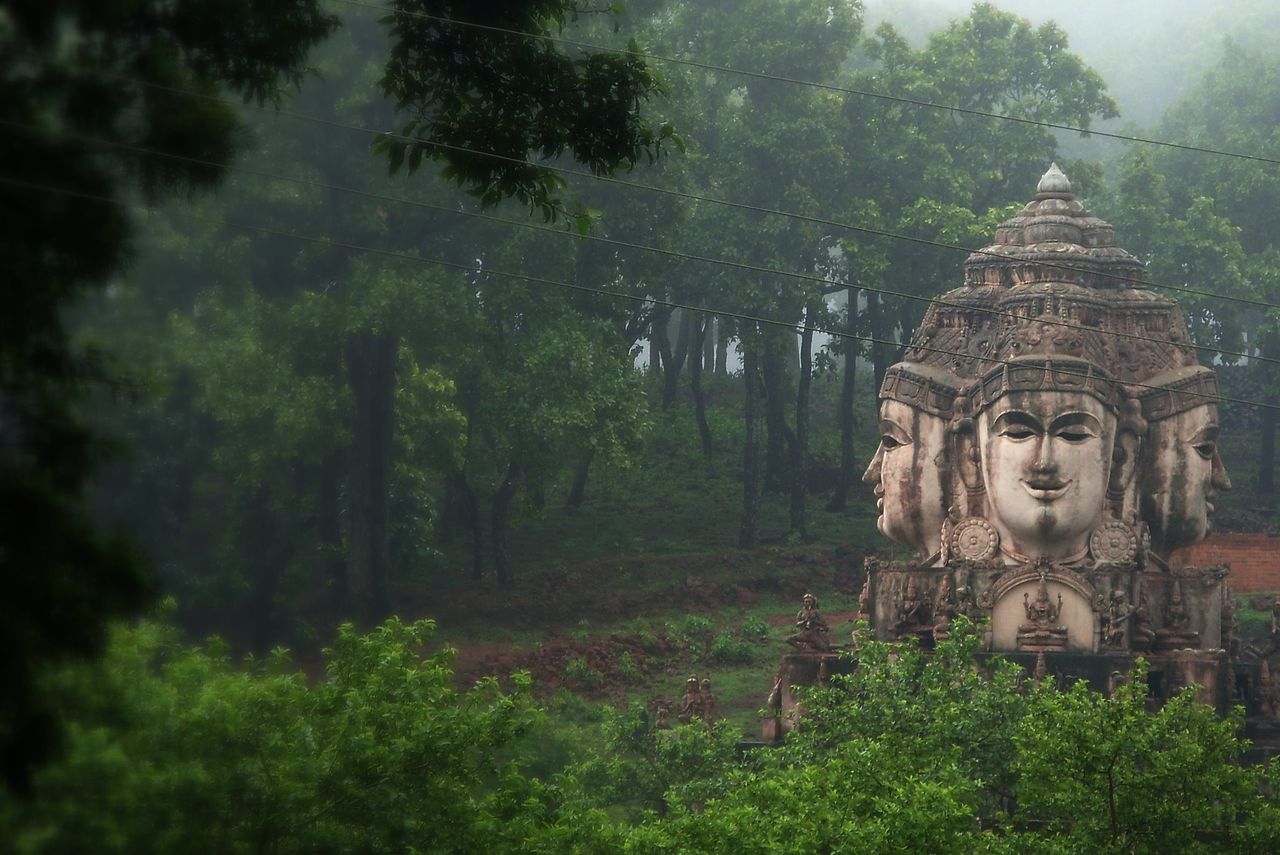
Tag: India temples

  • Colour Changing Shiva Near Chennai Chinna Ekkadu

    I have written about Shiva lingam changing Colors in many temples,some changing every Muhurtha,in Tamil Nadu.

    https://ramanan50-wordpress-com.cdn.ampproject.org/v/s/ramanan50.wordpress.com/2014/02/26/temple-where-shiva-changes-colors-five-times-a-day/amp/?amp_js_v=a2&amp_gsa=1&usqp=mq331AQECAFYAQ%3D%3D#aoh=15454582688450&amp_ct=1545458273076&referrer=https%3A%2F%2Fwww.google.com&amp_tf=From%20%251%24s&ampshare=https%3A%2F%2Framanan50.wordpress.com%2F2014%2F02%2F26%2Ftemple-where-shiva-changes-colors-five-times-a-day%2F

    There are two temples where Shiva linga changes colour,in Karnataka.

    One is near Bangalore,The Virupaksha temple,which also Cures Autism.

    Another one is near Mangalore.

    There is Kalyanasundareswarar temple at Nallur,Tamil Nadu.

    There is another Shiva temple near Chennai.

    The Shiva lingam has ,as His Accoutrement,a Stem,which resembles the Stem of Lotus.

    The dilapidated temple has recently been renovated and poojas are done twice a day.

    Childless couple are Blessed here.

    How to reach.

    Airport. Chennai.

    Railway. Chennai, Thiruvallur.

    Bus. Chennai, Thiruvallur.

    From Thiruvallur, one has to take a bus towards Redhills,get down at Ekkadu.

    The temple is nearby.

    One can reach from Thiruvallur,by traveling from Thamaraippaakam junction road..

    Images from

    http://wikimapia.org/19268178/ta/பஞ்ச-வர்நேஸ்வரர்-கோயில்

  • Where None Dies of Poisonous Bites Severe Fever Vishahareswarar Paruthiyur.

    There are temples in India which are belied to solve day to day problems and illness.

    Vishahareswarar. Image.
    Vishahareswarar, Paruthiyur Shiva
    Vishahareswarar temple Paruthiyur.
    Vishahareswarar temple Paruthiyur.

    Temples for begetting children,

    Relief from 💓 related ailments,

    Fear of death,

    Relief from financial woes,

    Depression,

    Mind related issues,

    Autism…..

    I have written on many temples of this nature.

    You may Google disease,problem +temple+ ramanan50.

    For mantras for these issues, please Google disease+Mantra/cure +ramanan50.

    There is a temple near Kumbakonam,Tamil Nadu for relief from poisonous bites and life threatening fever.

    It is the Vishahareswarar temple,Paruthiyur.

    Nobody is troubled by poisonous bites or dies of Life threatening fever in this place.

    Sthala Purana states that Sun was distressed because of Eclipse and he got cured here.

    How to reach.

    Air. Thiruchirapalli.

    Train. Kumbakonam.

    Bus. From Kumbakonam.The town lies in the route Kumbakonam Nannilam.

    Temple priest. Sri. Rajappa.

    Mobile. 9943343031.

  • Temple Where First Embryo Fell Karuvi Shiva Temple

    Temples in India have history dating back to thousands of years.

    Ancient history is called Purana in Sanskrit.

    Puranas are of two kinds.

    One is Main Puranas and another is

    Minor,called Upa Puranas.Thete are eighteen Puranas.

    Apart from this each temple had its history,called sthala Purana, history of the place.

    There are over 33000 temples in Tamil Nadu under the HR & CE department of the Government.

    These are mainly old temples.

    During the course of my writing this blog, researching Indian History, I have,to my surprise,found that the information,events provided in the Puranas and the two Ithihasas, Ramayana and Mahabharata tally and there is no contradiction!

    Unfortunately,most of the temples built by our ancestors have been demolished by Islam and British invaders, rulers.

    Those that survived were neglected by the Secular Government,which ,in essence means destroying Hinduism.

    Many grand ancient temples are facing ruin.

    I propose writing on these so that we can restore them.

    I am of the view that we need not build new temples and can concentrate on restoration of these grand temples,we will be restoring History.

    Those who have information on such temples may forward me details with photos and contact number of the Temple Gurukkal or the administrator.

    The information will be gratefully acknowledged in the article.

    I have written on colour changing Siva in Virupaksha temple, Karnataka and another one in Tamil Nadu.

    I will be writing on one such temple near Chennai.

    Now there is a Shiva Temple near Myladuthurai,Tamil Nadu.

    This temple is reported to be the place,where the First Embryo fell on the earth.

    The original name in Tamil is Karuvizhundhanadhapuram.

    கருவிழுந்தநாதபுரம்.

    Means place where the Embryo Fell.

    The temple is in a dilapidated condition.

    A Gurukkal comes from a nearby and performs Pooja.

    How to reach .

    By Air. Thiruchirapalli.

    By Train.Myladuthurai/Kumbakonam.

    By Bus,Car.From Myladuthurai to Poompuhar road,one has to take a turn in the Chavadi koottu road,(Four road Junction), before The place Karuvi.

    One would find a small road towards the temple.

    Information , image from.

    http://shivabelievers.blogspot.com/2016/06/blog-post.html?m=1

    This site contains information on such temples and the author is doing a great service.

    -Krishnaarppanam.

  • Maternal 🏠 Home Of Subrahmanya Kurukuthurai

    Unlike some Religions, Hinduism is a personal one,and not institutionalised.

    It is a question of individual choice.

    It accepts non believers as well as a part of it,as in the case of Carvakas.

    Lord Rama engaged in conversation with Jaabaali,who was a Carvaka,the system that believes that Universe has no case and denies God.

    Kurukuthurai Murugan temple.image.

    Kurukuthurai Murugan temple .

    And the way one realizes God or Self is left to him/her.

    The Sruthi, Smriti,both provide guidelines and show the path chosen by those who followed certain procedures and been successful.

    It is left to you take it or leave it.

    Hinduism is a way of life,not merely a view.

    The way one relates to God is left to him/her.

    Some can not conceive of Abstract Reality.

    So,we have Gods with Name,Form and Attributes.

    One relates to God in a way he is comfortable with.

    We have people relating to God as,

    Father,like Gnanasambhandar,

    Mother,as Devi Devotees do,

    Child,as Anasuya did,

    Friend,as Sundara Murthy Nayanar,

    Lover like Meera..

    It is also the practice of Hindus to deck up God as they like,

    To endow God,the Reality without name and form,with Human attributes,

    Quarrel with Him as one would with a fellow human being.

    This is what makes Hinduism close to 💓 and it becomes a part of one’s Lifestyle.

    In this vein,Lord Subrahmanya is treated as a child.

    Subrahmanya is the only God with the Sanskrit ‘su’ to His name, meaning the best.

    The word Subrahmanya means Best among Brahmins.

    Su+Brahmana.

    He is the Guru of His Father Shiva.

    Yet He is loved as a child.

    He is endowed with Human attributes.

    Look at the way He is considered as Human being,just as Shiva is considered as the Family elder by Tamil Kings.

    Subrahmanya has six important temples,called Arupadai veedu.

    One of them is Thiruchendur,where he resides after Sura Samhara and marrying Devasena, daughter of Indra,chief of Devas.

    So Thiruchendur is Murugan’s In laws Home.

    What about His Maternal Home?

    Krukkuththirai, Thirunelveli,Tamil Nadu.

    Murugan, Kurukuthurai. Image.
    Lord Subrahmanya, Kurukuthurai.

    In Kurukuthurai, there are two Murugan temples, one at the bank of the Tamirabarani and another just above it, commonly called “Mela Koil”.
    The rocks at Kurukuthurai are called “Thiruvuruvamalai”, and are considered to be ideal for sculpting deities, which is why the Thiruchendur Senthilandavar deity was sculpted here. The sculptor who conceived Senthilandavar sculpted two identical forms, out of which one is consecrated to the Thiruchendur Temple and the other to Kurukuthurai Mela Koil.
    So, it’s because the deity was sculpted out of the Kurukuthurai rock that this place is called the Thiruchendur Murugan’s maternal house.
    When the Utsav deity (a deity used for processions) was stolen by Dutch thieves, a new one was immediately created by VadaMalaiappa pillai.
    In the meantime, the stolen idol was salvaged, and so the newly-made one was erected in Kurukuthurai’

    Reference and citation.

    Ramasubramanian in Quora.

    How to reach.
    Kurukkuthurai Murugan Temple is located at about 9 Kms from Thirunelveli, 160 Kms from Thiruvananthapuram and 170 Kms from Madurai. Nearest Railway Station is located at Thirunelveli. Nearest Airport is located at Thiruvananthapuram and Madurai..

    About Kurukuthurai temple design.

    Even when the Tamirabharani carried over two lakh cusecs of water during the 1992 floods, the temple and the idol withstood its fury majestically while only a few tiles on the terrace alone got damaged.

    “This is due to the quality of construction and thoughtfully designed structure by our ancestors. Since the ancient architects had fully understood the nature of the Tamirabharani, especially during floods, the western side wall of the temple has been designed like the front portion of a ship. Hence, even a furious flood does not affect the sturdiness of the structure,” says Yagna Narayanan, Executive Officer of Swamy Nellaiyappar Temple. The entire Tamirabharani – from Papanasam to Punnaikaayal — is dotted with a number of ‘mandapams’ with granite pillars.

    Reference and citation.

    https://www-thehindu-com.cdn.ampproject.org/v/s/www.thehindu.com/news/national/tamil-nadu/kurukkuthurai-temple-withstands-rivers-fury-for-over-300-years/article7998458.ece/amp/?amp_js_v=a2&amp_gsa=1&usqp=mq331AQHCAFYAYABAQ%3D%3D#referrer=https%3A%2F%2Fwww.google.com&amp_tf=From%20%251%24s&ampshare=https%3A%2F%2Fwww.thehindu.com%2Fnews%2Fnational%2Ftamil-nadu%2Fkurukkuthurai-temple-withstands-rivers-fury-for-over-300-years%2Farticle7998458.ece

  • Thiruchendur Subrahmanya Stops Storm Idol Recovered From Dutch ?

    What is evidence in history?

    When you publish a paper, it gains credibility if it has more sources,links,related articles and more sources that have references as in the earlier references.

    This applies to ancient writings, epigraphs and other records as well.

    When you look at closely, it boils down to one testimony, by word, preferably contemporary in nature.

    Even here if there are more versions, the record becomes questionable.

    And History is what one chooses to write.

    And Conqueror’s History remains unless one is vigilant enough.

    So authenticity of historical facts are dependant on oral evidence which could have been recorded in writing, epigraphs, literature.

    Hence at times I am faced with problems like this as I research Indian history.

    One such is the information about Thiruchendur Subrahmanya temple,Tamil Nadu.

    Thiruchendur Subrahmanya.image.
    Thiruchendur Subrahmanya,An Arupadai Veedu

    Temple records state that the Idol of the temple was looted by the Dutch and when they set sail with it, they encountered a severe storm and only after throwing away the Idol, the storm ceased.

    And the idol was restored through the efforts of Mr.Malayappa Pillai.

    I have provided three versions below.

    I consider Sri. Neelakanta Sastry as a credible source.

    But his report has been quoted by some one in the Tamil magazine, Kalaimagal issue of 1939.

    The magazine was founded in 1932.

    But the original paper or reference to this issue or the basis on which Sri.Neelakanta Sastry arrived at his conclusion, is not available.

    I am not sure whether this information is the usual secularist’ misinformation.

    Hence I am unable to arrive at a conclusion.

    Those who have information may share.

    The Murugan temple at Thiruchendur was occupied by the Dutch East India company from 1646 to 1648, during the course of their war with the Portuguese. The local people tried to free their temple, with no success. The Dutch finally vacated the temple on orders from the Naik ruler. However, while leaving, they removed the idol of the main deity of the temple, and took it with them. While they were sailing away, they encountered a strong storm and realised their mistake of stealing the idol. They dropped the idol in the middle of the sea and seen the storm stopped immediately. Later, Lord Senthil Aandavan appeared in a dream to Vadamaliyappa Pillai, an ardent devotee of Lord Muruga, and revealed the place in the sea where the idol had been abandoned. Vadamlaiyappa Pillai and Athitha Nadar, a sponsor of services in the Thiruchendur temple, went to the spot in a fishing boat and retrieved the idol in 1653. The story is shown in paintings inside the temple.

    Reference and citation.

    https://en.m.wikipedia.org/wiki/Thiruchendur

    Another version.

    The Nayak and his agent Vadamalai Pillayyan sent an embassy of four men to the Dutch in to demand the return of the temple idols. The Dutch Governor referred the demand to Dutch Government at Batavia, who directed the return of the idols to the temple at Tiruchendur, accepting however whatever amount they were offered.

    Accordingly the idols were brought back to Tiruchendur in January 1651 and re-installed at the temple after consecration. And the inscription of Vadamalai-appa Pillayyan mentions this incident as in kollam 866.

    http://tiruchendur.org/history.htm

    Yet another version.

    he loss of the idols was discovered and duly communicated to Vadamalaiyappa Pillaiyyan, the local administrator of the Nayakkan ruler at Tirunelveli. A great devotee that he was, Pillaiyyan was sorely affected and knew not what to do. He ordered for a similar idol to be made in panchaloka. As the duplicate one was ready, and was on its way to Tiruchendur to be installed, in 1653 Vadamalaiappa Pillaiyyan had a dream.

    Acting to the advice conveyed to him by the God, he put out to sea and following the instructions that the idol was to be found at the spot whereon a lime fruit would be found floating, and the place marked by the circling overhead of a kite, the bird of Vishnu.

    Vadamalaiappa Pillaiyyan recovered the original idol and reinstalled it in the temple in the year 1653. The replacement idol was then consecrated in the shrine of Tiruppirantîsvarar alias Venku Patcha Kovil situated east of Palamcottah (known as Murugan Kurichi).

    Vadamalaiappa was greatly struck by the Lord’s grace in giving him this great relief, in memory of which he erected a mantapa at Tiruchendur in his name and endowed it largely for the performance of a Kattalai abhishekam and pujas for Subrahmaniam on the seventh days of Masi and Avani festivals. An inscription at the mantapa relates the incidents referred to.

    Among many others, kirtanas composed by Venri Malaik Kavirayar, are sung at this mantapa at the time when Shanmukhar is brought here for Ubaya Mandagappadi on the seventh day of the Masi and Avani festivals. The poem relates the incidents and their rejoicings at the Lord being got back again. “Vadamalai Venba” is another poetic panegyric on Vadamalaiappa Pillaiyyan.

    M. Rennel, the French author of A Description, Historical and Geographical, of India (published in Berlin, 1785), gives a picture of the temple, which, he says, he got from a soldier in the service of the Dutch Company. He relates an incident which offers a reasonable explanation of the Tiruchendur tradition. “In a descent made by the Dutch off the Coast in 1648,” he says, “the Dutch halted in the temple and on leaving did their best to destroy it by fire and by a heavy bombardment. But they only partially succeeded and the tower defied all their efforts.” Possibly the capture of the idol was one of their achievements.

    As a matter of fact M. Rennel calls the place Tutucutin, but from the picture and an accompanying sketch-map it is clear that Tiruchendur was meant. The Dutch were incessantly at war with the Portuguese on the coast.

    Reference and citation.

    http://tiruchendur.org/history.htm

    From the Temple site.

    A familiar local tradition runs to the effect that about 1648 AD, a race of seafaring men, identified later as Dutch, descended upon Tiruchendur and carried away the idol Shanmukhar and Śiva Natarajar, thinking that they were made of gold. Their attempt at melting it proving futile, they tried to carry them away by sea. But the sea suddenly grew boisterous, and rocked the ship violently, so the sailors threw the idols into the sea.

    The loss of the idols was discovered and duly communicated to Vadamalaiyappa Pillaiyyan, the local administrator of the Nayakkan ruler at Tirunelveli. A great devotee that he was, Pillaiyyan was sorely affected and knew not what to do. He ordered for a similar idol to be made in panchaloka. As the duplicate one was ready, and was on its way to Tiruchendur to be installed, in 1653 Vadamalaiappa Pillaiyyan had a dream.

    Acting to the advice conveyed to him by the God, he put out to sea and following the instructions that the idol was to be found at the spot whereon a lime fruit would be found floating, and the place marked by the circling overhead of a kite, the bird of Vishnu.

    Vadamalaiappa Pillaiyyan recovered the original idol and reinstalled it in the temple in the year 1653. The replacement idol was then consecrated in the shrine of Tiruppirantîsvarar alias Venku Patcha Kovil situated east of Palamcottah (known as Murugan Kurichi).

    Vadamalaiappa was greatly struck by the Lord’s grace in giving him this great relief, in memory of which he erected a mantapa at Tiruchendur in his name and endowed it largely for the performance of a Kattalai abhishekam and pujas for Subrahmaniam on the seventh days of Masi and Avani festivals. An inscription at the mantapa relates the incidents referred to.

    Among many others, kirtanas composed by Venri Malaik Kavirayar, are sung at this mantapa at the time when Shanmukhar is brought here for Ubaya Mandagappadi on the seventh day of the Masi and Avani festivals. The poem relates the incidents and their rejoicings at the Lord being got back again. “Vadamalai Venba” is another poetic panegyric on Vadamalaiappa Pillaiyyan.

    M. Rennel, the French author of A Description, Historical and Geographical, of India (published in Berlin, 1785), gives a picture of the temple, which, he says, he got from a soldier in the service of the Dutch Company. He relates an incident which offers a reasonable explanation of the Tiruchendur tradition. “In a descent made by the Dutch off the Coast in 1648,” he says, “the Dutch halted in the temple and on leaving did their best to destroy it by fire and by a heavy bombardment. But they only partially succeeded and the tower defied all their efforts.” Possibly the capture of the idol was one of their achievements.

    Reference and citation.

    http://www.tiruchendurmurugantemple.tnhrce.in/historical_event.html