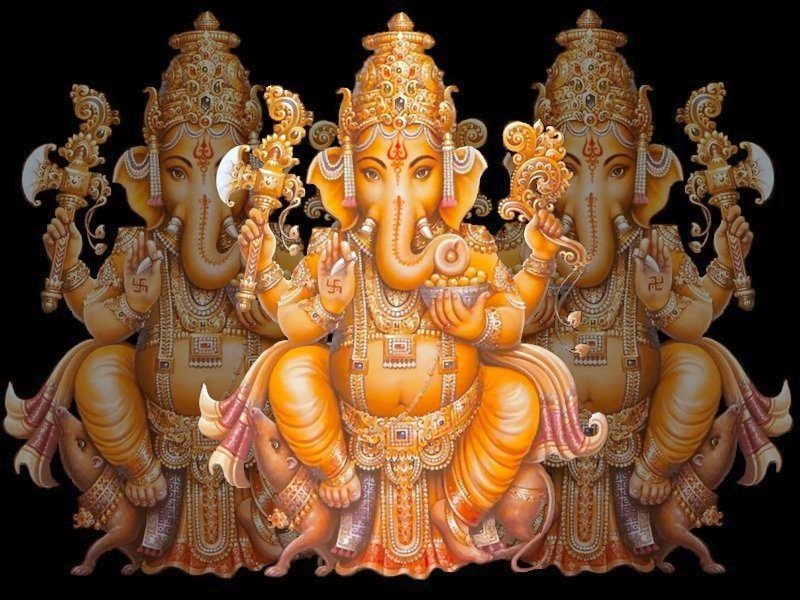
Tag: Ganesha

  • Ganesha Verse Latin Dwimukha Ganapati Janus Roman God

    Lord Ganesha Cult was present throughout the world.

    I had written on,

    Red Ganesha in Australia,

    Ganeshaya Namah inscription in Azerbaijan,

    Dwimukha Ganapati.jpg
    Dwimukha Ganapati, Two faced Ganesha

    Atlantis people were the descendants of Shiva, Ganesha and Subrahmanya,

    Golden Ganesha idol was unearthed in Kuwait,

    Ganesha’s mount, Mooshika was considered as a flying Machine y the Incas and there are paintings on this.

    There is a temple for Haridra Ganapati in Thailand,

    There is a view, a sound one at that  Dwimukha Ganapti ws worshiped as Janus by the Romans,

    I had written the Italian connection to Hinduism , in various articles including the one on aerial view of Vatican, being identical with Shiva Linga with Avudaiyar(Peeta)

    Janus.

    Two Faced Roman God, Janus
    Janus, Roman God.


    ‘In ancient Roman religion and myth, Janus (/ˈnəs/; Latin: Ianus, pronounced [ˈjaː.nus]) is the god of beginnings, gates, transitions, time, doorways, passages, and endings. He is usually depicted as having two faces, since he looks to the future and to the past. It is conventionally thought that the month of January is named for Janus (Ianuarius), but according to ancient Roman farmers’ almanacsJuno was the tutelary deity of the month.

    Janus presided over the beginning and ending of conflict, and hence war and peace. The doors of his temple were open in time of war, and closed to mark the peace. As a god of transitions, he had functions pertaining to birth and to journeys and exchange, and in his association with Portunus, a similar harbor and gateway god, he was concerned with travelling, trading and shipping.

    Janus had no flamen or specialised priest (sacerdos) assigned to him, but the King of the Sacred Rites (rex sacrorum) himself carried out his ceremonies. Janus had a ubiquitous presence in religious ceremonies throughout the year, and was ritually invoked at the beginning of each one, regardless of the main deity honored on any particular occasion.’

    Note the similarities between Ganesha and Janus.

    Both are given the first place in worship.

    No special priest is required to perform Pooja  for both

    Both are associated with travel.

    We worship Ganesha before travel and there is a custom to break the coconut at the beginning or during the Journey.

    Many of you would have noticed luxury Bus drivers and heavy vehicle drivers breaking coconut in a roadside Ganesha temple.

    ‘anus frequently symbolized change and transitions such as the progress of future to past, from one condition to another, from one vision to another, and young people’s growth to adulthood. He represented time, because he could see into the past with one face and into the future with the other.. Hence, Janus was worshipped at the beginnings of the harvest and planting times, as well as at marriages, deaths and other beginnings. He represented the middle ground between barbarism and civilization, rural and urban space, youth and adulthood. Having jurisdiction over beginnings Janus had an intrinsic association with omens and auspices’

    All these are being the process of Gnapati worship.

    Latin Verse on Janus.

    Carmen Saliare

    As may be expected the opening verses of the Carmen, are devoted to honouring Janus, thence were named versus ianuli. Paul the Deacon mentions the versus ianuli, iovii, iunonii, minervii. Only part of the versus ianuli and two of the iovii are preserved.

    The manuscript has:

    (paragraph 26): “cozeulodorieso. omia ũo adpatula coemisse./ ian cusianes duonus ceruses. dun; ianusue uet põmelios eum recum“;

    (paragraph 27): “diuum êpta cante diuum deo supplicante.” “ianitos“.

    Many reconstructions have been proposed: they vary widely in dubious points and are all tentative, nonetheless one can identify with certainty some epithets:

    Cozeiuod orieso. Omnia vortitod Patulti; oenus es

    iancus (or ianeus), Iane, es, duonus Cerus es, duonus Ianus.

    Veniet potissimum melios eum recum.

    Diuum eum patrem (or partem) cante, diuum deo supplicate.

    ianitos.

    The epithets that can be identified are: Cozeuios, i.e. Conseuius the Sower, which opens the carmen and is attested as an old form of Consivius in Tertullian; Patultius: the Opener; Iancus or Ianeus: the Gatekeeper; Duonus Cerus: the Good Creator; rex king (potissimum melios eum recum: the most powerful and best of kings); diuum patrem (partem):father of the gods (or part of the gods); diuum deus: god of the gods; ianitos: the Janitor, Gatekeeper.’

    All are the Attributes of Ganesha.

    I may add that Jaanu is a term for Ears, Ganesha’s ear being huge(elephant’s)

    Janus in Ganesha.

    In 1806 Sir William Jones drew a close comparison between a particular form of Ganesha, known as Dwimukhi-Ganesha, and Janus, the two-headed Roman god. Jones felt the resemblance between Dwimukhi-Ganesha and Janus was so strong that he referred to Ganesha as the “Janus of India.” The Dwimukhi-Ganesha form is a very unusual depiction in which Ganesha is shown with the head of an elephant looking toward his right and a human head at his left. It was possessed of four arms. Nagar says that the Dwimukhi-Ganesha form was associated with the region around Bombay.

    There was no clear claim by Jones either that Ganesha was worshipped by the Romans or how Janus could have evolved from Ganesha as a prototype (or vice versa). Another early 19th century Indologist, Edward Moor, repeated the speculation by Jones, helping to keep the Janus idea alive Moor expanded the claims of an association based on functional grounds, noting that Janus, like Ganesha, was invoked at the beginning of undertakings, a liminal god who was the guardian of gates. Moor made various other speculations on the connection between Janus and Ganesha. These fanciful connections proposed by early Indologists no longer appear in modern academic reviews of Ganesha’s history.

    Ganesha is represented as having anywhere from one to five heads, so depictions with two heads are not reliable evidence of a connection with Janus. Representations of Ganesha with two heads are uncommon, and according to Nagar, textual references to the adoration of Ganesha with two heads are difficult to trace. There are no other examples of two-headed forms in which one head is human other than the Dwimukhi-Ganesha form. In the thirty-two mediation forms of Ganesha that are described in theSritattvanidhi only one has two heads (Dwimukhi Ganapati, the Ganapati with two faces), and both of those are heads of elephants, like all the other forms described.

    References and citations.

    https://en.wikipedia.org/wiki/Ganesha_in_world_religions#Speculation_related_to_Janus

    https://en.wikipedia.org/wiki/Janus#Position_in_the_pantheon


    Janus Image credit.By Loudon dodd – Own work, CC BY-SA 3.0, https://commons.wikimedia.org/w/index.php?curid=7404342

  • Haridra Ganapati For Black Magic   Impotency Wealth

    Haridra Ganapati For Black Magic Impotency Wealth

    Post Vedic period,myriad of deities were worshiped, overlooking the fact the core of the Vedic teaching that defines Reality as One without attributes,Nirguna Brahman.

    However, realizing  that the human Mind can not operate and concentrate on mere abstractions, the Vedas have also hinted at worship of Individual Gods..

    And there are two broad classifications of all the Vedic teaching .

    One is Karma Kanda,path of Action as explained in the Brahmanas..

    The other one is Gnana Kanda, which emphasizes Knowledge as a path of salvation, Path of Knowledge, as detailed in the Upanishads.

    People started leaning more towards the karma kanda and this was carried to the extreme by the Mimamsa system of Indian Philosophy.

    The Mimamsa believed  only in Karma, or action.

    In the process they lost sight of the Ultimate Reality through Gyana ,knowledge.

    Performance of rituals reigned supreme with dedication to many Gods.

    This led to distortion of Vedic thought and the number of deities became countless.

    People ere confused whom to worship because of the presence of numerous deities.

    This confused state paved the way for the advent of Buddhism and Jainism and Hinduism was losing ground.

    Adi Shankaracharya sorted out this confusion and established Six systems of worship,Shanmataha.

    For details on this please read my Post Six systems of worship Shankaracharya.

    They are,

    Ganapathya, worship of Ganesha, Ganapati,

    Saura, of Surya, the Sun,

    Saktha, of Devi,

    Saiva, of Shiva,

    Vaishnava, of Vishnu and

    Kaumaram , of Subrahmanya.

    Tantik sects of these six deities are also there.

    Ganapathya is devoted to Lord Ganesha, Protector and Remover of obstacles.

    There are various forms of Ganapati.

    Please read my posts on these.

    One such form is Haridra(Turmeric) Ganapathi.


    Turmeric is a symbol of prosperity and auspiciousness.

    Ganesha is worshiped by making an image of him by hand and perform Pooja to him in any function before going ahead.

    There is an interesting anecdote in the Vinayaka Puran,

    Haridra Ganapati
    Haridra Ganapati, folio from the Sritattvanidhi (

    Goddess Parvati created Him with the turmeric she applied to her body while bathing and ordained that worship of Ganapathi in the form of turmeric is most aust auspicious.

    Worship of Ganapathi was done by making an image of Him with foams of the Sea by Lord Shiva, during his battle with Tripurantaka.

    Haridra Ganapathi worship is essentially a tantrik practice, though one can perform this pooja in a normal manner.

    Haridra Ganapati (Sanskrit: हरिद्रा-गणपति, Haridrā-gaṇapati, literally “turmeric Ganesha”) is an aspect of the Hindu God Ganesha(Ganapati).

    Haridra Ganapati is also known as Ratri Ganapati.

     Haridra Ganapati is depicted as yellow like turmeric and wears yellow garments.

    He is one of the most popular thirty-two forms of Ganesha

    (Please check my post on this).

    He is described as having three eyes. He sits on a golden throne. He is yellow-complexioned like turmeric and also wears yellow clothes. He has four arms and carries a pasha (noose), an ankusha (elephant goad), a modaka (sweet) and the danta (his own broken tusk) in his four hands. He draws his devotees closer by the noose, while goads them in the right direction by the ankusha.(Refer Niyotsava and the Mantra-maharnava)

    Haridra Ganapati has six arms and sits on a jewelled throne, in addition to his yellow colour and yellow vestments. His three right hands hold the ankusha and display the krodha-mudra (the gesture of anger) and abhayamudra (the gesture of protection). His left hands carry the pasha, a parashu (battle-axe) and displays the varadamudra (gesture of Granting Boons) -refer The Dakshinamnaya.

    Haridra Ganapati is described as turmeric-colored and flanked by two unnamed wives

    (Ajitagama)

    Haridra Ganapati is worshipped for wealth and well-being.

    He is also described to protect his devotees.

    Haridra Ganapati is the patron of the Haridra Ganapatya sect.

    The Haridra Ganapati followers consider him as leader of all deities including Brahma, Vishnu, Shiva.

    Worshipping Haridra Ganapati is believed to grant moksha(emancipation).

    These sectarians used to brand by iron the head of Ganesha and his tusk on their palms.

    Haridra Ganapati is a Tantric form of Ganesha. Special mantras and yantras are used in his worship.

    Rituals involving his worship generally are performed to fulfill material objectives, especially gaining boons related to sexuality.

    He is also associated with six rituals of abhichara (uses of spells for malevolent purposes) by which the adept can cause the target to suffer delusions, be overcome with irresistible attraction or envy, or to be enslaved, paralysed or killed.

    Reference and citation.

    1. T. A. Gopinatha Rao (1993). Elements of Hindu iconography. Motilal Banarsidass Publisher. p. 59. ISBN 978-81-208-0878-2.
    2. https://en.wikipedia.org/wiki/Haridra_Ganapati

    Image credit Haridra Ganapati. By Unknown – Folio from Sritattvanidhi, Public Domain, https://commons.wikimedia.org/w/index.php?curid=27496883

  • Thirty Gitas Of Hinduism

    The term Gita, Sanskrit means,


    गीता– a song, sacred song or poem, religious doctrines declared in metrical form by an inspired sage’

    All of us aware of Srimad Bhagavd Gita.

    Though I know some texts( I have written on some of them) which are called Gita, I have recently come across information that there are thirty Gitas!

    The rate at which I come to know what I do not know about Hinduism is staggering.

    Childishly I have started started writing on Hinduism.

    I am certain that I would not even touch the periphery of Hinduism before my death.

    Hope and pray that I may attempt to scratch its surface.

    I propose writing on these Gitas in detail shortly.

    Who Realize God? Bhagavad Gita
    Bhagavad Gita quote.


    1. Uttara Gita Lord Krishna’s second discourse to Arjuna
    2. Anu Gita – Lord Krishna’s final message to Arjuna
    3. Uddhava Gita – Krishna’s last discourse to his disciple Uddhava.
    4. Devi Gita
    5. Asthavakra Gita
    6. Avadhoota Gita
    7. Rama Gita
    8. Vibhishana Gita
    9. Hanumad Gita
    10. Guru Geeta
    11. Siddha Gita
    12. Vidya Gita
    13. Yama Gita
    14. Ganesha Gita
    15. Agastya Gita
    16. Bharata Gita
    17. Bheeshma Gita
    18. Bhikshu Gita
    19. Brahma Gita
    20. Gopika Gita
    21. Hamsa Gita
    22. Rishabha Gita
    23. Rudra Gita
    24. Siva Gita
    25. Vyasa Gita, Vasistha Gita(Yoga Vasistha)
    26. Sanatkumara Gita
    27. Sanat Sujata Gita
    28. Rishabha Gita
    29. Sruti Gita
    30. Kapila Gita

    Reference.

    Sanskrit Dictionary

  • ‘Uchchhishta Ganapathi Black Magic Vamachara Worship?

    ‘Uchchhishta Ganapti Worship is shrouded in mystery.
    Ganapati, meaning head of the Shiva Ganas which includes Nandi , Chandikeswara and Veerabhadra is traditionally worshiped as the embodiment of Pranava , OM.
    He is venerated in such a way there is an Upnishad dedicated to Him.
    Please read my article on this.
    There are 32 forms of Ganapati.
    One of them is Uchchishta Ganapati.
    This form of worship is believed to be a form of Vamachara(left handed worship), meaning Black magic worship)
    Description of the worship is provided in this article.
    This practice is attributed to Tantra Sastra.
    image

    My views.
    In Sanskrit Vama means ‘left’
    Shakti occupies the left portion of Shiva.
    The form of Shiva is Universe in Motion.
    Look at Nataraja.
    He represents Sruthi and Laya.
    Movement with harmony Uniformity(sruthi) and Rhythm(laya)
    Those who know music can tell you that sruthi and laya are described thus
    Sruthi Maatha(mother)
    Laya Pitha(Father)
    When these combine Uniform Motion is set.
    In Music , sound becomes Music.
    Now Devi occupies the left portion of Shiva.
    Shiva is Inert(Jata) Potential Energy.
    Shakti is Kinetic Energy , the Soul.
    One is ineffective without the other.
    Each complements the other.
    Kalidasa describes Shiva and Parvati as word and meaning.
    So does Abhirami Bhattar in Abhirami Andadhi.
    So the worship of Dynamic principle is Shakti Worship.
    Any God worshiped in this manner is Vamachara.
    That  belongs to Left, Devi.
    So the interpretation that the Uchchishta Ganapati is a Vamachara Worship is not sanctioned in the Sruthi.

    So are the rituals mentioned.
    The Mimamsa system of Hinduism gave undue and non sanctioned form of Rituals , so did the Vamacharins, that the Vedas declined because these wild practices and Buddhism came into being.
    It took the efforts of Adi Shankaracharya to cleanse the system and he established the Six Systems of Worship, Shanmatha.
    Please read my article on this.
    In South Ganapati is worshiped as a Brahmachari, save in some temples), while He is worshiped along with His two consorts in north India.
    The two consorts are Siddhi and Buddhi.
    Siddhi is Attainment and Buddhi is Discrimination.
    Ganesa is represented thus to convey that with the Grace of Ganesha one can direct Buddhi towards Self Realization and in the process attain Siddhi.
    So the Uchchishta Ganapati worship is not Vamachara or Black Magic.

    Uchchhishta Ganapati (Sanskrit: उच्छिष्ट-गणपति, Ucchiṣṭa Gaṇapati) is an Tantric aspect of the Hindu god Ganesha (Ganapati). He is the primary deity of the Uchchhishta Ganapatya sect, one of six major schools of the Ganapatyas. He is worshipped primarily by heterodoxvamachara rituals. He is depicted with a nude goddess, in an erotic iconography. He is one of the thirty-two forms of Ganesha, frequently mentioned in devotional literature. Herambasuta was one of the exponents of the Uchichhishta Ganapatya sect.


    Uchchhishta (“leftovers”). The word refers to the food left over at the end of a ritual, but in this context refers to its Tantric connotation. Uchchhishta is the food kept in the mouth, which is contaminated with saliva, thus ritually impure and a taboo in Hinduism


    he elephant-headed god is described to be reddish in colour in the Mantra-maharnava, while mentioned as dark in the Uttara-kamikagama.[2] Another description describes him to be blue in complexion.[3] The deity is described to have four or six arms. He is described to be seated, sometimes specifically noted in on padmasana (a lotus pedestal). TheUttara-kamikagama elaborates that he wears a ratna mukuta (jewelled crown) and has a third eye on his forehead.

    The Kriyakramadyoti mentions that the god carries in his six hands: a lotus (in some descriptions, a blue lotus),a pomegranate, the veena, an akshamala (rosary) and a rice sprig. As per the Mantra-maharnava, he carries a bana (arrow), a dhanus (bow), a pasha (noose) and an ankusha (elephant goad).The Uttara-kamikagama says that the god has four arms and holds a pasha, an ankusha and a sugarcane in three hands.

    Uchchhishta Ganapati,Nageswaraswamy Temple, Kumbakonam. The deities touch each other’s genitalia.

    Rao classifies Uchchhishta Ganapati as one of the five Shakti-Ganesha icons, where Ganesha is depicted with a shakti, that is, a female consort. The large figure of Ganesha is accompanied with smaller figure of the consort. The nude devi (goddess) sits on his left lap. She has two arms and wears various ornaments. In the Uttara-kamikagama, she is called Vighneshvari and is prescribed to be sculpted as a beautiful, young maiden. The fourth hand of Uchchhishta Ganapati touches the genitalia of the naked goddess. The Mantra-maharnava prescribes that the god should be depicted as though he is trying to have intercourse.

    The textual descriptions generally do not correspond to the sculptures of the deity. Uchchhishta Ganapati is always shown with a naked consort, who is seated on his left lap. The god is generally depicted with four arms and holds a pasha, an ankusha and a ladoo or amodak (a sweet), while the fourth arm hugs the nude goddess around her hip. She holds a lotus or another flower in the left hand.Instead of his hands, the tip of his elephant trunk touches the yoni (vagina) of the goddess. Occasionally, the goddess touches the lingam(phallus) of the god with her right hand. The god is depicted ithyphallic in the later icon. Such erotic imagery is restricted to his four-armed form..

    Cohen notes that many Ganesha icons are depicted with a shakti, seated on his left hip. She holds a plate of modaks in her lap and the god’s trunk reaches into it, to fetch the sweet. The trunk is taken as a symbolic of an “erotic bond” between Ganesha and the goddess. The Uchchhishta Ganapati takes the idea a step further, by eliminating the bowl of sweets and allowing the trunk to reach the goddess’ yoni. This erotic iconography reflects the influence of the Tantric Ganapatya (the sect that considered Ganesha as the Supreme Being) sects. The pomegranate is also a symbol of fertility, often represented in the icons of the sects.

    As per the Kriyakramadyoti, Uchchhishta Ganapati is worshipped as a giver of great boons. Rao notes that he is worshipped by “many” to gain the desired from the deity.[2] He is also regarded as the guardian of the country. Mediating over his form is said to impart control over the five sensory organs. A temple dedicated to Uchchhishta Ganapati exists in Tirunelveli, where he is worshipped as a giver of progeny.

    Uchchhishta Ganapati is the patron of the Uchchhishta Ganapatya sect, one of the six major schools of the Ganapatya sect. They follow Tantric Vamachara (“left-handed”) practices. The sect may have been influenced by the Kaula worship of Shaktism (Goddess-oriented sect).The iconography of the deity bears Kaula Tantric character. The erotic iconography is interpreted to convey the oneness of Ganesha and Devi (“The Hindu Divine Mother”). The sect also worships a Ganesha, who is depicted drinking wine and also its use in worship, a taboo in classical Hinduism .. Adherents of this sect wear red marks on their foreheads.This sect does not believe in caste and varna distinctions, disregards the orthodox Hindu rules of sexual intercourse and marriage and leaves the adherence of traditional Hindu rituals to the follower’s own will.

    As per Vamachara practices, the deity is worshipped when the devotee is in the Uchchhishta (“ritually impure”) state, that is, nude or with remnants of food (Uchchhishta) in his mouth.

    Uchchhishta Ganapati is also associated with six rituals of abhichara (uses of spells for malevolent purposes) by which the adept can cause the target to suffer delusions, be overcome with irresistible attraction or envy, or to be enslaved, paralysed or killed.[12]

    The Kanchi Ganesh shrine within the Jagannath Temple, Puri houses the icon of Uchchhishta Ganapati, also called Bhanda Ganapati and Kamada Ganapati, which was originally the patron icon of Kanchipuram (Kanchi), but was brought to Puri as war booty when the Gajapati king Purushottama Deva (1470–97) of Puri defeated Kanchi’

    Citation and reference.

    https://en.wikipedia.org/wiki/Uchchhishta_Ganapati


  • Vancha Kalpalatha Ganapathi Tantric Mantra Homa 13 Gods


    Less known is the fact that though there are various systems to realize Brahman, The Reality,the underlying fact is that the Reality is one and the various Gods mentioned are the expressions of the One to suit the dispositions of the Many.


    1. Agni,
    2. Surya,
    3. Lalaithambika,
    4. Balatripura Sundari,
    5. Mahamritunjaya,
    6. Kubera,
    7. Lakshmi,
    8. Vishnu,
    9. Rudra,
    10. Durga .


    vidyaganapati
    Srividya Ganapathi.

    Śrī Vidyā Gaṇapati Vāñcha kalpalatā mantra

    श्री विद्या गणपति वाञ्छ कल्पलता मन्त्र

    This mantra is a combination of mantras of Gaṇapati, Saubhāgya Pañcadaśī and Gāyatrī.

    Vāñcha means wishing or the one who desires for something and kalpalatā means granting all desires. (Dictionary meaning of kalpalatā – a creeper that grants all desires).

    When a boon is granted, it is because of three reasons if the Deity is satisfied.

    1.The Karma Phala is due and it is hastened(Karma Phala means results of Righteous actions)

    2.The Deity is pulled by the God by the power of the Mantra.

    3.The God is pleased and He grants the boon with Love and affection.( Vancha)

    Vancha is a difficult word to translate into English.

    It is akin to love one feels spontaneously to wards a child or a total stranger moved by their mere sight.

    This is the mantra:

    om śrīṁ hrīṁ klīṁ glauṁ gaṁ

    aiṁ ka e ī la hrīṁ

    tat saviturvareṇyaṁ

    gaṇapataye ।

    klīṁ ha sa ka ha la hrīṁ

    bhargo devasya dhīmahi

    varavarada ।

    sauḥ sa ka la hrīṁ

    dhiyo yo naḥ pracodayāt

    sarvajanaṁ me vaśamānaya svāhā ॥

    ॐ श्रीं ह्रीं क्लीं ग्लौं गं

    ऐं क ए ई ल ह्रीं

    तत् सवितुर्वरेण्यं

    गणपतये ।

    क्लीं ह स क ह ल ह्रीं

    भर्गो देवस्य धीमहि

    वरवरद ।

    सौः स क ल ह्रीं

    धियो यो नः प्रचोदयात्

    सर्वजनं मे वशमानय स्वाहा ॥

    There is Sri Vidya Ganapathi Vancha Kalpalatha Homa.

    This Homa can be conducted only SRIVIDHYA UPASANA VEDIC PANDIT..
    This is a very rare Homa and who knows the concept of this Homa will perform this Homa
    Chanting Vancha Kalpa Latha Ganapathi Manthra is equivalent to 444 times of chanting regular Sri Maha ganapathi manthra. So to say performing of Sri vancha kalpalatha Homa is equivalent to performing of 444 times of Sri Maha Ganapathi Homa.
    Benefits of the Homa.
    1. Prosperity happiness and wealth in the family.
    2. All obstacles related Marriage, official career, puthra bhagya, prosperity in life and all negative aspects in the family will vanish.
    3.Grants the benefit arising out of taking bath in Holy rivers .
    4.Chanting all Vedas one can certainly realize
    5.Offering Brahman Bhojan to 1000 Vedic Brahmins .


    Citations and references.

    http://vedichomas.com/vancha-kalpalatha-ganapathi-homam/

    h


    tml