There is a viral post/ image of a letter purported to have been written by Jawaharlal Nehru to Clement Attlee , the then Prime Minister of UK that Netaji was a War criminal.Here is the image.
The contents of the letter, as far as I could remember, were as follows.“Clement Attlee“Prime Minister of Britain“10, Downing Street, London“Dated: 26 December 1945“Dear Mr Attlee,“I understand from most reliable source that Stalin has allowed Subhas Chandra Bose, your war criminal, to enter Russian territory. This is clear treachery and betrayal of faith by the Russians as Russia has been an ally of the British-Americans, which she should not have done. Please take care of it and do what you consider proper and fit. “Yours Sincerely“Jawaharlal Nehru” – By freedom fighter’s Netaji) great-grand-niece, Rajyashree Chaudhuri.https://www.sundayguardianlive.com/news/2313-70-years-netaji-still-war-criminal-un-records
A careful analysis of the claim proves that never was Netaji declared as a War Criminal’ by UK or any other nation or UN. Therefore The letter purported to have been written by Nehru to Attlee calling Netaji as War Criminal is a fake / forgery.No doubt there are various activities carried out by Nehru which was not in India’s National interest. This particular issue was not one among them . By circulating this type of fake information makes the credibility of genuine information on the nefarious activities of Nehru , lose authenticity and credibility. One should double check before sharing sensitive information.
See the letter by The Ministry as Featured Image.
Verification..’
No, Nehru never called Bose ‘a war criminal’.
The letter apparently appears in an essay by Netaji’s nephew Pradip Bose in 1998 to the then PM Atal Bihari Vajpayee. The letter can also be found in Pradip’s book ‘Subhas Bose and India Today: A New Tryst with Destiny?’
According to Shyamlal Jain, who was Nehru’s stenographer, contents of the letter are his recollection of what Nehru had supposedly dictated to him in December 1945. Reportedly, Jain was deposed before the GD Khosla commission which was set up in 1970 to look into Bose’s mysterious disappearance. However, the one-man commission did not accept Jain’s testimony.
‘According to a report published in the ‘Times of India’, the MEA, while replying to an RTI application filed by activist Choodamani Nagendra, has maintained that there is no written proof to suggest that Netaji’s name figures in the war criminal list.
However, the newspaper report says that MEA’s UNP division doesn’t clear the air on the existence of a war criminal list.
Did India get Independence on 15th August 1947? This is not a very simple question that can be answered with a straightforward Yes or No. We normally expect a declaration by the Occupying Power that they are granting independence to the country they have ruled. Alternately the country that had been occupied should announce that they are free, though this is not normal as it is the occupier who has to declare that the occupied country is free.
This issue has come to the fore with actor Kangna Ranaut calling Independence of India on 15th August ,1947 was ‘ Alms’ and not Independence.
Bollywood actress Kangana Ranaut on Saturday defended her comments on India’s freedom and independence, and said she’d return her Padma Shri award if proven that she disrespected martyrs, freedom fighters in her recent statement.
The actress has been receiving a lot of heat and criticism for her comments where she said that India attained freedom in 2014 when the Modi-led government came to power and described the country’s Independence in 1947 as “bheek”, or alms.
Seems that she is not far off the mark. See the letter by the Indian Prime Minister to British Crown.The tone and the language is that of the Servile,Slave!
Letter by Jawaharlal Nehru to Britain Crown.
Of more relevance is the question whether the occupier, in the case of India, The British Monarch/ Queen, should have announced that He/ She has annexed the territories.In the case of British and the countries occupied by them, neither it was declared as occupied ,nor the occupied countries have been granted independence. Legally and technically British Royals never annexed or occupied any country including India!Nor had the granted independence to them!Therein lies the cleverness of the British.
British crown entered India, not directly, but through the East India company. India .The company was helped, aided and abetted by the British Monarchy through the Parliament to grab lands and Kingdoms in India. Adminstration was carried out in the name of the British crown , by a governor general.This development came later when British Parliament appointed Governor General ,on the ground that the East India company did not manage things properly in India.So technically the areas coming under the British were called Dominions. And they are administered’ , not ‘ Ruled’ but British Crown had Suezrnity!
[…] Om of Hinduism. “SACHIN PRABHAKAR MURDESHWAR9h […]
done
Kindly update this blog page with the official contact numbers for the customer service. Valid customer service contact details: –…
No dosha
Akshara initiation is necessary by A Guru. Minimum Panchadasi
This is the kind of double talk British adopted. In this sense, technically , India did not get Independence on August 1947. What it got was Transfer of Power'.Then India became a member of Commonwealth , one among the Nations that were ruled by the British.
Im providing necessary Excerpts from sources on the points mentioned above as follows with Links.
Parliament continued to control the East India Company by extending its charter for only twenty years at a time.
Those granted in 1793, 1813, 1833 and 1853 successively whittled away the Company's commercial rights and trading monopolies.
Losing privileges
Its last remaining monopoly over the China tea trade was abolished in 1833. Parliament allowed the Company to maintain its political and administrative duties in India, but the charter of 1813 included a clause asserting the Crown's undoubted sovereignty over all of the Company's territories and required it to open up India to Christian missionaries.
The 1833 Charter Act invested the Board of Control with full authority over the Company and further increased the power of the governor-general.
Gaining territory
Successive governors-general – particularly Marquess Wellesley (1798-1805), and the Marquess of Hastings (1813-23) – continued to add territory to the Company's holdings in India through conquest and alliance.
By 1856, with the annexation of Oudh, all the Indian subcontinent up to the Himalayas, and much of Burma, was ruled directly by the Company itself or by local allied rulers.
Indian Rising
In 1857 the Indians rose in revolt against high-handed and oppressive Company rule – particularly its insensitivity towards their religions – and it took excessively brutal action by the Company's army to regain control of its possessions.
Following this failure of governance, the British state formally took over the East India Company's rule in India.
End of Company rule
The Company lost all its administrative powers following the Government of India Act of 1858, and its Indian possessions and armed forces were taken over by the Crown.
Rule of the country shifted from the directors of the Company to a Secretary of State for India advised by a council, whose members were appointed by the Crown.
The term dominion means "that which is mastered or ruled". It was used by the British to describe their colonies or territorial possessions.
Use of dominion to refer to a particular territory within the British Empire dates back to the 16th century and was sometimes used to describe Wales from 1535 to around 1800: for instance, the Laws in Wales Act 1535 applies to "the Dominion, Principality and Country of Wales". Dominion, as an official title, was conferred on the Colony of Virginia about 1660 and on the Dominion of New England in 1686.The term dominion was used to refer to one of several self-governing nations of the British Empire.[1] "Dominion status" was accorded to Canada, Australia, New Zealand, Newfoundland, South Africa, and the Irish Free State at the 1926 Imperial Conference to designate "autonomous communities within the British Empire, equal in status, in no way subordinate one to another in any aspect of their domestic or external affairs, though united by a common allegiance to the Crown and freely associated as members of the British Commonwealth of Nations”. India, Pakistan, and Ceylon (now Sri Lanka) were also dominions for short periods of time. The Balfour Declaration of 1926 recognised the Dominions as "autonomous communities within the British Empire", and the 1931 Statute of Westminster confirmed their full legislative independence. With the dissolution of the British Empire after World War II and the formation of the Commonwealth of Nations, it was decided that the terms Commonwealth realm and Commonwealth republic should formally replace dominion for official Commonwealth usage. This decision was made during the 1949 Commonwealth Prime Ministers' Conference when India was intending to become a republic, so that both types of governments could become and remain full members of the Commonwealth, and the terms also recognised the full autonomy of the dominions and full sovereignty of independent republics.https://en.m.wikipedia.org/wiki/Dominion
An Act to make provision for the setting up in India of two independent dominion states, to substitute other provisions for certain provisions of the Government of India Act, 1935, which apply outside those dominions, and to provide for other matters consequential on or connected with the setting up of those Dominions..The 1947 Indian Independence Act [1947 c. 30 (10 & 11. Geo. 6.)] is an Act of the Parliament of the United Kingdom that partitioned British India into the two new independent dominions of India and Pakistan. The Act received Royal Assent on 18 July 1947 and thus India and Pakistan, comprising West (modern day Pakistan) and East (modern day Bangladesh) regions, came into being on 15th August.
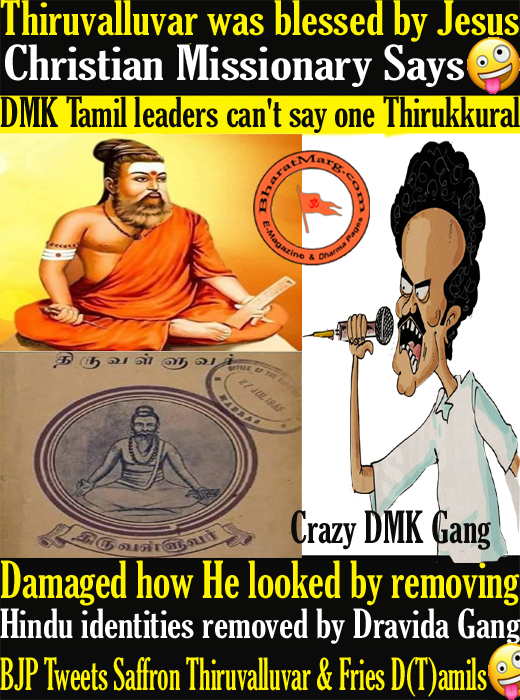
I have in my earlier article shown how Christianity tried to forge Thirukkural, a great Tamil work dating back to 2000 years, and the people behind the attempt, Arch.Bishop Arulappa and John Ganesh were exposed by the court and Ganesh was punished.Here I shall share information received from my friend Sri.Trisakthi Sunderraman on how the fraud was perpetrated.
The biggest fraud Santhome Church tried to pull with Arch Bishop Arulappa and John Ganesh.
The case has been closed. And the dramatis personae prefer to maintain a studied silence. For fear that a post-mortem would reveal hidden cadavers in their cupboards. For even a superficial examination of the fraud that shook the foundations of the Catholic Church in Madras in the late seventies and early eighties indicates that a lot of embarrassing details have been swept under the mat. The infamous scandal had to be pieced together from court
records, police files and the ramblings of the main character. As the Arch Bishop was ill with cardiac problems. It all began in the early seventies. Ganesh Iyer, who had adopted the Christian faith and was a self-styled Bible preacher known as John Ganesh. He is reported to have presented himself to Father Micheal of Tamil Illakiya Kazhakam as Dr.John Ganesh, professor of philosophy and comparative religions at the Banaras university,and recently returned from Jammu and Kashmir where he was involved in research on Christianity here Michael put him on to another priest, Father Mariadas of Sriviliputhur.
John Ganesh impressed Maridas,by his xian knowledge and showing him pics of palm leaf writings and copper plate Inscriptions several centuries old. Maridas funded 22,000 to Ganesh to research on these and when he ran out of money, enters Arch Bishop Arulappa of Santhome church.
Arulappa was a Tamil scholar and had authored several texts, he also knew sanskrit. He had studied Thirukural extensively. A.Bishop held the view that St. Thomas, before his martyrdom on a hill near Madras, now called St. Thomas Mount, met Tiruvalluvar and influenced the bard to the extent of converting him to the nascent faith.
In 1975-76, John Ganesh began his research. And archbishop with funds The archbishop had planned minutely how this was to be done. It was simple but ingenious.
Simply brilliant, if perverted. He made Ganesh cut brown paper into long strips– irregular and uneven like ancient palm frond scroll.He then wrote whatever he was asked to on these strips. Ganesh adopted a scrawl that was similar to ancient writings – often indecipherable. And the style of language was also lifted from the past.
Laborious and involved. These strips of brown paper were then pasted with glue on white cardboard and then photographed The photo print looked exactly like a photograph of ancient palm frond scrolls. The archbishop intended to pass these off to unsuspecting people as the real stuff.
Both made several such photographs. Hundreds, thousands. To an unbelievable scale, entire Tirukkural were written this way and interspersed with Christian thought. 100℅ funded by the Arch Bishop Arulappa.
Yes they forged the entire Thirukural as Christian text The Arch Bishop in 1976 obtained a passport for Ganesh in the name of Acharya Paul and in 1977 both traveled to Vatican and met the Pope Paul VI , and Ganesh(A.Paul) actually presented his fraud findings of Thirukural palm pics to the Pope. The press went gala over the findings of Thirukural of xian origins, and the Arch Bishop and Ganesh were mentally intoxicated over their success. But Hindu orgs and Christians got a shock and realised the fraud which had been happening, and found out that Ganesh from Srirangam who claimed a bachelor was actually a married man and had together they had duped the church and archbishop’s money to an amount of 14 lacs. Investigations into the sordid episode began. The police, led initially by Inspector Seshadri and later by Inspector Chandrayaperumal searched iyer’s residence. They unearthed the “originals” of all the photographs produced by Iyer as proof of his research – writings on strips of brown paper cut to resemble medieval palm frond writings, pasted on sheets of white paper. The police learnt that the photographs had been taken at a studio in Tiruchi and this led to the seizure of all the relevant original negatives, including stamps of museums and letterheads of various departments. On February 6, 1986, P. Aruvudayappan, second metropolitan magistrate, Madras, delivered his judgment in case number 100087/82:
“Taking advantage of the soft attitudes of public witnesses 2 and 3 (Father Mariadas and Father Arulappa),” he averred, “the defendant (Ganesh Iyer) guilty under various sections of the I.P.C. and has to undergo 10 months imprisonment and 5 month’s rigorous imprisonment under section 12-B of the Indian Passports Act. He had been arrested on April 29, 1980 and let off on bail on June 27, 1980.
What is even more curious is that a civil suit of compromise had been filed in the Madras high court. The compromise decree was taken up immediately after the conclusion of the criminal case. This reduced Ganesh Iver’s sentence. Rumors say this was in exchange for his silence.
Originally published under the title “Hoax!” in The Illustrated Weekly of India, April 26 – May 2, 1987, Bombay.
2.Originally published under the title “What Wrong Have I Done?” in The Illustrated Weekly of India, April 26 – May 2, 1987, Bombay. Reference : The myth of st.Thomas and Mylapore Shiva temple
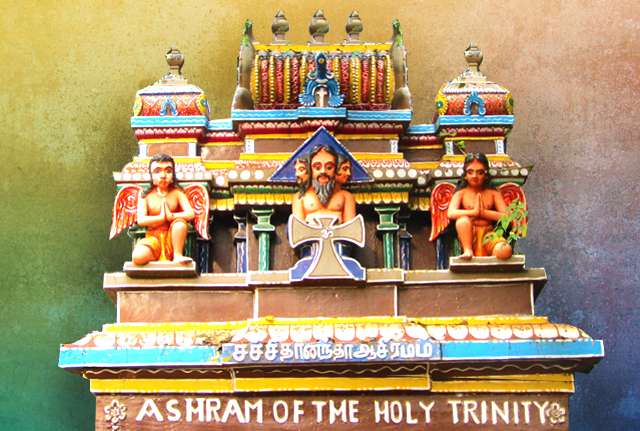
I have, through this blog, been researching the antiquity of Sanatan Dharma, Hinduism and it’s presence throughout the world in ancient days among world cultures. It had taken centuries of concerted action by invaders, Dutch,Portuguese, French and the British and of course Islam and our own brand of quislings masquerading as Secularists to deny our history and culture by deliberate misinterpretation of our texts, practices , destruction of temples,libraries, religious conversion both sweet and by sword and floating fake theories by self styled Scholars and promoted by Church. And Christianity doesn’t feel anysense of shame when Christianity tries to Hinduise,funny use of the term,that is following Hindu practices like building churches like Hindu temples, Composing Jesus Suprapadha,Astotra, Sahasranama,….And they use Sanskrit in some places too.
Worst form of this attempt to legitimise Christianity, is trying to force ancient Hindu texts saying that they refer to Jesus. We have a joker, a self styled atheist,who was a born as a Brahmin,now a converted Christian by his preachings,says Kathopanishad refers only to Jesus. This crackpot is Tamil Actor Kamal Hassan’s brother Charu Hassan.And there are Christian groups in India and some Hindus too, say that Jesus was a Yogi he lived and learnt yoga in Kashmir and his tomb is in Kashmir. I have exposed this fake narrative in my blog post.
Now Christianity wants to encroach Tamil, one of the ancient languages of India,along with Sanskrit,by trying to forge the Thirukkural, an Ethical work by Thiruvalluvar, which is dated around 2000 years ago. But here again, secular fake historians date it between 300 to 600 AD!
Christianity seems to have lost its Ethical works, including The Bible,which, incidentally was compiled three hundred years after the death of Christ,that the Church tried to forge Thirukkural and prove that it was inspired by the Bible! First step was taken in this direction by G.U.Pope, a self styled Tamil scholar in his introduction to Thirukkural.
All this started with this- Rev.G.U.Pope who translated Kural bluffed in his IntroductionThiruvalluvar worked hard to acquire knowledge by all means. Whenever a ship anchors in Mylapore coast, Valluvar’s ‘Captain’ friend would send him message about the arrival of new visitors including foreigners. Many foreigners could have travelled in his friend’s vessel and landed in Mylapore via Sri Lanka. Within me I see the picture of Thiruvalluvar talking with the Christians gathering information and knowledge. He has gathered a lot of Christian theories in general and the minute details of Alexandrian principles in particular and incorporated them in his Thirukkural. The philosophy of Christian theories from the Church situated near Valluvar’s place is present clearly in Thirukkural. Thiruvalluvar lived between 800 AD and 1000 AD. The Christian Biblical works were certainly an evidence for Valluvar’s Thirukkural. He was certainly inspired by the Bible. Thriukural in its First Chapter “Kadavul Vaazththu(In Praise of God) does not use any name of God, though Thikural uses several God names in 27 or more Kurals. This became easy for Forgers as Archbishop Arulappaa, Devaneya Pavanar, Deivanayagam etc., in Tamilnadu. Santhome church team worked to give wrong Christian meanings to Kural to interpret in a Christian way, and books were published from 1969 – first book being”Thiruvalluvar Christuvaraa?” with a foreword from then Chiefminister M.Karunanithi. In this Church funded book- Author says Kural is a small stone from the Mountain of Bible” and true researcher must acknowledge the truth that Kural was copied from Bible.”
Next step was taken by Arch Bishop Arulappa , Chennai with the help of a Brahmin convert Ganesh,John Ganesh.Read the facts as it unfolded , how the fake researcher was jailed.
Arch. Bishop Arulappa.
Archbishop Arulappa, Pavanar and Deivanayagam team wanted more, to prove for centuries Thirukural was known only as Christian Literuature and found one Ganesh Iyer- who was paid in Lakhs to Forge Old Manuscripts. Ganesh Iyer was given the name “Acharya Paul Ganesh”, Archbishop gave him his Car, a passport with address of residence as Archbishop’s official residence and went on a world tour including Vatican.
Church officials below Archbishop who did not like this Church Forgery – Filed a Case against Acharya Paul Ganesh Iyer as cheating Church- was convicted him for 10 months Imprisonment.The police case was complete. On April 29, 1980, Iyer was arrested and placed under remand, while prosecution proceedings were instituted under sections 419 (cheating by impersonation), 420 (cheating and dishonestly inducing delivery of property), 465 (forgery), 471 (using as genuine a forged document), 473 (making and possessing counterfeit seals with intent to commit forgery) of the Indian Penal Code and under section 12-B of the Indian Passports Act (obtaining a passport supplying false information). Archbishop Arulappa testified against Iyer before the court. Iyer initially pleaded innocence, but later admitted to the fraud on all counts. He prayed that in view of his advancing age and critical family circumstances, he be shown leniency.
On February 6, 1986, P. Aruvudayappan, second metropolitan magistrate, Madras, delivered his judgment in case number 100087/82: “Taking advantage of the soft attitudes of public witnesses 2 and 3 (Father Mariadas and Father Arulappa),” he averred, “the defendant (Ganesh Iyer) had taken from them about Rs. 13.5 lakhs between 1975 and 1980. This has been clearly established. Taking into consideration the nature of the offenses, the defendant is being held guilty under various sections of the I.P.C. and has to undergo 10 months imprisonment and 5 month’s rigorous imprisonment under section 12-B of the Indian Passports Act. These sentences are to run concurrently. He had been arrested on April 29, 1980 and let off on bail on June 27, 1980. These 59 days of imprisonment are to be deducted from the total sentence as required under section 428 of the code of criminal procedure.”
What is even more curious is that even as criminal proceedings against Iyer were in progress in the magistrate’s court, a civil suit for a compromise had been filed in the Madras high court. The compromise decree was taken up immediately after the conclusion of the criminal case. Since Iyer had admitted the offense, his jail term was reduced to a mere two months imprisonment. And since he had already served 59 days of remand, this period was adjusted against the sentence.In other words, Iyer, who had defrauded the archbishop to the tune of about Rs. 14 lakhs, was let off without any further punishment. He was ordered to forfeit all claim on the money given to him by the archbishop. Accordingly, the ornaments and money seized from him by the police were returned to the archbishop. As part of the compromise, Iyer was allowed to retain the large bungalow he had purchased with the archbishop’s money.“I agreed to this compromise because there was nothing else I could do,” says Iyer. His viewpoint in understandable. For, going by the lower court’s verdict, he would have not only had to serve 5 months of rigorous imprisonment, but would have automatically had to forfeit all his properties including the house. Why the archbishop agreed to the compromise is not understandable.As the case was going – Arch Bishop formed “Tamil Christian Research Department” in Madras University with 100% Church funding – and now many P.Hd. are given to promote Thirukural as Christian book, and the effects of St.Thoms Preaching Christianity over Tamil Society.
Arch Bishop Arulappa who in normal Catholic tradition remains as Archbishop till death was Retired due to poor health, to avoid further publicities.Again Archbishop Chinnappa wanted to spread Thiruvalluvar -St.Thomas Myth annouced a 50Crore funded film project launching it with Chief Minister M.Karunanithi.
Sources for this article and quotes.Originally published under the title “Hoax!” in The Illustrated Weekly of India, April 26 – May 2, 1987, Bombay
The lengths to which Christians had gone to establish Christianity in India is mind-blowing. We are aware of Christian missionaries converting people; of fake narratives by Christian missionaries who masqueraded as people who were interested in spreading Vedas,like Maxmuller; Self styled Tamil scholars like Bishop Caldwell;People who propagate that Thirukkural, a great Tamil literary work was written by him under instruction from Saint.Thomas……..! List is endless.
What most of us are unaware is false narratives and destruction of Hindu temples by Christians. Most think, rightly so, that Muslim invaders destroyed Hindu temples; what they do not know is Christians also indulged in destroying Hindu temples and had used the materials,like stones, from the temples to construct Churches and Basilicas.
One such is the false narrative regarding the arrival of St.Thomas in India to establish Christianity in India.
According to Christian leaders in India, the apostle Thomas came to India in 52 AD, founded the Syrian Christian Church, and was killed by the fanatical Brahmins in 72 AD. Near the site of his martyrdom, the St. Thomas Church was built. In fact this apostle never came to India. The Christian community in South India was founded by a merchant called Knai Thoma or Thomas of Cana in 345 AD—a name which readily explains the Thomas legend. He led four hundred refugees who fled persecution in Persia and were given asylum by the Hindu authorities.
In Catholic universities in Europe, the myth of the apostle Thomas going to India is no longer taught as history, but in India it is still considered useful. Even many vocal “secularists” who attack the Hindus for “relying on myth” in the Ayodhya affair, off-hand profess their belief in the Thomas myth. The important point is that Thomas can be upheld as a martyr and the Brahmins decried as fanatics. He never visited India and the the entire narration is a fraud.
Added to this is the information that the St. Thomas Church in Chennai was a Siva temple and it was destroyed by the Portuguese during the early sixteenth century.A new church was built and was named as St.Thomas Church at Santhome!
The Siva temple dedicated to Kapaleswara. References to it are found in Thevaram, one of holy Tamil texts praising Siva.A reference is found regarding Sambhandhar, Saivite Saint having brought back to life Poompaavai.The place is referred to as Myilai,now called as Mylapore.The present Kapaleswara temple was built , (after the old Temple was destroyed by the Portuguese;where now stands Santhome Church), by Muthayappa Mudali around 1700 AD.-Census of India-1961; Temples of Madras State, 1 Chingleput District and Madras City, P.204.
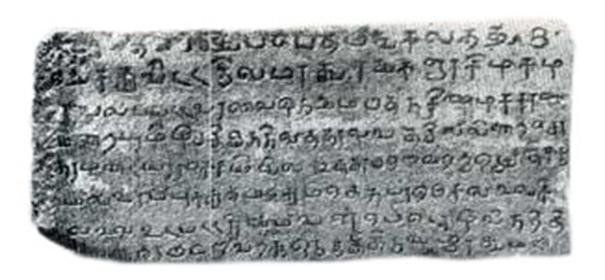
In the archeological digs in 1921 and 1923,Stone pillars and Epigraphs were found in Santhome cathedral.The finds included a Subramanya idol with His mount Peacock.Also an Epigraph states that the entire structure belongs to temple dedicated to Siva and Parvathi.More remains of the destroyed temple were found in the present Kapaleswara temple and at the Santhome Church Seminary which later was moved to Santhome High School ( the latter remains is now missing).The missing Epigraph was in Sanskrit. Here it is.
Siva temple , Kapaleswara inscription found at Santhome Church
Am providing images of these Epigraphs. Shocked to see that these were indexed in 1967! The department of archaeology notes in each of the Epigraphs that it belongs to 12 AD and by Rajendra Chola and yet kept quiet. What happened to history? Shameful that our own distort history.
Santhome Church Epigraph 4Inscriptions found on the walls of Santhome Church, Chennai.Inscriptions by Rajendra Chola 12 Century AD.Place where each is found is mentioned in each Epigraph.Thiscseries included Tamil and Sanskrit Epigraphs.
1923இல் தொல்பொருள் ஆய்வுத் துறையினர் சாந்தோம் கதிட்ரலில் நிகழ்த்திய அகழ்வாராய்ச்சிகளால் கல்வெட்டுகளும், தூண்களும், சிலைகளும் கண்டெடுக்கப்பட்டன. கல்வெட்டுகள் சிவன் கோயிலைக் குறிக்கின்றன. கற்றூண்களிலும் கல்வெட்டுகள் காணப்பெறுகின்றன. மயிலோடு கூடிய முருகர் சிலையும் கண்டெடுக்கப்பட்டது. 1921இல் மறைத்திரு ஹோஸ்டன், சாந்தோம் கதிட்ரலில் கண்டெடுத்த வடமொழிக் கல்வெட்டு “கருவறை உட்பட எல்லாக் கட்டிடங்களும் மயிலாப்பூரிலுள்ள புகழ்பெற்ற சிவனுக்கும் பார்வதிக்கும் உரியவையாகும்” என்று குறிப்பிடுபகிறது. மற்றொரு தானக் கல்வெட்டில், “திருமயிலாப்பில் பூம்பாவை” என்று குறிப்பிடுப்படுவதாலும், பழைய கபாலிசுவரர் கோயில் கடற்கரையருகே இருந்திருக்க வேண்டும் .
இந்திய மக்கள் தொகைக் கணக்கெடுப்புத்துறை வெளியிட்டசென்னை மாநிலக் கோயில்கள் (Temples of Madas State) என்னும் நூலில் காணப்படும் கருத்துக்கள் :-“கி.பி. 16ஆம் நூற்றாண்டின் தொடக்கத்தில் சாந்தோம் கடற்கரையிலிருந்த கோயில் போர்த்துக்கீசியர்களால் அழிக்கப் பட்டிருக்க வேண்டும் என்று கூறுகிறது. இந்நூல் கூறும் புதிய செய்தி,இப்போதுள்ள கபாலிசுவரர் கோயிலும் குளமும் முந்நூறு ஆண்டுகளுக்கு முன், மயிலை நாட்டு முத்தையப்ப முதலியாராலும் அவருடைய வாரிசுகளிலாலும் கட்டப்பட்டது என்பதேயாகும்.” Census of India-1961; Temples of Madras State, 1 Chingleput District and Madras City, P.204 போர்த்துக்கீசியர்கள் இந்துக் கோயில்களை அழித்த செய்தியைக் கேள்விப்பட்டு இராமராயர் கி.பி. 1558இல், சாந்தோம் மீது படை எடுத்துப் போர்த்துக்கீசியரைப் பணிய வைத்துப் பின்னர்ப் பழுதுபட்ட கோயில்களைப் பழுதுபார்க்க ஆணையில்ட்ட செய்தியாலும் பழைய கபாலிசுவரர் கோயில் போர்த்துக்கீசியர்களால் . S.Kalyanasundaram- A Short History of Mylapore page-8) அழிக்கப் பட்டது https://thamilkalanjiyam.blogspot.com/2018/07/blog-post_18.html?m=1





Leave a Reply