


Though written in lucid prose,the article presumes the importance of Pakistan than warranted by its polity.
True, a Nation need not be huge and economic power house as India is.
But at least the Nation should be stable and be economically self-reliant;it should have some political system in place;the responsibilities of the various organs must be clear.
Only then Alliance with a country like Pakistan which is more or less a failed State, where none knows,including their President knows what happens in the Country(remember the instance of Indian planes incursions into Pakistan last year), will be beneficial to the Allies.
The Alliance with Pakistan, apart from the reasons mentioned in the article, is also motivated by the anxiety ,rather urgency of the World(not merely US) to stop the export of terrorism.
Having found Pakistan to be an unstable State,the US is slowly giving up on Pakistan, though it is discomforting for the US to deal with India, as India wants to deal with US on its terms and not as a supplicant like Pakistan
China regards Pakistan to check mate US in the region.
Having noticed that US is developing India relationship,China is looking elsewhere to encircle India as Pakistan can only be a liability to it in the long run;China wants Pakistan remains unstable.
Funniest point is that Pakistan has a grievance that it has not been involved in Afghan Rebuilding.while the World knows the part played by Pakistan in Afghan confusion.
The dynamic nature of geo-political environment is transitioning from American efforts to retain its uni-polarity to a stage where the emerging competitors and challengers are moving to a position of asserting their influence. This is likely to result in geo-economic, geo-political and geo-strategic changes, realignments and re-assertions, in certain regions which are likely to play important, if not pivotal roles in the future. These are high-stake political games which may well result in either prolonging geo-political status-quo or the commencement of changes towards a multi-polar balance of power.
To maintain the geo-political status-quo, major US concerns are likely to remain focused on Asia. These include an emerging China, sustaining support for a countervailing India, a resurgent Russia and a concerned Muslim world attempting to redefine its place in the world polity. While US led efforts aimed at containment of Russia are stabilizing almost along the original Russian borders in Europe, endeavours to curtail her expansion towards the south and limit Russian and Chinese influence in Eurasian hinterland are underway.
 Pakistan
In February 2002, Colin Powell told the House International Relations Committee that, “America will have a continuing interest and presence in Central Asia of a kind that we could not have dreamed of before.” Chairman of NATO Military Committee while on a recent visit to Australia stated that, securing the safety of Washington and Brussels requires the expansion of a US dominated military alliance into “the Euro-Asian and Asian-Pacific regions.” Major US and NATO presence in Afghanistan and their efforts to enhance military presence in various Central Asian countries under the garb of providing support for Afghan war are clear indications in this direction.
In the post 9/11 environment Asia therefore became the test-bed of American attempts to assert and realign the politico-economic order to maintain her full-spectrum domination and deny or delay the emergence and assurgence of competing powers. US invasion of Iraq was essentially a venture to sustain these objectives and not against terrorism which had roots in Afghanistan. It was thought that the US adventure in Iraq would achieve its objectives soon and would allow shifting the focus to stabilize Afghanistan for a protracted US presence because of geo-political compulsions. While the US was busy in Iraq, they co-opted Indian support to replace Pakistan as a stabilizing influence in Afghanistan, mainly due to Pak-US trust deficit. This also provided Americans an opportunity to project Indian influence in Central Asia to dilute the existing Russian and increasing Chinese support base.
Having failed in her earlier attempts to coerce Pakistan through application of direct strategy, India readily took this opportunity to pay back Pakistan for its alleged interference in Indian Occupied Kashmir and ventured in to a strategic encirclement of Pakistan. Under a calibrated strategy, US also supported India by attempting to persuade Pakistan to allow passageway for sustaining the Indian influence in Afghanistan and beyond. While addressing a press conference in January this year in Islamabad, Hillary Clinton openly supported this venture to the discomfiture of her hosts. However, Pakistan did not acquiesce and avoided a self-inflicted strategic encirclement.
Moreover, in order to dilute and contain resurgent Taliban, US contrived with Indian and Afghan support to shift the terrorist center of gravity to Pakistani territory resulting in manifold increase in drone attacks in Pak regions bordering Afghanistan. However, the US desire to confine this war to Af-pak region was short-lived. Soon the Taliban outside of so-called Af-pak region re-emerged stronger, warranting a US surge followed by a crisis of command and strategy.
Also, the Americans soon realized Indian inability to replace Pakistan’s strategic influence in its backyard. This also solidified the fact that the geo-politically influenced strategic pivot provided by Pakistan could not and would not be replaced by India, no matter how powerful India may be. Pakistan had withstood the challenge, no matter how weak it had been or would be. Achievement of US geo-political and geo-strategic goals therefore would become extremely difficult without co-opting Pakistan. This fact can not be overstated by citing a statement of Senator McCain (courtesy wikileaks), who while talking to David Cameron in a 2008 meeting said that, “if they (Pakistan) don’t cooperate and help us, I don’t know what we are going to do.”
Many believe that India is a regional power, yet they fail to realize the fact that its regional prowess can only be exercised against nations as small and vulnerable as Nepal, Bhutan, Sri Lanka, Maldives and Bangladesh. It has not been able to convincingly project its power potential against present day Pakistan and China and it is unlikely to happen in the future as well. US Embassy, New Delhi (courtesy wikileaks) corroborates this fact indicating that, with present Indian military capabilities, Cold Start doctrine would encounter mixed results.
US, France, UK, China and Russia etc can project their power potential because either they do not have a powerful regional threat to counter or they have enough capability to deter a regional threat and also project their capability to take care of extra-regional threats.
India cannot laterally expand its influence beyond its western borders due the existence of geo-political impediments in addition to the geographical restrictions placed by the presence of Pakistan. Expansion of its influence towards the east is impeded due to the large geographical lay of China. Myanmar can provide India with limited ability to expand towards South East Asia. She attempted to undertake such a venture but due to its internal upheaval in adjoining areas failed to take timely advantage. Chinese influence in Myanmar has in the meantime increased manifold which may limit future Indian endeavours. Therefore the only direction it may be able to expand its influence is towards the vast expanse of sea in the south.

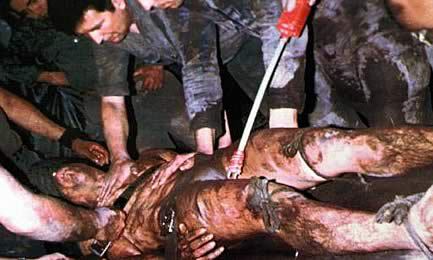
History will remind you why its Pakistan Occupied Kashmir & not ‘Azad’ Kashmir.There is no such thing as India “occupied” KAshmir. We have allowed generations to forget facts and let sources in Wiki/google/our own ppl etc use these terms.
Based on records available on the net as well as U.N library. Pak in the U.N council claimed J&K (in 1948)on the basis of a “standstill agreement” which was to supply railway, telegraph, postal and food supplies. Prime Minister of J&K had simultaneously sent a feeler to India, who replied with their standard “stand still agreement” -which included external affairs, state forces, indian army, motor vehicles, highways and a whole gamut. J&K delegates were invited to delhi to finalise the arrangements. THey could not make it because on 31 aug’47 the chief of staff of J&K forces -major general Scott(british officer) gave reports of armed muslims from rawalpindi invading J&K.
4sept’47 J&K ministers protested to pak over telegraph and witnessed an increased intensity.
6 sept’47 these incursion reports were confirmed in a telegraph by Major general Lovett commanding & patrolling Pakistani forces.
18 sept’47 pak govt.suspends railway service to J&K in contravention of “standstill agreement”.
30 sept’47 100s of pathans armed with service rifles automatics with spears attached, enter J&K state territory.
3oct’47 J&K Prime minister protest Poonch being occupied to pak which commits second violation of “standstill agreement” by withholding petrol rice salt supplies.
10 oct’47 two sections of pakistani army followed by armed gangs attacked villages. The invasion had begun. At this point in time Pak submitted to U.N that they were not involved in anyway and at most would help quell the rebels. U.N ordered Pak to not enter J&K. Pak newspapers announced arms being made available to all so that the enemies of pak would have none!
15 oct’47 J&K Maharajah apeals to British PM as was the habit of old, and reports economic blockade and invasion by Pak.
22 oct’47 J&K PM telegraphs Deputy commisioner of rawalpindi to stop the infiltration. By now Pak has involved their army’s engineer regiment to build bridges past Jhelum river.
25Oct’47 Lord Mountbatten attends Indian defense council and hears reports sent by british officers in Pak army stating 5000 armed tribesmen attacked and captured Muzafarabad and Domel. Pak had still not acknowledged the invasion.
26oct’47 The maharajah who is the head of state and only competent authority to sign accession appeals to india for military help & protection in a letter. (Indian forces not entered kashmir yet)
28Oct’47 Acting commander in chief of pak army -general Douglas Ignored Jinnah’s order to move Pak army into Kashmir stating automatic withdrawal of every British officer that served with new Pak army as it is an act of aggression. Govt. of India got to know of this in 20 March’56(@ Pak organised Kashmir Liberation Conference) from ex Major General Akbar Khan(who was later sentenced for treason by Pak)
BIRTH OF TERRORISM
During this period – extensive rapine and plunder followed. 5000 strong force OF ‘MASUDS’ ‘PATHANS'(called foreign raiders by jinnah) led by Pak army commanders and enforced by more tribesmen sacked baramulla. Independant reports from british misionaries who survived the massacre corroborate these facts. Baramullas population of 24000 was burnt and shot to 1000 in a single day. If J&K territory was alligned with Pak by kinship/links of blood/race or religion this was a funny way of showing it by rape plunder and massacre
7 March’49 In a budget speech to the legislative assembly of the frontier province premier Abdul Quayum Khan advocated a sp. grant for tribesmen “Thehouse will recall with pride the fact that ‘Masuds’ responded in our hour of greatest danger by rushing to liberate the oppressed muslims” ** in 1949 no international law sanctioned one state to go protect someone in another state even if he was oppressed.
FLASH FORWARD…WAR !
At a meet in LAhore, Indian representative to PM, demanded of Jinnah to WITHDRAW and stop “frontier raiders” from crossing Pak land into J&K(now under Indian Domain. He claimed no one could stop co-religionists in the struggle for liberation.
Later Jinnah’s offer was:Indian forces backing out and he would stop the raiders. When Lord Mountbatten caught him at this contradiction-Jinnah said he would stop them if you call this whole thing off!!
“In one part of the country is this rapine going on, and being called a struggle for freedom.We know a bit about the sruggle to freedom, if not for us it wouldnt have been possible for Pak. to gain independence.” – Krishna Menon
Time that we put out Real History to youngsters.
Mr Ramanan,
After reading the article, I find it pretty convincing. Your comments are primarily based on Pakistan’s internal mess whereas the article explains the geopolitical environment. In my opinion, geopolitically Pakistan at this stage stands much stronger than India. That is the reason West and the US are supporting it. I think you need to carryout a dispassionate analysis to understand that Pakistan is not a failed state as many of us presume – rather wishfully. Dont just comment being an Indian and therefore being anti-Pakistan.
Geopolitically Pakistan is definitely is an advantageous position, no doubt.As I indicated in my comments that the advantage is nullified by internal confusion and instability.
A failed Pakistan(ok, a failing Pakistan), can not contribute anything worth the while to US or China as Pakistan’s resources shall be spent only in trying to contain internal chaos.
So the next best for US and China is to keep Pakistan unstable and blackmail India on the dangers of Pakistan’s Instability, especially Pak. being a Nuclear power( though unofficially).
I am not anti-Pakistan.
At best I am anti-Pakistan Establishment that is in place right now .U might read some of my comments on Pakistan filed under Pakistan.
Sir,
I dont know if you had visited Pakistan – I did when last time team India was there. Honestly, I was surprised. I thought I’d find AK-47 totting Taliban all over and Burqa clad women going around in streets – just like Kabul. No, I didnt see all that. It was a modern city, much better and wider roads, clean areas, lone women driving cars and a well lit city (Lahore) which remained awake till wee hours of the morning. Certainly not like our Delhi, in fact much better. Yes there were places in the city which reminded me of the inner chandni chowk but it did surprise me because our press portrayed it almost as Kabul. Subsequently, I returned on other occasions and visited Karachi etc. It never looked like a failed state or a state which was failing, in any case. Yes they have their problems and I want that GOI should take advantage of it, however a lot of effort will have to be made to do this.