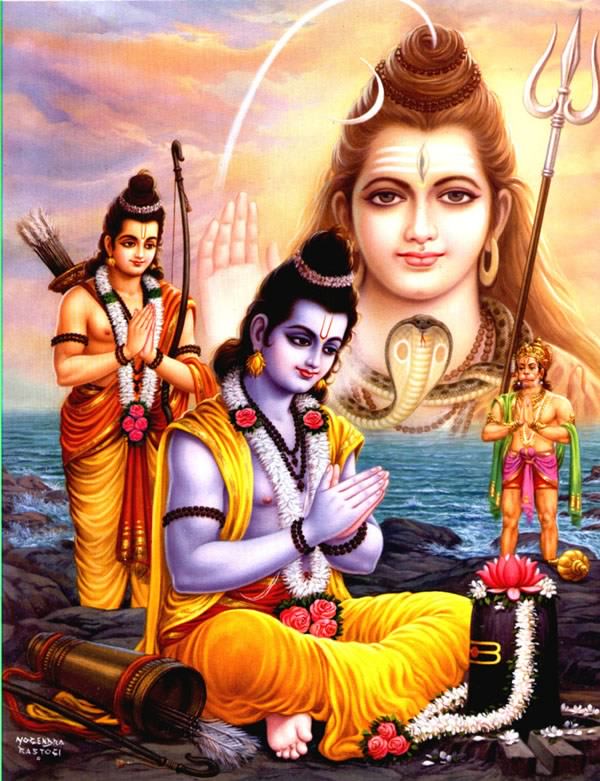
Tag: Vasishta

  • Vasishta Kaundinya Gotra Migrated from Sumeria DNA Study

    Vasishta Kaundinya Gotra Migrated from Sumeria DNA Study

    *Evidence substantiating information found in Puranas and Ithihasa, Ramayana and Mahabharata are now being validated by Astronomy, Astroarcheology , Epigraphy, Archeological finds, Tectonic plates movements,C4dating, Infra-red analysis, Stratification studies.

    Before going into the Research find,let us look at some seemingly contradictory facts mentioned in the Puranas and Ithihasa.

    And cross check them with references in ancient Tamil literature.

    On Sage Vasishta.

    1.Vasishta appears in Ramayana and not much of him is heard since.

    2.Yet , Vasishta is one of the Sapthapathi,who are eternal.

    Atri,Bhrigu,Kutsa, Vasishta,Gautama,Kashyapa and Angirasa

    3. Vasishta is found in Ancient Tamil literature.

    4.Though Sanatana Dharma is reported to have sprung from the north of the Vindhya Mountains,latest finds prove that the Founder of Ikshvsku Dynasty, Ikshvsku’s Father Manu was from the South of Vidhyas.

    5..Emperor Aja of Ikshvsku clan married a Pandya princess from South.

    6.Chola kings of South trace their lineage to Ikshvsku Dynasty.

    7.Cholas call themselves from Kashyapa Gotra.

    8.Sage Viswamitra banished his sons to Dravida Desa,south of Vindhya.

    9. Their descendant Apasthamba composed the Apasthamba Sutras, which are followed by Brahmins of South India.

    10.Parashurama settled families from Dwaraka to Kerala.

    11.Sage Agastya settled seventy two families on the present border area of Tamil Nadu and Kerala.

    12.The Tamil homeland Lemuria is 230 million years old.

    13. Rama refused to wage war against the Dravidas as they were his ancestors.

    14. Lord Rama fought with the Atlantis people at seven Rishi valley currently in Pakistan

    15.Chola king SibiChola king Sibi ruled from the present NWFP of Pakistan.

    It was his second capital.

    He was ancestor of Lord Rama.

    He built a temple for Vishnu as Pundarikaksha at Thiruvellarai near Srirangam, Tamil Nadu.

    16. When a Tsunami struck south,Lord Shiva,Ganesha and Vasishta migrated to Arctic via what is now middle East, Europe,America.

    Rig Veda was composed in Arctic.

    Then they reentered India.

    One must remember the landmass then, was different from what it is today.

    Lemuria million years ago

    17.Rama’s empire covered the world.

    18. Sanatana Dharma was present throughout the world.

    19.People of Bharathavarsha were spread throughout the world.

    20. They remigrated from wherever they were to the present India,mostly from Sumeria.

    21. Names of Dasaratha,Rama and Bharatha are found in Sumerian Kings List.

    Now the research on Vasishta and Kaundinya Gotta migrated from middle East towards India , South India through Bolan Pasd.

    This study is based on DNA presence.

    Abstract

    A rare R1a1 Y-haplogroup (Y-HG) L657 clade subtype designated as LPKSTR is found in most male members of a clan of “founder” families within the Goud Saraswat Brahmin community in Lotli town in Western India. TMRCA calculations using pairwise comparisons to control cohorts suggested a probable migration history distinct from the canonical narrative for medieval migration of orthodox Brahmin families to South India. Using Y-HG centroid analysis, chi-square analysis of TMRCA distributions and archeological find-spots, and discriminant function analysis we show that the parental Z93 L342.2 subclade in which LPKSTR occurs originated in West Asia and that LPKSTR individuals migrated toward the southeast by a Bolan Pass route distinct from the traditionally presumed route of Brahmin ingress into the Indian subcontinent. The proposed migration route is supported by archeological, toponymic, numismatic, linguistic, iconographic, and literary data. Lastly, we present cultural metrics demonstrating that these LPKSTR lineages retained distinct family practices with respect to literacy, religious practice, and emigration not shared with orthodox Brahmins of canonical geographic origin within the same community, despite centuries of intermarriage. Long-term transmission of differentiated family practices within a patrilineal endogamous community has rarely been documented.

    It is notable that Rig Vedic Book 7 is ascribed to the sage Vasishta, whose affiliation with the mainly Iranic sun-worshipping Mitra-Varuna tradition is nevertheless codified in the Hindugotra system and became especially popular in the medieval assimilation of sun-worshipping Iranic peoples (Huna, Maitraka, and Gurjar) in Gujarat and the Western states []. LPK Brahmins follow the Kaundinya gotra of the Vasishta group. Moreover, Brahmins of the Vasishta gotra occur in significantly higher numbers along the western side of the subcontinent (Supplementary File S42). Taken together, these observations support the possibility of Mitra-Varuna antecedents for LPKSTR LPK families..

    Source and credits.

    Research Article

    Genetic and Cultural Reconstruction of the Migration of an Ancient Lineage

    1Mayflower Organization for Research and Education, Sunnyvale, CA, USA
    2Department of Forensic Medicine and Toxicology, All India Institute of Medical Sciences, New Delhi 110029, India
    3Department of Pediatrics, University of Oklahoma Health Sciences Center, Oklahoma City, OK, USA

    Received 10 May 2015; Revised 24 August 2015; Accepted 25 August 2015

    Academic Editor: Peter J. Oefner

    Copyright © 2015 Desmond D. Mascarenhas et al. This is an open access article distributed under the Creative Commons Attribution License, which permits unrestricted use, distribution, and reproduction in any medium, provided the original work is properly cited.

    https://www.hindawi.com/journals/bmri/2015/651415/

    PS. I have provided some links for points mentioned,not all.

    Please check related posts in each article or search the term +ramanan50 for more articles.

  • Four Of The Saptha,Seven Rishis From South Of India

    There are Seven Seers of Hinduism called as Saptha (seven) Rishis.

    According to Puranas,these change for every Manvantara,a Time scale of Hinduism going back to lakhs of years.

    For more read my article on Manvatara.

    The Saptha Rishis for our Manvantara are,

    Atri,

    Bhrigu,

    Kutsa,

    Vasishta,

    Gautama,

    Kasyapa and

    Angirasa.

    It is interesting to note that references to these Rishis are associated with certain regions of the world,though all of them are from Bharatavarsha.

    Of these,while,

    Bhrighu from Himachal Pradesh,Kutsa from near Uttar Pradesh,Vasishta from Indus valley,Atri,Kasyapa and Gautama and Angirasa are from the south of Vindhyas.

    It is also curious that the Bhargavas,those from Bhrighu Lineage, to which Parashurama,an Avatar of Vishnu,are sometimes treated as those from the south,with Parashurama establishing Goa and Kerala regions of today.

    Kasyapa is the earliest and his name means Turtle.

    The Turtle concept  is present in almost all lehends related to Creation of Earth.

    Kasyapa must have lived in the south ,though he is reported to have come to south twice .

    Once when the earth was tilted during Shiva,s Marriage with Uma and again during Ramayna whe he came down to Lanka to impart The Adityahridhaya Stotra on Surya,the Sun God,to Lord Rama,when he was depressed during his battle with Ravana in Lanka.

    Agastya’s movement has been validated by the Star Canopus.

    Please read my article on this.

    Sage Gauthama was from the Godavari basin/valley,the River Godavari is named after him.

    Bhrighu and Angirasa are classified as pre Vedic Rishis.

    Though they are referred thus and are mentioned in The Zend Avestha of Zoraosterianism,Angirasa ,going by Sumerian and Tamil related material was from the Dravida desa and he seems to have founded the Akkadian empire or worshiped by them.

  • Kanchipuram Tribe In Vasishta Viswamitra War

    Many tribes are mentioned in the Ancient texts of India, The Vedas,Puranas,Ramayana, Mahabharata and later works of Poets like Kalidasa.

    The Rig Veda describes the tribes in detail.

    And these mention that some these tribes scattered around the world, thus sowing the seeds of Sanatana Dharma around the world.

    Also there was another civilization flourishing in the south of Vindhya mountains.

    It was the Dravida, now being identified as Lemurianas and MU civilizations.

    Apart from this there were two more civilizations in place.

    Ekambareswarar Temple, Kanchipuram,Tamil Nadu India.jpg
    Ekambareswarar Temple, Kanchipuram,Tamil Nadu India.

    They were,

    The Uighurs and

    The Atlanis People.

    For more details please read my article Rama dropped Atom Bomb.

    The Vedic texts refer to the Dravidians and the Chera,Chola and Pandya Kings.

    They were present during the Swayamvara of Damayanti, which predates Ramayana, of Draupadi and the Rajasuya Yaga of Yudhishtra.

    And the Kings from the South participated in the MahabharataWar.

    Now to the tribes mentioned in the Ancient texts of India.

    The earliest reference is to the Battle of Ten Kings.

    We find references to many tribes.

    There was a war between the Kings mostly from the North of Vindhyas.

    Now there is yet another reference of the  Tribes of India , involving Sage Vasishta and Viswamitra.

    Sage Vasishta, though the Family Priest of the Ikshvaku Dynasty, not much of is heard of him after Ramayana.

    It seems that he left with Shiva and Ganesha towards the west of India during a Tsunami,while Vaiwasvatha Manu left for Ayodhya to found the Ikshvaku Dynasty.

    There is a reference that Sage Viswamitra banished his 51 sons to Dravida Desa( History of the Tamils by PT. Srinivasa Iyeangar).

    Now let us look at these two facts together to find out more about the tribes of Dravida Desa.

    One of the Tribes who took the side of Vasishta against Viswamitra when the latter tried to take away Vasishta’s Cow,Nandini , is the Kanchi .

    Kanchi, Kanchipuram finds a reference in all the Puranas, Ramayana, Mahabharata, Harivamsa of Kalidasa and Bhrthuhari’s works.

    Kanchi was called the learning center of the south like Nalanda in the North.

    Tamil Classics also speak of Kanchi,and the Sangam Literature calls it as Kanchi Mudur,Ancient Kanchi.( The Term Mudur is used only for two cities (Mudur),Madurai and Kanchi).

    These two cities are quite ancient if one goes through these references.

    A Brahmin from Kanchi founded Cambodia Vietnam Thailand

    Kanchi tribe is mentioned in the Mahabharata Thus,

    When the sage Vasistha was attacked by king Viswamitra’s army, Vasistha’s cow, Kamadehnu, brought forth from her tail, an army of Palhavas, and from her udders, an army of Dravidas and Sakas; and from her womb, an army of Yavanas, and from her dung, an army of Savaras; and from her urine, an army of Kanchis; and from her sides, an army of Savaras. And from the froth of her mouth came out hosts of Paundras and Kiratas, Yavanas and Sinhalas, and the barbarous tribes of Khasas and Chivukas and Pulindas and Chinas and Hunas with Keralas, and numerous other Mlechchhas.

    In the ancient Indian literature, cow is a symbol of earth or land. Thus the myth mentioned above simply means that, these tribes gathered for the protection of sage Vasistha’s land against the army of king Viswamitra.(

    • Mahabharata, Book 1, Chapter 177)

    References and Citations.

    http://ancientvoice.wikidot.com/mbh:kanchis

    https://en.wikipedia.org/wiki/Kanchi_Kingdom#The_myth_of_origin_of_Kanchis

    And some moments after, from her tail she brought forth an army of Palhavas, and from her udders, an army of Dravidas and Sakas; and from her womb, an army of Yavanas, and from her dung, an army of Savaras; and from her urine, an army of Kanchis; and from her sides, an army of Savaras.
    Mbh.5.161.7227 Like a frog having its abode in a well, why art thou not able to realise the might of this vast army of the assembled monarchs, invincible, looking like the very celestial host, and protected by these lords of men, as the heavenly host by the gods themselves, protected that is, by the kings of the East, the West, the South and the North, by the Kamvojas, the Sakas, the Khasas, the Salwas, the Matsyas, the Kurusof the middle country, the Mlechchhas, the Pulindas, the Dravidas, the Andhras, and the Kanchis, this host of many nations, ready for battle, and resembling the uncrossable current of the Ganga.
  • Why Rama Uses Brahmin Rishis In Gotra Pravara

    I had written on the Gotra and the Pravara of Lord  Rama.

    He recites the names of Brahmin Rishis as his ancestors in His Pravara.

    Lord Rama was a Kshatriya.

    Why?

    Rama with Kodanda,Bow.jpg
    Lord Rama

    Lord Rama’s Gotra/Pravara is this.

    Yajur vEDa Saakhaa adhyaayinE, VaasishTa, MaitraavruNa KouNDinya trayaarishEya Prvaraanvita, VasishTa


    GotrOdbhavaaya, Tribhuvanaadheesaaya, AkhilaaNDa kOti BrahmaaNDa naayakaaya, Tattva ateetaaya, Sat chit Ananda

    moortayE, Soorya Vamsa Paavanaaya, Akhila jagad aananda kaarakkaya, Ksheeraabdi VaasinE, SaraNaagata vatsalaaya,

    Kousalyaananda Vardhanaaya, ThaTakaa ThaaTakEyaantakaaya, Sree Paada rENu paalita Goutama kaLatraaya, Parama

    Bhaagavata architaaya, khaNDeekrita tripura chaapaaya, Saadu jana nivaasa vrukshaaya,LakshmaNa agrajaaya, Sreevatsa


     Koustuba  haara - kanaka kEyooraadi DivyaabharaNa bhooshitaaya, Vaijayantee Vanamaala sObitaaya, Ikshvaaku Vamsa


    Udbhavaaya, Naabhaaga VarmaNa: naphtrE, Aja Mahaaraaja VarmaNa: poutraaya, Dasaratha Mahaaraaja VarmaNa: putraaya,


    Sree Raamachandra VarmaNE Saakshaat NaaraayaNa svaroopaaya varaaya'

    Pravara of Lord Rama

    Now Lord Rama was a Kshatriya.

    Yet we find that He uses the Brahmin Rishis as his ancestors as His Pravara!

    Why?

    Gotra is derived from two sources.

    One is ancestors an another is the  Guru Shishya Parampara, Preceptor Disciple Lineage.

    That is one type uses the ancestors an the other uses the Guru of his family.

    The Ancestors are used tin Gotra/Pravara by the Brahmins.

    They do not use the Guru, except in some cases, like Viswamitra as he was by birth a Kshatriya and later became a Brahmin because of Knowledge.

    His original Name was Kausika when he was a King.

    When he became a Brahma Rishi, he was called Viswamitra and there is Kausika nd Viswmitra and Kausika Gotra.

    The offspring he sire when he was a king Kausik use the Kausika and after he became a Brahmin, those offspring use Viswamitra Gotra.

    Other communities like Kshatriya, Vaisya and Sura normally use their family priests, Guru’s Gotra for they considered Gurus as spiritual Fathers.

    Lord Rama chose a middle path thus,

    Yajur vEDa Saakhaa adhyaayinE, VaasishTa, MaitraavruNa KouNDinya trayaarishEya Prvaraanvita, VasishTa''

    Translation.

    He belongs to the Pravara consisting of three Rishis viz., VasishTar, MaitraavaruNar and


    KouNDinyar; He is born in the VasishTa Gotra

    GotrOdbhavaaya,  ( Guru Prampara)...


    Ikshvaaku Vamsa

    Udbhavaaya, Naabhaaga VarmaNa: naphtrE, Aja Mahaaraaja VarmaNa: poutraaya, Dasaratha Mahaaraaja VarmaNa: putraaya, (ancestors)

    Translation.


    He belongs to Ikshvaaghu Vamsam: He is the Great grandson of Naabhaaga Mahaaraaja Varma; He is the


    grandson of Aja Mahaaraaja Varma; He is the son of Dasaratha Mahaaraaja Varma; He is Sree Ramachandra Varma;'

    Note how meticulously he uses the term Varma , indicating  that He is a Kshatriya.

    Brahmins must use the term Sarma, Kshatriyas Varma and Vaisyas Gupta after their Names in Pravara.

    Thus Rama does not make  a mistake when He uses the Brahmin Rishis in His Pravara.


  • Why Vasishta Not Found In South , Shiva Left Dravida?

    It has come to my to notice that Vasishta Gotra is not found much in the South of Vindhyas as much as it is in the North through a shrewd observation by a reader while commenting on mu Post Which Gotra is Superior?

    Yes, it is a fact that Vaishista Gotra is very limited in the South.

    Sage Vasishta.jpg Sage Vasishta.

    One may also notice that Vasishta comes into prominence only after Ramayana despite the fact that Vasishta is one of the Saptha Rishis, who are eternal

    And he was the Sage who is also one of the Nava Prajapathis, Nine Prajapathis amomg Daksha, whose Yaaga was destroyed by Veerabhadra on the orders of Lord Shiva.

    Vasishta composed (rather grasped and expressed will be the correct term)  Mandala 7 of the Rigveda. as the Chief.

    The Sag Viswamitra yearned for The Title of Brahma Rishi from Vasishta even though he was called such by even Brahma.

    Why is it that such a great personality does not find a prominent place before Ramayana?

    The Bhagavatha Purana states that the ancestor of Lord Rama Satyavrata Manu  left Dravida(South)  for Ayodhya and his son Ikshvaku founded the Ikshvaku Dynasty.

    This was necessitated by the great Tsunami in the south as recorded in Tamil classical literature.

    Lord Shiva left , at the same time,along with his son Ganesha moved out through the western coast of Bharatavarsha, traveled through the middle east, Europe, Africa, Americas,and finally reached Arctic.

    And it was in the Arctic the Rig veda was compiled.

    I have detailed post on this, as for all the observations I have made here and exhaustive research was done by Bal Gangadhar Tilak in his Book Arctic Home of the Vedas.

    after the rig Veda was composed Shiva and Ganesha set out for India through Russia and Khyber Pass .

    This has been misinterpreted as Aryan Invasion.

    The archeological evidence linking Ganesha and Shiva throughout the world would strengthen this point.

    Now Vasishta, being a Manu and a Parajapati obviously left along with Shiva and while Maheswara sukthas are by Shiva, Rig veda important portions were done by vasishta and others.

    It may be of interest to note that there is a Temple For Daksha in Kerala( I have a Post on this)

    Thus ,as Vasishta left along with Shiva at the time of Tsunami there are minimal references to Vasishta in the South.

    By the time they returned to india, and Vasishta had become the Kula Guru of Ikshvaku Dynasty, years had gone by.

    In the south the other progeny of Shiva, Subrahmanya, called as Murugan in Tamil spread Santana Dharma in South East Asia and developed the Santana dharma further in the south.

    That is the reason one finds the Murugan is identified with Tamil and Shiva being treated as the Adhi Siddha and as ‘Ancient of the Ancients’

    Munnaip Pazhamporutku Munnaip ParamPorule – Tamil.

    Hnece Vasishta lineage was limited in the south and as he became the Kula Guru after settling down in the North his clan expanded there.

    Hence ther are less Vasishta Gotra in South.

    Vashishtha (Sanskrit: वशिष्ठ, वसिष्ठ, IAST: Vaśiṣṭha, Vasiṣṭha, Thai: Vasit, Tamil: வசிட்டர்) is one of the Saptarishis (seven great Rishis) in the seventh, i.e. the presentManvantara, or age of Manu.[1] Vashista is a manasputra of God Brahma. He had in his possession the divine cow Kamadhenu, and Nandini her child, who could grant anything to their owners. Arundhati is the name of the wife of Vashista. RigVeda 7:33 mentions Vashishtha rishi as son of MitraVaruṇa and Urvasi.[2][3]

    Vashistha, as one of 9 Prajapatis, is credited as the chief author of Mandala 7 of the Rigveda. Vashistha and his family are glorified in RV 7.33, extolling their role in the Battle of the Ten Kings, making him the only mortal besides Bhava to have a Rigvedic hymn dedicated to him. Another treatise attributed to him is “Vashistha Samhita” – a book on the Vedic system of electional astrology

    More on VasishtaPrajapati to follow.

    Citation.

    https://en.wikipedia.org/wiki/Vashistha