Tag: Vaishnavism

  • Thenkalai Origin Details History of Vaishnavism Part 4

    Thenkalai Origin Details History of Vaishnavism Part 4

    I have written on the background of Vaishnavam in my three preceding articles.

    In this article ,I shall present the origin and history of the two forms of Vishnu worship in South India,Dravida Desa.

    As mentioned in my earlier articles on this subject,Vedas speak of Reality, Brahman as a Principle,beyond words and thoughts.

    One has to Realise It by Discerned Wisdom,Gnana and Determination,Vairaagya.

    However, realising that Human mind,human nature being limited and is not equipped to Realise Brahman,Vedas have provided worship of individual Gods,who can be worshipped in line with disposition.

    This method of worship is Saguna Aradhana,while realising Brahman direct is called Nirguna Aradhana.

    Nirguna Aradhana is practiced as Gnana Yoga,more related to Mind.

    Saguna Aradhana is closer to Bhakti Yoga,the Path Of devotion.

    This Emotional Approach.

    Whatever be the method,the Goal is Realisation of Brahman.

    It can be through Saguna Aradhana or Nirguna Aradhana.

    Under Saguna Aradhana people might worship Shiva,Vishnu,Devi,Ganapathy,Subrahmanya….

    Because of this approach of the Vedas,there were numerous Gods right after the Vedic period and performance of Rituals were given priority,as detailed in Mimamsa,and this reached such proportions that there were sixty four systems of worship and the performance of Rituals gained priority over Knowledge and Realisation of Brahman.

    This confusion resulted in the ascendency of Jainism band Buddhism.

    Adi Shankaracharya,realising that the message of Vedas was being diluted,organised these myriad of practices into six six systems of worship.

    This is called Shanmatha,Six Systems.

    They are,

    Ganapathyam, worship of Ganesa,

    Saivam,Of Siva,

    Saaktham,of Devi,

    Vaishnavam, of Vishnu

    Kaumaaram,of Subrahmanya and

    Saura,of Sun,Surya.

    Worship of Vishnu is Vaishnavam.

    Worship of Gods was in Sanskrit as the Vedas are in Sanskrit.

    Though there were about fifty six kingdoms in ancient India, Prakrit was the Link language,though there were local languages in different parts of India.

    Tamil, Telugu,Kannada,Bengali..

    Of these, according to available information,Tamil is older.

    The timeline of Tamil and Sanskrit run parallel.

    When people Worship as ordained by Vedas, simultaneously they also worshipped in the local language,mother tongue.

    The Bhakti Bhava is more compatible with one’s mother tongue.

    Hence many Saints practicing Bhakti Yoga,left behind their experiences of Godhood in Local languages.

    These remain at the regional level and are practiced even today.

    Thus we have Bengal ,Assam,Odisha following the Bhakti Bhava practices from Bengali and Oriya primarily in the East,North East of India.

    In the West Marathi Bhava is in place.
    When one comes to the south of India,from the Vindha mountains to south, Dravida Desa,Tamil Bhakti Bhava has been in practice,and others came later.

    As Tamil was in vogue during Vedic,Puranic and Ithihasa times,the Devotional aspect has been there for quite long.

    The experiences of Saints,thus recorded in Bhakti Bhava in Tamil formed the nucleus of Worship of Vishnu in a different pattern.

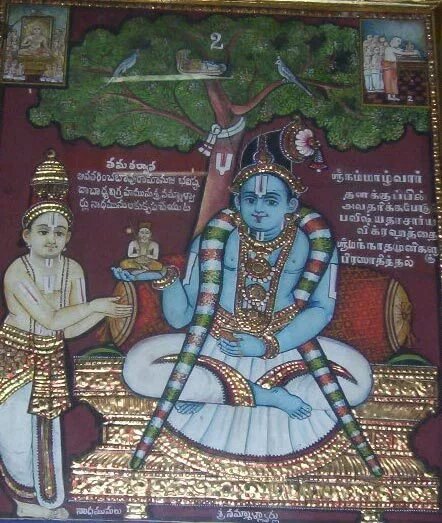
    The Azhwars,those who are immersed in Vishnu,are the founding fathers cas it were for the sects that came into being vin Tamil Nadu, Karnataka,Andhra and Kerala.

    The Azhwars are twelve in number.

    Some of them predate Christ.

    Read my article Andal date 3000 BC?

    She is the last in line of the Azhwars.

    Other Azhwars could also be dated back than the dates assigned to them at present.

    So compelling and soul stirring were the compositions of Azhwars,The Bhakti cult in Tamil starts from Azhwars,who are dated to middle ages or slightly before it.

    I do not agree with this date as my study indicates that they belong to much earlier period.

    So there was this concurrent worship of Vishnu both in Sanskrit and Tamil.

    When Ramanujacharya,Propounder of Visishta Advaita, Qualified Non Dualism,he gave priority to Tamil .

    His disciples carried on this practice and the system of Thenkalai was carried on.

    Though Nathamuni who first started this,Ramanujacharya took this system forward and made it popular .

    So ,taking Ramanujacharya, Nathamuni as the benchmark,the Thenkalai system may be dated to Ramanujacharya Nathamuni period.

    That is Tenth century AD.

    But one can not say it began with him as these poems of Azhwars were in place before his time and people were worshipping in Tamil Earlier on the lines of Azhwars.

    What one can say is that Ramanujacharya systematised this .
    Sri Vaishnavism developed in Tamil Nadu in the 10th century.It incorporated two different traditions, namely the tantric Pancaratra tradition and the puranic Vishnu worship of northern India with their abstract Vedantic theology, and the southern bhakti tradition of the Alvars of Tamil Nadu with their personal devotion. The tradition was founded by Nathamuni (10th century), who along with Yamunacharya, combined the two traditions and gave the tradition legitimacy by drawing on the Alvars. Its most influential leader was Ramanuja (1017-1137), who developed the Visistadvaita (“qualified non-dualism”) philosophy.Ramanuja challenged the then dominant Advaita Vedanta interpretation of the Upanishads and Vedas, by formulating the Vishishtadvaita philosophy foundations for Sri Vaishnavism from Vedanta.ri Vaishnavism developed in Tamil Nadu in the 10th century. It incorporated two different traditions, namely the tantric Pancaratra tradition and the puranic Vishnu worship of northern India with their abstract Vedantic theology, and the southern bhakti tradition of the Alvars of Tamil Nadu with their personal devotion. The tradition was founded by Nathamuni (10th century), who along with Yamunacharya, combined the two traditions and gave the tradition legitimacy by drawing on the Alvars. Its most influential leader was Ramanuja (1017-1137), who developed the Visistadvaita (“qualified non-dualism”) philosophy. Ramanuja challenged the then dominant Advaita Vedanta interpretation of the Upanishads and Vedas, by formulating the Vishishtadvaita philosophy foundations for Sri Vaishnavism from Vedanta.

    Source.

    https://en.m.wikipedia.org/wiki/Vaishnavism

    Nathamuni.
    Nathamuni is generally considered to have been born in 823 AD and to have died in 924 AD. His birth name was Aranganathan however he was known as Nathamuni or literally the Saint lord (Nathan-lord, muni-saint) An alternative view is that he was born in 582 AD and died in 922 AD.Yet another view is that Nathamuni was born at Viranarayana Puram sometime shortly after 907 AD and flourished in the 10th century.The traditional view that he lived for than 400 years is untenable. It is likely that Nathamuni lived for slightly over a hundred years in that region controlled by the Chola kings before they rose to the peak of their greatness.His birth star was Anusham

    ..
    He spent time travelling in north IndiaHe came to know about Nalayira Divya Prabhandam, but he heard only 10 hymns. He wanted the rest. He recited 12000 times, Kanninun Siruthambu, a poem in praise of Nammazhwar. Nammazhwar appeared and gave the 4000 hymns(Nalayira Divya Prabhandam). He was the one who brought back the 4000 hymns. In addition to teaching the hymns to his two nephews at Srirangam, he introduced them into the Srirangam Temple Service at the Sri Ranganathaswamy Temple, Srirangam where he was the Temple Administrator.

    The story goes that Nathamuni, while at the Vishnu temple at Mannargudi, his native place, heard some Brahmins from the Southern end of the Peninsula recite Tamil verses of Satakopa addressed to the Vishnu God of Kumbhakonam and was charmed with their sense and diction. He also found that these verses concluded with the words “These 10 out of the thousand, composed by Satakopa”.Nathamuni thus placed in the track of research seems to Haven finally recovered the whole of Satakopa’s works and then rearranged them and the extant works of the other Alwars into four collections of about a thousand stanzas each.

    Source.

    https://en.m.wikipedia.org/wiki/Nathamuni

    * I have not touched upon the philosophical imports of each sect.

    I will be writing on this aspect shortly.

  • Melkote Western Fortress of Vaishnavism

    Melkote Western Fortress of Vaishnavism

    Melkote is a famous and popular Vaishnava Temple in Karnataka.

    Melukote in Pandavapura taluk of Mandya district, Karnataka, in southern India, is one of the sacred places in Karnataka. The place is also known as Thirunarayanapuram. It is built on rocky hills, known as Yadugiri, Yaadavagiri and Yadushailadeepa, overlooking the Cauvery valley. Melukote is about 51 km (32 miles) from Mysore and 133 km (83 mi) from Bangalore.(wiki)

    This temple was the abode of Sri Ramanujacharya,who espoused the Qualified Non Dualism, Visishta Advaitha,Visishtadvaida,.

    He had to flee from the Chola kingdom, Sri Rangam due to persecution from the king and some Vaishnavas and Shaivas.

    One may add here that there no mention of Shaivas and Vaishnavas in the Vedas, and as such, in my opinion,the difference between them, to say the least,is not what Vedas say.

    Be that as it may,

    During middle ages in India there was resurgence of Jainism and Buddhism in South India.

    The Main and Buddhist monks had a great day in running the administration as they had the ears of the King’s.

    And both Shaivas and Vaishnavas were persecuted.

    This continued till Mahendra Varma Pallava( who followed Jainism and later promoted Hinduism) And Pandya King Nedumaran.

    Nedumaran was brought back to Hinduism by his sister Mangayarkkarasi and Saint Thirunavukkarasar.

    Then internecine feud between Shavias and Vaishnavas were on.

    It was during one of these periods,when Sri Ramanujacharya had to flee from SRI Rangam to Melkote.

    I shall be writing on Sri Ramanujacharya and Visishtadvaida in a series of articles.

    The Ruling Deity Thiru Narayanan(Tamil) and Cheluva Narayana in Kannada(which means Beautiful Narayana).

    Truly the Moolavar is beautiful beyond description.

    I can recall only Rajagopaswamy of Mannarkudi,as near to this Moolavar in Beauty.

    Now to the name Melkote.

    Mel kottai in Tamil means the Western Fortress.

    The eastern fortress of Vaishnavas is Sri Rangam,which is the second Divyadesa,the first being Thirupparkadal,in Vaikuntha,which is Celestial.

    So the Easter Fortress of Vaishnavism is Sri Rangam and West, Melkote.

    While Sri Rangam is a Divya desas,Melkote is an Abhimana Sthala,the Loved Abode.

    More on Melkote.


    Over the last 1000 years, Vijayanagara kings, the Hoysalas and more recently the Wodeyar dynasty have made significant contributions to this temple.
    Dakshina Badri
    The ThiruNarayanan Temple is also referred to as the ‘Dakshina Badri’. A reference to this is found in 12 chapters under the topic Yadava Giri Mahatmiyam in the Narada Puranam.

    One of the four Swayambu Kshetrams

    ThiruNarayanapuram in Melkote is one of the four famous Swayambu Kshetrams, the others being Srirangam, Kanchipuram and Tirupathi.
    Araiyar Sevai
    One of the other highlights at this temple is the continued performance of the Araiyar Sevai, an artistic song and dance enactment of the Naalayira Divya Prabandham. This is one of the four Vishnu temples in India where Araiyar Sevai is still performed, the others being Srirangam, Srivilliputhur and Azhvaaar Thirunagari.
    Archakas of Melkote
    A special mention must be made of the archakas of ThiruNarayana Perumal temple. In these days of short cuts every where, these Bhattars follow every pooja ritual with a commitment that is sublime...

    Festivals.
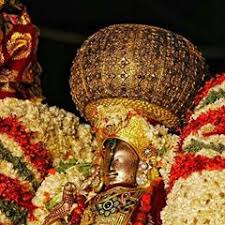
    Vaira Mudi Festival in the Tamil Calendar month of Panguni is the most important festival at this temple and attracts several thousand devotees. On the 6th day of the Brahmotsavam, Selva Pillai is adorned with a diamond crown and taken on a street procession.
    Ashta Theertotsavam during Raja Mudi Brahmotsavam in Karthigai is another popular festival.
    Thai Punarvasu festival – This is a special festival commemorating Ramanuja’s arrival in Thiru Narayanapuram on the Makara Shukla Punarvasu day
    Krishnaraja Thirunaal (9days), Aadi Pooram (for Thaayar)are a few of the other important utsavams at the ThiruNarayanan temple in Melkote.
    Prarthana Sthalam
    Childless couples who bathe in the Kalyani Pushkarani for 8 days and offer sincere prayers to ThiruNarayanan are said to be blessed with a child.
    Quick Facts:
    Moolavar : Thiru Narayanan
    Goddess : Yathu Giri Naachiyar
    Utsavar : Selva Pillai (Sampath Kumar)
    Utasava Goddess: Kalyani (Selva Nayagi)
    Temple Time : 730am-1pm, 4pm-6pm and 7pm-830pm
    Contact : S.Narasaraja Bhattar
    Contact Telephone number: 94487 54696, 94488 13124 or 08236 298 913
    How to reach
    Take 6222 Chennai Mysore Kaveri Express, Get down at Pandava Pura (715am arrival)
    Take Tumkur bound bus and get down at Jakkanahalli junction (about 15kms from Pandava Pura)
    Auto from Jakkanahalli to Melkote temple (about 5kms) will cost Rs.50/-.
    One can reach Melkote in 2 hours from Bangalore ( about 135kms) via Mandya- Jakkanahalli.

    Reference and citation.

    http://prtraveller.blogspot.in/2009/10/thiru-narayana-perumal-in.html

  • Karunanidhi To Write On Ramanujacharya

    It was both amusing and shocking to learn that the Torch bearer of Rationalism and habitual Hindu-baiter Karunanidhi is about to pen for a TV serial on the Great Hindu Philosopher Sri Ramanujacharya.

    MF Hussain,Karunanidhi and EVR..Image.jpg
    MF Hussain,Karunanidhi and EVR.

    Hindu Makkal Katchi President is reported to have met Karunanidhi and given him some books for reference!(Thamizhaka Arasial  dtd 21/3/2015)

    There is news item in The Hindu stating that,

    In an interview to The Hindu , he said the saint was a revolutionary who took religion to the masses. “He showed through his life that the oppressed and backward communities were not those to be hated and sidelined,” Mr Karunanidhi said. He added that propagating this idea was the greatest of Ramanuja’s social reforms.

    Dismissing accusations that the DMK was against Hinduism, Mr Karunanidhi said the party only opposed fundamentalists who arrogated to themselves the role of protectors of religion.’

    Yes You follow Ramanujacharya , who followed the Vedas, the Mahvakyas, who named Himself after Lakshmana, who chanted nothing but the Name of Narayana!

    What did you say?

    Rama is a Myth propagated by Brahmin Aryans  and it has to be burnt.

    If you see a Brahmin and a Snake, leave the Snake and kill Brahmin.

    பாப்பானையும் பாம்பையும் பார்த்தால் பாப்பானை அடி

    From which University did Rama take a degree in Engineering to build Rama Sethu?

    Sita stayed in Ravana’s custody for 10 months, what is the guarantee for her chastity?

    ( This noble thought was by Perarignar(?) Annadurai in his Book Kambarasam)

    How did Kunti beget children?

    Kurangu Mukathil Oru Kadavul

    ( A god with the Face of a Monkey)

    When shall we stop the Temple Car festival of  Thiagaraja?

    திருவாரூர்  தியாகராசா , உனக்கு தேரோட்டம் போதாதா

    Try writing on the Prophet after stating the fact he married a nine-year old girl or state that Jesus was born of a woman who was unmarried and write a commentary on The Bible?

    As CHO said in another context,

    In Tamil Nadu,

    Hindus have no sense of shame

    யாருக்கும் வெட்கமில்லை

    Citation.

    http://www.thehindu.com/news/national/tamil-nadu/vaishnavite-philosophersaint-ramanuja-broke-caste-barriers-says-karunanidhi/article7068531.ece

  • Sumangali Prarathanai Hoovili Habba Procedure

    Two essential ceremonies are conducted in Brahmin Households in the South.

    These are followed as a More than as one sanctioned by Sruthi or even Smriti.

    Pudavai Kalam, Sumangali Prarthanai.Image.jpg
    Pudavai Kalam, Sumangali Prarthanai.

    More is a Group of practices followed by a specific group rather than as a matter of personal choice.

    These are followed in the South of India, in the States of Tamil Nadu,Karnataka, Kerala and Andhra.

    One is Samaradhanai and the other is Sumangali Prarathanai.

    Samaradhanai is conducted before or after an auspicious occasion like Ayush Homa, Upanayana, Pilgrimage , Marriage.

    This is conducted for any auspicious occasion.

    This is conducted either before or after the event .

    In Samaradhanai , Family Deity is worshiped at Home and people are fed.

    In Sri Vaishnava Sampradaya, this is called Dhadhiyaarathanai.

    In those case where people are not sure of their Family Deity, the Pooja is offered to Lord Subrahmanya, in the case of Iyers, and in the case of Sri Vaishnavas, Lord Balaji.

    The other ceremony is the Sumangali Prarthanai.

    This again is a custom practiced and it does not find a reference in the Sruthi or Smriti.

    This function is more of sentiments practiced in the Family.

    This has to be performed, as a thumb rule, following the practices of the ancestors.

    While it is not advisable to start this practice if it has not been practiced by the ancestors, it is equally essential note that the practice is not to be discontinued if it had been in vogue in the Family.

    This is a function meant for women, married with Husband being alive.

    This has to be performed once a year for one Gothra and more than once in year should not be conducted.

    Tuesdays and Saturdays are to be avoided.

    Fridays during the Waxing of the Moon is advisable.

    Wednesdays/Thursdays are also permissible.

    Ashtami,Navami Thithis are normally avoided.

    Panchami is preferable.

    In this function the Blessings of the departed Sumangalis, those whose deaths precede the death of their husbands are sought and those who died young before getting married.

    Generally, if the daughter is getting married, the event is done before the marriage.

    In the case of a son getting married, this is performed after the marriage, with the Daughter-in-law conducting it.

    7 ladies and 2 young girls (preferably below the age of 10) are invited to participate in the function, partake the feast and receive thamboolam.


    The total number of ladies should always be in Odd numbers.

    The maximum number of ladies allowed normally is 11.

    Minimum is 5 +2.

    Advisable that unmarried Girl is about Eight Years as it is believed that she represents the Devi.


    The ladies who sit for the puja represent all the women of the family who are no more alive.

    The function is presided over by the elderly lady members of the family.

    Usually the kartha is a sumangali from the family.

    The gifts to the ladies vary among families and depend on the financial status of the kartha, very similar to the nandi sradham.

    The menu for the feast is also very similar.

    9 yds saree in silk or cotton is be bought along with a Blouse piece.

    The preferable colours are red, yellow and green.

    Invite and procedure.

    Those to be invited, kumkum, haldi, oil, shikakai, vasanai podi  are to offered at thier Home a day earlier

    On the morning of the day, wash the 9 yds saree & a blouse piece with madi (shuddam)after bath & dry.

    The Person conducting the Sumangali Prarthana should not take an oil bath.

    Kalyana kolam/Rangoli in the entrance, and semman & tie “ mavilai” at Home.

    For the pudavai kalam – put a square kolam, (padi kolam), over that keep a palakai & put kolam on that.

    In front of that, put a kolam to keep the elai.

    On both sides of the Pudavai(Sareee) kalam put kolam for 2 elais , beside for elais facing North, East is preferred next

    Fold the dry saree so that the “ pallu” comes on the top.

    The corner of the same should face N. Fold the blouse & keep on that.

    On the saree keep the following:

    A small mirror
    Oru kavuli ( 100 no:s) vethalai
    Plenty of Kali paakku
    Plenty of urundai manjal
    Nalangu manjal – (mix of haldi and chunnambu) on a vethalai
    12 bananas
    10 yds malli, kathambam or roses
    Maruthani on a vethalai
    A ball of haldi & water on a vethalai
    Chullu vella urndai in a vethalai.
    A gold chain.

    .
    In a “ kudam” – water to which cardamom powder and  dry ginger powder are added.
    One sombu( Vessel for storing water) of panakam
    One sombu of neer mor.
    Coins to give ladies with vethalai pakku
    On the kolam in front of pudavai kalam, put double nuni elai, one overlapping the other.

    Nuni should face North.

    On other kolams, place elais and Water for Drinking.

    Start before or after Rahu kalam.

    When the ladies arrive give them manjal mixed with water, to wash their legs, apply  and welcome them.
    Then give them chandanam(sandalwood paste), kumkum & flowers & ask them to take their seat near the elais.(plantain Leaf)
    Offer all items on menu to the pudavai kalam first & hthen serve clockwise to other elais.
    Show “ doopa deepam” to pudavai kalam first & then to all ladies.
    The “ conducting person” should take in the hand akshathai & flowers, sprinkle below the pallu of the saree in the pudavai kalam & pay your respects( in mind) to all the deceased sumangalis of the family.
    Show karpooram (Camphor) .
    Now offer a teaspoon of Water to the pudavai kalam and to all women in their hands.
    They are to drink it , start eating.


    Nobody should get up halfway through.
    After everybody finishes eating, again offer a teaspoon of water to thepudavai kalam & move the pallu corner to the North.
    One of the daughters in law should eat the pudavai kalam sappadu.
    After meals the ladies should be given naeer mor, panakam & chukku vellam.
    Then smear haldi on their legs and apply nalangu.(Mehendi)
    Offer flowers, maruthani, chandanam & kumkum.
    In a plate keep lot of vethalai, pakku, gundu manjal, coconut, kumkum bharani, comb, mirro, coin, 2 bananas, blouse piece – keep in their paLLU.
    Give akshathai in their hand, do namaskaram ,request them to Bless you.

    After the person who conducts has eaten, she must give the saree to a poor woman who also is asked to eat.

    The custom varies from family to family.

    Best procedure is to get Family Elders’ advice .

    Menu.

    Paruppupayasam

     Thayirpachadi

     Vella pachadi.

    vazakkai curry.

    avarai or kothavarai curry.

    Poosani Kootu .

    Pitlai(Paakalkai) .

    Mor kuzambu .

    Thani kootu.

    Kadalai paruppu sugar kosemalli .

    Paasiparuppu savoury kosemalli .

    Coriander thogayal .

    Ginger, mango pickle.

    Curry leaf thogayal.

    Rasam .

    Banana.

    Mango.

    Jackfruit .

    Ulundu Vadai .

    Sojji appam .

    Thengai sadam.

    Lemon rice .

    Kalathukku paruppu .

    Ghee .

    Curds.

    Honey.

    No Appalam or Vadams.

    Ref.

    http://kramans.blogspot.in/

  • Types Of Vaishnava Sampradayas History of Vaishnavam 3

    Types Of Vaishnava Sampradayas History of Vaishnavam 3

    Sampradaya may be translated loosely as Tradition.


    Practices that were followed are continued by successive generations at the Family level.


    Thus in Hinduism we have some practices that are common to all the Hindus and some that are group specific.


    Some Common practices  are,


    Waking up early in the morning,


    Taking bath and drawing Rangoli in  front of the House,


    Doing Pooja,


    Performing Sandhyavandan, in the case of Brahmins,


    Performing pooja and offering Naivedya to God,


    Cook only after taking bath,


    Perform basic samskaras like Namakarana, Karna Bhooshana, Upanayana, Marriage, Garbhadhana, Seemantha,Anthima Samaskaras.


    But the way of performing them and some practices distinguish one group from another, though in essence all are Hindus.


    The two sects in Hinduism, Shaiva and Vaishnava, the former worships Shiva, the later Vishnu,the Samapradayas differ.


    What is Vaishava Sampradaya?


    Basically Vaishnavas worship Vishnu to the exclusion of all other Deities, though Puranas insist that this is not correct.


    Even among the Vaishnavas, there are different Sampradayas.


    They are four in number traditionally.


    Sri Sampradaya which is the Sampradaya of Lakshmi
    Philosophy: Vishishtadvaita (“Qualified Monism/Non dualism”), espoused by Chidachida Visishtam Ramanujacharya
    See Sri Vaishnavism, Vaikhanasa, Ramanandi Sect, Swaminarayan.
    Brahma sampradaya
    Philosophies: Dvaita (“dualism”), espoused by Madhvacharya, and Achintya Bheda Abheda (literally “inconceivable difference and non-difference”).
    Rudra sampradaya
    Philosophy: Shuddhadvaita (“pure nondualism”), espoused by Vishnuswami and Vallabhacharya.
    Kumara-sampradaya
    Philosophy: Dvaitadvaita (“duality in unity”), espoused by Nimbarka.

    In South India.


    1. The Iyengars, who follow the Sri Vaishnava Vishistadvaita philosophy of Asuri Ramanujacharya. The Iyengars are further divided into the Vadakalai-i.e. the northern school, and Thenkalai or southern school. Both these sects adhere to the Pañcaratra agama, in temples.

    These two sects evolved about 200 years after Ramanuja and differ on 18 points of doctrine. The founder of the Vadagalai sect is Swami Vedanta Desika, and the Tengalai sect is Manavala Mamuni.[26] But both schools have a common Guru Parampara prior to the division. The Sri Vaishnavas use both the Sanskrit veda as well as the Tamil divyaprabandham in temple worship.

    1. The Madhvas, who follow the Sadvaishnava Dvaita philosophy of Madhvacharya.
    2. The Vaikhanasas, who are primarily an ancient community of temple priests, who use the Vaikhanasa Agama in temple worship. They use Sanskrit exclusively in temple worship.

    But as I indicated in my post Vadakalai, Thenkalai has no sanction of the Vedas, there is no sanction for these divisions in the Vedas.


    The Reality is One but people practice different methods to realize it , period.


    Squabbles are not allowed, if one is a Hindu.

    Citation.


    http://en.wikipedia.org/wiki/Vaishnavism#Vaishnava_sampradayas