Tag: Turkey

  • Turkey Sun God  Mitra Shiva Kingdom

    Turkey Sun God Mitra Shiva Kingdom

    Considering the fact that,

    There was Sanatana Dharma in the south of India much before the Indus/Sarasvathi Civilization,

    Shiva is described in detail in the Ancient Tamil Classics,

    Sage Agastya ,along with Shiva founded the Tamil language,

    The present geographical area of Syria,Lebanon,Jordan and Turkey was a part of  Lemuria/MU of the Tamils,

    The first Man, Manu,Satyavrata/ Vaivasvatha Manu was a Dravidian King,

    He meditated near Madagascar,

    He moved to Ayodhya in the north ,along with his son,who later founded the Ikshvaku Dynasty,

    Lord Rama refused to fight against the Lemurians quoting his Lemurian ancestry,

    The ancient Tamil Kings had a flourishing trade relationship with Turkey,


    Shiva,along with his son Ganesha moved towards the west from the south of India because of a Tsunami,which incidentally forced Manu to move to North,

    Shiva temple is found in Lebanon,

    Tamil city is found in  Sumeria,

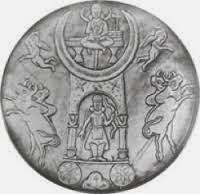
    Mitra ,deity. Image
    Mitra,a name of son God,Surya

    ‘1.Lord Rama’s Chapel was found in UR, Iraq.*

    2.A burial ground called as Nagar is fond in Syria. It is called Tel Brak now.

    3.Idols of Rama,Sita and Lakshmana are found.*

    4.Ancestors of the Syrians were the Halaf and Ubaid.

    They date back to 6100 BC.

    They had connection with the Tamils and this is reflected in the ruins of  Nagar.*

    These people traded with the Tamils.

    ”Naram-Sin traded with Meluhha (almost certainly corresponding to the Indus Valley civilization), and controlled a large portion of land along the Persian Gulf. He expanded his empire by defeating the King of Magan at the southern end of the Persian Gulf, and conquering the hill tribes to the north in the Taurus Mountains.

    5.Akkadian’s( Forefathers of the Sumerians) Moon God was Naram Sin, Narasimha.*

    6.There are repeated references in the Sumerian/Akkadian language to Meluuha.’

    Ancient Tamil Brahmi Scripts were found in Oman and Egypt.

    These facts establish that,

    The Tamils were an advanced civilisation by 2200 BC(Akkadian Empire)

    The Hindu Gods and Goddesses were worshiped in Sumeria,

    Names of Lord Rama and Bharata were found in the Kings List of Sumeria.

    * Read My posts on This.’

    Source. Tamil city in Sumeria

    Lord Rama is mentioned in Sumerian Kings List.

    The traces of Shiva are found everywhere from the Middle east to the Arctic!

    The Chola dynasty traces its origins to ikshvaku dynasty of Rama.

    The story of Chola King Sibi is narrated in the Vishnu Purana, as the ancestor of Rama.

    Apart from the evidence of Hitties being influenced by the Tamils, it might be possible that the Cholas were in Hittie Kingdom,possibly they had a hand in forming the Hittie Empire.

    This is a speculation I have in the light of many of the Hitties customs and the depiction of a chariot  running over a man.

    In the Tamil Classics, King Manu Needhi Chola ran his son down by his chariot because his son ran over a calf and because the cow had complained of this to him by ringing the bell set up by the king for the people to let him know of their problems!


    Shiva city.

    It wasn’t until explorer Charles Texier stumbled upon ruins he had hoped belonged to an ancient Roman city that history would gradually begin to allow the Hittites to take their rightful place. Texier made his discovery in the isolated village of Bogazköy, in central Anatolia, roughly half way between Ankara and Sivas. The year was 1834. Though he didn’t know it at the time, he had in fact discovered the imperial Hittite city of Hattusa. However, the road to understanding the Hittites would prove to be a long one.

    Stones covered with mysterious hieroglyphs were being discovered in northern Syria and all over Anatolia and they seemed to relate to the hieroglyphs found at the Hattusa site. Archaeologists were beginning to consider the possibility that these hieroglyphs belonged to an ancient forgotten empire. In 1880, English Assyriologist Archibald Sayce shocked the world with his announcement that this empire and the Hittites of the Old Testament were one and the same people.

    Excavations at the site did not start until 1906, and tablets found in the Hittite’s cuneiform language revealed a surprising twist. The language of the Hittites belonged to the Indo-European languages with the Hittite word for water (‘watar’) for instance uncannily resembling English and German, leading to speculation that the Hittites may originally have migrated from Europe. Other theories, however, claim that Indo-European languages originated elsewhere, perhaps even in Anatolia itself. Whatever the truth may be, English and a host of other languages can thus be traced back to a single root hidden somewhere in the darkness of prehistory..

    ‘Excavations at a mound known as Topraktepe indicate Hittite settlement in the area as early as 2600 BC, though little is known of Sivas’ history prior to its emergence in the Roman period. In 64 BC as part of his reorganization of Asia Minor after the Third Mithridatic War, Pompey the Great founded a city on the site called “Megalopolis”. Numismatic evidence suggests that Megalopolis changed its name in the last years of the 1st century BC to “Sebaste”, which is the feminine form of the Greek name corresponding to Augustus. The name “Sivas” is the Turkish version deriving from the name Sebasteia, as the city was known during late Roman empire.

    Shiva city in Turkey

    Shiva connection in Haran in Turkey, Murugan was worshiped in Iraq,Narasimha and Tamil connection in Syria, Lord Rama’s name in Sumeria’s King List.

    Now on Gobekli Tepe, the remains in Turkey has a Temple, Burial /worship Ground.

    Gobekli Temple built by Brahmins

    Mittanai Mitra Kingdom.
    Mitanni (Mitranya Desa) appears in history in 1480 BCE, when Parrattarna (Pratardhana) was in control of Aleppo in Syria , By the end of 15th century BCE, Saushatar brought Assyria under Mitannian control. Tushratta was assassinated by his son in 1340 BCE. He was the last king of independent Mitanni. His kingdom was destroyed by the Hittites and Assyrians. A document from the Hittite capital Hattusa records a treaty in which Tushratta’s son Shattiwaza is recognised as the ruler of Mitanni as a Hittite vassal. Mitanni’s capital was called Washukanni (Vedic God Vasu) .
    A powerful Hurrian (Surya Vamsa; Hurrian=Suryan)) state in north Mesopotamia and Syria (named after Surya, Hindu sun god) , Mitanni is first mentioned in an Egyptian tomb inscription dating to the early the fifteenth century BCE and last attested at the time of Assyrian king Tiglath-pilesar 1115—1077 BCE.

    The name Mitanni comes from a personal name maiita (MITRA for Sun) known from Nuzi In Iraq. Since Bogazkoy inscription mentioned Mitra in Mitannian Peace Treaty, there is no doubt that it denotes MITRA, the Vedic God. Hurriya is also Surya=Sun=Mitra.’

    Source. https://tamilandvedas.com/2014/10/11/hindu-kings-who-ruled-syria-and-turkey/

    In a treaty between the Hittites and the Mitanni, the deities Mitra, Varuna, Indra, and Nasatya (Ashvins) are invoked. Kikkuli’s horse training text includes technical terms such as aika (eka, one), tera (tri, three), panza (pancha, five), satta (sapta, seven), na (nava, nine), vartana (vartana, turn, round in the horse race). The numeral aika “one” is of particular importance because it places the superstrate in the vicinity of Indo-Aryan proper as opposed to Indo-Iranian or early Iranian (which has “aiva”) in general.

    Another text has babru (babhru, brown), parita (palita, grey), and pinkara (pingala, red). Their chief festival was the celebration of the solstice (vishuva) which was common in most cultures in the ancient world. The Mitanni warriors were called marya, the term for warrior in Sanskrit as well; note mišta-nnu (= miẓḍha,~ Sanskrit mīḍha) “payment (for catching a fugitive)”.

    Sanskritic interpretations of Mitanni royal names render Artashumara (artaššumara) as Arta-smara “who thinks of Arta/Ṛta”, Biridashva (biridašṷa, biriiašṷa) as Prītāśva “whose horse is dear”, Priyamazda (priiamazda) as Priyamedha “whose wisdom is dear”,Citrarata as citraratha “whose chariot is shining”, Indaruda/Endaruta as Indrota “helped by Indra”, Shativaza (šattiṷaza) as Sātivāja “winning the race price”, Šubandhu as Subandhu “having good relatives”, Tushratta (tṷišeratta, tušratta, etc.) as *tṷaiašaratha, Vedic Tvastr “whose chariot is vehement”

    Source.https://en.m.wikipedia.org/wiki/Mitanni


    Rulers of Mittani Empire.

    The first king was Shuttarana

    His dynasty followed the Hindu/Vedic custom of naming the child after  paternal Grandfather.

    We have Kirata city in Turkey.

    Full Name: Kirata

    Primary Country Code: TU (Turkey)

    First-order administrative division code: 00 (Turkey (general) )

    Region Font Code: 4 (Russia/ Central Asia)

    Unique Feature Identifier: -753482

    Unique Name Identifier: -1087078

    Latitude in decimal degrees: 37.733333

    Longitude in decimal degrees: 44.016667

    Kirta (1500 BCE) = Kreeta/Crown or Kirti=Fame
    Shuttarna = Sudhana or Sudharsana (Gautama Buddha’s father name was Sudhodana)
    Paratarna = Pratardhana in Vishnu Sahsranama
    Shaushtatara = Suacadhara (Pure?)
    Artatama = Like Rudra Daman.
    Shuttarna II
    Artashumara = Artha Kumara
    Artatama II
    Shuttarna III
    Shattivaza/ Kirtiwasa = Sathya vakya, Sathya Vacha, Kirti Vacha, Krittivasan is name of Lord Shiva
    Shattuvara= Satvavara or Sathyavaran
    Wasashatta = Vasu satva or Sathya
    Shattuara II =

    Shiva is called Kirata,Hunter.


  • Sivas City Turkey Hinduism Tamil Manu Needhi Chola

    Sivas City Turkey Hinduism Tamil Manu Needhi Chola

    I have written articles on the connection between Anatolia,(Asia Minor), Mesopotamia, Sumeria and Babylon.

    They are,

    Hindu kings of Iraq, Turkey, Syria, Lebanon, Egypt and Italy,

    Mitanni (/mɪˈtæni/; Hittite cuneiform KUR URUMi-ta-an-ni; alsoMittani Mi-it-ta-ni) or Hanigalbat (Assyrian Hanigalbat, Khanigalbatcuneiform Ḫa-ni-gal-bat) or Naharin in ancient Egyptian texts was a Hurrian-speaking state in northern Syria and southeast Anatoliafrom ca. 1500 BC–1300 BC. Founded by an Indo-Aryan ruling class governing a predominantly Hurrian population, Mitanni came to be a regional power after the Hittite destruction of Amorite[1] Babylon and a series of ineffectual Assyrian kings created a power vacuum in Mesopotamia.

    The Mittanni was in northern Mesopotamia , roughly from 1500-1300 BC.

    At its height the empire extended from Kirkuk (ancient Arrapha) and the Zagros Mountains in the east through Assyria to the Mediterranean Sea in the west.

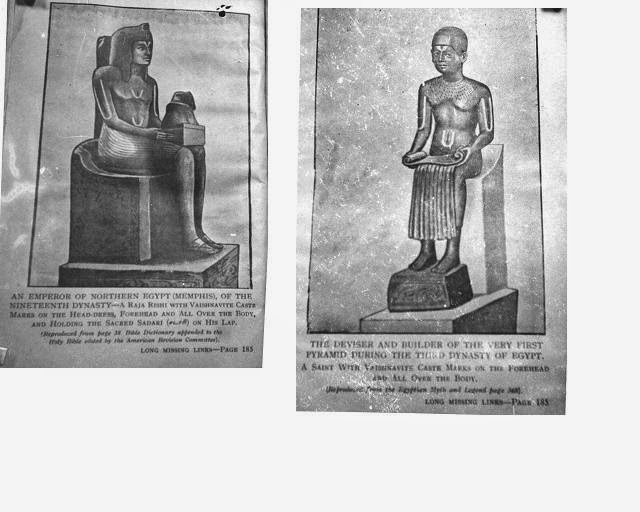
    …These Kings and evena Roman Emperor sported Thiruman, The Vaishnavite marks on their Body.

    Mittani, Hitties

    I had also written on the migration of Shiva with his son Ganesha westwards from the south of Vindhyas, because of a Tsunami.

    This was the time Lord Rama’s ancestor Satyavrata Manu migrated to Ayodhya .

    Satyavrata manu’s son Ikshvaku founded the Sola dynasty, Ikshvaku.

    The traces of Shiva are found everywhere from the Middle east to the Arctic!

    The Chola dynasty traces its origins to ikshvaku dynasty of Rama.

    The story of Chola King Sibi is narrated in the Vishnu Purana, as the ancestor of Rama.

    Apart from the evidence of Hitties being influenced by the Tamils, it might be possible that the Cholas were in Hittie Kingdom,possibly they had a hand in forming the Hittie Empire.

    The Hittites relied on their mastery of chariot warfare. Resembles Manuneedhi Chola, Tamil King of Solar Dynasty
    The Hittites relied on their mastery of chariot warfare. Resembles Manuneedhi Chola, Tamil King

    This is a speculation I have in the light of many of the Hitties customs and the depiction of a chariot  running over a man.

    In the Tamil Classics, King Manu Needhi Chola ran his son down by his chariot because his son ran over a calf and because the cow had complained of this to him by ringing the bell set up by the king for the people to let him know of their problems!

    Monument in Siva, Turkey.jpg Monument in Siva, Turkey.

    It wasn’t until explorer Charles Texier stumbled upon ruins he had hoped belonged to an ancient Roman city that history would gradually begin to allow the Hittites to take their rightful place. Texier made his discovery in the isolated village of Bogazköy, in central Anatolia, roughly half way between Ankara and Sivas. The year was 1834. Though he didn’t know it at the time, he had in fact discovered the imperial Hittite city of Hattusa. However, the road to understanding the Hittites would prove to be a long one.

    Stones covered with mysterious hieroglyphs were being discovered in northern Syria and all over Anatolia and they seemed to relate to the hieroglyphs found at the Hattusa site. Archaeologists were beginning to consider the possibility that these hieroglyphs belonged to an ancient forgotten empire. In 1880, English Assyriologist Archibald Sayce shocked the world with his announcement that this empire and the Hittites of the Old Testament were one and the same people.

    Excavations at the site did not start until 1906, and tablets found in the Hittite’s cuneiform language revealed a surprising twist. The language of the Hittites belonged to the Indo-European languages with the Hittite word for water (‘watar’) for instance uncannily resembling English and German, leading to speculation that the Hittites may originally have migrated from Europe. Other theories, however, claim that Indo-European languages originated elsewhere, perhaps even in Anatolia itself. Whatever the truth may be, English and a host of other languages can thus be traced back to a single root hidden somewhere in the darkness of prehistory..

    ‘Excavations at a mound known as Topraktepe indicate Hittite settlement in the area as early as 2600 BC, though little is known of Sivas’ history prior to its emergence in the Roman period. In 64 BC as part of his reorganization of Asia Minor after the Third Mithridatic War, Pompey the Great founded a city on the site called “Megalopolis”. Numismatic evidence suggests that Megalopolis changed its name in the last years of the 1st century BC to “Sebaste”, which is the feminine form of the Greek name corresponding to Augustus. The name “Sivas” is the Turkish version deriving from the name Sebasteia, as the city was known during late Roman empire. Sebasteia became the capital of the province of Armenia Minor under the emperorDiocletian, was a town of some importance in the early history of the Christian Church; in the 4th century it was the home of Saint Blaise and Saint Peter of Sebaste, bishops of the town, and of Eustathius, one of the early founders of monasticism in Asia Minor. It was also the place of martyrdom of the Forty Martyrs of Sebaste, also 4th century. Justinian I had a fortified wall around it rebuilt in the 6th century…

    …’Historian Christopher Scarre describes Hattusa as “a vast fortress-city sprawling over the rocky terrain, with craggy citadels and elaborate temples. It became the center of a powerful empire that covered not only most of Anatolia but also at times extended far to the south, into Syria and the Levant” (206). Hattusa was originally founded by the Hatti (an aboriginal tribe of Anatolia) in 2500 BCE, and their culture may have provided the basis for that of the Hittites.  This very important complex and those who built it along with their vast empire, however, remained almost unknown until their writings were discovered, first by the Irish missionary William Wright  in 1884 CE, and then by the German archaeologist Hugo Winckler in 1906 CE. By the year 1912 CE, Winckler “had recovered 10,000 clay tablets from the Hittite royal archives” (Scarre & Fagan, 206).  These tablets, on which they had recorded their history and transactions, were deciphered relatively quickly.

    ..

    Sivas (Armenian: Սեբաստիա; Latin: Sebastia, Sebastea, Sebasteia, Sebaste) is a city in central Turkey and the seat of Sivas Province. According to a 2011 estimate, its urban population is 425,297.

    The city, which lies at an elevation of 4,193 feet (1,278 m) in the broad valley of the Kızılırmak river, is a moderately-sized trade center and industrial city, although the economy has traditionally been based on agriculture. Rail repair shops and a thriving manufacturing industry of rugs, bricks, cement, and cotton and woolen textiles form the mainstays of the city’s economy. The surrounding region is a cereal-producing area with large deposits of iron ore which are worked at Divriği.

    Sivas is also a communications hub for the north-south and east-west trade routes to Iraq and Iran, respectively. With the development of railways, the city gained new economic importance as junction of important rail lines linking the cities of Ankara,Kayseri, Samsun, and Erzurum. The city is linked by air to Istanbul.

    Citations.

    http://www.ancient.eu/hittite/

    https://en.wikipedia.org/wiki/Sivas

    http://www.turkeytourism.in/cities/city_c.php?id=321

  • World’s Oldest Temple Gobekli Turkey Built By Brahmins

    I have posted articles on the connection between Sanatana Dharma, called as Hinduism, and Sumeria and Mesopotamia.

    Shiva connection in Haran in Turkey, Murugan was worshiped in Iraq,Narasimha and Tamil connection in Syria, Lord Rama’s name in Sumeria’s King List.

    Now on Gobekli Tepe, the remains in Turkey has a Temple, Burial /worship Ground.


    Scroll down for Videos

    “Six miles from Urfa, an ancient city in southeastern Turkey, Klaus Schmidt has made one of the most startling archaeological discoveries of our time: massive carved stones about 11,000 years old, crafted and arranged by prehistoric people who had not yet developed metal tools or even pottery. The megaliths predate Stonehenge by some 6,000 years. The place is called Gobekli Tepe, and Schmidt, a German archaeologist who has been working here more than a decade, is convinced it’s the site of the world’s oldest temple’

    And

    Nevalı Çori was an early Neolithic settlement on the middle Euphrates, in Şanlıurfa Province, Southeastern Anatolia, Turkey. The site is famous for having some of the world’s oldest known temples and monumental sculpture. Together with the earlier site of Göbekli Tepe, it has revolutionised scientific understanding of the Eurasian Neolithic.

    The settlement was located about 490 m above sea level, in the foothills of the Taurus Mountains, on both banks of the Kantara stream, a tributary of the Euphrates.

    Note the name Kantara, name of Kandhari, wife of Dhritarashtra,Mahabharata.

    Nevali Cori may be a distortion of ‘Na-Valay-Akriti’ or “Na-Valay-Akrit’.

    Nevali Cori ruins, Brahmin with tuft.jpg
    Nevali Cori ruins, Brahmin with tuft.

    ‘Na’ (न) as in ‘Not’. ‘Valay’ (वलय) is Sanskrit for ‘Bracelet-like or Circular’. ‘Akriti’ (आकृति) is ‘shape’ or ‘design’. Nevali-Cori may be ‘Na-Valayakrit’ (न-वलयीकृत) which means ‘Not shaped like a bracelet or not-circular ‘.Nevali Cori is said to be closest in design to Kalasasaya Temple [Sanskrit: Kala (Time) + Sasaya (Good Wish or to be desired)]. Kalasasaya Temple is also rectangular in shape.

    Nevali Cori may also be a distortion of the Sanskrit ‘naval’ (नवल) meaning ‘new’ and ‘akriti’ (आकृति) meaning ‘shape’ or ‘design’ and could be a reference to an architectural design which was new and different from what was prevalent at the time.

    The Yazdis.

    The Yazidis perform a form of Sandhyavandana.

    Yazidis have five daily prayers:[63]

    Nivêja berîspêdê (the Dawn Prayer), Nivêja rojhilatinê (the Sunrise Prayer), Nivêja nîvro (the Noon Prayer), Nivêja êvarî (the Afternoon Prayer), Nivêja rojavabûnê (the Sunset Prayer). However, most Yezidis observe only two of these, the sunrise and sunset prayers.

    Worshipers should turn their face toward the sun, and for the noon prayer, they should face toward Laliş. Such prayer should be accompanied by certain gestures, including kissing the rounded neck (gerîvan) of the sacred shirt (kiras). The daily prayer services must not be performed in the presence of outsiders, and are always performed in the direction of the sun. Wednesday is the holy day, but Saturday is the day of rest.[63][64] There is also a three-day fast in December.’

    The Yazidis worship Malak Ṭāʾūs , Peacock and Peacock is the vehicle of Lord Subrahmanya.

    For details on this, read my post on this.

    Sapta Rishis in Yazidis.

    Hinduism has seven  Rishis and they are entrusted with the task of laying down rules for each Aeon, Yuga.

    Yazidis believe in ,

    “Two key and interrelated features of Yazidism are: a) a preoccupation with religious purity and b) a belief in metempsychosis. The first of these is expressed in the system ofcaste, the food laws, the traditional preferences for living in Yazidi communities, and the variety of taboos governing many aspects of life. The second is crucial; Yazidis traditionally believe that the Seven Holy Beings are periodically reincarnated in human form, called a koasasa.”

    Citation.

    https://ramanisblog.in/2015/01/27/sandhyavandan-sapta-rishis-in-islamic-tribe-yazidis/

    http://www.smithsonianmag.com/history/gobekli-tepe-the-worlds-first-temple-83613665/?=&preview=&page=1&no-i=

    May 2026
    M T W T F S S
     123
    45678910
    11121314151617
    18192021222324
    25262728293031

    Gobekli Tepe, located in southeastern Turkey, is an ancient archaeological site that has been described as the world’s oldest temple. It is a place of immense historical significance, predating Stonehenge by around 6,000 years. The site consists of massive carved stones arranged by prehistoric people who did not have metal tools or pottery.

    The discovery of Gobekli Tepe has revolutionized our understanding of the Neolithic period and has challenged traditional archaeological beliefs. The German archaeologist Klaus Schmidt, who has been working at the site for over a decade, believes that Gobekli Tepe was a place of worship and rituals.

    Nevali Cori is another important archaeological site in Turkey, known for its ancient temples and monumental sculptures. It is located in the Şanlıurfa Province and, like Gobekli Tepe, provides valuable insights into the Eurasian Neolithic period.

    The connection between Sanatana Dharma (Hinduism) and these ancient civilizations is an intriguing topic. Some theorists propose connections between Hindu deities and the worship of certain ancient gods in Sumeria, Mesopotamia, and other regions. For example, references to Shiva, Murugan, Narasimha, and Lord Rama have been found in ancient texts and inscriptions in these areas.

    While it is fascinating to explore these connections, it’s important to approach such claims with caution. Archaeological and historical research is ongoing, and definitive conclusions can only be drawn with solid evidence and scholarly consensus.

    If you are interested in further reading on this topic, you can refer to the blog post on Ramanisblog that provides additional insights into the connections between the Yazidis, Sapta Rishis, and Sandhyavandana rituals in Hinduism.

    Sources:

    Above summary is by Jetpack AI

  • Muslim Indian, Hindu Indian,Chetan Bhagat Muslim Reaction

    There is an article by Chetan Bhagat in The Times of India, on Islam and Hinduism, lamenting that these Religions are to introspect about Liberalism ans have to change.

    True. there is no doubt.

    But the choicest derision is reserved for Hinduism while Islam is handled with kid gloves.

    He says ‘we had no opportunity to learn more about Hinduism…there are Hindus piercing ears with javelin..”

    Mr.Bhagat, your ignorance is not Hinduism’s responsibility,

    If you do not know about a Religion ‘ better keep your mouth shut,;make people wonder if you are an idiot than to open your mouth and confirm that you are one.

    Have you heard of Swami Vivekananda, Ramakrishna Paramahamsa,Sathya Sai Baba to cite a few among the latest?

    Or have you heard of what Muslims do during Muharram, beating their chests,cutting their skins with knives?

    Do you have enough guts to talk of Prophet’s marrying a widow or his marrying a child of 9?

    Or do you know what the Vedas are?

    If you do not know , please try to understand and do not sling mud without knowing the subject.

    If you want to know what Hinduism is, read Swami Vivekananda’s works,(16 volumes) ,provided you can read some thing brainy.

     Turkey is liberal?

    Check your current knowledge of world affairs.

    Mr. Bhagat, Hinduism is not pulp fiction.

    Better stick to what you think you know,even there you are a writer for the prurient.

    Leave it at that.

    *For your information , I am providing a letter from the Muslims, India on yoiur article.

    That is for your soft appraocah to Islam.

    Defenders of Afzal Guru on par with Hinduism?

    Imagine their reactions if you had included the points I have mentiuoned.!

     Story:Muslim Indian, Hindu India

    Let us begin with Hinduism. There is a section of Hindus who believe in mutilating themselves to please the Gods. They poke their cheeks with javelins. They pull chariots with metal hooks dug into their back. Hindu sadhus live the life of ascetics….

    So let’s pose a question — what is a Hindu supposed to be? Is the cheek-poking devotee a benchmark? Is a sadhu the ideal Hindu? Or is a regular middle-class person, working in a bank, consuming chicken, drinking beer and occasionally visiting a temple also a good Hindu?…

    For instance, take Saudi Arabia where Muslims are 97% of the population. Saudi legal system does not work on a separate constitution, but involves a strict, conservative interpretation of sharia law. Examples of Saudi laws include the need for women to cover up in public, a woman’s testimony being invalid (or carrying much less weightage than that of a man’s), and punishments such as beheadings, lashing and stoning for a variety of crimes.

    The laws are imposed strictly. In a fire at a Saudi school, firemen allegedly did not let girls leave the burning building because they were not covered enough. The girls died. Many criticise the Saudi system, while others praise it for leading to low crime.

    Let us take one more example of Turkey. Vying for EU membership, Turkey grants large amounts of personal freedom to its citizens. Religion and politics are separate. A secular constitution governs the legal system. Astonishingly, despite a 99% Muslim population, wearing the hijab is banned in universities and public or government buildings (although this has been recently relaxed) as some view it as a symbol of religion, which needs to be separated from state institutions.

    Other Muslim-majority countries are somewhere in the middle. Malaysia is somewhat liberal, Iran isn’t, Pakistan is in the middle, etc. Which brings us back to the same question. Who is more or less Muslim in the above examples?

    We are sorry, Mr. Bhagat, but the ‘’democratic republic’’ you talk of is not so democratic. If it were so, Afzal Guru wouldn’t have been executed to ‘’satisfy the collective conscience of the nation’’. Muslim youth would not have fallen prey to minority witch-hunting, and their killers not decorated with gallantry awards. Adivasis in Chhattisgarh, Jharkhand and Orissa would not have been ripped of their fundamental rights to live with dignity. Dalit poets would not have been falsely charged under sedition laws.

    Loving one’s nation is well and good, but being blinded by patriotism is not. Why do Indian Muslims always have to prove their allegiance to India? Why can’t they also be critical of their country?

    The party whose path you are treading has had Indian Muslims pass through too many Sita-like ordeals of fire, Agni Pariksha.  You may have the privilege to turn a blind eye to the post-Babri Masjid Demolition violence, the Gujarat pogrom, but many others don’t. How then do you think a leader who doesn’t even have the integrity to apologize for his complicity in the Gujarat pogrom represent Muslim youth’s aspirations for ‘’scientific way of thinking, entrepreneurship, empowerment, progress’’ and above all, ‘’personal freedoms’’? And just by the way, have you heard of the word, ‘Justice’?

    http://blogs.timesofindia.indiatimes.com/The-underage-optimist/entry/being-hindu-indian-or-muslim-indian

    http://kafila.org/2013/07/03/a-letter-to-chetan-bhagat-from-indian-muslim-youth/

  • Islam Halal Sex Shop Online No Sanction In Islam

    A Halal Sex Shop has been opened in Turkey and the Anonymous founders have declared that the Sex Shop selling Sex toys are in compliance with Islam and these  Sex Toys are ‘Halal”

    This service(?) is Online and there are separate Links for Males and Females.

    Sex issues can be discussed Online and one can check whether a Sex activity is sanctioned by Islam.

    Sex Shop Islam.
    Halal Sex Shop,Islam.

    But I find that there is no sanction for Sex Toys in Islam.

    “NEXT, in response to your question about SEX TOYS;

    Masturbation does not necessarily mean using the hands. Whether it is done using the hand or not, or by touching the private part or not, it is still haraam. The scholars have stated this clearly, including Ibn ‘Aabideen in his commentary on al-Durr al-Mukhtaar. Some people may do that using a machine or dummy etc, which are known as “SEX TOYS”. This is also not permitted. Shaykh Ibn ‘Uthaymeen (may Allaah have mercy on him) said that masturbation using the hands or otherwise is haraam according to the evidence of the Qur’aan and Sunnah, and sound opinion, etc….

    Fataawa al-Shaykh Ibn ‘Uthaymeen, ed. By Ashraf ‘Abd al-Maqsood, 2/931-932.

    Also, you have to keep away from everything that leads to a provocation of desire, for these means will no doubt ultimately lead you to fall into doing the “Secret Habit” i.e. Masturbation, which is Haraam. What counts is doing that which leads to a climax, whether that is done directly by the hand or by using a machine whose vibrations lead to a climax. So strive against yourself (Jihaad al-Nafs) and do not do that. You must keep away from and avoid places where you may mix with men, because that is haraam according to sharee’ah, because the Shaytaan will make you commit evil actions so long as you meet with them every day, especially since your husband is absent. You have to get in touch with your husband and tell him that he has to be there so that you will not end up doing something haraam. ”

    https://www.facebook.com/112AnsarAllah/posts/322568527812000

    You can follow conversations on this subject here.

    http://www.interfaithshaadi.org/blog/?p=4699

    http://helalsexshop.com/