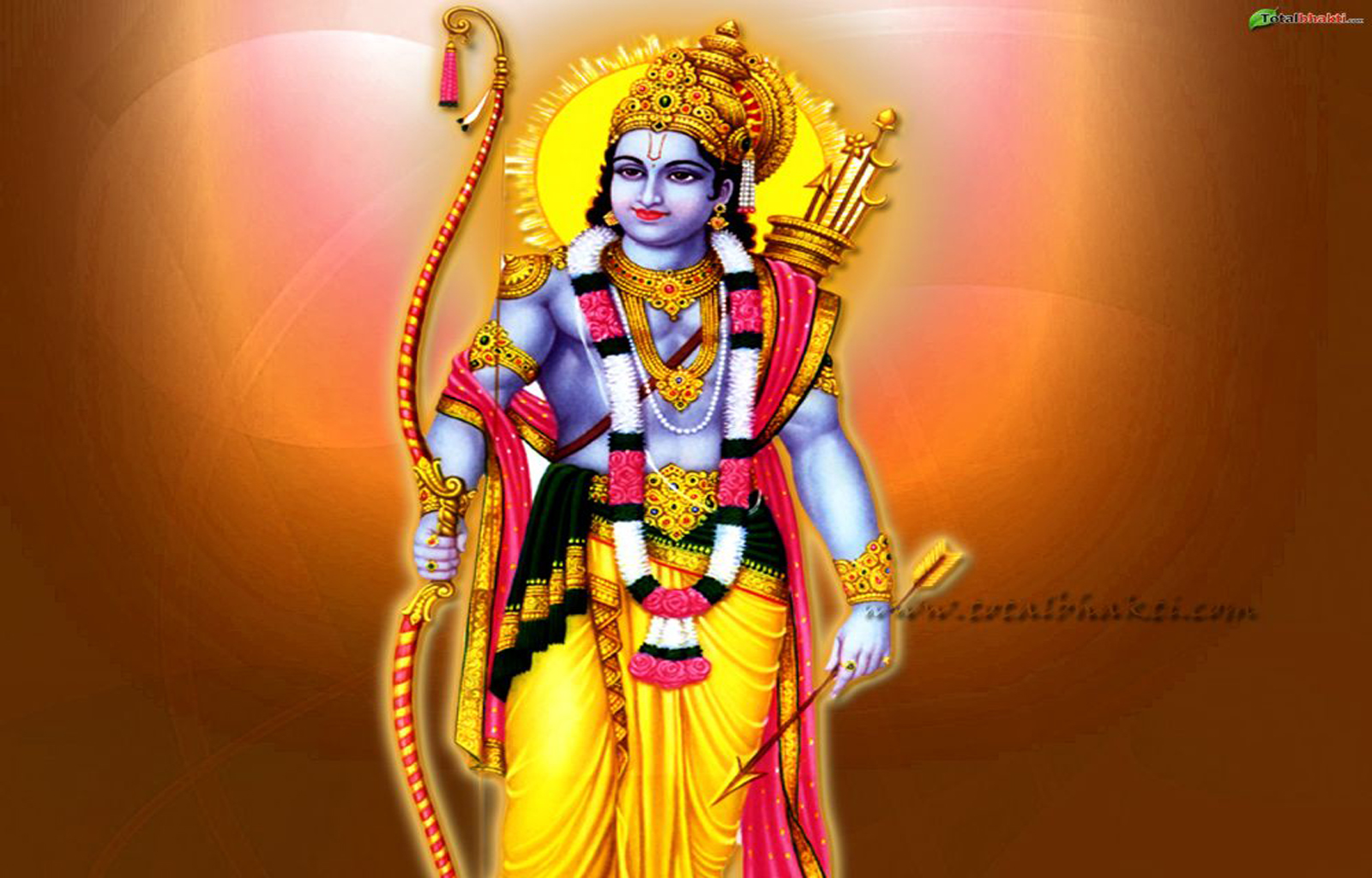
Tag: Sri Rama Navami

  • No Ram Mandir In Ayodhya,The Hindu Wendy Doniger

    No Ram Mandir In Ayodhya,The Hindu Wendy Doniger


    It takes audacity of the best/worst kind to deny a fact outright.

    The intention to denigrate Hinduism and its culture started from Islamic period and it was carried on in a more subtle and systematic manner by the British firstly by publishing ‘First History of India’ by James Stuart Mill from England who without even visiting during the 12 years it took him to write the ‘History’ where he begins by asserting that the world did not begin before 4000 years ago and Indians were barbarians and steeped in superstitions.

    supreme-court-of-india-ram-temple

    Our Secular Indians of post Independent India did not even flinch.

    Many of them carried and are carrying on in the path..


    Wendy Doniger , author of Alternate History which ridicules Hindus and insults Krishna, faced flak from India, of course, excepting from the Sickularists.

    Having been shown the Book where it deserved to be, in the Dustbin, it looks as though she has taken recourse to denigrate Indians in the web.

    This gem of a piece seems to have been written in http://www.vichaar.com and is quoted by the site https://wondersofpakistan.wordpress.com/2009/03/27/the-battle-over-indian-history/

    Check the site and you will know what I am talking about.

    The vichaar site does not seem to work.!

    The  article titled Battle over Indian History quoted by a site extolling Pakistan is, to say the least, is disgusting and speaks of intellectual dishonesty and moral depravity.

    When one attempts to write a History one is expected to be careful and that too when you write about a country about which you are unfamiliar with its culture and its History.

    You should know the language and study and if you lazy or an illiterate you should get some one who can read and study.

    There is no evidence of Rama Temple and it is a story.

    Really!


    Check out the Link

    https://ramanisblog.in/2012/04/05/ramayana-lord-ramas-exile-date-and-other-details/

    And follow the Related posts or

    Still better,

    Google Rama’s date+ramanan50

    ‘https://ramanisblog.in/2012/04/05/ramayana-lord-ramas-exile-date-and-other-details/

    There are authentic sites about the Temple of Rama in Ayodhya which give out proof about Ram Mandir , Ayodhya.

    Please check them.

    What is painful is the similar attitude shown by some Indians and of course The Hindu, Indian Newspaper which has published them,


    Though I have been writing  on dating the Ramayana, Mahabharata and other Indian texts, I have not written on Ayodhya Temple’s date.

    The Sri Rama Navami, the Birth date of Lord Rama falls on 15 April 2016.

    Rama Navami Puja Muhurta = 11:05 to 13:33
    Duration = 2 Hours 27 Mins
    Rama Navami Madhyahna Moment = 12:19
    I will be writing in detail a series of Articles on Ayodhya Ram Mandir and this shall be my offering to Lord Rama for His Birth Day this year

    “It’s not a logical judgement with so many parts going 2-1. One does not accept the logicality of the judgement,” said Irfan Habib, a noted historian and a former Chairman of the Indian Council of Historical Research who earlier taught at the Aligarh Muslim University.

    He noted that the verdict seemed to legitimise the events of 1949, when an idol was placed inside the mosque, by constant references. On the other hand, by minimising any mentions of the demolition of the Babri Masjid in 1992, the court seemed to be disregarding it, he said.

    He also expressed surprise that two judges questioned the date of construction of the Babri Masjid, as well as the involvement of emperor Babar or his commander Mir Baqi, since there had been clear inscriptions to this effect before the demolition. “Things that are totally clear historically, the court has tried to muddy,” he said.

    “The historical evidence has not been taken into account,” said D.N. Jha, history professor at the Delhi University. Noting the judgement’s mention of the “faith and belief of Hindus” in reference to the history of the disputed structure, Dr. Jha asked why the court had requested an excavation of the site.

    “If it is a case of ‘belief,’ then it becomes an issue of theology, not archaeology. Should the judiciary be deciding cases on the basis of theology is a question that needs to be asked,” he said.

    Professional archaeologists also noted that the judges did not seem to rely heavily on the Archaeological Survey of India’s court-directed excavation of the site in 2003, at least in the summaries of their verdict available on Thursday evening.

    “Somewhere, there is doubt about the credibility of that report,” said Supriya Verma of the Jawaharlal Nehru University, who acted as an observer during the ASI excavation.

    She noted that neither Justice Sudhir Agarwal nor Justice Dharam Veer Sharma even referenced the ASI report to support his conclusion on the existence of a temple on the site before the mosque was built.

    “It is almost as though they themselves were not convinced by the evidence. They are clearly conceding that there was no archaeological evidence of a temple or of its demolition…It is a judgement of theology,” she said.

    Another observer of the ASI excavation, Jaya Menon of the Aligarh Muslim University, noted that the ASI report itself did not provide any evidence of a demolition, and only asserted the existence of a temple in its conclusion. “So I don’t know on what basis they made their judgements,” she said. The ASI report had been criticised by many archaeologists for ignoring evidence such as animal bones, which would not have been found in a temple for Ram, and the existence of glazed pottery and graves which indicated Muslim residents.’

    Source.http://www.thehindu.com/news/national/historical-evidence-ignored-say-historians/article805087.ece


    For years, some Hindus have argued that the 16th century mosque called the Babri Masjid (after the Mughal emperor Babur) was built over a temple commemorating the birthplace of Rama (an avatar of the god Vishnu) in Ayodhya (the city where, according to the ancient poem called the Ramayana, Rama was born), though there is no evidence whatsoever that there has been ever a temple on that spot or that Rama was born there.
    On December 6, 1992, as the police stood by and watched, leaders of the right-wing Hindu party called the BJP whipped a crowd of 200,000 into frenzy. Shouting “Death to the Muslims!” the mob attacked Babur’s mosque with sledgehammers. In the riots that followed, over a thousand people lost their lives, and many more died in reactive riots that broke out elsewhere in India. On the site today, nothing but vandalized ruins remains, and, in a dark corner of the large, empty space, a small shrine with a couple of oleograph pictures of Rama, where a Hindu priest performs a perfunctory ritual. Whether or not there ever was a Hindu temple there before, there is a temple, however makeshift, there now.
    People are being killed in India today because of misreadings of the history of the Hindus. In all religions, myths that pass for history–not just casual misinformation, the stock in trade of the internet, but politically-driven, aggressive distortions of the past–can be deadly, and in India they incite violence not only against Muslims but against women, Christians, and the lower castes.
    Myth has been called “the smoke of history,” and there is a desperate need for a history of the Hindus that distinguishes between the fire, the documented evidence, and the smoke; for mythic narratives become fires when they drive historical events rather than respond to them. Ideas are facts too; the belief, whether true or false, that the British were greasing cartridges with animal fat, sparked a revolution in India in 1857. We are what we imagine, as much as what we do.
    Hindus in America, too, care how their history is taught to their children in American schools, and the voices of Hindu action groups ring out on the internet. Some of these groups, justifiably incensed by the disproportionate emphasis on the horrors of the caste system in American textbooks, and by the grotesque misrepresentation of Hindu deities in American commercialism, ricochet to the other extreme and demand that all references to the caste system be expunged from all American textbooks.
    And so I tried to tell a more balanced story, in “The Hindus: An Alternative History,” to set the narrative of religion within the narrative of history, as a statue of a Hindu god is set in its base, to show how Hindu images, stories, and philosophies were inspired or configured by the events of the times, and how they changed as the times changed. There is no one Hindu view of karma, or of women, or of Muslims; there are so many different opinions (one reason why it’s a rather big book) that anyone who begins a sentence with the phrase, “The Hindus believe. . . ,” is talking nonsense.
    My narrative is alternative both to the histories promulgated by some contemporary Hindus on the political right in India and to those presented in most surveys in English–imperialist histories, all about the kings, ignoring ordinary people. But the texts tell us not just who was the ruler but who got enough to eat and who did not. And so my narrative is alternative in its inclusion of alternative people. How does one include the marginal as well as the mainstream Hindus in the story? The ancient texts, usually dismissed as the work of Brahmin males, in fact reveal a great deal about the lower castes, often very sympathetic to them and sometimes coded as narratives about dogs, standing for the people now generally called Dalits, formerly called Untouchables. The argument, for instance, that Dalits should be allowed to enter temples, an argument still violently disputed in parts of India today, can already be found, masked, in ancient stories about faithful dogs who should be allowed to enter heaven. So too, though Feminists often argue that Hindu women were entirely silenced, women’s voices–their ideas and attitudes and, above all, their stories–were often heard and recorded by the men who wrote down the texts.
    Foreigners, too, made contributions to Hinduism from the very beginning. Once upon a time–about 50 million years ago –a triangular plate of land, moving fast (for a continent), broke off from Madagascar (a large island lying off the southeastern coast of Africa), and sailed across the Indian Ocean and smashed into the belly of Central Asia with such force that it squeezed the earth five miles up into the skies to form the Himalayan range and fused with Central Asia to become the Indian subcontinent. Or so the people who study plate tectonics nowadays tell us, and who am I to challenge them? Not just land but people came to India from Africa, much later; the winds that bring the monsoon rains to India each year also brought the first humans to peninsular India by sea from East Africa in around 50,000 BCE. And so from the very start India was a place made up of land and people from somewhere else. India itself is an import, or if you prefer, Africa outsourced India (and just about everyone else).
    The magnificent civilization of the Indus Valley (in present-day Pakistan) traded with Sumer, Crete, and Mesopotamian, before it came to a mysterious end in about 2000 BCE. At just about the same time, in the nearby Punjab, a very different culture entered India from the Northwest and created the great corpus of texts called the Vedas, the oldest texts of Hinduism. Other invaders– Greeks, Turks, Arabs, and British–made valuable contributions to the complex fabric of Hinduism.
    We can trace certain important ideas throughout the centuries of this unbroken tradition. For example: A profound psychological understanding of addiction to material objects is evident throughout the history of Hinduism. Addiction was the concern not merely of kings or scholars but of ordinary people, like the proto-hippy and the gambler who are depicted in the Vedas (see excerpt). One reaction to this perceived danger was to control addiction through asceticism or renunciation. And so began an ongoing battle between a great tradition that always celebrated sensuality (think: elephants encrusted with rubies, temples that make rococo look like Danish modern, the Kama-sutra) and another that feared the excesses of the flesh and practiced meditation (think: Gandhi).
    Some of the British, especially in the early colonial period, admired and celebrated the sensuality of Hinduism. Others, particularly but not only the later Protestant missionaries, despised what they regarded as Hindu excesses. Unfortunately, many educated Hindus took their cues from the second sort of Brit and became ashamed of the sensuous aspects of their own religion, aping the Victorians (who were, after all, very Victorian), becoming more Protestant than thou. It is not fair to blame the British for the Puritanical strain in Hinduism; it began much earlier. But they certainly made it a lot worse. And cultural influences of this sort, as much as the grand ideas, are part of what makes the history of the Hindus so fascinating.
    http://www.vichaar.com/

    Scholarship of

    Maps in front pages: Maps titled Indias Geographical Features and India from 600 CE to 1600 CE 
    COMMENT: In the first map, the Waziristan Hills area is marked erroneously as Kirthar Range. The Kirthar Range is at least 200 miles further south. In the third map, Janakpur, Nagarkot, Mandu and Haldighati are marked several hundred miles from their correct geographical location.

    Pg. 67 – It is claimed that the entire Harappan culture had a population of 40,000! 
    COMMENT: This is estimated as the population of Mohenjo-Daro alone. The population of the entire culture is estimated around 500,000.

    Pg 130 – The author claims that there are no Gods in the Vedas who are Shudras. 
    COMMENT: It is anachronistic to assign castes to Rigvedic deities, but nevertheless, Pushan, Vesmapati and others have been considered Shudra deities in later times.

    Pg 450- It is claimed that Emperor Ala-ud-Din Khalji did not sack temples in Devagiri. 
    COMMENT: His contemporary Amir Khusro clearly mentions that the Emperor sacked numerous temples and raised mosques instead.

    Pg 552 – The book claims that the Ramcharitmanas was written at Varanasi. 
    COMMENT: Both modern scholarship as well as tradition accept that the work (or at least most of it) was written in Ayodhya.

    Pg 128 – The book likens the Vedic devotee worshipping different Vedic deities to a lying and a philandering boyfriend cheating on his girlfriend(s). 
    COMMENT: This is offensive and ignores that fact that in the Rigveda, the gods are said to be all united, born of one another, and from the same source.(India Today)

    5.Why is it that writing on Islam, even  a hint of Prophet’s Image.would hurt Religious sentiments ?

    Satanic Verses  by Rushdie was banned for much less and a booty was announced to kill the author.

    6.The Da Vinci Code was initially banned for portraying History as found in Christianity.

    7.Are these secularists prepared to publish a Book on Muhammad marrying a Widow with a child,

    Or marrying a nine-year old,

    or The practice of Thighing in Islam where children are raped as a practice?

    Or Mary of Magdalene was the wife , to put it politely,of Jesus?

    8.I have a good collection of Posts on the History of Islam, Christianity, American wiping out the Indians,Debauchery of the British Monarchy.

    Any body there to publish them in the interest of Truth and History?

    The Hindus Alternative History Krishna Fondling Breasts

    Source and citation in Block quote is from

    https://wondersofpakistan.wordpress.com/2009/03/27/the-battle-over-indian-history/


  • When Lord Rama Realized He Was ‘Brahman’

    One of the differences between the Avatars Rama and Lord Krishna(both being the Avatars of Vishnu) is that Lord Krishna  was aware all the time He was the Avatar of Vishnu, while Lord Rama was not aware of it.

    Lord Sri Rama
    Lord Sri Rama

    Excepting in one instance.

    Lord Rama was facing Ravana in the Final battle in the penultimate day before the death of Ravana in the Battle field.

    The battle was fierce and both Rama and Ravana were fighting each other fiercely.

    Ravana was matching Rama arrow for arrow(Astra) and Castra(Divine Weapons).

    Rama got weary and sent his Rama Bana, which can never return unconquered.

    There is famous saying about Lord Rama in Telugu,

    Oka Mata,Oka Bana, Oka Baarya’

    One word, One Arrow, One Wife -That’s Sri Rama.

    This Rama Bana went screaming at Ravana.

    Ravana saw this and realized he could do nothing about it.

    He remembered the Sathi Ayudha, given to him by his Grand Father, Lord Brahma, who told him thus,

    “In  battle field when everything fails for you, you us e this.

    Nothing can stop it. It will destroy everything’

    Ravana sends it across.

    It meets up with the Rama Bana and goes past it towards Lord Rama.

    Lord Rama was stunned.

    He was helpless.

    It was nearing his neck.

    Without being Conscious, He utters the Pranava ‘Om from His Navel (Nabhi)

    Pranava, coming from the Reality, shatters the Sakthi Ayudha.

    Rama realizes He is more than the son of Dasaratha, husbanf Sita or the Preceptor of Hanuman.

    Ravana recalls the second part of his Grand father‘s Boon,

    ‘ If and when this Sakthi Ayudha fails, understand thatwho is facing yoyu is Para Brahman

    Ravana gets down from his chariot and prostrates  before Lord Rama, saying,

    ‘ Now In Know You are The Brahman,

    I can not win you,

    Dying in Your hands will grant me Mukthi.

    I can not surrender for people have died, including my brothers and son,s for Me.

    I can not sully them’

    Ram replies,

    .’Ravana, you are with out Arms to-day,

    Go to-day and come forth prepared to morrow’

    Related:

    Following is the procedure for performing Sri Rama Navami Pooja.

    For Sankalpam, please refer my blog on Sarasvati Pooja and make necessary changes-Kara nama Samvatsaram,Punarvasu,Ashtami/Navami)

    Astothram. Click The Link below.

    http://ramanisblog.in/2012/03/31/sri-rama-navami-pooja-details-with-mantras/

    Birth Date of Lord Rama.

    As for as The Ramayana goes, external evidence is provided in the Puranas(means ‘ very old’) , Eighteen in Number( in Sanskrit) and in regional Languages of India, be it Tamil,Telugu,Kannada, Malayalam,Hindi,Bengali,Oriya,other languages .

    In addition Dialects of India have this spread through word of mouth.

    Though the versions vary in embellishments, the basic fact that there was a King called Rama , he had been sent to forest with his wife called Sita by his father who wanted to appease his wife(not Rama’s mother),she was abducted by a Chieftain called Ravana of Sri Lanka and he was killed by Rama , never varies.(History of The Tamils by P.T.Srinivasa Iyengar)

    http://ramanisblog.in/2011/03/13/birth-date-of-lord-ramaroute-taken-by-him-to-sri-lanka-maps/


  • Sri Rama Navami  Pooja Details with Mantras.

    Sri Rama Navami Pooja Details with Mantras.

    Chaitra Sukla Paksha Navami is treated as Rama Navami. Rama Navami is the ninth day of the waxing phase of the moon in the month of Chaitram as per Telugu calendar.


    Rama Navami Madhyahna Muhurat – 11:07 AM to 01:35 PM
    Duration – 02 Hours 28 Mins
    Sita Navami on Tuesday, May 10, 2022
    Rama Navami Madhyahna Moment – 12:21 PM
    Navami Tithi Begins – 01:23 AM on Apr 10, 2022
    Navami Tithi Ends – 03:15 AM on Apr 11, 2022

    https://www.drikpanchang.com/dashavatara/rama-navami/rama-navami-date-time.html


    The Coronation of Lord Sri Rama

    LordRama Pattabhishekam Image credit . http://www.starsai.com/wp-content/uploads/sri-rama-pattabhishekam.jpg

    There are two dates due to the Thithi(waxing and waning of the Moon) and the Star in which Lord Rama is born.

    .

    Thithi(Navami) might fall on one day,the Nakshatra((Punarvasu) on another day.

    Lord Rama’s Nakshatra is Punarvasu, Thithi is Navami.

    (The dates differ because of the practice in following different systems of the Almanac.)


    If people follow Sauram(who follow Stars,more specifically the movement of the Sun-Solar calendar,Saura Manasa).

    They give importance to the Star , Punarvasu,which is prevails for major portion of the Day.

    For conducting occasions by Star , the Star must be prevalent for the major portion of the day, while for

    Thithi, the balance, that is the least presence on the Day is to be observed – Chandra Maanasam).

    That Lord Rama was a historical figure and not a figment of imagination is proved.

    Please read my Blog on the Route Taken by Lord Rama.

    Two names , among the pantheon of Hindu Gods have the Pranavam OM,The Ultimate Reality, in their names.

    One is UMA, consort of Lord Siva and another is Lord Rama.

    That is the reason why Uma asks of Lord Siva (as if she does not know-for our benefit) the name which can deliver the results of Lord Vishnu’s Sahasranama.

    Lord Siva Replies it is Rama.

    (‘kenopaayena laguna……

    Sri Rama Ramethi….)-Sri Vishnu Sahasra Namam)

    Following is the procedure for performing Sri Rama Navami Pooja.

    The Full Sankalpa Text.

    Aadhya Brahmanah,

    Dwdheeya Paraarthe,

    Swetha Varaha Kalpe,

    Vaivaswatha Manvantare,

    Astavikum Sathi tha me.

    Kali Yuge,

    Pradhame padhe.

    Jambooth Dweepe,

    Bharata Varshe,

    Bharata Kande,

    Merooh,

    Dakshine parsve for those south of India) Sahapthe,

    Asmin,

    Varthamane,

    Vyavahaarike,

    Prabhavaathi,

    Shasti Savastharaanam,

    Madhye …….(name of the year) nama samvathsare

    Dakshinaayane /Uttarayane(movement of the SUN to Cancer to Capricorn),

    …….(Name of the season among the six seasons), Ritau,

    …..(Name of The Month),

    …….pakshe(indicate the Waxing and Waning of the Moon)

    Punya Thithou,

    …..(mention the Day) ”Vaasara Yukthaayaam

    …mention the Nakshatra/Star Yukthaayaam.

    Asmaakam Saha Kudumbaanaam,

    Kshema, Dhairya,, Veerya, Vijaya, Ayur, Arogya, Aiswarya Naam,Dharma ,Artha, Kama, Moksha,

    Chatur vith pala purushaartyartham,

    ..mention Gotra(your lineage ( there will be three in number-this is called ‘Pravaram- the details are posted separaetely)

    ..mention you christened Name”

    For more details on Sankalpam, please refer my blog on Sarasvati Pooja and make necessary changes-Kara nama Samvatsaram,Punarvasu,Ashtami/Navami)

    Astothram. Click The Link below.

    http://www.raaga.com/play/?id=90030

    Panakam ,Neer More along with regular fruits etc may be offered.

    Advisable to do Seetha Astothram as well.

    Use this Link to convert into your Time Zone.

    Rama Astothra Text.

    108 Names of Lord Rama / Shree Rama Ashtothram

    OM shriiraamaaya Namaha
    OM raamabhadraaya Namaha
    OM raamachandraaya Namaha
    OM shaashvataaya Namaha
    OM raajiivalochanaaya Namaha
    OM shriimate Namaha
    OM raajendraaya Namaha
    OM raghupu.ngavaaya Namaha
    OM jaanakiivallabhaaya Namaha
    OM jaitraaya Namaha
    OM jitaamitraaya Namaha
    OM janaardanaaya Namaha
    OM vishvaamitrapriyaaya Namaha
    OM daantaaya Namaha
    OM sharaNatraaNa tatparaaya Namaha
    OM vaalipramathanaaya Namaha
    OM vaagmine Namaha
    OM satyavaache Namaha
    OM satyavikramaaya Namaha
    OM satyavrataaya Namaha
    OM vratadharaaya Namaha
    OM sadaahanumadaashritaaya Namaha
    OM kausaleyaaya Namaha
    OM kharadhva.nsine Namaha
    OM viraadhavadhapaNDitaaya Namaha
    OM vibhiishhaNa paritraatre Namaha
    OM harakodaNDa kha.nDanaaya Namaha
    OM saptataala prabhettre Namaha
    OM dashagriiva shiroharaaya Namaha
    OM jaamadgnya mahaadarpadalanaaya Namaha
    OM taaTakaantakaaya Namaha
    OM vedaantasaaraaya Namaha
    OM vedaatmane Namaha
    OM bhavarogasya bheshhajaaya Namaha
    OM duushhaNa trishiro hantre Namaha
    OM trimuurtaye Namaha
    OM triguNaatmakaaya Namaha
    OM trivikramaaya Namaha
    OM trilokaatmane Namaha
    OM puNyachaaritrakiirtanaaya Namaha
    OM trilokaraxakaaya Namaha
    OM dhanvine Namaha
    OM danDakaaraNya puNyakRite Namaha
    OM ahalyaa shaapa shamanaaya Namaha
    OM pitRi bhaktaaya Namaha
    OM varapradaaya Namaha
    OM jitendriyaaya Namaha
    OM jitakrodhaaya Namaha
    OM jitaamitraaya Namaha
    OM jagadgurave Namaha
    OM Rixa vaanara sa.nghaatine Namaha
    OM chitrakuuTa samaashrayaaya Namaha
    OM jayanta traaNa varadaaya Namaha
    OM sumitraaputra sevitaaya Namaha
    OM sarvadevaadi devaaya Namaha
    OM mRitavaanar jiivitaaya Namaha
    OM maayaamaariichahantre Namaha
    OM mahaadevaaya Namaha
    OM mahaabhujaaya Namaha
    OM sarvadevastutaaya Namaha
    OM saumyaaya Namaha
    OM brahmaNyaaya Namaha
    OM munisaMstutaaya Namaha
    OM mahaa yogine Namaha
    OM mahodaraaya Namaha
    OM sugriivepsita raajyadaaya Namaha
    OM sarvapuNyaadhika phalaaya Namaha
    OM smRita sarvaagha naashanaaya Namaha
    OM aadipurushhaaya Namaha
    OM paramapurushhaaya Namaha
    OM mahaapurushhaaya Namaha
    OM puNyodayaaya Namaha
    OM dayaasaaraaya Namaha
    OM puraaNapurushhottamaaya Namaha
    OM smitavaktraaya Namaha
    OM mitabhaashhiNe Namaha
    OM puurvabhaashhiNe Namaha
    OM raaghavaaya Namaha
    OM anantaguNa gaMbhiiraaya Namaha
    OM dhiiroddaattaguNottamaaya Namaha
    OM maayaamaanushha charitraaya Namaha
    OM mahaadevaadipuujitaaya Namaha
    OM setukRite Namaha
    OM jitavaaraashaye Namaha
    OM sarvatiirthamayaaya Namaha
    OM haraye Namaha
    OM shyaamaa.ngaaya Namaha
    OM sundaraaya Namaha
    OM shuuraaya Namaha
    OM piitavaasase Namaha
    OM dhanurdharaaya Namaha
    OM sarvayaGYaadhipaaya Namaha
    OM yajvane Namaha
    OM jaraamaraNavarjitaaya Namaha
    OM vibhiishhaNa pratishhThaatre Namaha
    OM sarvaavaguNavarjitaaya Namaha
    OM paramaatmane Namaha
    OM parasmai brahmaNe Namaha
    OM sachchidaananda vigrihaaya Namaha
    OM parasmai jyotishhe Namaha
    OM parasmai dhaamne Namaha
    OM paraakaashaaya Namaha
    OM paraatparaaya Namaha
    OM pareshaaya Namaha
    OM paaragaaya Namaha
    OM paaraaya Namaha
    OM sarvadevaatmakaaya parasmai Namaha

    Sri Rama Navami Date Converter.

    Related:

    http://ramanisblog.in/?p=24623&preview=true


    Join 4,576 other subscribers
  • Birth Date of Lord Rama,Route taken by him to Sri Lanka-Map.

    Birth Date of Lord Rama,Route taken by him to Sri Lanka-Map.

    Philosophy and Hinduism are so intermingled with a Man’s life in India that it becomes difficult to separate Philosophy, Myths ,Legends,History and work of fiction.

    Lord Rama at Rameswaram
    Lord Rama  worshipping at Rameswaram

    How ever the evidence provided in the Ithihasas (meaning ‘it happened thus’) can not be wished away.

    Normal to procedure to validate the authenticity of the work is to check both internal and external evidence.

    Internal evidence is provided in the text we are studying ,while external evidence consists of references to the event in Contemporary and post -the work in discussion.

    As for as The Ramayana goes, external evidence is provided in the Puranas(means ‘ very old’) , Eighteen in Number( in Sanskrit) and in regional Languages of India, be it Tamil,Telugu,Kannada, Malayalam,Hindi,Bengali,Oriya,other languages .

    In addition Dialects of India have this spread through word of mouth.

    Though the versions vary in embellishments, the basic fact that there was a King called Rama , he had been sent to forest with his wife called Sita by his father who wanted to appease his wife(not Rama’s mother),she was abducted by a Chieftain called Ravana of Sri Lanka and he was killed by Rama , never varies.(History of The Tamils by P.T.Srinivasa Iyengar)

    Reference to the Ramayana has been made in Mahabharata, which is posterior to The Ramayana.

    One of the characters in The Mahabharata is Lord Krishna, whose palace has been unearthed off Gujarat coast , India.(please see my blog filed under(‘Videos)

    External evidence needs the corroboration of the internal evidence supplied by Valmiki in The Ramayana.

    Based on this ,research has proved the Date of birth of Sri Rama, which is explained here below.

    In addition the route taken by Lord Rama is traced at the beginning of the article.

    Excerpts&(The following document is the ‘MOST’ authentic scientific work that does not need further scientific verification. )

    The story of Shri Ram’s life was first narrated by Maharishi Valmiki in the Ramayana, which was written after Shri Ram was crowned as the king of Ayodhya. Maharishi Valmiki was a great astronomer as he has made sequential astronomical references on important dates related to the life of Shri Ram indicating the location of planets vis-a-vis zodiac constellations and the other stars (nakshatras) . Needless to add that similar position of planets and nakshatras is not repeated in thousands of years. By entering the precise details of the planetary configuration of the important events in the life of Shri Ram as given in the Valmiki Ramayan in the software named “Planetarium” corresponding exact dates of these events according to the English calendar can be known.

    Mr Pushkar Bhatnagar of the Indian Revenue Service had acquired this software from the US.. It is used to predict the solar/lunar eclipses and distance and location of other planets from earth. He entered the relevant details about the planetary positions narrated by Maharishi Valmiki and obtained very interesting and convincing results, which almost determine the important dates starting from the birth of Shri Ram to the date of his coming back to Ayodhya after 14 years of exile.

    Maharishi Valmiki has recorded in Bal Kaand sarga 19 and shloka eight and nine (1/18/8,9) that Shri Ram was born on ninth tithi of Chaitra month when the position of different planets vis-a-vis zodiac constellations and nakshatras (visible stars) were: i) Sun in Aries; ii) Saturn in Libra; iii) Jupiter in Cancer; iv) Venus in Pisces; v) Mars in Capricorn; vi) Lunar month of Chaitra; vii) Ninth day after no moon; viii) Lagna as Cancer (cancer was rising in the east); ix) Moon on the Punarvasu (Gemini constellation & Pllux star); x) Day time (around noon).

    This data was fed into the software. The results indicated that this was exactly the location of planets/stars in the noon of January 10, 5114 BC. Thus Shri Ram was born on January 10, 5114 BC (7123 years back). As per the Indian calendar it was the ninth day of Shukla Paksha in Chaitra month and the time was around 12 to 1 noontime. This is exactly the time and date when Ram Navmi is celebrated all over India.

    http://www.funonthenet.in/forums/index.php?topic=152243.0#ixzz1GUIzShqY

    Featured image from

    https://hinduism.stackexchange.com/questions/33771/lord-ramas-path-to-exile-from-ayodhya-in-todays-india

    Places visited by Sri Rama, as described in Valmiki Ramayana.