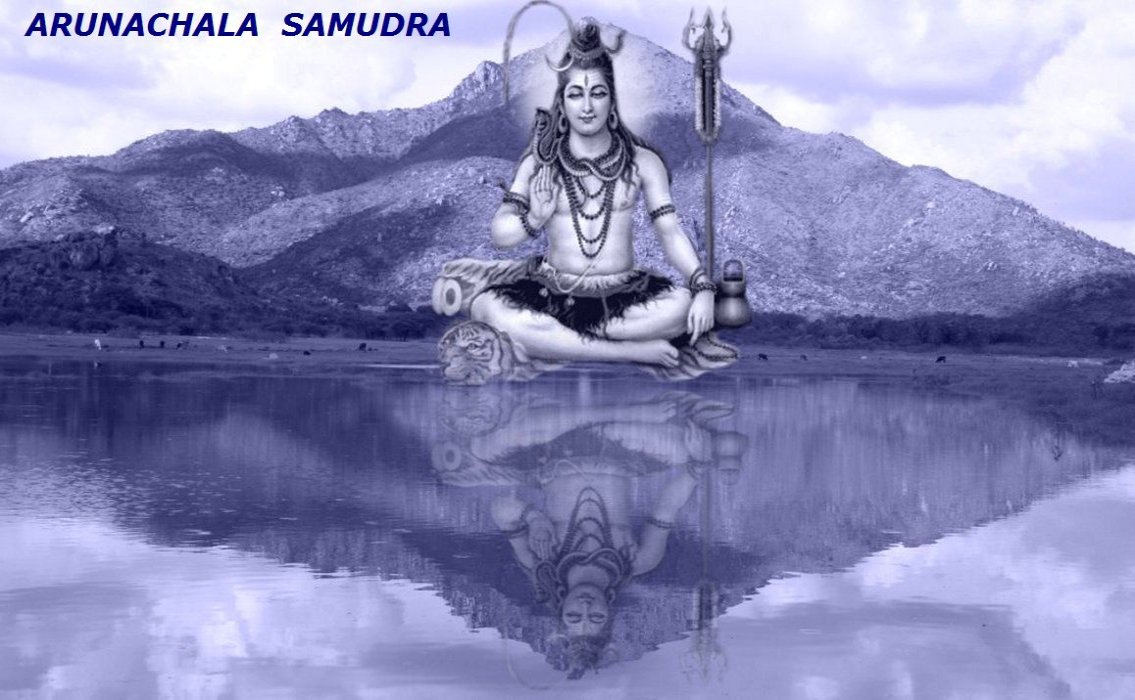
Tag: Shiva

  • Ravana Reserve Army Atlantis Rama Atlantis War

    Valmiki provides a lot of Geographical information in the Ramayana.

    Most of them are found when he describes the Aranya vasa of Lord Rama., his search for Sita, his travel to Lanka, Rama’s return from Lanka by Pushpaka Vimana and Sugriva’s directions to his army about the possible places where Ravana could have taken Sita.

    Of interest is the description by Sugriva about the Nazca Lies of Peru ad Russia, though one can find references to other countries as well.

    Location of Atlantis.jpg Location of Atlantis.

    I have written articles on California being the Kapila Aranya, Mount.Ashes ,USA is the place where Sagara’s(Rama’s ancestor) sons were turned into ashes.

    I have referred to the Quadrilateral Temple of Shiva in Colorado and a Natural Vishnu Temple in Grand Canyon,US.

    I remembered about the Moola Sainya ( Reserve Army of Ravana, which he called up during his battle with Rama.

    Lemuria Kumari Kandam.png Lemuria, KumariKandam. “Kumari Kandam map”. Licensed under CC BY-SA 3.0 via Commons – https://commons.wikimedia.org/wiki/File:Kumari_Kandam_map.png#/media/File:Kumari_Kandam_map.png

    ‘A grieved Ravana soon collected himself and sent word for his reserve forces all over the globe (moola bala sainya). That was a frightful army that Ravana did not think of using against these ‘puny creatures’ at all. He considered it below his dignity to use such a powerful force against humans and monkeys. It was like killing a fly with a sledgehammer, for him. In fact, Kumbakarna had advised him otherwise. If you have decided to fight against them, then the better strategy would be to collect all our forces together. ‘pandhiyir pandhiyir padagaLai vittu avai sindhudal kaNdu nee irundhu thEmbudal mandhiram andru.’ It is not right to send our army in small lots convenient enough for them to wipe off and to weep over their death. ‘nam vali elaam udan undhudal kadan.’ It is of utmost importance to collect all our forces here and now and go to the field in such vast numbers so that it becomes difficult for them to encounter such a vast army’.(Kamba Ramayaa ,Tamil-http://www.heritagewiki.org/index.php?title=Vibhishana_-_Part_4)

    Valmiki also talks about the Moola Sainya in the Yuddha Kada

    And the location of Kara and Dushana who were killed by Rama.

    And there is this point of Hanuman flying to Lanka,

    The Adams Bridge, Rama Sethu is about 30 Kms from Rameswaram, India

    But Valmiki says it is about 800 Miles!

    And there is evidence that Hanuman traveled at a speed of 660Kms/hour!

    I shall be writing on this shortly.

    I recalled about Lemuria and Atlantis.

    Lemuria is the Lost continent of the Tamils.

    And the US is the Patala Loka.

    Please read my posts on this and Atlantis.

    Plato’s description of Atlantis reminds me of the descriptions of the Patala Loka, inhabited by the Rakshasas.

    The presence of Hanuman ad his son Makaratwaja in Central America and the reference to Tamil Kings of the south of Vindhyas made me wonder whether there is any connection between Atlantis. Ramayana and Lemuria.

    So,

    Considering the distance covered by Hanuman in his flight to Lanka,

    The Lanka of Ravana could not have been where it is today,( Please red my Post)

    Lemuria and Atlantis being different entities and that The Tamils occupied that land,

    Atlantis had the Sanatana Dharma presence, including the Rotating city of Tripura, which was destroyed by Shiva,

    Shiva migrated towards the west of India, when a great flood struck South India(when Rama’s ancestor Sathyavrata Manu migrated to Ayodhya),

    The presence of Shiva in these countries, including the Nazca Lines of Peru and Mecca, Petro Jordan having Shiva Temples,

    Rama’s name is found, along with Dasaratha and Bharatha in the Sumerian Kings List,

    Shiva worship preceded the Sanatana dharma in the south,

    The Rakshasas having bee present in this land, where the Moola Sainya of Ravana was kept,

    Ravana having been a Shiva worshiper,

    Hanuman and Makaratdwaja is found in Honduras,

    The land mass at these times was different than what we find today,

    Thiruvannamalai in South India being 3 Billion years old,

    There is a room in Romania which is connected to Iraq,Kailsh,

    Gobekli Tepe was built by Brahmins.

    It stands to reason that The Atlantis people were a part of Sanatana Dharma .

    And there is evidence to suggest that there was a great war between Rama and the Atlanteans.

    Ravana was in Lemuria, had his Reserve army in Atlantis

    There is also a view that ET were involved in this.

    ‘Some Wedha and Jain manuscripts, among others, the Ramayana and the Mahabharata it contains evidence of historical and technological overview of Rama’s dynasty which is believed to have experienced the golden age of the seven main cities ‘Seven Rishi City’ which is one of Mohenjo Daroo (Northern Pakistan).

    From various sources I have learned, can generally be described a wide range of theories and research on the subject of this study provide some interesting material. Include:

    – Atlantis and Rama dynasty had experienced the golden era (Golden Age) at the same time (30000-15000 BC).

    – Both have mastered nuclear technology.

    – Both the aerospace and aeronautics technology has advanced to have enabled aircraft and shaped like a UFO (by some accounts) called Vimana (Rama) and Valakri (Atlantis).

    – Residents of Atlantis has an aggressive nature and led by the clergy (priests Enlighten), according to Plato’s text.

    – Rama dynasty has seven major cities (Seven Rishi’s City) with the capital city of Ayodhya where one of the results found are Mohenjo-Daroo.

    – Competition of the civilization reached its peak with the use of nuclear weapons.

    – The experts found that the debris and the remains of human skeletons found at Mohenjo-Daroo containing radioactive residue that can only be produced by large-scale thermonuclear explosion.

    – In a seloka of the Mahabharata, narrated by the figure of a weapon of mass destruction is a result similar to the present nuclear weapons.

    – Some Seloka Wedha and Jain in the book is explicitly and completely describe the shape of the ‘flying vehicle’ called ‘Vimana’ that its characteristics resemble flying saucers today.

    Most of the written evidence it was in India in the form of literary texts, while the physical evidence would be in the western world the Pyramids in Egypt and South America.

    In short all the above investigations denounce mankind had advanced in the civilization of Atlantis and Rama. Even long before man ever entered the century 4000SM space and nuclear technology. But the golden age was ended by a devastating nuclear war until the aftermath, people had time to go back to primitive times to the advent of Sumerian civilization around 4000SM or 6000tahun ago.’

    Citation.


    https://sites.google.com/site/vansalegend/home/articles/ancient-wars-nuclear-atlantis-vs-ramaR

  • Lakshmi Jyeshta Devi Durga In Ancient Sumeria?

    I have written on the presence of Sanatana Dharma throughout the world.

    Either they have been a part of Sanatana Dharma directly or having been there after being inhabited by the Tamils who have been, contrary to what the fraudulent Tamil Historians say on this, a part of Sanatana Dharma.

    Sanatana Dharma had been there in Sumeria, Mesopotamia , apart from being present in other Cultures.

    The Hindu Gods are present in the Sumerian and Mesopotamian Culture

    Rama and Dasaratha’s names are found in the King’s List of Sumeria.

    In the Kings List, one finds the Dynasties of the Kings of Sumeria with their official locations.

    It includes the names of Kings of adjoining countries, then called city states

    The Kingship was believed to be from the Gods and was transferable from one  city to another.

    Rama in Sumerian King List

    If Ram-Sin is identified as Rama his greatest Amorite enemy Hammurabi must be Ravana or Ravi-anna. This presents some difficulties although Valmiki’s version of the abduction of Sita probably has more to do with poetic imagination than history. However, that she was the chief priestess of the moon-temple at Ur may have been at the root of some events of the politically turbulent era. There is a possibility that at some stage Ur was captured by Hammurabi. The chief-priestess of Ur was inviolable under Sumerian law and the fact that Ravana did not dishonour Sita may show his regard for law. The Battle between Khammu-ravi and Ram-Sin who led a group of Ten-Kings was one of the most famous events of Sumerian history.

    Rama Invaded Babylon

    There is also a similarity between the war of Ten Kings during the Vedic period and battle of Ten kings in Sumeria,

    Now I have come across references to Goddess Durga and Lakshmi in the Sumerian Culture.

    Look at the following Image of Inanna.

    Inanna, Sumerian Goddess.jpg Inanna, Sumerian Goddess.

    You find the Lion  as one would find in Durga Temples and Trishul as well.

    Goddess Durga.jpg Goddess Durga.

    Inanna, the goddess of love and war, with a lion. No other image of Inanna better illustrates her dual nature. She is depicted as a goddess of love, “showing some leg”; while the lion and the weapons of battle (maces) seen rising up behind her shows that she is also the goddess  of war. In all of ancient mythology, no other deity is the goddess of love and war combined. The eight-pointed star (Venus) is another symbol associated with Inanna. This image is in photographic reverse. See the complete seal impression. Also see a line-drawing of the seal by S. Beaulieu.

    Although she is called the goddess of love, Inanna is really the goddess of lust. She is not associated with romance, marriage, fertility or child-bearing. She is so extreme in her emotions, so psychotic in her desires, and so relentless in getting what she wants, she thus symbolizes the violence of human passion. This is why she is also represents the destruction and carnage of war.’

    Durga is a Goddess of Power .

    As Mahalakshmi.

    I have not found the legend of Lakshmi as the daughter of Moon in any other culture excepting in Hinduism.

    Inanna’s Akkadian counterpart is Ishtar. In different traditions Inanna is the daughter of Anu or she is the daughter of the moon-god Sin.

    And like Lakshmi, Inanna has a sister,

    ‘Additionally, the myth may be described as a union of Inanna with her own “dark side”, her twin sister-self, Ereshkigal, as when she ascends it is with Ereshkigal’s powers, while Inanna is in the underworld it is Ereshkigal who apparently takes on fertility powers, and the poem ends with a line in praise, not of Inanna, but of Ereshkigal. It is in many ways a praise-poem dedicated to the more negative aspects of Inanna’s domain, symbolic of an acceptance of the necessity of death to the continuance of life.

    Lakshmi’s Elder sister is Jyesta Devi, personification of things inauspicious.

    Devadasi system in Sumeria.

    The Devadasi system, I have been thinking, was unique to India.

    But,

    ‘Along the Tigris and Euphrates rivers were many shrines and temples dedicated to Inanna. The House of Heaven (Sumerian: e2-anna; Cuneiform: 𒂍𒀭 E2.AN) temple[6] in Uruk[7] was the greatest of these, where sacred prostitution was a common practice. In addition, according to Leick 1994 persons of asexual or hermaphroditic bodies and feminine men were particularly involved in the worship and ritual practices of Inanna’s temples (see gala)’

    And Iraq, has Sanatna Dharma connection!

    Citations.

    https://en.wikipedia.org/wiki/Inanna

    http://sumerianshakespeare.com/106901.html

    https://ramanisblog.in/2010/09/20/prostitutes-of-god-devadasis/

  • Veda Shakhas Brahmin Distribution Region wise

    Vedas, the basic referral text of Hindus is a highly organized one.

    There are four Vedas, Rig, Yajur, Sama and Atharva Veda.

    Each Veda has four divisions,

    Samhitas or Hymns.

    Texts of Sanatana Dharma, Hinduism.png Texts of Sanatana Dharma, Hinduism.

    Brahmanas, Rituals.

    Aranyakas, to be recited in the forest and

    Upanishads, containing the highest Knowledge of Reality, Brahman.

    Veda has  two sub divisions.

    Shukla and Krishna Yajur.

    These Hymns have Sukhthas in them which are in praise of  Deities and they are also explanation of Cosmology.

    Some of them are also addressed to curing diseases .

    These texts have been classified by Rishis.

    Each Veda has many Branches. called Shakhas.

    A shakha (Sanskrit śākhā, “branch” or “limb”), is a Hindu theological school that specializes in learning certain Vedic texts, or else the traditional texts followed by such a school.[3][4] An individual follower of a particular school or recension is called a śākhin.[5] The term is also used in Hindu philosophy to refer to an adherent of a particular orthodox system.

    A related term caraṇa, (“conduct of life” or “behavior”) is also used to refer to such a Vedic school:[7] “although the words caraṇa andśākhā are sometimes used synonymously, yet caraṇa properly applies to the sect or collection of persons united in one school, andśākhā to the traditional text followed, as in the phrase śākhām adhite, (“he recites a particular version of the Veda”)”.[4] The schools have different points of view, described as “difference of (Vedic) school” (śākhābhedaḥ). Each school would learn a specific VedicSaṃhita (one of the “four Vedas” properly so-called), as well as its associated Brahmana, Aranyakas, Shrautasutras, Grhyasutrasand Upanishads.

    The traditional source of information on the shakhas of each Veda is the Caraṇa-vyūha, of which two, mostly similar, versions exist: the 49th pariśiṣṭa of the Atharvaveda, ascribed to Shaunaka, and the 5thpariśiṣṭa of the Śukla (White) Yajurveda, ascribed to Kātyāyana. These have lists of the numbers of recensions that were believed to have once existed as well as those still extant at the time the works were compiled. Only a small number of recensions have survived.

    Rig Veda

    Śaunaka‘s Caraṇa-vyuha lists five shakhas for the Rig Veda, the Śākala, Bāṣkala, Aśvalāyana, Śaṅkhāyana, and Māṇḍukāyana of which only the Śākala and Bāṣkala are now extant. The Bashkala recension of the Rigveda has the Khilani which are not present in the Shakala text but is preserved in one Kashmir manuscript (now at Pune). The Shakala has the Aitareya-Brahmana, The Bashkala has the Kausitaki-Brahmana.

    There is, however, Sutra literature from the Aśvalāyana shakha, both a shrauta sutra and a grhya sutra, both surviving with a commentary (vrtti) by Gargya Naranaya. Gargya Naranaya’s commentary was based on the longer commentary or bhashya by Devasvamin, written in the 11th century.

    Yajur Veda

    Śaunaka‘s Caraṇa-vyuha lists forty-two or forty-four out of eighty-six shakhas for the Yajur Veda, but that only five of these are now extant, with a sixth partially extant. For the Yajur Veda the five (partially in six) shakhas are the (Vajasaneyi Madhandina, Kanva; Taittiriya, Maitrayani, Caraka-Katha, Kapisthala-Katha).

    The Yajurvedin shakhas are divided in Shukla (White) and Krishna (Black) schools. The White recensions have separate Brahmanas, while the Black ones have their(much earlier) Brahmanas interspersed between the Mantras.

    • Shukla Yajurveda: Vājasaneyi Samhita Madhyandina (VSM), Vājasaneyi Samhita Kānva (VSK): Shatapatha Brahmana (ShBM, ShBK)
    • Krishna Yajurveda: Taittirīya Saṃhita (TS) with an additional Brahmana, Taittiriya Brahmana (TB), Maitrayani Saṃhita (MS), Caraka-Katha Saṃhita (KS), Kapiṣṭhala-Katha Saṃhita (KapS).
    • Citation.

    https://en.wikipedia.org/wiki/Shakha#Krishna

    for more on Vedas check my Posts by Googling Vedas ramanan50.

    Shukla

    Shakha Samhita Brahmana Aranyaka Upanishad
    Madhyandina (VSM) Currently recited by all over North Indian Brahmins and by Deshastha Brahmins Madhyandina Shatapatha (SBM) survives as Shatapatha XIV.1-8, with accents. Brihadaranyaka Upanishad= SBM XIV. 3-8, with accents, Ishavasya Upanishad = VSM 40
    Kanva (VSK) Currently recited by Utkala Brahmins, Kannada Brahmins, Karhade Brahmins and few Iyers Kanva Shatapatha (SBK)(different from madhyandina) survives as book XVII of SBK Brihadaranyaka Upanishad=SBK,with accents, Ishavasya Upanishad = VSK 40
    Katyayana

    Krishna

    Shakha Samhita Brahmana Aranyaka Upanishad
    Taittiriya TS,Present all over South India and in Konkan Taittiriya Brahmana (TB) and Vadhula Br. (part of Vadhula Srautrasutra) Taittiriya Aranyaka (TA) Taittiriya Upanishad (TU)
    Maitrayani MS,Recited by few Brahmins in Nasik virtually same as the Upanishad Maitrayaniya Upanishad
    Caraka-Katha Katha Aranyaka (almost the entire text from a solitary manuscript) Kathaka Upanishad, Katha-Shiksha Upanishad
    Kapishthala KapS (fragmentary manuscript, only first sections accented), edited (without accents) by Raghu Vira.

    Sama Veda

    Śaunaka‘s Caraṇa-vyuha lists twelve shakhas for the Sama Veda out of a thousand that are said to have once existed, but that of these only one or perhaps two are still extant. The two Samaveda recensions are the Jaiminiya and Kauthuma.

    The Kauthuma shakha has the PB, SadvB, the Jaiminiya shakha has the Jaiminiya Brahmana.

    Shakha Samhita Brahmana Aranyaka Upanishad
    Kauthuma edited,Recited by all over North and in South India[citation needed] edited (8 Brahmanas in all), no accents None. The Samhita itself has the ‘Aranyaka’. Chandogya Upanishad
    Ranayaniya Manuscripts of Samhita exist.Recited byGokarna[disambiguation needed],and Deshastha Brahmins[citation needed] Same as Kauthuma with minor differences. None. The Samhita itself has the ‘Aranyaka’. Same as Kauthuma.
    Jaiminiya/Talavakara Samhita edited.Recited by Nambudiris and choliyal of Tamil nadu[citation needed] Two distinct styles of Saman recitation, partially recorded and published.[citation needed] Brahmana published (without accents) – Jaiminiya Brahmana, Arsheya Brahmana Tamil Nadu version of Talavakara Aranyaka (=Jaiminiya Upanishad Brahmana) published[citation needed] Kena Upanishad
    Shatyayana

    Atharva Veda

    Only one shakha of an original nine is now extant for the Atharvaveda. The nine sakhas were Paippalada, Tauda, Mauda, Shaunakiya, Jajala, Jalada, Brahmavada, Devadarsa and Chaarana-Vaidya.

    The Shaunaka is the only shakha of the Atharvaveda for which both printed texts and an active oral tradition are known to still exist.

    For the Atharvaveda, both the Shaunakiya and the Paippalada traditions contain textual corruptions, and the original text of the Atharvaveda may only be approximated from comparison between the two.

    Shakha Samhita Brahmana Aranyaka Upanishad
    Shaunaka AVS, edited and recited by all over North India and South India Fragmentary Gopatha Brahmana (extant and published), no accents. Mundaka Upanishad (?) published.
    Paippalada AVP; recited by Utkala Brahmins as samhita patha only. otherwise, two manuscripts survive: Kashmiri (mostly edited) and Oriya (partly edited, by Dipak Bhattacharya and others, unaccented) lost,similar to that of Gopatha Brahmana Prashna Upanishad, Sharabha Upanishad etc. – all edited.[citation needed]
  • Mahabharata Weapons User Manual Found Kerala

    I have written on the use of weapons in the Mahabharata..

    I have also written articles on

    Rules of War,

    Battle Formations,

    Weapons of Mass Destruction,

    List of Astras,

    Brahmastra Invocation Mantra.

    Now  a manuscript containing the Mantra for the weapons used in the Mahabharata War has been found in Kerala.

    They are a sort of User Manual.

    ‘A manuscript found from the collections of Ashtavaidyan Vaidyamadham Cheriya Narayanan Namboodiri, who passed away recently, clearly mentions the mantras to use brahmastra, agneyastra, among others. The 63-folio manuscript in palm leaves, believed to be rewritten about 120 years ago, is the only manuscript retrieved so far in the country that tells how to use all the deadly weapons mentioned in the Mahabharata in about 48 well-described mantras.

    “It was Cheriya Narayanan Namboodiri’s wish to digitize all his manuscript collections — 1,300 bundles — for the benefit of researchers, students and the future generation. The particular manuscript was noticed while we were digitizing the collections using the most reliable method, reprography,” said A R Krishnakumar, project manager at Central Council for Research in Ayurvedic Sciences (CCRAS). Krishnakumar is part of a team from the Indira Gandhi National Centre for the Arts (IGNCA), New Delhi that has been bestowed with the responsibility of digitizing all the manuscripts available with both public and private parties in the country. “People may wonder why the manuscripts should be digitized. It is because they would throw light on our history, culture, customs, ancient religions besides giving information on the environment, health and science of ancient times,” said Krishnakumar.

    “Till now, we haven’t even used 15% of the information from the manuscripts being written on ayurveda. Yet ayurveda is considered to be one of the most accepted system of medicine in the world. Now imagine if the knowledge in five lakh-odd bundles of manuscripts are made available to the society, how much more effective would ayurveda be,” he added.

    “We had digitized a portion of the manuscripts available with libraries, colleges, universities and other institutions in Kerala a few years ago. We started the second phase of the initiative from Vaidyamadham at Mezhathur in Palakkad district. Our next destination is Kanippayyur Mana near Kunnamkulam, famous for thachu sasthra (architectural science), and other centres that have hundreds of manuscripts preserved with them. Thankfully, all these private parties are now coming forward to share the knowledge they have been preserving from the past,” said senior reprographic officer of IGNCA Krishnakumar B. ‘

    Citation.

    http://timesofindia.indiatimes.com/india/Found-User-guide-for-Mahabharata-weapons/articleshow/26762484.cms

  • Bhrigu From Greece Greek Priests in Rig Veda?

    When people talk of the spread of Sanatana Dharma one is struck by the fact that the Sanatana Dharma was present throughout the world.

    Please read my posts on each Country, Civilization  and its Link to Hinduism Sanatna Dharma.Sanskrit/Tamil.

    Shiva and Dionysus.jpg. Shiva and Dionysus.

    And when one reads the origins of the European and other counties in all the continents we have now, we find that people seem to have just come there from Asia, which incidentally coincides with the great Flood reported in India then called Bharatavarsha and mingled with the people already present there..

    In that case where had these  people who had been residing there, from?

    After all one should have either been in one place or have come from somewhere.

    ( In this sense, all of us are immigrants from somewhere!)

    This is anomaly I have faced when I research into Human migration and read it along with the Sanatana Dharma.

    The only plausible is explanation is that the land mass was different in ancient times and there was one huge landmass which was peopled by one group.

    Please read my Post on Shiva Uma Marriage.

    This group, based on the available evidence is the people from India then called Bharatavarsha.

    The entire landmass was following Sanatana Dharma and there were frequent interactions and occasional  migration from one part of the landmass from another.

    This is the only explanation for the presence of all notable figures of the other Cultures(other than Sanatana Dharma) being found in Hindu texts, ranging from The Vedas, Puranas, Ithihasas and Tamil.

    In one form or the other, names from the history of India are found in these cultures and references and names from those cultures in India.

    Not merely names, archeological sites, language. Customs and culture buttress this view.

    Kindly read my posts on these.

    One more connection of Sanatana  to Greece has been found in the relationship of Dionysus and Shiva.

    Dionysus may be Shiva Himself because He migrated to the West during the great flood while Vaivaswataha Manu, ancestor of Lord Rama moved to Ayodhya.

    Dionysus is found in the Atharva Veda.

    Bhrigu and others are also found in Greece.

    by the pre-historic times the devotees Dionysus’s  used to travel to India since it was a pilgrimage for them. The  priesthood genes got developed into various tribes. So there are the Bhrigu (Bhryges), the Avanti (Avantes), the Kurus (Kuris), the Panchas(Panchaioi) theKoshas (Koes), the Sindhu (Sindu). They originate from different parts of Greece’

    The Kurus and the Panchas originate from Crete and might be the oldest ones. The Avanti from Evoia. A part of them joined with A part of Kuris and created the priesthood Korivantes, who ruled Asia Minor. Bhriges, Koshas and Sindu were from Thrace, an area that covered this time all North Greece. A part of Bhriges moved to Anatolia and a part of Sindu to south cost of black sea. Bhrigu in ancient Greek means “to burn” and it is referred to the sacrificial ritual. Sindu in Thracian dialect means river. So is it possible the oldest name of Indus river deriving from them? Even nowadays in North Greece there is the municipality of Sindos. Most of the western researchers either don’t understand or they don’t want to accept the common roots of those cultures. But as I heard in Harvard they teach that the Sanskrit Soma has common etymological root with Greek saima that means originally the holly blood of the sacrificed God. Saimon was a holy mountain of Dionysus in Thrace, meaning blood..

    Vassiliki States that  the Greek priests moved to Indus valley in prehistoric times (Before Rig Veda). Their names are found in Vedic texts and in ancient Greek Mythology

    There is another possibility. In Rig Veda 7,18,16, it is written that half of humanity ignores Indra, that means that half of humanity the time of Rig Veda was worshiping Indra. Indra means the “Archetypal man“, existing in Ancient Greek as Andra or Andreus with the same meaning. It was epithet of Dionysus and ofDias. Andrineia was a Dionysus’s festival. Some ancient Greek text (been in Batican) says that there were eight Dionysi in ancient times. One of them was the God (non incarnated) and the others were sages. In between them there was an Indian one, who was supposed to be the oldest. In this case, we can make the hypothesis that this cult was given as a revelation to many parts of the earth, carrying a common theological language. But even if the Indian Dionysus originates from Greece, obviously he selected Indus valley as his pilgrimage because it had already a spiritual background.

    Soma means blood and it was the red sweet wine, they were drinking in his sacraments. A traditional kind of wine in Eastern islands of Greece is called Souma and derives from the ancient sacraments. In prehistoric Greek blood is called saima. In ancient Sanskrit Soma is existing also as sauma and souma. It symbolizes the blood of the sacrificed Dionysus or Purusha (Grk: Proseios= rising sun).

    My observation is that the was no Greece as we know it to-day but it was ( as all the other countries)a part of Sanatana Dharma.

    https://sites.google.com/site/greekinfluenceonindia/rig-veda-and-it-s-origin