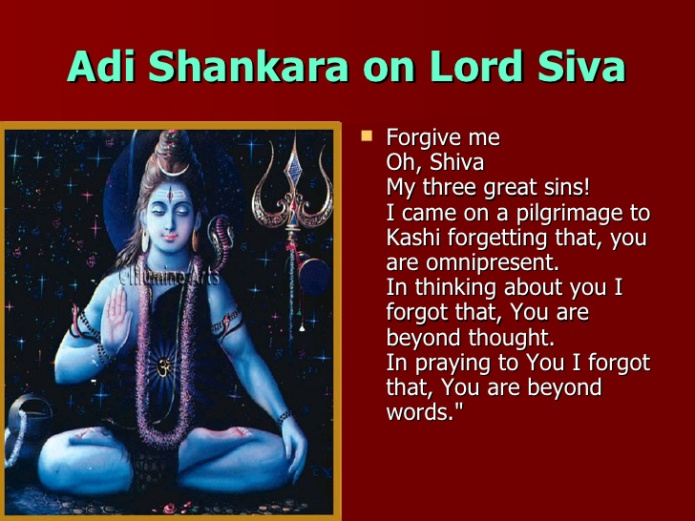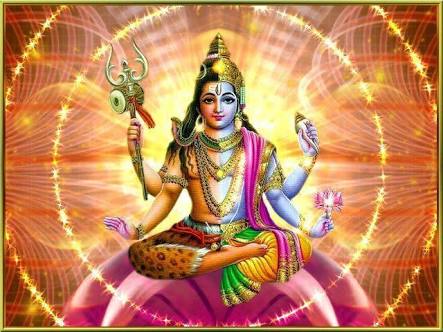
Tag: Shiva

  • Shivas Secret Name Shambhu Ashta Eight Temples

    Shiva is a Pre Sanatana Dharma/vedic Deity, though He finds a rare mention in the Vedas.

    Records indicate He was worshiped in the South, the Dravida Desa much before the worship of Vishnu.

    The spread of Shiva, Ganesha and Murugan(Subrahmanya cult in the south Asian Countries and towards the west culminating in the US has been documented in this blog.

    Shiva has been attributed many names,

    Sankara,Neelakanta,Visweswara,Mahadeva,Triyambaka,Tripurantaka,Mahakala,Kala,

    Mrutyanjaya,Sarveswara.

    Viswesvaraya Mahdevaaya Triyambakaaya Tripurantakaaya Trikaagni Kaalaya Kaalagni Rudraaya Neelakantaaya Mruntnjayaya Sarveswara Sadasivaaya -Sri Rudram

    Even this Maha Mantra does not disclose the secret Name of Shiva, mentioning the name of Shiva  in secret  in the Rudram in the Yajur Veda, in the middle of the eleven anuvaakas, in the fifth anuvaka,again in in the 5th stanza as the fifth word!

    ‘Nama Sivaya cha Sivadharaaya Cha’


    The hidden name is Shambhu, indicating Shivas’ Bliss.

    astasambhu_siva_temple-i
    Ashta( Eight)Shiva Temples.Bhubaneshwar.

    ‘This name of Lord Shankar indicates his blissful personality. He assumes the form of gross elements during playful moments, while he becomes the object of concentration during spiritual moments. Therefore He is called as Shambhu. Shiva, Maheshwar and Shambhu; these names indicate creation, maintenance and annihilation respectively. Thus these three titles can be accepted as the neutral symptoms of Brahman, the Absolute. Material cause (Upadan उपादान) from the first title, efficient cause ( Nimitta निमित्त) from the second title and the oneness of cause and effect has to be understood from the third title. A great Shaiva शैव and crown jewel of Tantra तंत्र Shri Bhaskar Roy reveals the secret of this name as under—
    शं भवयसि च भवसे शं च भवसि चेति वा देव्।
    त्वं देवदारुविपिने लिङ्गे प्रथितोस्यतः शम्भुः॥
    O Lord!! You generate all bliss and you enjoy all bliss, you are embodiment of all bliss and eternity. Your lingam which resides in pinewood forest, is called Shambhu-lingam शंभु लिंगम्. So you are known as Shambhu.
    The sense of delight which we feel in ourselves, that also depends on the delightfulness of Lord Shambhu. He remains uncovered just to allow us to get pleasures ceaselessly. His perpetually uncovered form is eternally joyful to Him. Therefore Lord Shiva is called Chidananda चिदानंद. Even the happiness felt by us in gross sense objects, that happiness also comes from Shiva because there is no other origin of happiness except Lord Umesha. Attainment of the happy and blissful nature of the self is the secret of holy name ‘ Shambhu’.

    “शं सुखं भक्तानां भावयतीति शंभु:”, meaning, one who produces happiness to his devotees

    -Shankaracharya in His commentary on the Vishnu Sahasranama.

    There are eight (Ashta) Shiva Temples in Bhubaneshwar,Odisha, India.

    ‘In the Uttaresvara Siva Temple precinct there are eight temples of identical size and dimension locally known as Astasambhu. Ashtameans eight and Sambhu refers to another name of Lord Shiva. Five of them are arranged in one alignment are also known as Panchu Pandava. The temple is under the private ownership and is maintained by the Ratnakara Gargabatu and family. According to architectural features like bada division and pabhaga mouldings, this temple was built around 10th Century A.D. This is a building made up of stones and its typology is Rekha Deul. The temple is surrounded by Godavari tank in the east, Uttaresvara Siva Templecompound wall in west, and Bindusagar tank in south beyond the compound wall. The temple has an east facing shrine.

    The temple has a square vimanam(shrine) measuring 2.45 metres with a frontal porch of 0.53 metres. Its pancharatha(five chariots) as distinguished by a central raha and a pair of ‘anuratha and kanika pagas on either sides of the raha. On elevation, he vimana is of rekha order that measures 5.72 metres in height from pabhaga to kalasa. From bottom to the top the temple has a bada, gandi andmastaka. With three fold divisions of the bada the temple has a trianga bada measuring 1.72 metres. At the bottom the pabhaga has four base mouldings of khura, kumha, pata, basanta that measures 0.47 metres. Jangha measures 0.90 metres and barandameasuring 0.35 metres thick has three mouldings. The gandi measuring 3.00 metres in height is devoid of any decoration and mastaka measures 1.00 metres with components like beki, amlaka, khapuri and kalasa.

    The parsvadevata niches are located on the raha paga of the jangha on the three sides of north, west and south measuring 0.50 metres x 0.32 metres and with a depth of 0.20 metres. Except the southern niche the rest two are empty. The niches are decorated with talagarbhika and urdhagarbhika of khakhara order. The southern niche houses a four armed Ganesha holding a parasu in his lower left, a rosary with varadamudra pose in lower right hand. His upper hands are broken. The deity is flanked on the top by two flying vidyadharas holding garlands in their hands. This temple is made up of coarse grey sand stone, construction technique is dry masonry type and construction type is Kalingan.

    Uttareswara Shiva Temple.

    Uttaresvara Siva temple is located within a precinct in the northern embankment of Bindusagar tank in the Nalamuhana Sahi, Kedara-Gouri Chowk, Old Town, Bhubaneswar. The enshrining deity in this temple is a Siva lingam within a circular yoni pitha at the centre of sanctum. The original temple has collapsed, as evident from the renovation work above the pabhaga and presence of cult images of earlier phase in different parts of the temple walls without conforming to the canonical prescriptions. It is the main temple within the precinct along with nine lesser shrines..

    Citation and References.

    https://en.wikipedia.org/wiki/Uttaresvara_Siva_Temple

    https://www.quora.com/What-is-the-meaning-of-Shambhu-which-is-one-of-the-names-given-to-Lord-Shiva

    https://en.wikipedia.org/wiki/Astasambhu_Siva_Temples


  • Why No Shiva Gotra Among Brahmins

    I have written articles on the Gotra, the Hindu System of tracing Lineage, with a List of Brahmin Gotras and Brahmin Surnames in India.

    I have also published Vaisya and Kshatriya Surnames.

    Shiva,jpg Shiva, Image credit.www. stephen Knapp.com

    Often I receive mails and calls to verify whether a Gotra belongings to Brahmins and I have been replying.

    I shall be writing a Post on How to identify Brahmin Gotra.

    In the course of answering these questions I was struck by one fact.

    That there is No Shiva Gotra is not found among Brahmins, despite Shiva being considered as a Brahmin because of Function and Vishnu as Kshatriya because of the same yard stick, that of protecting us.

    And Subrahmanya is considered as the best among the best of Brahmins-Su+Brahmanya.

    One does not find Rama and Krishna Gotras among Hindu community.

    I have written on this, explaining the reason.

    Then why Shiva is left out, even though He is described as a Brahmin?

    1.Shiva is truly a Ayonija, never born of a womb.He appears from nowhere and disappears.

    He does not have progeny  ,like Rama or Krishna.

    2.The term Brahmin denotes one who realizes Brahman by self efforts.

    Shiva being Para Brahman Himself, He need not realize.

    He is without attributes, Nirguna.

    Hence  to belong to a Brahmin Gora he should have realized Brahman which is not the case with Him.

    Hence no Shiva Gotra among Brahmins.

    In comparison between Rama and Krishna. while Rama was aware of Himself as Brahman occasionally, Krishna was all the time aware of it and He, like Shiva did not need to Realize Himself.

    And Krishna’s Children were killed and He was left with no progeny, consequent to Gandhari’s Curse.

    However Shiva Gotra is found among communities other than Brahmins for it had been a practice to denote Shiva as the Father when one is unable to trace the ancestry.

    Anoter intersting point to note is that though Viswamitra was not a Brahmin by birth we find Viswamitra Gotra among Brahmins indicating that caste is by disposition and character and not by birth.

    Inputs with authentic sources welcome.


  • Rudra Birth Place Adi Gokarna Creates World Ekadasa Rudras

    Not much of is known about Rudra, excepting the Maha Mantra Sri Rudram, which is invogue to worship Lord Shiva.

    Rudra is considered to be an Amsa, a part of Shiva in performance of His Duty of Destruction of The Universe.

    The destruction is not annihilation but Concealment,Thirodhaana.

    Rudra Manifestation. Rudra Manifestation.

    There are Five Attributes of Lord Shiva.

    Shiva means Auspiciousness.

    Rudra's Birth Place.jpg Rudra’s Birth Place, Gokarna.

    Adi Gokarna.jpg Adi Gokarna.

    The Five Attributes are.

    Srushti, Creation,

    Sthithi,Stabilization and maintenance,

    Samhara, Destruction as a Prelude to Concealment,

    Thirodhaana, Concealment and

    Anugraha,Divine Blessing-Anugraha is difficult to translate into English, it is more than Divine Blessing, Blessing by Divine with a Personal touch.

    The aspect destruction is carried out by Rudra and Rudra is called as a Gana of Shiva, some other Ganas being  Ganapati(Ganesha) who is the Chief of Ganas, Nandikeshwara.

    The Sri Rudra begins with the Salutation,

    Om Namo Bhagawate Rudaaya,

    Namsthe Rudramanyave,

    My obeisance to Lord Rudra,

    My obeisance to Your Anger.

    Rudra is the personification of Righteous Anger.

    As such He is always portrayed as one with uncontrollable anger.

    He is also called as a Hunter.,Kraatha.

    I shall be writing in detail about the History of Shiva and Rudra from the available Historical evidence.

    There are eleven Rudras, Ekadasa Rudras.

    They are,

    Mrgavadha, Sarpa, Nirriti, Ajaikapad, Ahi Budhnya, Pinakin, Dahana, Ishvara, Kapalin, Sthanu and Bhaga(Mahabharata)

    Manyu, Manu, Mahmasa, Mahan, Siva, Rtudhvaja, Ugraretas, Bhava, Kama, Vamadeva and Dhrtavrata.(Vishnu Purana)

    Aja, Ekapada (Ekapat), Ahirbudhnya, Tvasta, Rudra, Hara, Sambhu, Tryambaka, Aparajita, Isana and Tribhuvana(

    1. Mani pp. 654–5
    2. ^ a b c d e f g h i j k l Daniélou, Alain (1991). The myths and gods of India. Inner Traditions International. pp. 102–4, 341, 371. ISBN 0-89281-354-7.)

    Kapali, Pingala, Bhima, Virupaksa, Vilohita, Ajesha, Shasana, Shasta, Shambhu, Chanda and Dhruva –Matsya Purana.

    The origin of Rudra differs.

    They are eleven of the 33 children of the sage Kashyapa and his wife Aditi, along with the 12 Adityas, 8 Vasus and 2Ashvins, constituting the Thirty-three gods-Ramayana.

    Rudras are the sons of Kashyapa and Aditi-Vamana Purana.

    Rudra – here identified with Shiva – was born from the anger of the creator-god Brahma. The furious Rudra was in Ardhanari form, half his body was male and other half female. He divided himself into two: the male and female. The male form then split itself into eleven, forming the eleven Rudras. Some of them were white and gentle; while others were dark and fierce. They are called Manyu, Manu, Mahmasa, Mahan, Siva, Rtudhvaja, Ugraretas, Bhava, Kama, Vamadeva and Dhrtavrata. From the woman were born the eleven Rudranis who became wives of the Rudras. They are Dhi, Vrtti, Usana, Urna, Niyuta, Sarpis, Ila, Ambika, Iravatl, Sudha and Diksa. Brahma allotted to the Rudras the eleven positions of the heart and the five sensory organs, the five organs of action and the mind.

    The Birth Place of Rudra.

    Adi Gokarna is mentioned as the birth place of Rudra.

    When it took a long time for Brahma, who was ordered to Create the Universe, he became angry and as a result of His anger a child was born and when Brahma opened His eyes he found a Child crying and He asked the Child,

    Why do you cry”

    Kim Ruda?(Sanskrit)

    Brahma named the child as Rudra.

    This child was considered to be aspect of Sankara and Brahma asked Him to create the Universe and He created a perfect world only with One Guna, Satvik, Pure, gentle,ascetic.

    Brahma found it was not alright and produced the world with Satva ,Rajas and Tamas qualities,purity & goodness (Satvik), action and passion (Rajas), Ignorance and Inertia (Tamas).

    This He produced in the Brahma Loka while Sankara created the Satvik world from the Patala Loka.

    On knowing that Brahma created a world of His own, Rudra became furious and rose as a Thunder towards the sky about to annihilate the Earth.

    Bhoomi (Mother Earth) was terrified by this  pleaded Rudra,

    “Oh my Lord, I am a woman and more so, a frightened one. I am at the risk of destruction and I will be shattered into pieces without any fault of mine. So please forgive me”.

    Her fearful but innocent pleading moved Rudra.

    He asked if she had any wishes. Bhoomi requested him to move out slowly from a tiny hole in her ear. She also requested him to take a tiny form (Angushta Matra).

    Rudra conceded to her request and came out of Bhoomi’s ear.

    After coming out, Lord Shankar showered blessings on Bhoomi.

    He said Bhoomi one of your names is “Go” and as I came out of yourkarna (ear), this place where I emerged shall be known, as Gokarna. He also said, I am as good as born here and hence this place shall also be known as “Rudra Yoni”


    Sages (Rishis) consecrated a ShivaLinga at the point of emergenceand It is this Shivlinga in Gokarna realm, known as “Aaadi Gokarna

    Adi Gokarna.

    Post on Adi Gokarna Follows.

    Rudra Refernces.

    https://en.wikipedia.org/wiki/Rudras#cite_ref-Mani_2-0

    Reference.and Image credit.

    http://scriptures.ru/india/karnataka/gokarna/mahabaleshwar_en.htm

    For more information on Gokarn.

    http://www.gokarnamahabaleshwar.com/english/index.php/2013-11-07-09-45-04

  • Shiva’s Eight Children List

    Shiva is called as Ayonija, one who does not stay in the womb.

    Nor does He have children in the sense we understand it or even  like the Avatars of Vishnu.

    However there are references in the Puranas that Shiva had children.

    They are Eight.

    This does not include the refernces found in the Kandha Puranam about the Nava Veeras who were born with Subrahmanya

    However they were not because of the Union between Shiva and Shakthi or even a woman.

    Subrahmanya, Shiva, Ganesha and Parvathi.jpg Subrahmanya, Shiva, Ganesha and Parvathi.

    The List.

    1. Ganesha -Born of Shakthi’s sweat.
    2. Kartikaya, Subrahmanya-Of Shiva’s Third Eye.
    3. Ashok Sundari -Of Parvati’s thought of Shiva

    Lord Shiva being of Yogic disposition, goes off to Kailash often.


    Feeling lonely Parvati prayed the Kalpa Vruksha for a companion and thus was born Ashoka Sunadri.(Shiva Purana)


    She is considered as the child of Shiva along with Subrahmanya and Ganesha.

    4.Ayyappan-Of Shiva and Vishnu as Mohini Andhaka, Of Shiva.

    5.Andhaka.

    When Shiva was meditating on Mandara mountain, Parvati who was in a playful mood covered Shiva’s eyes due to which the whole universe was covered in darkness. The sweat that oozed out of Parvati’s hands due to touching Shiva fell to the ground and created a horrible looking and blind boy. Parvati was terrified on seeing him however Shiva said that since he was born due to their physical contact he was their child. When the demon king Hiranyaksha who was childless performed penance to please Shiva in order to beget a child Shiva gifted the child to him and named him Andhaka due to his blindness. After Hiranyaksha’s death Andhaka became the king however he was not regarded as an Asura since he was a divine product. Disowned by majority of his clan he performed a severe penance to please Brahma. Brahma thus appeared to him and offered him a boon. Andhaka demanded Brahma to make him invincible and to repair his vision. Brahma granted these wishes however warned him that he can be killed by Shiva. Andhaka went back to his kingdom and subdued all his opponents and even the Devas

    6.Jalandhara.

    When Indra and Brihaspati were going towards Mount Kailash to meet Shiva their way was blocked by a naked yogi with matted hair and a radiant face. The yogi was Shiva himself, who had taken the form to test the knowledge of Indra and Brihaspati. Indra did not recognize the yogi and was infuriated at the fact that the man was not moving out of their way. Indra asked him to move but the man did not budge. After getting no reply Indra became enraged and threatened him with his thunderbolt. Upon this action Indra’s arm became paralyzed and Shiva neutralized the thunderbolt. Shiva became angry upon this action of Indra and his eyes turned red, frightening Indra. The anger caused Shiva’s third eye to open, nearly killing Indra. Brihaspati recognized Shiva and prayed to him, requesting him to pardon Indra. To avoid killing Indra, Shiva sent the fire from his eye towards the ocean and upon meeting with the ocean it assumed the form of a boy.The boy cried terribly which caused Brahma to descend from heaven. The ocean told Brahma that he did not know where the boy came from. Brahma then told him that the boy will one day become the emperor of Asuras, he could only be killed by Shiva and after his death he would return to Shiva’s third eye.

    7.Manasa, Snake Goddess.

    By the 14th century, Manasa was identified as the goddess of fertility and marriage rites and was assimilated into the Shaiva pantheon as a relative of Shiva. Myths glorified her by describing that she saved Shiva after he drank poison, and venerated her as the “remover of poison”. Her popularity grew and spread to southern India, and her cult began to rival Shaivism itself. As a consequence, stories attributing Manasa’s birth to Shiva emerged and ultimately Shaivism adopted this indigenous goddess into the Brahmanical tradition of mainstream Hinduism.

    8.JyothiJyoti, the goddess of light, who emerges from Shiva’s halo and is the physical manifestation of his grace. She is commonly associated with Kartikeya.

    References from Shiva Purana .

    For Jothy it is a Legend. I do not find any reference int the Eighteen Puranas.

  • Attahasa Loud Laughter Shiva

    I wrote an article in July 2014, on the 68 Important Shiva Temples listed by Shiva Himself.

    Yesterday I received a comment from a reader asking me the details about it.

    Though my article contains information on  this Shiva, it was sketchy because the place is Fullara, A Shakthi Peeta, where Devi’s Lower Lip fell.

    So the accent of the article was more on Shakthi.

    Shiva Linga in Cosmos.jpg
    Shiva Linga in Cosmos.

    In the list of 68 Shiva Temples provided by Shiva, the Attahasa is mentioned.

    1. Attahaas (Mahanaad),
    2. Mahendra (Mahavrat),
    3. Ujjain (Mahaakaal),
    4. Marukot (Mahotkat),
    5. Shankhakarna( Maha Teja)’

    Lord Shiva in Meditation.jpg Lord Shiva in Meditation.

    The apocalyptic laughter of Shiva is referred as Attahasa.

    Some scholars are of the view that this a future manifestation of Shiva.

    Shiva took the form of Attahasa in a mountain in the Himalayan Range.The sons of Shiva will also reside in the Attahasa mountain range in the 20th yuga.-Vayu Purana.

    When the twentieth cycle of a yuga occurs, then I shall be known by the name Attahasa, the loudly launghing one – a form that people will adore. – (Linga Purana 1.24.94 – 95)

    Atthas Peeta has the Devi‘s Lower Lip and She s worshiped as Fullara, Phullara Devi.


    The temple is in Labhpur,Birbhum Disrict West Bengal,India.


    Image of Devi and the Shiva temple is next to the Devi temple. It is a major pilgrimage and tourist attraction.


    From Birbhum to Ahmedpur to Labhpur (6.5 miles). Attahas is just East of Labhpur, around 115 miles from Kolkata.


    The temple of Bhairav is beside the temple of Maa Fullora or Phullara. A deity made of stone.

    Citation.

    Ramani’s blog

    Shiva Lists His Important Temples


    It is so large that the lower leap of the Goddess is about 15 to 18 feet wide.


    According to mythology, when Mahadeva (Lord Shiva) danced around with Sati’s dead body cutting it to pieces, the lip fell at Fullara or Phullara.


    There is a big pond beside the temple.


    According to hearsay, Hanuman collected 108 blue lotuses from the pond when Sri Ramachandra required them for the worship of Goddess Durga.


    How to  reach.


    Labhpur is about 12 km from Ahmedpur on the Ahmedpur Katwa Railway.