I have read that Ravana was a Great Scholar and a great Shiva Bhakt.
Based on this efforts were made to describe him as a good character by the protagonists of the Aryan Invasion theory, especially by the motley group of DK and DMK.
They argued that Ravana was a Dravida, Ram, an Arya and that the North Indians were trying to dominated the South my misinterpreting the Epic.
Ardra constellation is the 6th constellation located in the sign of Gemini & has the
Navamsas of Jupiter & Saturn. 1st Navamsa is that of Sagittarius, 2nd Navamsa is that of
Capricorn, 3rd Navamsa is that of Aquarius, 4th Navamsa is that of Pisces. This must be borne
in mind when reading the results of various 4 padas (quarters) as per some scholars, at times
one finds the traits of the navamsa sign and lord giving results as per padas but at times it
does not make sense. The toughest part of astrology for the non-obsessive predictors that is
the ‘Explorers’ is to understand why the Rishi has given such and such a result, to understand
the basis of the results given in classics for a particular combination but unfortunately the
sages never explained the reasoning nor have the past scholars been successful in explaining it
all. Please note that it is very difficult to find charts where planet would be in exact pada and it takes a
long time to find one. So here we have taken Sun in Ardra Nak, ignoring the pada number given by
Ravana and only trying to understand if the results in actual charts are atleast nearby. This will be
followed in all examples.
General results of being born in Ardra Nakshatra
1. Such natives are extremely sincere in their work and also are too sensitive. It is noticed that
even when in a slight problematic situation they go through mental torture but ironically at
times they can keep a very cool head under great stressful situations.
2. If females have the first menses in this Nakshatra, she will have immoral life, defective
sexual organ, will give birth to dead children.
3. Normally, a native born in this constellation earns his livelihood away from his home and
family. In other words he is settled in foreign places. The period between 32 years and 42
years of age will be the golden period for such natives. He may be employed in transport,
shipping, communication departments or industries. He may also earn as a book seller or
finance broker.
4. His marriage will be delayed. In case marriage takes place early he will be compelled to live
separately from the family either due to difference of opinion between the couple or due to
other circumstances beyond his control. When the marriage takes place at a later stage his
married life will be good. His spouse will exercise full control over him.
Yet you chose to kill me hiding behind a tree. while I was fighting Sugriva.
Why did you do this?
What was my crime?
Even if I committed a crime (with my brother), what is your right to kill me?
The third statement shows Vali’s disapproval of the way Rama killed him.
He says, “I was fighting with some other person and was not careful enough when you shot me.”
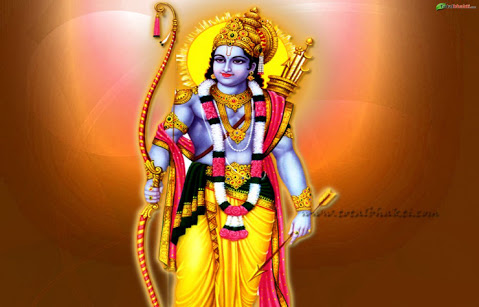
Lord Rama replied,
Rama Vows to Kill Vali
Vali, you speak as if you are the embodiment of Virtues.
You grabbed what was essentially entitled to Sugriva, his share of the Kingdom.
You coveted his wife.
Hence you deserve to be killed by me.
When some one breaks the Dharma, it is my duty to set the Dharma right by punishing the Guilty and protecting the Wronged.
And I have accepted Sugriva as my friend and had given him my word that I would help him to relieve him of hid fear of you in return for his assurance to find Sita for me”.
The younger brother should be treated like a son. Even if he made a mistake you should forgive him, especially when he promised to respect you for your whole life.
About his authority he said he had permission from King Bharat to spread righteousness and punish evils.
The third argument he quoted how great kings did hunting of deers in the past. In fact, Vali in principle could also be kept in the category of deers (as he was a Vanara and not a Human) and a hunting king does not care whether the deer was careful or not.
Vali replies,
‘Rama,
You speak as if you have performed a very noble act.
These are my points,
1.Rama, since when your Reign extended to Kishkinta?
Who are you to intrude into my kingdom and kill me in this fashion?
2.The Dharma of Vanaras is different for Vanaras from what is applicable to Human Beings.
As a Vanara we have our Mores, including the sanction to have one other’s wife.
The Spring Water turned Darkish just before Indira Gandhi was assassinated.
When black or darkish, it’s believed to be an indication of inauspicious times for Kashmir. In 1886, Walter Lawrence, the-then British settlement commissioner for land, during his visit to the spring, reported the water of the spring to have a violet tinge.
Kashmiris claim to have observed a darkish or murky tinge to the water just before the assassination of Indira Gandhi and the 1989 insurgency in the valley.
This is the Temple where Ravana offered her kheer (rice pudding), which Goddess Bhavani accepted.
Kheer Bhavani Temple is at a distance of 14 miles east of Srinagar near the village of Tula Mula,Kashmir.
Kheer Bhavani Temple,Tula Mula
Kheer Bhavani Temple, Interior View
Kheer Bhawani in Atma Linga Form
Other names of Kheer Bhavani
Maharagya Devi,
Ragnya Devi,
Rajni,
RagnyaBhagwati,
The Color of the Water Spring indicates auspicious or auspiciousness.
The Temple is constructed over a Water Spring.
”
This spot is now called vata-shun. Haider Malik Chadoora calls this spring “Votur-Gang”, and relates that its defiling, brought a fear of a snow-fall in Summer Hassan supported Haider Malik and has called it ‘votur-nag’. Now this spring is used by the water-works department (PHE) as a water-source.
A mela is held at this spring, on the 12th of the bright-half of Shravana. It has been called Achha-ra-na Nag in Harmukh Mahatamya.
Raithan is to the North-West of Srinagar 32 km away. Near the village, between the Son-moi river and the road, there a very large stone which the Hindus have been worshipping since time immemorial as a form of Goddess Ragniya.
Legend:
Maharagya was pleased with the devotion of Ravana and appeared before him and Ravana got an image of the Goddess installed in Sri Lanka.
However, the Goddess became displeased with the vicious and licentious life of Ravana and so didn’t want to stay in Sri Lanka.
Therefore, she is believed to have instructed Lord Hanuman to get the image from Sri Lanka and install it at the holy spot of Tula Mulla.
The mention of Kheer Bhawani is found in Kalhana‘s Rajtarangini. Kalhana writes that the sacred spring of Tula Mula is situated in a marshy ground.
The name of the spring is Mata Ragini Kund (pond).
Maharagini is the form of Durga Bhagvati.
Tula Mula and the spring of Maharagya has been considered very sacred.
Thousands of years ago, many floods occurred in Kashmir and the sacred spring of Tula Mula was inundated under its sway and the holy place could nowhere be traced.
At last, Kashmir’s Yogi Krishna Pandit had a dream in which the Goddess appeared to him and directed that she would swim in the form of a snake at the proper place and that he should stick large poles to demarcate the holy spot in the marsh land.
Subsequently, when the water subsided there the holy spot was discovered.
This event happened during the Samvat 4041 (Hindu lunar date). Abul-Fazal in his book Aini-Akbari mentions the area of Tula Mula extending over a region of hundred bighas (unit of land area) of land, which used to sink in the marshy lands during the summer season
How To reach and Festivals.
Deities: Ragnya Devi (Hindu Goddess) Location: At Tullamula of Srinagar Built by: Maharana Pratap Singh Built in: 1912 Attraction: Natural Spring Best time to visit: Around the year
he eighth day of the full moon in May holds great significance for the devotees of Ragnya Devi.
They fast on this particular day and gather at the temple in huge numbers.
It is believed that on this day, the goddess changes the colo.of the spring’s waters.
The Kheer Bhavani temple serves as the venue for an annual festival held in May-June, on the occasion of Jesht Ashtami.
Another Festival at Kheer Bhavani temple Shukla Paksh Ashtami.
On this day, havans/yagnas are performed to please the goddess.
by Air: Srinagar airport is approximately 20 km away.
by Rail: the nearest railhead for Srinagar. Trains from Delhi, Calcutta, Pune, Mumbai and other cities arrive at this station only. by Road: One can easily reach Kheer Bhavani Temple by taking regular Buses or by hiring Taxis from Srinagar.
The Study of Vedas and the Purans never ceases to amaze me for their depth of Knowledge of Things, Empirical(leave the Spiritual as every one knows about them)
Rama being welcomed back to Ayodhya, also shown him flying in the Pushpaka Vimana, which here is depicted as a boat (Photo credit: Wikipedia)
Those who claim the Vedic Hindus had always their eyes on the sky, not bothering about the ground under their feet.
Incorrect.
Whatever we claim to have invented(?) to-day has been done by them already and they had the means of Technology, including Nano Technology..
They had creature comforts, one look at the description of Sundara Kanda o Valmikif Ramayan, describing Ravana‘s Palace will do or the description of Indraprastha in Mahabharata of Vyas.
See my posts on thsi subject , on Vaimanika Shastra and the evidence that Ravana’s Pushpaka Vimana ‘s Axle having been found in Sri Lanak.
Description of Atomic blasts in the Mahabharata reflects what Erch Von Danike has stated in his Chariot of Gods on Hiroshima Atomic Blast.
Identical.
They also had Neutron Bombs at their disposal!
On the Psychological front, they could communicate through the Mind with others, .
Telepathy, Hypnosis,Levitation, Kinetasis, you name it they had it.
Clairvoyance, Clair-audience, yes they had.
They also built Highrise apartments for Living.
Skyscrapers.
The term.Harmya prathishthe occurs in Bahagavatha Puran- 3.22.17 on Visvavasu
“Harmya means in ‘in very high places”
The Gandharva fell from his Plane after seeing the beautiful woman playing on the roof of a Skyscraper.
Robots.
“An example is the story in the Buddhistic Bhttp://ramanisblog.in/wp-admin/post-new.phphaisajya-vastu, in which a painter went to the Yavana country and visited the home of a yantracarya, or teacher of mechanical engineering. There he met a machine-girl who washed his feet and seemed human, until he found that she could not speak.”( http://www.iskcondesiretree.net)
”
Yantras are devices that control the action of elements according to some plan.
According to the Samarangana-Sutradhara, the primary elements that form yantras are called the bijas, or seeds, of the devices’
Vastu-Shastra: Hindu Science of Architecture, by D. N Shukla explains this in detail.
These elements are earth, water, fire, air, and ether. In each yantra, a particular bija element is dominant. For example, we might say that the modern internal combustion engine is a yantra in which earth (in the form of metal) is the bija. The metal is arranged so as to generate energy from fire and air, and the energy is used to propel a vehicle.
The yantras described in the Samarangana-Sutradhara were apparently quite complex. Some of them were made of metal. Some of them are described as svayam vahaka, or self-propelled, with the propulsion mechanism hidden from view.
Yantra characteristics .
Yantras are “well knit construction,” “smoothness and fineness of appearance,” and “functional efficiency.”
Among the robotlike yantras described in the text were “men machines serving as servants,” and “soldier machines.”
Shukla (p. 591) “Each part of their figures is made and fitted separately, with holes and pins, so that the thighs, eyes, neck, hands, wrists, forearms and fingers can act according to the need.”(Shukla (p. 591)
Vastu-Shastra: Hindu Science of Architecture, by D. N Shukla


You must be logged in to post a comment.