Tag: Ramanujacharya

  • Melkote Western Fortress of Vaishnavism

    Melkote Western Fortress of Vaishnavism

    Melkote is a famous and popular Vaishnava Temple in Karnataka.

    Melukote in Pandavapura taluk of Mandya district, Karnataka, in southern India, is one of the sacred places in Karnataka. The place is also known as Thirunarayanapuram. It is built on rocky hills, known as Yadugiri, Yaadavagiri and Yadushailadeepa, overlooking the Cauvery valley. Melukote is about 51 km (32 miles) from Mysore and 133 km (83 mi) from Bangalore.(wiki)

    This temple was the abode of Sri Ramanujacharya,who espoused the Qualified Non Dualism, Visishta Advaitha,Visishtadvaida,.

    He had to flee from the Chola kingdom, Sri Rangam due to persecution from the king and some Vaishnavas and Shaivas.

    One may add here that there no mention of Shaivas and Vaishnavas in the Vedas, and as such, in my opinion,the difference between them, to say the least,is not what Vedas say.

    Be that as it may,

    During middle ages in India there was resurgence of Jainism and Buddhism in South India.

    The Main and Buddhist monks had a great day in running the administration as they had the ears of the King’s.

    And both Shaivas and Vaishnavas were persecuted.

    This continued till Mahendra Varma Pallava( who followed Jainism and later promoted Hinduism) And Pandya King Nedumaran.

    Nedumaran was brought back to Hinduism by his sister Mangayarkkarasi and Saint Thirunavukkarasar.

    Then internecine feud between Shavias and Vaishnavas were on.

    It was during one of these periods,when Sri Ramanujacharya had to flee from SRI Rangam to Melkote.

    I shall be writing on Sri Ramanujacharya and Visishtadvaida in a series of articles.

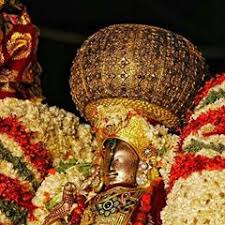
    The Ruling Deity Thiru Narayanan(Tamil) and Cheluva Narayana in Kannada(which means Beautiful Narayana).

    Truly the Moolavar is beautiful beyond description.

    I can recall only Rajagopaswamy of Mannarkudi,as near to this Moolavar in Beauty.

    Now to the name Melkote.

    Mel kottai in Tamil means the Western Fortress.

    The eastern fortress of Vaishnavas is Sri Rangam,which is the second Divyadesa,the first being Thirupparkadal,in Vaikuntha,which is Celestial.

    So the Easter Fortress of Vaishnavism is Sri Rangam and West, Melkote.

    While Sri Rangam is a Divya desas,Melkote is an Abhimana Sthala,the Loved Abode.

    More on Melkote.


    Over the last 1000 years, Vijayanagara kings, the Hoysalas and more recently the Wodeyar dynasty have made significant contributions to this temple.
    Dakshina Badri
    The ThiruNarayanan Temple is also referred to as the ‘Dakshina Badri’. A reference to this is found in 12 chapters under the topic Yadava Giri Mahatmiyam in the Narada Puranam.

    One of the four Swayambu Kshetrams

    ThiruNarayanapuram in Melkote is one of the four famous Swayambu Kshetrams, the others being Srirangam, Kanchipuram and Tirupathi.
    Araiyar Sevai
    One of the other highlights at this temple is the continued performance of the Araiyar Sevai, an artistic song and dance enactment of the Naalayira Divya Prabandham. This is one of the four Vishnu temples in India where Araiyar Sevai is still performed, the others being Srirangam, Srivilliputhur and Azhvaaar Thirunagari.
    Archakas of Melkote
    A special mention must be made of the archakas of ThiruNarayana Perumal temple. In these days of short cuts every where, these Bhattars follow every pooja ritual with a commitment that is sublime...

    Festivals.
    Vaira Mudi Festival in the Tamil Calendar month of Panguni is the most important festival at this temple and attracts several thousand devotees. On the 6th day of the Brahmotsavam, Selva Pillai is adorned with a diamond crown and taken on a street procession.
    Ashta Theertotsavam during Raja Mudi Brahmotsavam in Karthigai is another popular festival.
    Thai Punarvasu festival – This is a special festival commemorating Ramanuja’s arrival in Thiru Narayanapuram on the Makara Shukla Punarvasu day
    Krishnaraja Thirunaal (9days), Aadi Pooram (for Thaayar)are a few of the other important utsavams at the ThiruNarayanan temple in Melkote.
    Prarthana Sthalam
    Childless couples who bathe in the Kalyani Pushkarani for 8 days and offer sincere prayers to ThiruNarayanan are said to be blessed with a child.
    Quick Facts:
    Moolavar : Thiru Narayanan
    Goddess : Yathu Giri Naachiyar
    Utsavar : Selva Pillai (Sampath Kumar)
    Utasava Goddess: Kalyani (Selva Nayagi)
    Temple Time : 730am-1pm, 4pm-6pm and 7pm-830pm
    Contact : S.Narasaraja Bhattar
    Contact Telephone number: 94487 54696, 94488 13124 or 08236 298 913
    How to reach
    Take 6222 Chennai Mysore Kaveri Express, Get down at Pandava Pura (715am arrival)
    Take Tumkur bound bus and get down at Jakkanahalli junction (about 15kms from Pandava Pura)
    Auto from Jakkanahalli to Melkote temple (about 5kms) will cost Rs.50/-.
    One can reach Melkote in 2 hours from Bangalore ( about 135kms) via Mandya- Jakkanahalli.

    Reference and citation.

    http://prtraveller.blogspot.in/2009/10/thiru-narayana-perumal-in.html

  • Karunanidhi To Write On Ramanujacharya

    It was both amusing and shocking to learn that the Torch bearer of Rationalism and habitual Hindu-baiter Karunanidhi is about to pen for a TV serial on the Great Hindu Philosopher Sri Ramanujacharya.

    MF Hussain,Karunanidhi and EVR..Image.jpg
    MF Hussain,Karunanidhi and EVR.

    Hindu Makkal Katchi President is reported to have met Karunanidhi and given him some books for reference!(Thamizhaka Arasial  dtd 21/3/2015)

    There is news item in The Hindu stating that,

    In an interview to The Hindu , he said the saint was a revolutionary who took religion to the masses. “He showed through his life that the oppressed and backward communities were not those to be hated and sidelined,” Mr Karunanidhi said. He added that propagating this idea was the greatest of Ramanuja’s social reforms.

    Dismissing accusations that the DMK was against Hinduism, Mr Karunanidhi said the party only opposed fundamentalists who arrogated to themselves the role of protectors of religion.’

    Yes You follow Ramanujacharya , who followed the Vedas, the Mahvakyas, who named Himself after Lakshmana, who chanted nothing but the Name of Narayana!

    What did you say?

    Rama is a Myth propagated by Brahmin Aryans  and it has to be burnt.

    If you see a Brahmin and a Snake, leave the Snake and kill Brahmin.

    பாப்பானையும் பாம்பையும் பார்த்தால் பாப்பானை அடி

    From which University did Rama take a degree in Engineering to build Rama Sethu?

    Sita stayed in Ravana’s custody for 10 months, what is the guarantee for her chastity?

    ( This noble thought was by Perarignar(?) Annadurai in his Book Kambarasam)

    How did Kunti beget children?

    Kurangu Mukathil Oru Kadavul

    ( A god with the Face of a Monkey)

    When shall we stop the Temple Car festival of  Thiagaraja?

    திருவாரூர்  தியாகராசா , உனக்கு தேரோட்டம் போதாதா

    Try writing on the Prophet after stating the fact he married a nine-year old girl or state that Jesus was born of a woman who was unmarried and write a commentary on The Bible?

    As CHO said in another context,

    In Tamil Nadu,

    Hindus have no sense of shame

    யாருக்கும் வெட்கமில்லை

    Citation.

    http://www.thehindu.com/news/national/tamil-nadu/vaishnavite-philosophersaint-ramanuja-broke-caste-barriers-says-karunanidhi/article7068531.ece

  • What Is Swayam Acharya Of Sri Vainshnavam

    What Is Swayam Acharya Of Sri Vainshnavam

    The Sri vaishavaites of some groupings follow the Swayam Acharya Sampradaya.


    I have a close friend who is a Swayam Acharya.


    Unfortunately, though he is a devout Iyengar,he was unable to say what it was excepting that he was following the Acharya of a Mutt.


    When I checked with some of m other Iyengar friends, they also did not have the details.


    I have referred some texts, the internet and am sharing the information.


    Suggestions for improvement is welcome.


    The earliest name the Puranas ascribe to those who worship Lord Vishnu is ‘Bhagavatha’


    Later it was meant to include those who follow Pancharatra.


    Please read my post on Pancharatra.


    Bhagavatha means one who sings. praises the Glory of Bhagwan, here it refers only to Vishnu,


    Technically this is incorrect as it refers any one who praises Bhagawan,


    Please read my post on Bhagwan, God in Hinduism.


    Equally incorrect to say that Ishwara refers only to Lord Shiva.


    Iswara means personal God , that’s all.


    Now to Swayam Acharya.


    Later when many Devathas were being worshiped, to distinguish those who worship Vishnu, the term Vaishnava was coined.


    As Vishnu is to be worshiped always along with Lakshmi, Sri, has been added.


    Thus was born the term Sri Vaishnava.


    Swayam Acharya means one who is an Acharya to himself.


    In the earlier days, when Brahmins were following all the duties of a Brahmin, including  Agnihotra, the tradition was handed over to the son.


    Thus the father becomes the first Acharya.


    In Upanayana, the Gayathri is first taught by the father.


    In all cases Father is the first Acharya.


    Sruthi says Pitru devo Bhava, Acharya Devo Bhava  in this context.


    Swayam Acharya sampradayam:
    In olden days, all the Vaishvaites were very orthodox, performing daily Agni Hothram in their houses. Therefore the father of the family himself was the Acharyan for the members of that family. He was initiating the members into Sri Vaishnava sampradayam by Samasrayanam process.

    Matams and Munitrayam sampradayam:
    Now a days, most of the family heads do not perform agni hotrams and follow the sampradayam very strictly. So for the purpose of Samasrayanam, we approach Matams. The matadhipathi/Swami/Acharya initiates us into sampradayam.


    Citation.

    http://www.ramanuja.org/sv/bhakti/archives/may99/0063.html


    http://ramanuja.wikifoundry.com/page/Sri+Vaishnavaite+Monastries


    This term is used for Sri Vaishnavas who are descendants
    of the original 74 disciples of Ramanuja, and who continue
    to have association with learned members of their extended
    family who administer the panca-samskAra (samASrayaNam) 
    and minister to their needs.  Many of our most learned
    acharyas came from "svayam-AchArya" families -- Desika,
    Pillai Lokacharya, etc. This is because the concept of
    a maTha and therefore a sampradAya based on the maTha
    dates from the 14th century, much after Sri Ramanuja's
    time.
    
    Some notable svayam-AchArya families are Prativaadi Bhayankaram,
    Tatacharya, Tirumalai Anandaanpillai, Nallaan Chakravarti, etc.
    There are many scholars among these families even today,
    as they have a strong sense of connection to the tradition
    and maintain a certain level of scholarship.
    
    Not all descendants of the 74 original disciples are still
    considered "svayam AchArya".  At some point, some of the  
    descendants drifted away from their traditional acharya or
    did not have a strong scholar in their family, and consequently
    became associated with some maTham or other swami.  So there
    will be Sri Vaishnavas who bear the appellation "Kidambi",
    "Vangipuram", "Tatacharya", etc., who at one point belonged 
    to svayam AchArya purusha families, but who now follow
    some other swami.
    
    It should be pointed out that some people object to the
    term "svayam AchArya purusha" (not the concept behind it)
    with the feeling that only one person is truly a "svayam
    AchArya", an acharya for himself -- the Lord.
    
    
  • No Advaita Visishtadvaita in Vedas Why

    If one studies, not merely reads, the Veda, one will know that there is no specific school of thought or ‘ism’


    One will find worship of nature in its Glory, starting from Water,(Mantra Pushpam),Fire (Agni Suktham,Rige Veda),Earth(Bhoomi Suktham)


    Vedas.Image,jpg.
    Vedas. Image source. http://www.trinetra.org.uk/#/vedas-what-are-they/4561706759


    On Time, Rathri Suktham,Kala Suktham,Ushas Suktham,


    On individual forces of nature, Surya Suktham,


    On Values, Samanasasya Suktham.


    On Gods,


    Vishnu Suktham,


    Sree Suktham,


    Durga Suktham.


    On the  world and on Monotheistic approach,


    Purusha Suktham,


    Narayana Sukham


    There is no specific system of worship or specific God promote as it were.


    Why?


    Hinduism is not founded by any one.


    Vedas express Truth as experienced by the Rishis and the Manta grasped by them from the Ether.


    As Lord Krishna puts it in the Bhagavad Gita, Reality or God reveals itself according to the disposition of the worshiper.


    Reality however remains One,.


    So on a cursory reading of the Vedas might give the impression that there are many Gods in mentioned in the Vedas.


    As experiencing Godhead is intimately personal, Vedas knew that thee is no Universal Solution to the seeker.


    One realizes God hood by His self enquiry and this depends on his tendencies or Vasanas,


    So, much like a Super market, Vedas contain what ever that has been grasped for selection by the Individual.


    That’s all.


    That is the reason why do not promote one God.


    Then why is it in the Veda Mantras on finds that Vishnu is the first God, in  NarayanaSuktham, Vishnu Suktham, Shiva in Sri Rudram, Lakshmi in Sree

    Suktham and Durga in Durga Suktham?


    In philosophy it is called ‘Henotheiism’- the practice of praising one God to the exclusion of the others.


    This has a Psychological element built into it,


    You will not agree that what you do or follow is not the best among the available.


    This reinforces faith and helps you spiritually.


    Similarly there is no specific leaning towards Advaita,Visishtadvaita or Dwaita as such in the Vedas.


    This is has come into being only after the commentators and the three Great Acharyas, Sankaracharya, Ramanuja and Madhwa,


    They did not say anything new or what is not said in the Vedas.


    Each interpreted the Mahavakyas of the Vedas from their stand point.


    And they found supporting arguments for their approach from the Vedas.


    Vedas , being an Ocean, it would provide you source for your approach.


    Therein lies its greatness,


    One more point one must bear in mind the time when these Achayas founded their Doctrines.


    Sankararacharaya came after Buddha, whose Buddhism promoted Nihilism or Sunya Vada.


    It is not practical to restore the Vedas with so many Gods as it were,for one without understanding, to have faith in the Vedas.


    From one Sankara said not Two Advaita, it is easy for one who had been saying that there is nothing to believe that there not two, Advaita


    Then came Ramanuja who established Qualified Non Dualism,not Dualism, Visishta Adavaita.


    Then Madhwa came along and founded Dwaita, Dualism.


    In essence there is no difference as far as the origin of these systems go.


    The difference lies in interpretations.


    Anticipating some bigots of Hinduism , there are slokas of Shiva by Vishnu and By Shiv of Vishnu.


    Read my post on these.


    Only those who do not understand the Vedas and Indian Philosophy would promote either Shaivisma or Vaishnavism.


    Ekam Sat, Vipra Bahuta Vadanti’


    The Truth is One,.


    The learned, Vipra(this is actually a dig at the so-called Scholars, Krishna uses this term and Pandita in the same sense in the Bhagavad Gita)


    Say It is many.


    Sivoham.


    Krishnarappnamasthu.


    Enhanced by Zemanta