Tag: Rama Navami

  • Rama Festival On June Peru Rama-Sitva Festival

    Sanatana Dharma had spread throughout the world in ancient times and the landmass was different from what it is today.

    References to various continents,kingdoms,kings,cities and festivals are found in Indian Puranas and Ithihasas, Ramayana and Mahabharata.

    And Tamil classics dating back to 20,000 years also refer them.

    I have written on the presence of Sanatana Dharma in,

    Afghanistan,Russia,US, Central and South America, Europe,Africa, Middle East,Far east and Australia.

    Even Antarctica and Arctic.

    For individual countries which had Sanatana Dharma presence,please Google country name+Hinduism+ramanan50 for details.

    India had a close relationship with Central,South and North America.

    I have written on each country.

    In Peru,one finds the Shiva’s Trishul mark as Nazca Lines.

    This is referred to in the Ramayana,when Sugreeva directs his vanaras to search for Sita.

    And Ram’s name was popular in Peru.

    Indian ships traveled to Peru.

    Rama’s Festival is Celebrated as Ram-Sitva festival in Peru during winter solstice.
    Dr. Robert Heine Geldern anthropologist, has written that: “Those who believe the ancient peoples of Asia were incapable of crossing the ocean have completely lost sight of what the literary sources tell us concerning their ships and their navigation. Many of the peoples of Southeastern Asia had adopted Indian Hindu-Buddhist civilizations. The influences of the Hindu-Buddhist culture of southeast Asia in Mexico and particularly, among the Maya, are incredibly strong, and they have already disturbed some Americanists who don’t like to see them but cannot deny them.” “Ships that could cross the Indian Ocean were able to cross the Pacific too. Moreover, these ships were really larger and probably more sea-worthy than those of Columbus and Magellan.” “Ships of size that carried Fahien from India to China (through stormy China water) were certainly capable of proceeding all the way to Mexico and Peru by crossing the Pacific. One thousand years before the birth of Columbus Indian ships were far superior to any made in Europe up to the 18th century.”….

    The Peruvians and their ancestors, the Indians, are in this point of view at once seen to be the same people.”- Edward Pococke

    Rama is represented as a descendant from the sun, as the husband of Sita, and the son of a princess named Causelya. It is very remarkable that Peruvians, whose Incas boasted of the same descent, styled their greatest festival Rama-Sitva; whence we may take it that South America was peopled by the same race who imported into the farthest of parts of Asia the rites and the fabulous history of Rama.”

    Sir William Jones (1744 – 1794) states in his papers published by the the Asiatic Society that the Incan festival ‘Rama-Sitva’ celebrated on the Winter Solstice Day gets its name from the Hindu God King, Sri Rama and his wife, Goddess Sita. The Winter Solstice Day is celebrated in June in Peru. (Peru lies in the southern Hemisphere and the winter solstice day falls in June).

    -Sir William Jones,1746-1794) judge of the Supreme Court at Calcutta and was one who pioneered Sanskrit studies.

    https://amzn.to/2ABFMFS

    Related.

    https://www.google.com/amp/s/ramanan50.wordpress.com/2015/01/27/navaratri-is-rama-sita-festivalshiva-in-mexico/amp/

  • Rome Founded April 21, 753 B.C Rama Navami Little Rama

    Rome Founded April 21, 753 B.C Rama Navami Little Rama

    History of the world,studied in conjunction with the History of Sanatana Dharma is interesting.

    Horoscope of Lord Rama
    Rama’s Horoscope

    It shows a wealth of evidence that Sanatana Dharma was present throughout the world and is the forerunner of world civilizations, be it Europe,Asia,Americas,Australia…


    Rama Lakshmana and Sita. Image from Museo Civico Archeologico in Bologna, Italy.
    Rama Lakshmana and Sita. Image from Museo Civico Archeologico in Bologna, Italy.

    I have posted articles on the Vedic links to

    Iran,

    Iraq,

    Sumeria,

    Mayan,

    Egyptian,

    Polynesian,

    Roman,

    Christian, and

    European civilizations.

    And the aerial  view of Vatican resembles Shiv Linga(please check my article on this)

    Vatican a Shiva templejpg
    Vatican a Shiva temple

    I am looking into the links between Sanatana Dharma and Minoan Civilisation.

    I have some information Linking the pre roman, pre christian to Vedic civilization.

    Etruscan civilisation existed around 8 century 2 BC in Italy and is believed to have ruled the whole of Italy.

    But very little information is available about them.

    One of the reasons, like what christianity has done to African Religion, is the systematic obliteration of the Etruscan civilisation and its history by the Romans.

    “Etruscan civilization is the modern English name given to a civilization of ancient Italy. Its homeland was in the area of central Italy, just north of Rome, which is today called Tuscany.

    Hanuman Rama Sita in Pre Roman Etruscan civilization

    The Sanatana link to the present civilizations is not visible directly as except Sanatan Dharma all other civilizations that existed  between Santana Dharma and the present civilizations have disappeared.

    If one digs patiently  and traces history of these lost civilizations, one would find that the root of world civilizations is Sanatana Dharma.

    My articles deal with these facts.

    Now information on Rome and Italy.

    ‘assussanni a form of the Sanskrit asva-sani meaning ‘horse trainer’,
    aika wartanna meaning one turn (cf. Vedic Sanskrit ek vartanam),
    tera wartanna meaning three turns (cf. Vedic Sanskrit tri vartanam),
    panza wartanna meaning five turns (cf. Vedic Sanskrit panca vartanam),
    satta wartanna meaning seven turns (cf. Vedic Sanskrit sapta vartanam), and
    navartanna meaning nine turns (cf. Vedic Sanskrit nava vartanam).
    [Regrettably, writers do not mention the Old Iranian equivalents.]

    Hindu Kings of Iraq Turkey Syria Lebanon Egypt Italy

    Sharada Devi in Sardinia

    I have come across information  that Rome was founded on Rama Navami Day, the Birth Day of Lord Rama.

    ‘According to tradition, on April 21, 753 B.C., Romulus and his twin brother, Remus, found Rome on the site where they were suckled by a she-wolf as orphaned infants. Actually, the Romulus and Remus myth originated sometime in the fourth century B.C., and the exact date of Rome’s founding was set by the Roman scholar Marcus Terentius Varro in the first century B.C.

    “On this day the Romans keep a festival which they call the birthday of the city. At this feast, originally, we are told, they sacrificed nothing that has life, but thought it right to keep the anniversary of the birth of the city pure and unpolluted by blood.” (page 38, Chapter XII)( Plutarch’s Lives, Volume 1 )

    Plutarch cites Lucius Taroutius Firmanus, a Roman astrologer, in reference to the founding date of April 21st:

    “Rome was founded by him on the ninth day of the month Pharmouthi, between the second and third hour; for it is supposed that the fortunes of cities, as well as those of men, have their certain periods which can be discovered by the position of the stars at their nativities.” (pg. 39, Plutarch’s Lives, Volume 1, Chapter XII)
    Much like the astrological/astronomical fixing of holy dates in the Hindu lunar calendar, ancient Europeans and Middle Eastern cultures (i.e. Egypt) used similar principles when describing and setting specific historical dates. They meticulously noted down the exact position of stars and other astronomical bodies in the sky, at least during special circumstances. One such time was the founding day of Roma, the eternal city whose fortunes were prefixed by the astrological arrangement on Rama’s birthday. Pharmuthi in the Egyptian calendar corresponds to March-April in the Julian calendar and more importantly, Chaitra in the Vedic lunar calendar.
    Hindus celebrate the birth of Rama on the ninth day of Chaitra, the first month in their lunar calendar. Since scholars recognize that the oldest Egyptian calendar must have been lunar as well, one can clearly see these congruent dates in Pharmuthi and Chaitra are no mere coincidence.
    Indians worship the Sun God at the beginning of this day, as King Rama appeared in the Solar Dynasty (Surya-vansha), meaning he claims direct descent within the Sun God’s lineage. Hindu devotees customarily fast on this day, much like the Romans abstained from eating flesh. Legend has it that Lord Rama took birth at midday, and Hindus perform special prayers and make offerings into a ceremonial fire (homa) in the evening. Whether the Romans conducted more elaborate rituals similar to this, remains to be uncovered but is unknown. Given that Italy is about 3-4 hours behind India in the time zones, if Rome was founded in the morning, then it must have been around noon time (12 p.m.) in India, thereby coinciding with Rama’s time of birth. The Sanskrit word Para-Murthi, meaning Supreme Idol, may be the origin of the Egyptian Pharmuthi.
    Plutarch himself essentially confirms this truth:
    Romulus “consecrated his city, having fetched men from Etruria, who taught him how to perform it according to sacred rites and ceremonies, as though they were celebrating holy mysteries.” (pg. 38, Plutarch’s Lives, Volume 1, Chapter XI)
    Little Rama.

    We know that Rome was founded by Romulus and Remus – twins suckled by an Etruscan she-wolf. If you don’t know, just ask. These curious twins a dual origin – as dual like they were. First an Etruscan origin, but there is another. Which one? The investigation begins.

    ….Seek what their names mean, these wild children. First Remus – says good oldGaffiot?

    Let’s have a look at his brother Romulus : the suffix -ulus is recognized, a diminutive which means little.Romulus, Little Rom. Or Little Ram? Really good old Rama left living traces of his passage everywhere – traces still visible today in our lexicons. Romulus is son of the god Rama, his name is quite simply Little Rama. Later, when Romulus has founded Rome, the Etruscan tribe Ramnes or Ramnensès became his army. Ram Nes, those of Ram. Note also that Rome – or rather Roma – is the city of Rama.

    Similarly Rom people, or Roms, are descendants of Rama and his clan. Throughout his progress towards far east, Ram founded cities where he left his faithful people – heirs of his blood and manners. They founded ramaïques lines, most of which are still recognizable today.
    Whether Romulus was the son of Ram in the flesh or in the spirit, is hard to decide. Certainly many millennia have passed since the birth of Ram when Roma was founded.

    References and citations.
  • Sky Maps Star Position During Rig Veda Rama Krishna Birth

    Indian Puranas, History and The Epics are not fairy tales.

    They are facts.

    I have been verifying statements events mentioned in these texts with the help of Astronomy, etymology of word used,archeological evidence,Anthropology,Geology and tools like Carbon Dating, Atomic verification,Infra red evaluation.

    I have published posts on many events narrated in the Indian Texts.

    Now I am posting information on the appearance of the sky during,

    The Rig Vedic Period,

    Rama’s Birth,

    Krishna’s Birth.

    These maps have been arrived at running the references found in these instances through a Software designed to arrive at star positions and period..

    Rig Vedic Period Sky Map.

    There are 53 references in Rigveda as prayers offered to Aswinis at dawn. The description clearly points to the observation of the pair of stars in the Aries constellation (referred to as Aashvin or Asvini) just before sunrise as a ritual to mark the year beginning. Using Planetarium software, we find that the Winter Solstice occurred on 19 December, 7000 BC at 0735 hrs as shown in Figure 1. This is the earliest reference to Vedic calendar with year beginning at Winter Solstice, found in Rigveda (5-77-1/2; 1-46-14; 7-69-3/2). Heliacal rising of Ashwini Nakshatra (Aries) can be seen to occur on 5th January, 7000 BC, marking the year beginning (Fig. 1).

    Skymap during Ri Vedic Period.png
    Skymap during Ri Vedic Period.Fig. 1

    Pre Dawn Sky during Rig Vedic Times.

    A thousand years later, Winter Solstice no longer occurred near Aries (Asvini) due to precession. As a result, Ashwinis were no longer rising heliacally as before. They were still below the horizon at sunrise around Winter Solstice time. The Winter Solstice had moved to Revati by 6000 BC. Thus the precession of Equinoxes and Solistices was being observed by Rigvedic Scholars.

    The Sky of 19th December, 6000 BC at sunrise on the Winter Solstice day shows that Ashvini gave way to bright star Chitra (α Vir) on opposite side (Western horizon). A full Moon in Chitra Nakshatra provided a new time marker in the sky and heralded the lunar month naming system-Chaitra, Vaisakha etc. (Rigveda: 5-74-1,2 and Tait Samh. 7-4-8). See Fig. 2 –

    Winter solstice sky Ri Veda Period.jpg
    Fig.2 .The Sky of 19th December, 6000 BC at sunrise on the Winter Solstice day shows that Ashvini gave way to bright star Chitra (α Vir) on opposite side (Western horizon). A full Moon in Chitra Nakshatra provided a new time marker in the sky and heralded the lunar month naming system-Chaitra, Vaisakha etc. (Rigveda: 5-74-1,2 and Tait Samh. 7-4-8).

    Please check my post on Agstya star, Canopus Validates Sanatana Dharma.

    Rama’s Birth, Sky Map.

    Rama was born on the Navami tithi of Shukla Paksha of Chaitra masa(9th day of the increasing phase of the moon in the lunar month of Chaitra).At that time, the nakshatra was Punarvasu, and Sun, Mars, Saturn, Jupiter and Venus were in Aries, Capricorn, Libra, Cancer and Pisces respectively. Lagna was Cancer and Jupiter & Moon were shining together. — Ramayana 1.18.8,9.

    1. Sun in Aries
    2. Saturn in Libra
    3. Jupiter in Cancer
    4. Venus in Pisces
    5. Mars in Capricorn
    6. Lunar month of Chaitra
    7. 9th day after New Moon
    (Navami Tithi, Shukla Paksh)
    8. Moon near Punarvasu Nakshatra
    (Pollux star in Gemini constellation)
    9. Cancer as Lagna
    (Cancer constellation rising in the east)
    10. Jupiter above the horizon
    The observations on the left, when entered into Planetarium software gives us the above Sky Chart, which in turns gives forth the below mentioned date.

    Sri Rama Navami – 10th January 5114 BCE – Birth Day of Rama
    Observation at 12.30 p.m.

    Skymap During Krishna’s Birth.

    Lord Krishna was born around midnight. That night was the eight phase of the moon known as Ashtami Tithi. The moon was near Vrshabha, the bull, i.e the Taurus constellation that houses the star Rohini. The star Rohini is known as Aldeberan in modern astronomy. The month was Shravana, one of the 12 months in the Indian calendar.

    Shravana vada ashtami, Rohini Nakshtra, uditam Lagnam

    ( Srimad Bhagavatham, Skanda 10, Chapter 3.)

    Sky During Krishna's Birth.jpg
    Sky During Krishna’s Birth.

    Date of Krishna’s Birth By Gregorain Calendar.

    27th July, 3112 BCE .

    Couple of Points.

    1.Astronomical events repeat themselves at regular intervals.hence fixing one date is difficult.

    We are taking the last event for calculation.

    As time is Eternal and Cyclic, the events repeat themselves.

    Please read my posts on Time Non Linear for more information.

    You may check my posts under Astrophysics on Astrodating and dating of Events.

    Citations and Sources.

    Krihsna’s Birth , Skymap.Image courtesy. Sri. Narahari Achar, Memphis Univesrsity US.

    https://kalyan98.wordpress.com/2007/12/25/ramayana-era-based-on-planetarium-software/

    http://sarojbala.blogspot.in/2012/06/scientific-dating-of-ramayan-era.html

    https://bharathgyanblog.wordpress.com/

  • Taxila, Takshashila Built By Bharata Brother Of Rama

    Lord Rama’s son ,Lava built Lahore now in Pakistan.

    Taxila, called as Takshashila in Sanskrit and Takashila was built by Bharata, brother of Lord Rama , for his son Taksha.

    Taxila.Image.jpg
    Taxila, Takshasila, world’s First University.

    Legend has it that Takṣaśilā derived its name from Takṣa, who was the son of Bharata, the brother of the Hindu deity Rama. Takṣa’s kingdom was called Takṣa Khanda and its capital that he founded was named Takṣaśilā.

    *According to another theory propounded by DD Kosambi, Takṣaśilā is related to Takṣaka, Sanskrit for “carpenter”, and is an alternative name for the Nāgas of ancient India. In the great Hindu epic Mahābhārata, the Kuru heir Parikṣit (grandson of the Arjuna) was enthroned at Takṣaśilā. Traditionally, it is believed that the Mahabharata was first recited at Takṣaśilā by Vaishampayana, student ofVyasa at the behest of the seer Vyasa himself, at the Snake Sacrifice.

    * There is no supportive evidence for this.

    In “Lalitha Vistara,” we are told of the formation of such institutions for teaching the three R’s and moral stories to the young. Further, a very remarkable achievement of ancient India in the post-Vedic and Buddhist ages was the organisation of higher education in a few of the prominent centres of India. The earliest and the most famous institutions of the kind were those of Benares and Taxila, which were the educational havens for people from all parts of the world, right down at least from the Buddhist age. The one place which acquired a great reputation not only for its mastery over a special branch of knowledge, medicine, but also for its general ideal instruction, perfect discipline and homely training was the University of Taxila…

    In the Ramayana, (Vangavasi Edition-Uttarakandam-Chapter XIV) Bharata, Sri Rama’s brother, is said to have built two cities, Takkhasila and Puskalavata, and appointed his sons, Takkha and Puskala, to be their rulers respectively. The cities were described as very prosperous in as much as their citizens were pious and prosperous. There is another reference in the same Uttarakanda of Ramayana that Takkhasila was a centre of learning and that people from different parts of the country resorted to the Institution of Education there to specialise in Law (Vyavahara). The 88th Chapter of Vayupurana refers to Takkhasila, the capital of Takka, a beautiful city.

    ‘Brihatsamhita’ mentions Takkhasila as a most famous city, implying thereby that it was doubtless a centre of ancient education and culture. Further, in Mahabharata, it is recorded that the King Janamejaya conquered it. It also declares the men Taxila to be matchless and unrivalled in discussions and debates in educational and cultural learning. Lastly, Ksemendra’s ‘Aradanakalpalata’ says that Asoka’s son, Kunala, was sent by Asoka to conquer Takkhasila, which was ruled by Kunjarakarna.

    Taxila has been referred to, often, in Pali literature as well, a great centre of learning and as an important University centre in ancient India. According to Dhammapadattahakatha, Pasenadi, King of Kosala, was educated at the University of Taxila. From the Mahavagga, (Vinaya Pitaka), we learn that several princes from various kingdoms, within and without India, went to the University of Taxila for their complete education.

    Dhammapadadattahakatha speaks of a student who went to Taxila, all the way from Benares, to study the ‘Silpas’, in the midst of five hundred class-mates. In several places, in the Pali Jatakas, there are references to highly renowned teachers living at Taxila and to the various subjects taught there.
    The foreign writers of Greece, Rome and China have left Lind valuable records of accounts of Taxila. Arrian refers it as having been a great and flourishing city in the times Alexander. Strabo comments upon its population. Plutarch dwells upon its fertile soil. Hiuentsang writes of its rich harvests and luxuriant vegetation. There are other foreign Buddhist works which refer to the various arts and sciences, imparted at the University of Taxila, in the Buddhist age.

  • Rama Sita in Vedas A Contradiction?

    Sometimes one comes across references in the Ithihasa and Puranas , when related to the Vedas there is confusion.

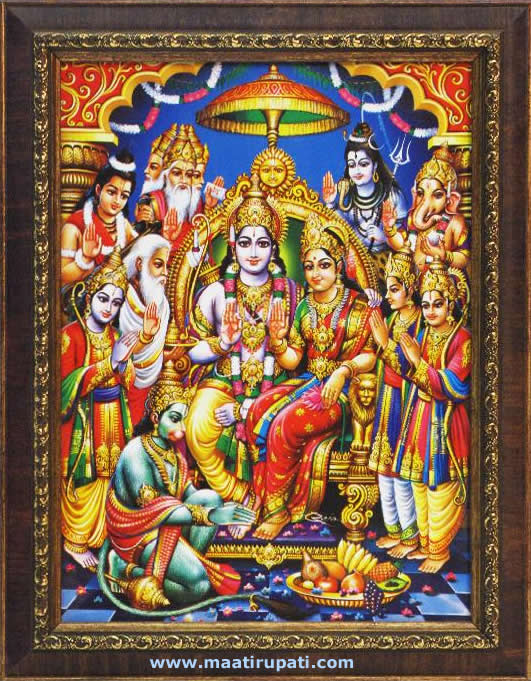
    Rama and Sita. image.jpg Rama and Sita.

    The Vedas,the Scripture of the Hindus, are accepted as Apaurusheya, not man-made and timeless, are undoubtedly the earliest works of Sanatana Dharma, and the Vedas , especially the Rig Veda is considered to be first literature of Mankind.dated conservatively at 5000 BC.

    The Ithihasas Ramayana and Mahabharata come later.

    One comes across references to Rama and Sita in the Ramayana.

    References to Rama in Ramayana.

    “14 This to Duḥśīma Pṛthavāna have I sung, to Vena, Rama, to the nobles, and the King.
    They yoked five hundred, and their love of us was famed upon their way.
    15 Besides, they showed us seven-and-seventy horses here.
    Tānva at once displayed his gift, Pārthya at once displayed his gift; and straightway Māyava showed his.” XCIII Visvedevas.

    Vena is the ancestor of Rama.

    In the absence of Dasaratha reference, some dispute the name Rama as the Rama of Ramayana.

    There is an interesting  note found in the Bala Kanda of Ramayana.

    Valmiki wrote that he wrote the Ramayana to expound The Vedas.

    “kushiilavau tu dharmaGYau raajaputrau yashasvinau |
    bhraatarau svarasampannau dadarsha aashramavaasinau ||
    sa tu medhaavinau dR^ishhTvaa vedeShu pariniShThitau |
    vedopabR^ihmaNaarthaaya taavagraahayata prabhuh ||
    kaavyaM raamaayaNaM kR^itsnaM siitaayaashcharitaM mahat.h|
    paulastya vadhamityeva chakaara charitavrataH||

    (vAlmIki-rAmAyaNa–bAlakANDa 1.4.5-7)

    The princes, the brothers, Kusha and Lava, were knowledgeable about Dharma and were glorious. Their voices were melodious and they lived in the hermitage of (vAlmIki). He (vAlmIki), established in good deeds, observed those two extremely intelligent (princes), skilled in the Vedas, and for the sake of expounding the Vedas, he composed and made them study the poem sampUrNa-rAmAyaNa (the entire rAmAyaNa) (containing) the great story of sItA and the slaying of rAvaNa.

    These verses from the vAlmIki-rAmAyaNa clearly show that the sage vAlmIki composed the rAmAyaNa to expound the meaning of the Vedas…

    Sita in the Vedas.

    Auspicious Sita, come thou near;We venerate and worship thee
    That thou mayst bless and prosper us
    And bring us fruits abundantly.

    -Rig veda 4.57

    In Harivansha Sita has been invoked as one of the names of goddess Arya:

    O goddess, you are the altar’s center in the sacrifice,
    The priest’s fee
    Sita to those who hold the plough
    And Earth to all living being.

    The Kausik-sutra and the Paraskara-sutra associate her repeatedly as the wife of Parjanya (a god associated with rains) and Indra.[4]

    Sita is known by many epithets. She is called Jānaki as the daughter of Janaka and Maithili as the princess of Mithila.[5] As the wife of Rama, she is called Ramā. Her father Janaka had earned the sobriquet Videha due to his ability to transcend body consciousness; Sita is therefore also known as Vaidehi.

    Is this not an Anachronism?

    How can the Vedas mention Rama and Sita who came later?

    The Ramayana mention that Rama was adorned with Upaveeda and the Upanayana ceremony was performed according the Vedic procedure.

    Sita Rama Marriage was performed according to Vedic rites.

    Why this contradiction?

    The explanation for Rama being found Rama in Vedas.

    10.111.07 sacanta yad uShasaH sooryeNa citrAm asya ketavo rAm avindan |
    10.111.07 A yan nakShatraM dadRushe divo na punar yato nakir addhA nu veda ||(Rig Veda)

    pra tadduHshIme pR^ithavAne vene pra rAme vochamasure maghavatsu |
    ye yuktvAya pa.ncha shatAsmayu pathA vishrAvyeshhAm.h ||9Rig Veda 10.93.14),

    In yajnas of wealthy kings such as duHshIma, pR^ithavAna, vena, and the powerful rAma, I utter hymns to the gods who travel by 500 chariots drawn by horses in the world of the gods, and who are fond of us (humans).

    1.’Since rAmAyaNa is based on the Vedas, there must be mantras in the Vedas that correspond to the immortal story of rAma. It is with this objective that nIlakaNTha, the great commentator on the mahAbhArata, has presented, with his own wonderful commentary, the mantra-rAmAyaNa. The mantra-rAmAyaNa is a compilation of Riks from the R^ig Veda that narrate the story of rAma or the rAmAyaNa.”

    2.As I have posted earlier the Vedas were not grasped in one shot.

    They were grasped by different Rishis at different times.

    Hence the reference to  Rama in the Ramayana could have been included in the later revelations, while a portion of the Vedas were in existence before Rama, which Rama followed.

    Reference of Sita in Ramayana.

    1. If one were to look at the etymology of the word Sita, it means Furrow, indicating that Sita was found while using furrowing.

    As such she was considered to be daughter of Earth.

    As Sita was found while using the Furrow, she might have been given the name Sita.

    The name given to her was Janaki, daughter of Janaka..

    This practice is called Thaddidhaantam, that of linking the the name of the offspring to father.

    Thus Rama is also called Dasarathy.

    The other explanation for Sita being mentioned in the Vedas is the same as stated for Rama.

    Citation.

    https://ramanisblog.in/2014/08/07/ramayana-in-the-rig-veda/

    http://en.wikipedia.org/wiki/Sita#Legend