Tag: Puranas

  • The Fifth Veda Pranava Veda?

    It is accepted traditionally that there are Four Vedas in Hinduism.

    They are not written and transmitted orally since five thousand years.

    The Vedas themselves, Ithihasas,Ramayana and Mahabharata , the entire Sanskrit Literature , and in other languages as well,and the eighteen Puranas declare so,

    Except one…

    Pranava Veda, The Fifth Veda.png
    Pranava Veda, The Fifth Veda.


    The Chandogya Upanishad.


    It states that there is another Veda, the Fifth veda.


    ‘itihāsapurāṇaṃ pañcamaṃ vedānāṃ’

    -Chandogya Upanishad (7.1.2)


    It is one thing for an Ithihasa or agreat literary work to be called a Veda, as a  tribute; but a Upanishad, a part of Veda, declaring that there is another Veda, is intriguing.

    ‘the Mahabharata declares itself a new Veda for a new era, intended for all people, and which is the equal of, and in some ways superior to, the four canonical Vedas.The other major Hindu epic, the Ramayana, also makes a claim to be the fifth Veda’

    The Bhagavata Purana elaborates on the Chandogya Upanishad’s statement concerning the fifth, by stating that after the four Vedas emerged from each of Brahma’s four mouths, the fifth Veda – itihasapurana – emerged from his fifth mouth[1] or all his mouths.[6] It then declares itself supreme over all other puranas, on the grounds that it was Vyasa’s crowning achievement.[5] Similarly, the Skandapurana, too, suggests that the puranas are the Fifth Veda, thus giving itself scriptural authority


    There is another view that this fifth Veda is called the Pranava Veda and it was from the Pranava ‘OM’


    Eighty-four year old V. Ganapati Sthapati, is a renowned architect and sculptor.
    Ganapati Sthapati’s range of accomplishments is extraordinary. He has designed and built more than 600 temples in India and the U.S., the U.K., Australia, Singapore, Malaysia, Fiji, Sri Lanka and Kenya. He was the architect of Swaminatha Swami Murugan temple, popularly called Malai Mandir, situated on a hillock at Ramakrishnapuram, New Delhi.’

    He asserts that the controversy over which language is older – Sanskrit or Tamil – is needless. He calls Sanskrit “the classical language of sculptors.” He will build a Veda Mandapam in the University to teach not only the Rig, Yajur, Sama and Atharva Vedas but also the Pranava Veda in Tamil. He estimates that the Pranava Veda is older than the other four Vedas. Ganapati Sthapati has already recorded on audio-tape the 50,000 stanzas of the Prananva Veda. He is keen that the Tamil Nadu Government should publish it and spread it.’

    “The Pranava Veda is the first Veda and the “source Veda.” Dr. V. Ganapati Sthapati explains, “A good deal of evidences is available both in Tamil as well as in Sanskrit works, particularly in Srimat Bhagavatam and Skandam about the remote existence of Pranava Veda. This Veda was later on called the science of Vastu (energy) and Vaastu (embodied energy), which is gaining much popularity today across the globe.”

    Dr. V. Ganapati Sthapati goes on to say that Veda Vyasa himself said in the Bhagavatam:

    “eka eva pura vedo pranavha sarva vangmayha”
    (9th skandha, 14th chapter, sloka 48 of Bhagavatam)

    This phrase by Veda Vyasa, the compiler of the present day Vedas, means that there was only one Veda in the remote past and that Veda is called Pranava Veda – the Veda of the shilpis of India. Artharva Sheershopanishad makes mention of the term “Pranava” as being “ongara” – the all-pervasive substance.

    Pranava Veda elucidates the science of Pranava. It is the scientific study of The All Pervading Substance. Pranava Veda presents the science of “how the invisible substance of the universe (paravastu) makes itself manifest in the visible material (Vaastu) forms.” In other words, Pranava Veda reveals the process of how the All Pervasive pure Energy turns into Matter or material existence.(www.vastuved.com)

    My view is that the Fifth Veda needs more investigation before any comment is passed
    Citation.


  • Adam Eve Atma Jiva Upanishad Story In Hebrew Christianity

    I have  posted quite a fe articles on the spread of Sanatana Dharma throughout the world with the help of Archeology and Astronomy.

    Considering the fact that Sanskrit being the oldest language of Mankind and th earliest Human literature being the Rig Veda, I am trying to find out the Link between Santana Dharma, Hinduism through Sanskrit Etymology.

    I have posted blogs on the close Links between various Civilisations and Cultures with Hinduism.

    Now to Etymological connection.

    The Logo, eal of Government of India.png
    The Logo Of India Contains the quote Truth Alone Triumphs’ from Mundaka Upanishad


    Adam Eve Forbidden Fruit Painting by Titan.png
    Adam Eve Forbidden Fruit Painting by Titan.

    The Upanisadic story speaks of two birds perched on the branch of a pippala tree.

    One eats the fruit of tree while the order merely watches its companion without eating.

    The pippala tree stands for the body.

    The first bird represents a being that regards himself as the jivatman or individual self and the fruit it eats signifies sensual pleasure. In the same body (symbolized by the tree) the second bird is to be understood as the Paramatman.

    He is the support of all beings but he does not know sensual pleasure.

    Since he does not eat the fruit he naturally does not have the same experience as the jivatman (the first).

    The Upanisad speaks with poetic beauty of the two birds.

    He who eats the fruit is the individual self, jiva, and he who does not eat is the Supreme Reality, the one who knows himself to be the Atman.

    It is this jiva that has come to be called Eve in the Hebrew religious tradition. “Ji” changes to “i” according to a rule of grammar and “ja” to “ya”. We have the example of “Yamuna” becoming “Jamuna” or of “Yogindra” being changed to “Joginder “.

    In the biblical story “jiva” is “Eve” and “Atma” (or “Atman”) is “Adam”. “Pippala” has in the same way changed to “apple”.

    The Tree of Knowledge is our “bodhi-vrksa”. “Bodha” means “knowledge”.

    It is well known that the Budhha attained enlightenment under the bodhi tree. But the pipal (pippala) was known as the bodhi tree even before his time.

    The story is from the Mundaka Upanishad.

    Some famous verses.

    नायमात्मा प्रवचनेन लभ्यो
    न मेधया न बहुना श्रुतेन।
    यमेवैष वृणुते तेन लभ्य-
    स्तस्यैष आत्मा विवृणुते तनूं स्वाम्‌॥ ३॥
    nāyamātmā pravacanena labhyo
    na medhayā na bahunā śrutena |
    yamevaiṣa vṛṇute tena labhya-
    stasyaiṣa ātmā vivṛṇute tanūṁ svām || 3||
    Translation:

    This Atman cannot be attained through study of the Vedas,
    nor through intelligence, nor through much learning.
    He who is chosen by Atman—by him alone is Atman attained.
    It is Atman that reveals to the seeker Its true nature.[1]

    Mundaka Upanishad 3.2.9:

    Sanskrit:

    ब्रह्म विद् ब्रह्मैव भवति ।
    Brahma vid Brahmaiva bhavati ।
    Translation:

    He who knows Brahman becomes Brahman.

    Citation.


    Bibilical Story from Upanishad.Citation.

    Mundaka Upanishad

  • Shiva With Third Eye Dance By Australian Tribe

    Sanatana Dharma spread far and wide throughout the world.

    Middle east,Europe, Africa,Latin America, Americas,England, Sweden,Arctic,Russia,Iran, Burma,Indonesia, Japan,Vietnam,Laos, Cambodia,Fiji,Polynesian Islands, New Zealand and Australia.

    The dance of Lord Shiva.jpg
    Cosmic Dance of Shiva

    A group led by Shiva and Ganesha left from the South of India and traveled to Arctic through the middle east, Europe, Africa,Americas,before returning to Sarasvati valley through Russia and Iran.

    Earlier to this event , the Sanatna Dharma was in the Super Continent of Gondwana and spread easily to Australia.

    There is  also a reference that Australia might have been the repository for weapons, Astra Alaya.

    The wild native tribes of Australia, dance with a ‘Third Eye” painted on their forehead called the ‘Siva Dance’.  (Spencer and Gillen, “The Natives tribes of Central Australia, Figures 128-129, page 21.)

    About 5 km to the north of the township of Gympie in south-east Queensland is a structure (or series of structures) which has become known as the ‘Gympie Pyramid’.
    There have been many differing claims as to its origins and function. Some of these claims have been quite controversial and gained considerable media attention beginning in 1956 through to the present. In preparing this paper I investigated the various claims and the local folk-lore which surrounds the ‘pyramid’ and attempted to place these in a context which is supported by empirical or historical fact. Documentation was scarce which has meant that the results of my investigation tend to highlight what the structure is not rather than what it is. I hope to remedy this situation by completing a more detailed survey of the site in early 1990…”

    Astra in Sanskrit means weapons, arrows, Aalaya means home,


    Australia  might mean home of weapons.


    Atomic weapons were used in Mahabharata battle.


    Read my articles on this.

    Citation.

    http://rajavedapatasala.org/FAQ2.html

    https://ramanisblog.in/2015/01/16/australia-home-of-weapons-ramayana/

  • Chihuahua Mexico Is Shiva Hinduism In Americas

    The Sanatana Dharma extended to Americas as well.

    The Mayan and other civilisations in the Americas were evolved from and are the remains of the Sanatana Dharma.

    The construction of the Pyramids in the Americas and in Egypt has its base in Indian Vassthu Sastra.

    I shall be posting on the subject between the Thiruvannamalai Temple and Chichitzen Itza.

    Murudeswara,Karnataka.jpg
    Murudeshawara.

    Chihuahua district in Mexico derives its name from the root Shivava, named after a native American;Tamaulipas-Tamralipta;Nayarit-Nairitti..

    Shivava means the Temple of Shiva in Native American pronunciation.


    The early Kings were known as Nayars.


    Other etymological connections.

    Tabasco-Taba Kosh-place of meditation.

    Chiapas-Shiva Pas-Chiefs of Shiva.

    Sinaloa-Sinhala.

    The Pilgrim site of Chalma,Mexico was a Shiva Temple.


    Post Follows on this.

    Citation.

    India Once Ruled Americas by Gene D. Matlock.

    Mexicos Shrines

  • Vedas Rama Vayu In Zend Avesta Iran

    Similarities between Vedic literature, Hinduism and Cuture were noted by  Sir William Jones in 1786.

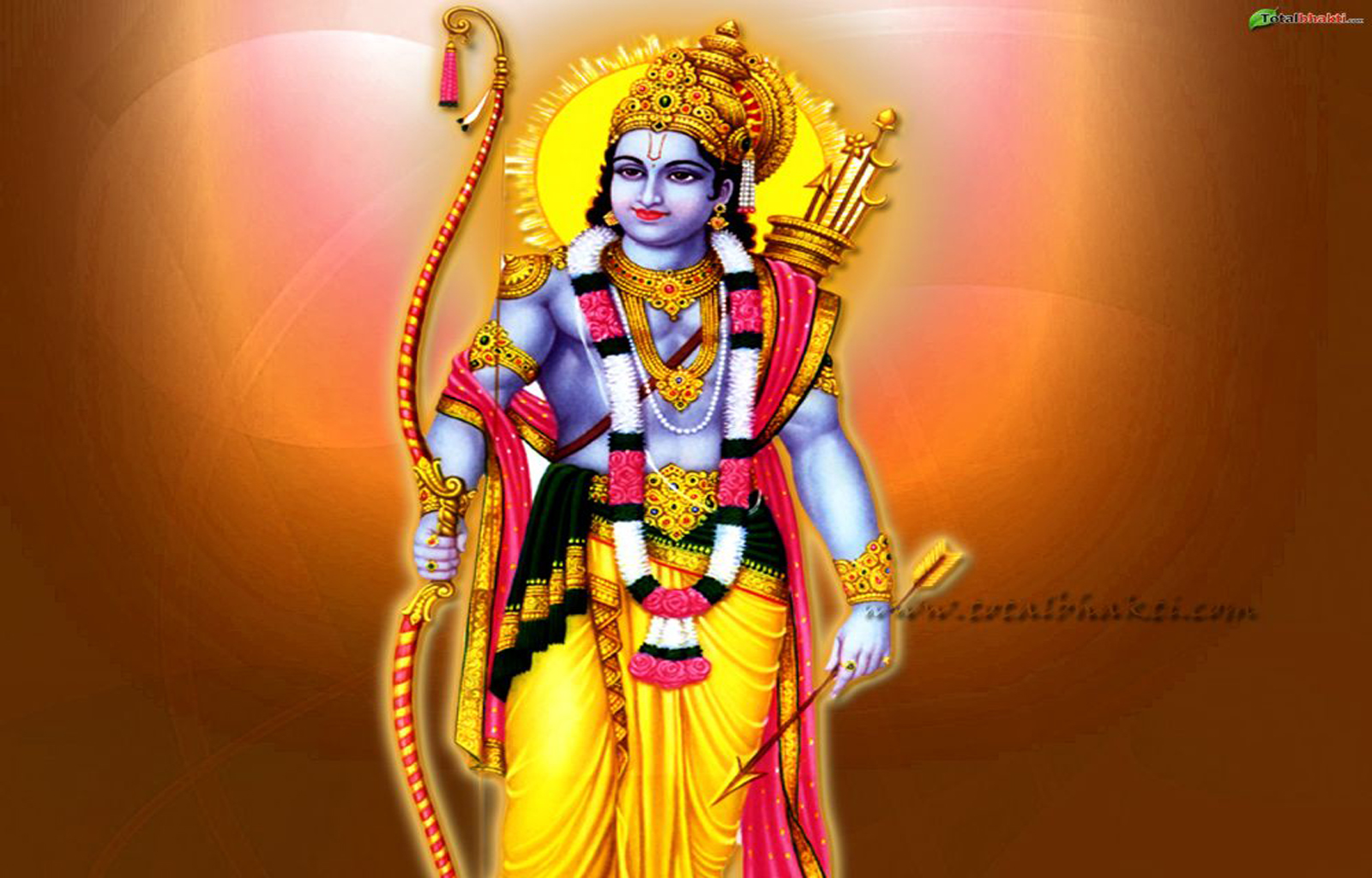
    Lord ama.jpg
    Lord Rama.

    A treaty signed by the Hittites and Mitannis dating to the fourteenth century BC calls upon Indara/Indra, Mitras(il)/Mitra, Nasatianna/Nasatya and Uruvanass(il)/Varuna, all known to Rig-Veda and Avesta.

    There were similarities in rituals too. In India, upanayana is a ritual by which a boy becomes a full member of his class. Zoroastrians have a similar ceremony called Navjot which is still practiced by Parsis. The Rig-Veda refers to the drink soma which was drunk at sacrifices and  which caused invigorating effects. The Avesta gives physical descriptions of the plant haoma which causes similar effects, though the plant identified as haoma by modern Parsis is a bitter herb which does not get your drunk, but just bitter.

    Even though there are similar words like haoma (soma), daha(dasa), hepta (sapta), hindu (sindhu), and Ahura (Asura) in Avesta and Rig-Veda, there are reversals in religious concepts and attributes of Gods. Indra and the devas  are demonic in Avesta,and Ahura/asura is considered the highest deity.

    At the time of composition of the Vedas, Varuna was losing his importance to Indra. In Avesta, Ahura Mazda  is the main divinity and some people think that he is thesame as Varuna. Varuna sat with his spies who flew all around the world and bought back reports on the conduct of mortals. He abhorred sin and loathed evil deeds prompted by anger, drink and gambling.”

    1) Rama and Vayu are venerated in the Avesta.

      2) Bharata was the Elamite king Warad-Sin.

      3) Lakša of PF 69 is a namesake of Lakshmana.

      4) King Shutruk-Nahhunte echoes Shatrughna.

      5) Dandakran (PF 666) was the true Dandakaranya.

      6) Arya-Ram-ana was an early ancestor of Darius-I
      7) Ramannuya (PF1855) was close to Darius-I.  

      8) The Ram Bazrang were a Kurdish tribe of Fars.

      9) The Sasanid ancestor Ram-Behist was a Bazrangi

     10) Many Sasanian city-names had the prefix ‘Rama‘.

     11) Ramakanam is a place-name in PF 1831.

    The study of the Persepolis tablets has yielded much information about important figures like Darius and Parnaka yet crucial data remains unknown due to improper prognosis. Even a meticulous scholar like Hallock failed to note the echo of Rama in the name Ramanuya. The name of the Mitannian king Tushratta echoes Dasharatha, Rama’s father. Chedor La’omer of Genesis 14 corresponds to Kudur Laghumar of the Babylonian texts and Raghupati was Rama’s name.

          Rama’s presence in the Indus-Saraswati area is unattested although the frequent symbol of the bow-man in the seals may, in fact, stand for Rama. Post-Islamic Iran also ignores him although his name may be hidden in the many Ram-names like Ramadan, Ram-allah etc.

          Fortunately, the Sumerian texts provide priceless data about Rama. The Sumerian king-lists show that Rama was the same as Ram-Sin of Larsa (~18th cent. B.C.) who ruledSumer, Elam, and Indus Saraswati. Although Ram-Sin was deified and his memorial has been found at Ur, his relics are unknown from Elam, said to be his homeland. Rim-Sin (also called Ram-Sin) was the longest ruling monarch (60 years) of Sumer. Ram-Sin’s reign is termed the golden era of Sumer by the great Assyriologist C. J. Gadd. Ram-Sin is called anElamite in the Sumerian texts.’

    Romilla Thapar obseves,

    ” Indo-European speakers had central Asia as their habitat and gradually over many centuries they branched out in search of fresh pastures. According to her, it is these central Asian migrants who wrote the  Avesta in Iran and Rig-Veda in India. According to Thapar there is an argument that people who migrated to India were dissidents of the Old Iranian, hence you find a significant reversal of meaning in concepts common to both Avesta and Rig-Veda.”

    My study indicates, as I have indicated in many articles, that Lord Rama’s ancestor Satyavrata Manu migrated from the South of India with his sons to Ayodhya to found Ikshvaku Kingdom, Ikshvaku is the son of Manu, because of a Tsunami.

    Shiva and His son Ganesha left ,traveled through the middle east,what is now Europe, Africa,Americas,to Arctic and the Rig Veda was composed there.

    Then a group left the Arctic and traveled through Russia ,Caucasus, Iran  before entering India through the Khyber Pass, which was being mistakenly dubbed as ‘Aryan invasion’

    They settled in the Sarasvati valley.

    This would account for the Tamil scripts being found in the Sarasvati valley and Harappa.

    During their travels, they left a cultural trial behind in all the lands they left.

    I have posted articles on all this,under Hinduism.

    “Vâyu in the Rig Veda is praised as follows:
    – Come hither, O Vâyu, though beautiful one!
    These somas are ready, drink
    Of them, honour our call!
    – O Vâyu, the prayers celebrate thee with hymns,
    they who know the
    Feast-days, and have prepared the Soma.
    – O Vâyu, they satisfying stream goes to the
    worshipper, wide-reaching, to the Soma – draught.
    – O Indra and Vâyu these (libations of Soma)
    are poured out, come hither for the sake of our offering,
    for the drops (of Soma) long for you.
    – O Indra and Vâyu, Vâyu perceive the libations.
    You, who are rich in booty, come them quickly
    hither.
    – O Vâyu and Indra come near to the work of
    the sacrificer, quick, thus is my prayer, O ye men!
    (Vedic Hymns.1994. I.2)
    And in another hymn at Rig Veda:
    – O Vâyu, may the quick races bring thee towards
    the offering, to the early drink here, to the
    early drink of Soma! May “Sûnritâ” (the Dawn)
    stand erect, approving thy mind! Come near on thy
    harnessed chariot to share. O Vâyu to share in the
    sacrifice!
    (Vedic Hymns.1994.I.134. 2-6)

    Vayu in Zend Avesta.

    “Vâyu in the Iran has a great as well as enigmatic
    personification, who, Ahuramzda as well as Ahriman
    creations sacrifice for him.
    Ahuramazda offers a sacrifice for him that he
    able to destroy of the Ahriman creations and protect
    the good Creations:
    “To him did the maker Ahuramazda. Offer
    up a sacrifice in the Airyana Vaegeh2
    , on a golden
    throne, under golden beams and golden canopy,
    with bundles of baresma and offerings of full boiling
    [milk]”.( The Zend Avesta, 2000, Part II, p.250)
    He begged of him a boon, saying:
    “Grant me this, O Vayu who do work highly,
    that I may smite the creation of Angra mainyu, and
    that nobody may smite this creation of,the God
    Spirit!”
    “Vayu who works highly, granted him that
    boon, as the Maker Ahuramazda, did pursue it”.
    “We sacrifice to the holy Vayu; we sacrifice
    to the Vayu who works highly”.(The Zend Avesta.2000.Part
    II, p.250)
    And Azi-Dahaka (one of the Ahrimans creations)
    also offer a sacrifice which he destroy all the
    men, but Vayu did not grant him”
    “The three mouthed Azi-Dahaka offer up a
    sacrifice and he begged of him a boon, saying:
    “Grant me this, O Vayu! Who do work highly,
    that I may make all the seven country of the earth
    empty on men”

    Citation.

    Vayu in Vedas and Zend Avesta pdf download

    Rama by Ranajitpal